

Keeping your classroom running like a well-oiled machine takes special skills—and a bit of strategy. One way to ensure kids stay on track is to introduce some fun classroom management games. These bring out their competitive nature while encouraging the behaviors your classroom needs.
Jump to:
Why You Should Try Classroom Management Games
“Classroom management games take the power struggle out of classroom management and give ownership back to your students,” says Ashley Marquez, educator and founder of Teach Create Motivate.
When we give students ownership and let them have a say in the classroom, they have more buy-in and are more likely to follow expectations.
—Ashley Marquez, educator and founder of Teach Create Motivate.
“Instead of repeating directions all day, these games make students WANT to meet expectations because they’re working toward something fun as a team. This builds classroom community while reinforcing the exact behaviors and routines you need, and honestly, it makes management fun for the teacher too!” Ashley promises.
Tips for Using Classroom Management Games
Using these games effectively takes a little planning and persistence, but once you find the right ones for your class and teaching style, they’ll make life so much easier. Here are Ashley’s tips for making these games work for you.
1. Make it whole-class
“When the reward is shared, students hold each other accountable in a positive way instead of you doing all the reminding,” Ashley explains. “Plus, it fosters classroom community while they’re all working toward the same goal!”
2. Let the game do the talking
“Instead of constantly reminding about quiet transitions or staying on task, mark progress and add a game piece when you catch students doing the right thing,” suggests Ashley. “They notice this FAST.”
3. Reward progress immediately
Don’t wait until the end of the lesson, day, or week to note the progress you’re seeing—do it right when it happens. As Ashley says, “The closer the recognition is to the desired expectations or choices, the stronger the connection students make.”
4. Keep it fresh
Even the most popular classroom management games need a bit of a twist from time to time. “Switching to a new game, a seasonal theme, or a new target expectation gets student buy-in back just when the novelty starts to wear off,” Ashley says.
As the founder of Teach Create Motivate, Ashley has created a multitude of classroom management games for every purpose, season, and teacher. We asked her to share her favorite one in each of three categories and explain why she loves them. Learn more about each on her Instagram page, and follow her at @teachcreatemotivate.
Games for Teaching Classroom Rules, Routines, and Procedures
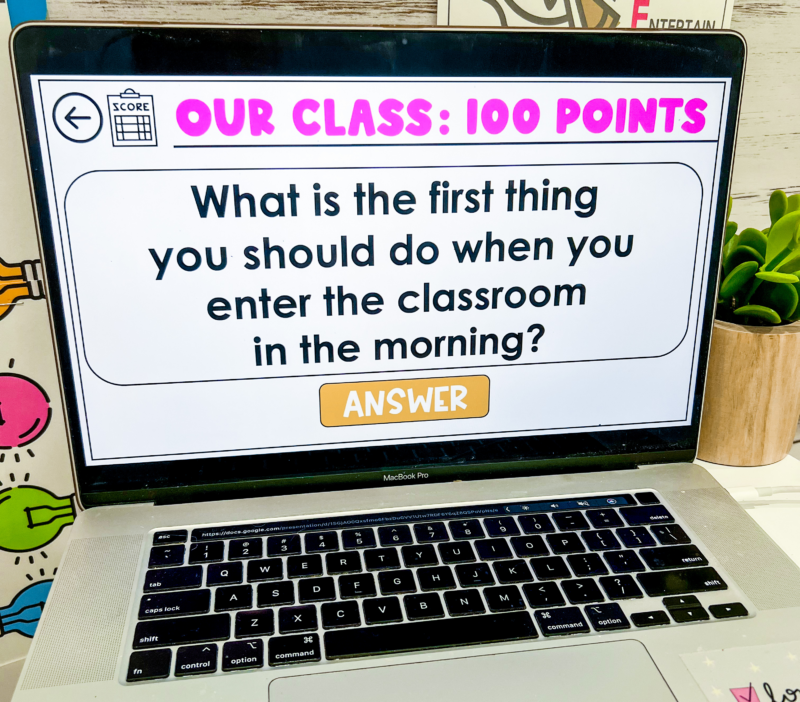
Ashley’s Pick: Class Rules Game Show
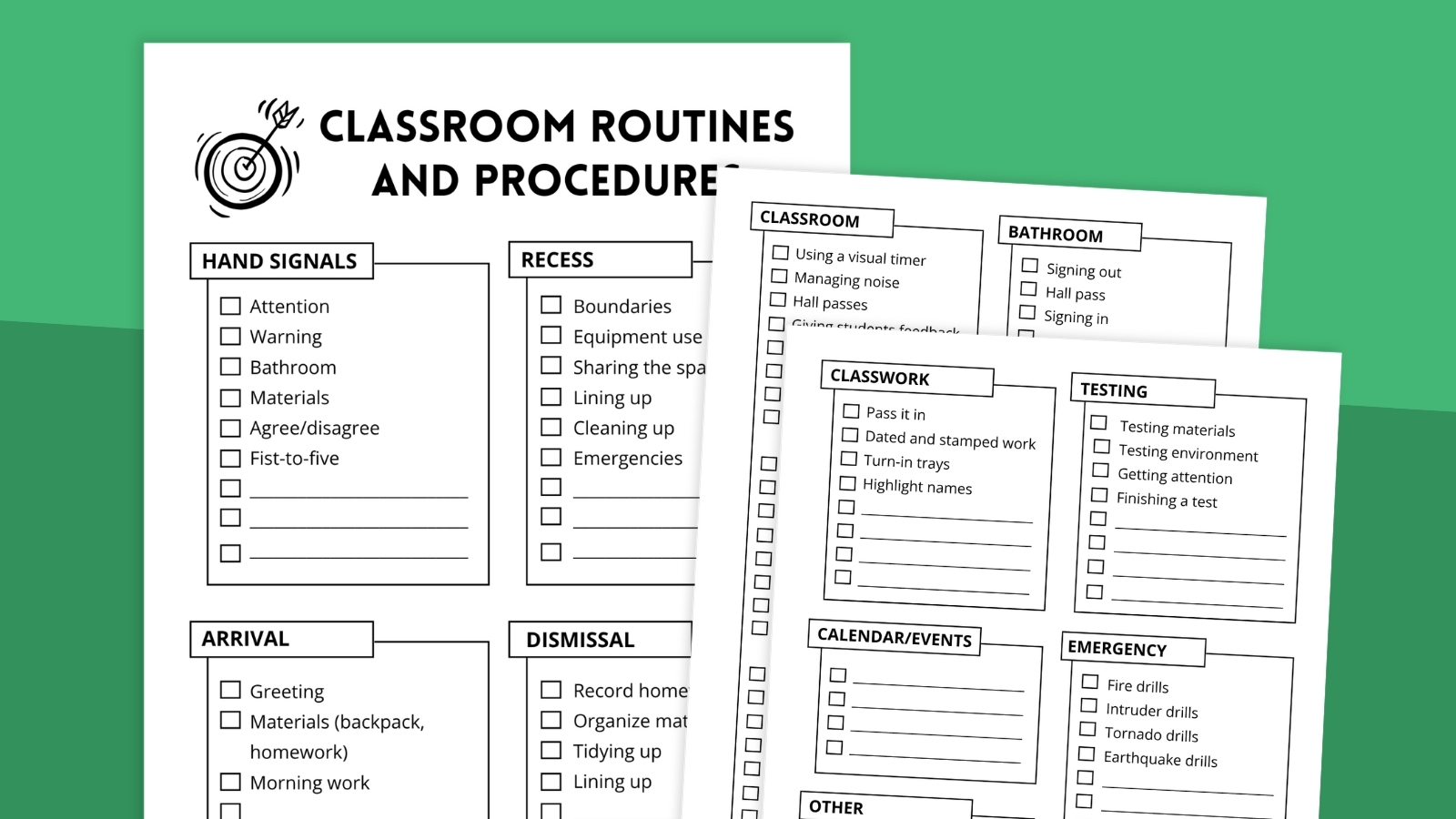
This one takes a little prep, since you’ll need to create the game-show questions and board in advance. Create categories and questions that match your classroom rules and procedures, like Work Habits, Expectations, School Rules, Classroom Rules, etc. Split the class into teams to play, then watch them get genuinely competitive over knowing the routines, rules, and more.
Why Ashley loves it: “This works really well because students are way more invested in expectations they had fun learning about. I love this game for the first week of school, as well as any time routines need a reset, like after a long break.”
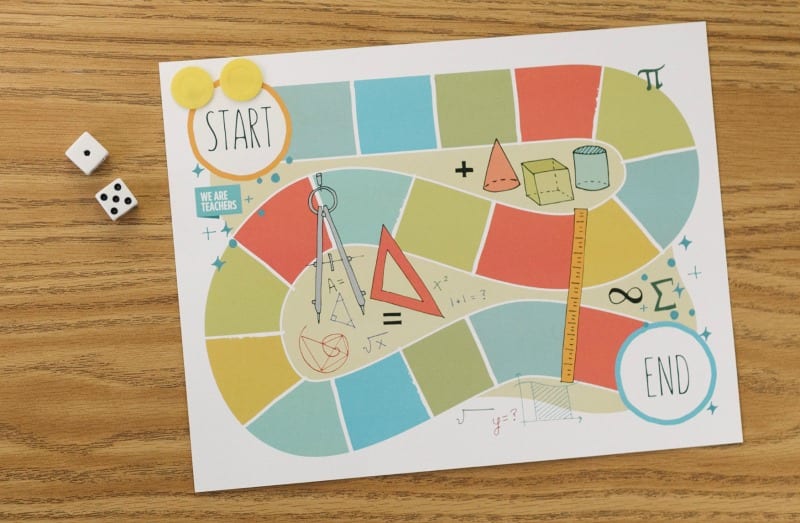
Tip: Create your own game board using our free printables, or head to Teach Create Motivate to check out Ashley’s pre-made Class Rules Game.
Rules Charades
Break your class into small groups and secretly give each one a rule or procedure to act out. Groups plan a short skit, then take turns performing their charade for the rest of the class to see if they can figure out what it is. For a fun twist, ask students to perform charades that show them breaking the rule instead!
Odd One Out
Create a collection of “Which one doesn’t belong?” sets, and see if kids can figure out which one doesn’t fit with your rules or procedures. For instance, for transitions, you might use “Line up quickly, follow the line leader, walk quietly in the hall, talk to your friends.” Students should select “talk to your friends,” and then explain why it’s not part of your transition procedures.
Signal Simon Says
If you’re using nonverbal hand signals in class, this is a fun way to practice them! Play a game of Simon Says, asking kids to demonstrate the signals you’ve chosen. For example, you might say, “Simon says listen,” and kids would respond by putting their hands up behind their ears. Just like the original, occasionally leave out the “Simon says” part, and anyone who still signals has to sit down.
This or That? Rules and Routines
Create a series of slides showing two options: one that fits your rules and expectations and one that doesn’t. Have students stand up for option 1 and sit down for option 2. Slide examples: “Chew Gum or Throw It in the Trash?,” “Cell Phone Off or Cell Phone in Locker?,” “Raise Hand or Blurt Out?”
Classroom Transitions and Line-Up Games
Ashley’s Pick: Complete the Phrase
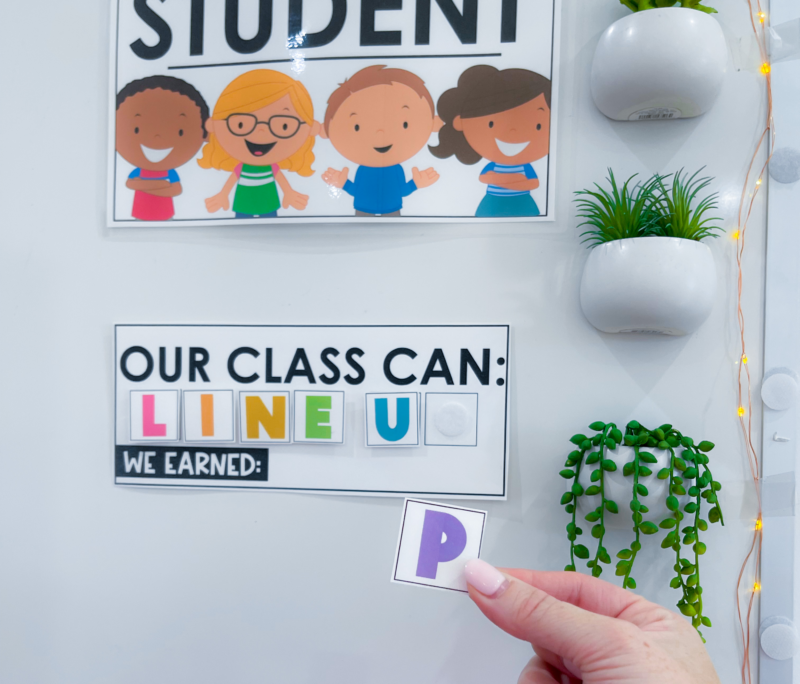
This one is so simple, but it’s an easy way to keep transitions on track. Pick a phrase like “LINE UP” or “DISMISSAL.” Have students vote on the prize they’d like to earn, such as 10 extra minutes of recess. Each time you see everyone in class meeting that goal in the expected way, award them one letter of the phrase. When it’s completely spelled out, they get the reward!
Why Ashley loves it: “This game is perfect for teaching things like lining up at the start of the year or tightening them up midyear. The anticipation of completing the word keeps buy-in HIGH.”
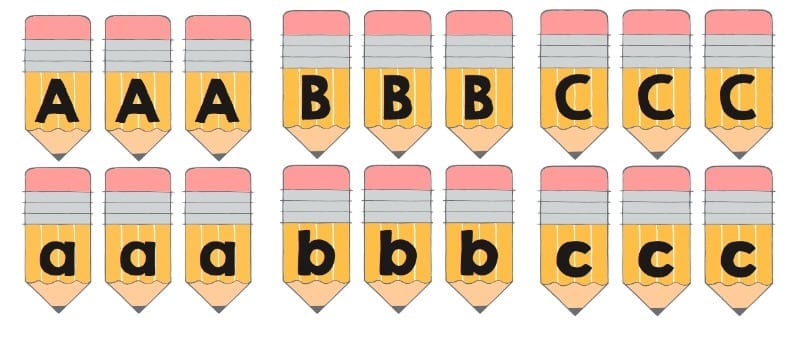
Tip: Use our free printable pencil-themed letters for this game, or try one of Ashley’s Complete the Phrase games from Teach Create Motivate.
Silent Line-Up
Put a cooperative twist on line-up time! Give kids instructions to line up in order of height, alphabetically by name, or by their assigned classroom number—but they have to do it without saying a word! This won’t necessarily make line-up time go faster, but it does encourage teamwork and bring a few minutes of quiet to the classroom.
Check out more brilliant lining-up strategies here!
Race Against the Clock
Set a countdown timer and challenge students to complete the transition or procedure before it ticks down. You might give them 45 seconds to put away their desk work and line up for lunch, or 30 seconds to move from the story-time rug back to their seats. Remind them they need to both beat the clock AND follow all the correct procedures to win. Alternate option: Use a stopwatch to time them, then see if they can beat their record next time.
Follow-the-Leader
This is a classic classroom management game: The line leader gets to choose some fun actions for everyone to perform as they walk from one place to another. You’ll need some ground rules, of course, to make sure kids stay quiet and in line. But they can still use actions like hopping, marching, or holding their arms out to the side. Just remember to follow the leader!
Mystery Walker
When kids line up to head from one room to another, tell students you’ve chosen a “Mystery Walker.” If that student follows all the right procedures as you walk along, the whole class earns a small reward. This is a fun way to keep everyone on their toes, since they have no way of knowing which student it might be!
Behavior Management Games
Ashley’s Pick: Classroom Management Bingo
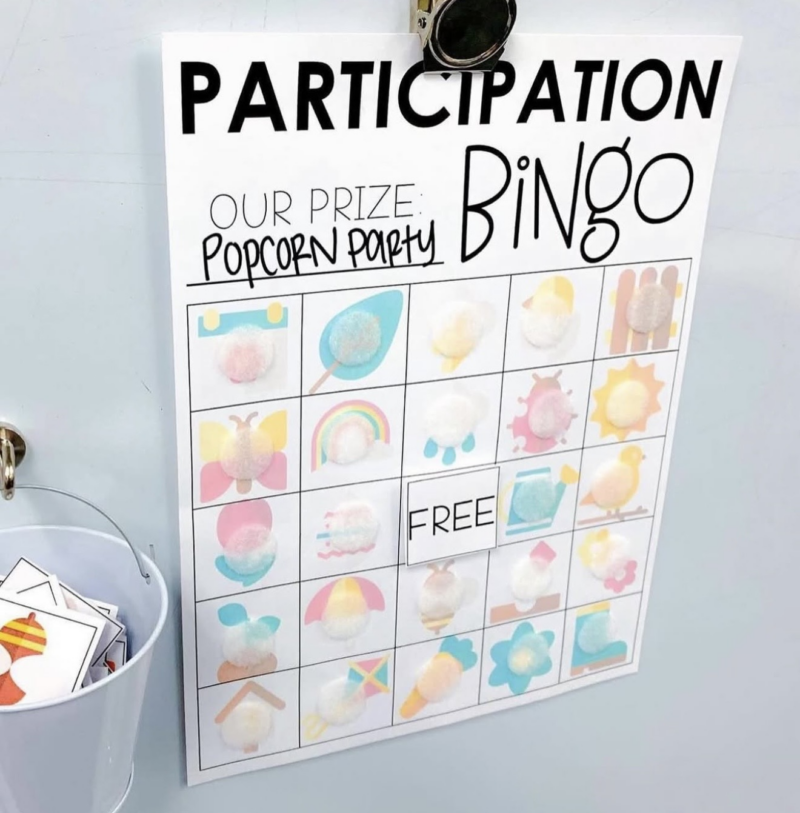
In this engaging game, the class works together to earn squares on a bingo board. Post it in a place where everyone can see it. Then, each time you catch the whole class meeting a behavior expectation, award them a piece to add to the classroom bingo board. Once they make five in a row, the class earns a reward they voted on.
Why Ashley loves it: “This is one of my favorite go-to resources because it’s so versatile and students absolutely love it. It works because students stop relying on ME to manage behavior. They remind each other, because everyone wants that next bingo piece.”
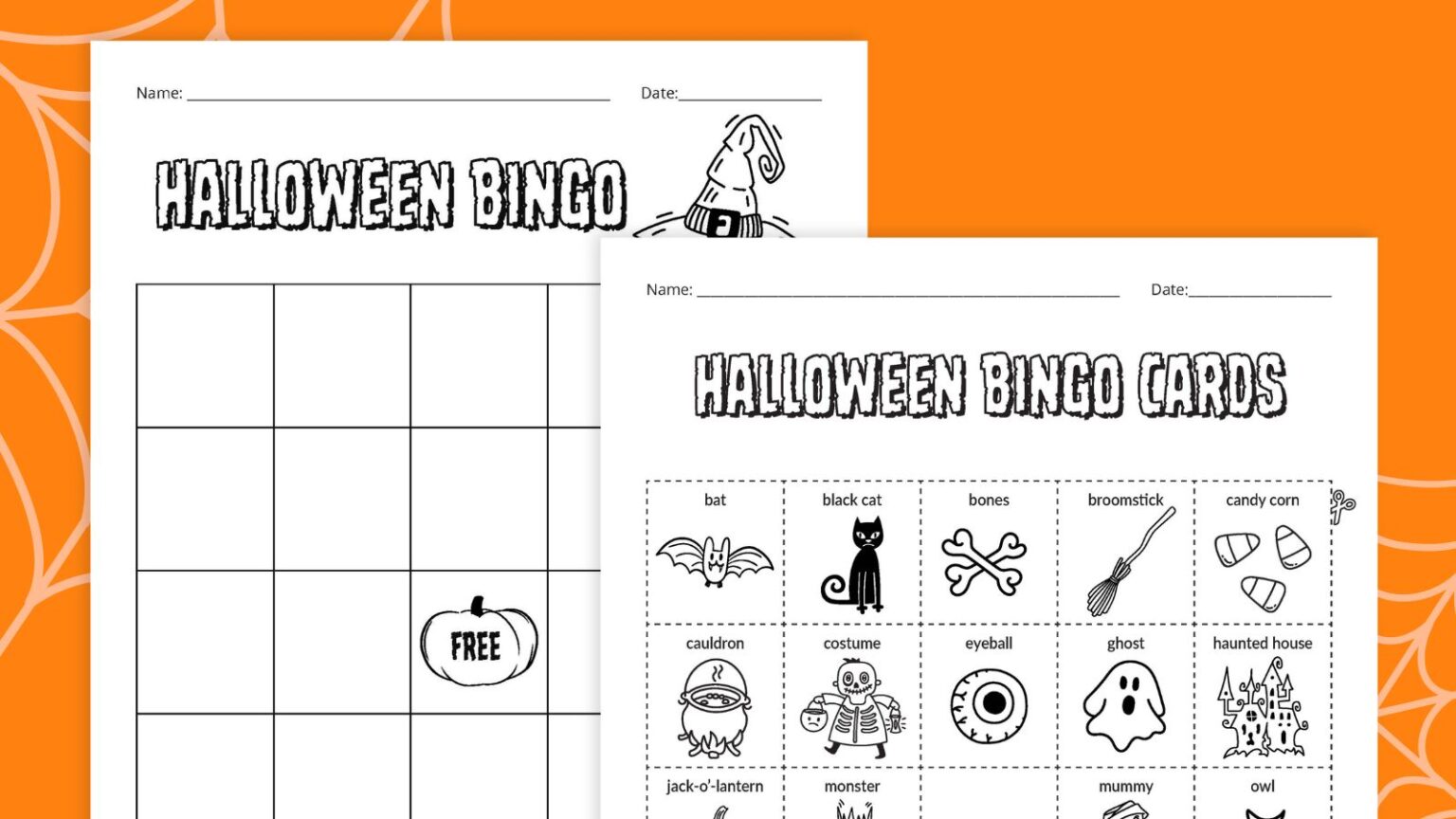
Tip: Check out our free printable Halloween Bingo board for this game, or head to Teach Create Motivate to check out Ashley’s versions of Classroom Bingo!
Mystery Student
This is similar to Mystery Walker, but it applies to an entire day rather than just a transition. Select one person to be the day’s “Mystery Student,” but don’t tell kids who it is. Instead, keep a special watch on their behavior all day long. If that student behaves well all day, reveal their name at the end, congratulate them, and reward them with a small prize. (Tip: Don’t shame Mystery Students who misbehave—simply say that no one won the prize that day, and put that student back in the mix for another try.)
Beat the Teacher
Start a tally on the board, pitting the class against the teacher. Each time the class completes a transition, procedure, or other behavior well, they earn a point. But when they break the rules, the teacher earns a point instead. See who has the most points at the end of the day!
Caught Being Kind
Want to encourage kids to be kind to one another? Try this classroom management game! First, work with your class to create a list of ways they can demonstrate kindness to one another. Prepare Kindness Tickets to reward students when they’re “caught being kind,” and distribute them as needed. (Encourage students to point out acts of kindness when they see them too!) Students write their name on each ticket they receive and drop it into a container. At the end of the week or month, draw a name and award them a prize.
Noise Monster
Think of this sort of like Hangman. Set aside space on your whiteboard for the “Noise Monster.” Any time your class is caught being too noisy, draw a new part of the Noise Monster’s body. (For example, add arms, legs, horns, eyes, mouth, etc.) If the class makes it to the end of the day or week without completing the Noise Monster, they earn a small prize.
More Classroom Management Games
Silent Ball
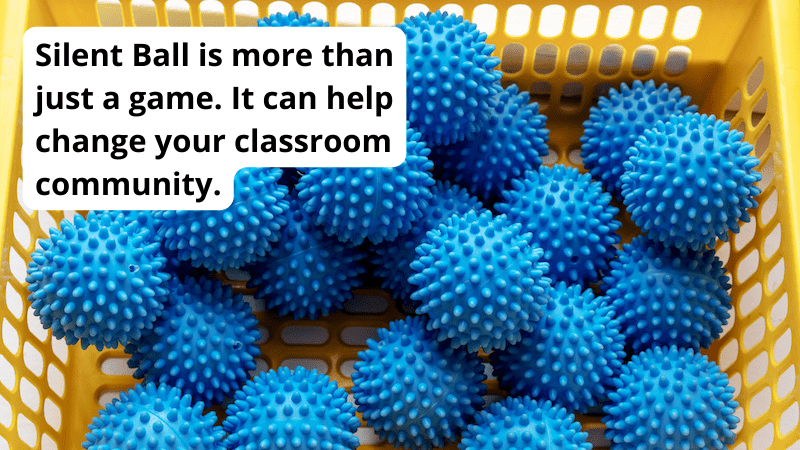
This simple game is also a terrific brain break. Kids stand up and toss a soft ball around the classroom. If someone misses or makes noise, they’re out of the game and have to sit down. Play until there’s only one person left standing, and congratulate the winner. Now you have a quiet, seated class that’s ready to get back to work!
Learn more: Is Silent Ball the Best Classroom Management Tool You Never Knew Existed?
Compliment Chain
Cut a stack of strips you can use to make a paper chain, and keep them in a basket with a marker and glue stick. Any time your class or an individual student receives a compliment from an outside source (e.g., another teacher mentions that your class did a great job during a fire drill, or the principal drops by and congratulates your class on working quietly as they talk to you), write the compliment on a strip and attach it to the chain. Set a goal for a certain number of links, then reward the class when they reach it.
Mystery Trash

When it’s time to clean up the classroom at the end of the day, mentally choose a piece of trash but don’t tell kids what it is. As students bring their trash to the garbage can, keep an eye on who has what. When all the trash is collected and kids are back in their seats, announce the “Mystery Trash” piece and reward the student who threw it away!
Try it: Keep Your Classroom Clean With This “Mystery Trash” Hack
Secret Goal
Set a secret goal for your class, and keep it hidden until the end of the day. If the class meets the goal, they earn a prize. You can use this for any behavior or classroom management goal: quiet transitions, everyone turns in their homework on time, no one yells in the classroom, etc. So versatile!
Boss Battle
Choose a “Boss” for your class to battle against. Give them fun names like “The Distractinator,” “The Mess Monster,” or “Captain Chaos.” Each boss starts out with five life hearts (just like a video game), and so does the class. When the class performs the specific behavior well, the boss loses a heart. But when they don’t, the class loses one instead. Can they defeat the boss before the boss beats them?
Don’t forget to grab your free Brain Breaks for Kids cards!
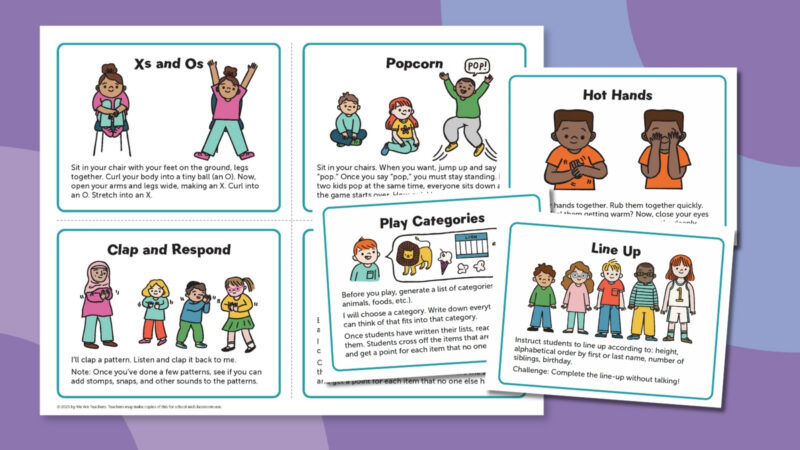
Click the button and fill out the form to print your free set of cards, with brain break ideas for every age and classroom!
Plus, explore all of our Classroom Management Resources here!

