

MiddleWeb Blog
 Consolidation strategies help students integrate and make sense of what they’re studying. They reinforce learning as students summarize and synthesize and spend dedicated time practicing new concepts.
Over the past five years, I’ve worked hard to add different consolidation strategies into my teaching practice. I teach my students every other day, so I want them to be able to recall what they learned in the previous lesson and be ready to put it to use.
A summary of international research describes why student practice time is so important. Practice helps consolidate new mental processes “until we can do them almost without thinking,” making room for fresh learning in our limited working memory. Then we’re “ready to move on and learn more.”
It’s pretty amazing that we can make small adjustments to our lessons and help our students’ brains work more efficiently. Here are a few consolidation strategies I’ve used.
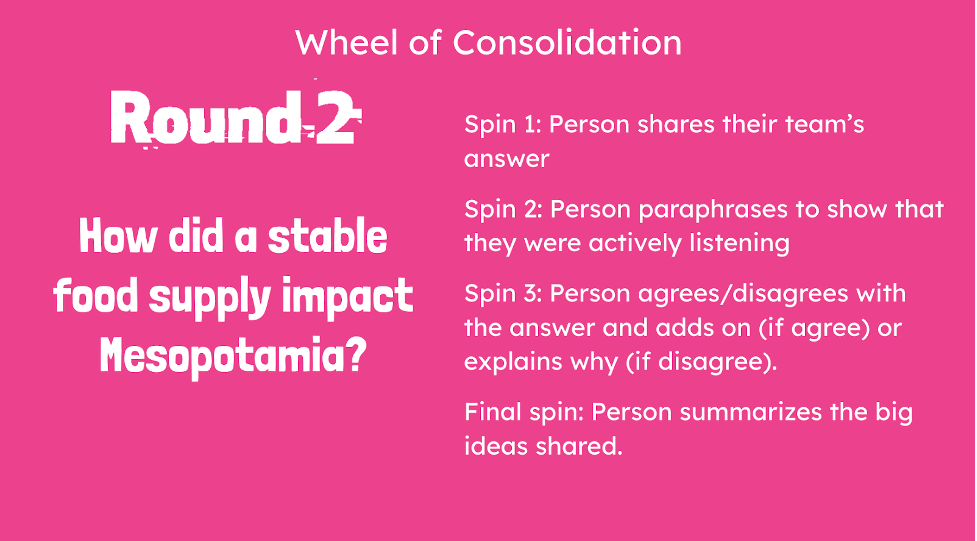
Wheel of Consolidation
Students love when I do the Wheel of Consolidation with them. Everyone’s name goes on a wheel of names from Flippity.net or wordwall.net. Each round involves four spins, with students building on or refuting the ideas of the student who spoke before them. Since they never know if they will get called upon, they all have to pay close attention.
I usually start with an easy question, such as, “How is middle school different from elementary school?” and then a few rounds related to the content we are learning. I also often give out a “participation Mento” when students’ names are called, which makes the activity more pleasurable for students.
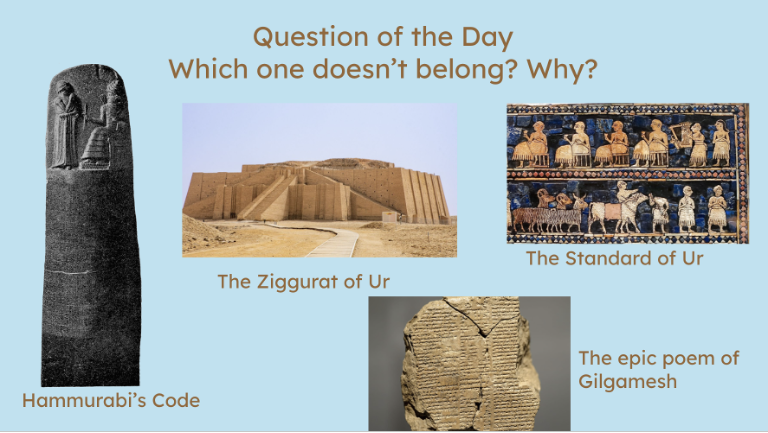
Question of the Day
Sometimes I use a Question of the Day slide at the start of our class to reinforce what we learned in the previous class. It’s a nice way to get students talking at the evaluating/judging level, but still keeping it lighthearted. When asking them to eliminate one option from a group of choices, I can see the depth of understanding of our topics.
I haven’t done this yet, but it might be fun to use the question as a pre-assessment, and then at the end of the lesson as a way to reinforce to students how much they are learning.
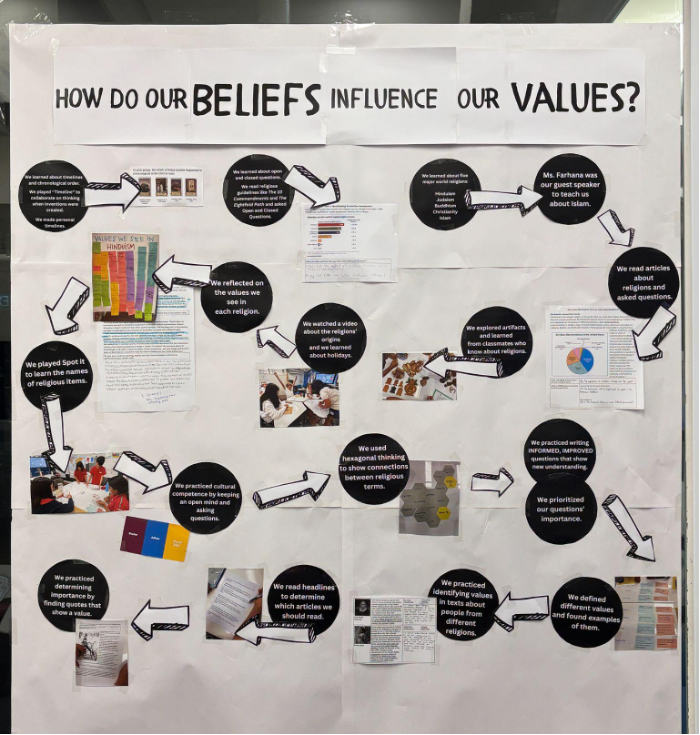
Creating a Unit Map
I was lucky to recently attend professional development by educational consultant Kath Murdoch. One of the many things that she shared with us was the idea to create a unit map that is built lesson by lesson (see below).
This helps students see how activities tie together, and I found it especially helpful during a unit with a lot of interruptions from holidays, assemblies, and schedule changes. It grounded our work and was a nice end to the class to say, “What did we do today? What’s worth adding to our unit overview?”
I created the first one for my students, but I left the second one to them. In my head, I was making peace with it not looking as nice, but the student-created learning journey was way better, with ephemera like work samples, post-it notes, and photos.
During parent-teacher conferences, the students used the chart to refer to what we had learned with more detail. The sixth graders love to be the person who writes the summary of the lesson, and they often work in table groups to figure out the best way to consolidate all that we did in our class.
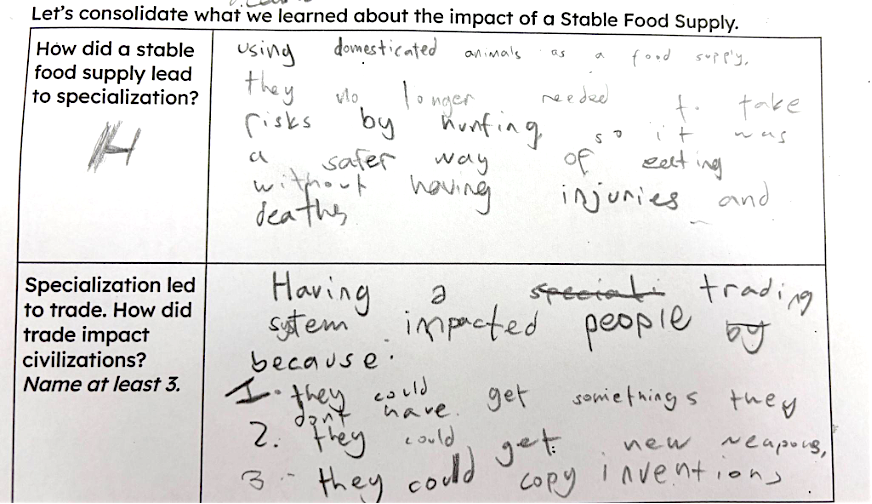
Quick Check-Ins to Start Class
One of the biggest shifts in my consolidation work is to start class with some consolidation, instead of just at the end. A quick check-in gets everyone on the same page to learn new content. It’s also interesting to see what really sticks out to students and what tends to be forgotten, which helps me know how to adjust my lessons.
It also starts the lesson for students with a confidence boost – they already know something about what we’re studying and have a springboard to learn more.
The More We Consolidate…
As with most classroom activities, the more frequently an exercise is done, the more meaningful it is. By consistently consolidating what we have learned, students are growing their long-term memories and creating more background knowledge to build upon.

