

AI with Intention: Principles and Action Steps for Teachers and School Leaders
By Tony Frontier
(ASCD, 2025 – Learn more)
Reviewed by Chris Wagner
 Artificial Intelligence has been around for a number of years. In the last two to three, the debate regarding the usage of AI in schools has really grown.
I’ve watched this debate play out in education blogs, on the evening news, and in my own small school in northern Illinois. As students have begun to use AI more frequently, the initial response in schools seems to be to ban it, block it, or have students handwrite everything in class.
In his book AI with Intention: Principles and Action Steps for Teachers and School Leaders, Tony Frontier encourages decision makers in schools to view artificial intelligence as a tool for both teachers and students. This tool only works when it is used with intention, and Frontier provides a framework for schools to use AI in this way.
 To drive this point home, Frontier splits the book into two sections. The first section is aimed at school leadership.
While it may be tempting as a teacher to skip this section as you may not be the primary audience for it, I found it useful in terms of developing my own philosophy about AI usage in my planning as well as AI usage for my students. This section sets the foundation for AI usage whether it be for the school, for a department, or for an individual classroom.
Each chapter in this section is a portion of that foundation. They cover the topics of leadership, integrity, and fidelity. After defining the aspect of each chapter, Frontier provides action steps one can take to set the philosophy you are looking for.
These action steps are where the real value of the book rests. I would use them as a way to foster a discussion around AI usage by teachers. As the title states, Frontier wants to help teachers use AI intentionally to design lessons, materials, and assessments for students. He argues that allowing schools to use AI without intention may be more efficient in the moment, but a lack of intention does not lead to better learning.
The second section of the book focuses on how to help teachers and students learn to use AI to drive intentional learning. The section is set up the same way as section one. Each chapter begins with an explanation of an appropriate stance to take as a classroom teacher. Frontier then provides action steps one can take to explicitly teach students how to use AI as a tool to learn.
One helpful aspect of this section is the number of and types of prompt examples Frontier provides for teacher use. He continually makes the point that what the AI produces is only as good as the person providing the input. This speaks directly to my own usage of AI. Prior to reading this book, I did not get the results from AI that I was looking for. Now I have a number of models I can use to be more intentional.
If our goal is to help students understand how to use AI with intention to learn, not just to get the easy answer, then chapter 8 is a must read. This chapter includes ways to explicitly teach students how to use AI to develop their thinking, their writing, or their product. Frontier uses this chapter to advocate for practicing the skill of utilizing AI as a tool rather than an answer mill.
In addition to supplying prompts and sentence frames for students to use to fulfill a variety of learning goals, the book also provides ways for students to track their AI usage in a transparent way. This transparency allows both the student and the teacher see the process used and determine ways to improve it.
Artificial Intelligence is not going away. It will improve and become more pervasive over time. No matter where you or your colleagues are in the AI journey, this book will be a definite help in building a foundation and framework from which to utilize AI with intention.
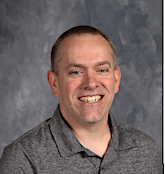
Chris Wagner is a 6-8 ELA teacher at Nippersink Middle School in Richmond, Illinois. Now in his 27th year of teaching for the district, Chris has also been the ELA content leader for his school and the Future Problem Solving Coordinator for about the last 10 years. He lives in Crystal Lake with his wife, Kim, and their two children.

