This Free Air Quality Experiment Reveals Air Pollution

Date:


Air pollution is often invisible to the naked eye, but this memorable experiment makes it impossible to ignore. In this free, ready‑to‑use lesson plan from Ward’s Science, your students create petroleum‑jelly–coated index card particulate traps. After hanging them in various locations, they return later to observe the dust, fibers, soot, pollen, and other airborne evidence they’ve collected.

It’s a powerful way for students to see the impact of air quality firsthand and to compare results across the school environment. Best of all, this inquiry‑based activity requires minimal prep and fits beautifully into your earth science, AgSci, environmental science, biology, chemistry, or general science unit plans.

Here’s What’s Included in the Airborne Evidence Experiment Bundle
We Are Teachers

Teacher Guide

Everything you need to walk you through setting up, introducing, completing, and reflecting on your air quality experiment with your students. The particulate trap printable makes this experiment come together in a flash.

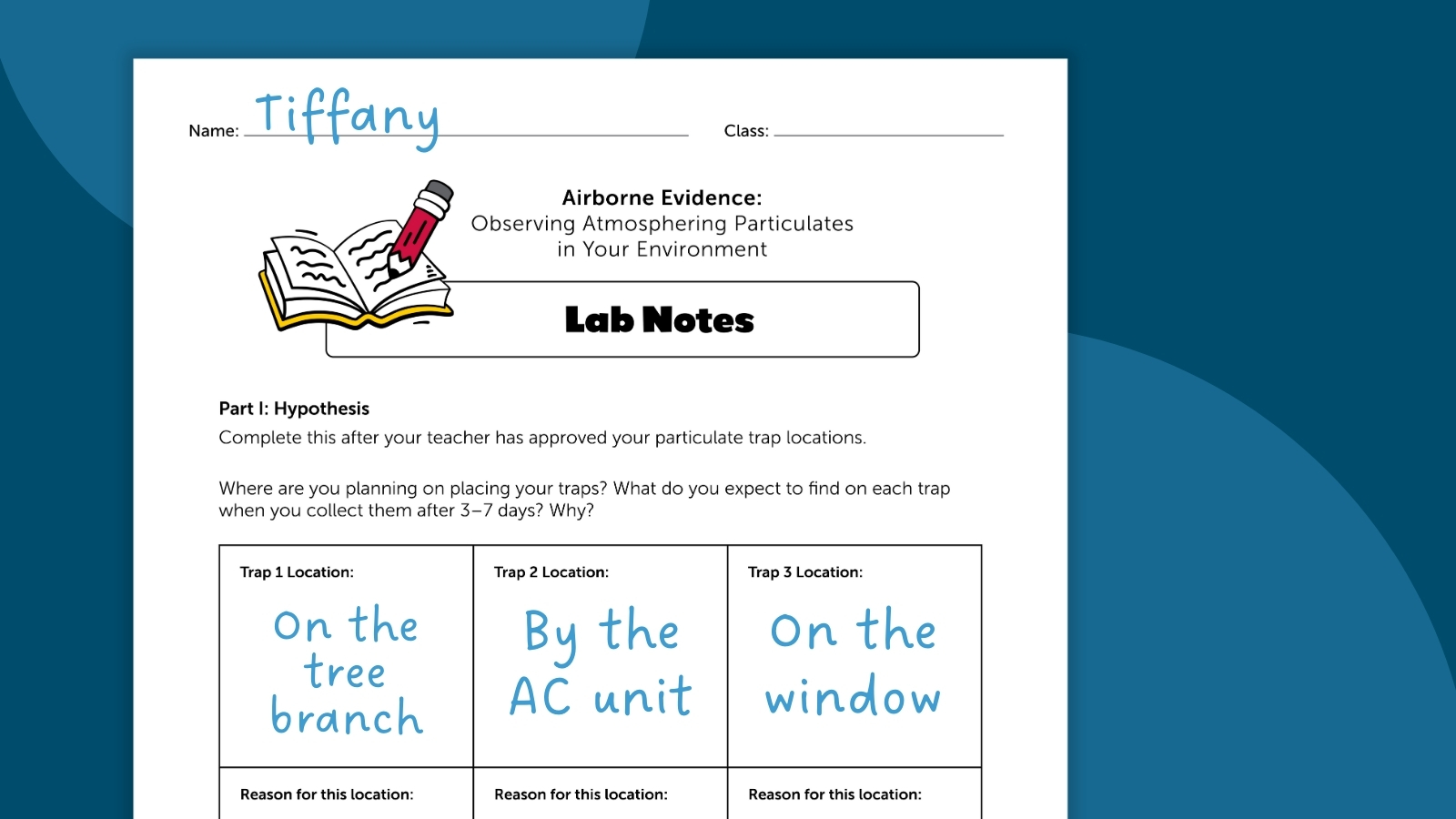
Image of student lab notes of Ward's air quality experiment
We Are Teachers

Lab Notes

Easy to use lab notes help walk your students through each step of their experiment, providing them with simple instructions to guide their work. The lab notes ask students to form a hypothesis, observe their experiment, and analyze their data. These pages make this experiment a perfect way to review and use the scientific method in your air quality unit.

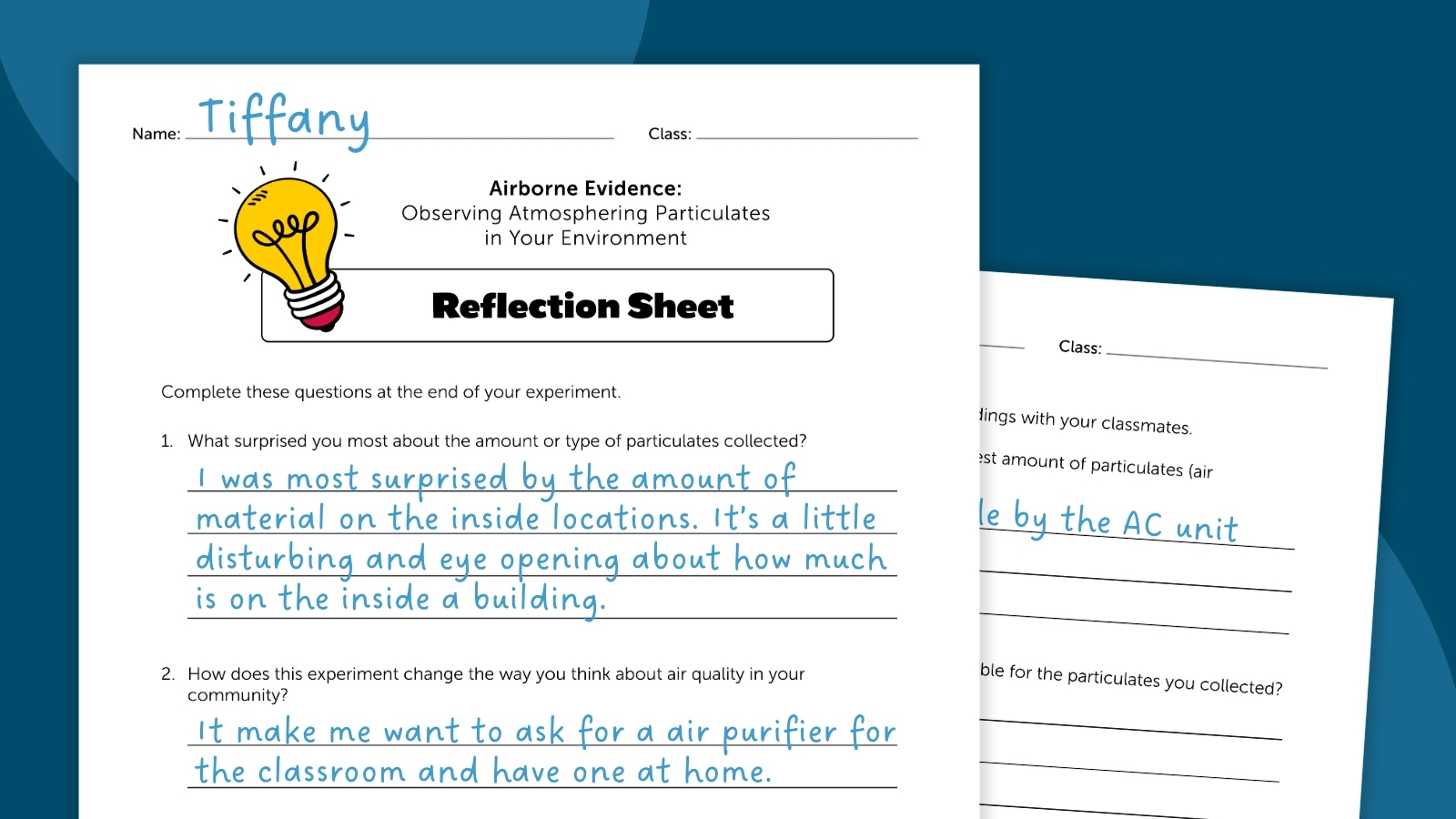
Images of the reflection page from Ward's air quality experiment
We Are Teachers

Reflection Sheets

The perfect wrap-up to your air quality experiment, these reflection questions ask your students to think deeply about the lesson they’ve just completed. These pages are great for class conversation, as part of project assessment, or as a review when returning to these concepts later in the school year.

Bring This Engaging Air Quality Experiment to Your Classroom

Students can use this lab while studying pollution, ecosystems, weather, animal systems, or human‑environment interactions. It also works well when you simply want them to become more curious observers of the world around them. No matter the context, this activity provides a simple and high‑impact learning experience. Click the button below and fill out the form to snag your lesson plan for free!

Extend your lesson with this Air Quality Test Kit or level up your data collection with this Air Quality Monitor.

Share post:

Subscribe

Popular

More like this
Related

Children’s Books Honored For Focus On Disability Experience

Nine books featuring stories about various types of...

From Silent Landscapes to Living Urban Commons – The Nature of Cities

Renaturalised burial grounds, with their rich blend of...

The Health Benefits of Chocolate

It’s chocolate season! With Valentine’s Day just around...

Breaking the Cycle of “There’s Something Wrong with Me”

Does everything feel like too much these days?...