

Editor’s note: From “climate adaptation” to “ecosystem services,” environmental jargon is everywhere these days. Conservation International looks to make sense of it in an explainer series called “What on Earth?”
In this installment, we break down “conservation finance” — the creative funding that makes nature protection possible.
Protecting nature costs money — but how much exactly?
Experts say roughly US$ 700 billion.
That doesn’t sound too—
Per year.
Ah. So not couch cushion change.
Uh, yeah. But it gets worse. US$ 700 billion isn’t the total cost — it’s the gap. It’s how much more the world needs to spend each year to protect and restore nature, on top of the roughly US$ 100 billion we’re already investing.
But why do we need to pay to protect nature in the first place?
Because one million species of plants and animals are currently facing extinction. And protecting nature also means sustaining ourselves. Food, water, air, shelter and a livable climate all depend on healthy ecosystems.
But if nature is so valuable, why isn’t conservation always the obvious choice?
Well, protecting nature isn’t always the easiest — or most profitable — option for the people who live closest to it.
Take a forest, for example. Keeping it standing means clean air, carbon storage, wildlife habitat and water for nearby communities. But cutting it down can bring quick income — from crops, cattle or timber.
So, it’s not just an environmental issue — it’s an economic one.
Exactly. In many places, people depend directly on nature to live: the food they grow and the firewood they use to cook; the crops or fish they sell to earn a living.
I’ll let Bjorn Stauch, finance expert at Conservation International, explain: “Many communities who live closest to nature are struggling with extreme poverty. They can’t possibly focus on conservation when their children have hungry bellies.”
What we really need to do is make it possible for people to earn a living and protect nature.
Now you’re getting it.
We’ve got to redirect money away from activities that harm nature and toward real alternatives that help people and nature thrive, together. That means jobs that restore ecosystems, programs that help communities thrive without cutting down forests or draining wetlands, and initiatives that make clean water and healthy soil part of everyday life.
Here’s Stauch again: “When people have their basic needs met, they are more likely to support conservation efforts because they no longer see nature as something that competes with their survival. Instead, they see nature as an asset that can improve their lives.”
Hence, nature finance?
Right. That’s why it costs money to protect nature — we’re quantifying the economic value that’s always been there, hiding in plain sight.
When we say nature finance, we’re talking about all of the financial tools we have to make that possible: donations, taxes, carbon credits, investments, debt-for-nature swaps, green bonds—
Whoa, whoa, slow down. What were all those tools you just mentioned?
Right, let’s unpack them. Some are obvious — like governments directly funding conservation programs and policies. Easy enough.
But here’s the problem: only about 3 percent of public climate funding goes directly to protecting nature. That tiny slice shows why conservation needs more creative ways to attract and direct money where it’s needed most.
Get creative how?
Well, arguably, this whole conversation started with the debt-for-nature swap. Conservation International helped pioneer the approach back in 1987, where a country’s debt is reduced in exchange for commitments to protect nature.
Back then, it was a radical, untested idea. Yet Conservation International pulled off the first deal — buying US$ 650,000 of Bolivia’s debt at a steep discount in exchange for the government’s promise to establish protected areas in the Amazon.
Nearly 40 years later, those areas remain protected and swaps have become a mainstay of global conservation finance: Just last year, the U.S. and the Republic of Indonesia struck a deal to swap US$ 35 million of debt in exchange for protecting and restoring two of the most biologically diverse coral reefs on the planet.
Wow, debt-for-nature swaps started with one wild idea. What’s next?
You know, some of the best ideas come from crisis. Climate change, biodiversity loss and rising human pressures are pushing innovators to find ways for money to flow to nature and people at the same time.
Take carbon credits — a way for companies or governments to offset fossil fuel emissions by funding projects that protect or restore ecosystems that store carbon.
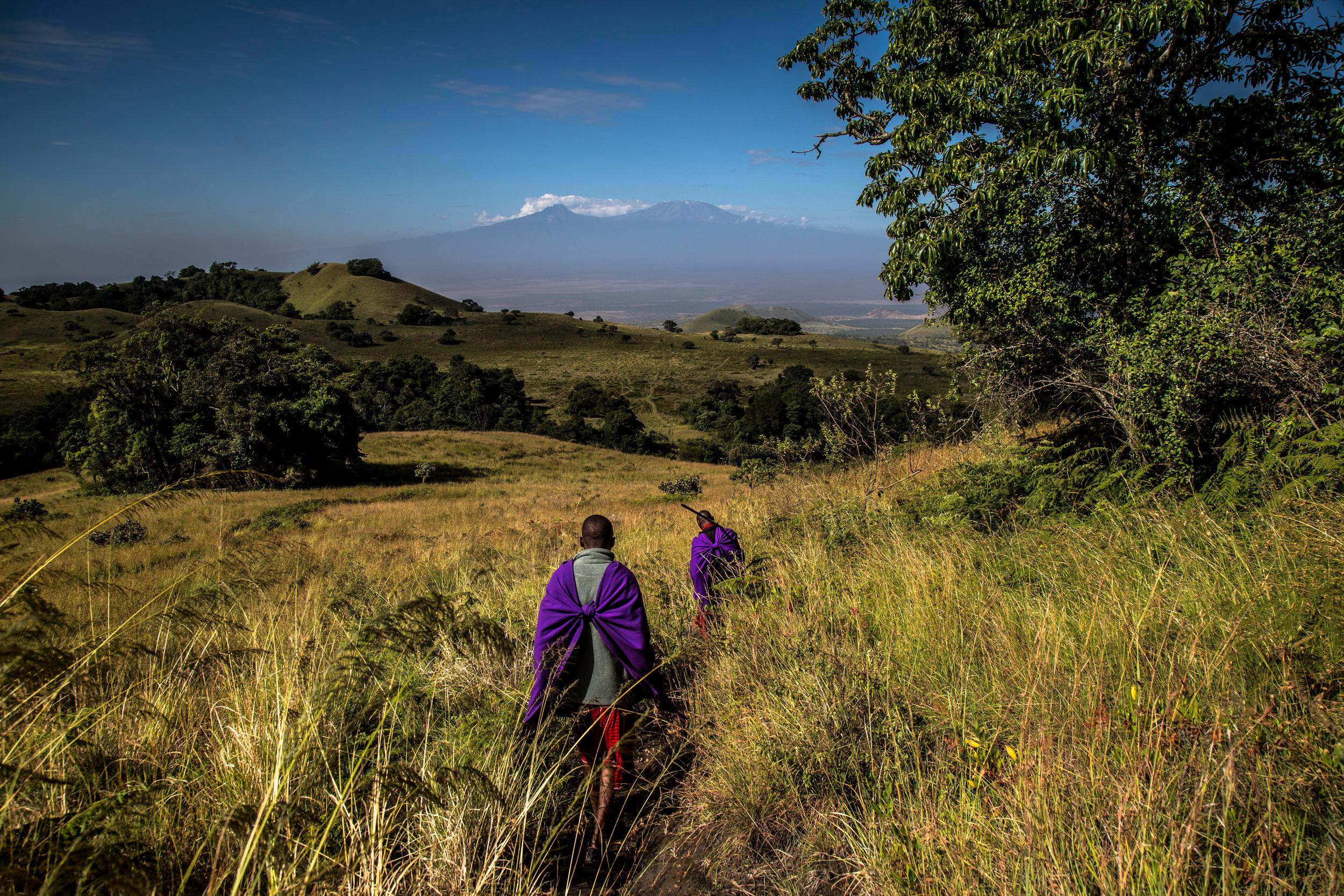
In Chyulu Hills, Kenya, a cloud forest long threatened by unsustainable land use, Conservation International and local partners helped communities protect their home by selling carbon credits. Since the project began, the Maasai people and other local farmers have conserved and restored 404,000 hectares (1 million acres), safeguarding wildlife and preventing roughly 37 million metric tons of carbon emissions.
And that’s just one forest — imagine if we multiplied this kind of investment across the world.
It sounds like even small investments can really add up.
You bet. When you zoom in on specific places, modest investments can have really tangible impact.
Take the tiny Pacific island nation of Niue — a country with a marine territory 1,200 times larger than its land. Niue found a way for anyone on Earth to contribute to protecting its massive ocean area.
CI Ventures, Conservation International’s investing arm, is backing startups creating plastic from seaweed, transforming logging companies into forest-restoration businesses, and offering loans to local communities in Africa to protect land for wildlife tourism.
In Brazil’s Cerrado, one of the most threatened ecosystems on Earth, a timber operator has committed to protecting and restoring half of their total investment as natural ecosystem, recognizing that doing so actually increases the long-term value of their tree farms.
With all these ideas, can we really close the gap?
Look. hitting that $700-billion-a-year target isn’t going to be a breeze. But here’s the encouraging part: every innovative idea and every small, targeted investment chips away at that number.
That said, we won’t get there by innovation alone. Governments and institutions need to shift more funding toward protecting nature, rather than subsidizing activities that harm it. Only then can these tools reach their full potential.
The takeaway? Even in the face of a massive challenge, smart ideas and well-placed investments are already making a difference. And when you add them all up, they’re showing us a path toward a future where people and nature thrive together.

