

April 22, 2026
Lionel Alexander Rosenblatt, born December 10, 1943; died April 11, 2026.
Lionel Rosenblatt was the most consistent, clear, sane voice on behalf of refugees and war victims in Washington, DC, SE Asia, Switzerland and across the humanitarian community during his many years building up the stature of Refugees International (RI), the NGO he led as Executive Director. During those years he was the most accessible, humane and down to earth of Washington leaders, always putting others at ease while steering conversations with a strong moral compass.
He is survived by his wife of 55 years, Ann Grosvenor Rosenblatt, whom he met in Vietnam and saved from a rhinoceros in Africa; his sister Sarah; and the generations of humanitarian workers he taught, cajoled, inspired, and sent off to places that needed them.
Born in New Rochelle, New York, and educated at Harvard College and Stanford Law School, he entered the U.S. Foreign Service in 1966 beginning a career that would span the fall of Saigon, the Indochinese refugee crisis, the wars in the Balkans, the Rwandan genocide, and crises in Somalia, Chechnya, and the Congo.
He is perhaps best remembered by many for an act of principled insubordination: in April 1975, he and colleague Craig Johnstone defied State Department orders and flew to Saigon on personal leave, arranging the evacuation of 400 greatly at-risk Vietnamese before the city fell as the war came to an end. Michael Eiland, who succeeded him in Bangkok, says “It was truly a bold and remarkable undertaking and illustrated the depth of Lionel’s moral courage.” Soon thereafter, Lionel was called before Secretary of State Henry Kissinger in Washington, DC to answer – he thought – for his clear violation of State Department instructions. He was instead complimented by Kissinger who praised him for doing exactly the right thing.
Selected quotes by Lionel himself:
- “The treatment of refugees is a measure of whether countries live up to their stated principles.”
- “It was always a mystery to me why they [the Hmong] were good enough to fight for us but not good enough to consider for resettlement.”. “They were willing to risk everything for us. We should have been willing to do more for them.”
- “Humanitarian relief cannot substitute for political will. Feeding people under siege while allowing the siege to continue is not a policy—it is an abdication.” (about the crisis in Bosnia and the failure to act).
- “Governments respond when they are pressed to respond. If they are not pressed, they will do as little as possible.”
- “The lesson of Rwanda [after the genocide] is not that we did not know; it is that we did not act on what we knew.”
- “If you go to the field and you see what is happening, you cannot come back and pretend that incremental steps are enough.” And “Working on the ground, listening to the customers, the refugees, and finding out how to help them…”
- “The most vulnerable are those who have not crossed a border—because they have no legal status and no one assigned to protect them.”
- “Early action saves both lives and resources; delay multiplies both the human and financial cost.” (From Humanitarian Emergencies: Ten Steps to Save Lives and Resources, 1995)
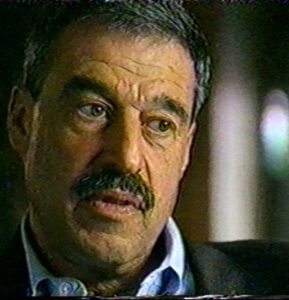
- “We have one of the worst refugee crises of modern times — we have hundreds of thousands of people [from Rwanda in DR Congo] — one need not quibble over numbers, but all of us saw the camps — we know there are hundreds of thousands of people formerly supported by all of us as wards of the international community who’ve gone missing and are without food or water now for three weeks from this sector. … [we] must decide to go ahead more aggressively or we’ll really have written off substantial numbers of people to certain death.”
- “We spend far more responding to crises than we would have spent preventing them.”
- “You’ve got to be sure that you don’t get killed in the semifinals.”
- “Our job is not simply to report what we see, but to force those who can act to do so.”
- “Our enemies were not the Viet Cong… our enemies were the Koreans and the Americans and the South Vietnamese who didn’t like what we’d done.”
- “Everybody [in the US Government] reported [only] success up the chain of command… so it was very hard for the senior Americans [officials] to know what was really happening.”
- ”Many experts agree that a force of just 5,000 peacemakers could have saved hundreds of thousands of lives in Rwanda in 1994.”
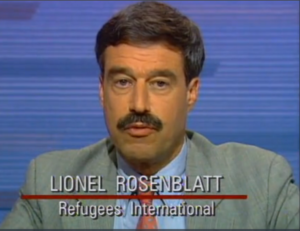
- “While the international community is focused on Bosnia, little attention is paid to Burundi, a country that is close to exploding into a frenzy of killing that would dwarf the carnage of the Balkans. The United States should supply logistical and financial backing and solicit troops from other countries, including African nations, such as Botswana and Zimbabwe. The mission: to protect the moderate central government and the operations of foreign relief organizations.”
- “When the United States leads, others follow; when it hesitates, others find reasons to hesitate as well.”
- “Because of the funding shortfall, in beleaguered Bosnia meager rations are now being cut by half. In Croatia, the UNHCR has been forced to cut back drastically on support for the 600,000 Bosnian refugees there. … strong U.S. leadership is required to sustain a relief effort that must quickly resume feeding [to avert] the terrible precedent of permitting the remainder of Bosnia to be starved into submission.”
- “The difference between acting now and acting later is measured in lives.”
- “My life has always been dictated by strange, unpredictable circumstances.”
- “You become a crusader for the underdog. And that’s much more satisfying than going to diplomatic functions and having high titles.”
- “I realized that if I ever have to go on the run again, the quickest way to change my appearance is to have a mustache to shave off.”
Lionel was famous for hard-hitting one-page fax sheets specifying 5-to-10-point plans for immediate action to solve emerging problems.
This box below is from the 1996 Annual Report of Refugees International:
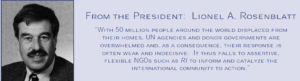
His leadership was moral alertness: refusal to let distance, numbers, or diplomatic protocol numb the conscience. He was part of a generation that built the modern humanitarian system, but his particular gift was persistence without cynicism.
Selected quotes by others about Lionel:
“Lionel was a lion hearted and compassionate advocate for refugees and saved so many lives because of his commitment.” – Patricia Frye Walker
“He was a walking soundbite, able to eloquently and persuasively articulate why aiding others was beyond a moral imperative but of importance for national security at any time. He had to have one of the world’s best rolodexes. There was almost no one in the humanitarian space he could not get on the phone. I recall fondly seeing firsthand Lionel’s willingness to forcefully rattle cages and go out on a limb for the sake of those in need. I was in the room at the Orchid Hotel in Bukavu when he was being interviewed by the Washington Post about the ongoing civil war in what became the DRC. During the interview he called for the U.S. Ambassador to Rwanda to be recalled to Washington and read-in on the current US position on the war. The reporter asked Lionel if he really wanted to go on record for saying this. Lionel’s response, “‘You can !@$%ing print it.’ It made the article.” – Kirkpatrick Day
“He was a giant.” – Ellen Frost
“Lionel was a powerhouse: loud, bold, principled and fearless. He fought tirelessly for refugees and their human rights. I began my career in the humanitarian sector at Refugees International and Lionel modeled purpose and ferocity in a way that emboldened me to never shy away, to always speak up, to ask the tough questions and be relentless in the pursuit of solutions. So many of us became better advocates and allies because we had the chance to learn from him, to argue with, be challenged and encouraged by him.” – Joung-ah Ghedini-Williams
- “Even then he was investing in the next generation of advocates imploring a multilateral organization in which he strongly believed but pushed daily to hold up the 1951 convention and the foundation of international refugee protection.” – Kelly Clements, Deputy High Commissioner of the United Nations High Commissioner for Refugees
-
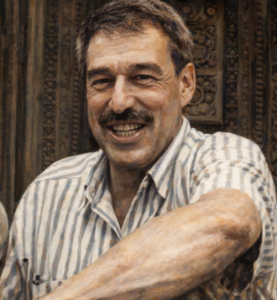
“Lionel Rosenblatt, who led the refugee section [in Cambodia] was incredible, a real dynamo on this disaster. He would call me from a remote area to report that one refugee was being mistreated… He had that unique ability to care as much for one as for a thousand.” – Ambassador Morton Abramowitz
“At that time, Lionel had very little experience in Laos and almost none with Hmong at the beginning, before ‘75, because his experience was in Vietnam. But he became extremely knowledgeable and very involved, and the key player in all this was Lionel. He was the refugee coordinator, so—and very articulate. The refugees could not have had a better advocate for them. And this was within the State Department, so it made a big difference.“ – Dennis Grace
“The enumeration of the sheer volume of his accomplishments is almost overwhelming. It is impossible to convey in words, though, his energy, passion, and selfless dedication to the refugee cause.” – Michael Eiland
“Lionel could figure out how to get around problems. When I needed to figure out how to get rid of landmines in my camp, he got me a landmine detector. He found people. He had a huge contact list; he knew people, he raised money for Refugees International. It had almost been falling apart; he really rescued it. He spoke straight forward and testified often to Congress. This small group made big changes in the international system. People trusted him. I went out to his Llama farm in West Virginia before he took the job at RI.” – Dr. James Cobey
“He was so insightful and so relentless. He was a magnificent person to witness and work with. He was always looking for evidence of wrongdoing by whoever cast the characters in that. He was in there all the time holding up a vision of themselves to themselves and fighting for refugee rights.” – Don Krumm
“I think without Lionel Rosenblatt we wouldn’t be here” – Lee Pao Xiong
“Lionel had three key components of an effective humanitarian advocate — passion, smarts, and heart — and he offers all of us a model of a life well-lived.” – U.S. Assistant Secretary of State Eric Schwartz
“He did a great job leading meetings at the Burundi Policy Forum in the mid to late 1990’s.” – Margaret Zeigler
“Whenever he appeared, it was to encourage people towards engagement, participation, solutions. The message was always clear: we can and must do better. Lionel Rosenblatt was one of the handful of giants that influenced my career. Just the right suggestion or correction at just the right time, typically without preamble, steered me to better helping others. He wasn’t great at following the status quo and, yeah, I loved that”. – Bill Hyde
“He seemed like a bulldog, a pit bull even, pressing one administration after another to do the right thing on humanitarian issues.” – John Prendergast
“Rosenblatt displayed special empathy for ethnic minorities whose fates were largely regarded as collateral damage. These included the Hmong hill-tribe minority in Laos, who served as proxy soldiers for the U.S. in its “Secret War” to support a pro-Western government against the communist Pathet Lao. – Washington Post
“Lionel’s influence extended well beyond the organization itself. His relationships and advocacy helped connect policymakers to the realities on the ground in conflict zones. Notably, his role in bringing Richard Holbrooke into besieged Sarajevo became part of a chain of events that would later influence U.S. engagement in Bosnia and the eventual Dayton Peace Accords – a powerful example of how principled action can reverberate at the highest levels of policy.” – Refugees International
“His working style as head of Refugees International was to visit areas where conflict was creating refugees and publicize the plight of these individuals not only in Southeast Asia, but the former Yugoslavia, Russia, and Africa, often to the irritation of authorities in the host country and in the United States. His advocacy more than once produced news coverage of events that otherwise might have been overlooked. “Harassing” governments was the term Dick Holbrooke used in his book To End A War about Rosenblatt’s style.” – Legacy.com
Other readings: Numerous other obituaries provide a chronological litany of his career postings and involvement in different crises.
https://www.jstor.org/stable/40209567
Humanitarian Emergencies: Ten Steps to Save Lives and Resources” (1995)

