

The relationships between people and urban wildlife here are shaped by histories and traditions that deserve their own literature, their own frameworks, their own attention.
Not long ago, Bengaluru had a different identity. People called it the Garden City, a place of wide, tree-lined roads, quiet lakes, and a climate so gentle it earned the nickname Pensioners’ Paradise. That city still exists in the memories of older residents, in photographs, and in the stories people tell when they are feeling nostalgic. But it is harder to find on the ground.
The Bengaluru of today is one of the fastest-growing cities in Asia. An IT boom, a construction surge, and decades of infrastructure expansion have come at a steep cost: the city has lost close to 90% of its green cover. Lakes have been filled in and built over. Large avenue trees have been cut down for road widening. Parks have shrunk or disappeared entirely. The wildlife that once made this city extraordinary, such as its birds, its reptiles, its small mammals, has now had to contend with a landscape that is increasingly concrete and fragmented.
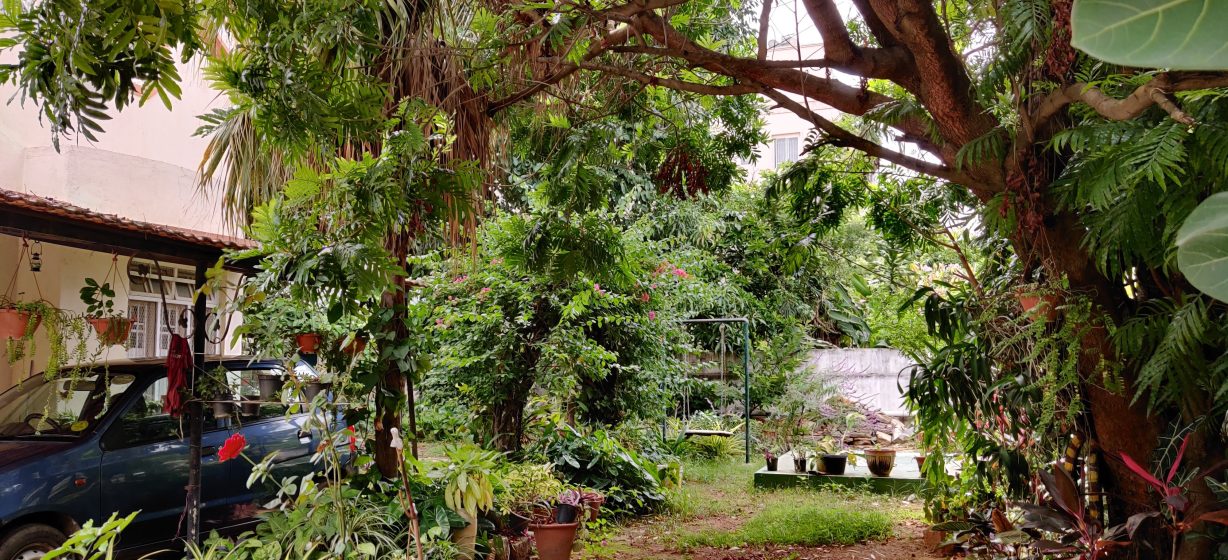
And yet, something remarkable is happening behind the compound walls of homes across the city. In backyards, rooftops, and the narrow strips of soil between buildings, people are keeping gardens. And those gardens, it turns out, are far more than personal hobbies. They are wildlife refuges. They are the last pockets of green in neighbourhoods that have little else to offer.
The people tending them are the ones who determine what these spaces can be. How they feel about the animals that show up, what they are willing to share their space with, how their cultural beliefs and personal histories shape their relationship with urban wildlife, and whether any of that translates into the way they garden. This is what I wanted to understand when I began this research.
A gap in the literature — and a gap in our cities
There is a growing body of research on urban gardens and biodiversity, much of it from cities in Europe and North America. Studies from the UK, for instance, have shown that private gardens collectively cover more land than all the nature reserves in the country combined. That is a remarkable number, and it has rightly drawn attention to the potential of domestic green spaces as conservation tools.
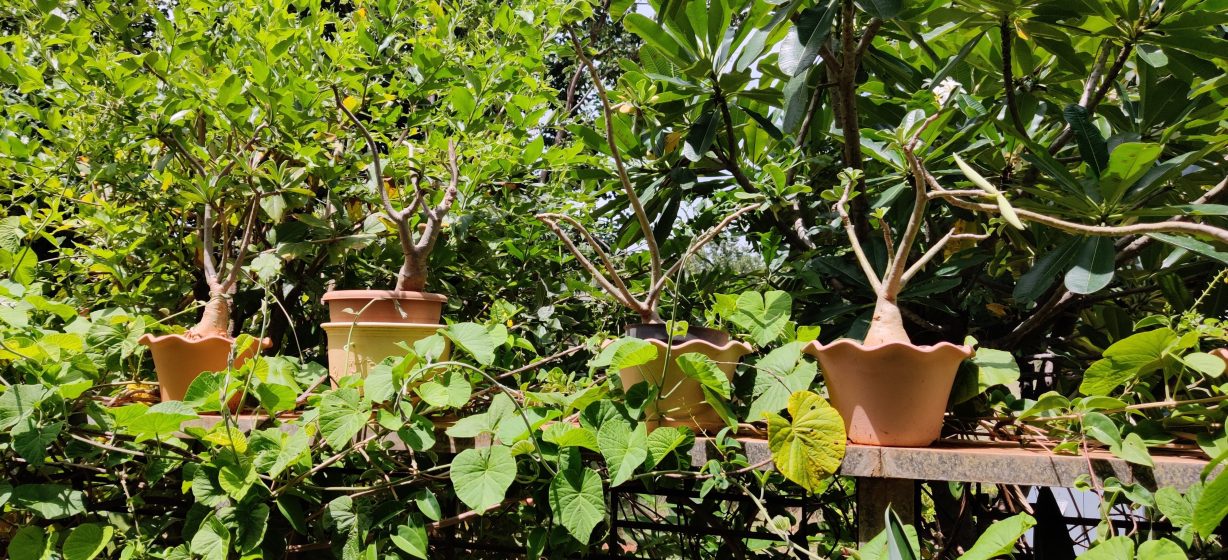
But very little of this research exists for cities in the Global South. In places like Bengaluru, where the relationship between people and urban wildlife is shaped by entirely different cultural histories, different economic pressures, and different kinds of biodiversity. When I looked at the existing literature on urban home gardening in India, it was sparse. And the specific question I was interested in– how do people’s perceptions of the wildlife in their gardens influence the garden itself as habitat — had barely been touched.
That gap mattered to me, for a practical reason. In a city like Bengaluru, where traditional large green spaces are disappearing, and where wildlife has nowhere to go except the fragments that remain, the question of whether home gardens can support biodiversity is not only academic. It is also urgent. And the answer depends almost entirely on the people who own and manage those gardens.
So, I set out to ask them directly.
What I asked, and what people told me
The study focused on home gardeners in Bengaluru. Through interviews and surveys, I explored three connected questions: What wildlife were people seeing in their gardens? How did they feel about it? And did those feelings translate into choices about how they gardened?
Gardeners reported seeing a remarkable diversity of wildlife. They reported seeing over 20 species of birds alone, plus butterflies, bees, reptiles, and small mammals. To put that in context: the average Bengaluru resident, living in an apartment without a garden, might recognise five bird species around them.
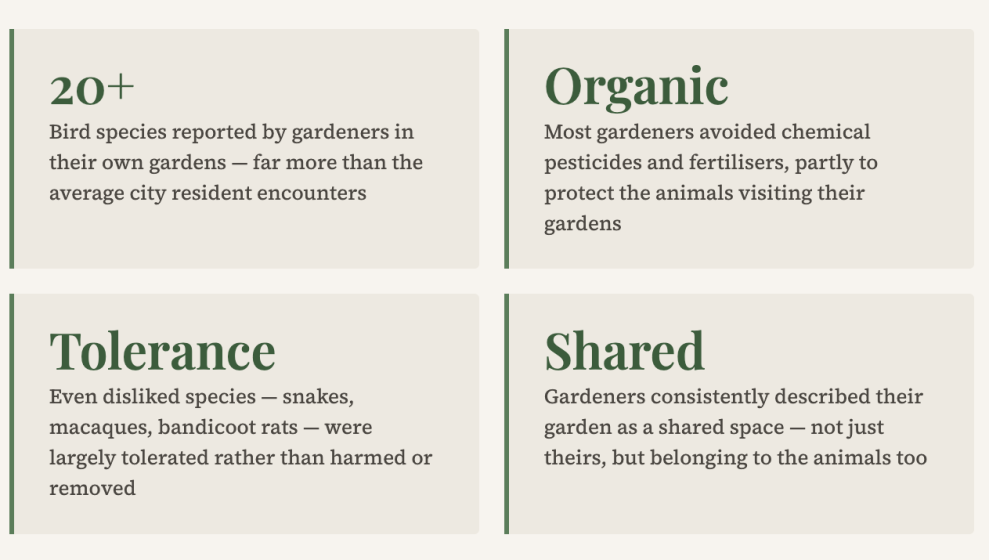
Most of the gardeners loved it. Birds, butterflies, and bees were universally welcomed. Feeders, baths, and artificial nests appeared in garden after garden. People told me they had stopped using pesticides not just for their vegetables, but because they did not want to harm the insects and birds that visited. The garden, for many of them, had become an ecological project as much as a personal one.
What surprised me most, though, was the tolerance people extended even to animals they found difficult. Snakes are a genuine concern in Bengaluru — the city is home to four of India’s most venomous species. And yet, most gardeners who encountered snakes did not immediately call a snake catcher. They told their neighbours. They warned their families. They gave the snake time to move on. One respondent described finding a cobra in the garden and simply choosing to avoid that part of the garden for a few days.
Macaques raided vegetable patches. Bandicoot rats dug up soil and damaged plants. These were not welcome guests, exactly. But the prevailing attitude was something I would describe as principled tolerance. There was an acknowledgement that these animals had no other place to go, and that a garden in a city like Bengaluru had a kind of responsibility to them.
Culture, knowledge, and the act of paying attention
Attitudes toward wildlife are never formed in a vacuum. In Bengaluru, they are shaped by a mix of ecology, culture, and history, and the research reflected all of it.
Cultural associations played a significant role. Snakes, for instance, occupy a complex place in South Asian cultural imagination. The cobra is revered in Hindu mythology, linked to deities, associated with protection. At the same time, it is feared as lethal. Both of these things were true for respondents in this study, sometimes simultaneously, in the same person. Owls were described by some as signs of wisdom and by others as omens of misfortune. Bats were often viewed with suspicion, as harbingers of bad luck, and a few gardeners admitted to having removed trees from their gardens to discourage bats from roosting.
These cultural narratives matter enormously for conservation, because they shape behaviour in very direct ways. A person who considers a cobra sacred is unlikely to kill one, even if they are frightened. A person who associates bats with misfortune may inadvertently eliminate a roosting site that has stood for decades.
Gardeners also displayed something I found genuinely moving: they were paying attention. Several respondents noted a decline in sparrow sightings over the years. They attributed this to construction, to the loss of trees, to the noise and lights of an expanding city. These were not ornithologists. They were people who had been watching the same trees for thirty years and had noticed something was missing. That kind of informal ecological monitoring is undervalued, and it is one of the things this study made me want to take more seriously.
What this means — and what we might do with it
I want to be honest about the limitations of this research. The gardens I studied represent a particular slice of Bengaluru. It represents households with the space, resources, and interest to maintain a garden. That is not everyone. The city’s informal settlements, its apartment blocks, and its dense neighbourhoods contain their own relationships with urban wildlife, and they were not captured here.
But even with those caveats, I think the findings point to something important. Urban home gardens are not just decorative. They are functioning ecological spaces acting as stepping stones across a fragmented landscape, refuges for species that have nowhere else to go. And the people who manage them are already, in many cases, making conservation decisions, even if they would never describe it that way.
That feels significant to me. So much of conservation communication is built around the assumption that people need to be taught to care about nature. What this study suggests, at least in this context, is that many people already do care and that caring is practical, culturally grounded, and translated into real choices about how they manage their land.
What might help, then, is not more persuasion but more support. Workshops on biodiversity-friendly gardening. Better information about which plants attract which animals. Community networks like the beekeeping and snake-awareness workshops some respondents had already organised spontaneously, which allow people to share knowledge and normalise the presence of wildlife in residential spaces.
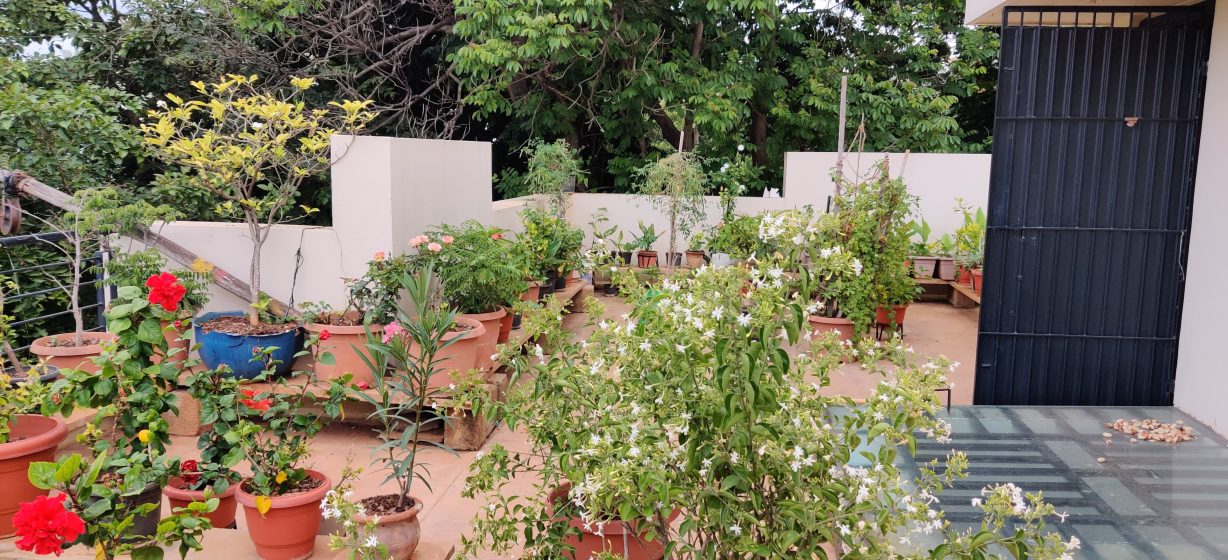
For urban planners and architects, the message is straightforward: when designing new residential developments, do not treat the garden as an afterthought. The small green strips between buildings, the compound plantings, the shared courtyards, these are not amenities. In a city like Bengaluru, they are infrastructure.
And for researchers, including myself, I think this study is a reminder that the Global South has its own ecological and cultural logics, and that we cannot simply transpose findings from Sheffield or Seattle onto Bengaluru. The relationships between people and urban wildlife here are shaped by histories and traditions that deserve their own literature, their own frameworks, their own attention.
When I think about the gardeners I spoke with — the person who gave a cobra space to move on, the one who noticed the sparrows disappearing, the one who described her garden as something she was giving back to the city — I feel something that is not quite hope, but is close to it. It is more like recognition. The city has lost so much. But in these small, tended spaces, something is still being held.
That is worth understanding. And it is worth protecting.
Varsha Bhaskaran
Chicago

