

June 9, 2026
The question people rarely ask about refugee settlements is whether the people living in them can truly thrive.
Survive, yes. Receive aid, yes. But build something? Own something? Lead something?
Many believe that economic opportunity is too fragile to build on. That the divide between refugee and host communities runs too deep to bridge. That dignity is something people get to think about once the bigger problems are solved.
But at Search for Common Ground, we know something different.
That assumption — that refugee life is defined by waiting rather than doing — is exactly what three women-led groups in Hagadera, Kenya disproved.
Dignity isn’t what comes after stability. It’s what supports it.
The idea was simple: teach women from refugee and host communities to make tie-and-dye fabric. Help them access a tool. See what they built.
With support, they set up small production units inside a shared compound.
What they built was far more than expected.
Basket weaving. Shampoos. Soaps. Fabric softeners. Incense. A full ecosystem of enterprise, created by women who took one opportunity and multiplied it into many. Income became consistent. Households became more stable. Women who once depended on others began making decisions — in their businesses and in their homes.
And then something harder happened.
Trust grew between refugee women and women from host communities. Two groups with every reason to remain divided chose cooperation instead. Shared economic goals dissolved old suspicions.
Today, their products travel hundreds of kilometres, reaching markets in Garissa, Wajir, Mandera, and Tana River.
That’s the proof.
Give women the tools, the resources, and the space to work alongside each other — and they don’t just build businesses.
They build peace.
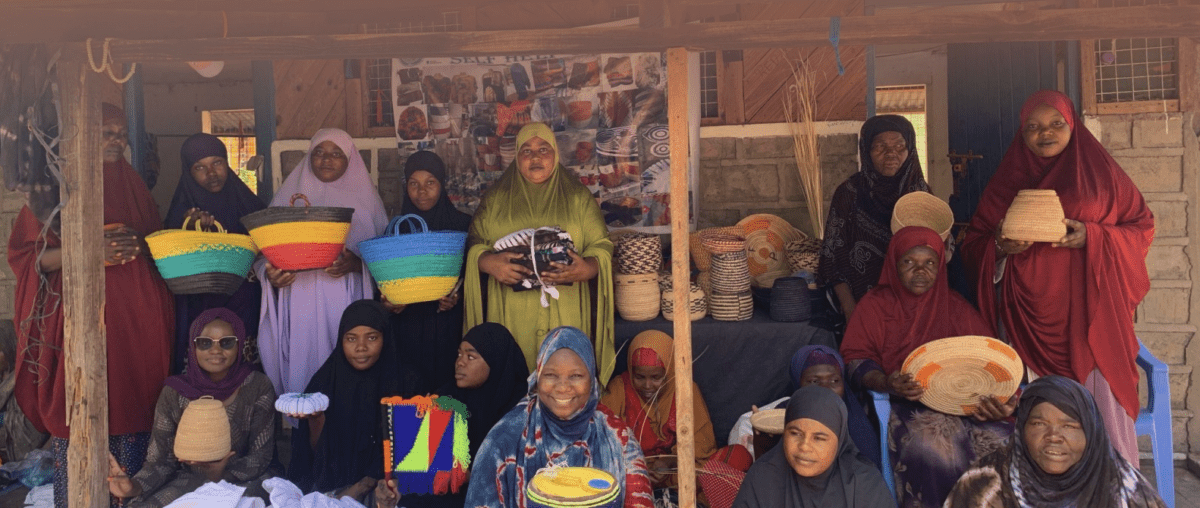
In Hagadera, it looks like colorful fabric drying in the sun. Baskets being woven. Women counting their earnings and planning for tomorrow.
Together.

