

Indigenous lands are a bastion against climate change.
While Indigenous Peoples account for roughly five percent of the world’s population, they steward more than a quarter of Earth’s land. Their territories are strongholds for rare wildlife and hold stores of carbon in ancient old growth, locking it away so it can’t contribute to climate change.
But why? And how? For all the attention paid to Indigenous knowledge in certain conservation circles, the specific practices that make it so effective — the rules, the rituals, the relationships between people and land built over centuries — are rarely examined up close.
In a new study published today in Nature Humanities and Social Sciences Communications, Conservation International scientist Sushma Shrestha Sangat and her team interviewed Indigenous experts from 43 communities across six continents — seeking to build a detailed portrait of Indigenous knowledge in practice.
What they found across dozens of distinct cultures are belief systems and practices shaped by distinct landscapes — deep relationships with nature so long and so specific that they became inseparable from identity itself.
“The knowledge only exists because the people and the land are still bound together,” Shrestha Sangat said. “Lose one, and you lose both.”
That, Shrestha Sangat said, is the point most often missed. “We talk about Indigenous knowledge like it’s a resource — something we can document, extract, apply,” she said. “But it lives in the doing. It is, at its core, culture.”
The study itself was designed by a research team that is majority Indigenous. Allie Goldstein, a co-author and scientist at Conservation International credits this with opening doors — and conversations — that might otherwise have remained closed. In a field where peer-reviewed journals rarely publish research on traditional knowledge, they pushed to get it into the scientific literature anyway. Perhaps most tellingly, the people they spoke to are referred to throughout not as subjects or informants, but as experts.
“People told us they appreciated that,” Goldstein said. “It mattered to them.”
What those experts shared was remarkable in its consistency — and its urgency.
Across the communities studied, the team found relationships with nature expressed through unique empirical systems — built on observation, hypothesis and adaptation over millennia.
The ghost forest
In the forests of Cambodia, the Kuy people have set aside a tract of old-growth trees they call the ghost forest — the place, in their tradition, where the dead gather. No one harvests there. No one builds there.
It is also, scientists have found, one of the best-protected forest reserves in the region. The Kuy didn’t plan it that way. They were just preparing their dead for a journey into another plane of existence.
“This wasn’t necessarily about conservation,” Shrestha Sangat said. “It was about continuation of a central belief system — nature is just an inherent part of that worldview.”
This pattern repeated itself everywhere Shrestha Sangat looked. In Ecuador, the Shuar maintain sacred sites at waterfalls where ceremonies are performed. In Malaysia, the Dusun keep forest areas set aside for ritual plants. In the United States, the Potawatomi protect stands of maple — secret areas known only to the community. Across 90 percent of the Indigenous communities documented in the study, the researchers found land set aside for cultural or spiritual reasons — land that, as a result, has also conserved natural ecosystems.
Rules of the river
Water is life, for everyone.
But for communities who live closest to nature, water is not a utility to be taken for granted. It must be monitored, understood and protected — and the consequences of failing to do so are immediate.
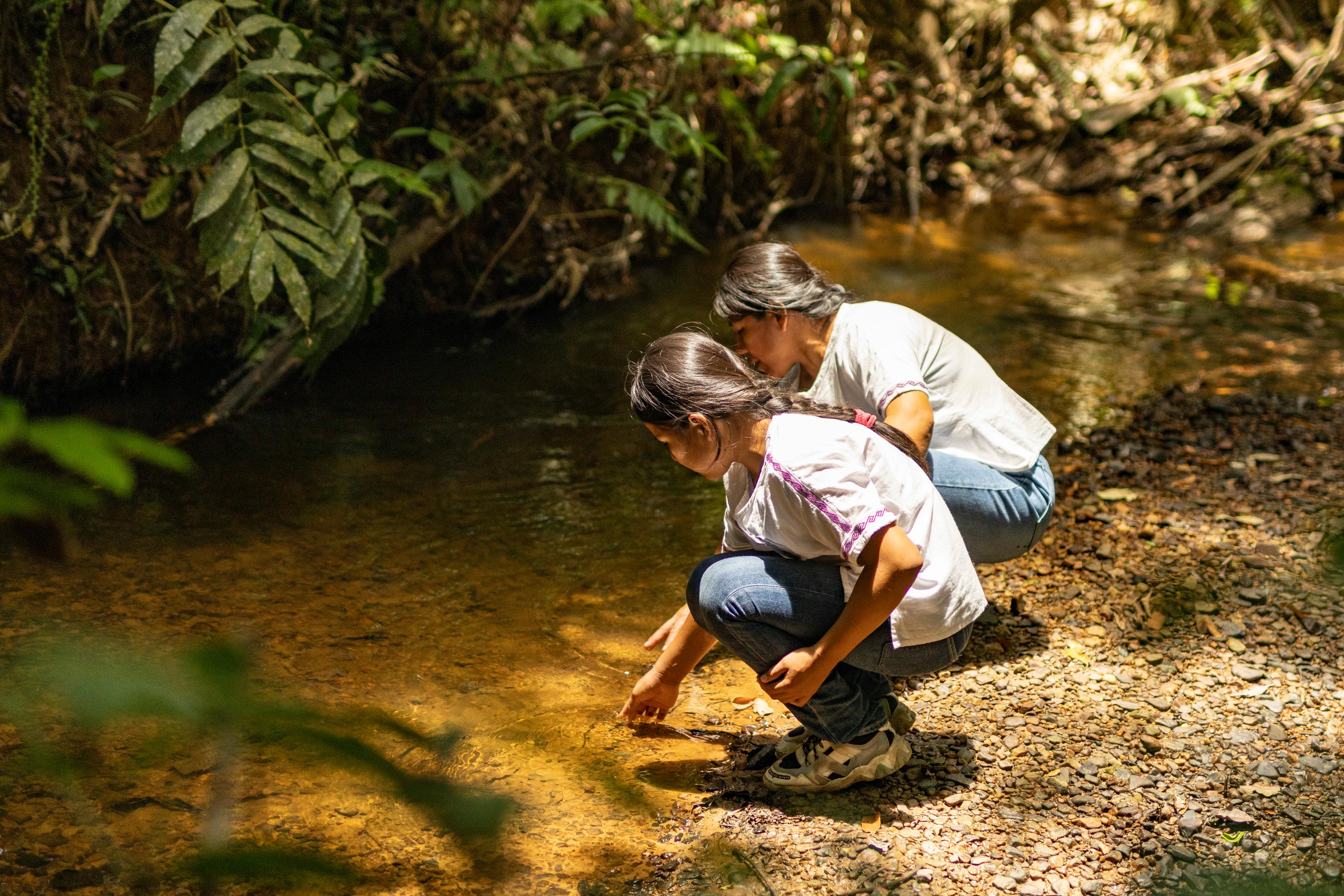
In the Ecuadorian Amazon, the Kichwa maintain buffers up to 500 meters along their rivers — zones where nature, as one community member put it, “is allowed to regenerate.” Trees along the riverbank are never felled. In Bolivia, the Tacana have arrived at the same conclusion, prohibiting logging along rivers to protect their water supply.
This is precisely the kind of knowledge that gets lost when decisions about water are made from a distance. The Das Mortes River in Brazil passes through six Xavante Indigenous territories. It already has two hydroelectric power plants along its course, with more proposed. Under Brazilian law, only communities within 40 kilometers of a dam are considered affected. The Xavante know otherwise. “The river passes through our territories,” one community member said. “The impacts do not stop at 40 kilometers.”
Forest guardians
Across the communities studied — in Bolivia, Guyana, Indonesia, Mexico, Peru, the Philippines and Venezuela — one practice appeared again and again: sending guardians out to monitor the land.
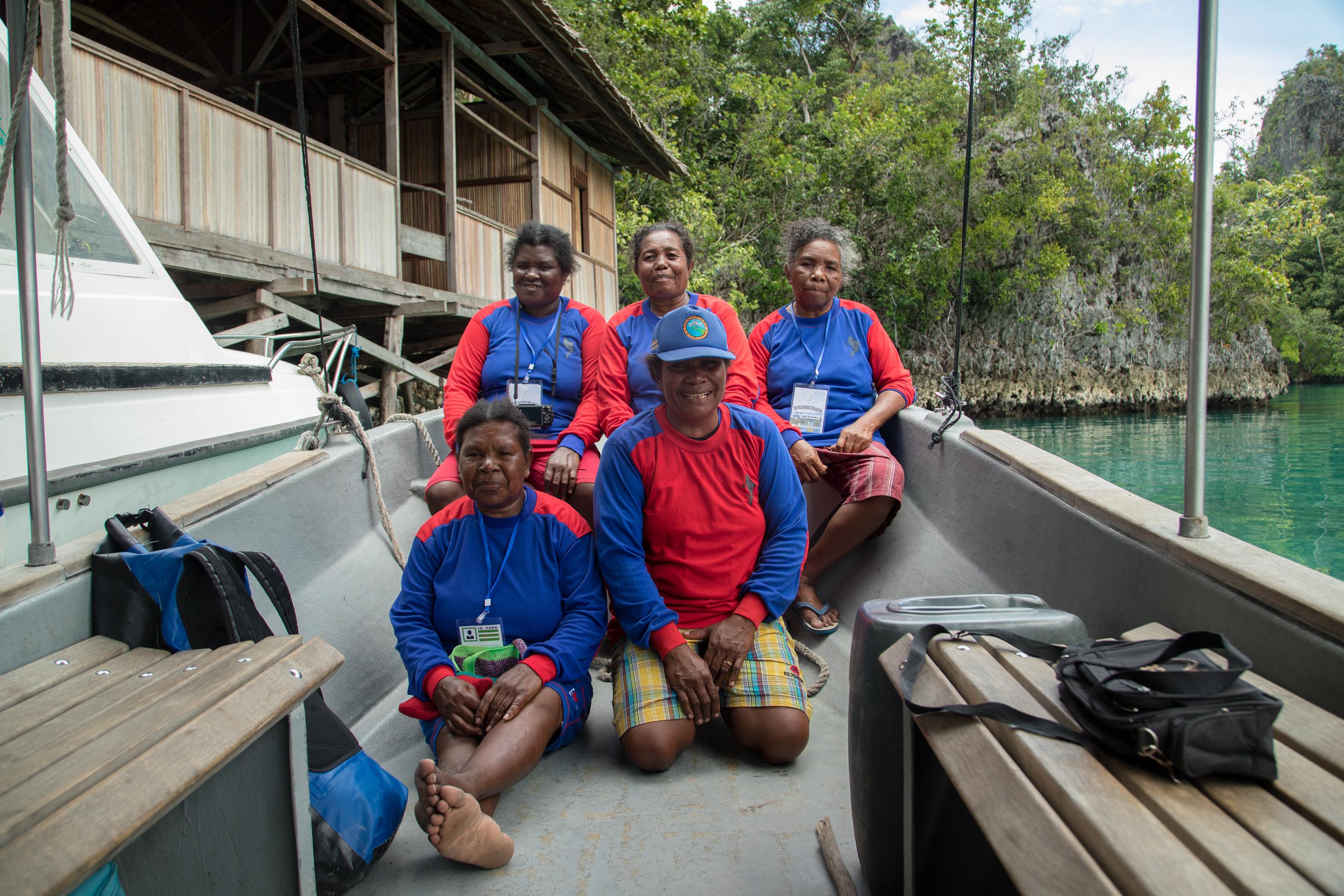
In Bolivia, the Chiquitano patrol their territory on foot, bringing what they find back to community assemblies. Illegal logging, signs of encroachment, changes in the landscape — nothing goes unnoticed or unreported. They are now training to fly drones. Shrestha Sangat sees this kind of integration as significant.
Indigenous communities, she has observed, are increasingly combining ancestral ways of tracking changes in weather and climate with modern tools — barometers, water gauges, social media.
Shrestha Sangat notes that territorial monitoring is also a form of data collection. The Yukagir of Siberia observe a silence near the water each July, when the salmon spawn — a practice that has sustained the fishery for generations. In Malaysia, the Dusun read the river as a warning system. When a certain plant suddenly sprouts, the monsoon is coming. When particular animals disappear from the riverbank, a flash flood may be close behind.
“Indigenous monitoring is linked to direct and intimate observation of nature,” said Candido Pastor, a co-author who leads Conservation International’s Amazonia program. “It allows communities to continuously learn and adapt — to see changes and respond to them before they become crises.”
Patterns, interrupted
Every single Indigenous community interviewed — all 43 of them, across every habitable continent — said climate change was affecting their lives.
“What the traditional calendar used to look like, when we knew that it would rain at one point, then it would be sunny, then we would sow, the crops would grow, then we would harvest,” said one A’uwe Uptabi community member in Brazil.
“These days are over. It’s almost impossible to follow this process.”
In Thailand, warming highlands are bringing mosquitoes — and with them, malaria and dengue — into communities that have never faced them before. In Mexico, floods are taking crops from riverbanks where people have farmed for centuries. In Guyana, the Wapichan people describe watching the small signs they once relied on — the behavior of ants before rain, the movement of animals before a storm — become unreliable.
“People cannot rely on traditional knowledge anymore,” said one Wapichan community member. “Because traditional knowledge was based on a pattern, something that you saw every year. Now that pattern is gone.”
When a pattern is interrupted, so is the knowledge built around it, Shrestha Sangat says.
“This is what I mean when I talk about cultural survival and ecological survival as the same project,” she said. “The land and the people who tend it have shaped each other over centuries. You cannot protect one without protecting the other.”

