

“I love how this program helps bring real-world science into my classroom and makes students part of the process of caring for lake sturgeon and restoring their population in the Detroit River.”
What if there were an educational program that could ignite a sense of wonder in middle school students, bring science to life in unforgettable ways, and nurture a stewardship ethic? That is precisely what the Sturgeon in the Classroom program is doing. It is transforming curiosity into connection, and connection into care for the natural world.
Historically, science was the business of scientists, and laypersons did not speak the language. Therefore, laypeople were not often involved. But today, more scientists are turning to citizen science to involve the public in the scientific process. Its goals are to empower people from all walks of life to contribute meaningfully to scientific research and monitoring, improve civic understanding of both science and the scientific method, further ecosystem-based management, and help develop a stewardship ethic. The aim is to make citizen science so compelling that it leads to a transformative moment that inspires individual respect, reverence, and stewardship of ecosystems.
History of Lake Sturgeon
French explorers and voyageurs in the late 1600s and early 1700s described the waters from Lake Huron to Lake Erie as alive with lake sturgeon. These ancient fish ― some living 150 years and growing to more than seven feet ― once moved through the Great Lakes in numbers that are almost unimaginable today. By the 1800s, lake sturgeon was found throughout all five Great Lakes, but they were especially abundant in the corridor from Lake Huron to Lake Erie, where they were considered one of the dominant species. But that abundance did not last.
By the early 1900s, the lake sturgeon fishery was collapsing under the weight of overfishing. Commercial harvests that once measured in the millions of pounds plummeted. As the 20th century progressed, the pressures mounted: dams blocked historic spawning runs, pollution degraded water and sediment quality, and habitat loss accelerated. By mid‑century, lake sturgeon in the Great Lakes were nearly extirpated ― a species pushed to the edge of local extinction.
Today, Michigan’s lake sturgeon population is estimated at only about 1% of its former abundance. Recognizing the severity of the decline, the State of Michigan, the Province of Ontario, and the American Fisheries Society have all designated lake sturgeon as a threatened species. Yet, the story is no longer only one of loss.
Over the past 23 years, U.S. and Canadian partners have constructed eleven spawning reefs in the Detroit River, deliberately engineered to give sturgeon and other rock-loving spawning fishes a fighting chance. These reefs mimic the rocky substrates sturgeon once relied on, and monitoring shows that this species is returning to use them. Each reef represents a small but meaningful act of repair ― a sign that with persistence, science, and cross‑border cooperation, even a species pushed to the brink can begin to recover.
Sturgeon in the Classroom
About 20 years ago, the Black Lake Chapter of Sturgeon for Tomorrow and the Michigan Department of Natural Resources brainstormed a program that would educate, engage, and mobilize our next generation of conservation stewards through a program called Sturgeon in the Classroom. To formalize this partnership, these two organizations signed a memorandum of understanding. Soon, the U.S. Fish and Wildlife Service, Native American tribes, and the University of Windsor’s Freshwater Research Ecology Centre joined the partnership to provide juvenile sturgeon to schools that would raise them and return them to their native waters. Schools also agreed to incorporate hands-on, place-based education ― learning rooted in a local place – to enlighten youth on the importance of conservation and stewardship for the ecosystem within which they live.
Since 2013, the Black Lake Chapter of Sturgeon for Tomorrow, the St. Clair-Detroit River Chapter of Sturgeon for Tomorrow, and three Native American tribes ― the Little Traverse Bay Band of the Odawa Indians, the Grand Traverse Band of the Ottawa and Chippewa Indians, and the Sault Tribe of the Chippewa Indians ― have participated in the Sturgeon in the Classroom program. Over these 13 years, 126 schools have participated in the program, engaging and inspiring nearly 20,000 students with hands‑on science and real‑world stewardship.
Schools are selected to raise juvenile sturgeon during the school year by Sturgeon for Tomorrow or the tribes. Each school must care for this prehistoric fish that was alive when dinosaurs walked the Earth. Further, participating schools must also incorporate hands-on, place-based education to enlighten youth on the importance of conservation and stewardship of local ecosystems. Eventually, the students release their sturgeon back into their native water as part of the sturgeon recovery effort.
“What inspires me most is seeing the excitement of students and teachers involved in the Sturgeon in the Classroom program,” said Jeremy Guc, manager of the Sturgeon in the Classroom Program of St. Clair-Detroit River Sturgeon for Tomorrow. “While the program currently limits the number of schools that can participate because of sturgeon availability, I would love to eventually see it able to grow, reaching more schools and engaging even more students. Every new classroom strengthens the next generation’s connection to our natural resources and helps build a deeper stewardship ethic.”
In the fall of 2025, Shumate Middle School in Gibraltar, Michigan, located along the lower Detroit River, was selected to be in the program and receive a juvenile lake sturgeon. Students are responsible for maintaining the tank, testing the water quality, and feeding the lake sturgeon. Shumate students named their sturgeon Bubbles. Near the end of the school year, the fish, now nearly seven inches long, was released into the Detroit River.
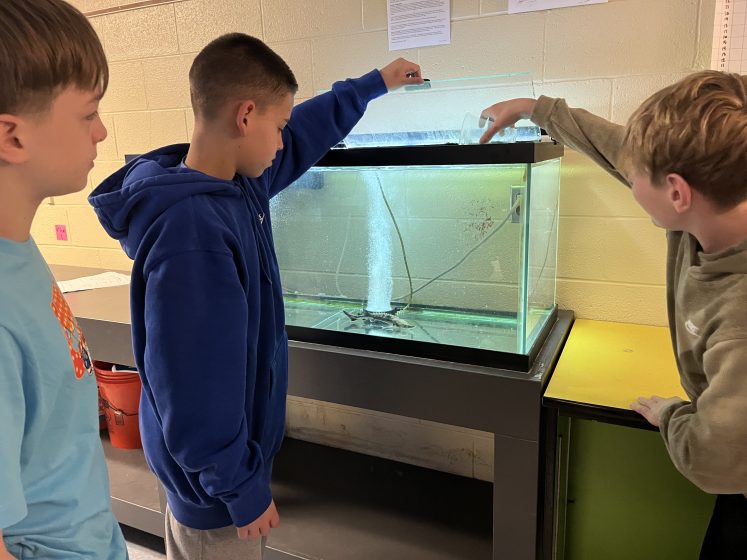
“I love how this program helps bring real-world science into my classroom and makes students part of the process of caring for lake sturgeon and restoring their population in the Detroit River,” said Jena Stamper, 6th and 7th grade science teacher at Shumate Middle School in Gibraltar, Michigan. “All my students are super excited about feeding Bubbles ― our lake sturgeon, measuring water quality parameters like ammonia, nitrate, nitrite, temperature, chlorine, hardness, and alkalinity, entering the data into a spreadsheet, and releasing Bubbles back into the river as part of an international sturgeon recovery effort.”
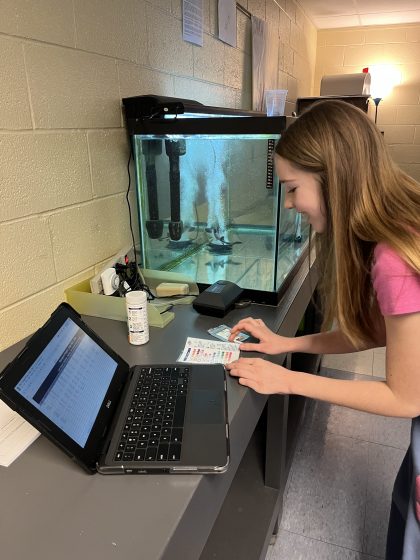
This project is a perfect example of place-based stewardship education where students learn about their local watershed and the threatened lake sturgeon, while contributing to local fisheries management through the fish’s release.
“It is very fun to watch Bubbles play in the air bubbles in the fish tank, watch Bubbles grow, and care for this fish,” said Reese Kerns, 6th grade student at Shumate Middle School. “I hope Bubbles grows big, explores the Detroit River, and helps the population recover.”
Compelling citizen science
Citizen science is a rapidly growing movement that has the potential to reshape the scientific and natural resource management landscapes. But for this movement to reach its full potential, it must do more than collect data. It must invite people ― children and adults alike ― to see themselves as part of an ecosystem rather than separate from it. When that shift happens, when someone feels that they are part of their local ecosystem, the experience can become transformative. It can spark respect and affection for their ecosystem and lead to a stewardship ethic.
Today, more than 80% of all U.S. and Canadian citizens live in urban areas, far from the daily rhythms of rivers, forests, meadows, wetlands, and wildlife. A recent study published in the journal “Earth” found that people’s connection to nature has declined by more than 60% since 1800 ― a dramatic change driven by urbanization, the loss of everyday nature experiences, and the degradation of ecosystems. This is not just an ecological problem; it is a cultural one. When people lose contact with nature, they lose the stories, relationships, and responsibilities that bind them to place.
That is why society urgently needs creative ways to reconnect people with the natural world, and in cities, to bring conservation into the places where most people live. We need a “citizen science spring,” a movement that rekindles curiosity, builds community, and inspires a civic stewardship ethic. Programs like Sturgeon in the Classroom show what is possible: when students raise a living creature, monitor its habitat, release it back into their watershed, and contribute to restoring a population of a threatened species, they begin to understand that science is not distant. It can be personal, relational (students co-producing knowledge with researchers), and alive. And this Sturgeon in the Classroom program has reached more than 20,000 students and many teachers since 2013. Simply put, the Sturgeon in the Classroom program is an elegant citizen science initiative because of its simplicity and explanatory power, which is helping develop a stewardship ethic in children.
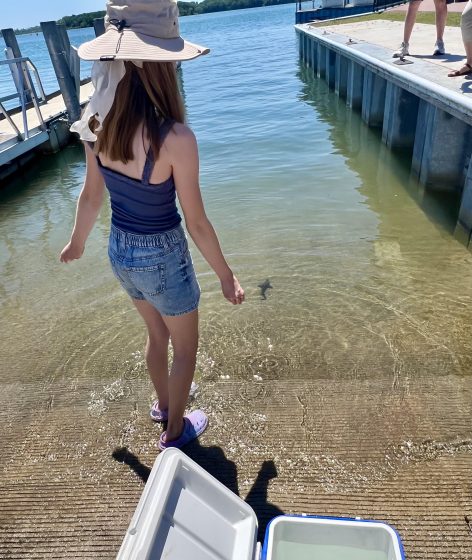
Aldo Leopold captured this shift perfectly when he wrote, “We abuse land (an ecosystem) because we regard it as a commodity belonging to us. When we see land (an ecosystem) as a community to which we belong, we may begin to use it with love and respect.” Citizen science, at its best, helps people make that leap ― from seeing nature as something “out there” to recognizing it as an ecosystem they are part of. And once that connection is restored, stewardship is much more likely to follow naturally.
John H. Hartig
Windsor

