

Editor’s note: “Heal our planet, protect our future”: six words driving a global movement to protect nature. Conservation International and our supporters are meeting the moment in an ambitious new campaign. In recognition of this campaign, Conservation News is spotlighting some of our stories and successes from around the world. Click here to make a gift and support this critical work.
Indonesia is one of the most ecologically remarkable places on Earth. Its 17,000 islands span a territory so biologically rich — from the Coral Triangle’s reefs to the deep-water channels of the Banda Sea — that scientists are still mapping what lives here. It is a place where the world’s largest animal migrates through waters barely charted, where critically endangered great apes live in lush rainforests and birds of paradise flaunt world-famous plumage.
Yet Indonesia also faces significant habitat loss, putting this irreplaceable biodiversity under constant pressure. Conservation International and its Indonesian partner, Konservasi Indonesia, are working across this vast archipelago to understand, protect and restore nature.
Here are three stories that show what’s possible.
Rare newborn whale shark sightings offer clues to a global mystery
In Saleh Bay, fishers working the night shift on traditional wooden lift-net platforms began noticing something strange in the lamp-lit water below them: tiny, pale, spotted shapes drifting just above their nets. They were whale sharks — but smaller than any anyone in the bay had ever seen.
At just over a meter long, the sharks fell within the size class of neonates — animals only a few months old. Only 33 such individuals have ever been recorded by science.
In a new study led by Konservasi Indonesia, scientists say these sightings offer the strongest evidence yet that Saleh Bay may be the world’s first known pupping and nursery habitat for whale sharks.
The findings were made possible by a citizen-science program Konservasi Indonesia has run in the bay since 2018, training fishers to document wildlife sightings, photograph sharks for identification and release bycatch safely. Their nightly observations turned out to be exactly the kind of data science needed most.
Read more here.
Tagging the world’s largest animal — from the sky
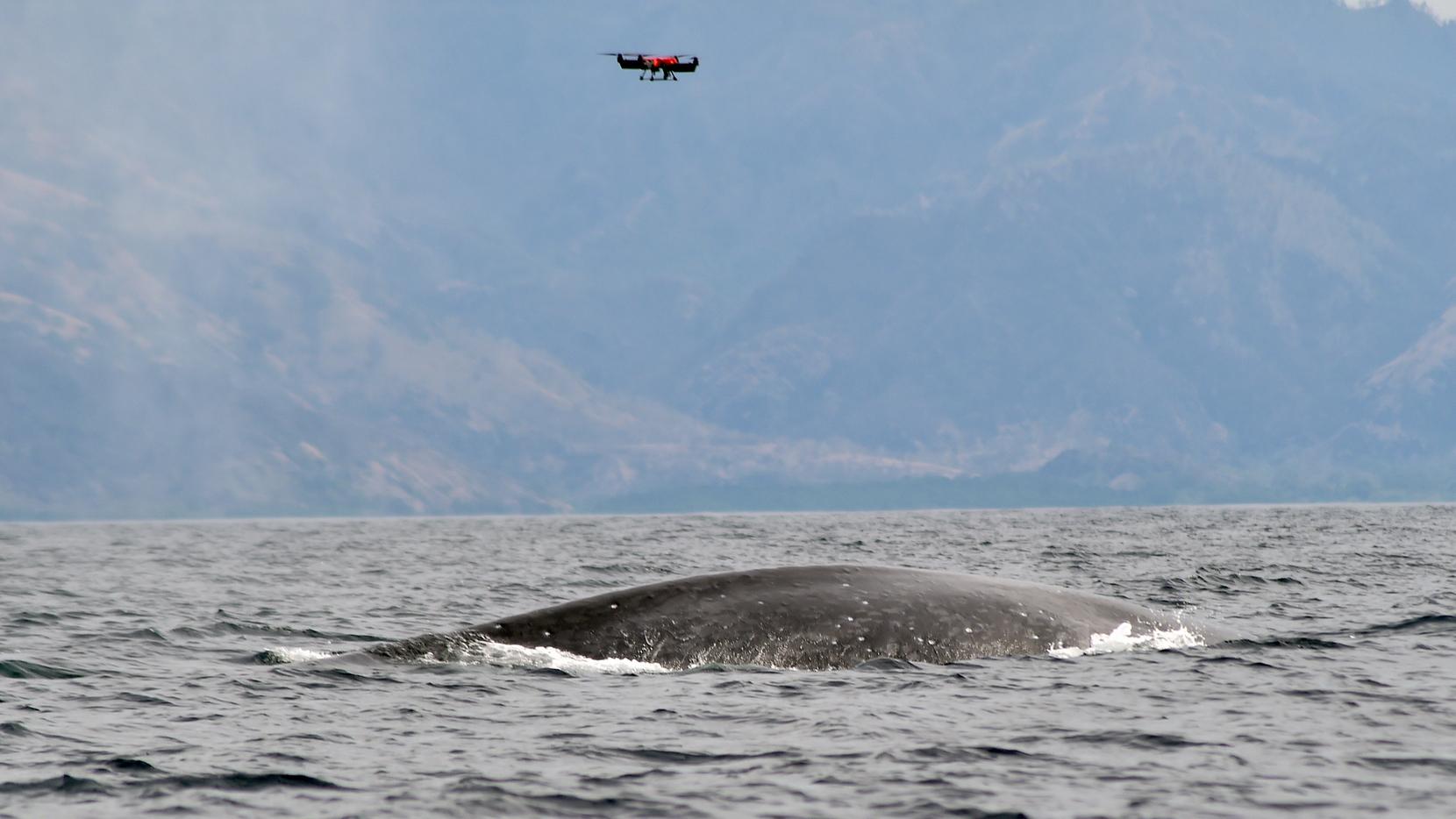
In the waters off eastern Indonesia, a small research team spent days watching blue whales surface and vanish on the horizon. They tried to tag one eight times. Eight times, they missed.
On the ninth attempt, marine scientist Iqbal Herwata stood on deck with a drone controller in his hands. He watched through a live feed as a pygmy blue whale surfaced below. He pulled the trigger. The crew, according to Herwata, jumped into the ocean.
The successful tag marked the first time a drone had been used to place a tracking device on a blue whale in open ocean — a technique developed in partnership with the Center for Whale Research in Western Australia and tested in the field by Conservation International and Konservasi Indonesia. Traditional whale-tagging methods require boats to chase animals at close range and fire tags from air guns; the new approach uses small, matchbox-sized LIMPET tags deployed from above, reducing stress on the animal and improving the quality of behavioral data collected.
Read more here.
More shrimp, more mangroves — and a new model for the industry
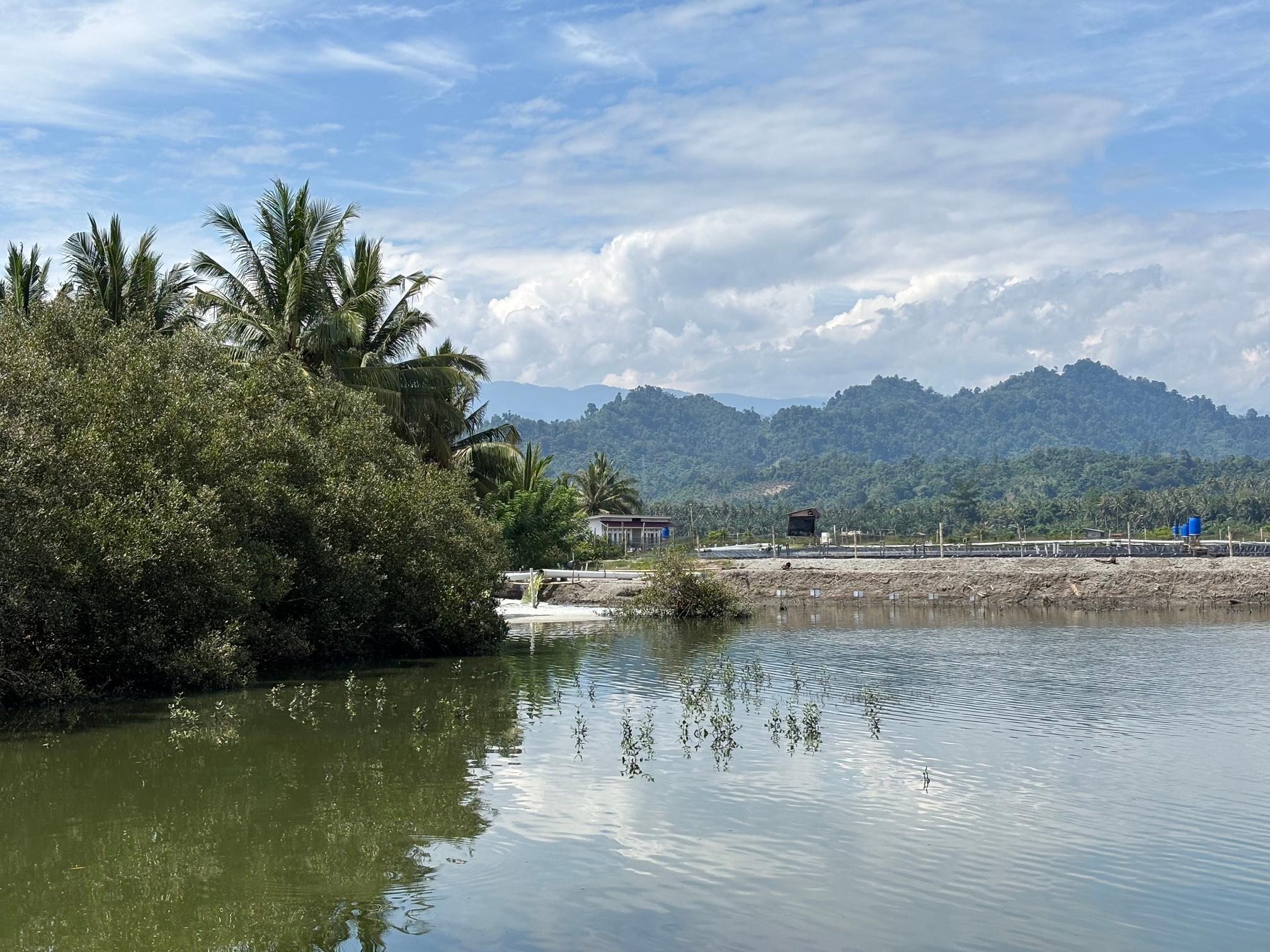
For decades, the story of shrimp farming has followed a familiar and devastating pattern: clear mangroves, dig the ponds and harvest what you can. It’s a boom-and-bust cycle that has pushed farmers to abandon depleted ponds and expand into some of the world’s last intact mangrove forests.
Now, in the coastal village of Lalombi in Central Sulawesi, Indonesia, a new chapter to the story is unfolding — one that includes more shrimp and more mangroves. Last summer brought the first harvest of shrimp raised using a new “Climate Smart Shrimp” approach pioneered by Conservation International.
“The equation is simple,” said Dane Klinger, who leads the organization’s Climate Smart Shrimp program. “We’re helping farmers grow more shrimp on less land, so that they can return the rest of their farms back to mangroves. It’s a shift that we think could disrupt the entire industry to make it not just more sustainable, but more productive and profitable, too.”
Read more here.

