

The effects of climate change shape everyday life for Zainab, a mother of three from a small, largely agricultural community called Tunga, in northwest Nigeria’s Sokoto state. Her family relies on income from her husband’s work as a farmer, which has become increasingly difficult in recent years. Changing rainfall patterns, increasing temperatures and declining agricultural productivity have increased economic pressures on their community.
Despite its direct impact on her, Zainab and women like her have been largely shut out of crucial decision making affecting the whole community, including how it manages its natural resources. All that began to change under International Alert’s Powering Peace through Climate Action (PPCA) project.
“We experience climate change in Tunga,” Zainab says. “The rain doesn’t come as much as it used to, and the heat is more intense. We experience changes every year, especially in terms of rainfall.”
Farmers who depend on predictable seasons are facing greater uncertainty. Water sources and seeds are in short supply, while limited access to markets continues to constrain their income. In search of fertile land for farming, they often engage in kurmi (a Hausa word meaning “migrate”) to neighbouring areas. By leaving their home communities behind, Tunga’s farmers face the risk of kidnapping and banditry during travel, and of not being accepted by other communities. It also means Tunga is left without some of its most active and productive young people.
Conflicts between communities have intensified, driven in part by increased competition over land and resources. Resolving disputes before they escalate has become a major challenge amid a wider context of violence and insecurity in the region. Traditional ways of handling disputes are often undermined by their lack of inclusivity, while state structures have limited reach into rural areas.
Prior to now I was not so active in the community, but now I’m active with my farm and I’m able to resolve conflicts through the knowledge I’ve gained.
Zainab relies on her husband’s income to feed herself and her children. A lack of economic independence and social barriers to participation in decision-making have limited her ability to improve conditions for herself and her community. Traditional leaders in Tunga have led the practice of ‘kule’, a cultural norm that prevents women from participating in social activities or decision making. Responses to the issues that affect her life – such as community development, climate adaptation and local conflict – have been decided largely without her involvement.
The PPCA project, however, has sought to bring women like Zainab together to change attitudes and gain the skills, knowledge and confidence to play a more active role in their community.
Working in partnership with the Jireh Doo Foundation, women and young people in Tunga have joined inclusive platforms designed to strengthen their participation in climate governance, agriculture and peacebuilding. Thirty women and young people have received training on climate change, climate-smart agriculture and Alternative Dispute Resolution (ADR). Participants have gained the knowledge and skills they need to understand climate-related challenges, contribute to community solutions, and manage conflicts peacefully.
For Zainab, the training helped her understand that communities can take practical steps to respond to environmental challenges. In particular she says that she learned about the impact of deforestation and importance of planting and keeping trees on the farms, as well as the damage caused by pollution and improper disposal of waste.
In communities where competition over resources can create tensions, the PPCA project also focuses on strengthening peaceful approaches to conflict management. The ADR training provided Zainab with practical skills to help resolve disagreements within her community. “Conflict can be resolved in different ways,” she says. “One can mediate between conflicting partners, and if the conflict is beyond you, you can take the matter to the village head.”
She soon applied her new skills when she encountered a dispute between community members. Intervening to ask what the source of the conflict was, she discovered it was an argument about money. She managed to help the parties understand the source of the disagreement and support them to find a solution to the problem. “I mediated amongst them until the issue was resolved and we all went our separate ways,” she says.
The changes facilitated by these groups are creating new possibilities. Members of the youth group are supporting farmers to test and share improved agricultural practices. After attending one of the workshops, the traditional leader of Tunga even started to advocate for the abolition of kule and allowing more equal participation in community activities.
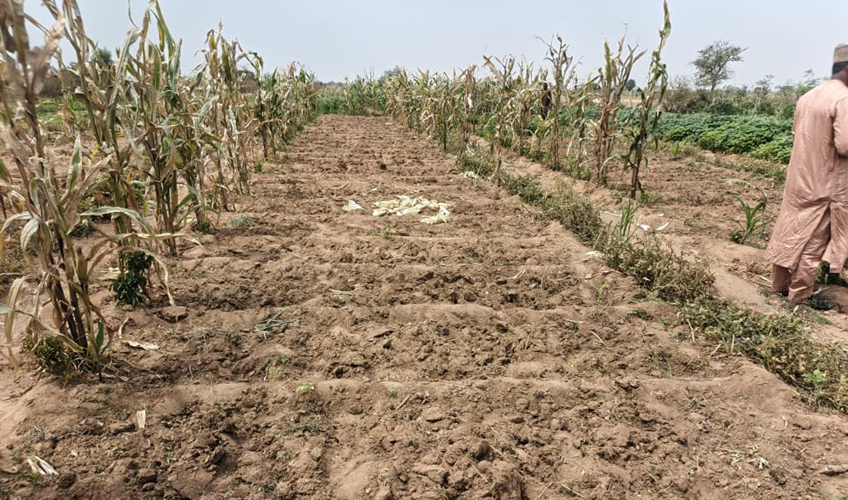
Zainab now shares her new expertise with other members of the community. She travels to buy better seeds, which she learned about during the training, and sells them to farmers in Tunga as an additional source of income. She has volunteered space within her compound to support women getting involved with farming.
“We really want to venture into farming, even if it is within my compound. I am happy about the engagement so far. I have learned a lot. This is one of the reasons I have decided that when I’m able to get seeds, I will try to cultivate the space within my compound,” she says. “Prior to now I was not so active in the community, but now I’m active with my farm and I’m able to resolve conflicts through the knowledge I’ve gained.”
The transformation in Tunga shows how climate action can open space for women and young people who have long been excluded from community decisions. The PPCA project is helping turn that inclusion into practical leadership, strengthening local resilience, supporting peaceful dispute resolution, and enabling communities to shape their own responses to the climate crisis.

