

Summer is officially in full swing, and it’s brought a host of climate- and energy-centered headlines: rising electricity demand, record-breaking heat, and a potential Super El Niño that could lead to severe environmental impacts.
But these are exactly the kinds of issues the C2ES team spends its days tackling — from supporting regional efforts that build climate resilience to helping companies, communities, and policymakers navigate a shifting energy landscape.
This summer, we’ve curated a staff-recommended reading list centered around some of the biggest issues currently shaping today’s climate and energy landscape. We also threw in a few picks that are just good company on a hot day.
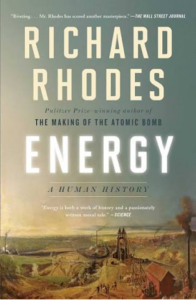
Energy: A Human History – Richard Rhodes
C2ES President Nat Keohane recommends Energy: A Human History, by Richard Rhodes. Covering five centuries of scientific discovery, development, and challenges, Nat says the book “provides a compelling, easily accessible, and comprehensive history of energy, from wood to fossil fuels to electrification — all told with an eye on the inventors and engineers and others who were deeply involved.”
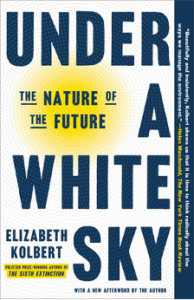
Under a White Sky – Elizabeth Kolbert
C2ES Communications Intern Mirya Dila recommends Under a White Sky: The Nature of the Future, where reporter Elizabeth Kolbert follows the scientists and engineers attempting to control the course of human-caused environmental crises — and the unintended consequences that ensue. “A book about people trying to solve problems caused by people trying to solve problems,” Kolbert observes a range of imperfect solutions, from electric barriers curbing invasive fish populations to synthetic clouds altering the composition of our atmosphere.
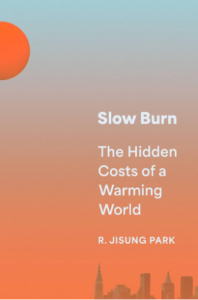
Slow Burn: The Hidden Costs of a Warming World – Dr. Jisung Park
Corporate Climate Resilience Manager Tessa Ide recommends Dr. Jisung Park’s Slow Burn: The Hidden Costs of a Warming World, which investigates the social and economic implications of climate change that often amplify existing inequalities. Dr. Park has worked with the C2ES corporate climate resilience team on several projects, including our ongoing extreme heat dialogue exploring how organizations can build comprehensive resilience to climate change. Tessa says this book is “a good way to start understanding how heat impacts the companies C2ES engages… and it is particularly timely as we sweat our way through this current heat wave!”
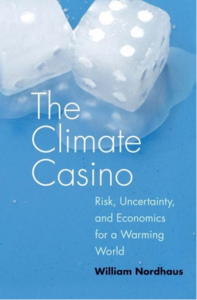
The Climate Casino: Risk, Uncertainty, and Economics for a Warming World — William Nordhaus
Senior Press Secretary Tim Carroll recommends The Climate Casino: Risk, Uncertainty, and Economics for a Warming World. Writing for a general audience, economist William Nordhaus examines the economic risks of climate change and highlights promising policy recommendations to reduce emissions while protecting long-term prosperity. “Climate and economy are inseparable as the world races towards clean energy and other technological innovations,” Tim says. “In The Climate Casino, we see just how intertwined they are as the author expertly lays out the stakes for the economy in the US and for those across the globe.”
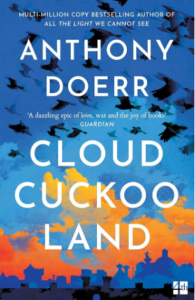
Cloud Cuckoo Land – Anthony Doerr
C2ES’s Senior Director of Institutional Giving Robin Johnson highly recommends Cloud Cuckoo Land by Anthony Doerr. Part contemporary, part historical fiction, and part sci-fi, the genre-bending novel connects five narrators across three time periods: 15th century Constantinople just before its fall, present-day Idaho, and a 22nd century starship fleeing a climate-ravaged Earth. Robin says this book is “a great read emphasizing why we need to protect our planet…the end is a real zinger!”
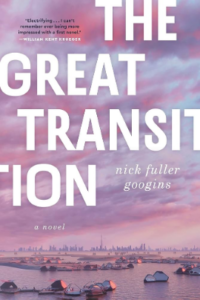
The Great Transition – Nick Fuller Googins
Set in a post–climate change world that has achieved net-zero emissions, Nick Fuller Googins’ debut climate fiction novel follows Emi Vargas as she searches for her mother, a political activist who played a pivotal role in building this new society. “If things have to get worse before they get better, The Great Transition lays out the hopeful, justice-centered, people-powered future that could lay on the other side,” says International Research Fellow Eda Kosma. “The story and visions of futures possible still stick with me!”
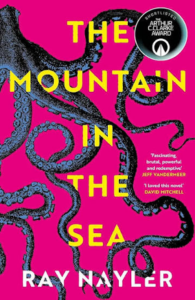
The Mountain in the Sea – Ray Nayler
Stephanie Gagnon-Rodriguez, C2ES’s Director of Regional Clean Economies recommends The Mountain in the Sea by Ray Nayler. “A near-future sci-fi novel about the discovery of a sentient species of octopus, it explores what it means to be a person in the age of AI and a steward of Earth as growing demand for resources depletes the environment,” says Stephanie. “The book asks the question: how do we save the planet, and for whom?”
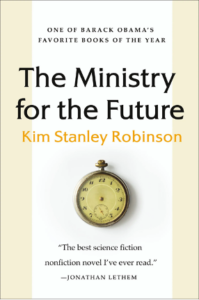
The Ministry for the Future – Kim Stanley Robinson
“Kim Stanley Robinson’s The Ministry for the Future is a must-read for climate hawks, I think — even though parts of it drove me crazy,” says Nat Keohane. Shifting between various writing forms, the cli-fi novel follows the work of a subsidiary body established under the Paris Agreement to protect future generations from climate catastrophe. While Nat notes the book’s “naive treatment of economics and policy debates,” he says that “the reason to read it is the very compelling portrayal of a near future in which extreme climate impacts — a heat wave in India — prompt much more radical and massive government response.”
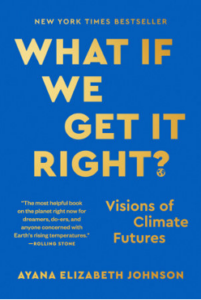
What If We Get It Right?: Visions of Climate Futures – Ayana Elizabeth Johnson
Ayana Elizabeth Johnson’s What If We Get It Right?: Visions of Climate Futures is a collection of essays, poetry, and conversations exploring hopeful, achievable climate solutions, recommended by Eda Kosma. “Anthologies are nice because they have something for everyone,” Eda says. “I particularly like the interviews on real-world climate solutions, but there are poems and essays and art that make this book rich in many ways.”
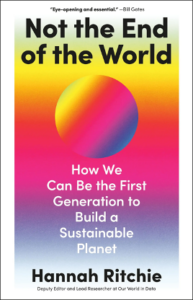
Not the End of the World: How We Can Be the First Generation to Build a Sustainable Planet – Hannah Ritchie
In Not the End of the World: How We Can Be the First Generation to Build a Sustainable Planet, data scientist Hannah Ritchie argues that we have the tools and knowledge to solve some of our biggest environmental challenges, from climate change to biodiversity loss. Pushing back against “doomsday thinking,” Ritchie draws on global data and real-world case studies to make a compelling case for practical optimism. Tim Carroll recommends the book, noting that “Ritchie’s writing style is optimistic and engaging as she walks through the major climate polluting sectors of the world with pragmatic solutions at every step, offering new ways to frame our greatest climate challenges

