

After years of conflict, communities along the West Pokot and Elgeyo Marakwet border are choosing cooperation, using farming as a pathway to reconciliation and stability.
The historically volatile and fractured corridor of land between Chesegon and Liter has been shaped by banditry, stock theft, revenge killings and deep mistrust. It sits within one of Kenya’s most climate-stressed and conflict-prone regions, where environmental pressures, resource scarcity, and cross-border dynamics have sustained cycles of insecurity for decades.
But a quiet and powerful transformation is taking root. What was once a “no-go zone” has become a shared space of productivity, cooperation, and hope. At the heart of this transformation is the KACHE farm, named after the two communities whose young men built it together: Kaben, in Elgeyo Marakwet County, and Cheptulel, in West Pokot County. It is a joint initiative started by former ‘warriors’, the term widely used in Kenya for young men involved in cattle raiding and related violence, who chose to trade conflict for farming.
This is a story of courage, reconciliation, and the idea that peace can grow from the ground up. It was made possible through the Powering Peace through Climate Action (PPCA) project, funded by Irish Aid and implemented by International Alert together with the Catholic Justice and Peace Department (CJPD). In a region where climate stress and conflict are deeply intertwined, the KACHE farm demonstrates how divided communities can come together to rebuild trust, restore relationships, and create new opportunities for peace.
Fear, violence and survival
For years, life for young men like Lawrence Mworsho, a 31-year-old from West Pokot County, and Ben Kibet, 33, from Elgeyo Marakwet County, was defined by conflict. As herders, their days and nights revolved around surviving in a context where violence was normalised. Raids were frequent, and retaliation was expected. Their communities were trapped in cycles of loss and revenge.
The harsh realities of climate change left them with fewer opportunities to make a living, further reinforcing the conditions that sustained conflict. Even stolen livestock, sold quickly to avoid detection, brought little reward.
Lawrence explains that “selling the stolen livestock fetched very little money… we would sell cattle and use the money to buy ammunition… there was no sleeping… we had to plan who would be keeping watch to protect our cows… you could not tell if there was someone waiting to attack you.”
Kibet similarly reflects on the brutality of that time: “We used to hunt each other and kill each other… when we crossed paths, and no one was hurt, we would call them and mock them that they were lucky they had escaped death.”
Violence had become self-perpetuating, with the proceeds of one raid financing the next. The consequences were devastating. Communities lived in constant fear, relationships between communities broke down, cross-border trade stopped, markets ceased to function, schools and health facilities were closed, and many families lost the opportunities to build sustainable livelihoods, trapping communities in a cycle of insecurity, poverty and underdevelopment.
We had to plan who would be keeping watch to protect our cows… you could not tell if there was someone waiting to attack you.
Dialogue over division
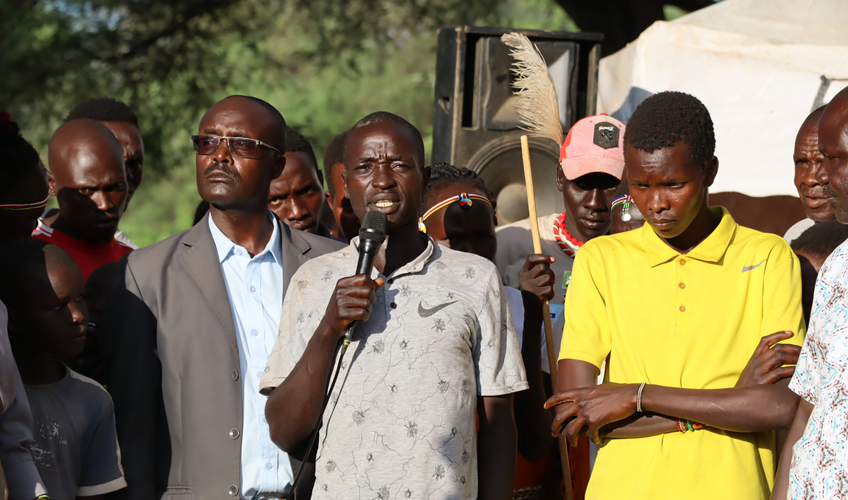
The change began when the PPCA project brought together members of the Pokot and Marakwet communities. A series of structured dialogue forums were designed to de-escalate tensions, rebuild trust, and help communities move beyond cycles of retaliation by identifying common priorities and practical areas for collaboration. As trust gradually developed, participants became more willing to cooperate and jointly address local challenges affecting them. For the first time, herders who had long viewed each other as enemies sat down to talk.
Lawrence explains that they needed to “sit and talk instead of fighting” with Kibet adding that they “resolved to work together and live in peace”.
Initially, the dialogues were not easy. Trust was fragile, and fear often lingered. However, there was also a shared realisation that the communities already knew each other through marriages, markets, and a shared geography, ties that raiding and revenge had strained but never fully severed. At the same time, government-led disarmament efforts in the region had begun to reduce the prevalence and use of small arms, creating a more conducive environment for dialogue and engagement. Together, these factors created an opportunity to move beyond cycles of violence and explore shared solutions. Recognising that lasting peace required both security and economic opportunity, what followed was a bold decision by the former raiders to invest in a joint alternative livelihood initiative that could strengthen both resilience and reconciliation. The idea was simple but transformative: convert a conflict zone into a shared farm.
Planting trust
As a first tangible act of trust between the two communities, a piece of communal land was cleared with support and approval from local leaders, including the area chiefs and elders. However, once the land was ready, they lacked the resources to purchase seedlings and other essential farm inputs. Through the PPCA project, the group received a micro-grant for what would become a joint tomato farm, turning what started as an idea into an opportunity for reconciliation.
When the group first began clearing the land, mutual suspicion was still high. Kibet recalls that “you would find the Marakwet going to one side… and the Pokot another side.”
Lawrence also notes that many doubted the initiative: “people did not believe that the two communities could work together… they would ask if we carried pangas (machetes) or hid them in the farm.”
Carrying weapons had been part of everyday life and meeting someone from the neighbouring community often meant preparing for violence. Therefore, choosing to work together required a conscious break from the past. The group made a deliberate choice from the outset: everyone who joined the initiative had to agree to leave their weapons behind, work together, and resolve disagreements peacefully. This rule required immense courage and trust from people who had viewed each other as enemies for years. As the former rivals spent more time working side by side, suspicion gradually gave way to trust, and the farm became a shared space where new relationships were formed, replacing hostility with cooperation.
“I have learnt that farming is a better venture… and there is no need to have conflict with our neighbours.”
The impact of the KACHE farm has been economically, socially and psychologically profound. Instead of relying on livestock raids, former warriors now have a stable source of income that has enhanced their well-being, sense of purpose, and overall health. According to Lawrence and Kibet, the return of peace has made it possible for people to travel freely across the border, restored trade, and reunited communities that had been living in constant terror. The project has strengthened social cohesion by bringing together communities that were once divided by conflict to forge a common identity built on trust and collaboration.
Lawrence reflects on his personal transformation: “Working in the KACHE farm has changed my life… before I could not sleep well… now even our health has become better.”
Kibet echoes this shift: “Right now… there is free movement at the border… we can go anywhere without fear of being attacked.”
More importantly, the farm has redefined relationships. Kibet notes: “We now live as a peaceful community… you cannot tell who among us is a Pokot and who is a Marakwet.”
Families have been reunited, as their sons who left home for raiding sprees have returned. The two communities that were once divided by violence are now connected through a shared purpose and a new livelihood opportunity, especially for young herders.
There have been challenges too. When the first batch of tomatoes was ready to sell, the market was already filled with tomatoes from other sellers. Lawrence explains that “when the tomatoes were ready, there was no market. There was an influx of tomatoes and local markets were saturated. Some of the tomatoes rotted on the farm.” The young farmers struggled to make a steady income because of price fluctuations, poor infrastructure, and high transport costs. He proudly shares, however, that the farm’s produce has now reached markets across multiple counties, including Baringo, Turkana, and Nakuru, drawing attention from far beyond the region, including from other investors who would like to support their initiative.
Perhaps the most powerful transformation is internal. People who previously engaged in violence are redefining who they are and what is possible.
Kibet says: “If we continue with farming, most of the youth who perpetrated violence and took part in stock theft would be willing to join us given how lucrative the tomato farm has turned out.”
Lawrence reflects on the deeper lesson, stating: “I have learnt that farming is a better venture… and there is no need to have conflict with our neighbours.”
The success of the KACHE farm has inspired other young people and community groups from both the Pokot and Marakwet communities to pursue similar joint initiatives. Seeing the social and economic benefits of working together, they have come forward with their own ideas for alternative livelihoods that promote cooperation while reducing incentives for violence. In response, the project has identified seven community-led ventures for microgrant support, extending the benefits of the initiative beyond a single farm. Through investing in these locally driven ideas, the project is helping to create additional spaces where former divisions can be replaced with shared interests, where divided communities can create new opportunities and contribute to lasting peace.

