

By Desmond Alugnoa and Ama Asiedu
For nearly a decade, the GAIA Africa team has been providing technical expertise and supporting movements across the continent, helping communities advance practical, just and people‑centred zero waste solutions. In 2025, we hosted the first-ever GAIA Africa Zero Waste Academy, with a simple but ambitious goal: to build the capacity of a new generation of African zero waste champions and create a growing platform for the practical implementation of zero waste solutions across the continent. One year later, that journey continues!
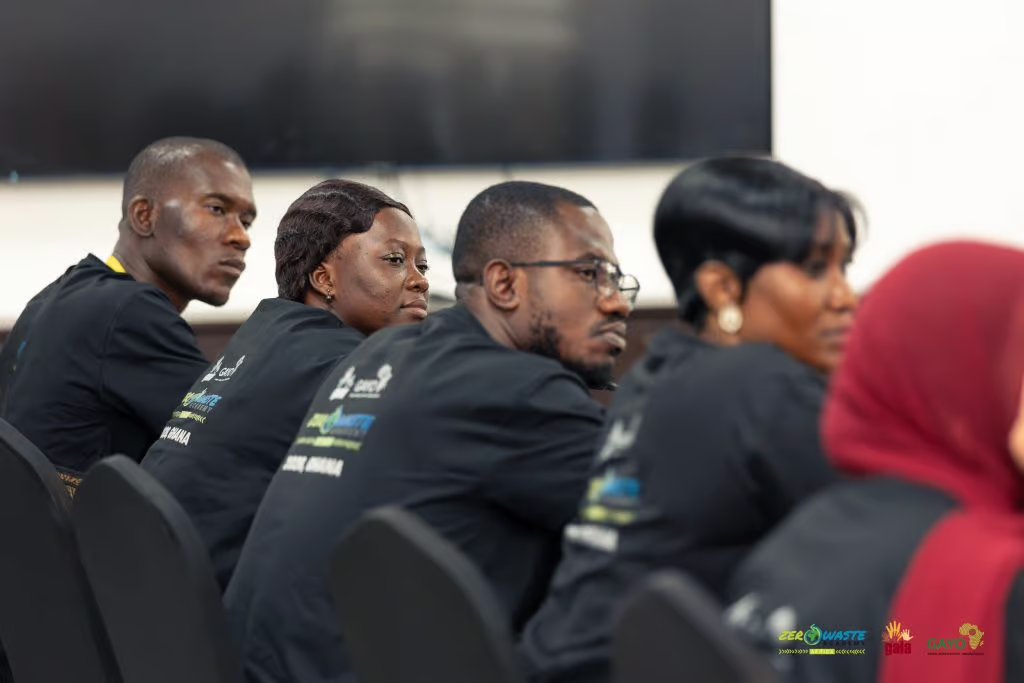
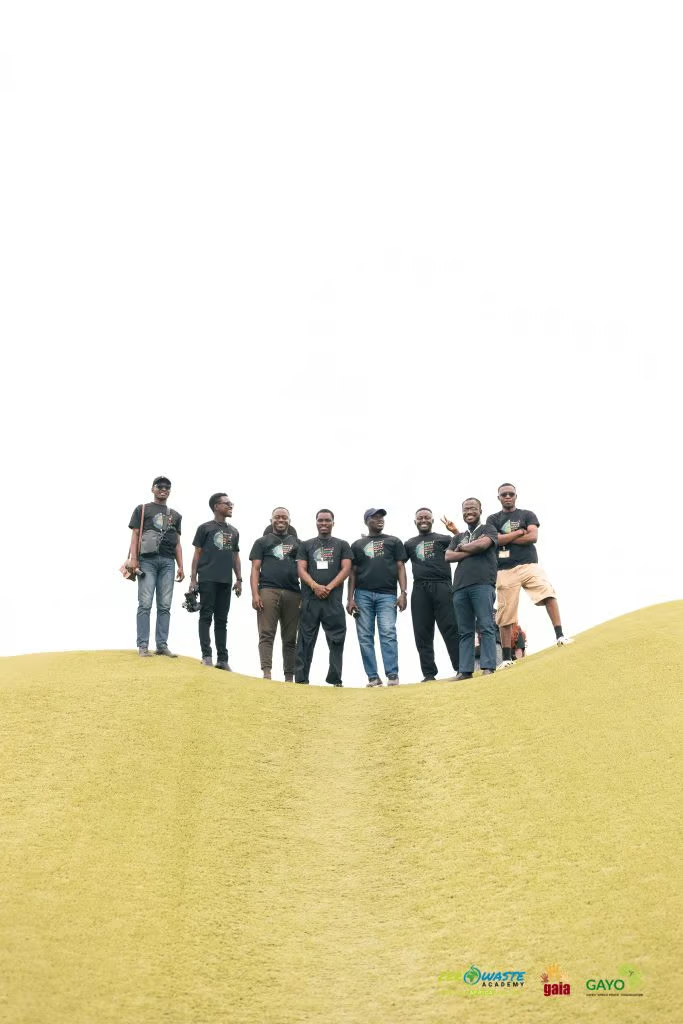
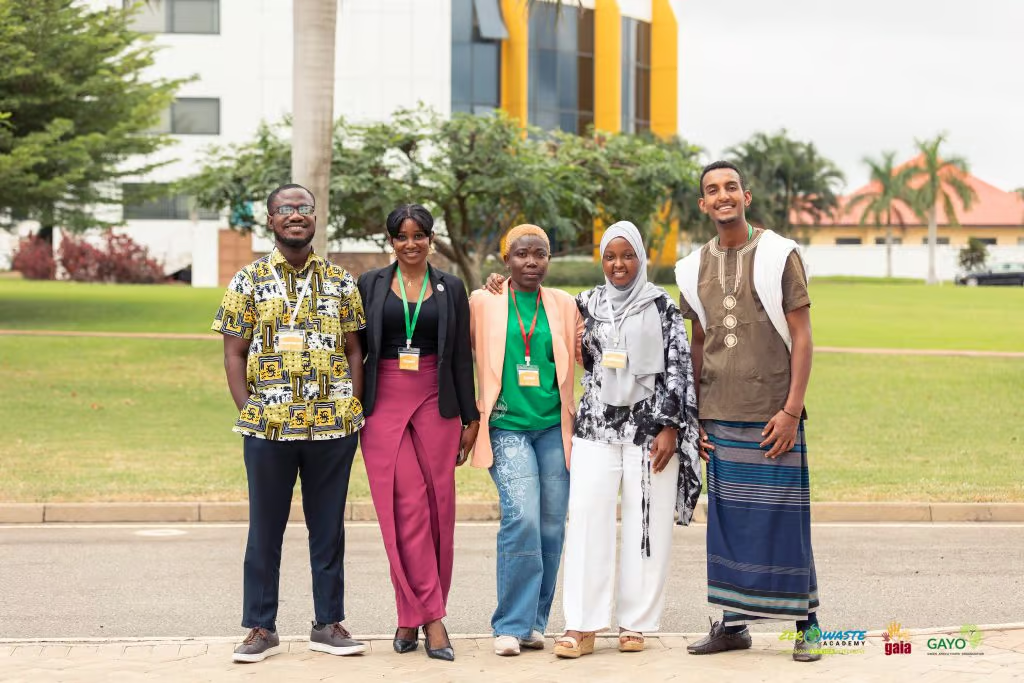
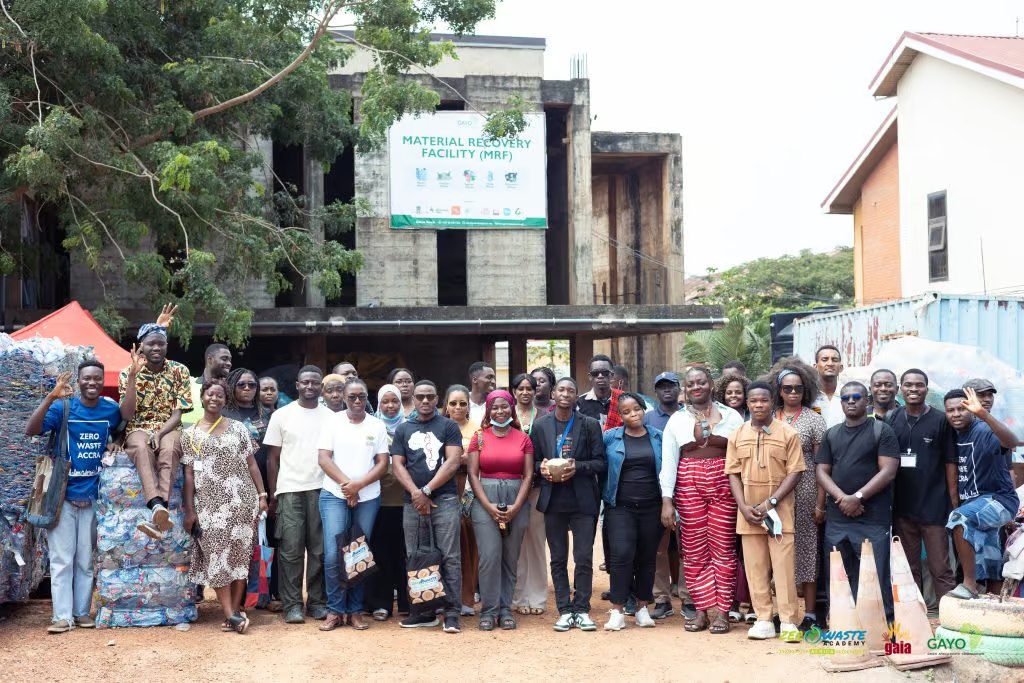
In 2026, the GAIA Africa Zero Waste Academy returned for its second edition, co-hosted withthe Green Africa Youth Organization (GAYO), in Ghana, a vibrant hub for youth‑led zero waste organising. This year’s Academy brought together 50 emerging and experienced climate and waste management practitioners from across Africa for a holistic journey of learning, exchange, movement building and action. More than 1,200 people applied to be part of the programme, reflecting the growing interest in locally led solutions to Africa’s waste and climate challenges.
A Movement That Keeps Growing
The Academy was created on the belief that Africa does not lack solutions to its waste crisis. Across the continent, communities are already composting, reusing materials, recovering recyclables, organising waste workers and developing alternatives to the extractive linear waste systems that perpetuate pollution and climate change. What is needed is to connect these experiences, strengthen the people leading them and create opportunities for learning across borders.
The 2026 Academy began with a five-week virtual programme, where participants explored movement building, waste characterisation, monitoring frameworks, climate and environmental justice, waste picker integration, community collection systems, composting, plastic pollution and methane. The learning was designed to go beyond theory. Participants were encouraged to examine the waste systems around them, understand the realities faced by waste workers and identify practical approaches they could adapt to their own communities, through hands-on weekly assignments to put their learning into practice.
As one participant, Bathseba Ratemo from Kenya, shared, the Academy offered an opportunity for “learning and unlearning, networking and sharing” a reflection that captures the spirit of the programme.
From the Virtual Classroom to Community Driven Action
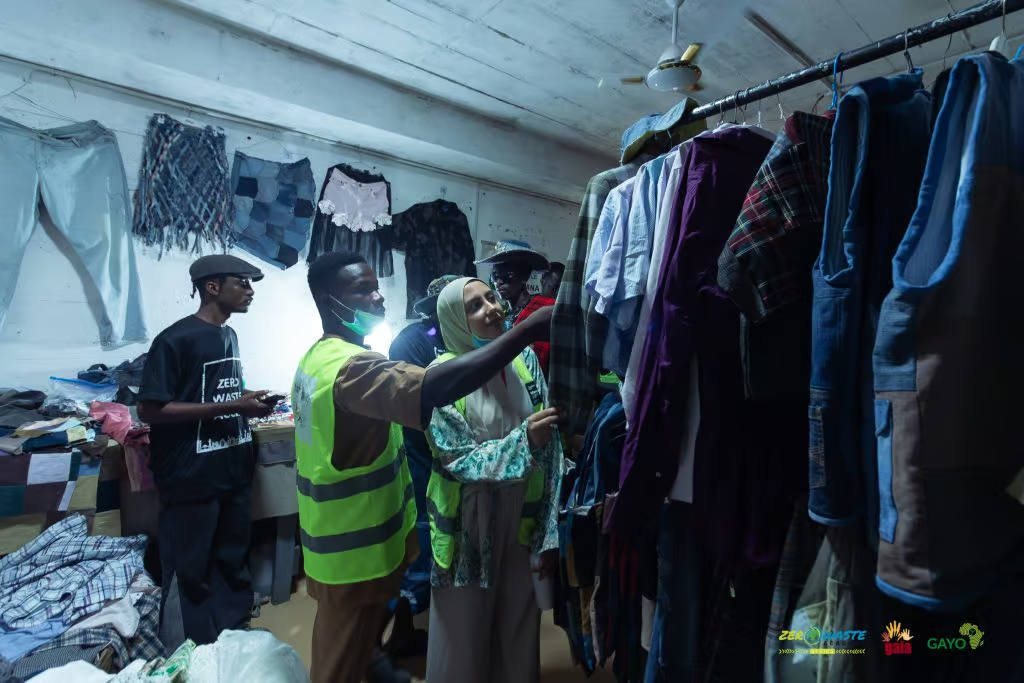
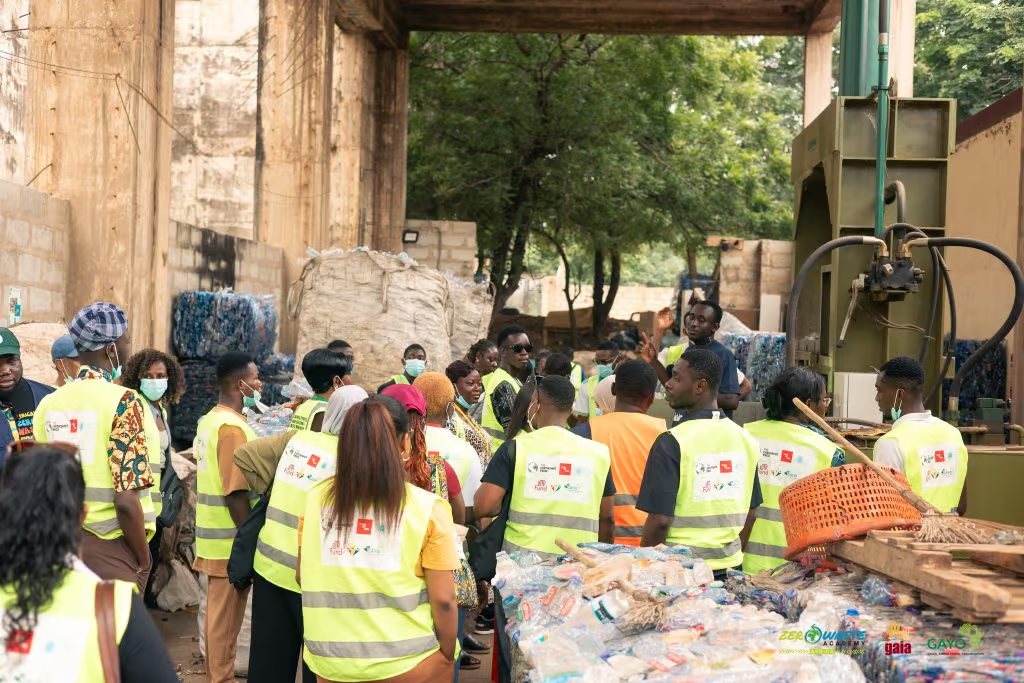
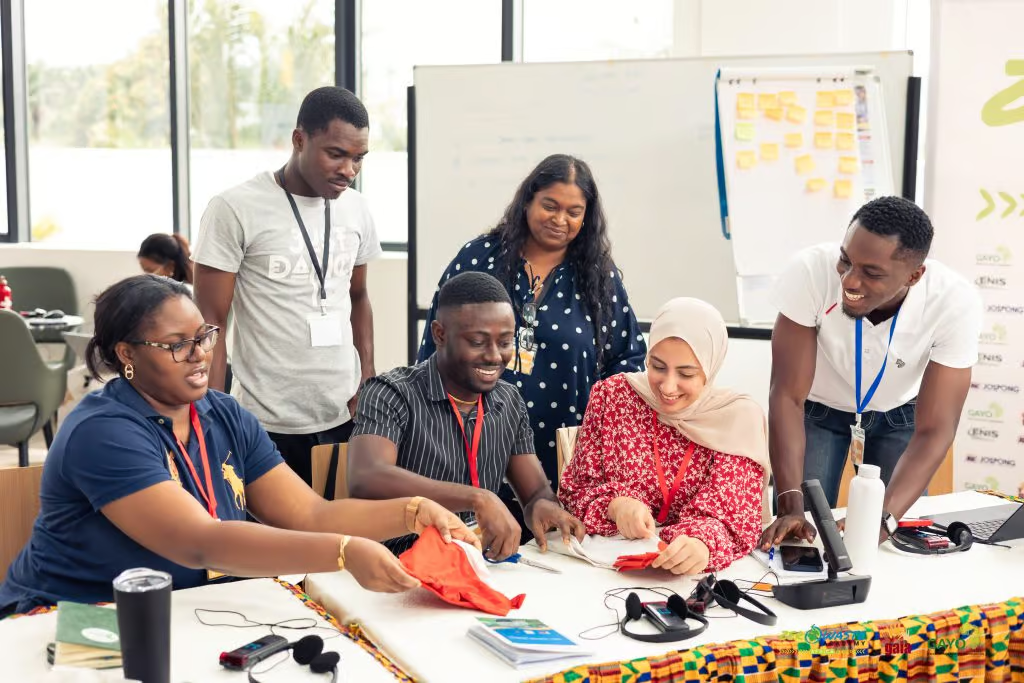
The in-person phase brought the cohort together in Ghana, creating space to deepen the learning through expert-led sessions, practical activities, field visits and conversations with people working directly within the waste sector.
Ghana provided a particularly fitting setting for this year’s Academy. In March 2026, Accra was recognised by the United Nations as one of 20 Cities Towards Zero Waste, highlighting the growing recognition of locally driven approaches to transforming urban waste systems. GAYO’s Zero Waste Accra Project has demonstrated how waste diversion, community action and the integration of informal waste workers can contribute to reducing pollution and methane emissions.
For Academy participants, visiting zero waste initiatives in Accra offered an opportunity to see these approaches in practice and consider how similar ideas could be adapted to their own contexts. But some of the most powerful learning came from witnessing movement building beyond the formal Academy sessions.
During the Academy week, participants attended the launch of the Federation of Informal Sector Waste Workers Associations of Ghana (FISWWAG). The launch marked an important step towards giving informal waste workers a stronger collective voice and advancing recognition, safer working conditions, fair pay and dignified livelihoods.
For participants, being present at this historic moment connected the Academy’s lessons on justice, organising and waste picker inclusion with a movement unfolding in real time. It was a powerful reminder that a just Zero Waste transition is not only about changing how we manage materials; it is also about ensuring that the people who collect, sort and recover those materials have a voice in shaping the systems they are part of.
Zero Waste Is About People
One of the strongest lessons from this year’s Academy was that zero waste cannot be separated from justice. Waste is not simply a technical issue. It is about livelihoods, health, dignity, climate and human rights.
Across Africa, waste pickers and informal waste workers recover valuable materials, reduce the amount of waste sent to dumpsites and landfills, and make important contributions to circular economies. Yet many continue to work without adequate recognition, protection or inclusion in formal waste systems.
This year’s Academy placed these realities at the centre of the conversation. Participants explored how waste systems can be designed to protect workers, recognise their knowledge and contributions, and ensure that the transition to zero waste does not leave anyone behind.
As GAIA Africa’s Zero Waste and Climate Programme Associate, Ama Asiedu, noted during the Academy, the programme is about more than managing waste better; it is about rethinking systems for climate resilience, green jobs and community health.
More Than a Training Programme
Perhaps the most valuable outcome of the Academy is the community that emerged from it. Participants did not simply leave with notes, presentations and certificates. They left with relationships, new ideas and a network of people working towards a common vision across the continent. The diversity of the cohort was one of its greatest strengths. Participants brought experiences from different countries, sectors and communities, but found common ground in the challenges facing Africa’s waste systems and the possibilities for change.
For us, this is what makes the Academy more than a training programme. It is a space where practitioners can learn from one another, challenge existing approaches, build solidarity and return home better equipped to act. The real test begins after the Academy.
From Ghana to the Continent
The second Africa Zero Waste Academy has shown us that the movement is growing and becoming more connected.
From Ghana to Uganda, Kenya to Nigeria, Senegal to The Gambia and beyond, people are already developing solutions rooted in their own communities. They are organising waste workers, building grassroots movements, advocating for stronger policies, reducing waste and demonstrating that our systems can work differently.
The role of the Academy is to connect these efforts, strengthen their capacity and create a community where knowledge can move freely across borders. We are grateful to GAYO Ghana for co-hosting this year’s Academy and helping create a learning experience rooted in African realities. We are equally grateful to the facilitators, partners, funders and everyone who contributed their time, knowledge and energy.
Most importantly, we are grateful to the 2026 cohort. You came from different places, carrying different experiences and facing different waste challenges. But you showed what becomes possible when people commit to change and learn together.
The Academy may have ended, but the work has only begun. The next chapter will be written in communities, cities and countries across Africa through the projects participants implement, the policies they influence, the movements they strengthen and the people they bring along. Africa does not need to wait for a zero waste future. We are already building it.
Ends.

