

Jason Arday’s death at 41 came only days after his resignation from the University of Cambridge. He had been facing intense scrutiny of his academic record and allegations of plagiarism.
Arday’s story had also become fodder for the ongoing accusation by some critics that universities pursuing racial diversity do so at the risk of compromising academic merit.
Black academics can mourn a relatively young colleague while also anticipating the burden Arday’s case may place on scholars who had no connection to his work but may now find their own qualifications subjected to renewed suspicion.
The Arday controversy becomes more troubling when questions about one appointment widen into claims that Black scholars would largely disappear from elite institutions under a supposedly pure merit system. That argument echoes an enduring anti-Black idea that racial inequality reflects differences in ability rather than unequal institutions.
One of Arday’s most prominent accusers, former Cambridge philosopher Nathan Cofnas, is a longstanding critic of diversity, equity and inclusion (DEI). Cofnas has argued that Black people would be far less represented in elite professions under a system based purely on merit.
That claim comes as Canadian universities pursue Black faculty hiring commitments and amid a renewed debate over the role of equity in academic life.
McGill University set a goal of reaching 85 Black tenure-track or tenured professors by 2032. The University of British Columbia plans to recruit up to 23 scholars by 2028. My colleagues and I are studying these initiatives and their implications for Black faculty and Canadian universities.
Read more:
Reckoning and resistance: The future of Black hiring commitments on campus
Recent editorial commentary on Canadian higher education has argued both for and against considering DEI in admissions and hiring.
The debate over DEI has also reached Parliament, where it has shaped discussions about funding federal research. Black faculty are often made the public face of DEI. When controversy follows, they can also become evidence of its supposed failure.
‘Black excellence fatigue’
The language of “Black excellence” carries a heavier burden than celebration alone suggests.
As McMaster political scientist Nathan Andrews explains, the term highlights the contributions of Black people working in institutions that have “historically underappreciated their efforts and contributions.”
However, he continues, “the idea itself can be exhausting and even harmful to the well-being of Black people.” He describes a “Black excellence fatigue,” and argues that Black academics can face pressure to excel because their legitimacy and even their competence may require repeated proof.
(Joe Giddens/LOCOG/PA via AP)
Research shows that Black professors’ authority can be questioned in classrooms and that racialized faculty face disadvantages in promotion and tenure.
Universities can intensify that burden by presenting Black appointments as institutional milestones. A scholar becomes the first in a faculty, the youngest in a particular post or the only Black professor in a field. Arday was repeatedly celebrated as Cambridge’s youngest Black professor.
When an appointment symbolizes racial progress, serious allegations can spread suspicion beyond the individual. Black academics have already warned that Arday’s alleged failures will be used to question Black academic legitimacy and diversity initiatives more broadly.
Unequal treatment
Academic integrity scandals have not always produced such expansive consequences. Some cases point to a double standard when it comes to institutional responses.
In 2004, Harvard found that law professor Laurence Tribe, accused of plagiarism, had committed “a significant lapse in proper academic practice,” but imposed no formal discipline. Tribe, a white man, recognized and took responsibility for his failure “to attribute some of the material” in question.
At Western University, where I teach, former psychologist J. Philippe Rushton infamously argued in the 1990s that racial groups differed innately in intelligence and tried to explain those differences through genetics. Though his work and tenure were protected at the time, Western’s psychology department now describes much of his work as racist and scientifically flawed.
Equal standards should not mean lowering the bar. They should leave room for accountability and repair without turning one scholar’s misconduct into a judgment about white intellectual fitness.
These uneven consequences give Arday’s death added weight.
His death follows Claudine Gay’s resignation from Harvard where plagiarism allegations against the former university president became entangled with a broader campaign against DEI. Gay reported receiving racist abuse and death threats.
Read more:
I am not your nice ‘Mammy’: How racist stereotypes still impact women
Meritocracy and systemic barriers
Cofnas has argued that under meritocracy, Black people would largely disappear from high-profile positions outside sports and entertainment, including from university faculties. His claim calls upon a tired racist trope in which Black people are imagined as suited to physical or performative success while intellectual authority remains suspect.
Similarly, Donald Trump’s reference to “Black jobs” in 2024 drew criticism for trading on a related assumption about the work Black people are expected to occupy.
Equity measures on campus emerged in response to documented disparities within hiring and promotion. They are imperfect attempts to correct workplace barriers that can give some people an advantage before merit is even considered. In the U.K., 2025 data shows the proportion of professors who are Black remains at one per cent.
Wavering public trust at universities
The Arday controversy lands amid a wider credibility problem within academia. Scientific paper mills publish false research that require mass retractions. Manipulated peer review processes expose weaknesses in systems meant to certify scholarly quality.
If appointment and promotion processes also fail, the relatively strong public confidence Canadian universities enjoy may weaken.
Cambridge’s vice-chancellor described senior appointments as faculty-led when announcing an independent inquiry into Arday’s appointment. Cambridge academics disputed this characterization because Arday’s appointment had also gone through a central university board.
Faculty elsewhere should now watch how institutions respond when reputational damage creates incentives to blame faculty for failures.
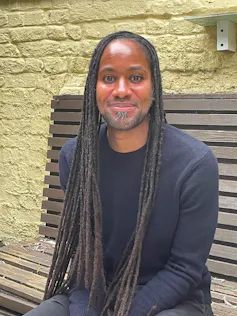
(Cambridge University, Department of Education)
The Arday case could become a reason for universities to expand oversight, even though the questions it has raised extend far beyond Black faculty hiring.
Heightened scrutiny may also affect disabled and neurodivergent scholars. Reporting on Arday extended to his autism diagnosis and personal history, raising concerns about how easily disability can become another site of scrutiny in institutions where disabled faculty already report discrimination.
In a more risk-averse university, differences in communication or ways of working could be reread through assumptions about cognitive capacity or the ability to withstand academic pressure.
The wider stakes should concern everyone in academia. Coverage of Arday unfolded within a British media landscape with a documented history of anti-Black bias..
Read more:
What’s fuelling the media’s enduring hate campaign against Meghan Markle?
Cambridge academics have questioned the university’s handling of Arday and its response to the media.
Universities need credible standards and fair accountability. They also have a duty to support faculty when scrutiny becomes disproportionate or dehumanizing.
Leaving Black faculty exposed when institutional visibility becomes costly sends a pointed message about how disposable those commitments can be. The research on the effects of racism and isolation in academia remains thin. Arday was among the scholars trying to fill that gap.
Universities cannot remain indefinitely undecided about equity. Inviting people in without being prepared to stand behind the principles that brought them there may be one of the clearest ways to undermine it.

