

September 8, 2026 A global study published this week finds that natural disasters in lower-income countries increase child malnutrition. Publishing in Pediatric Research, the authors, Adriano La Vecchia, Eleonora Borrione, Benedetta Esposito, Mattia Baglioni, Carlo Agostoni, Cristiana Berti & Anna Comotti combine 26 studies to provide evidence that extreme weather worsens pediatric nutrition.
The article, “Floods and droughts and pediatric malnutrition in low-income countries: a systematic review and meta-analysis”. Pediatric Research, (https://doi.org/10.1038/s41390-026-05411-8) also calls for more standardized exposure definitions and nutritional surveillance.
It concludes: “This meta-analysis provides the first pooled prevalence estimates of wasting, stunting, and underweight after droughts and floods—19%, 39%, and 42%, respectively.”
Wasting was significantly higher in droughts than in floods. .
The authors note that there had previously been no review to comprehensively examine extreme weather events, including droughts, floods, tropical typhoons, or wildfires, nor addressed their impact across the full pediatric age range (0–17 years).
“Considerable heterogeneity across studies underscores variability in exposure definitions, population contexts, and timing of outcome assessments.”
“Taken together, current evidence suggests that floods are more likely
to precipitate short-term nutritional crises, whereas droughts may
exacerbate chronic food insecurity, particularly in already vulnerable
regions. The higher prevalence of wasting observed among drought affected
children suggests a distinct geographical and climatic pattern in the malnutrition–disaster relationship.”
“Across 26 studies including more than 320,000 children, the pooled prevalence of undernutrition following droughts and floods was substantial: 19% for wasting, 39% for stunting, and 42% for underweight. Wasting prevalence was significantly higher after droughts than after floods.”
Download the report at: https://www.nature.com/articles/s41390-026-05411-8
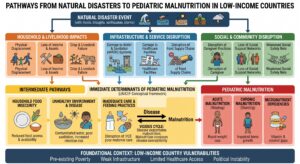
– Contributed by WHES board member, Steven Hansch

