

Every year, climate disasters force millions of people to leave their homes. In the aftermath of floods, fires, and droughts, they face the challenge of finding a new place to rebuild their lives. They’re part of a growing population of people on the move without specific legal protections, commonly referred to as climate migrants. Most move within their country, while others seek refuge across borders.
The hotter the planet grows, the higher the number of climate migrants is expected to climb. At the low end, predictions point to at least 44 million people displaced internally across the globe by 2050. That kind of planetary churn is the equivalent of rehoming the entire population of Argentina. Very few places are planning for this possibility.
Last fall, when Governor JB Pritzker signed the Climate Displacement Act, Illinois became the only state in the country trying to anticipate the ways in which climate-driven migration could transform life for its existing residents and those who may come. The law established a task force to investigate how domestic and international climate migration patterns could test Illinois’ infrastructure, resources, and residents. The first-of-its-kind law requires the newly-formed team to publish two reports over the next year outlining the state’s ability to address climate migration through at least 2050. If the Midwestern state succeeds, it could become a blueprint for how states make room for vulnerable migrants.
But only a year after introducing the effort, state officials have largely abandoned it.
Lawmakers have pushed back reporting deadlines and are yet to convene the task force, even though the first report is due in December.
Pritzker, the state’s top lawmakers, and the heads of several Illinois state agencies were supposed to appoint members to the board no later than 90 days after the law went into effect. For over a year, only one appointment was made to the 17-seat task force.
John Moore / Getty Images
WBEZ and Grist reached out to the state officials responsible for appointing the board, including Pritzker, four members of the Illinois General Assembly, and the heads of seven state agencies. Besides the governor’s office, only Illinois Senate President Don Harmon responded by appointing state Senator Graciela Guzman, who represents Chicago, to the task force after being contacted for comment.
“Governor Pritzker remains committed to fighting climate change and preparing Illinois for its impacts, including climate-related migration,” Jose Correa, a spokesperson for the governor, said in a statement to WBEZ and Grist. “This work is important, and the administration will continue working with lawmakers, state agencies, and stakeholders to establish a timeline and move the task force forward.”
The Governor’s office did not provide an estimate for when a timeline would be available.
“We haven’t received a clear answer,” said Guzman, a Chicago Democrat who introduced the Climate Displacement Act and was appointed to the task force last week, about the delays plaguing the climate law she helped pass last fall. “This has been two years in the making … I’m honored to serve on the Climate Displacement Task Force and ready to get to work.”
The law outlines what the reports should address, but it does not include consequences for failing to meet the mandate. The first report, due at the end of the year, requires the task force to compile the latest data and scientific findings to determine the scale of climate migration expected within the United States and neighboring countries in the coming decades. The following report, due at the end of 2027, is supposed to assess how state agencies and existing programs will need to evolve in response to disaster-induced displacement.

Guzman, born to Salvadoran refugees in Los Angeles, introduced the bill in February 2025 just a month after 14 wildfires tore through southern California, scorching tens of thousands of homes and buildings in the state’s second- and third-most destructive fires.
“My family, like many families there, were having some really real conversations: If these wildfires were to encroach upon the valley where they lived, where would they go?” she said.
They could come to Illinois.
The temperate Midwestern state is an agricultural powerhouse, adjacent to 20 percent of the world’s unfrozen freshwater, relatively safe from hurricanes and wildfires, and is far enough inland that sea level rise is not an immediate risk. A recent analysis by AlphaGeo, a climate-risk modeling firm, even ranked Chicago as the most climate-resilient big city on the planet, citing these advantages and its “robust urban infrastructure.”
Given these favorable conditions, Chicago, the state of Illinois, and the Midwest have sometimes been billed as “climate havens,” a term for destinations marketed as insulated from extreme weather. But scientists and policy experts have pushed back on these claims for years, countering that no such place exists. They say the nature of climate change is global, and rising temperatures will have cascading knock-on effects on all life on the planet — including the Midwest, where climate change has been leaving its mark.
This past year, Chicago residents experienced significant and widespread flooding, when its massive tunnel and reservoir system very nearly hit capacity. A record-breaking number of tornadoes, extreme heat, and wildfire smoke that spiked air quality levels for nearly a full week made the past summer unlike any recent memory.
“It’s all that anybody I’m around is talking about — just the incredible weather events that we have had in our state,” Guzman said. “It’s really laying bare why this kind of planning is important.”

Joshua Lott / The Washington Post via Getty Images
Climate haven or not, she said the law is an opportunity for the state to understand its resources and plan for the potential influx of new residents — which could mean building affordable housing or new job programs. But before any of that can happen, the state needs a roadmap.
Illinois is the only state with an explicit mandate to prepare for population shifts due to climate change. However, other states have begun enacting or at least considering climate-related relocation. Maine has incorporated climate migration into broader statewide resilience planning. And lawmakers in California, Hawaii, and New Jersey have introduced bills to begin planning for the protection of coastal communities vulnerable to sea level rise and to buy out some of the most at-risk properties.
Earlier this year, Alaska lawmakers passed a law pledging to help the low-lying, coastal communities of Kipnuk and Kwigillingok relocate in the devastating aftermath of Typhoon Halong.
In the Midwest, the city of Cincinnati is also preparing for newcomers seeking climate refuge. Earlier this year, city officials circulated a blueprint to accommodate upwards of 500,000 new residents by 2050. The plan doesn’t market the city as “climate-proof.” Instead, it outlines ways to improve the quality of life for residents by increasing the availability of affordable housing and investing in public transportation — not unlike Illinois’ proposal.
Illinois still has a long road ahead, according to Byran Jones, a geographer and professor at Baruch College in New York City, who has worked on landmark climate displacement and relocation reports.
“It’s a daunting task, and the state of Illinois needs to recognize that,” he said.
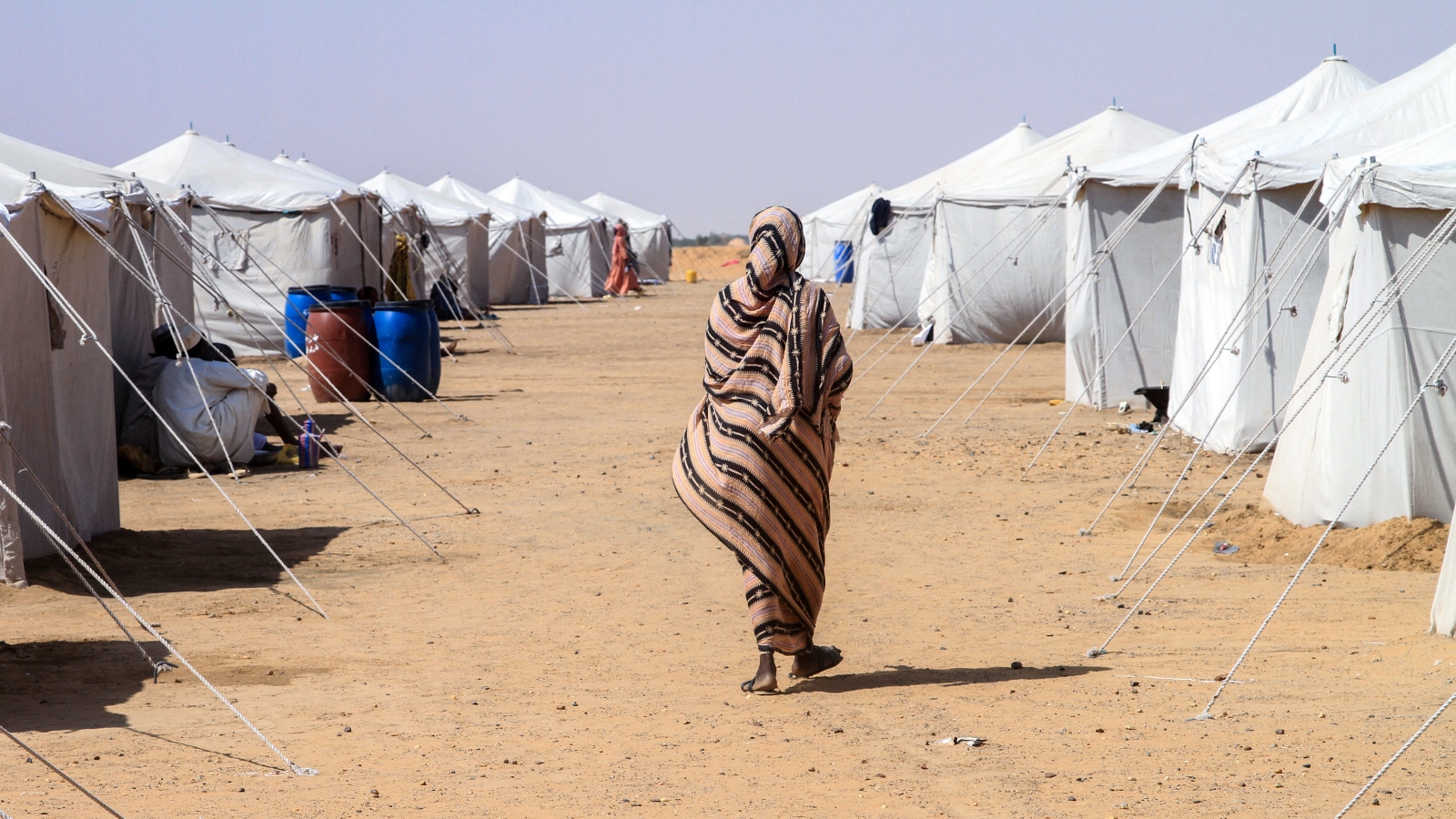
Part of the issue is that the term “climate migrant” is relatively new, and it has no universally agreed definition. Climate refugees also have no legal recognition under international law. Most modern-day protections for refugees are based on the 1951 Refugee Convention, which restricted the definition to someone “persecuted for reasons of race, religion, nationality, membership of a particular social group, or political opinion.”
Modeling climate change and migration independently is also difficult enough without trying to account for the two together. Migration alone is a complicated phenomenon driven by factors ranging from economic prospects to family ties, gender, and poverty, making it difficult to project even before adding the pressure of climate change.
But Jones said that Illinois officials can build on existing research by identifying what makes Illinois special — such as its vast agricultural sector and major metropolitan area — and modeling how it could influence migration patterns. The work, he said, will be time-consuming, but climate change is already affecting migration patterns, and the best way to limit disruptions is to plan for it.
“It would be of tremendous service and certainly help to get the conversation started where there’s been limited conversation in this country, to this point,” Jones said.

