

Reading and writing have given us the power to instrumentalise planet Earth in its entirety, for the better and the worse…
The purpose of this essay is to probe the relationship between the Earth, our bodies, and ourselves.
That these three are inextricably interlaced may seem self-evident, yet that very relationship is fraught with ambiguity. It is undoubtedly a misconception of Western thought that—as individuals and societies—we are primarily defined and valued as productions of our intellect and psyche. Descartes’s catchphrase, I think, therefore I am, has us believe that our minds overarch both our bodies and the Earth, reduced to the status of tools in the service of our brains. It is a deleterious simplification that disincarnates us. The opposite is true: our Earthly environment has produced our intellect and psyche in unison with our bodies. Indeed, our bodies, situated on Earth, have been instrumental in shaping our minds. Forming together a complex, integral, inseparable whole.
Bruno Latour urges us to ground ourselves[1] on Earth. His view is that in today’s regime of scientific rationality, nature and culture have become estranged. The enlightenment has made a world in which abstract thought takes precedence over bodily sensitivity. And in so doing, it fosters a utilitarian ethic that considers the Earth a support, a resource to be stripped by industrious men.
In this way, the relationship between the Earth and the Cosmos on the one hand, our bodies and ourselves on the other, has been ripped asunder. Summoning up their togetherness is a step on the path towards repairing the world.
The measure of the cosmos
Just like Monty Python’s lumberjack who sleeps all night and works all day, we—as individuals and as a species—are keyed to the rhythm of the Earth’s cycles.
The deceptively simple pas de deux, that combines the Earth’s daily spin upon its axis with its yearlong turn around the sun[2], engenders a regime of light and darkness, heat and cold, that millions of years of evolution have profoundly embedded within the metabolic functioning of all life on Earth. The biological clock that regulates the body ticks to the tempo of the Earth, so that waking and sleeping hours are synchronised with the rhythm of day and night, while the yearly cycle keys the body’s functions to the oscillating conditions of the seasons. We are truly Earth-born, for these cycles cannot be escaped when we defy gravity and rocket off into space.
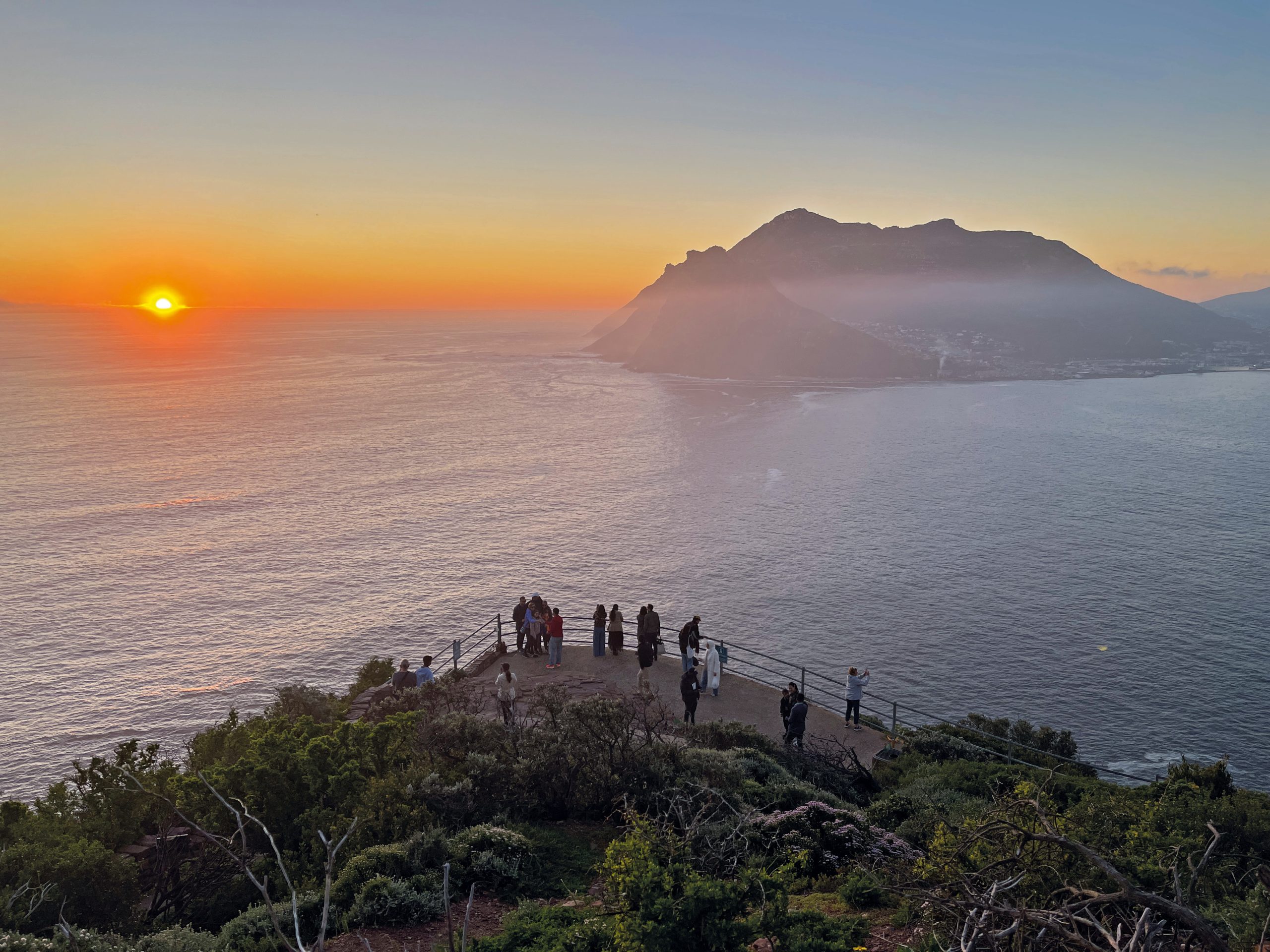
While this biological programming is innate, species are also subjected to social and environmental dimensions that inform their evolution. How knowledge is gained and refined, how it is handed down through social reproduction, is determined by the particular cognitive faculties of each–in this, though more sophisticated, humans do not differ from elephants. The very experience of living on Earth, dealing with its challenges, depending upon its resources, is constitutive of each society’s culture.
Such knowledge is always situated, serving to apprehend and act upon the multiple aspects of both the Earth as a whole and the singular geographic and climatic circumstances of each society’s location. Each society optimises its capacity to survive and thrive, or becomes extinct. Inhabiting a desert, a forest, or fertile plains, in mountains or by the sea, engenders very different types of civilization.
The mastery brought upon by sapience has overturned our species’ rapport with the Earth. Science and technique have allowed us to free ourselves from—or so we believe—the natural constraints imposed by the Earth’s cycles and environmental conditions. By turning night into day, by massively heating and cooling the air, we believe that we can countermand the metabolic dynamics of our planet. The effects of global warming show how misguided this is.
The illusion that is colour
Rhythm structures physical phenomena at every level of the universe. Electromagnetic waves, at the atomic level, compose a vast spectrum that is characterised by different types of energy, distinguished by their frequency: radio waves, infrared radiation, light, X-rays, gamma rays. Each type affects living creatures in a particular manner: while radio waves appear to have no particular effect, gamma rays are lethal. Emitted by the sun, the very existence of life on Earth depends upon the radiation received. Both infrared and light provide heat. Light, powering photosynthesis, has covered our planet with a green vegetal mantle that in turn fosters other forms of life by converting carbon dioxide into oxygen.
It is the narrow spectrum of what we perceive as visible light, located in the middle of the electromagnetic spectrum, that constitutes a defining feature of our existences by being just that: visible!
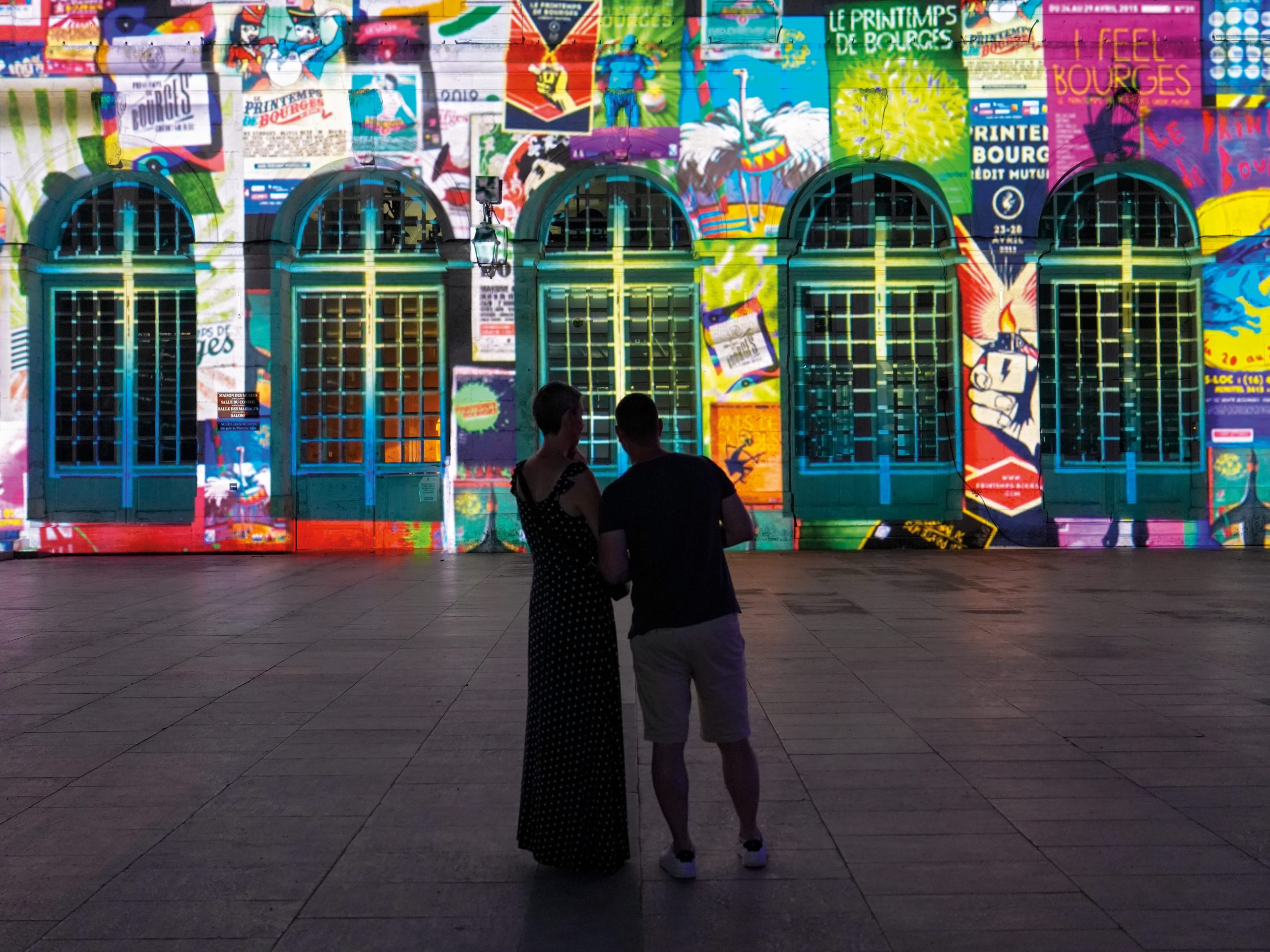
The fact that waves of light emanating from objects act upon our retinas in the act of vision is taken for granted. Yet it is the most marvellous thing. We can only surmise what ingenious sleight of hand allows a blind transmission of energy to appear inside our heads, where eye and brain interpret abstract variations in wavelength as a vibrant prism of colours that allow us to see our surroundings. Thus as a concept, colour is a cerebral invention that does not exist outside the minds of living creatures—one might truly declare that it is a pigment of the imagination. Such is the hiatus between the physical phenomenon defined by optical science, and its sublimation as the fabulous experiential phenomenon of vision.
The same is to be said about hearing: our auricular apparatus translates the waves propagating variations in atmospheric pressure into vibrations that our brains interpret as sounds. Since the movement of objects generates noise, this informs us of dangers that are not necessarily visible. As a bonus, evolution has gifted us with that most sublime of gifts, the transcendence of music. And speech: to this we shall return.
An affair of the ♥
An (in)famous architectural quotation of Le Corbusier’s states that “a house is a machine for living in”. This kind of rational reductionism that essentialises an object by its utilitarian function—negating whatever other mystery / poetry / emotion / symbolism or other wildness our psyches might endow them with—can of course be applied to other things, though with shaky results. For example, if “sex is a machine for the reproduction of the species” had any traction, it would put the church as well as Hollywood out of business. Thankfully our bodies, as emanations of the fertility of the Earth, will not permit rationalism to excise the manifold dimensions that sex brings into our existences.
This same rationalism considers the association between the heart and love (and emotions in general) a fallacious belief or metaphor. Declaring “the heart a machine for pumping blood around the body” may be more valid than with houses or sex, because of the very nature of its mechanical operation—borne up by medicine’s ability to fix it, like mechanics fix cars. And this might be so if the heartbeat were simply background noise, its rate uniquely the measure of the body’s physical exertion calling for a quicker flow of blood. The truth be told, the physiological manifestations caused by our emotional states also solicit our cardiovascular functions; thus, the pounding heart quite literally makes our bodies surge with the feelings rising up from the depths of our souls.
The philosopher William S. Casey demonstrates the relation between heart and body in the work of certain Chinese landscape painters. He quotes the author Tung Yu (beginning of the twelfth century), who says about the painter Yen Chung-mu: “He would travel, searching everywhere, and when his spirit was aroused by what he saw, he would store his exhilaration in his heart; hence the immensity in his breast naturally produced hills and valleys.”[3] Thus the body carries “a burgeoning set of ‘mind-heart-imprints’ as the ancient Chinese called these internalized images.”[4]
I talk to the trees…
But in spite of the song[5], our modern selves struggle with the art of listening to them.
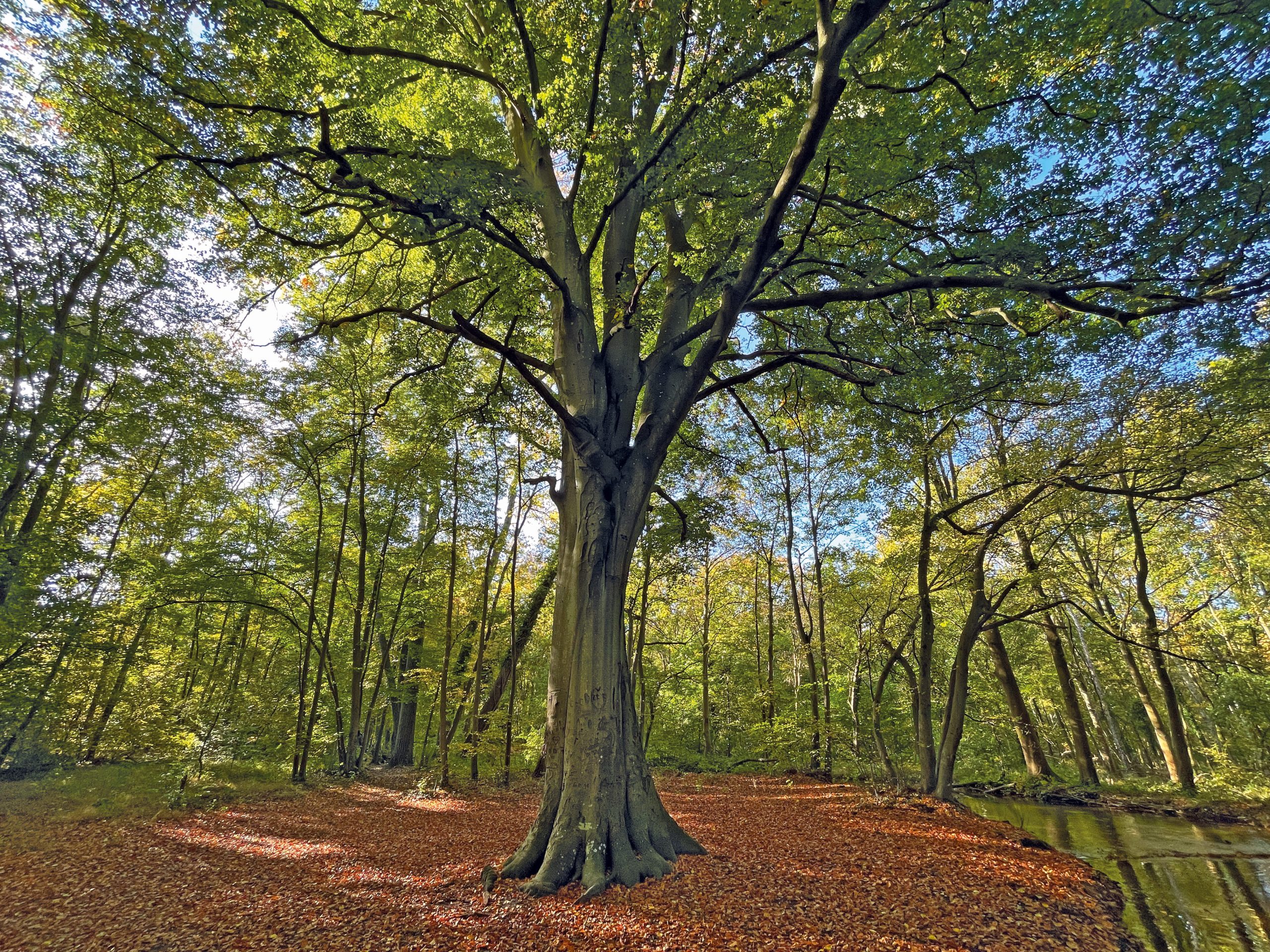
Our relationship with trees is not in their favour. Despite the affection we profess, the walks along forest paths that dazzle the eyes and reoxygenate the soul, the momentary peace of mind wrought from distancing oneself from the mechanical clamour of the world, we do not treat them decently. Timber, lumber, wood―our primary dialogue with trees is spoken in the language of the chainsaw, gobbled up by Ikea and consorts in a frenzy of fast furniture not built to last. Through human agency, the vast cloak of indigenous forests that formerly characterised the Earth is largely extinct, replaced by ghostly plantation-forests raised, axed, replaced.
Our relationship with trees goes back millions of years, nonetheless. Analysis of her remains suggests that Lucy, one of our oldest ancestors found by palaeontologists, was in all likelihood killed falling out of the tree canopy that was her home.
Harriet Rix[6] describes the many effects that inhabiting an arboreal abode has had upon us, demonstrating how profoundly the forest has been incorporated into both our physical and mental beings. Lucy and her kin’s bodies were equipped with lower limbs capable of walking upright, freeing the hands for other activities, and hefty upper limbs that enabled them to climb trees. Our morphology, our prehensile hands, are the outcome of the particular needs of movement and food-gathering in a forest environment. The ability to sleep peaceably at the summit of a protective tree, Rix believes, has been a boon for our evolution, because of the time afforded for dreaming, a formative activity for the mind. Further, she surmises that our love for chocolate was born of trees manipulating our senses as a strategy to get us to distribute their seeds.
And surely the aesthetic pleasure that humans derive from the odour and texture of wood, from the rustle of wind through the leaves, from the geometries of order and disorder, from immersion in luscious vegetation and the stars above, have structured the perceptual foundations of our mind.
Form follows fashion
Once upon a time, the natural pilosity covering the human body became insufficient, provoking the invention of apparel in order to clothe the body. A rational explanation is that when our ancestors moved out of Africa, survival in less clement environments led to them misappropriating the pelts of other creatures. Thus, clothing one’s body was an early step setting us apart from nature.
Legend, on the other hand, tells that this is the consequence of a snake persuading two human beings to partake of an apple. And though a consequential proportion of humanity takes the biblical account literally, the story is pertinent as an allegory for how the fraught nature of sexual relations has led to our concealing strategic elements of our bodies from view.
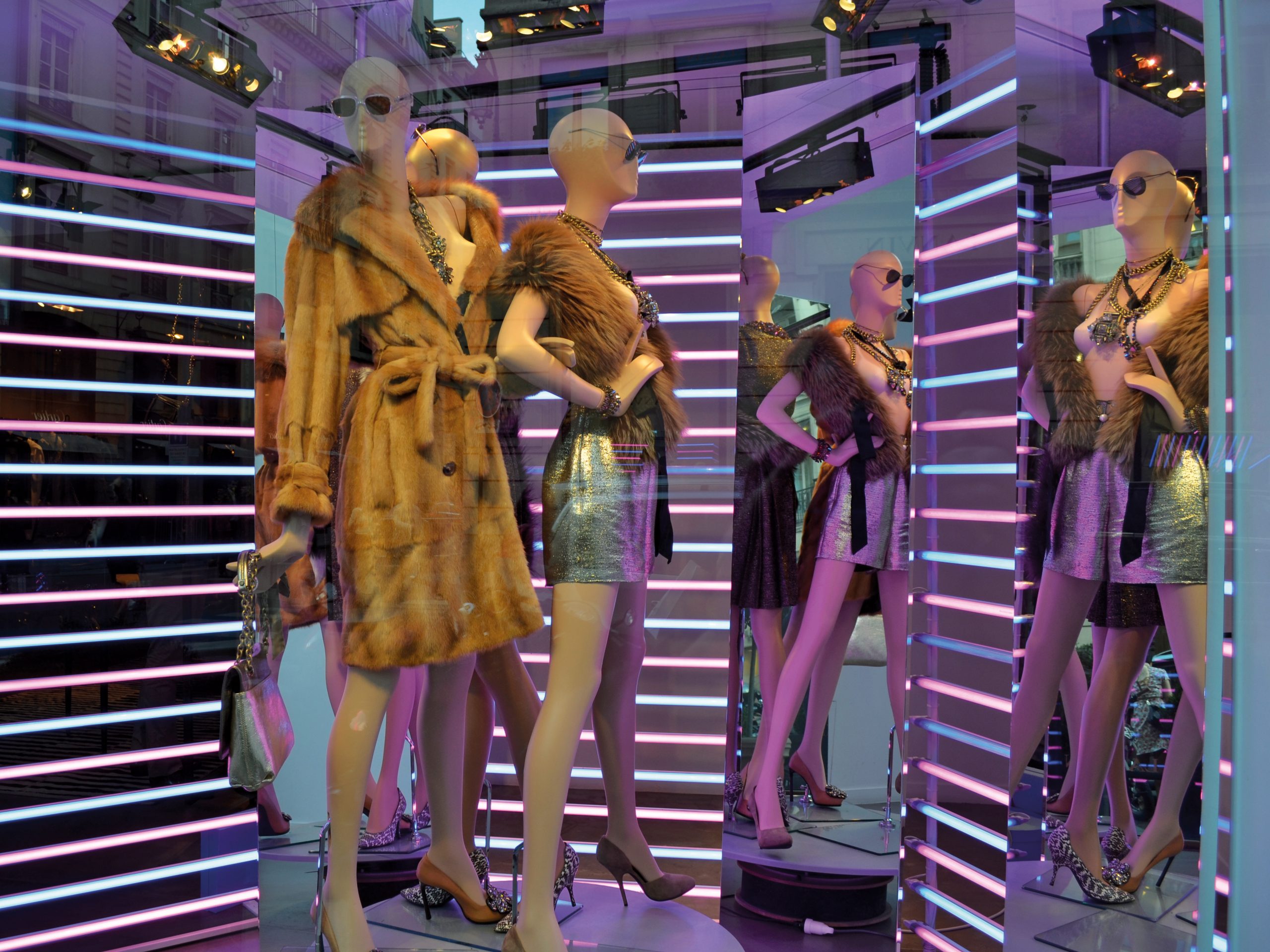
Both architecture and apparel serve to mediate the otherwise far-too-raw relationship between ourselves and the world. A relationship underpinned by utilitarian considerations (environment, shelter, protection, privacy); symbolic concerns relative to the place occupied by each in society and on Earth (belonging, domination, distinction, individuality); and aesthetics, via the artful meaning they bring to our lives. For some reason, architecture and its styles are considered a serious matter, while apparel and its fashions are somehow frivolous[7].
This attitude can be seen in the way the Modern Movement sought to banish ornament, considered a trapping of previous, less “enlightened” times, and therefore the manifestation of the archaic needs of a more primitive humanity—the Viennese architect, Adolf Loos, went as far as declaring that “ornament is crime”! No such thing ever happened with apparel, and it would in all likelihood be impossible, since adornment goes to the heart (the same ♥ as above) of fashion. Indeed, one looks with amusement at the old photographs of the leading architects of the Modern Movement sporting their purely ornamental bow ties, quite the most useless and unfunctional of vestments.
When one looks upon the wildly flamboyant decorative forms displayed by the world’s flora and fauna, one is confronted by the hiatus between the scientific view that this is the consequence of aleatory evolutionary processes, and the aesthetic intuition that imagination must be the veritable motor of evolution. Seen through human eyes—whether in a bird or a flower or whatever else—there is so much beauty, creativity, and joyfulness that it overflows the strict frameworks of reason.
Perhaps becoming mindful of our bodily nudity signalled evolution’s kicking us out of paradise. The imperative to clothe ourselves has given us the opportunity to invent our own plumage, through an imaginary inspired by the infinite ornamental permutations offered by biology and enabled by the transformability of organic material into fabric[8]. In this, we reassert our indissoluble link to nature and the Earth’s beauty. And in this, form transcends function.
Inside out
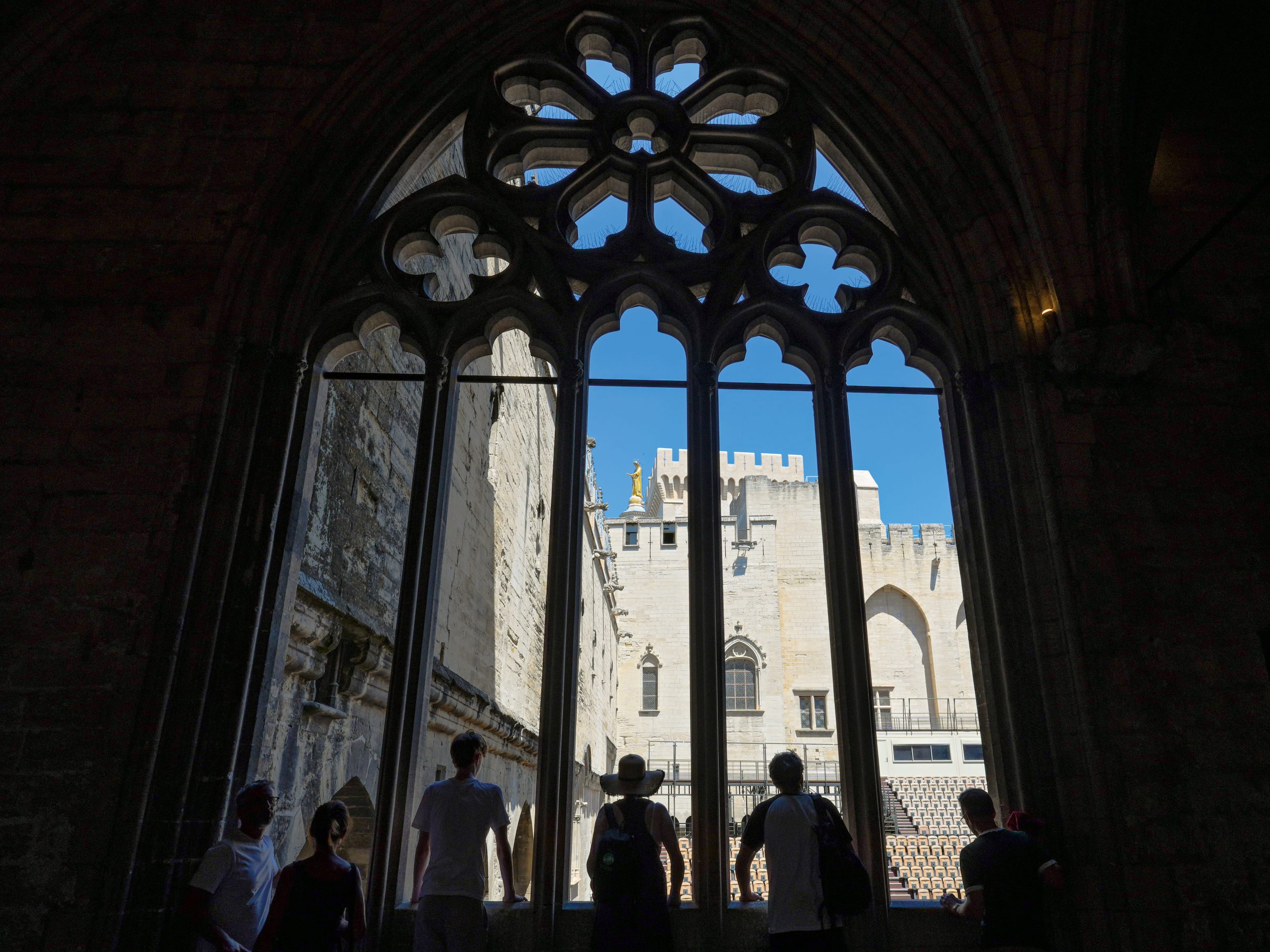
By separating without from within, apparel and architecture (as we have seen) permit the realm of individual being to coexist with the world at large. Our bodies safely screened by our clothing, we not only brave the elements, but also the scrutiny of our fellows. And when we stand at the door of whichever place we might call home, the surrounding structure has our backs in the most concrete manner.
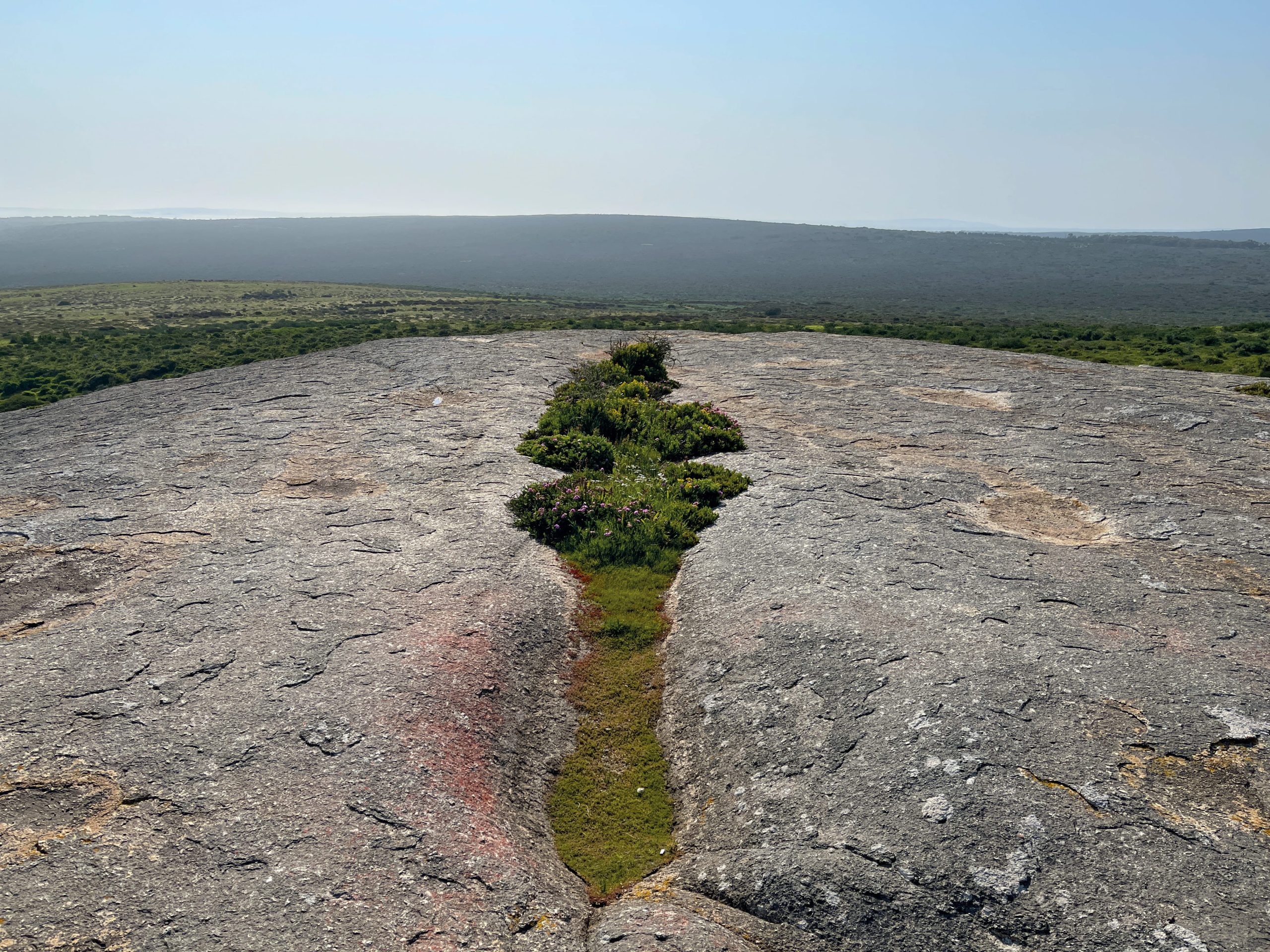
But when these things are stripped away, exposing us in the nakedness of our epidermal attire, what elemental relationships connect our bodies to the Earth? Our skin forms a receptacle tasked with guaranteeing the organic and metabolic integrity of our inner workings. Physically and symbolically, it constitutes the ultimate frontier disjoining bodily interior and exterior world. Yet it also provides the sensorial and sensual interface that enables our corporeal and psychic dialogue with everything, from intimate to vast, that surrounds us. As a mediatory surface, it contradicts any notion of physical separation between us and all the rest: our beings and our milieu unite in an act of mutual annexation.
Indeed, the skin in no way constitutes a hermetic membrane: exchanges occur between the body and the environment. Perspiration is released to the atmosphere, while multiple substances (not necessarily benign) penetrate the skin and enter the bloodstream. And it is pierced with orifices, giving us the sensation that within the space sculled between eyes and ears, consciousness itself has taken up residence, face to face with the world[9].
Likening the skin to an envelope shrink-wrapping all that is vital within belies a topological complexity in which bodily exterior and interior converge. The digestive tract, on its long, convoluted journey from buccal entry to anal exit, is in reality a seamless continuation of the skin’s exterior surface, even though the tissues making up its different parts vary greatly according to their function. An interior foray that enables the passage through our bodies of all the Earth’s comestible delights, to nourish, to sustain, to maintain life. In the same way, the lungs fold the outside in, allowing the atmosphere to enter and exchange oxygen and carbon dioxide with the bloodstream. Similarly, the uterus folds inwards, the placenta forming an inner-outer bubble where life in gestation may initially reside.
At the tip of my tongue
Our engagement with each other, our engagement with the world, depend upon capacities deeply foundational to body and self. The physico-mental complex consisting of thought, speech, listening, reading, writing, composing a system that enables cognition, communication, and creation. Each of these aptitudes is associated with bodily apparatus catering for their expression. The brain for thought; buccal cavity and vocal cords for speech; ears to listen; hands to write; eyes to read. Augmented by human ingenuity to overcome disabilities, substituting touch for the blind, sign language for the deaf.
Thought and speech form a totality that has empowered humanity in incommensurable ways. And while there are many non-verbal forms of thought—graphics, music and arithmetic come to mind, alongside the practice of social skills and the capacity for spatial orientation—language enables sophisticated intercourse, rouses the realm of the imagination, permits the elaboration of complex intellectual ideas.
How less far-reaching might the mind be, if it were bereft of the capacity of the mouth to produce words that are as tactile to the tongue as they are sonorous to the ears? An ample register of phonemes allows the construction of a vast lexicon, constituting the commons of a social group as it composes the vocabulary circumscribing its shared experience of the world. And though thought-as-words can operate within the mind independently of the mouth, their oral projection is prerequisite to the operation of society in the world.
The photographs illustrating this article come from an ongoing body of work that is directed towards a phenomenological study of the inhabitation of the world by the human species. You can download a complete portfolio at https://www.joetopia.org/_
pdfs/crea/Joseph_Rabie- portfolio_2026-07_mdef.pdf
It is amazing how each word, as an assemblage of sounds, starts off as an arbitrary abstraction[10] that becomes invested with meaning. Thus, the word representing the same thing may take a totally different form in different languages—dog, chien (French), hund (German), kalb (Arabic), inja (Xhosa)—that in each individual’s mind comes quasi-magically alive. So that the meaning, for each person, manifests itself as a composite of the acts, emotions, and memories of their personal encounters with dogs, qualified by the practical and symbolic role accorded dogs by their particular society.
Thus, the agentivity of words resides in their capacity to incorporate the world into our selves, while at the same time giving us the ability to project ourselves into the world. The invention of script (very recent on the timescale of evolution) has transformed us, by allowing for the collective recording and use of knowledge liberated from the mortality of individual memory. Reading and writing have given us the power to instrumentalise planet Earth in its entirety, for the better and the worse…
Joseph Rabie
Créteil
On The Nature of Cities
[1] He uses the French term, atterrir. Bruno Latour, Face à Gaïa : Huit conférences sur le Nouveau Régime Climatique, Éditions La Découverte, Paris.
[2] It is the tilt of the Earth’s axis at 23.5° relative to its orbital plane of rotation around the sun that is responsible for the seasons.
[3] Edward S. Casey (2002), Representing Place – Landscape Painting and Maps, University of Minnesota Press, Minneapolis/London, p. 108. Casey cites Susan Bush (1971), The Chinese Literati on Painting, Harvard University Press, Cambridge, p. 58.
[4] Ibid., pp. 108-109.
[5] Songwriters: Alan Jay Lerner / Frederick Loewe.
[6] Harriet Rix, The genius of trees: how forests have shaped humanity, from chocolate cravings to our ability to dream, The Guardian, 25 August 2025.
[7] This is reinforced by the prejudice that situates architecture as a “masculine” domain and apparel as a “feminine” one.
[8] This is not without ambiguity, given the multiple origins of different materials. Cotton and linen are cultivated plants. Sheep are shorn. Leather, furs and silk are fatal for their providers. Though synthetic fibres constitute an innovative alternative, both their manufacture and ultimate degradation pollute the Earth.
[9] In this, the author of this piece can only speak for himself!
[10] Onomatopoeias are exceptions, as they mimic the sonority of the named phenomenon.

