

Despite the high-tech name of “waste-to-energy” and its sustainability claims, GAIA’s documentation of the financial, climate, and human health impacts of twenty incinerators worldwide paints a very different picture. Although these twenty incinerators and incinerator proposals ranged across the globe, they told the same story: decades of debt, a dark cloud of air pollution, and the burning of resources that could have been recycled, composted, or prevented altogether.
Below are the toplines from GAIA’s research into these twenty incinerators, called The Burn Book: Incinerators that Threaten the Climate, Public Health, and our Finances. For more in-depth information you can read the report itself.
Attero Moerdijk Facility – Netherlands
Operating since 1997, Attero’s Moerdijk plant is one of the Netherlands’ largest waste incinerators. The plant has emitted roughly 945,000 MT of CO2 in a single year, was supported by a $269.4 million USD (€233 million) European Investment Bank (EIP) loan, and was tied to contracts requiring 510,000 MT of waste annually—commitments that later generated financial disputes when increased waste separation reduced municipal waste deliveries.10 11 Rather than eliminating waste, Moerdijk demonstrates how a large, capital-intensive incinerator can create decades-long dependence on maintaining waste throughput while generating hundreds of thousands of tons of CO2 and ash annually.
Runcorn Energy Recovery Facility (ERF) – United Kingdom
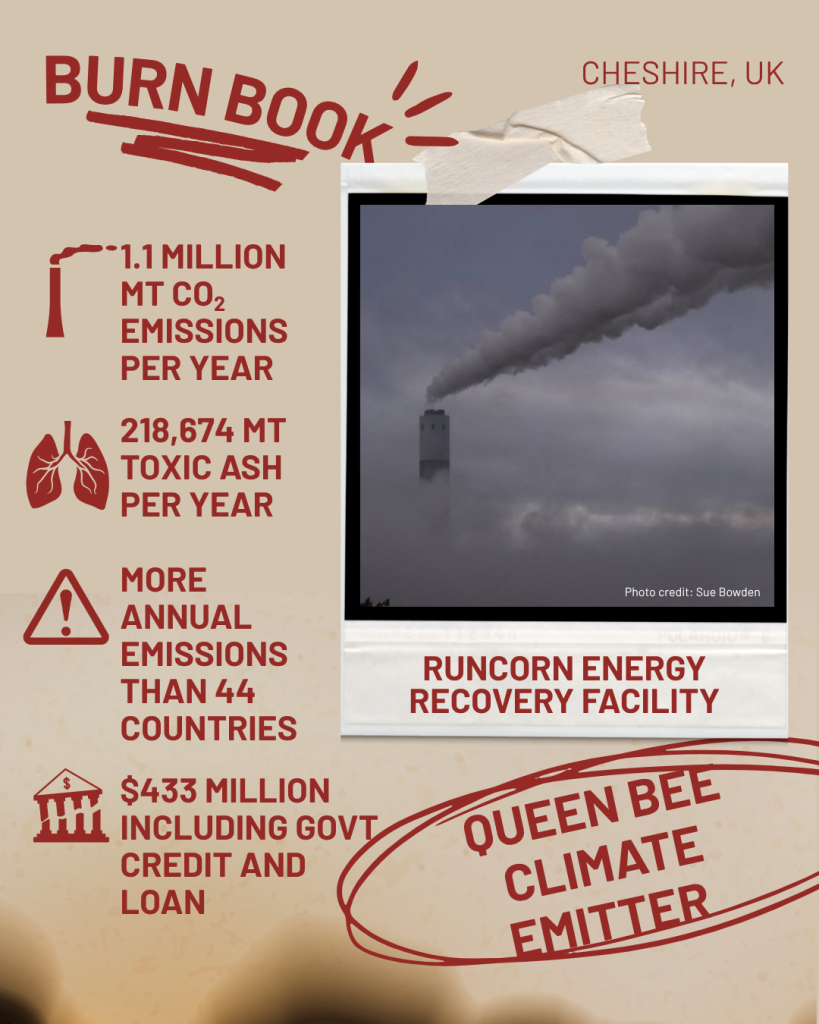
Operating since 2014–2015, Runcorn is one of the UK’s largest waste incinerators, permitted to burn 1.1 million MT annually in an industrial area surrounded by communities living and working nearby that have spent years reporting odors, noise, dust, vermin and other disturbances.56 57 The facility released approximately 1.11 million MT of CO2 in 2025 and generated more than 218,000 MT of bottom and fly ash, while its development was supported by long-term Greater Manchester waste commitments and substantial public financing, including a direct European Investment Bank (EIB) loan.58 59 Community opposition ultimately contributed to legal action by nearly 200 households and a reported $1.3 million USD (£1 million settlement), while residents and campaigners continue to press for stronger monitoring, enforcement, transparency and protection from the cumulative impacts of one of Britain’s largest incinerators.60 61
Hempstead Resource Recovery Facility (Reworld Hempstead) – USA
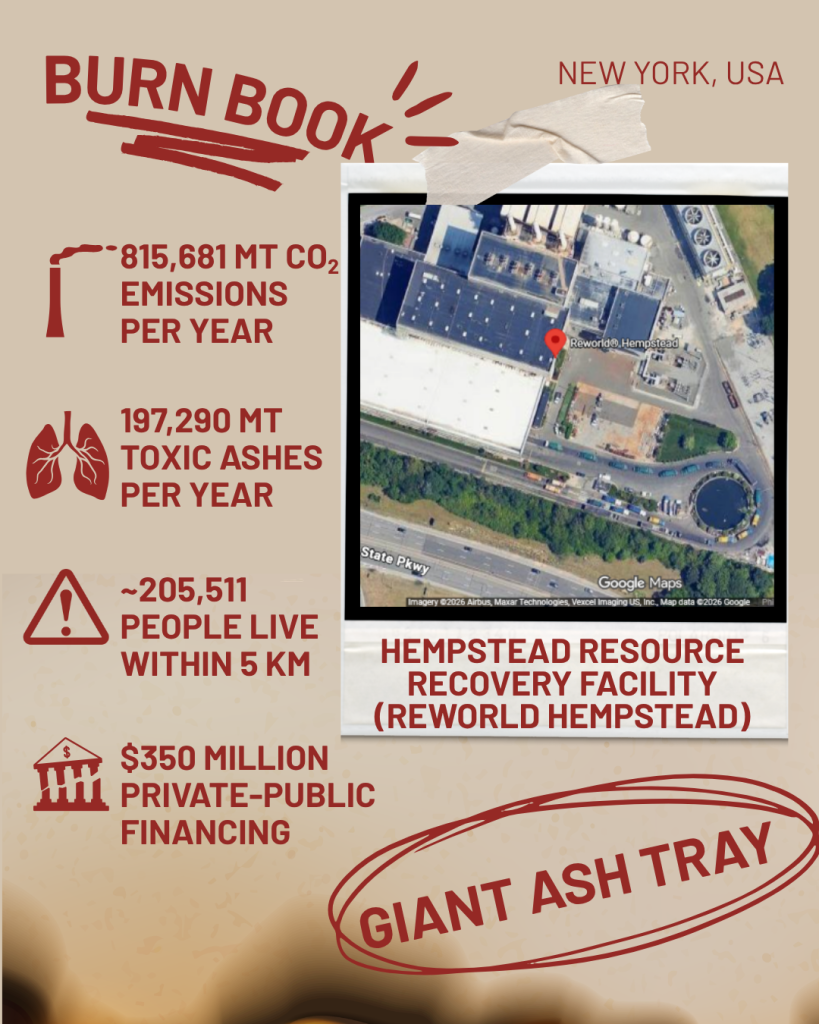
Operating since 1989, the Hempstead Resource Recovery Facility (Reworld Hempstead) is a large waste incinerator located in Westbury, New York, operated by Reworld (formerly Covanta), and capable of processing approximately 944,000 MT of waste annually.103 The facility generates substantial greenhouse-gas emissions and roughly 197,000 MT of incinerator ash per year, much of which has historically been disposed of at the Town of Brookhaven Landfill, adjacent to the predominantly Black and Latino community of North Bellport, where regulators have documented a groundwater plume contaminated with PFAS and 1,4-dioxane.104 While the plume has not been specifically attributed to Hempstead’s ash, New York State Department of Environmental Conservation (NYSDEC) fined Reworld $878,500 in penalties in 2025 for nearly a decade of historic violations in ash-management practices.105 Hempstead is also supported by a long-term put-or-pay contract requiring payment for at least 381,000 MT of waste annually through 2034, reinforcing dependence on incineration even if municipal waste deliveries decline.106
Essex County Resource Recovery Facility (Reworld Essex) – USA
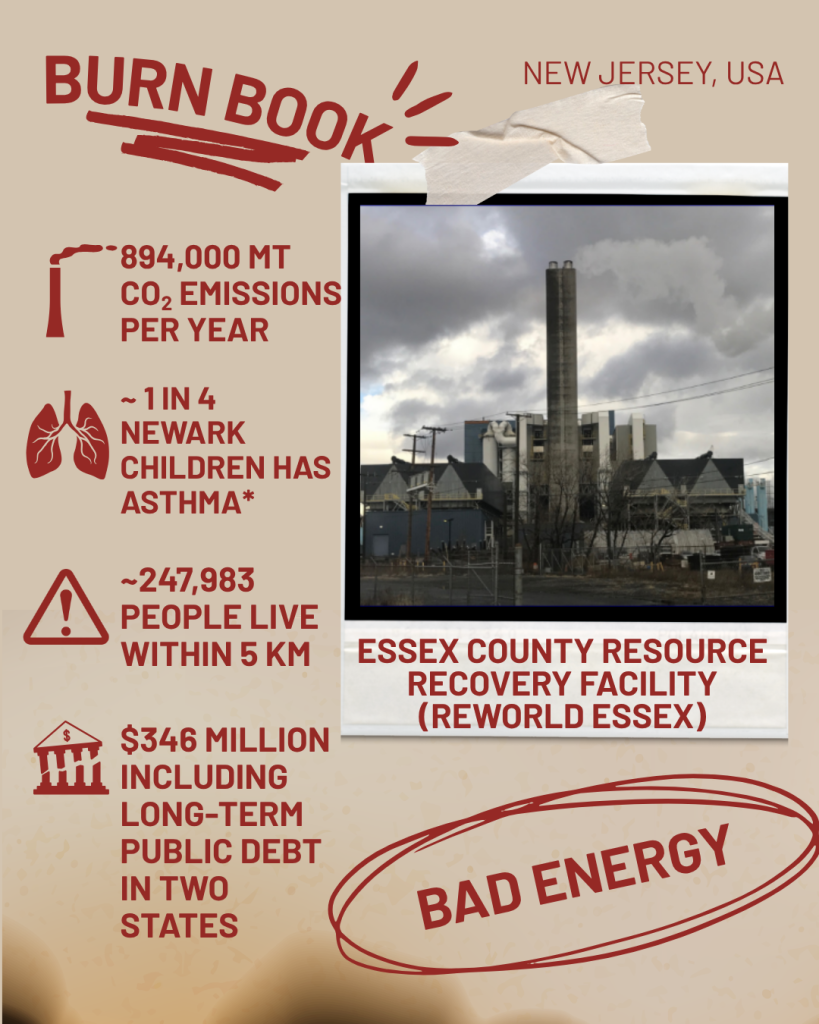
Operating since 1990, the Essex County Resource Recovery Facility (Reworld Essex) is a large waste incinerator located in Newark’s heavily industrialized Ironbound neighborhood, where it is operated by Reworld and permitted to burn approximately 894,000 MT of waste annually.139 The facility released roughly 854,000 MT of direct fossil and biogenic CO2 in 2023, alongside hundreds of metric tons of nitrogen oxides (NOx) and other air pollutants, adding to the cumulative pollution burden facing the surrounding environmental-justice community.14 The facility generates roughly 177,000 MT of incinerator ash annually that must be transported elsewhere for processing or disposal.141 142 For decades, the Ironbound Community Corporation and allied environmental-justice organizations have challenged the facility’s pollution and called for its closure, stronger enforcement, and an end to Newark’s dependence on waste incineration.143
Timarpur-Okhla Waste-to-Energy Plant – India
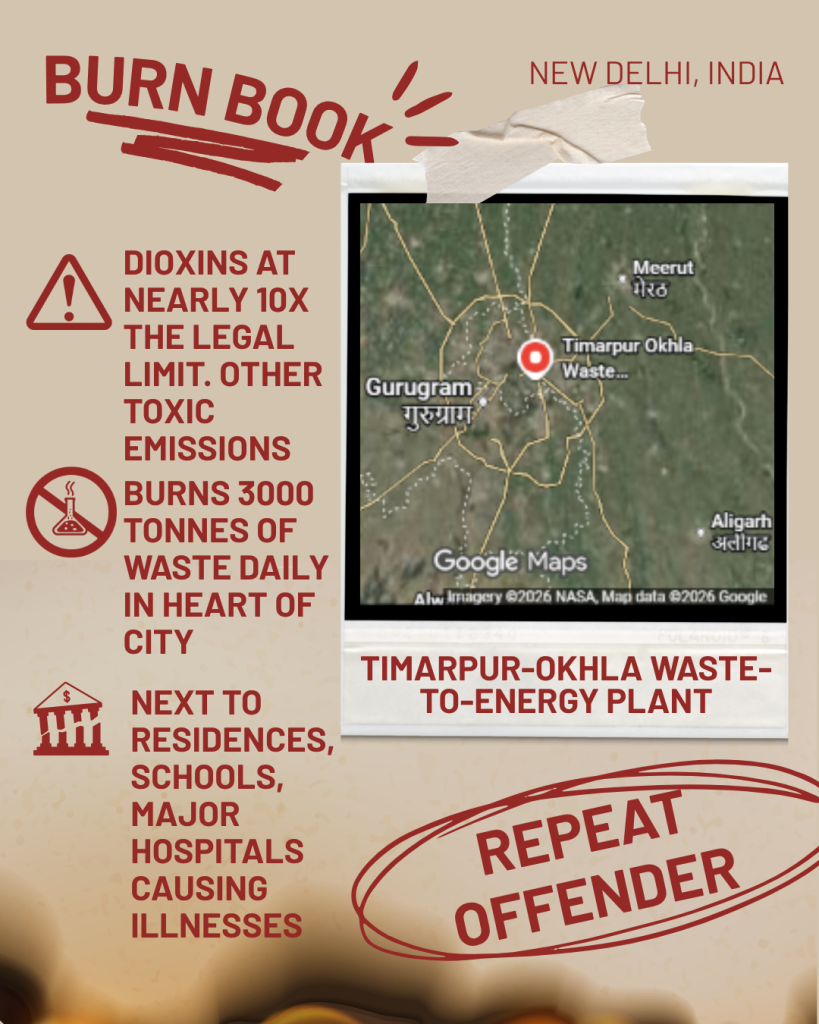
Operating since 2012 in one of the most densely populated parts of New Delhi, the Timarpur–Okhla Waste-to-Energy Plant burns up to 711,750 MT of municipal waste per year beside residential communities, hospitals and schools.178 The facility has received substantial government support—including publicly supplied waste, nominal cost land, an approximately $1 million USD (₹10 crore) central government subsidy, public sector financing and carbon credits—while residents have spent more than a decade challenging its pollution and expansion.179 180 181 Regulatory monitoring has repeatedly documented pollution problems: government testing found violations for particulate matter and dioxins/furans as early as 2013, while 2021 monitoring measured dioxins/furans at nearly ten times the legal limit and hydrogen chloride at nearly four times the limit.182 183 Despite this history of violations and community opposition, the facility has pursued a major expansion that would increase waste processing capacity by another 1,000–1,200 MT/day.184
Amager Bakke (CopenHill) – Denmark
Operating since 2017, Amager Bakke—also known as CopenHill—is a municipally owned mass-burn waste incinerator in Copenhagen operated by Amager Resource Center (ARC). Although promoted internationally for its architecture, ski slope, energy efficiency and advanced pollution controls, the facility has also become a prominent example of the financial and climate risks associated with oversized incineration infrastructure. Amager Bakke was financed through approximately $682 million USD (DKK 3.95 billion) in publicly backed borrowing, while its owner municipalities later loosened restrictions on imported waste after lower than expected local waste volumes weakened the project’s finances.233 234 ARC currently reports stack emissions of approximately 560,000 MT of CO2 per year, while local and regional advocates have argued that the plant’s scale and long-lived debt create pressure to maintain high waste throughput even as Copenhagen seeks to increase recycling and reduce residual waste.235 236

Isséane Incinerator – France
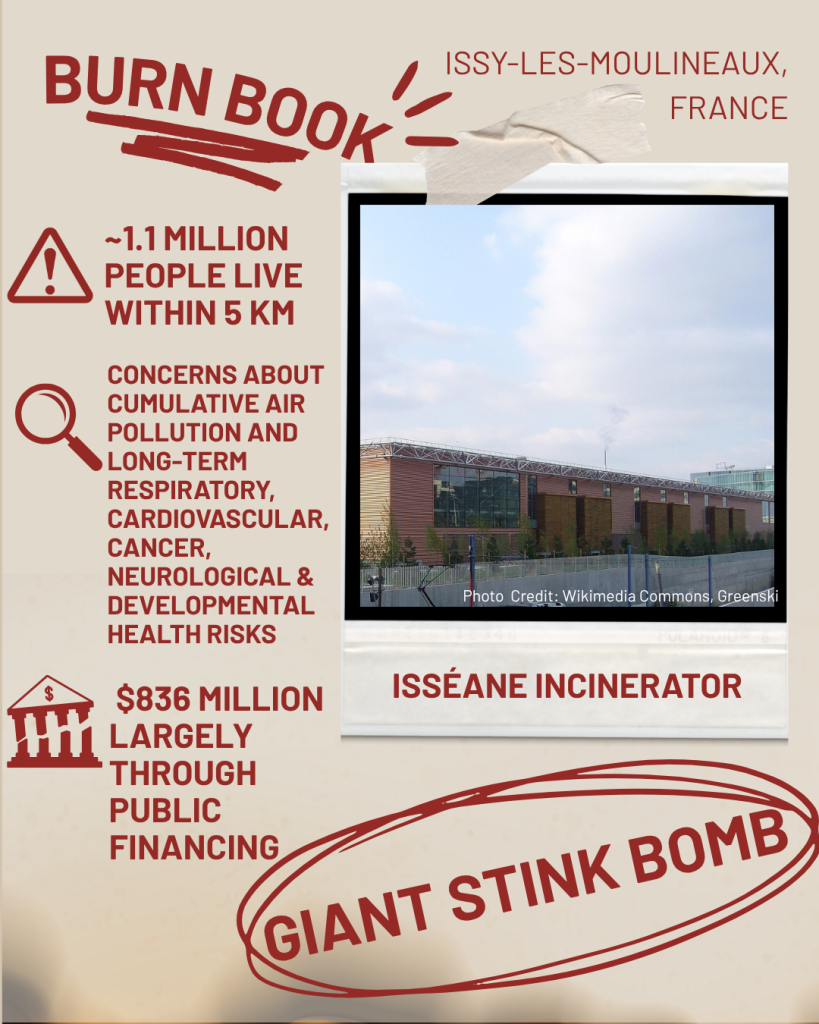
Operating since 2007–2008, Isséane is a large publicly owned waste incinerator embedded in the densely populated Paris metropolitan area, with over one million people living within 5 km of the facility.276 In 2024, the plant burned 536,000 MT of waste and released 252,060 MT of fossil CO2, alongside NOx, particulate matter, mercury, heavy metals and dioxins; it also generated approximately 89,300 MT of bottom and hazardous fly ash, with fly ash transported to hazardous-waste facilities outside Paris.277 Built at a cost of approximately $836 million USD (€600 million) largely through public financing, Isséane has faced sustained criticism over its short stacks, cumulative pollution in an already heavily urbanized area, health monitoring, and the financial and infrastructural dependence created by large-scale incineration.278 279
Kwinana Energy Recovery Facility – Australia
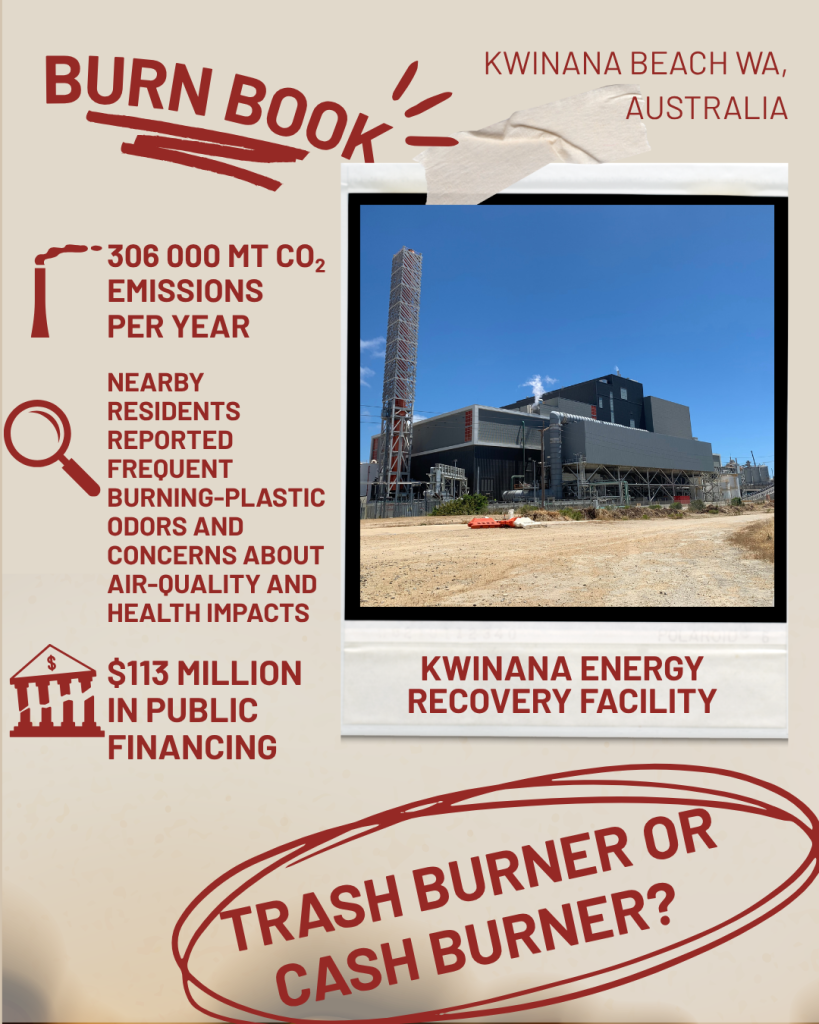
Australia’s first large-scale operational municipal waste incinerator, Kwinana Energy Recovery was developed at a cost of approximately $474 million USD (A$668 million) and is permitted to burn up to 460,000 MT of waste annually in the heavily industrialized Kwinana area south of Perth.313 314 The project received $16.3 million USD (A$23 million) in direct federal grant funding and up to $63.8 million USD (A$90 million) in debt financing from the Australian Government-owned Clean Energy Finance Corporation, while participating councils entered 20-year waste-supply agreements committing residual municipal waste to the facility.315 316 The plant’s own pre-construction lifecycle assessment estimated 115,165 MT CO2e/year in gross greenhouse gas emissions, while residents and environmental groups have raised concerns about air pollution, cumulative industrial exposure, long-term waste contracts and the potential diversion of materials from recycling and composting.317 318 Since waste burning began, residents of nearby Medina have reported recurring burning-plastic/rubbish odors, and Western Australian authorities have acknowledged increasing odor complaints.319
Reppie Waste-to-Energy Facility – Ethiopia
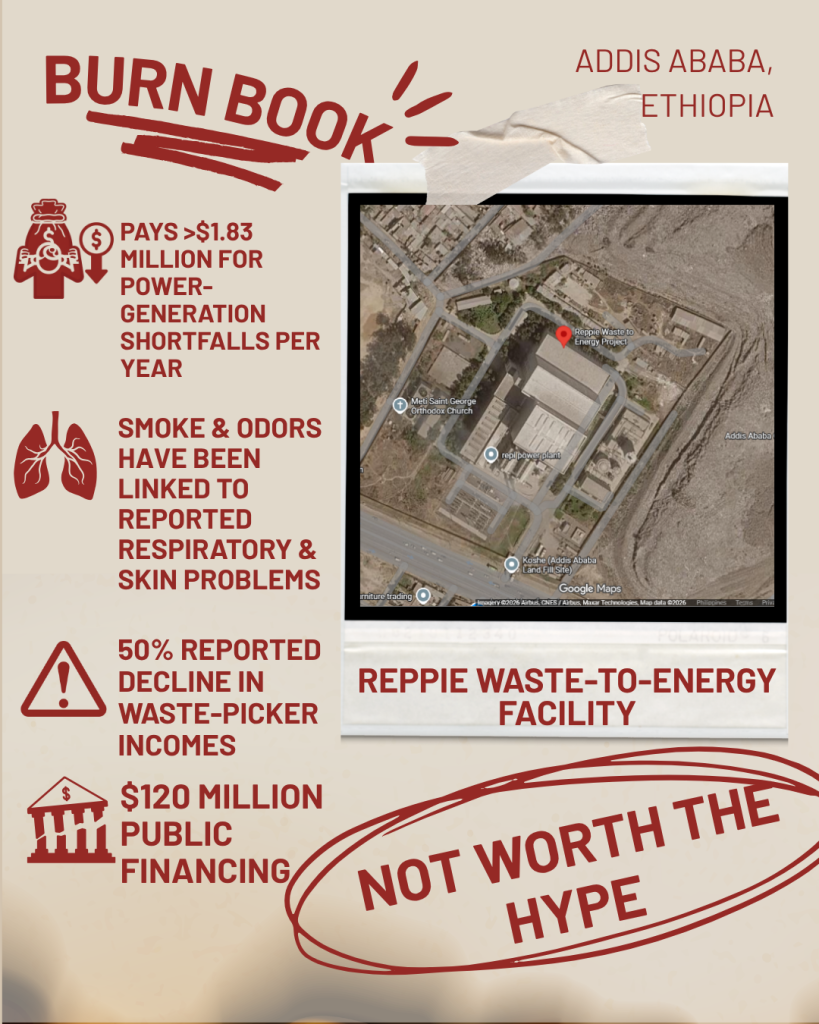
Reppie was inaugurated in 2018 as Africa’s first large-scale municipal waste incinerator, after the Ethiopian government spent approximately $120 million USD developing the facility beside Addis Ababa’s longstanding Koshe landfill.380 381 Designed to burn 1,400 MT/day—approximately 511,000 MT/year—the plant now processes only about 396–650 MT/day, while roughly 3,000 MT of waste can still arrive at the adjoining landfill each day.382 383 The facility’s underperformance has created continuing public costs: its annual operating cost is approximately $6.09 million USD (800 million Ethiopian birr), while Addis Ababa faces more than $1.83 million USD (240 million Ethiopian birr) annually in compensation to Ethiopian Electric Power associated with power-generation shortfalls.384 385 Residents and waste pickers living around Reppie and Koshe report smoke, odors, respiratory and skin problems, continued landfill expansion and loss of livelihoods, while interviewed waste pickers reported an average 50% decline in income following introduction of the incinerator.386
Beddington Energy Recovery Facility – United Kingdom
Beddington Energy Recovery Facility is a mass-burn municipal waste incinerator in south London built for approximately $308 million USD (£205 million) and operating under a 25-year residual waste contract between Viridor and the four councils of the South London Waste Partnership.431 432 The facility burned 330,484 MT of waste in 2025 and released 338,934 MT of carbon dioxide, while its environmental permit now allows it to receive up to 382,286 MT/year following a controversial capacity increase approved by the Environment Agency in June 2026.433 434 The facility has faced sustained community opposition over air pollution, waste imports, traffic and regulatory oversight. Concerns intensified after investigators determined that Beddington had exceeded its daily nitrogen oxide emissions limit 916 times between 2022 and 2024 without those exceedances being correctly reported at the time.435 436


Hennepin Energy Recovery Center (HERC) – USA
Operating since 1989, the Hennepin Energy Recovery Center (HERC) is located next to the historically black and working-class neighborhoods of North Minneapolis, Minnesota, and is owned by Hennepin County and operated by Great River Energy (GRE HERC Services LLC). Minnesota has the third-highest number of Municipal Solid Waste (MSW) incinerators in the country, with six of the seven located in an environmental justice community.494 Over the past 37 years, the HERC facility has become the top polluting facility in Hennepin County, contributing roughly $16 million in health damages, and at least 1-2 premature deaths annually from particulate matter alone, according to a PSE Healthy Energy study.495 496 In October 2024, the Minneapolis City Council passed a resolution pushing to end waste incineration at the HERC by December 31, 2027, and fully decommission the facility by 2033.497 However, this timeline is a recommendation to the county, with county officials not committing to an enforceable closure timeline.
Benowo Waste-to-Energy Plant – Indonesia
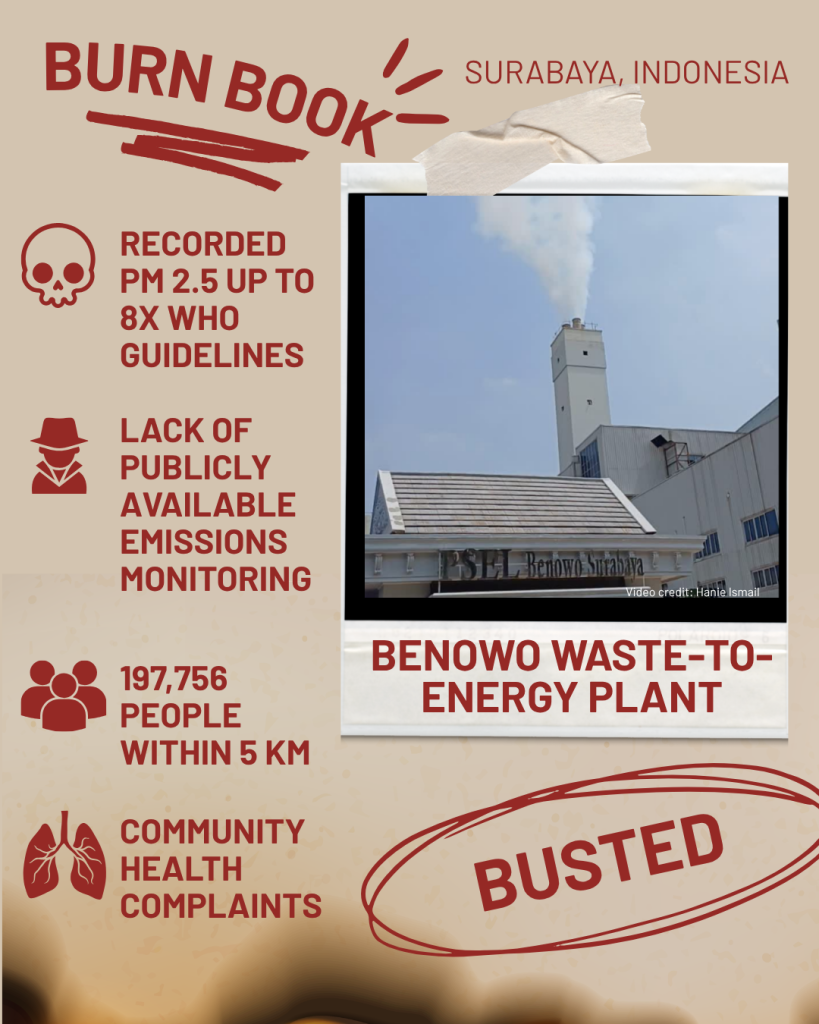
The Benowo Waste-to-Energy Plant in Surabaya is Indonesia’s first commercially operating large-scale municipal waste gasification facility, developed through a 20-year Build-Operate-Transfer agreement between the Surabaya City Government and PT Sumber Organik.549 550 Its thermal gasification unit, formally inaugurated in 2021 after an approximately $54.2 million USD (Rp704.4 billion) investment, is designed to process 1,000 MT of waste per day, or 365,000 MT/year, and generate up to 12 megawatts of electricity.551 The public-private arrangement guarantees PT Sumber Organik payment for at least 1,000 MT/day even when the city delivers less waste, while the national electricity utility purchases the plant’s electricity at a preferential $0.1335 USD/kWh tariff.552 553 Communities around Benowo have raised concerns about odors, respiratory illness, ash and the absence of transparent toxic-emissions data, while community air monitoring found daily-average PM2.5 concentrations exceeding the World Health Organization guideline on all 31 monitoring days, with maximum concentrations reaching roughly eight times the guideline.554

Maishima Incineration Plant – Japan
Osaka’s Maishima Incineration Plant is a publicly owned mass-burn waste incinerator that began operating in 2001, with two 450-MT/day furnaces capable of burning up to 900 MT/day.625 Designed by Austrian artist and architect Friedensreich Hundertwasser, the highly decorated facility cost approximately $492.0 million USD (¥60.9 billion) to construct and became controversial over its unusually high public cost.626 627 Recent FY2024 records show 32,762 MT of Maishima ash and other incineration residues sent to landfill.628 629 The plant also became the center of a major environmental controversy in 2013–14 when Osaka burned approximately 15,300 MT of disaster debris transported more than 700 kilometers from Iwate Prefecture following the Fukushima disaster, despite opposition from residents concerned about possible radioactive contamination.630 Residents sought an ordinance establishing Osaka’s financial responsibility if health damage occurred, but the Osaka Municipal Assembly rejected the proposal in February 2013.631 Osaka authorities maintained that monitoring showed the material could be processed safely.632
Emerald Energy-from-Waste Facility – Canada
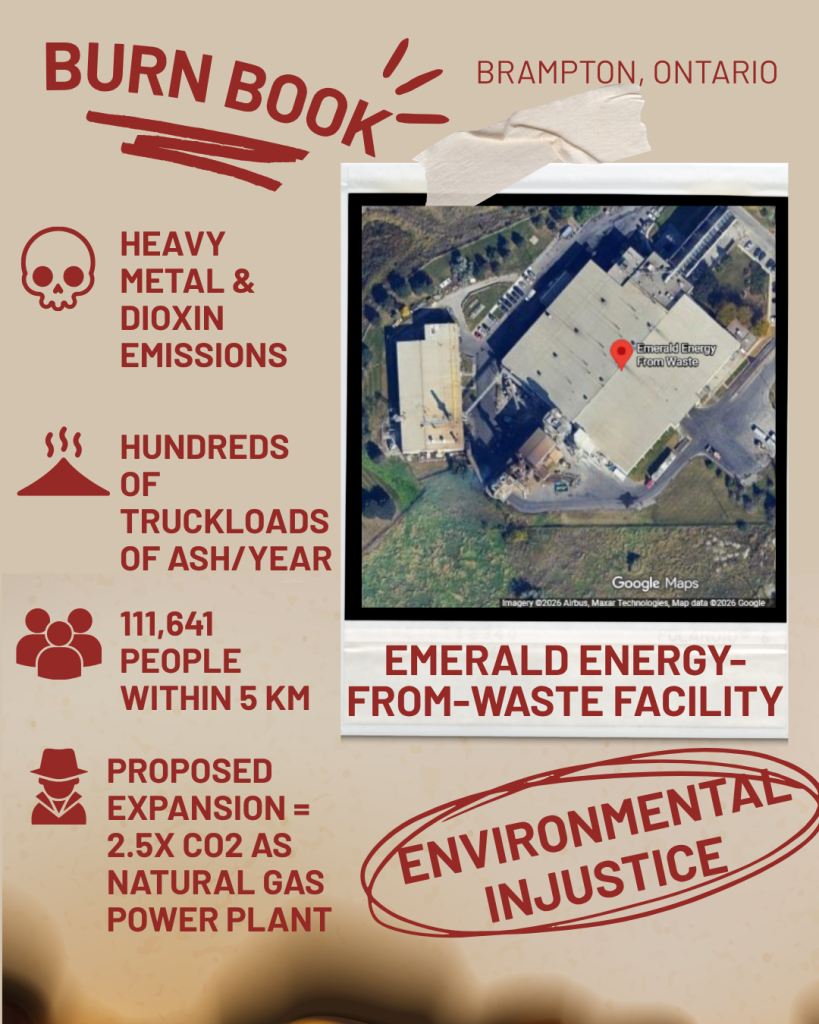
Operating since 1992, the Emerald Energy-from-Waste Facility is located in Brampton, Ontario, Canada. The company is beginning construction on a phased expansion in 2027 (approved in 2025) to increase capacity from approximately 182,000 to 912,000 MT/year, processing non-hazardous municipal and commercial waste— generating electricity, steam, with plans to eventually produce hydrogen. A recent report from the region’s Medical Officer of Health and Commissioner of Health Services warns that additional emissions from the expanded facility would increase cumulative exposure to air pollutants – posing serious health risks to nearby residents, many of whom are considered to be vulnerable.658

Joinville Energy Recovery Unit (URE) – Brazil
The Joinville Energy Recovery Unit (URE), which began operating in October 2025, is a new waste-to-energy facility constructed inside the city’s Parque de Educação Ambiental Bororós and designed to process 110 MT of municipal waste per day, or approximately 40,150 MT/year.686 Rather than directly feeding untreated waste into a conventional moving-grate furnace, the facility mechanically processes municipal waste into a dry fuel marketed as Composto Biossintético Industrial (CBSI), which is subsequently burned in a steam boiler to generate electricity.687The project has faced significant local opposition: environmental advocates, recycling organizations and academics have argued that burning CBSI still constitutes waste incineration, questioned its potential air emissions and challenged whether Joinville should invest more heavily in recycling, environmental education, and composting instead.
Rome Waste-to-Energy Plant – Italy
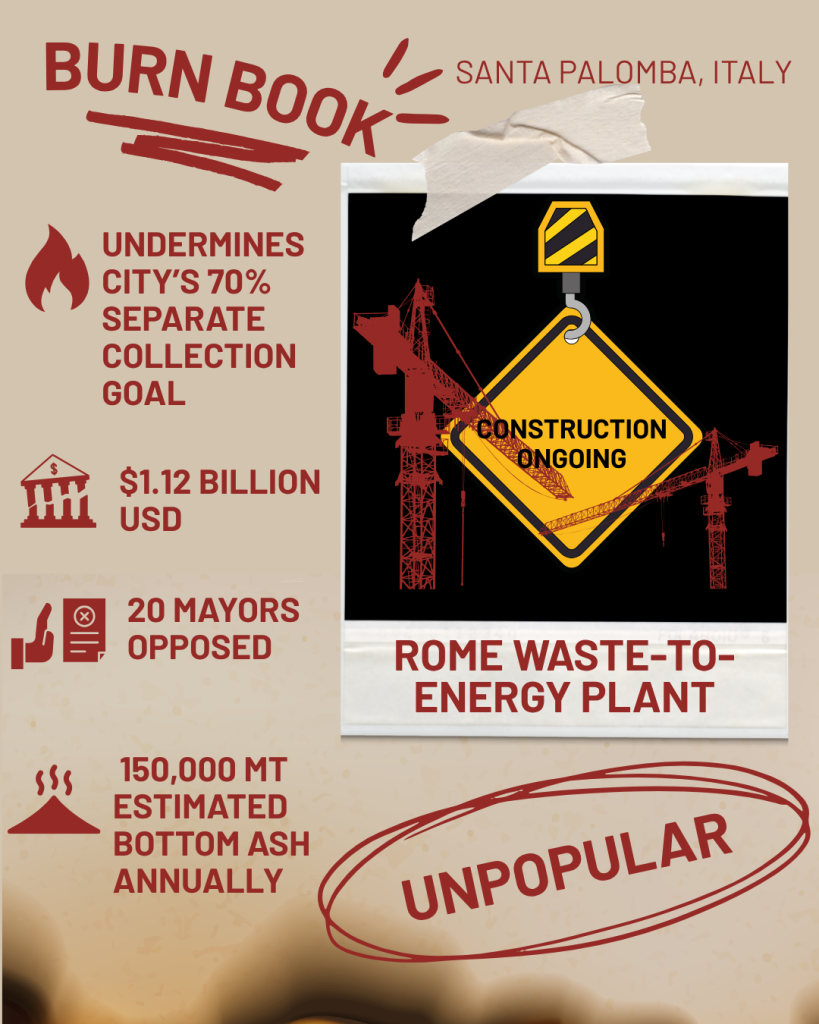
Construction began in May 2026 on Rome’s planned 600,000-MT/year waste incinerator at Santa Palomba, with first waste deliveries scheduled for September 2029. The nearly $1.12 billion USD (€946.1 million) project will bind Rome to a 33-year concession for one of Europe’s largest new municipal waste incinerators, even as the city plans to increase separate collection to 70% by 2035. The facility is expected to generate approximately 150,000 MT of bottom ash each year, while its experimental carbon capture system will initially address only part of the plant’s CO2 stream. Local governments and community groups have opposed the project over its size and location, raising concerns about air pollution, health, water resources, traffic, existing contamination and the potential for a large, long-lived incinerator to compete with waste reduction and recycling.
Pomona Waste-to-Energy Incinerator – Zimbabwe
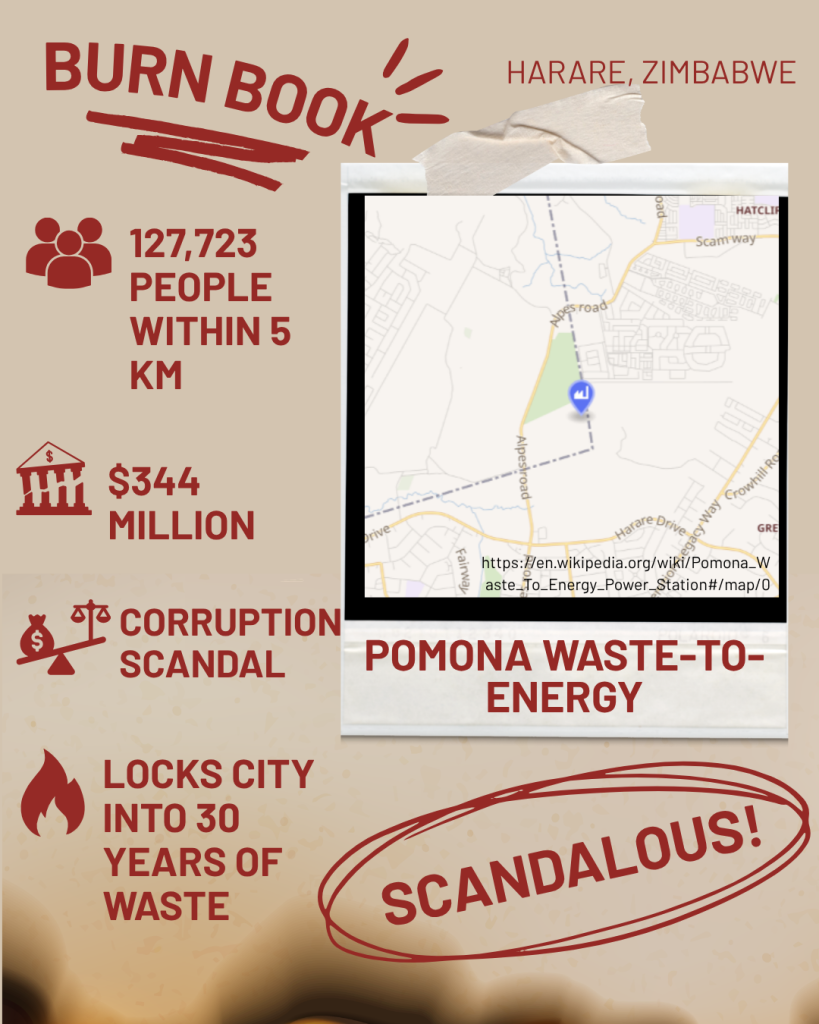
Harare’s planned Pomona Waste-to-Energy incinerator is the centerpiece of a controversial $344 million USD, 30-year waste concession that requires the city to pay for minimum quantities of waste whether or not they are actually delivered. The contract transfers control of Harare’s principal dumpsite to private operator Geo Pomona and ultimately requires as much as 1,000 MT of municipal waste every day, creating a long-term financial incentive to maintain a large residual waste stream. The project has also become intertwined with a major international corruption controversy: Albania’s Special Anti-Corruption Structure identified Mirel Mërtiri and Klodian Zoto as the de facto owners of Geogenix B.V., the Dutch parent company behind the Pomona concession, and alleges that they concealed their beneficial ownership and benefited from falsified invoices connected with Albania’s Tirana incinerator concession. Documents reported by Albanian media also identify Mërtiri as a Geogenix negotiator in Zimbabwe. In Harare, residents’ groups, civil society organizations and elected officials have challenged the Pomona agreement over its procurement, cost, minimum-payment guarantees and diversion of scarce public resources.
Energy Recovery Unit Barueri (URE Barueri) – Brazil
Now under construction in the densely urbanized western São Paulo metropolitan area, URE Barueri is designed to become Brazil’s first large-scale mass-burn municipal waste incinerator, processing approximately 300,000 MT of waste per year when operations begin in 2027. The project has drawn sustained community opposition over its proximity to residential areas, projected air emissions, ash generation, licensing history, and potential competition with recycling and composting. The original environmental review projected approximately 293 MT/year of nitrogen oxides (NOx), 73 MT/year of sulfur oxides (SOx), 73 MT/year of carbon monoxide and 15 MT/year of particulate matter, while estimating that ash and slag would equal 12–14% of incoming waste. At the same time, Barueri’s 2026 waste plan shows that the plant’s 870-MT/day capacity is roughly three times the amount of residual municipal waste the city itself generated in 2024, meaning the facility is explicitly designed to receive waste from surrounding municipalities as well. The project is tied to a 30-year public-private partnership, long-term electricity contracts and approximately $77 million USD (R$395 million) in tax-incentivized infrastructure debt, creating financial and contractual commitments that will extend for decades.

3-in-1 WtE Complex: Khiang Kan Energy Plant + Me Preme Energy Plant + Phraofa Power Plant – Thailand
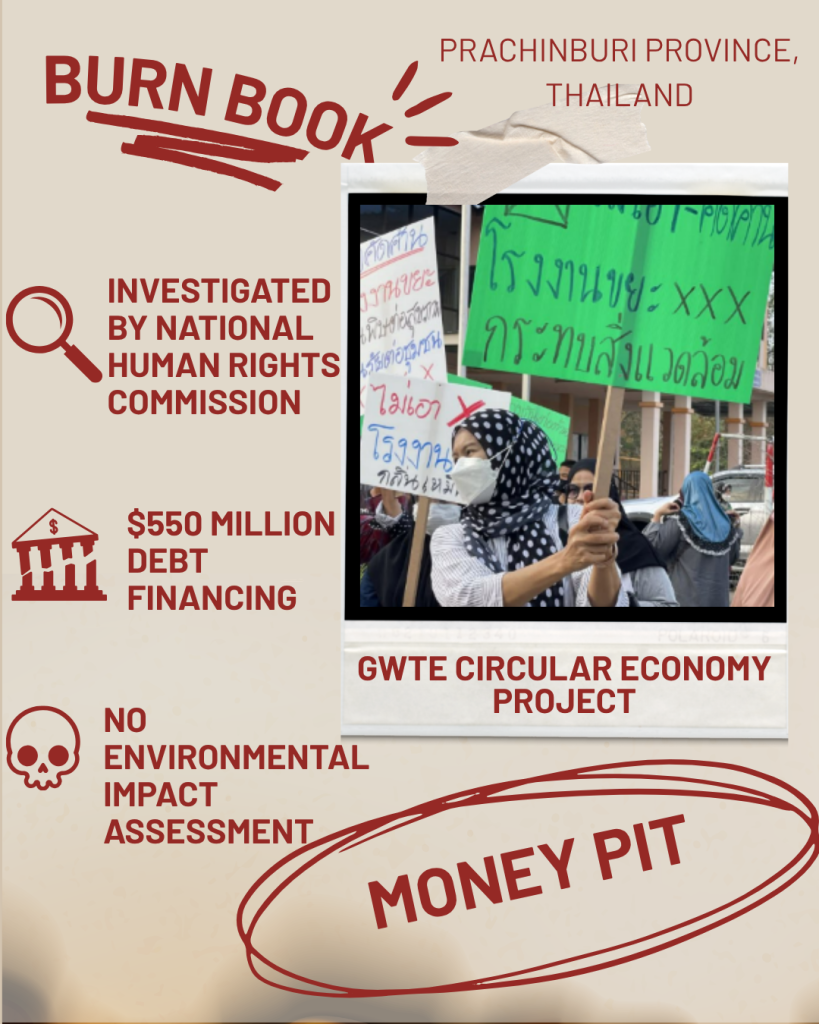
Three industrial waste incinerators are being developed side-by-side at the Hi-Tech Kabin Industrial Estate in Prachinburi Province, Thailand. The three plants are part of Gulf Development’s larger 12-incinerator GWTE Circular Economy Project, backed by more than $500 million USD in debt financing arranged by the Asian Development Bank (ADB) and other lenders, including the Asian Infrastructure Investment Bank (AIIB). Under Thai regulations, the individual 9.9-MW plants fell below the 10-MW threshold requiring a full Environmental Impact Assessment (EIA) and instead proceeded through the less stringent Code of Practice process, despite their close proximity and common corporate ownership. Local residents and civil society organizations have challenged this fragmented assessment, arguing that the three facilities should be evaluated together for their cumulative pollution and health impacts. Thailand’s National Human Rights Commission investigated complaints that residents opposing the projects were excluded, restricted and intimidated during public hearings, concluding that the process lacked genuine public participation.
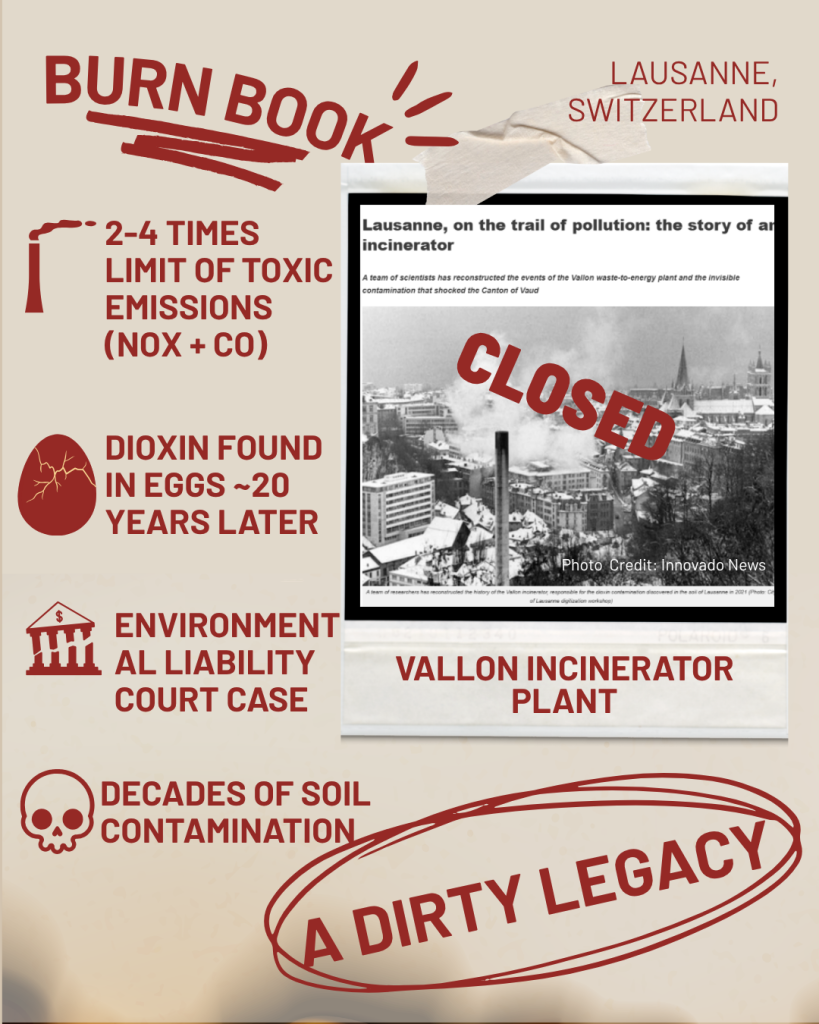
Vallon Incinerator Plant – Switzerland (Closed in 2005)
Operating from 1958 to 2005, the municipally owned Vallon incinerator burned Lausanne’s household waste for nearly five decades in the densely populated Vallon neighborhood. Although designed to burn approximately 73,000 MT of waste annually, the aging facility experienced recurring combustion and pollution-control problems, including historical exceedances for particulate matter, carbon monoxide, nitrogen oxides and mercury. Decades after the plant opened, extensive dioxin and furan contamination was discovered in soils across Lausanne, with Swiss authorities identifying the former Vallon incinerator as the probable principal source. Residents had complained about black particulate fallout, smoke, odors and potential health risks since the 1960s, and the contamination discovered after closure has turned Vallon into a long-term environmental-liability case involving soil remediation, public-health monitoring and demands for greater government accountability. A new facility named the Tridel Waste-to-Energy Plant was built and currently operates at the same location of the former Vallon Incinerator.
The post GAIA’s “Burn Book” Documents the Hazards of the Waste-Burning Industry first appeared on GAIA.

