

Whatever this winter brings, one thing is clear: California needs a different kind of infrastructure strategy for the century ahead.
Meteorologists are forecasting a historically strong El Niño system this coming winter after a 2025 defined by prolonged drought and a weak snowpack, with a 95% chance of extreme precipitation. California sits on a climatic boundary where drought and deluge are recurring features of our hydrology, and unpredictability comes with the territory. Climate change is intensifying those swings. Increasingly, much of the water system we built over the last century was designed around an unreliable assumption: that the hydrology of the future will look much like the hydrology of the past.
Whatever this winter brings, one thing is clear: California needs a different kind of infrastructure strategy for the century ahead.
Some of our dams, levees, aqueducts, and reservoirs still serve a useful purpose. Others have outlived theirs. But for generations, we have treated built infrastructure as an asset while too often treating healthy rivers and watersheds as something separate from the systems that sustain our communities.
That distinction no longer makes sense. Healthy rivers are living infrastructure.
Nature has spent millennia perfecting myriad ways to move, spread, and store water across California’s landscape; when we’ve allowed it to do so, our fire risk is reduced, our water supply is more secure, our ecosystems thrive, and our communities have better access to clean drinking water. These aren’t simply environmental amenities. They are functioning parts of California’s water system.
Nature has spent millennia perfecting myriad ways to move, spread, and store water across California’s landscape. When we’ve allowed it to do so:
-
Fire risk
is reduced
-
Water supply
is more secure
-
Eco-systems
thrive
-
Clean water
is more accessible
Yet much of the 19th and 20th centuries brought a wave of development within and along our rivers – particularly the construction of dams and levees – that block and constrain those natural processes. More than 8,000 dams block California’s rivers (many of which are aging and/or obsolete), while thousands of miles of levees separate rivers from their historical floodplains. Degraded mountain meadows and forests have lost some of their ability to slow and hold water in our headwaters. And at the same time our rivers are under threat, decreasing annual snowpack and increasingly extreme storms means we are going to rely more, not less, on the ability of our watersheds to safely move and store water.
For the past century, California has invested heavily in our ability to control water. The next century will require us to invest just as deliberately in restoring the ability of watersheds to manage it. That requires moving beyond a collection of one-off restoration projects and managing rivers as connected systems. A healthy river depends on processes operating across an entire watershed – from forests to meadows in its headwaters to the floodplains, groundwater basins, and communities downstream.
The intervention will differ from river to river. In some places, it means restoring mountain meadows and forests that can slow and store water higher in the watershed. In others, it means reconnecting rivers to floodplains where doing so can reduce flood risk, expand habitat, and create opportunities for groundwater recharge. And in some places, it means removing obsolete dams whose costs and risks now outweigh their benefits. The objective should be the same: restore the processes that allow watersheds to function as resilient systems.
California already knows these approaches can work.
Let’s stay in touch!
We’re hard at work in California for rivers and clean water. Sign up to get the most important news affecting your water and rivers delivered right to your inbox.
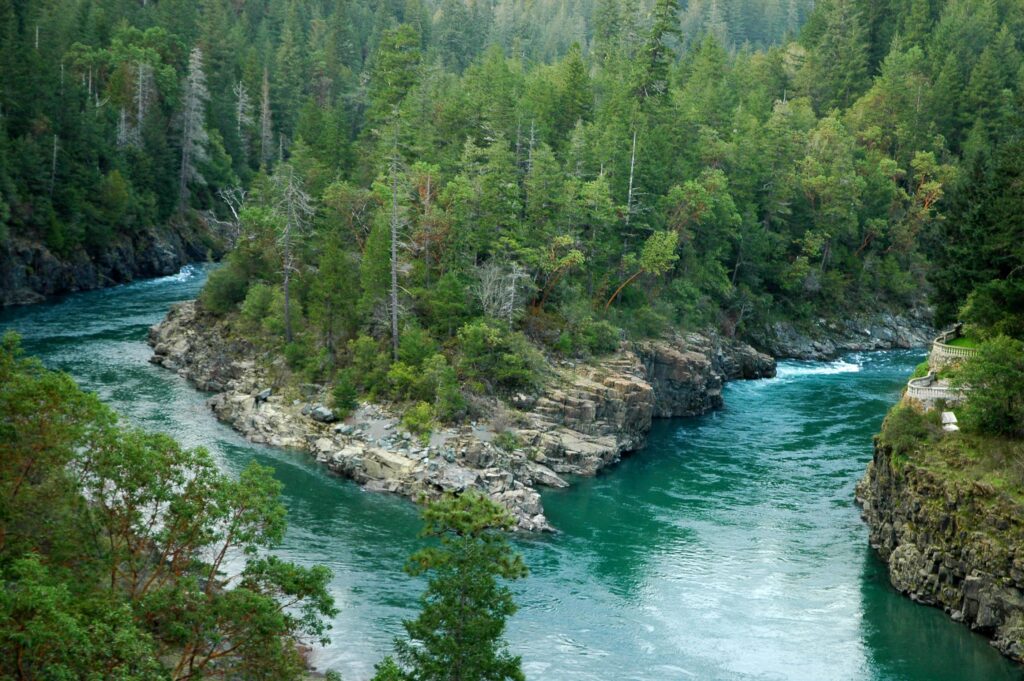
In the Central Valley, restoration in the Yolo Bypass demonstrates the multiple benefits that emerge when we give rivers more room to access their floodplains. In the Sierra Nevada, the restoration of Ackerson Meadow in the Tuolumne River watershed is returning a deeply eroded landscape into a functioning wet meadow. And on the Klamath River, Tribally led removal of four hydroelectric dams has reconnected hundreds of miles of river habitat in the largest dam removal project in U.S. history when cheaper energy alternatives made those dams obsolete.
The challenge now is not simply to demonstrate that river restoration works. It is to move from proofs of concept to implementation at scale.
California should recognize healthy rivers and watersheds as essential infrastructure – and invest in restoring them with the same seriousness we bring to the infrastructure we’ve built. That means making watershed-scale river restoration a core component of state water planning and directing public investment toward places where restoring natural processes can provide measurable water supply, reduce flood risk, improve public safety, and benefit ecosystems.
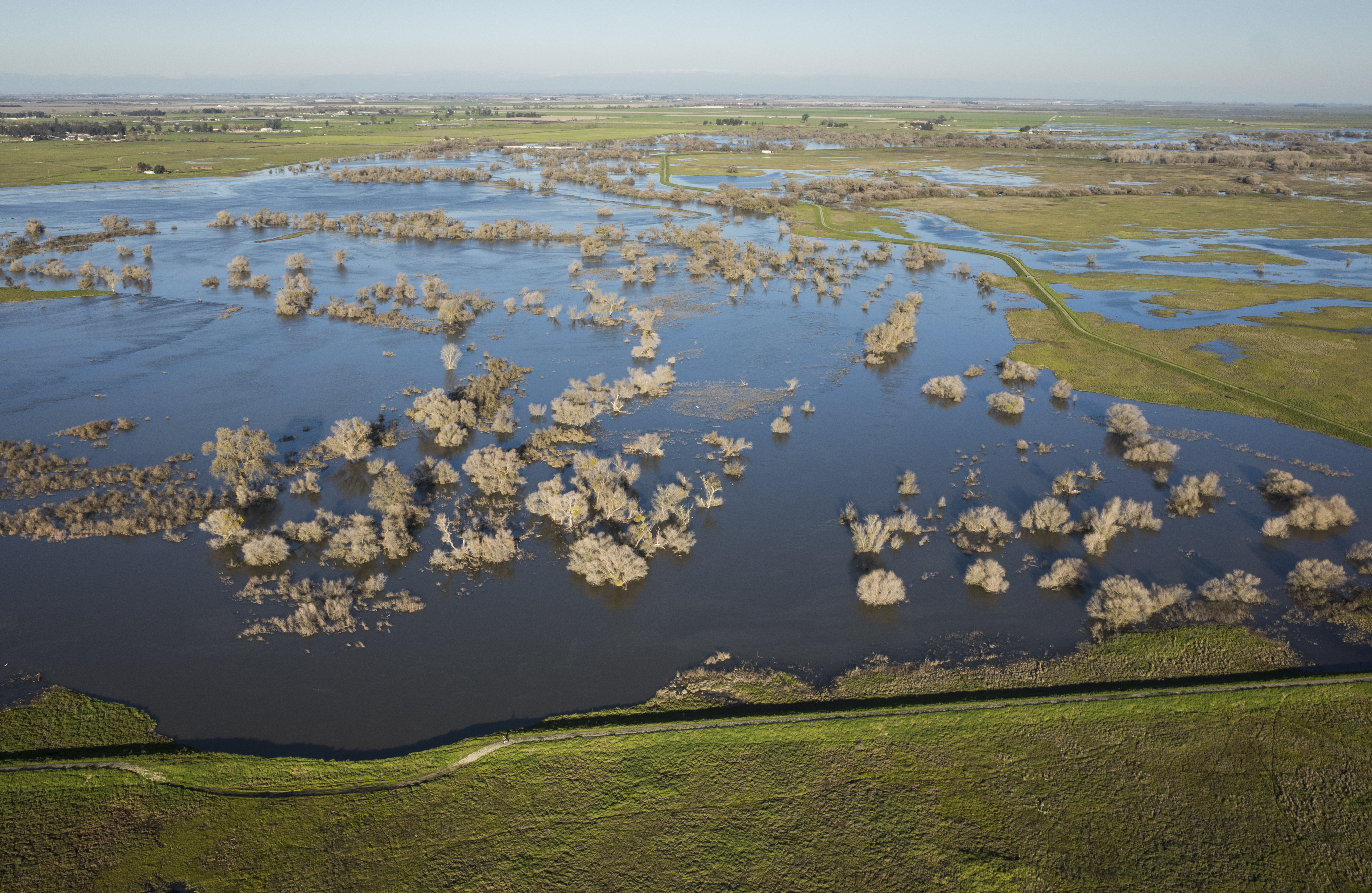
It also means moving away from fragmented approaches that treat forests, meadows, rivers, floodplains, and groundwater as separate systems. They are pieces of the same hydrologic landscape. Restoring them strategically, at watershed scale, can create benefits that isolated projects cannot.
This approach is not about choosing nature over people, or rivers over communities. Those are false choices. Healthy rivers and healthy communities are not only compatible – they are inseparable. When rivers are healthy, they do irreplaceable work for us: reducing flood risk, storing water across the landscape, recharging aquifers, supporting clean water and providing habitat. When rivers lose those functions, communities ultimately bear the consequences and the costs.
Healthy rivers and healthy communities are not only compatible – they are inseparable. When rivers are healthy, they do irreplaceable work for us: reducing flood risk, storing water across the landscape, recharging aquifers, supporting clean water and providing habitat. When rivers lose those functions, communities ultimately bear the consequences and the costs.
Nor is the choice simply between gray and green infrastructure. The question California should be asking is more practical: what combination of built and living infrastructure will make our water system most resilient to the conditions we now face? That question becomes especially urgent when another extreme winter is approaching. Our immediate attention will understandably turn toward reservoir operations, levees, flood preparation, and emergency response. But we should not lose the larger opportunity to modernize our water management when the storms pass.
A century ago, California transformed its rivers to meet the needs of a growing state. Now we face different challenges. We need to decide which pieces of that legacy infrastructure continue to serve us, retire those that no longer do, and restore the living infrastructure we will increasingly depend upon.
The next drought will come. So will the next flood. California cannot control that cycle. But we can create a water system better prepared for both.
Healthy rivers aren’t beneficiaries of infrastructure investment. They are infrastructure worth investing in.

