

Communities can refuse incineration by organizing early, demanding air-quality monitoring, and advancing zero waste plans before waste-to-energy contracts are signed. That single sequence — organize, monitor, propose an alternative — is how residents have stopped proposed incinerators from breaking ground.
To refuse incineration means treating burning waste not as an inevitable “solution” but as a false one that can be blocked through collective action, legal pressure, and a credible zero waste plan. This guide equips organizers and residents facing a proposed incinerator or waste-to-energy (WTE) facility with the concrete steps to fight back — and win.
Anti-incineration protest in Chile. © Oren Langelle
What does it mean to refuse incineration?
To refuse incineration is a community strategy: residents reject the burning of waste — including WTE, plastic-to-fuel, and chemical recycling — and organize to stop proposed facilities before contracts are signed.
Waste incineration is often marketed as “waste-to-energy,” a green-sounding label for burning trash to generate electricity. It is a false solution. Incineration of waste releases toxic air pollutants, undermines recycling and composting, and locks communities into decades-long contracts that require a constant stream of garbage to feed the burner.
Refusing incineration is not only about saying no. It is about saying yes to something better — a zero waste plan that reduces waste at the source, protects public health, and keeps decision-making in the hands of the community rather than the industry.
Incineration is not a climate solution. GAIA’s research documents that zero waste approaches cut climate pollution more effectively than burning trash, without the air-quality harm that falls hardest on frontline communities.
How to Refuse Incineration: A Step-by-Step Community Guide
Here is a practical, extractable sequence communities have used to refuse incineration and stop proposed facilities.
- Organize early — before the contract is signed. The window to stop an incinerator is widest before permits are issued and financing is locked in. A core group of 5–10 committed residents can map local decision-makers and draft a campaign timeline. The goal is to begin before any permits are submitted.
- Map the proposal and the permits. Identify the developer, the proposed site, and every permit the project needs. Incineration permits typically require environmental and air-quality approvals from local and national regulators — request every public document. Knowing exactly which agencies hold approval power tells you where to concentrate legal and public pressure.
- Demand independent air-quality monitoring. Do not accept the developer’s own data. Push for community-led air monitoring and independent review, and make air quality the center of your public case. Independent data is often the most persuasive evidence in permit hearings and media coverage.
- Expose the false-solution framing. Waste-to-energy, plastic-to-fuel, and chemical recycling are marketed as green. Document what they actually emit and who bears the harm. GAIA’s webinar on incineration as a false solution breaks down the arguments organizers can use. Sharing this evidence early shapes media coverage and public opinion before the developer’s narrative takes hold.
- Build a coalition rooted in environmental justice. Incinerators are disproportionately sited near low-income communities and communities of color. Center the voices of directly impacted residents, and bring in health professionals, waste pickers, unions, and faith groups. A broad, visible coalition signals to decision-makers that opposition is not a fringe position.
- Intervene in the legal and permitting process. File public comments, request hearings, and — where the case supports it — challenge permits in court. Legal pressure has delayed and defeated projects, as in Chile’s Araucanía region. Even interventions that do not immediately block a project create delay, raise costs for developers, and generate public record.
- Put a zero waste plan on the table. Refusing incineration is strongest when paired with a credible alternative. Present a zero waste plan that shows decision-makers a better path (see the section below). A concrete alternative removes the “no other option” argument that developers rely on.
- Keep the pressure public and sustained. Rallies, media coverage, petitions, and testimony keep the issue visible until the proposal is withdrawn or rejected. Decision-makers are more likely to act when they know the community is watching and will not disengage between official hearings.
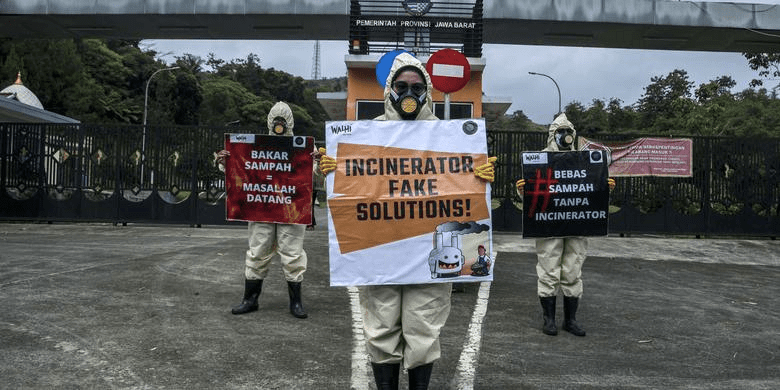
Local groups protest incinerator plans in Indonesia. Source: WALHI
Building a zero waste plan as the alternative
A zero waste plan is a community roadmap to reduce, reuse, recycle, and compost the maximum amount of waste — so there is nothing left to burn or bury.
This is the yes that makes the no credible. When residents refuse incineration without an alternative, decision-makers claim there is “no other option.” A zero waste plan removes that excuse.
A strong community zero waste plan usually includes:
- Source separation and organics diversion — composting food and yard waste, which is the largest and most burnable fraction of the waste stream.
- Reuse and repair systems that cut waste before it is generated.
- Integration of waste pickers and recyclers as recognized workers, not an afterthought.
- Producer accountability that shifts the cost of packaging and plastic back onto the companies that create it.
GAIA’s Zero Waste Academy has trained more than 500 participants across regions from Africa to Latin America to build exactly these kinds of plans. Learn how communities design zero waste systems through GAIA’s work on zero waste for all communities and the evidence that zero waste beats incineration in cutting climate pollution.
Communities that refused incineration and won
Communities have refused incineration and won by combining early organizing, legal action, and zero waste alternatives — from Canada to Chile. For more examples, explore 20 Inspiring Stories of Victory Against Incinerators, GAIA’s Global Week of Action series spotlighting communities that stopped incinerators around the world.
GAIA’s case documentation on stopping waste-to-energy in Canada records how community and civil-society pressure has challenged proposed WTE projects and pushed decision-makers toward waste reduction instead of burning.
In Chile, residents in the Araucanía region carried their fight into the courts. GAIA’s coverage of the case — WTE Araucanía awaits the tribunal’s resolution — documents how the community used the legal system to contest a proposed incineration project, demonstrating that permitting and tribunal processes are real leverage points for refusing incineration.
The pattern across these cases is consistent: organize before the contract is signed, make air quality and public health the core argument, and offer a zero waste plan as the alternative.
These are not isolated wins. They are part of a global movement in which residents, waste pickers, and organizers refuse to accept incineration as the price of managing waste.
Frequently asked questions about stopping incinerators
Can a community legally stop an incinerator?
Yes. Communities can legally stop an incinerator by intervening in the permitting process, filing public comments, requesting hearings, and challenging permits in court. In Chile’s Araucanía region, residents took a proposed WTE project to a tribunal, showing that legal channels are a real path to refuse incineration.
What is a zero waste plan?
A zero waste plan is a community roadmap to reduce, reuse, recycle, and compost the maximum amount of waste so that little or nothing needs to be burned or landfilled. It typically includes source separation, organics composting, reuse systems, integration of waste pickers, and producer accountability.
How long does it take to block an incinerator?
It varies. Some campaigns win in months by mobilizing before a contract is signed; others take years of sustained legal and public pressure. The earlier a community organizes — ideally before permits and financing are locked in — the shorter and more winnable the fight tends to be.
What agencies regulate incineration permits?
Incineration and waste-to-energy facilities generally require environmental and air-quality permits from local and national regulators. The exact agencies depend on the country and region, so a key early step is to map every permit the project needs and request all public documents.
Refuse incineration with us
Burning waste is not inevitable — and it is not a solution. Communities everywhere are proving that incineration can be refused and replaced with community-led zero waste. You don’t have to fight alone.
Join the Global Week of Action to Stop Incineration. Take part in the Global Week of Action to connect with organizers, access campaign resources, and help build the zero waste alternative in your community.

