ZERO WASTE FOR CLIMATE: MOVE UPSTREAM, CUT EMISSIONS, DELIVER JUSTICE
Zero waste is on the climate agenda. Now we need to get it right.
At COP31 in Antalya, Türkiye, GAIA will champion zero waste as a practical climate solution that cuts emissions at the source, protects communities, and advances a just transition. From preventing waste and reducing methane and black carbon to financing community-led solutions, we know what works. Now governments and financiers must turn ambition into action.
At COP31, we call on:
Policymakers to prioritize waste prevention, reuse, source separation, and organics management in climate policies, while keeping incineration and other polluting technologies out of zero waste solutions.
Financiers to direct accessible climate finance towards proven, locally led zero waste systems that cut emissions, strengthen communities, and avoid polluting infrastructure.
Governments and decision-makers to cut waste methane and black carbon at the source, reduce plastic production and fossil fuel dependence, and protect waste pickers and workers through a just transition.
Climate action must move upstream. The solutions already exist. What we need now is the political will and financing to scale them.
GAIA AT COP31
A global network of climate and zero waste advocates bringing community-led solutions, evidence, and frontline voices to the climate conversation.
At COP31, we will work to ensure zero waste delivers real climate action and environmental justice through events, engagement with policymakers and allies, and traditional and digital media.
WHY ZERO WASTE MATTERS AT COP31
For years, communities around the world have demonstrated how zero waste solutions can cut emissions, protect public health, create local livelihoods, and strengthen resilience. Yet these solutions have too often been overlooked in global climate policy and financing.
COP31 presents an important opportunity to change that.
Türkiye’s COP31 Presidency has elevated zero waste and circular economy planning among its priorities, creating momentum to advance waste prevention, reduce waste methane, and transform how materials are produced, used, and recovered.
The Presidency’s Action Agenda includes two targets:
Reduce the projected growth in global waste generation by 50% by 2035.
Increase the global circular material use rate in production and manufacturing to at least 15% by 2035.
These ambitions create an opportunity to advance zero waste as a core climate solution. But targets alone are not enough. Their success will depend on what counts as zero waste, how progress is measured, which solutions receive investment, and whose voices shape implementation.
The challenge is to ensure that zero waste means preventing waste and cutting emissions at their source—not simply managing growing volumes of waste through conventional disposal technologies.
COP31 must move from managing the consequences of a wasteful economy to transforming the systems that create waste.
WHAT WE’RE CALLING FOR
At COP31, GAIA calls on governments, financiers, and other decision-makers to turn zero waste commitments into practical, equitable, and measurable climate action.
1. Make zero waste a core climate solution
Prioritize waste prevention, reuse, repair, source separation, recycling, and composting. Embed these strategies in climate and waste policies, and keep incineration and other polluting end-of-pipe technologies out of zero waste and climate finance.
2. Cut methane and black carbon at the source
Act on super pollutants to deliver rapid climate benefits. Prevent food waste, separate organic waste at source, and expand effective organics management to keep organics out of landfills. Prioritize prevention and diversion over approaches that simply manage emissions after they are created.
3. Finance solutions that work
Direct predictable, accessible climate finance towards proven zero waste systems, organics management, reuse, and locally led implementation. Support cities, communities, waste pickers, and local organizations instead of locking public resources into expensive, polluting infrastructure.
4. Put environmental justice and a just transition at the center
Recognize waste pickers and waste workers as essential climate actors. Protect livelihoods, strengthen social protection, ensure decent work, and give workers and affected communities a meaningful role in the policies, investments, and systems that shape their lives.
5. Connect zero waste to the wider climate transition
Reduce plastic production and dependence on fossil fuels through prevention and reuse. Reduce pressure on natural resources and transition minerals by extending product lifetimes, repairing goods, and keeping materials in circulation.
6. Scale community-led solutions beyond COP31
Show what works in practice. Build on successful zero waste models, Zero Waste Districts, and GAIA member experiences to strengthen commitments, mobilize resources, and support implementation long after the climate summit ends.
Zero waste is practical climate action—but only when it tackles waste at source and is rooted in justice.
GAIA@COP31 LATEST RESOURCES
Building Community Resilience and Green Jobs through Organic Waste: The Case of Bandung, Indonesia
The Neglasari pilot project in Bandung, Indonesia demonstrates that community-based organic waste management can be financially feasible when the government finances the public-service functions that markets do not pay for, particularly land, source-separated organics collection, education, and waste treatment. This model is financially attractive as it generates public goods such as recoverable organic products, local livelihoods, and avoided landfill costs.
Building Community Resilience and Green Jobs through Organic Waste: The Case of Durban, South Africa
The Durban Zero Waste Project pilot shows that decentralized organic waste management can deliver powerful environmental and economic outcomes when regarded as a municipal public service rather than a commercial enterprise. The model reduces costs already borne by the municipality through avoided landfill disposal, avoided transport, avoided compost purchases, and reduced greenhouse gas (GHG) emissions.
Methane Emissions Mitigation by Waste Pickers: The Case of Valparaíso
The National Waste Pickers Movement of Chile (ANARCH) is taking foundational steps to find solutions for organic waste through management models led by waste pickers. Among these is a pilot project in the city of Valparaíso, in collaboration with its local affiliate, the El Molle Workers’ Cooperative. The project aims to mitigate methane emissions from the waste sector through the separate collection and composting of organic waste from the El Cardonal wholesale market, the resulting reduction in the amount of waste sent to landfills, and the creation of new economic opportunities for waste pickers.
Separation at Source (S@S): 12 Real-World Zero Waste Practices That Work
Establishing waste separation at source (S@S) is the foundation of zero waste systems. It means separating different types of waste—such as organic, recyclable, and residual materials—at the point where waste is generated, keeping materials clean and preventing contamination. This publication presents 12 diverse successful cases from five regions: Africa (Tanzania), Asia (India, The Philippines), Europe (Greece, Slovenia, Italy), North America (USA), and Latin America (Costa Rica). The communities featured range in scale, from Tilos Island with a permanent population of 700 residents, to megacities such as Bengaluru, where the zero waste systems reach approximately 2 million people. Across these jurisdictions, source separation rates vary according to local mandates and frameworks, ranging from 30-33% organic waste diversion in Portland to outstanding rates of 80- 95% in places such as Varkala, San Fernando, and Dar es Salaam, and reaching 100% in Tilos Island.
Financing Zero Waste: A High-Level Synthesis Report
This high‑level synthesis distills the core insights from Financing Zero Waste: Practical Guidance for Immediate Action by Local and National Governments, showing how governments can finance zero waste systems by aligning local implementation with national enabling conditions—and by recognizing the broader public value that zero waste generates across climate, health, livelihoods, and resilience.
At COP31, GAIA Africa will spotlight four key priorities: integrating food loss and waste management into Africa’s climate commitments, recognizing waste pickers as essential climate actors, challenging waste-to-energy incineration, and scaling up proven organic waste diversion models across African cities.
Integrating Food Loss and Waste into Africa’s NDCs: We will advocate for stronger food loss and waste commitments in African Nationally Determined Contributions (NDCs), positioning organic waste management as a key strategy for reducing methane emissions.
Recognizing Waste Pickers as Climate Actors: We will champion waste pickers as essential contributors to climate action, calling for their meaningful inclusion in waste management and climate policies. We will highlight the importance of strengthening waste picker movements, protecting livelihoods, and scaling up waste picker integration across African countries.
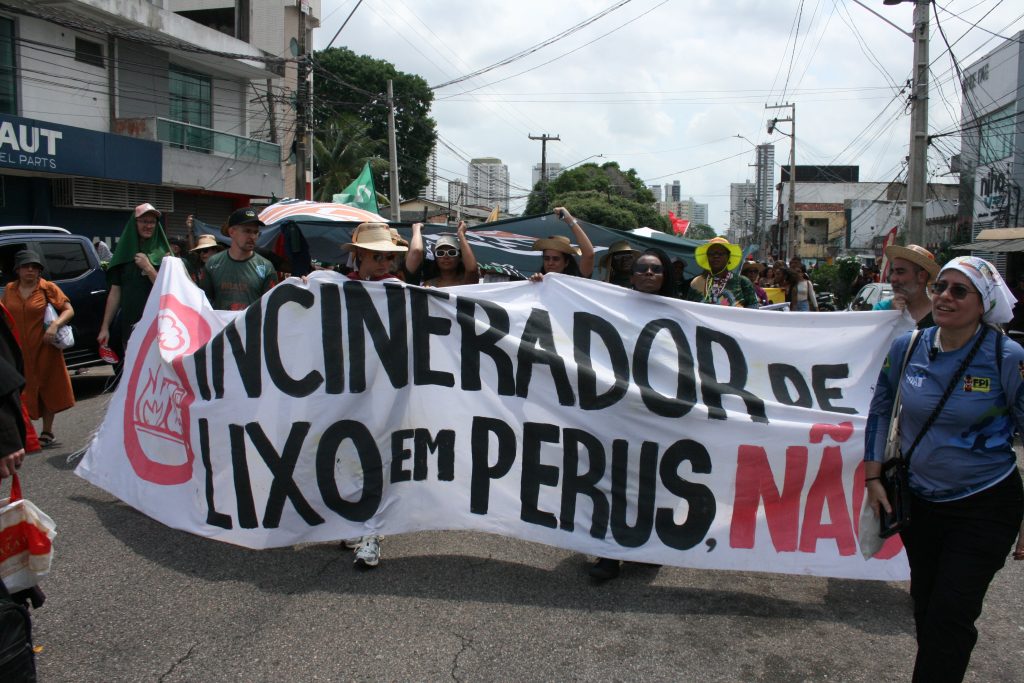
Challenging Waste-to-Energy Incineration: We will challenge the promotion of waste-to-energy incineration as a solution to Africa’s waste management challenges. Drawing on an analysis of 15 waste-to-energy incineration projects and proposals across 11 African countries.
Scaling Up Organic Waste Diversion Across African Cities: Through insights from the Methane Reduction in Nigeria (MAMRN) Project, we will showcase organic waste diversion efforts in Lagos, Abuja, Jos, and Benin City. We will share data, practical lessons, and replication resources to help more African cities establish and scale their own waste diversion programmes.
[Photo Credit: Green Knowledge Foundation, GKF]
ASIA PACIFIC
At COP31, Asia Pacific demands that climate financiers and national governments stop funding debt-heavy, ineffective incineration technologies, like Waste-to-Energy (WtE), and instead redirect public finance toward upstream, community-led zero waste systems. With organics making up over half of the region’s municipal waste, governments must embed separate collection and decentralized composting into updated NDCs to rapidly cut methane, scale reuse models to reduce fossil-fuel packaging at the source, and ensure a just transition that legally protects and funds informal waste workers and waste pickers.
LATIN AMERICA & THE CARIBBEAN
US & CANADA
At COP31, the GAIA U.S. & Canada region advocates for tangible methane action and urges governments to consider real solutions to our growing waste problem, such as community-led composting. Our members’ campaigns against toxic waste facilities not only work to close incinerators and stop landfill expansions, but also to implement change at the community level and through policy. As a region, our core priorities include:
Reducing methane emissions through actionable zero waste interventions. Much of the “waste” we burn or bury can be recovered — organics that can be composted and materials that can be recycled.
Mitigating the damage that toxic waste management infrastructure creates in overburdened communities. We empower our members to lead the change in their communities.
Advocating against waste colonialism and ensuring that waste from the Global North is not exported to vulnerable countries in the Global South.
EUROPE
At COP31, Zero Waste Europe will bring two lessons from Europe’s experience: how to manage leftover mixed waste in the most climate-friendly way, and why waste incineration must not be exported to the rest of the world as a climate solution.
Managing residual waste the climate-friendly way: While cities work to prevent and separate more of their waste, some mixed residual waste still needs to be managed along the way. We will make the case for Material Recovery and Biological Treatment (MRBT) as the most climate-friendly option for managing it. MRBT recovers the remaining recyclables, such as metals, plastics and paper, and biologically stabilizes the organic fraction before landfilling, sharply cutting methane emissions. It is cost-effective, needing a fraction of the investment of an incinerator per tonne of capacity, and easily scalable: modular plants can be up and running in around two years, work well at small scale, and adapt as separate collection improves, instead of locking cities into burning waste for decades.
Making the economic case for methane reduction: Food waste prevention, separate bio-waste collection and effective bio-waste management are essential to reducing methane emissions. We will highlight the climate and economic benefits of these measures, alongside solutions such as MRBT that recover valuable materials and reduce methane emissions from residual waste. We will showcase which economic and fiscal tools governments can use to make food waste prevention and bio-waste management more financially attractive than disposal. Drawing on our local methane work, we will highlight practical approaches that can deliver emissions reductions while making better use of resources and public investment.
Exposing false solutions: waste incineration: Waste incineration, often marketed as “waste-to-energy”, is a false climate solution. Europe is a clear warning: emissions from waste incineration have roughly doubled since 1990, while the EU’s overall emissions have fallen. Every new plant locks in fossil emissions, mostly from burning plastics, for decades. We will share how Europe is starting to tackle the problem, including the move to bring municipal waste incineration into the EU Emissions Trading System, and what the alternatives look like in practice: waste prevention, reuse, separate collection, and MRBT for what is left.
Building support for Extended Producer Responsibility for Food Products (ERPFP): COP31 will also be an opportunity to test the ground for ERPFP, build interest and alignment among potential partners, and map opportunities to advance producer responsibility as a way to support food waste prevention and more sustainable food systems.
GAIA@COP31 NEWS & UPDATES
Follow GAIA’s COP31 engagement through our latest:
MEDIA ADVISORIES AND PRESS RELEASES
COMMENTARIES AND BLOGS
EVENTS AND PRESS CONFERENCES
NEWS COVERAGE
PHOTOS AND VIDEOS FROM COP31
From community-led solutions to global climate policy, GAIA will share the stories, evidence, and voices demonstrating why zero waste is essential to climate action.
Zero waste is practical climate action—when it tackles waste at source and is rooted in justice.