

For years, zero waste solutions have quietly formed the backbone of community-led climate resilience. Yet, they have historically been sidelined in global climate discussions and storytelling. COP31 changes that. Türkiye, the host country, has placed zero waste and circular economy planning at the very top of its priority themes. For the first time in the history of UN climate summits, a host presidency is elevating waste-derived emissions to a leading position on the climate action agenda and the international stage.
Methane from landfills is created when food scraps, garden waste and other organic materials rot without oxygen in dumps and landfills. It is a short-lived but extremely powerful climate pollutant, so cutting it is one of the fastest ways to slow warming this decade — and the quickest, cheapest way to do that is to keep organic waste out of landfills through food waste prevention, source separation and composting, not by burning it in incinerators.
The COP31 presidency has made “Zero Waste and Methane Reduction” one of its headline themes, treating waste as a climate issue rather than only a municipal service. That is good news — at COP31, the UN climate conference taking place in Antalya, Türkiye, from 9 to 20 November 2026, our message is clear: zero waste is a proven climate action when it tackles waste at source and is rooted in justice — and the climate finance that follows must go to proven zero waste solutions, not to so-called “waste-to-energy” incinerators.
What is landfill methane?
When organic waste is buried in a landfill or piled in an open dump, it breaks down without oxygen. That process, called anaerobic decomposition, releases methane — a greenhouse gas that traps far more heat than carbon dioxide in the short term. The more food and garden waste a city sends to disposal, the more methane its landfills produce.
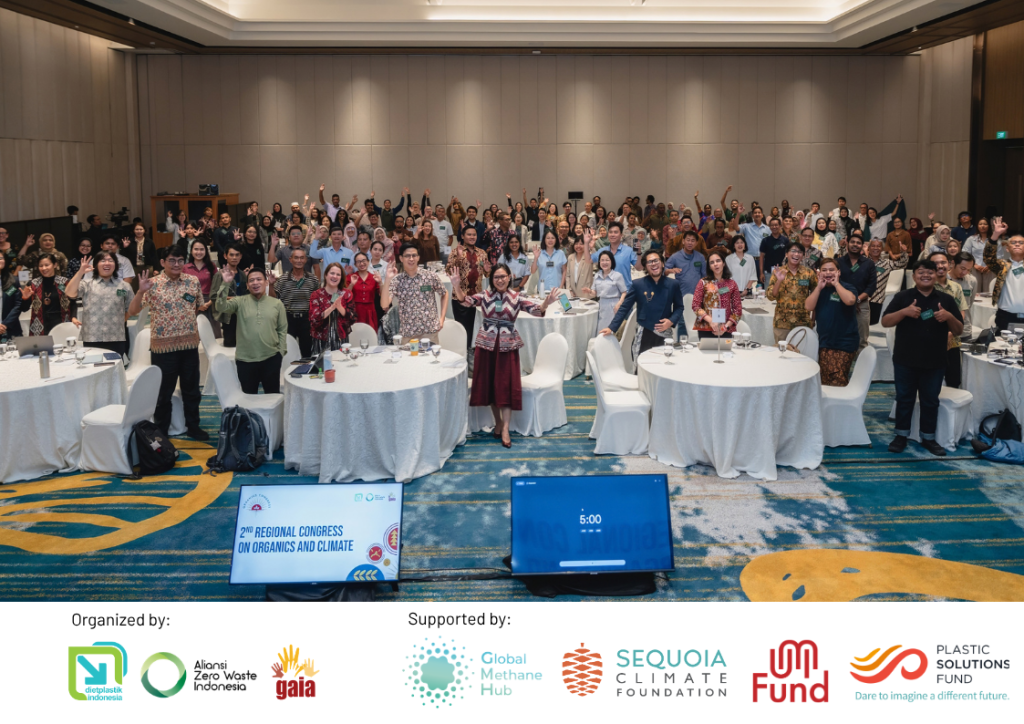
The science is clear. Organic waste is the largest part of the problem. In Asia, organic matter — mainly discarded food and agricultural material — makes up 50% to 70% of municipal solid waste, as delegates highlighted at GAIA Asia Pacific’s Second Regional Congress on Organics and Climate. Citing studies that attribute around 30% of current global warming to methane, the COP31 presidency has argued that waste prevention and better management of organic waste can deliver rapid climate benefits.
Landfill methane is also a public safety issue. The same rotting waste that generates methane fuels landfill fires and collapses. In recent months, a series of landfill fires and landslides across Asia blanketed cities in toxic fumes and claimed residents’ lives, many of them waste pickers.
“When communities prevent food waste and sort organics at the source, we win twice: we cut methane emissions at the source and eliminate the toxic landfill fires choking our neighborhoods.” — Froilan Grate, Regional Coordinator, GAIA Asia Pacific
Why incineration is not a solution
Proven solutions exist, and scaling them in the next five years is crucial. Incinerator companies often pitch “waste-to-energy” as a way to avoid landfill methane. But burning organic waste simply swaps one climate pollutant for another: the carbon in food scraps and paper is released as CO2 right away, alongside the fossil carbon in burned plastics. Waste-to-energy is the most carbon-intensive way to manage waste and releases more greenhouse gases than any other type of energy facility — 1.7 times as much as coal-fired power plants.
GAIA’s new Burn Book analysis of twenty incinerators and incinerator proposals found that the eleven facilities with available data release a combined 5.5 million metric tons of CO2e every year — the equivalent of 1.3 million passenger cars. And because incinerators need a steady supply of waste to stay financially viable, they compete directly with the composting and food waste programs that stop methane at the source.
Burning wet organic waste also makes little sense. In Mauritius, communities stopped a proposed 300,000-tonne waste-to-energy plant by pointing out a simple mismatch: roughly 70% of the island’s waste is green and kitchen waste. It’s one of the inspiring victories against incinerators GAIA members shared during the Global Week of Action.
Follow the money: climate finance is going to the wrong solutions
The biggest obstacle to cutting waste methane isn’t technology — it’s finance. Delegates at the Organics Congress highlighted a stark imbalance: nearly USD 4 billion has gone into capital-intensive waste incineration projects, capturing 94% of waste-sector methane finance, while barely 1% reaches organic waste management and food rescue systems.
The Jakarta Declaration, adopted at the Congress in September 2026, sets out a roadmap to fix that. It calls on national governments and financing institutions to halt funding for incinerators and redirect climate finance into low-cost, decentralized, and proven locally led organic waste systems and food loss and waste reduction.
Cities already cutting methane with zero waste
Community-led organic waste systems are not a pilot idea. They are working at scale today:
- Florianópolis, Brazil: the city’s Capital Lixo Zero program more than quadrupled food waste composting, from 1,175 tonnes in 2020 to 5,126 tonnes in 2024.
- Valparaíso, Chile: waste pickers from Chile’s national movement ANARCH began managing organic waste in September 2026, in a region where around 70% of municipal waste is organic.
- Pune, India: SWaCH’s 4,000 door-to-door waste pickers enforce source segregation across 1 million households and divert 25 tonnes of organic waste a day.
- Bandung, Indonesia: a Climate Policy Initiative analysis found decentralized community systems save the local government up to IDR 30 billion (about USD 1.7 million) a year in avoided transport and tipping fees.
- Barangay Potrero, Malabon City, Philippines: by integrating 80 waste workers into its system, this community of 43,000 residents diverts more than 100,000 kg of organic waste a year.
- Durban, South Africa: groundWork and eThekwini Municipality turned 586 tonnes of organic waste from three municipal markets into 190 tonnes of compost for city parks and community food gardens, avoiding an estimated 133 tonnes of methane. A cost-benefit analysis found market composting delivers a net benefit of R18 million (about USD 1.09 million) over ten years, while landfilling the same waste would cost R32 million.
- Dar es Salaam, Tanzania: Nipe Fagio’s community-based model collects waste from 4,500 households and diverts virtually 100% of their organic waste from disposal, avoiding about 16.4 tonnes of methane emissions a year.
- Accra, Ghana: the Green Africa Youth Organization (GAYO) has formally integrated more than 600 informal waste workers into a decentralized organic waste model that won the 2024 Earthshot Prize.
These results come from places with limited budgets. They show that the most cost-effective climate infrastructure is often people — waste workers, residents and local officials — backed by clear policy. Learn how Bandung, Durban and Valparaíso are financing inclusive organic waste systems, and meet the five Global South cities the UN recognized for zero waste. Explore more zero waste solutions and how GAIA members are building zero incineration cities.
What COP31 negotiators should do about waste methane
As negotiations continue in Antalya, GAIA members are calling on:
- Policymakers to prioritize waste prevention, reuse, source separation, and organics management in climate policies and national climate plans (NDCs), with targets for composting and food waste prevention, while keeping incineration and other polluting technologies out of zero waste solutions.
- Financiers to direct accessible climate and methane finance towards proven, locally led zero waste systems that cut emissions, strengthen communities, and avoid polluting infrastructure, including decentralized organic waste systems, food rescue and direct support for municipalities, and to stop treating incineration as a methane solution.
- Governments and decision-makers to cut waste methane and black carbon at the source, reduce plastic production and fossil fuel dependence, back city-level commitments like the Cities Methane Pledge, and protect and formally integrate waste pickers and workers through a just transition.
Frequently asked questions about landfill methane
How do landfills produce methane?
Landfills produce methane when organic waste such as food scraps, garden waste and paper breaks down without oxygen. Keeping organics out of landfills through prevention, separation and composting stops that methane at the source.
Does composting reduce methane?
Yes. Well-managed composting breaks organic waste down with oxygen, which largely avoids the methane that forms in landfills, and turns the waste into a soil amendment.
Is incineration better than landfill for the climate?
No. Incineration releases the carbon in waste as CO2 immediately, and waste-to-energy emits more greenhouse gases than any other type of energy facility. The climate-friendly alternative to both is zero waste: preventing waste, composting organics and recycling.
When and where is COP31?
COP31 takes place in Antalya, Türkiye, from 9 to 20 November 2026. The COP31 presidency has made zero waste and methane reduction one of its key themes.
What is the Jakarta Declaration?
The Jakarta Declaration was adopted in September 2026 at GAIA Asia Pacific’s Second Regional Congress on Organics and Climate. It calls on governments and financiers to stop funding incinerators and redirect climate finance into decentralized organic waste management and food waste reduction.
Take action during COP31
Zero waste is a climate action, but only when it tackles waste at source and is rooted in justice. Methane from waste is one of the most solvable parts of the climate crisis. Read the Jakarta Declaration, share this article with your local officials, learn more about GAIA’s engagement at COP31 and sign up for GAIA’s updates to follow our work at COP31 and beyond.

