

Editor’s note: This is the first installment of a two-part series on Conservation International’s work with Big Life Foundation to protect the Amboseli ecosystem in southern Kenya.
Elephants moved in single file beneath a darkening sky.
The herd followed the matriarch along a road that appeared profoundly ordinary — unpaved gravel; a scruffy berm, overgrown and rimmed with powerlines.
But it isn’t ordinary. It’s one of the last safe pathways for elephants in Kenya’s southern grasslands.
The route, called Kimana wildlife corridor, offers passage to the mountains and Tsavo National Park beyond. It snakes through a landscape increasingly fragmented by farms and fences, until it narrows to a sliver along the outskirts of a busy, sprawling town. Just a handful of arteries like this one still connect to the beating heart of the region — the sanctuary of Amboseli National Park.
“At its narrowest point, this corridor is just 45 meters wide,” said Jeremy Goss, head of science for the Kenya-based conservation organization Big Life Foundation. “That’s all that’s for animals moving through this core part of this ecosystem.”
For elephants, migration is survival. For millions of years, they followed ancient paths, ingrained in memory, across these open savanna and mountain woodlands, in search of fresh forage, water and mates. During dry spells, herds reliably converge on Amboseli, where natural springs filter from Kilimanjaro — one of the last glaciers in Africa.
“Animals don’t stay inside the park boundaries. They follow the rain, the grass, whatever the season is asking of them. And for them to do that, this space has to stay open,” said Benson Leyian, the CEO of Big Life. “If we lose those connections, then during drought you’ll have inbreeding, or you’ll have species completely cut off from each other. That will effectively be the end of this place — one of the most famous wildlife havens in the world.”
Conservation International, in partnership with Big Life, has committed to keeping the last corridors open — and reconnecting others before they’re gone for good. That work is happening in partnership with local landowners, many of whom live on the edge of poverty, as they work to build a better economic future in a rapidly changing landscape.
“Make open land worth more than selling it,” said Seif Hamisi, Conservation International’s lead in the region. “That’s the whole equation.”
“There’s so much in a cow”
Not long ago, this land had no fences.
It is the ancestral home of the Maasai, semi-nomadic cattle herders, whose bond with their livestock has long shaped their culture. It’s an identity enshrined in their very creation story, which casts them as divine caretakers of these animals.
“There’s so much in a cow,” said Beatrice Lempaira, an expert at Conservation International. “For pastoralists, a cow is not just an animal. It’s everything. It’s status, it’s marriage, it’s family, it’s peace-making, it’s life.”
For centuries, the Maasai moved through the savannas of Kenya and Tanzania with their livestock. There were no formal owners of this land. It was seen as communal, available for everyone to graze, and governed through traditional Indigenous systems.
That way of life was formalized in 1968, shortly after Kenya became a nation. The government recognized these grasslands as various “group ranches,” each collectively owned by everyone who lived on it and governed by people the community chose.
“This ranch system kept the land open because Maasai grazing and wildlife migration follow the same rules,” said Hamisi. “The Maasai moved their cattle to follow the rain. Elephants moved to follow the same rain. Nobody planned it that way — it’s just what an open landscape looks like when everyone in it has to keep moving to survive and thrive.”
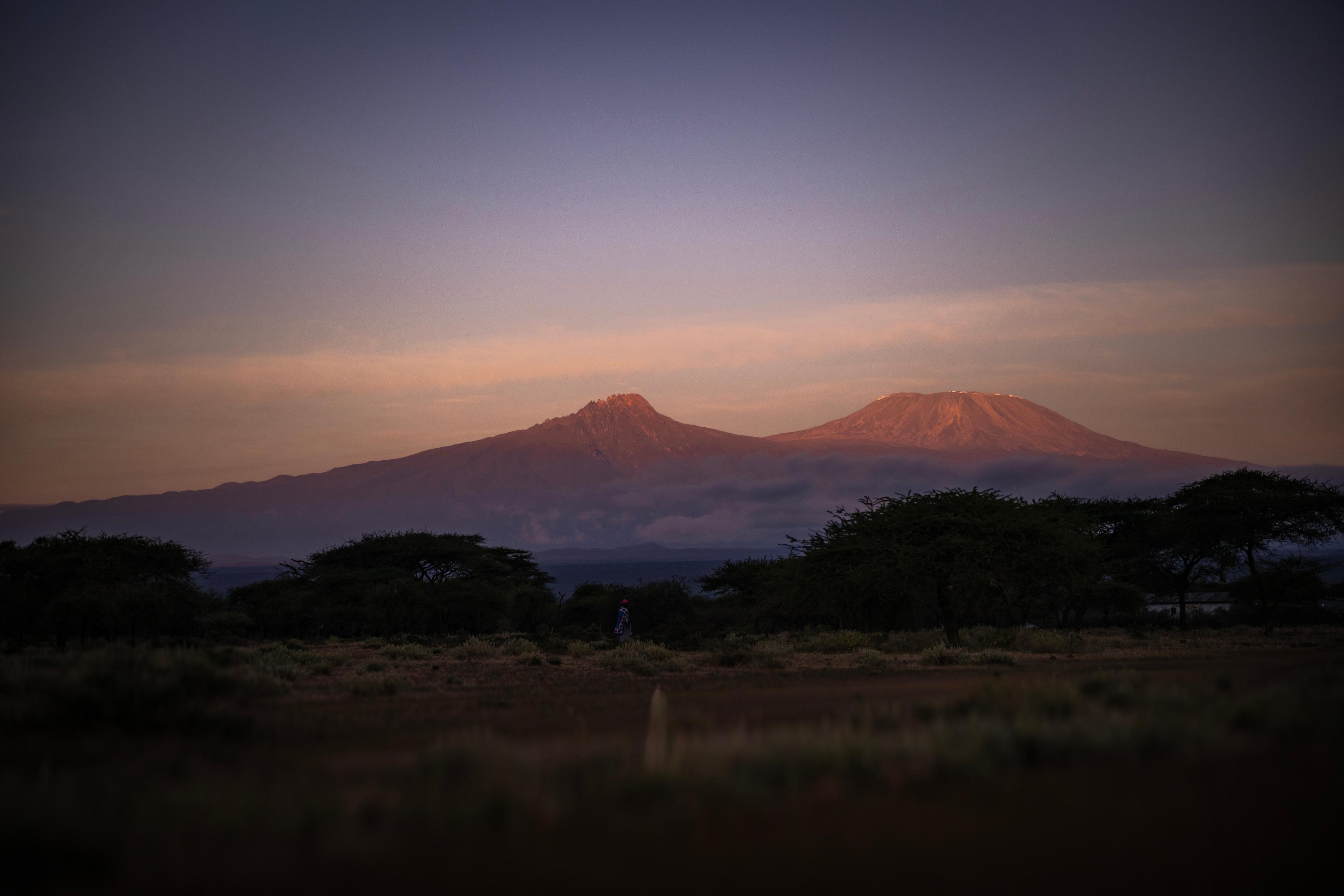
But in many ways, the group ranching system was also broken.
While the land technically remained communal, decision-making often wasn’t. “Just a few people made a hundred percent of the decisions for a hundred percent of the other people,” said Ernest Lenkoina, Big Life’s program manager focused on rangeland health. In other words, small, appointed committees held power that everyone else had no real way to challenge.
That changed in 2016 with the passage of a law that gave communities a choice: reorganize their group ranches to prevent corruption or divide the land into individual titles.
All seven of the ranches in the ecosystem — once open savanna — were now scheduled to be cut into tiny parcels. One ranch alone held roughly 130,000 hectares (330,000 acres), once shared by around 4,300 families under a single title. Subdivided, it became 12,600 individual plots.
With that individual ownership, the land became fence-able, farmable and sellable for the first time in its history.
“By and large, the communities did a lot right,” Goss said. “Almost a million acres got set aside as either rangeland or conservancy, and both of those prohibit fencing and farming. That was a real investment, and it shows how much people wanted to protect this place. The hard part is carrying the plans out. They’re being challenged all the time.”
Where the plans don’t hold, the land has become a barrier to wildlife.
“A reason to keep the land whole”
Kimana, where elephants pass through that narrow chokepoint, is the key to keeping this land open for wildlife.
It is the hinge where passage to Amboseli’s marshes, the corridor east toward Chyulu and Tsavo National Parks, and the community’s grazing lands meet on the same stretch of ground.
It’s also where subdivision happened first.
“Kimana chose to subdivide way before the others,” Hamisi said. “It went badly, fast.”
In the mid 1990s, long before the process was formalized by the government, the Kimana Tikondo Group Ranch — originally roughly 25,000 hectares (62,000 acres), held by around 800 extended Maasai families — dissolved and began subdividing into small agricultural plots.
Within six months, more than 40 percent of it had already been sold — mostly to outside investors. Today, 90 percent of the land has been sold. Samuel Kaanki, a local leader whose own family lived through it, has been direct about why: subdivision here “went wrong in the hands of rogue officials.”
Land meant to stay in Maasai hands ended up in outside ones — the beginning of the maze of fence lines and dead ends for wildlife. Hotels and farms now line the road into the bustling town of Kimana. The barriers have even reached inside the wildlife corridor itself — where a fence runs around 72 hectares (180 acres) of avocado trees.
This farm was planted directly on an area Leyian calls an “elephant bedroom,” where he says you can find an elephant almost any hour, any day. For years, Big Life stood alongside local landowners in a legal fight against the farm’s corporate owners — a fight that recently ended at Kenya’s Supreme Court.
Eventually, the company lost its legal path to farm but retained the land. “It’s a fifty percent win for us,” Leyian said. “They have to stop farming, but we still can’t tear the fence down.”
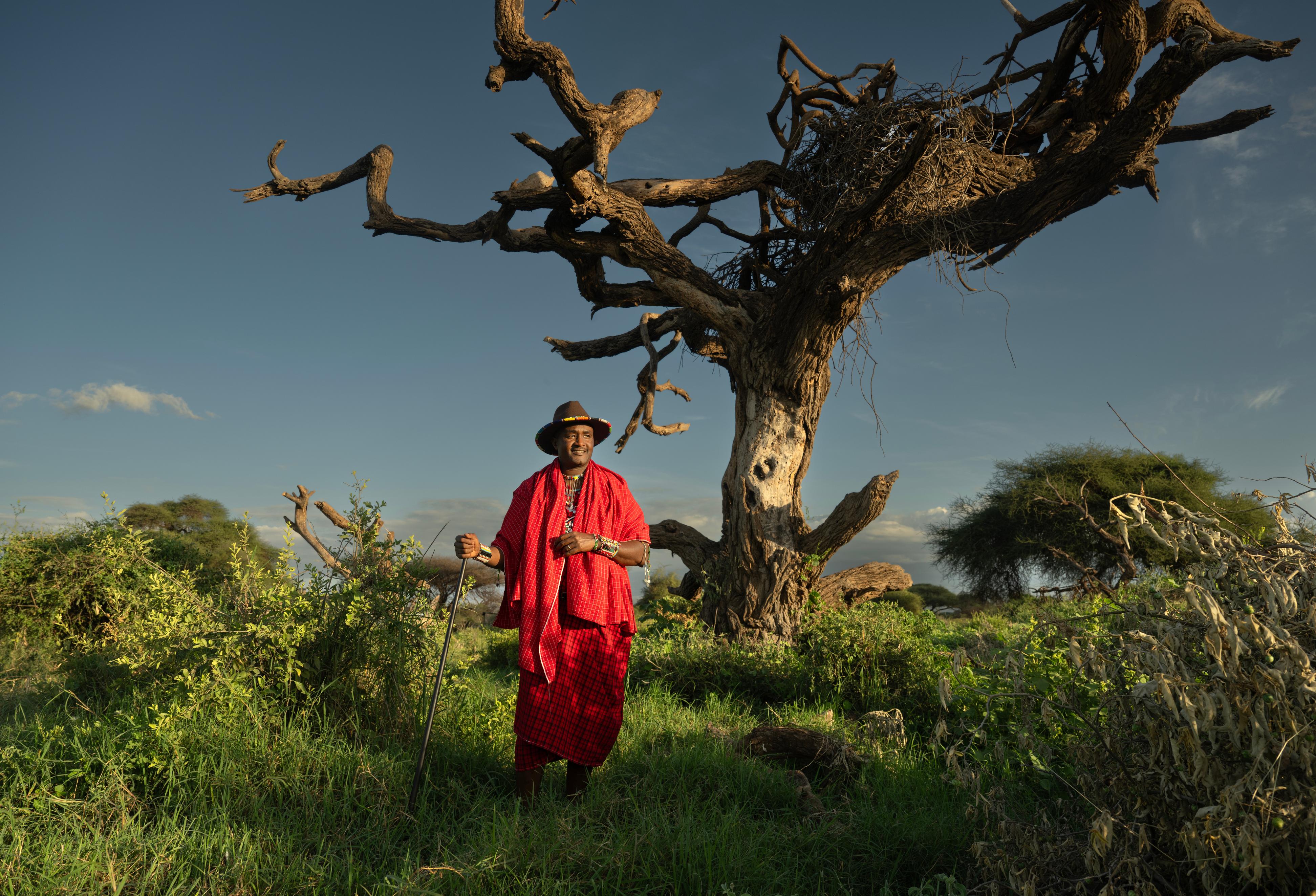
The avocado farm is the symptom of the larger problem, playing out in real time as landowners either fence off their own parcels or sell to speculators and brokers, who resell to outside investors.
For many families living a hardscrabble existence and looking at a newly fenced parcel of land that could be converted into a farm, the math is hard to argue with. But steadily, that change was erasing a cultural identity.
“If you separate a Maasai from a cow, then that culture is dead,” said Lenkoina. “If the culture is dead, so is the land.”
For Conservation International and Big Life, that dynamic sparked an idea — what if keeping the land open was really about restoring the Maasai’s ancient way of life?
“People here want to protect this land. But at heart, they are cattle-keepers,” said Lempaira, from Conservation International. “Give them back the cow, and you give them back a reason to keep the land whole.”
So, Conservation International went shopping for cattle.

