

Chemical “recycling” — often marketed as “advanced recycling” — uses high heat or chemicals to break plastic down into oils, gases or basic chemicals. Most of the industry relies on pyrolysis and gasification, technologies that GAIA members have documented working much like incinerators: they emit toxic pollution and greenhouse gases, they have repeatedly failed at commercial scale, and when their output is used as fuel, the plastic ends up burned anyway.
Plastic is a fossil fuel product, so this is a climate issue as much as an environmental health issue. As COP31 in Antalya puts the circular economy on the climate agenda, fuels and products made from waste are being promoted as climate solutions. At the same time, governments are trying to restart talks on a global plastics treaty after negotiations stalled in December 2024 and again in August 2025. Here’s what chemical recycling is, how it works, and why it’s a false solution for both plastic and the climate.
What is chemical recycling?
Chemical recycling is an umbrella term for processes that break plastic polymers into smaller molecules, instead of melting and remolding the plastic the way mechanical recycling does. The main types are:
- Pyrolysis: heating plastic without oxygen to produce oil, gas and solid char. Plastic pyrolysis is the most common “advanced recycling” technology.
- Gasification: heating waste with a limited amount of oxygen to produce a synthetic gas (syngas), usually burned for energy.
- Plasma arc: using extremely high-temperature plasma to break waste down into gas and slag.
- Solvent-based and depolymerization processes: using chemicals to dissolve or break down specific types of plastic.
Despite the recycling label, pyrolysis, gasification and plasma arc are thermal treatment technologies. GAIA’s position is clear: incineration — including gasification, pyrolysis, and plasma arc — turns one form of pollution into another.
Chemical recycling vs. mechanical recycling
Mechanical recycling keeps plastic as plastic: it’s sorted, cleaned, shredded and melted into new products. Chemical recycling breaks plastic down into raw materials through an energy-intensive process, where much of the material is lost, and what comes out is fuel rather than new plastic. The industry’s environmental claims also rest on shaky ground. A joint review of the most commonly cited life cycle assessments, Understanding the Environmental Impacts of Chemical Recycling, found major flaws in their scientific rigor, data quality, calculation methods and interpretation of results.
If plastic is turned into fuel and then burned, it hasn’t been recycled. It is merely an expensive, complicated way to burn fossil fuels.
What happens near a pyrolysis plant
The clearest evidence comes from the communities living next to these facilities. Through GAIA’s Clearing the Air project, residents used portable air quality monitors to measure pollution around three facilities sold as recycling or waste-to-energy: a pyrolysis-gasification plant, a tire pyrolysis facility and a gasification plant.
- Dumaguete City, Philippines: around the city’s pyrolysis-gasification plant, PM2.5 levels were unhealthy for part of the population on 24 of 27 days (88%) and reached up to 7 times the World Health Organization (WHO) guideline. Researchers estimated that shutting the plant could prevent up to 179 premature deaths a year. The plant was shut down in 2025.
- Ogijo, Nigeria: near a tire pyrolysis facility, daily average PM2.5 reached up to 5 times the WHO guideline and exceeded it on every monitoring day. The facility was later shut down, but has since quietly resumed operations.
- Surabaya, Indonesia: around the Benowo gasification plant, PM2.5 exceeded the WHO guideline on all 31 monitoring days, reaching roughly 8 times the guideline.

In Dumaguete, community science led directly to victory: waste workers, residents, students and teachers used the data to push for closure. It’s one of GAIA’s 20 inspiring stories of victory against incinerators. Burning plastic releases heavy metals, persistent organic pollutants and other toxics into the air and ash — read more about the toxic gases released by burning plastic.
Is plastic-to-fuel recycling?
No. Plastic is made from fossil fuels, so when pyrolysis oil or syngas made from plastic is burned, it releases climate pollution just like any other fossil fuel. According to the U.S. Environmental Protection Agency, burning plastics is the worst end-of-life option for plastic from a climate perspective. Gasification, pyrolysis and plasma incinerators are also less efficient at generating electricity than mass-burn incinerators, and often need coal or other fossil fuels added to produce energy.
That’s why plastic incineration is a hidden climate polluter, and why burning plastic won’t solve the plastic crisis — whatever the technology is called.
Why the “recycling” label matters for policy
How a technology is labeled decides who pays for it. When pyrolysis and gasification are counted as recycling, they can qualify for recycling targets, subsidies and green finance meant for real solutions. Development finance is already flowing that way: GAIA Asia Pacific’s Citizens’ Atlas found that 42 of 59 World Bank Group projects assessed between 2015 and 2026 support waste incineration, including pyrolysis and gasification.
The same debate is shaping the plastics treaty. GAIA’s policy briefing on a plastics recycling treaty asks whether an agreement that avoids controls on plastic production — and focuses only on recycling and burning plastic — can ever end plastic pollution.
What actually stops plastic pollution
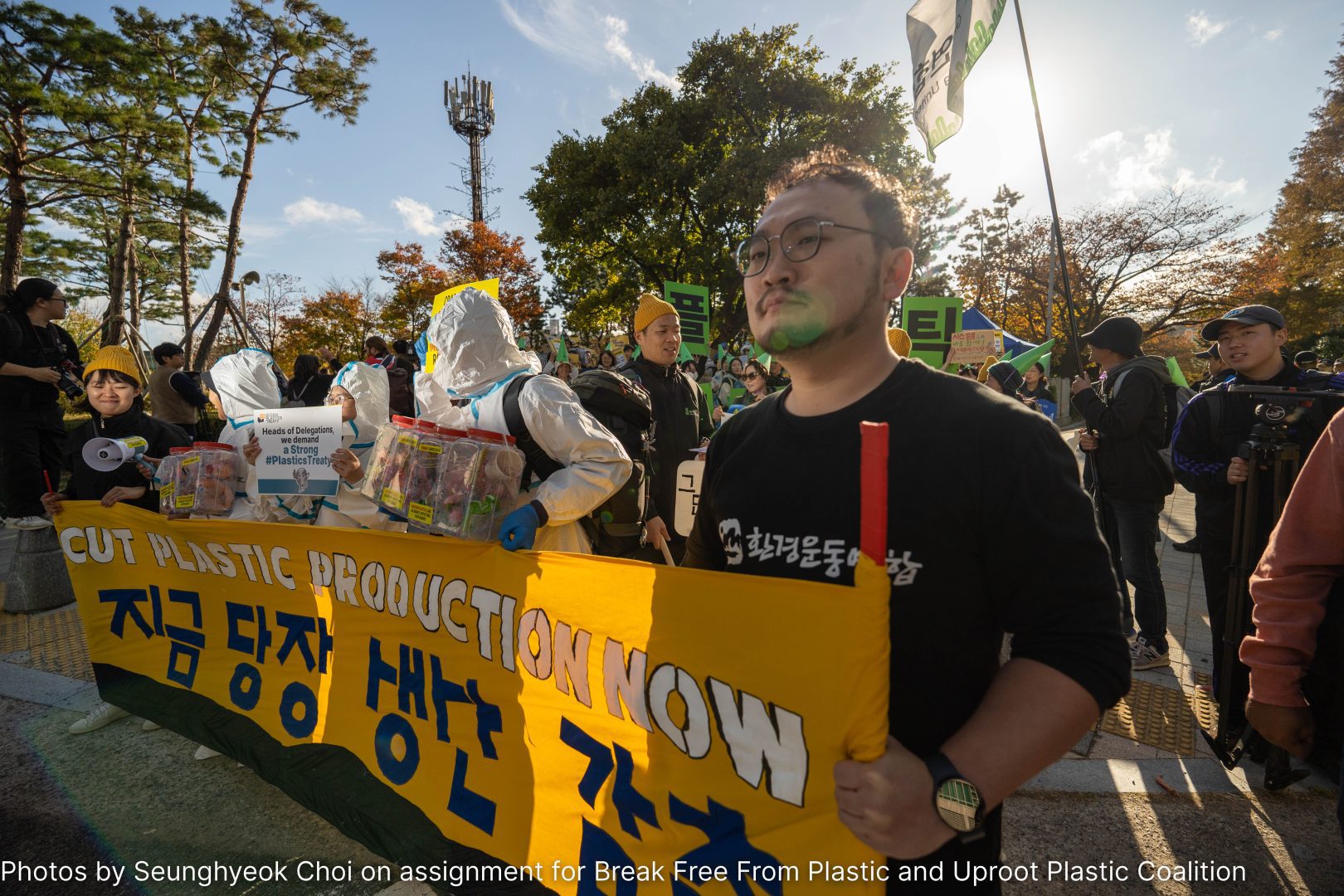
- Cut plastic production, starting with unnecessary single-use plastics.
- Scale up reuse and refill systems.
- Redesign products and packaging so they can be reused or genuinely recycled.
- Build zero waste systems with source separation, mechanical recycling and composting, run with waste workers.
- Keep pyrolysis, gasification and other forms of “chemical recycling” out of recycling targets and climate finance.
Learn more about GAIA’s work on plastic, the global plastics treaty to address plastic pollution, and why to solve the climate crisis, we must solve the plastic crisis.
Frequently asked questions about chemical recycling
What is chemical recycling?
Chemical recycling is a group of processes, mostly pyrolysis and gasification, that use heat or chemicals to break plastic down into low-quality oil, gases or chemicals. Much of the output is used as fuel, which means the plastic is ultimately burned.
Is chemical recycling bad for the environment?
Thermal chemical recycling can emit the same pollutants as mass-burn incinerators, including heavy metals and persistent organic pollutants. Communities near pyrolysis and gasification plants have measured particulate pollution up to 8 times WHO guidelines.
What is plastic pyrolysis?
Plastic pyrolysis heats plastic waste without oxygen to produce pyrolysis oil, gas and char. It is the most common technology sold as “advanced recycling.”
What’s the difference between chemical and mechanical recycling?
Mechanical recycling melts plastic and remakes it into new products. Chemical recycling breaks plastic down into raw materials or low-grade fuels through an energy-intensive process. While in theory, some chemicals could be used to make plastics, it hasn’t been proven at scale.
Is plastic-to-fuel recycling?
No. Turning plastic into fuel that is then burned releases its fossil carbon as climate pollution. It is a form of incineration, not recycling.
Share this explainer with anyone who’s been told chemical recycling will fix plastic pollution, and sign up for GAIA’s updates to follow our work at COP31 and on the plastics treaty.

