
By Mariel Vilella
COP31 in Antalya ended without an overarching agreement. This was a deeply disappointing outcome, exposing the growing gap between the urgency of the climate crisis and the political will to respond. The impasse reflected wider geopolitical divisions and competing national interests, at a moment when international cooperation is more essential than ever. Yet a weak compromise that legitimized false solutions would not have been progress either.
Beyond the negotiations, COP31 was an important moment for the global zero waste movement. GAIA and its members helped advance zero waste within the climate agenda, making the case for action that prevents waste and emissions at source, invests in community-led solutions, recognizes waste pickers, and directs climate finance towards a just transition.
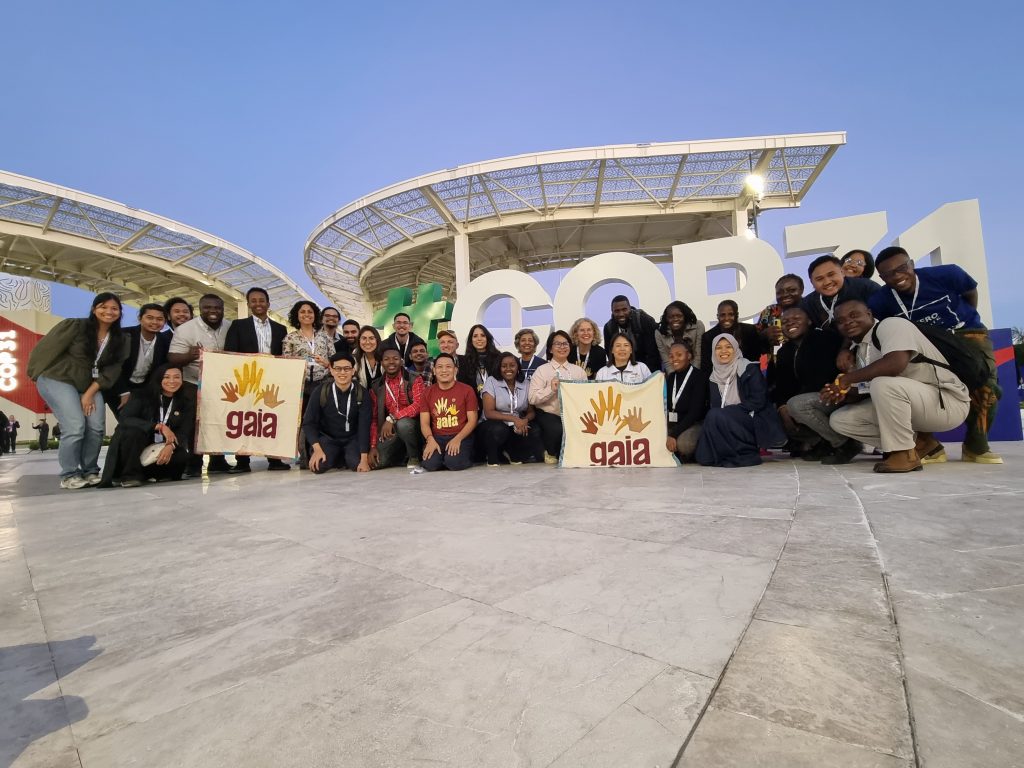
GAIA brought together a delegation of 72 people representing 49 member organizations, alongside 16 GAIA staff and 11 supported waste pickers, from 34 countries. Delegates contributed to 61 online and offline events, including three official UN side events and one official press conference, across 17 pavilions. Their work challenged incineration, advanced solutions to methane and food waste, and brought frontline voices into climate discussions.
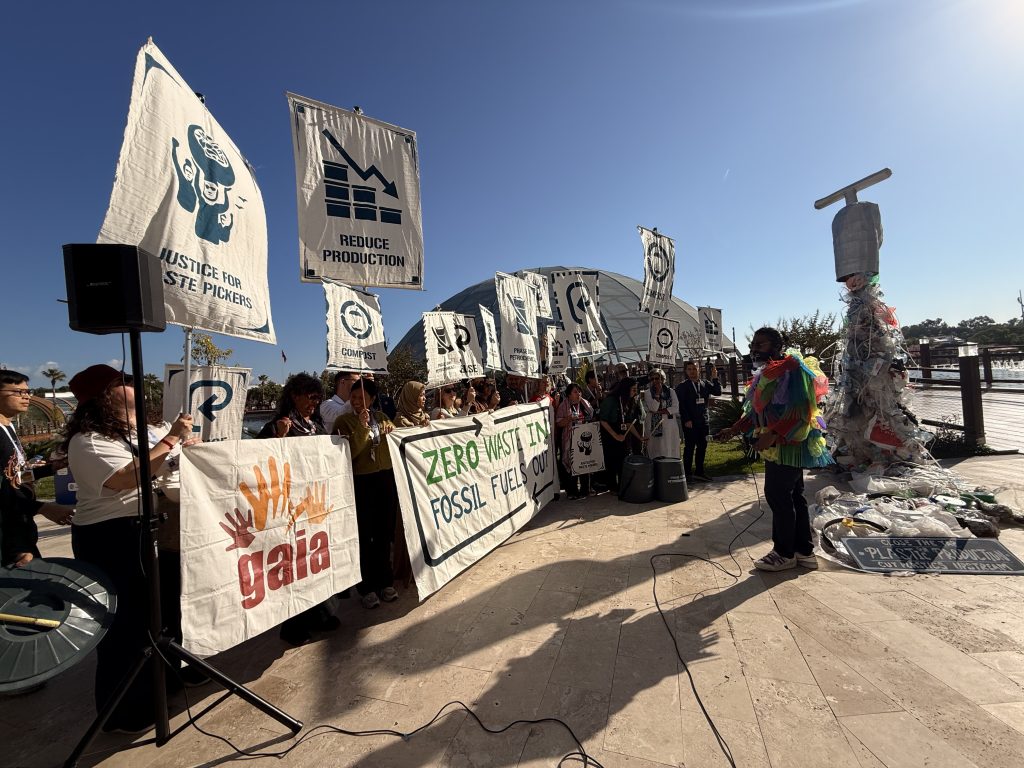
The delegation also strengthened alliances across the zero waste, plastics, and fossil fuel movements, including through the Zero Waste In. Fossil Fuels Out. reception co-hosted by GAIA and the Plastics Solutions Fund, which brought together advocates and allies to advance plastic reduction, Global South leadership and a just transition away from fossil fuels.
Shaping the zero waste agenda
Zero waste gained stronger recognition within the Global Climate Action Agenda, under Axis 4 on Cities, Infrastructure, and Water. The COP31 Presidency identified it as one of its ten implementation priorities and set a 2035 target to halve the projected increase in global municipal solid waste generation, while increasing global circular material use to at least 15%. The Istanbul Zero Waste Action Platform was launched, to connect all Plans to Accelerate Solutions contributing to zero waste in all 6 Axes.
The first 20 Zero Waste Districts were announced, spanning 20 cities across ten countries: Brazil, Chile, Ghana, Indonesia, Kenya, Malaysia, Mexico, Mongolia, Tanzania, and Türkiye. The districts will prioritize organic waste management, reuse, repair, refill, and the meaningful integration of waste pickers, with an ambition to reach 100 districts within five years. GAIA has championed the inclusion of allied cities in the program.
GAIA also contributed to PRISM (Plan to Accelerate Solutions on Upstream Circularity), launched by Shape Foundation alongside Eunomia Research & Consulting, Common House, Plastic Solutions Fund, amongst other partners, advancing prevention, reuse, inclusion, system change, and material stewardship. Other initiatives included the 1×100 campaign, which aims to mobilize 100,000 waste pickers to recover one million tonnes of recyclable materials, and the One Billion Meals Call to Action, which aims to halve food waste by 2030.
These initiatives offer important opportunities, but their contribution to the Presidency’s 2035 target remains unclear. A coherent framework, with measurable milestones, government commitments, and adequate finance, is still needed. The climate potential is significant: the Our Zero Waste Future report, launched at COP31, estimates that ambitious zero-waste and resource-efficiency strategies could avoid up to 149 GtCO₂e by 2050.
There are also encouraging signs that climate action is gaining momentum beyond the formal negotiations. The Global Climate Action Agenda is increasingly providing a framework for connecting commitments with practical implementation and tracking progress between COPs. One year after the launch of 120 Plans to Accelerate Solutions at COP30, 87% had reported progress. Meanwhile, 69 mayors representing more than 250 million people have committed to specific climate actions for 2027. These developments demonstrate the growing role of cities, coalitions and non-state actors in translating climate ambition into action on the ground.
Moving upstream: waste prevention is climate action
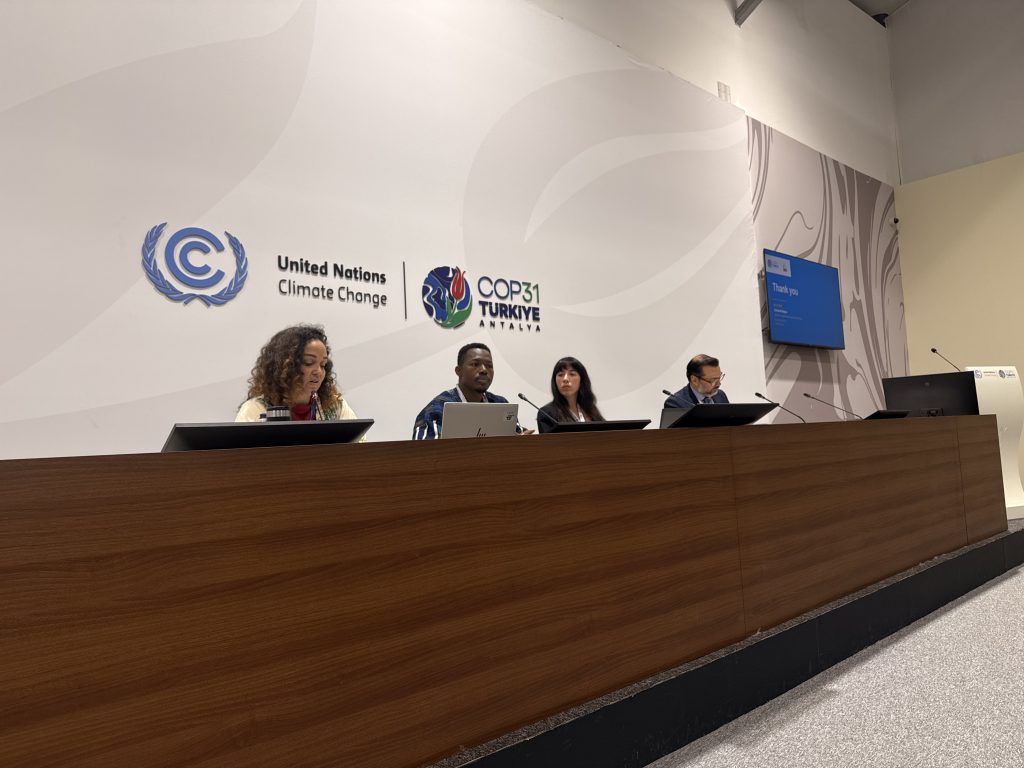
A central part of GAIA’s work at COP31 was challenging the promotion of waste incineration as a climate solution and making the case for prevention instead. GAIA Africa launched a report examining 15 incineration projects and proposals across 10 African countries, highlighting concerns about their economic viability, pollution risks, and potential to divert public resources from inclusive zero-waste alternatives.
GAIA also convened the press conference “Zero Waste COP – Incinerators Out. Zero Waste In”, calling on governments and climate financiers to reject incineration and invest in genuine zero waste solutions.
The growing evidence base challenging incineration as a climate solution was further strengthened by new research from Asia. The Centre for Financial Accountability, together with the National Alliance for Climate and Ecological Justice, published Chythenyen Devika Kulasekaran’s report, The Climate Cost of Burning Waste, examining the carbon intensity of Delhi’s four operational waste-to-energy incinerators. The research estimated that electricity generated by these facilities carries 3.4 kg of fossil-origin CO₂ per kWh – approximately 4.7 times the Indian grid average. The report adds important evidence from the Global South to the growing body of research exposing the climate costs of waste incineration.
GAIA Asia Pacific is also developing the Citizens’ Atlas on False Climate and Circularity Solutions, an innovative, crowdsourced platform mapping waste incinerators and other false solutions across the region. By bringing together project data, financial information and community evidence, the Atlas helps expose where investments are flowing and supports communities and advocates in challenging harmful projects.
Taking this argument further upstream, GAIA hosted the online press conference “Moving Upstream: Why Waste Prevention Is Essential to Delivering COP31’s Climate Ambitions” on 17 November, making the case that governments cannot manage their way out of the waste crisis through disposal or recycling alone. Climate action must start by reducing waste generation through prevention, reuse, repair, redesign, and composting.
The message was clear: we cannot solve the climate crisis by building more infrastructure to burn or dispose of what we produce. Climate finance must support prevention and inclusive local systems, not costly and polluting infrastructure.
Less Plastic, More Life: Artivism for a zero waste future
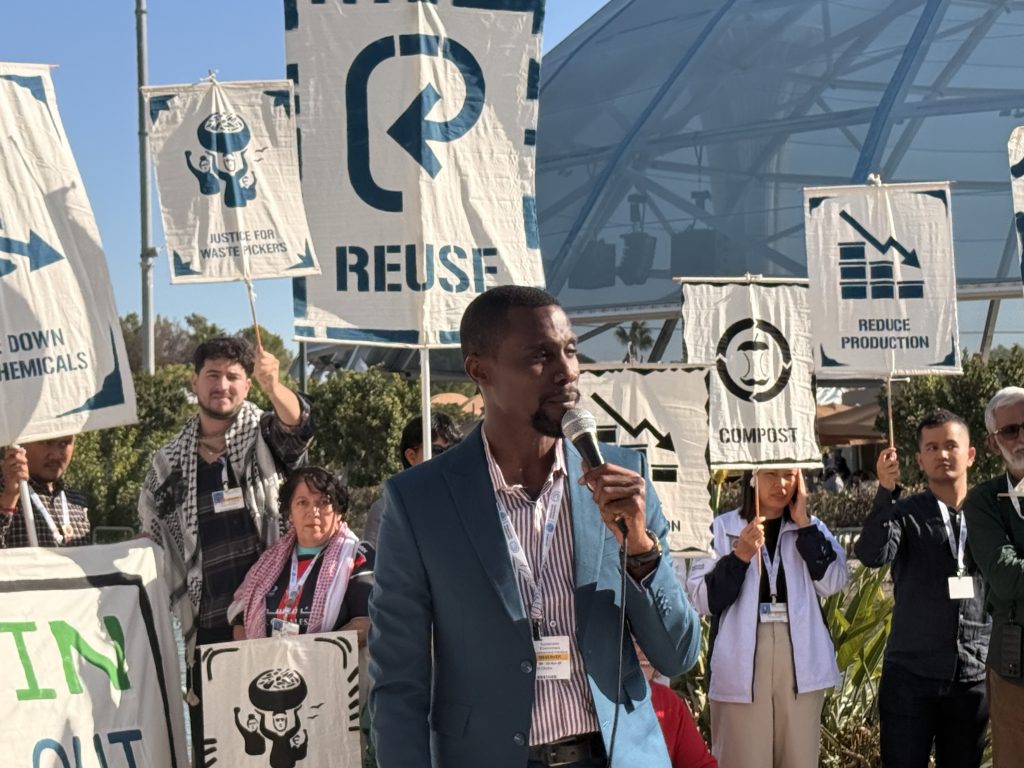
GAIA brought its message on plastic pollution to COP31 through Less Plastic, More Life!, a creative action using artivism and visual storytelling to highlight the systemic change needed to move beyond plastic pollution. The campaign connected the need to reduce plastic production with building zero-waste and circular systems, while protecting the people and ecosystems most affected by pollution.
At its heart was recognition of the essential role of waste pickers. As the campaign highlighted, we would be swimming in plastic without the work of waste pickers around the world, who recover materials and keep enormous quantities of waste out of our environment. Their contribution must be recognised and supported as part of a genuinely just and circular transition. With artwork inspired by artist Benjamin Von Wong and developed in collaboration with the Artivists Collective, Kebun Kali Code and Omah Buku Creative, and video by Hibat, the action brought creativity and grassroots advocacy together around a simple but powerful message: less plastic means more life.
This message continued through Zero Waste In. Fossil Fuels Out., a COP31 reception co-hosted by GAIA and the Plastics Solutions Fund. Bringing together allies, advocates and movement leaders, the reception strengthened connections across the zero-waste, plastics and fossil fuel movements, highlighting how reducing plastic pollution also means challenging dependence on fossil fuels in petrochemical production. It provided space to celebrate Global South leadership, share community-led solutions and build alliances for a just transition towards zero-waste and circular systems.
Methane, health, and food waste
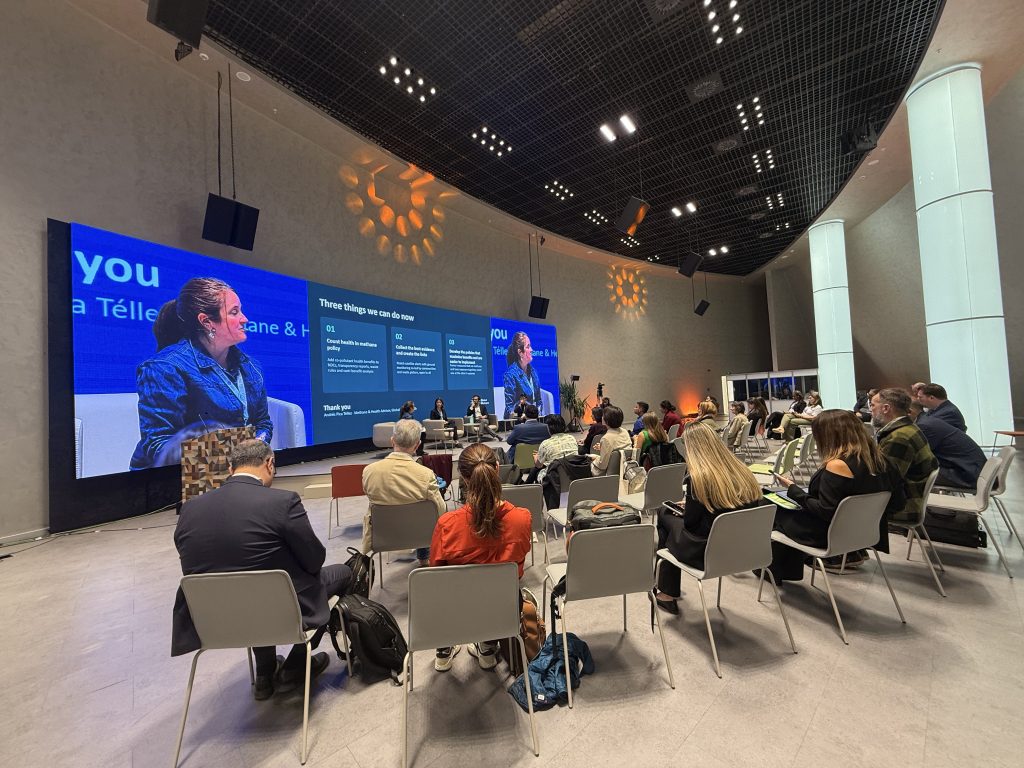
GAIA and its members brought practical waste-sector solutions into discussions on methane, clean air and health. At the Zero Waste Pavilion, “Methane, Air, and Health: From Detection to Community Benefits” explored how monitoring and evidence from frontline communities, including waste pickers in Ecuador, can connect methane mitigation with health benefits. Similarly, at the WHO Pavilion, “Zero Waste, Healthy Cities, and Healthy Workers” highlighted the links between zero waste systems, healthier cities, and the rights and wellbeing of waste workers, with contributions from Wellcome Trust, Fundación Basura, RedLacre, Instituto Pólis, and Universidad Simón Bolívar in Ecuador.
GAIA also brought food loss and waste into the formal COP31 discussions through the official side event “Implementing Food Loss & Waste Solutions Through Zero Waste and Environmental Justice”. Practitioners from Chile, India and Indonesia shared approaches including community-led food donation programs, composting, biogas, and black soldier fly larvae. The discussion connected with the COP31 Food Loss and Waste Declaration, supported by GAIA and partners including the Global FoodBanking Network, World Resources Institute (WRI), World Wildlife Fund (WWF) and The Waste and Resources Action Programme (WRAP), calling for governments to integrate food loss and waste reduction into national climate plans.
Furthermore, at the COP31 Leaders-Level Non-CO₂ Greenhouse Gases Summit, co-hosted by Brazil, China, and the United Kingdom alongside the COP31 Presidency, more than US$480 million in new philanthropic funding was announced for action on methane and other super-pollutants across energy, agriculture, and waste, as well as black carbon, clean cooking, transport, and cooling.
But waste-sector finance remains heavily skewed towards incineration, while organic waste management and food rescue receive only a small fraction. GAIA is calling for finance to be redirected towards prevention, separate collection, composting and food rescue, rather than locking cities into disposal infrastructure.
Waste pickers at the center of a just transition
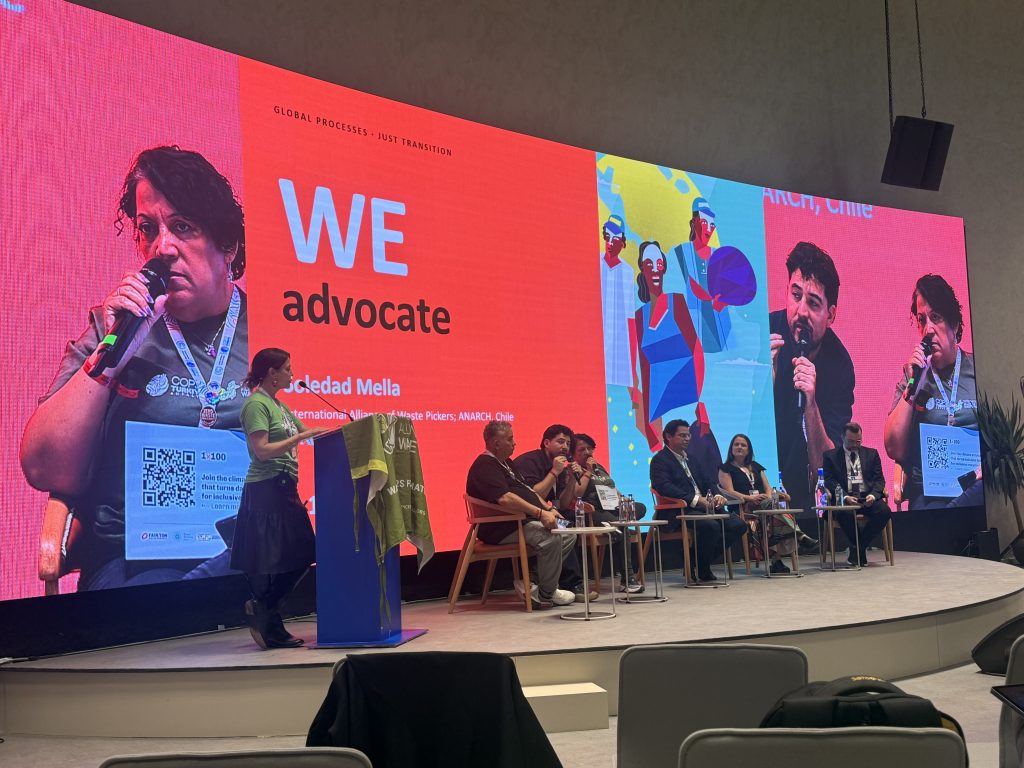
This COP also provided an opportunity to reflect on how far the waste picker movement has come. In 2009, GAIA and WIEGO brought the first delegation of waste pickers to the UN climate negotiations. Today, the International Alliance of Waste Pickers organises its own delegation, with waste pickers leading their advocacy and making their voices heard on the global stage.
As the movement grows stronger, waste pickers are also demonstrating the breadth of their contribution to zero-waste systems. Beyond recovering and returning recyclable materials to the economy, many are increasingly involved in the separate collection and recovery of organic waste through composting and other community-based solutions. This work helps divert organic waste from dumpsites and landfills, reduce methane emissions, produce compost that improves soil health, and support more resilient local food systems. Recognising this contribution means moving beyond a narrow understanding of waste pickers as recyclers and valuing their knowledge and role across the whole waste system.
COP31 failed to advance the Belém Action Mechanism (BAM), an important opportunity to strengthen international cooperation on a just transition. But while progress in the negotiations stalled, the movement itself continues to move forward. Waste pickers are asserting their leadership as essential actors in building inclusive zero-waste systems, and must be recognised through decent work, rights, participation in decision-making, and direct access to climate finance.
From commitments to implementation
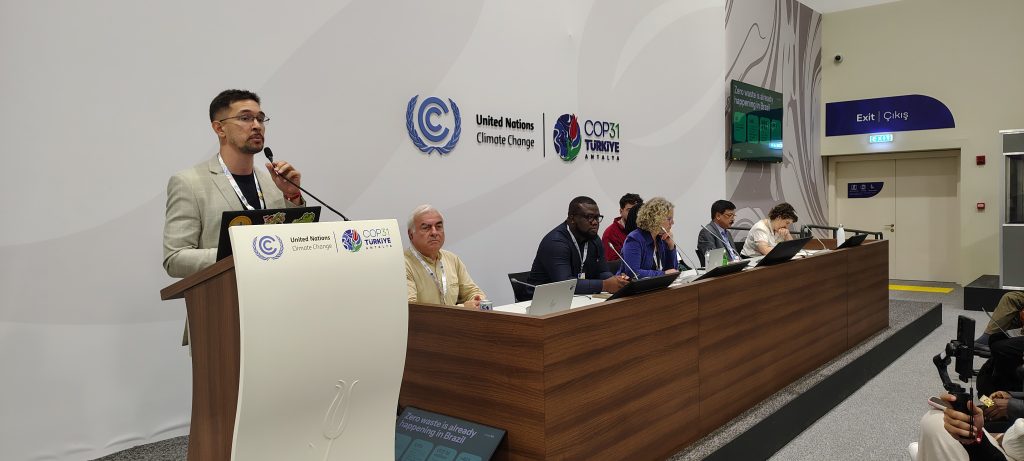
GAIA’s official side event “From Commitment to Implementation: Scaling Zero Waste for Climate and Clean Air”, led by Instituto Pólis with GAIA as moderator and partners from Ghana, Bangladesh, and Brazil, showcased how cities and communities are turning zero waste commitments into practical solutions, and explored what is needed to scale them through stronger partnerships, political leadership, and accessible finance.
Across COP31, GAIA and its members connected grassroots organizations with governments, city officials, international institutions, and funders, strengthening alliances and bringing frontline experience into policy discussions. The first Zero Waste Districts are underway, cities are making new commitments, and the Global Climate Action Agenda is increasingly focused on implementation and measurable progress.
COP31 did not deliver the political ambition the climate crisis demands. But the zero waste movement is demonstrating what change looks like, from waste pickers organizing for recognition and rights to communities preventing food waste and cities building inclusive zero waste systems. As we look towards COP32 in Addis Ababa, the challenge is to turn this growing momentum into lasting policy change and investment, ensuring that climate finance reaches the communities delivering solutions.
The momentum is growing. The solutions are here. Now is the time to scale zero waste.