

Listen to the interview with Marcus Luther:
Sponsored by Alpaca and Notability
“Mr. Luther, wait!” a student says, just as I’m about to thank their parents for attending the annual fall conferences at our school. “Can you tell my parents about the octopus?”
I smile wide hearing this.
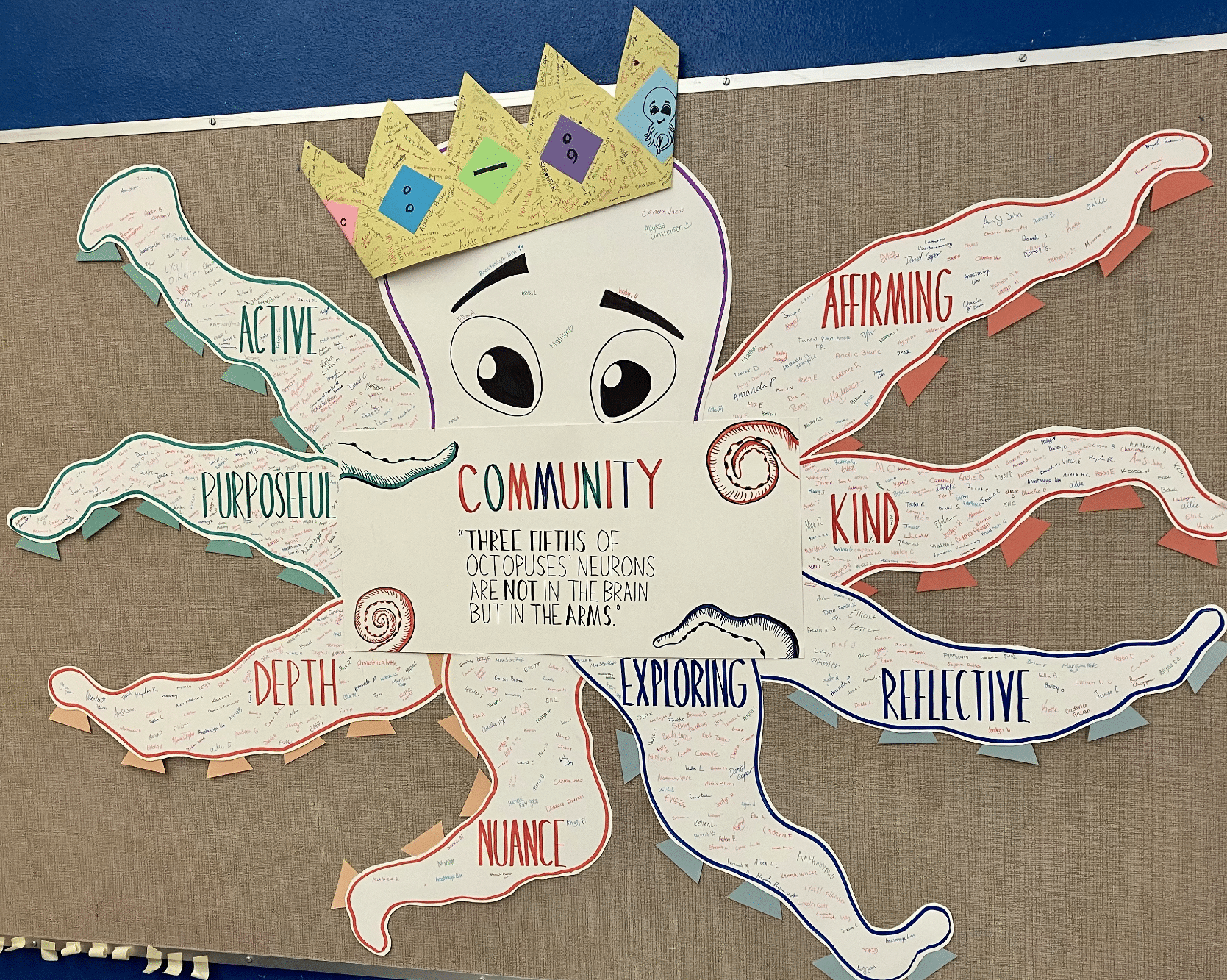
You see, a considerable portion of one of our classroom walls is taken up by “the octopus,” a collection of posters I assemble to begin each school year, with each of its appendages representing one of our classroom values.
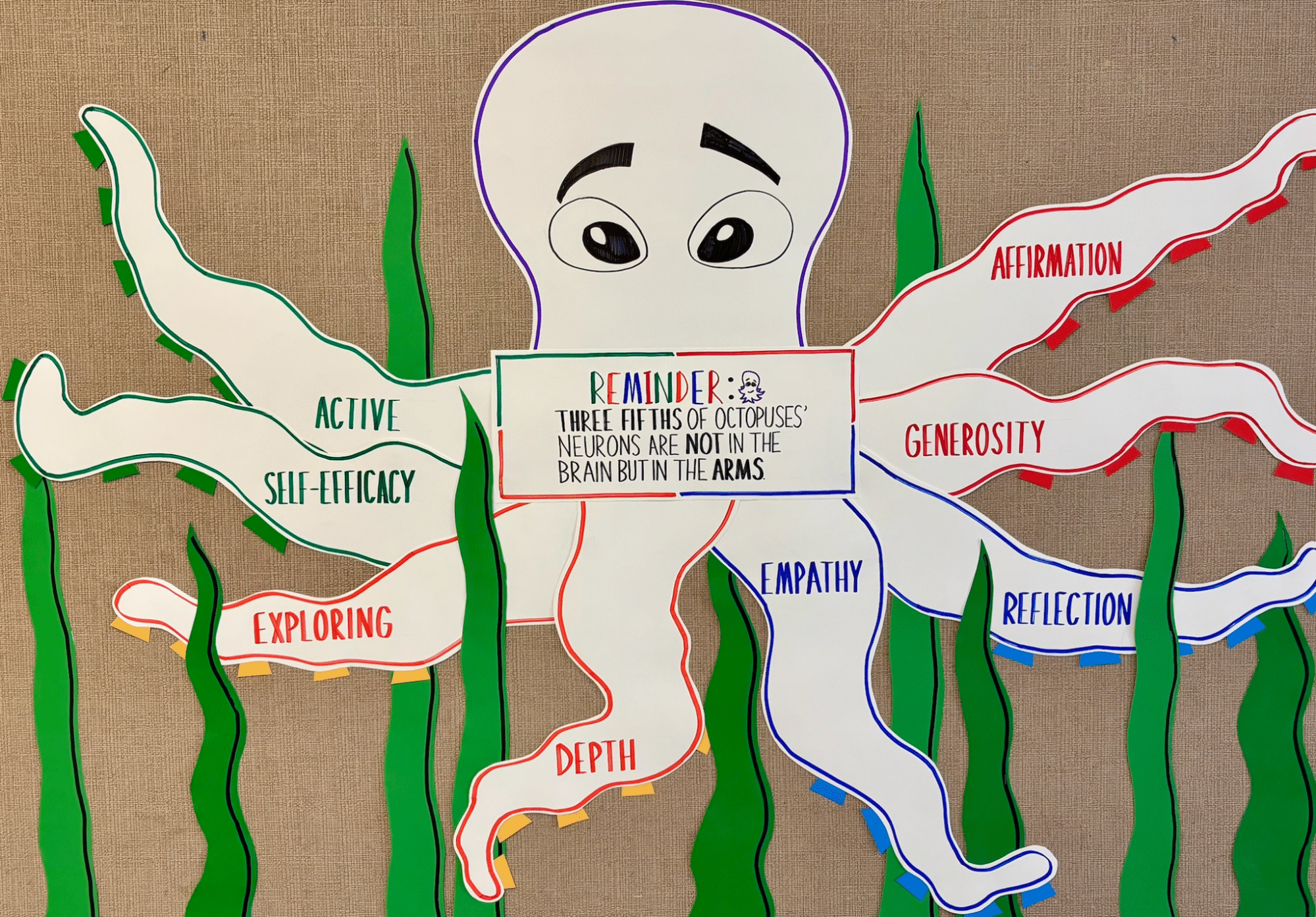
As you can see in the picture above, this octopus begins the year entirely blank, but then week by week, it begins to fill with student signatures — each one a result of that student being anonymously nominated by their classmates for making our classroom better by living out that particular value.
“I’ve already signed for active and depth,” the student says proudly to their parents, after I’ve given a brief explanation of how the octopus works in our classroom.
I nod, pulling up a spreadsheet on my computer. In a couple clicks, I can read aloud what this student’s classmates said about them back to their parents, about how they are “always really friendly and willing to talk to anyone” and how “they always go deeper and try to see the underlying message in the text.”
A pretty cool way to end a family conference, right?
A System of Peer Affirmation
For over a decade in my high school classroom, we’ve had a system built around peer affirmation.
I first got this idea when I visited my wife’s classroom back when she was a fifth grade teacher. She regularly asked students to write brief, positive notes for each other — along with being intentional with the values she wanted to be true throughout her classroom community by featuring them prominently.
This is how “the wall” came to be in our classroom: a series of posters with core values for our classroom community that students would sign throughout the year. As a long-time John Wooden admirer, I started it as a pyramid in my first classroom, but then let it evolve over the years through several iterations until finally, in my current classroom, it took the form of an octopus.
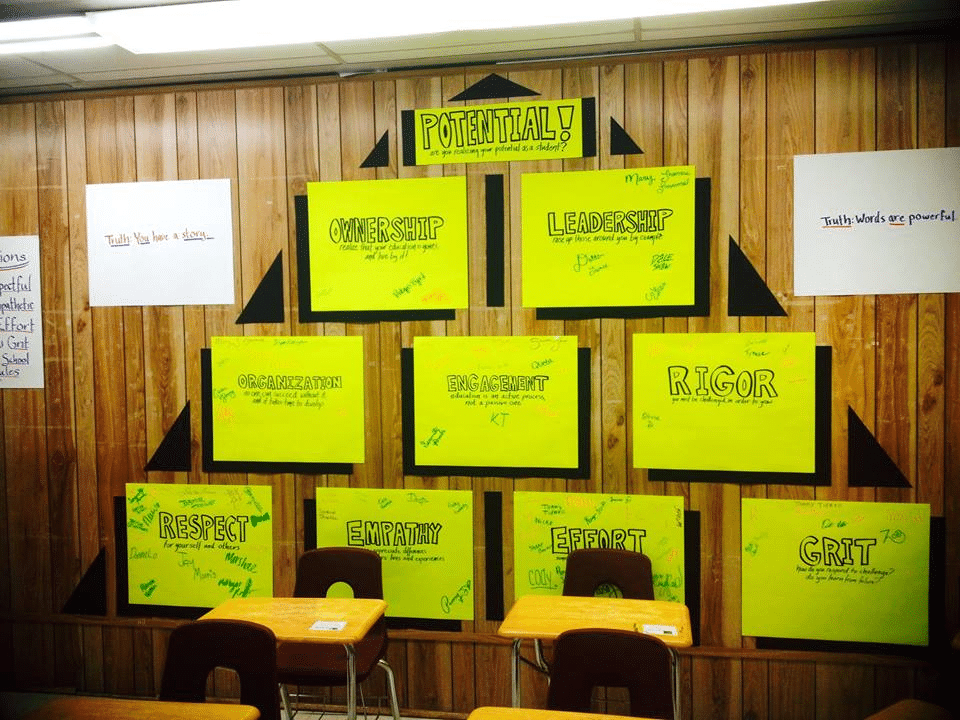
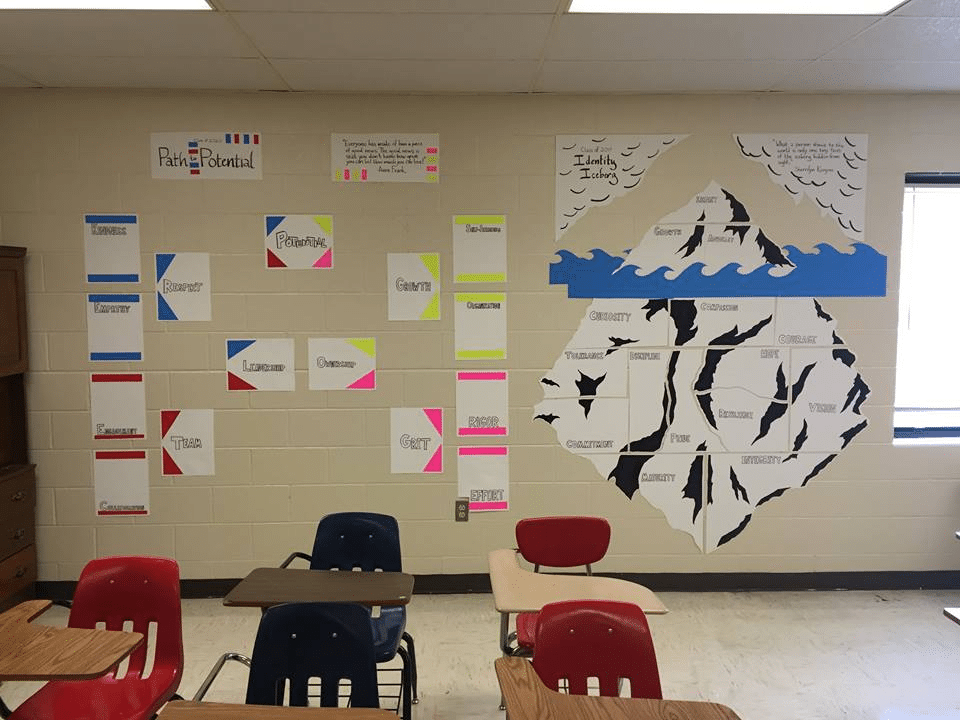
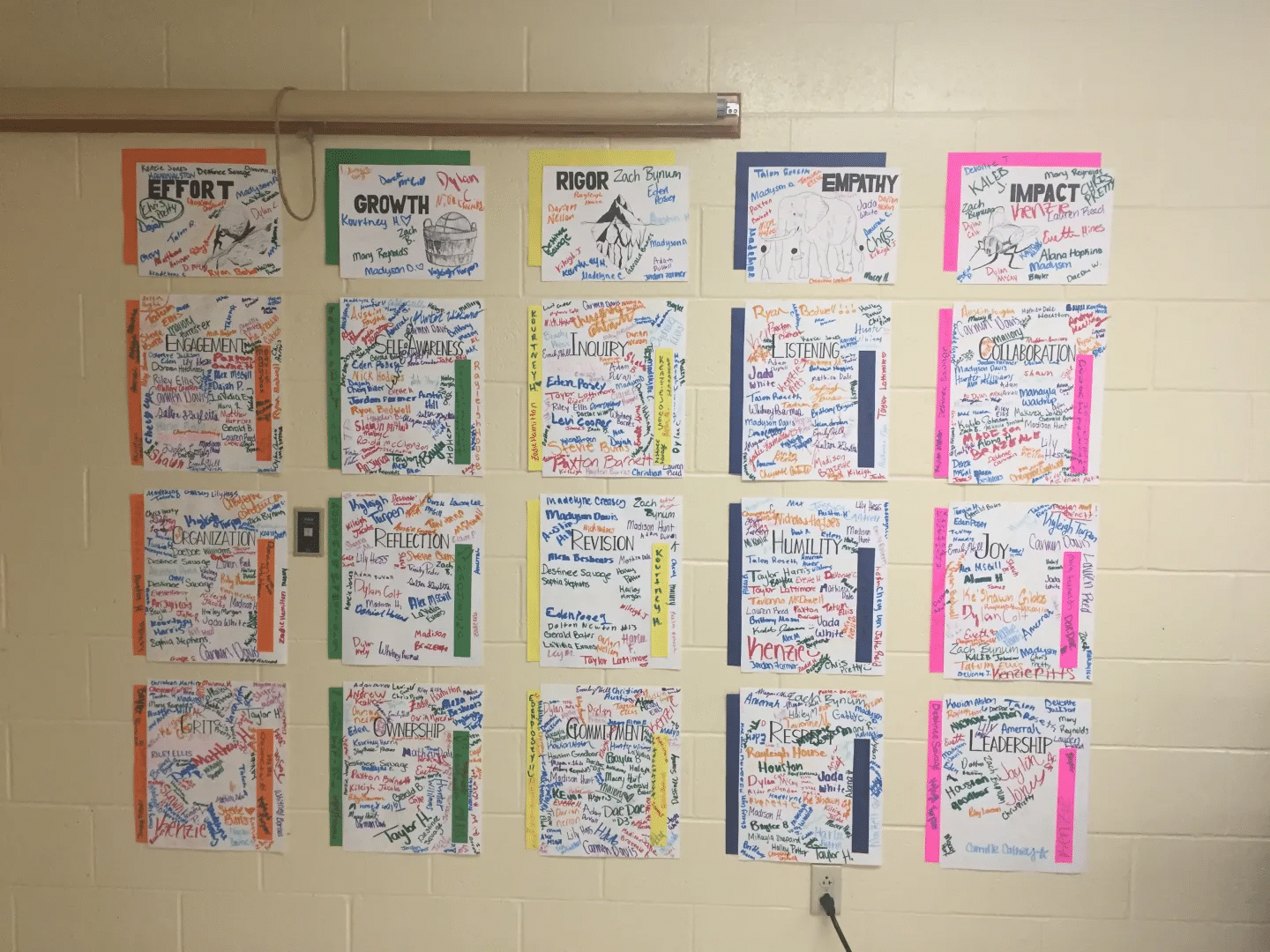
The point is not the octopus, though, but the system underneath it — a system that I’ve seen work in countless high school classrooms and that I think is quite replicable for any teacher looking for a way to help students feel seen and affirmed.
The basics of this system are three-fold:
- Identify a set of classroom values and create posters for each one, introducing and explaining them to your students.
- Throughout the year, have students nominate classmates for living out these values in the classroom.
- Pick a regular time to read out the nominations, having students “sign the wall” based on these nominations.
As any teacher reading this knows, however, there is no such thing as a “simple system,” so in this post I want to walk through each of these steps more in-depth, along with why I believe enough in this system to keep assembling octopus poster formations at the beginning of each school year.
Preparing the Classroom Before Students Arrive
The first step in this system is deciding what values you want to center.
There are many ways to do this. I’ve read of teachers who co-create classroom values and agreements (example: Adrian Neibauer’s first week approach) and also know some schools have building-wide values that would work well for this.
In my classroom, I actually end the school year by asking students to reflect on which classroom values meant the most to them along with suggesting potential changes, and then I allow them to “pay forward” that feedback into the next year’s wall. There is a pragmatic reason for this, too: I have six different sections with a total of 150-180 students, so trying to “co-create” the wall at the beginning of the school year is a bit too tall of an order for me, especially amidst the myriad other aspects of chaos the first weeks of school inevitably provide.
This also allows me to be really intentional about featuring and explaining the role of these classroom values in our classroom:
- The values — along with classroom core beliefs — are at the front of the classroom and also affixed to each desk label.
- Students begin the year with a survey that asks them to share their own values, which also get posted (using a strategy Tom Rademacher shared last year!)
- Then I introduce each of our classroom core beliefs and the attached values over the initial weeks of school. For each one, I share examples of how students have modeled them in previous school years.
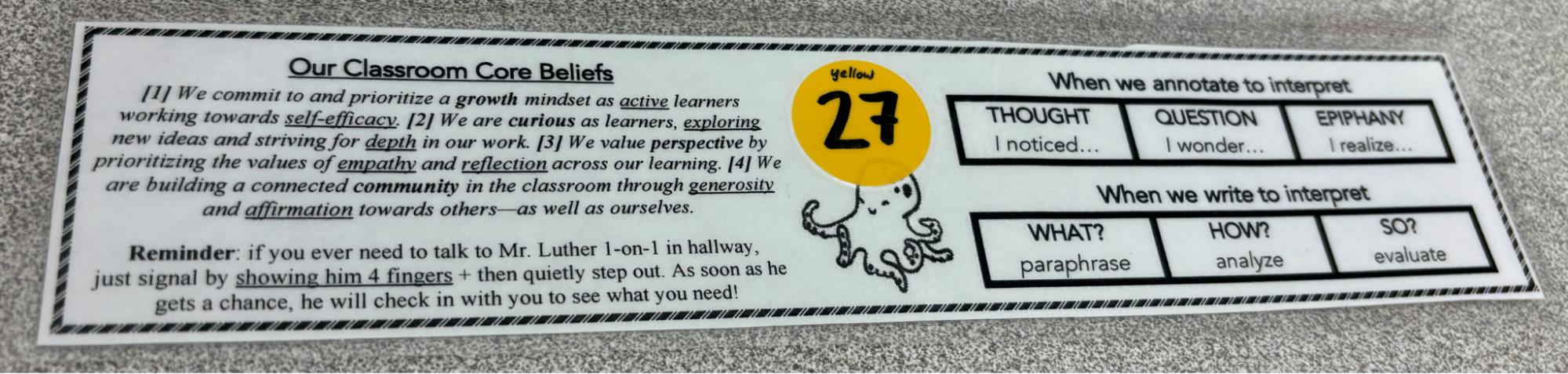
One other decision point that you’ll have to work through: how many values you want to feature. The benefit of fewer values is clarity, as it is easier to explain to students in a way they internalize fully — and that might be a better option for younger students! More values, of course, allow you a wider range of “look-for’s” as far as how students are making the classroom community better, and a higher number of values means students don’t sign all the posters too early in the course.
For our classroom I’ve settled on eight as the right number.
(Admittedly, there is an octopus bias that factors in!)
What The Peer Nomination Process Looks Like
This is the step I think can be most intimidating when bringing this system into the classroom: How do you get students to thoughtfully nominate each other?
Without question, the first time you do this is the most important — it sets the stage for what it will look like going forward.
I typically wait 2-3 weeks into the school year, once we have already done several other community-building activities. Yes, this means that there is a large set of mostly empty posters on the wall, but I’ve found that the mystery of this can also be sort of fun. (“Mr. Luther, what’s up with the big octopus?” they ask. My response: “You’ll see!”)
On the first day of peer nominations, I begin by explaining the system to them. Here are some points I stress:
- When I was in school, only a limited set of things were celebrated — high test scores, good grades, athletic victories.
- How you show up in the classroom impacts others, and I believe that deserves to get celebrated, too.
- Some students move through school more quietly and independently, and that’s 100% okay. Not everyone is going to sign the wall every single time.
- We see what we look for, and it is a skill — an important one! — to be able to see and affirm the strengths in the people around you.
This is also where I decide how much support or scaffolding students will need. In some classes, I’ll provide “exemplar nominations” from past years on the board, or I’ll even model what it looks like with my own nomination of a student for each value to build some momentum.
From there, I ask students to complete their first peer nomination, usually on a Google Form so that I can keep track of them much more easily (link to make your own!). On the form they’re asked to name a classmate, choose a specific value, and then explain what that classmate has done to live that value out in our classroom.
One other thing: These nominations are anonymous, which I make really clear to students before they start nominating.
The first time we do this it takes a bit longer, given the explanations, but as the year goes on these nominations are very quick and often embedded in what we’re already doing, such as at the end of an exit ticket or quiz. (This is another reason I love the Google Form option, as it is easy to attach to many other quick Google Form activities with just a couple clicks!)
“Signing The Wall” as a Classroom Ritual
We’re almost to the really fun part.
First, though, there is an important step: having a consistent process for collecting nominations, sorting out which students got nominated for which value, and having the reasoning accessible for you to read out.
Whether this is a clipboard you use to keep track of who has signed which poster as the year progresses or a more complex Google Sheet (I’ve recorded a step-by-step video of what this looks like for me), I’ve found that it is important to keep track of the nominations over the year, as (1) they can be helpful to return to for different forms of encouragement and motivation and (2) the “keeping track” itself becomes its own artifact, a visual of who has been nominated more often and who has not been nominated as much.
Without question one of the biggest differences between the early years of this system when I was much less organized (and had no idea what a Google Sheet was) and now is that the benefits of this system expanded, and the organization of the results itself because another valuable lens into our classroom community.
Once you have them collected and sorted? Now it’s time to “sign the wall.”
I usually like to do this at the end of the week, but you really can do this whenever it works best in your context. I make a bit of a show of getting out that particular class period’s assigned pen color (blue for 1st period, green for 2nd period, etc.) and then announce that it’s time to sign the wall.
Opening up my spreadsheet, I read the first peer nomination for that day without the student’s name, pause for a second, and then say the student name and value for them to sign:
“Every time I see them get called on or we go over answers they always have an answer and go into great detail explaining their answer.”
Pause.
“Signing the wall for self-efficacy…round of applause for Jose!”
And the cheering commences.
The student comes to the wall, grabs the pen, signs their name — and then we move on to the next name, and the next, and so on.

Wait, High School Students Cheer For This?
Yes!
Of course, all class periods are different — with some of the smaller and quieter ones needing a bit more encouragement early on. But one thing I’ve learned over the years of doing this: If you as a teacher show that you care about it, then they will almost always follow suit. Sometimes it takes a few helpful challenges — “Decent applause, but nothing like last period!” — but for over a decade, from classrooms of bounce-off-the-walls freshmen and sophomores to is-there-extra-credit-available AP juniors and seniors, “signing the wall” has been a thing in our classroom.
Do you get the occasional eye rolls? Yep. Just like all forms of celebration in a classroom or space, different students are going to respond differently. That’s okay!
I’d add, too, that sometimes the most eye-roll-y students early in the school year are the ones who become quite attached to the wall. Sometimes I’ll notice them looking at it during a pause in class and counting how many they have signed, and every once in a while I’ll even have my “I’m too cool to look like I care” student bring a friend by at lunch to show them where they signed earlier that day.
My all-time favorite memory, though, was with a student who was an absolute champion eye-roller throughout the year, particularly for signing the wall.
It was the last class of the year, and we had gotten carried away with our closing seminar discussion so much that the bell rang, signalling summer break.
Just as I was about to thank them for a great school year, this sophomore interrupted me.
“Mr. Luther, wait.”
I paused, already excited about what they were about to say.
“You said we were going to sign the wall.”
Did everyone stay for that final signing?
Yes.
Why I Believe In This System of Peer Affirmation
There are many tangible ways building a ritual of peer affirmations can bring value to your classroom.
As a teacher, you get insight into how students are seeing each other, especially those students who are quietly making a broad, meaningful impact in your classroom space. You also have a great tool to lift up students when they need a lift, whether with a pull-aside conversation (“Hey, can I share with you some of the things your classmates have said about you this year?”) or a surprise email to a student’s family (“I just want you to hear some things your student’s classmates have said about them”).
I’ve also found that these can be super helpful when I sit down to write letters of recommendation, as often one of my starting points when I begin writing one is to — you guessed it — go back and see what that student got nominated for in our classroom. (This is also where I do love keeping track of everything on that spreadsheet!)
Ultimately, though, all of those very-tangible benefits pale in comparison to a rather simple thing I’ve learned from this system: At the end of the day, you value what you make space for.
And students notice.
So, yes, there are some occasional eye rolls and, at least in my classroom, I’ve had to have some interesting conversations when people first notice the way-too-large octopus on the wall.
But I have zero regrets about creating space for affirmation in our classroom because of the signal it sends to every single student: This matters.
Not just this ritual, but more importantly the purpose it is built upon: the ability to look for the strengths in each other and the willingness to name those strengths to each other.
Something that matters in every single classroom.
(And beyond them.)
You can find more of Marcus Luther’s writing at The Broken Copier.
Join our mailing list and get weekly tips, tools, and inspiration that will make your teaching more effective and fun. You’ll get access to our members-only library of free downloads, including 20 Ways to Cut Your Grading Time in Half, the e-booklet that has helped thousands of teachers save time on grading. Over 50,000 teachers have already joined—come on in.

