

For Poyang Lake, the calendar dictates the coastline.
In summertime, it swells into a vast inland sea — the largest freshwater lake in China. By winter, it nearly disappears, shrinking until grassland swallows the shoreline.
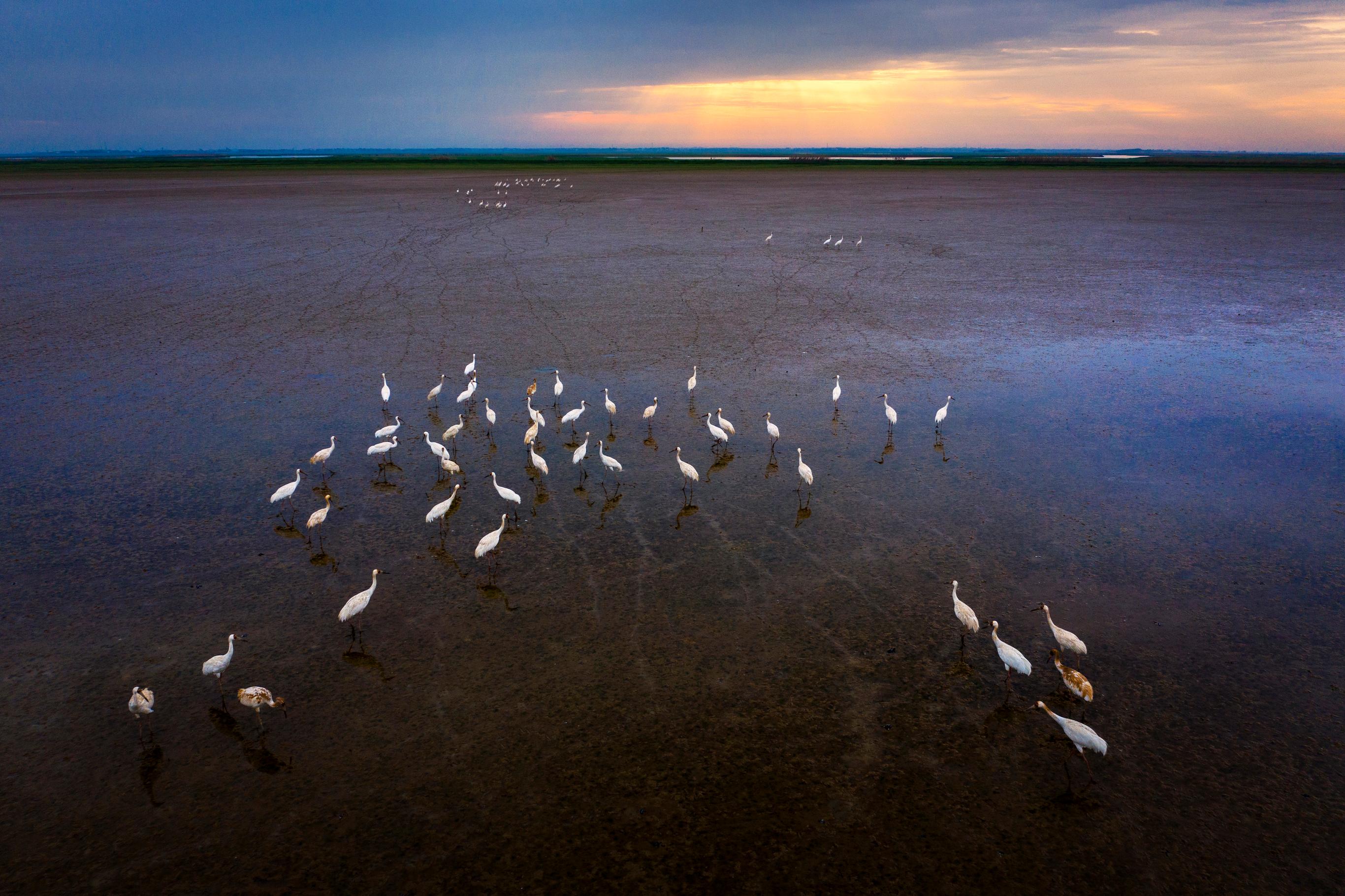
That dramatic cycle creates a habitat like no other, with marshes and mudflats that support rare plants, fish and invertebrates adapted to its seasonal rise and retreat. Come winter, the receding water draws in millions of migratory waterbirds, among them nearly the entire population of endangered Siberian cranes.
But Poyang’s delicate rhythm is increasingly disrupted. Altered river flows and climate-driven drought are degrading wetlands and threatening the birds that rely on the lake each winter.
Conservation International is working to stabilize the lake’s ecology — from restoring degraded wetlands to helping communities adopt more sustainable practices. A scientific “health check” of the basin has clarified what the lake needs to recover and where action is most urgent.
And across Poyang, community members are already rising to meet that challenge. Their efforts — and their stories — show how conservation flows outward from local communities.
Here are some of the voices shaping Poyang’s future.
Grandpa Li and the bird clinic
At 80 years old, Chunru Li, affectionately known as Grandpa Li, has dedicated his life to the care of birds. Once a local doctor, he shifted his focus to avian conservation more than 40 years ago, long before the importance of protecting these birds was widely recognized. With the support of local authorities and the Duchang Migratory Bird Nature Reserve, he transformed his home into a bird clinic, providing professional medical care to injured and sick birds.
Since then, Li has become a beloved figure in the community, sharing his knowledge of bird conservation with local youth out of a “nature classroom” partially funded by Conservation International, as well as hosting other conservation activities out of the bird clinic.
People in the village still talk about the day in 2015 when they found a young Siberian crane — brown with juvenile feathers — accidentally poisoned and unable to stand. They brought the bird to Li’s clinic, where he treated it for weeks. As it slowly regained strength, the crane began following him everywhere: balancing on his shoulder, trailing him around the yard and practicing short flights over the lake.
Day by day, the crane’s brown feathers gave way to white, and when it was finally strong enough to fly, Li released it to rejoin its flock on the long journey back to Siberia. The farewell felt final — a once-in-a-lifetime bond between a healer and a wild bird.
But a year later, in late autumn, as Li walked along the shoreline, a young Siberian crane landed beside him — with an adult female at its side. After a full migration cycle, the bird he’d raised had returned to see him again.
He captured the moment in a poem:
All around Poyang Lake I searched for my old friend;
At last, I see you again in late autumn,
When the chrysanthemums are in full bloom.
Learning the language of birds
Just a stone’s throw from Grandpa Li’s bird clinic, 11-year-old Jiahui has found her own sanctuary in the Migratory Bird Library.
Once an abandoned residential building, the library was transformed into an educational hub with support from Conservation International. With over 400 nature-themed books, it has become a cherished space for Jiahui and children from nearby communities.
“I love learning about the birds in Poyang Lake,” Jiahui said. “The books have beautiful illustrations, and I’ve even learned new Chinese characters and poems related to birds.”
For many young readers, the library is their first doorway into conservation. It has become a collaborative space for local seniors, including Jiahui’s grandfather, Xiaohua Xu, who leads a volunteer bird-conservation group.
With expert training based out of the library, villagers like Xu have shifted from primarily farming to serving as conservation volunteers — patrolling the wetlands, monitoring wildlife and supporting scientific research. Today, they form the backbone of grassroots conservation in the basin, working alongside Conservation International, the nature reserve and other partners to strengthen a wetland-protection network across Poyang.
“Our goal is to empower local communities to take ownership of their natural resources,” said Xiaohai Liu, who leads Conservation International-China.“By fostering a culture of conservation, we can ensure a sustainable future for Poyang Lake and its inhabitants.”
A former fisherman leads a porpoise patrol
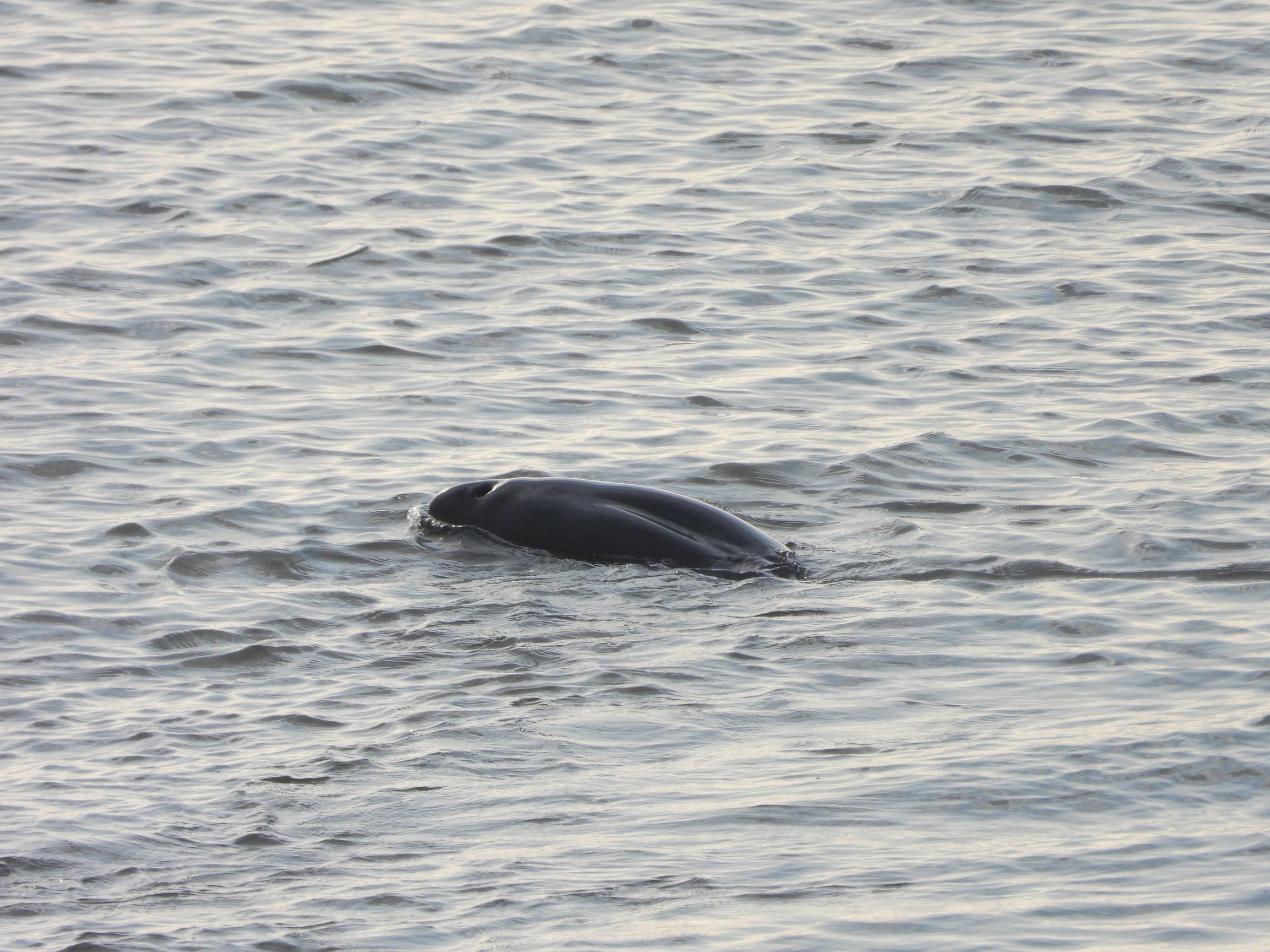
For most of his life, Wenbin Yuan made his living on Poyang Lake. He grew up fishing these waters, recalling childhood days when Yangtze finless porpoises were so common they often surfaced beside his family’s boat — and occasionally ended up in nets by accident. Those memories have faded. Today, the porpoise is critically endangered, with around 1,200 individuals left in the wild.
The porpoise’s endangerment is part of a broader ecological collapse at the basin of the Yangtze River, which feeds the lake. Here, fish stocks have crashed and once-common species — from sturgeon to freshwater dolphins — have all but disappeared.
Yuan noticed the change before many others did, and it troubled him. He stepped away from full-time fishing to focus more on protecting the porpoise — a decision that wasn’t easy to explain. Protecting habitat often meant asking neighbors to change practices tied to their livelihoods, and many wondered why he would give up a trade passed down for generations to protect an animal they rarely saw.
“For a long time, I felt alone,” Yuan said. He patrolled the lake in an aging wooden boat, recording sightings and speaking with fishers, unsure whether his work could make a difference.
In 2017, Yuan got a little help. Community members began to join him, forming a small patrol team to survey the lake. The team looks out for illegal fishing, documents conditions on the water — including noting any porpoises they may see — and occasionally rescues wildlife.
Today, Conservation International and local partners are strengthening these community-led efforts — helping patrol teams gain training, equipment and organizational support as they work to protect the finless porpoise and the lake that sustains them.
That work has helped Kangshan begin to reinvent itself as a “dolphin-friendly community.” In 2022, Yuan and his neighbors built a small artificial wetland to treat village wastewater and reduce pollution flowing into porpoise habitat. They also restored an old tree park behind the village and began welcoming visitors for nature education and eco-tourism, from birdwatchers to porpoise enthusiasts.
“When our stories are heard, people come to stand with us,” Yuan said. “Most of us didn’t have much schooling — we just needed support to learn how to protect the lake we depend on.”

