Originally published in CORAL Current magazine. Want more stories like this delivered to your mailbox? Become a supporter with an annual gift of $100 or more.
In late 2025, our team embarked on a scoping mission to Dominica – a lush, volcanic island where the Atlantic Ocean meets the Caribbean Sea. Our goals were to listen, understand community needs, and learn about the challenges facing the island’s reefs.
One thing came through in every conversation: this is an island of people who care deeply about nature and take pride in their work to protect coral reefs. But there simply aren’t enough people and resources on the front lines.
We are a year into CORAL’s expansion into the Eastern Caribbean, and I’ve had the opportunity to join our Board, Council, and staff on a trip to see this work firsthand. We’re here meeting partners, strengthening relationships with local governments, and learning from the community members.
Our CORAL Connections trips deepen our understanding and help inform our strategy. We come with respect for local culture, curiosity, and a global perspective, offering technical and scientific support where it’s needed. We know we don’t arrive with all the answers.
And I’ve learned so much. I’ve learned that, like humans, corals compete with one another, pass along diseases, and show remarkable resilience after setbacks – if the conditions are right. Similar to our team and partners, corals work together to overcome challenges building vibrant, thriving communities.
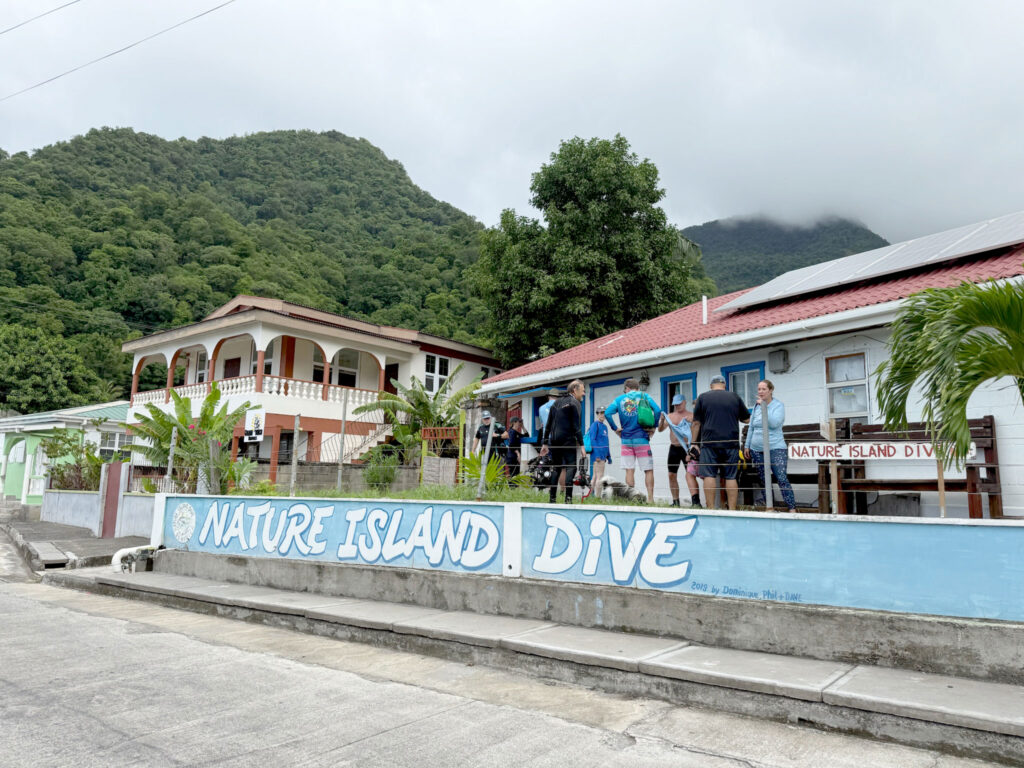
Oceans Forward, a local nonprofit in Soufrière, is a dedicated team on the front lines of fighting coral disease. This organization is small yet mighty, and the divers work in partnership with Nature Island Dive. So when Stony Coral Tissue Loss Disease reached Dominica in 2024, this dive team stepped up and dove in. Today, they still apply antibiotics to diseased corals daily while educating visitors about what’s happening beneath the surface.
Alongside them in the water, we watched as they treated affected corals with antibiotics. Seeing that work firsthand made the care these reefs need feel very real. Each coral being treated was a living part of the reef, and someone was there giving it a chance. All of this was happening because of how deeply they care for this ecosystem. I felt both grateful for their dedication and aware of how much they are up against.
On this visit to Dominica, we also had 13-year-old Grant with us, the son of board member Shannon Williams, who was experiencing the reef for the first time. When we spotted an octopus that flashed from white to blue before our eyes, I could feel his excitement through the water. Watching someone his age discover this world was powerful. It reminded me that we’re protecting this chance for Grant, and for future generations coming after him, to experience a living reef and to spot an octopus and feel that same sense of wonder.
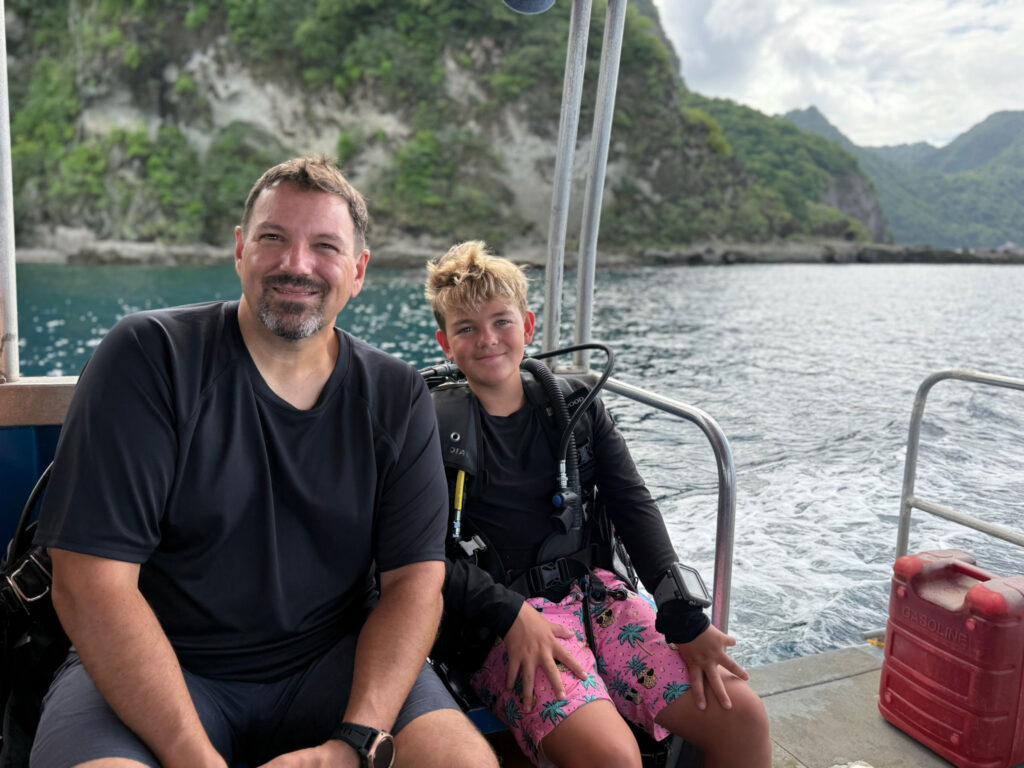
Both Oceans Forward and Nature Island Dive work closely with the Local Area Management Authority (LAMA) to help keep the marine protected area, which includes 12 dive sites, effective. It’s a team effort, and the needs are substantial: monitoring equipment, boats, and, most critically, staff.
As I listen to them, I keep coming back to the role CORAL can play behind the scenes. They are the local stewards of these reefs. We want to help them do the work they know needs to happen.
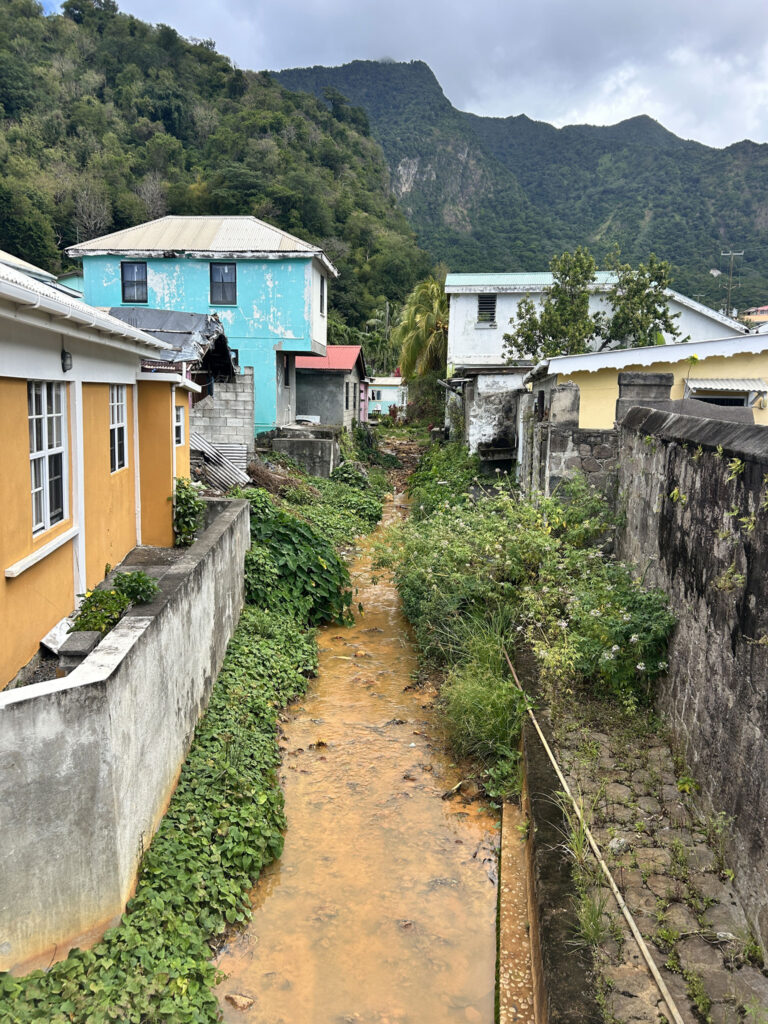
Throughout the week, we talked about how closely marine protection needs to be connected to clean water. Like humans, corals are more susceptible to disease when they’re under stress. Wastewater entering the ocean through nearby streams is a concern here, adding pressure to reefs already facing significant challenges.
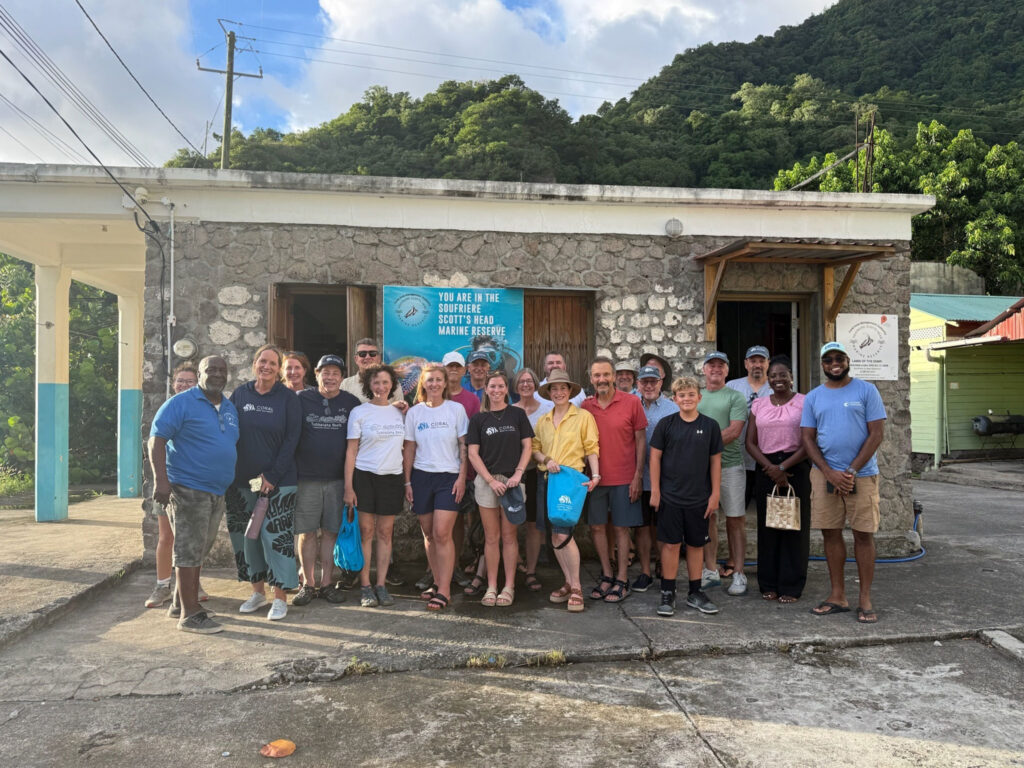
Watching the coral treatments brought that connection home for me. Helping an individual coral survive matters. So does improving the conditions around it, giving it a better chance to recover and thrive.
We’re beginning our work in Dominica with a portfolio of marine protection and wastewater projects. These include upgrades to a treatment facility in the Roseau area and improvements to household wastewater systems in Soufrière, where a stream carries sewage into the marine protected area. We walked through the facility in Roseau and learned it has not been operating for an entire year and within two months we will be funding the pumps they need to get treatment going again for the community. That’s an almost immediate impact on coral reefs and water quality.
I see the potential for the work happening in Dominica to become a model for our work across the Eastern Caribbean, building on lessons we’ve learned alongside partners in the Western Caribbean and Hawaiʻi.
I’ve noticed so many familiar threads. On the drive from the airport to the southern tip of the island, we saw signs of heavy sedimentation – soil moving through rivers and streams toward the ocean, where it can smother reefs. And, as in so many places we work, a few dedicated people are carrying much of the responsibility. They’re doing everything they can, while knowing how much more is needed.
Fortunately, funding from Outrigger Impact is helping us get the wastewater projects moving. Additionally, we have initial funding to support a formal partnership with Oceans Forward. Nature Island Dive has also joined our CORAL Dive Alliance, strengthening our shared commitment to educating visitors and creating opportunities to support local conservation efforts. While we know we have a long way to go, this is undoubtedly a strong beginning, and we will continue working through these partnerships for the long term.
Words don’t quite give this island’s beauty the credit it deserves. I learned that scenes from the Pirates of the Caribbean movies were filmed here, and it’s easy to understand why. The dramatic green mountains and the water surrounding them make this a place I know I’ll carry with me long after I leave.
But what stays with me most is the people: their commitment, their determination, and the work they do every day to give these reefs a future. I think about the team treating corals, and about Grant seeing the reef for the first time. Those experiences leave me feeling both the urgency of this work and the hope that makes it possible to keep going.
If you invested in this expansion a year ago, I want you to know that I can see your support at work. I’ve met the people, seen the challenges, and begun to understand the opportunities. The people here inspire me, and I believe that, alongside the community and government, we can help build a healthier future for Dominica’s reefs.
I trust you will keep investing in this work – in the Eastern Caribbean, across our existing hubs, and in our newest hub in the Coral Triangle. We have an approach grounded in experience, and we know that lasting progress takes strong relationships, local leadership, and a willingness to keep learning.
I can’t wait to bring you along as this story unfolds. We’re making a sustainable commitment to this place. My hope is that when Grant returns in however many years from now, he’ll find a reef that’s thriving – and a community with the support it needs to keep caring for it.