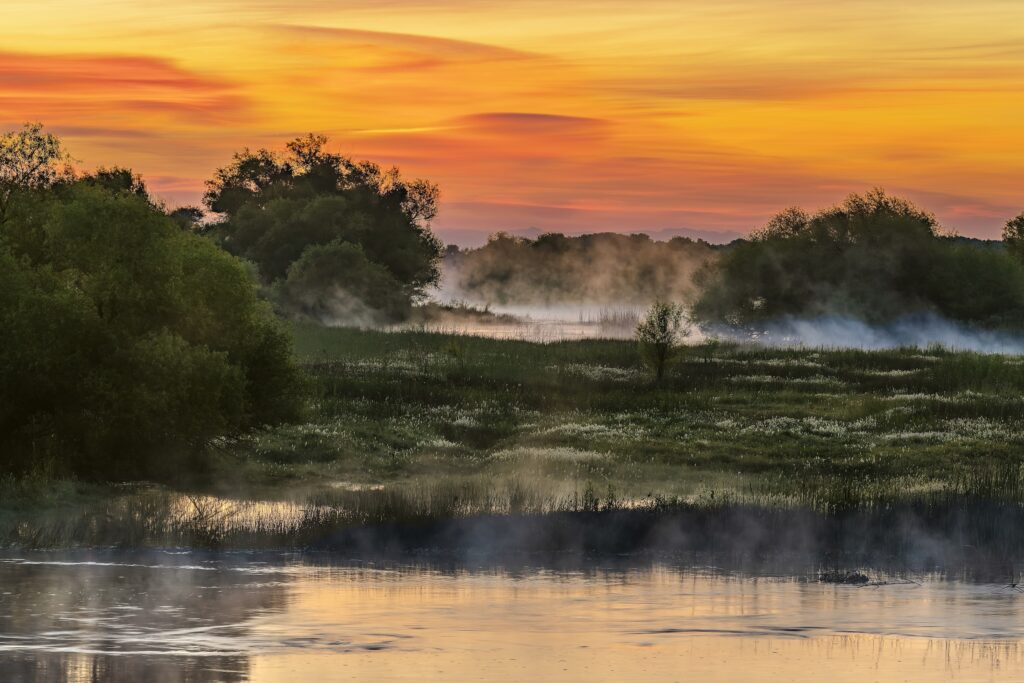
On June 11, dozens gathered in the early morning light at Great Valley Grasslands State Park outside of Merced to celebrate a milestone 15 years in the making — the reconnection of the San Joaquin River with more than 220 acres of historic floodplain habitat. The energy was palpable as scientists, tribal leaders, state officials, nonprofit partners, and community members came together to witness something that had taken the better part of two decades to achieve.
The Grasslands Floodplain Restoration Project, completed in February 2026, is one of the most significant floodplain restoration efforts in California’s San Joaquin Valley. The project will improve habitat for threatened and endangered fish and wildlife species, support groundwater recharge, and restore one of the last and largest undisturbed expanses of wetlands and native grasslands in the region.
American Rivers led the project implementation in close partnership with CA State Parks, River Partners, and Flow West. The celebration was timed to coincide with California State Parks Week and was one of five spotlight events held across the state.
A Morning Worth Celebrating
The morning featured an inspiring lineup of speakers, including California Natural Resources Secretary [MK1] Wade Crowfoot, Director of CA State Parks Armando Quintero, Chairperson of the Northern Valley Yokut Ohlone Tribe Kathy Perez, and Central Valley District Superintendent Danielle Gerhart. American Rivers’ California Regional Director Ann Willis delivered a particularly moving reflection on the power of partnerships, reminding the crowd that restoration is neither a sprint nor a marathon — but a relay. The partners that worked to restore the landscape are passing the baton on to the next generation to care for the land.
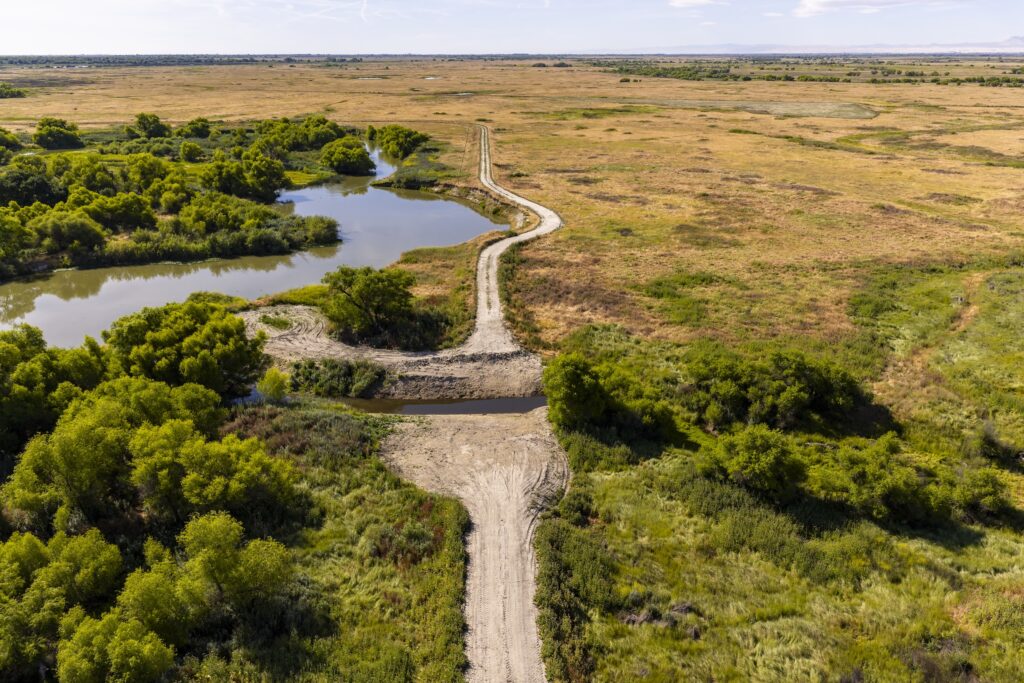
After the speeches, everyone walked together along the San Joaquin River to the site where the levee was notched — the precise point where the river will now flow onto its historic floodplain for the first time in over 75 years. The crowd cheered as a large red ribbon was cut across the new channel, a fitting symbol of a river finally finding its way home.
We were also proud to celebrate our partnership with Cox Enterprises[MK2] , whose team traveled from Atlanta to see the completed construction firsthand and advance their commitment to replenishing groundwater and restoring habitat across the region.
Why This Restoration Matters
The benefits of reconnecting the San Joaquin River to its floodplain extend far beyond Great Valley Grasslands State Park. Floodplains are among the most productive ecosystems on earth — they filter water, recharge groundwater supplies, buffer communities from flood damage, and provide critical habitat for fish and wildlife.
By breaching and removing segments of an old, decommissioned levee, the project allows the San Joaquin River to flood the grasslands seasonally, as it would have naturally decades ago. This return of historical flooding patterns will smother invasive exotic plants — which thrive in drier conditions — and replenish the native grasses and wetland plants that evolved alongside the river. In turn, this will re-create habitat for wildlife to live and thrive.
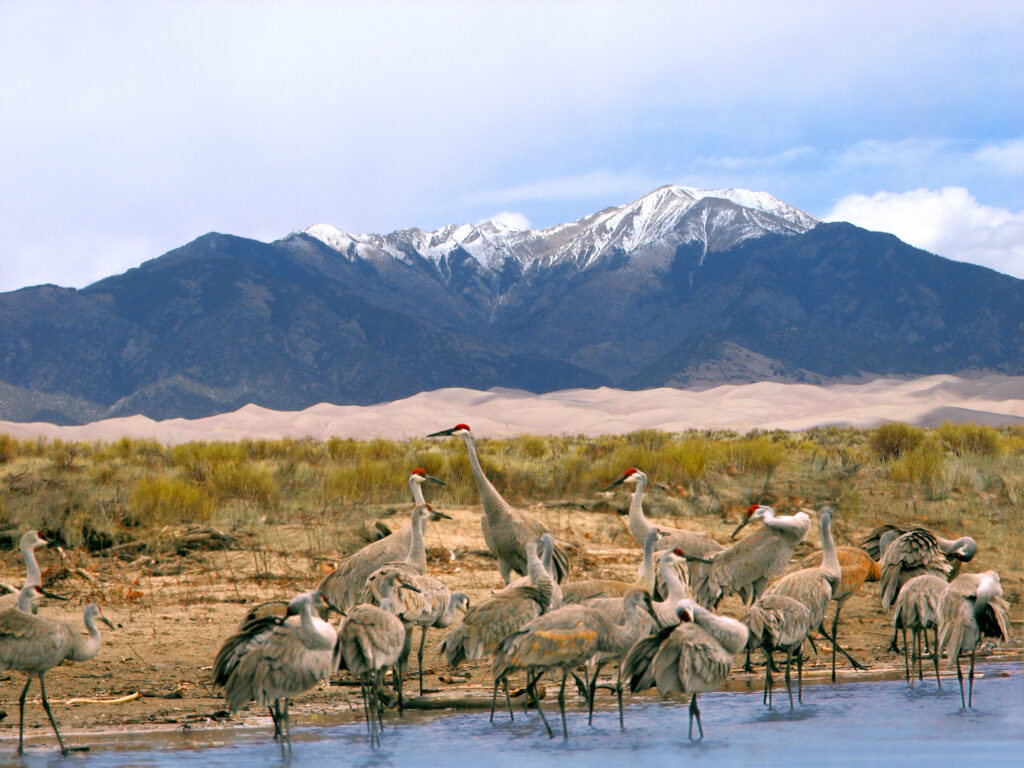
The reconnected floodplains will enable endangered Chinook salmon to once again be able to find shelter and food along this stretch of the San Joaquin River, improving the likelihood that they will survive, reach maturity, and spawn. The seasonal flooding will also create vernal pools — temporary wetland ecosystems that support aquatic amphibians, reptiles, and invertebrates that depend on these fleeting but vital habitats.
And the benefits aren’t just ecological. The project will support groundwater recharge in a region where aquifers have been significantly depleted by decades of agricultural pumping — a priority for partners like Cox Enterprises and the communities that depend on reliable water supplies in California’s Central Valley.
A Park with an Unlikely Origin Story
Great Valley Grasslands State Park wouldn’t exist if it weren’t for cheese. In 1982, Joseph Gallo — a former dairy farmer who built a successful cheese business — donated thousands of acres of Central Valley grasslands to the U.S. Fish and Wildlife Service and the state of California, with a request that the land be designated for wildlife refuges and parks.
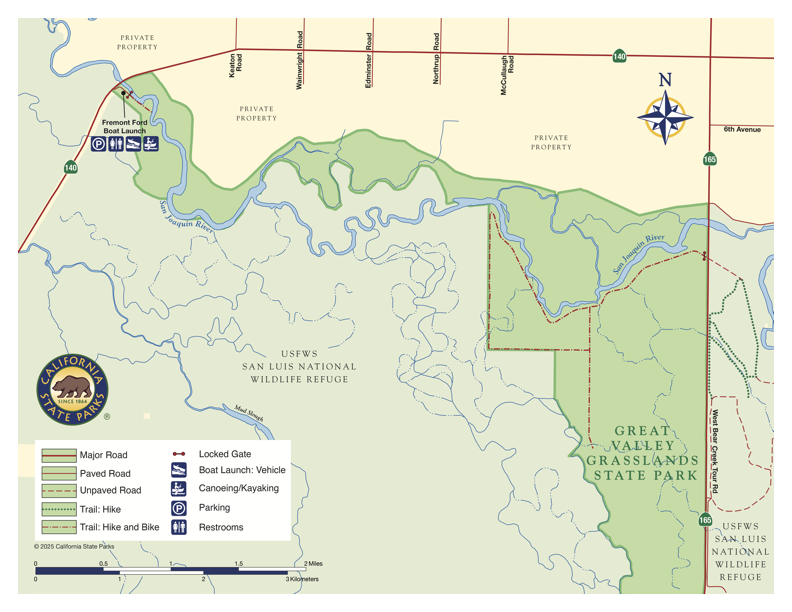
Sitting just south of Modesto and west of Merced, the 2,826-acre park is one of California’s largest remaining native grassland areas. But unlike most state parks, it was never developed for public use — no visitor centers, no trails, no infrastructure to welcome people to this remarkable landscape along the San Joaquin River. In many places, you can’t safely reach the river without a motorized boat.
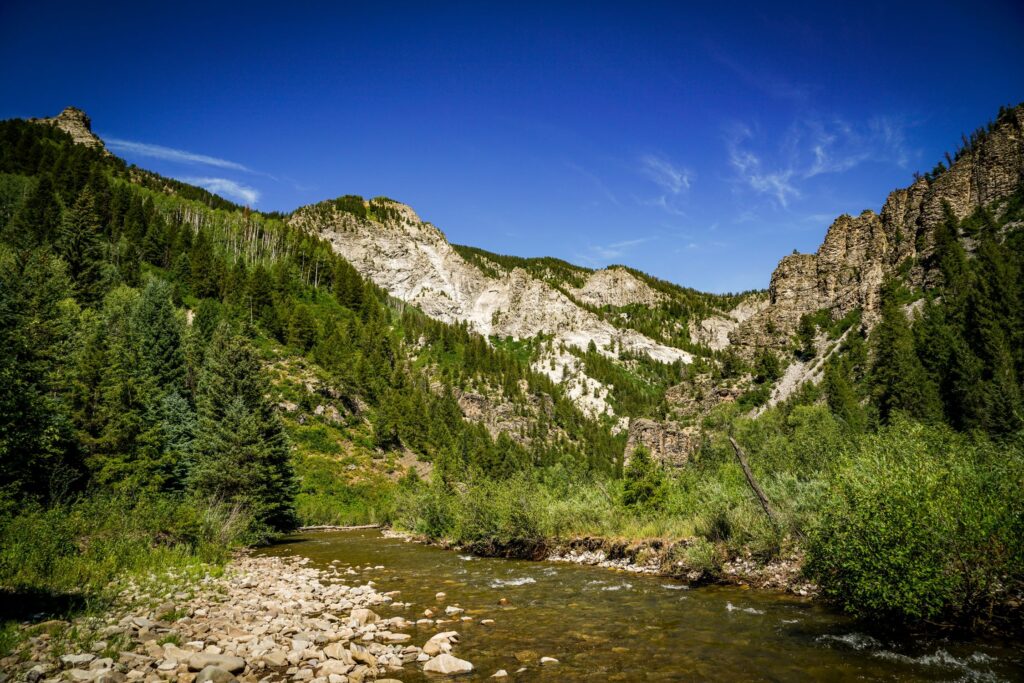
Let’s stay in touch!
We’re hard at work in the Southwest for rivers and clean water. Sign up to get the most important news affecting your water and rivers delivered right to your inbox.
Adding to the challenge, when Gallo donated the land, a network of levees built in the 1950s crisscrossed the landscape. These levees weren’t built to hold back the river — they were designed to contain cattle from Gallo’s dairy operation. But even after the cattle stopped grazing, the levees remained, cutting off the grassland ecosystem from the San Joaquin River, altering the natural flood patterns that had shaped this landscape for thousands of years, and opening the door for invasive plant species to take hold.
What remained was a series of obsolete levees at an underused park — and an extraordinary opportunity for restoration.
How We Got Here
More than 15 years ago, American Rivers began working with the California Department of Parks and Recreation, River Partners, and other agencies, nonprofits, and private partners to identify opportunities to restore the park’s native grasslands and reconnect the San Joaquin River to its historic floodplains. It was a vision that took patience, persistence, and the contributions of many organizations over many years.
Funding from the California Department of Fish and Wildlife — through Propositions 1 and 68 — along with support from California State Parks’ Cannabis Watershed Protection Program and Cox Enterprises helped turn that vision into a construction project. But getting to the finish line was far from linear. Permitting delays paused work for extended periods. Construction in a naturally flood-prone area meant crews were regularly sidelined for months at a time as weather events intervened. Some of the State Parks staff and project engineers worked on this assignment for more than 15 years.
That’s why the red ribbon moment on June 11 meant so much. It wasn’t just a construction milestone — it was the culmination of a relay run by dozens of people across two decades.
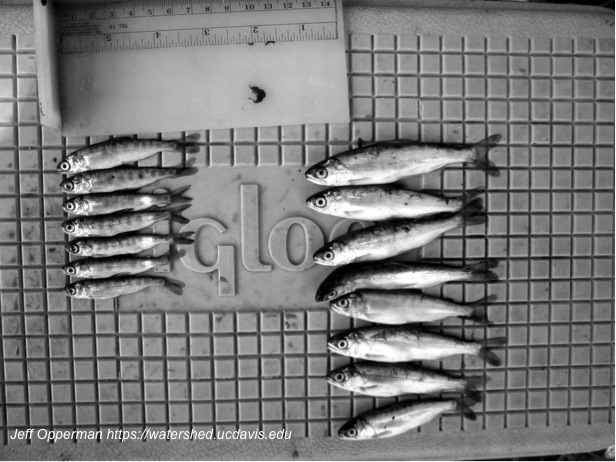
How do we know if the Restoration is a Success?
With construction now complete, the project team will shift focus to monitoring and learning. The team will track zooplankton, groundwater levels, water temperatures, native plant reintroduction, and wildlife use to measure how successfully the ecosystem is recovering. Floodplains provide the shelter and food juvenile salmon need to survive the arduous journey to the ocean. Zooplankton are microscopic organisms that drift along water currents and are an important food source for juvenile salmonids. When the river flows through the breach, we will measure zooplankton on the floodplain and in the San Joaquin River to determine the effectiveness of our efforts. This data will help inform future restoration efforts across the San Joaquin River and beyond.
What Comes Next
California’s Central Valley has long been recognized as one of the most “park-poor” regions in the state — most of California’s 280 parks lie along the coastline or within the mountains.
But that is beginning to change.
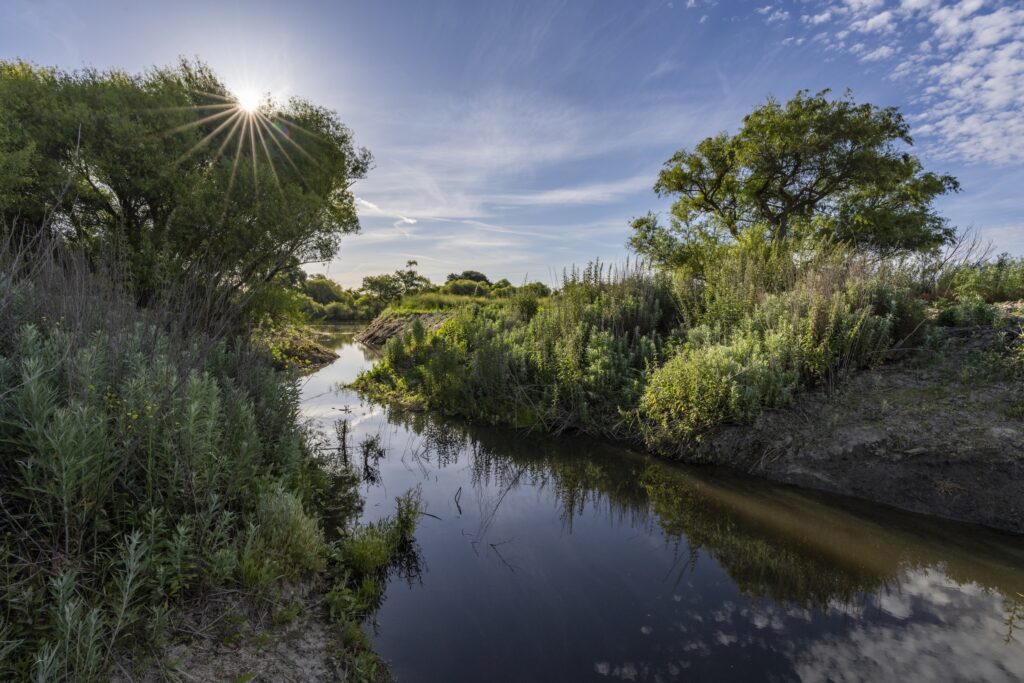
State Parks is gathering public input to develop a General Plan to improve public access at Great Valley Grasslands State Park so that residents and visitors can experience and enjoy this revitalized landscape. In addition, State Parks and American Rivers are continuing our partnership to restore and reconnect floodplains on over 1,000 acres of land north of the San Joaquin River with funding from the Wildlife Conservation Board. Soon Central Valley residents will be able to discover and enjoy this remarkable stretch of the San Joaquin River in their backyards.
On April 22, Governor Gavin Newsom announced State Parks Forward, a new initiative to expand the State Parks System and establish three new state parks in the Central Valley, including the 874-acre San Joaquin River Parkway in Fresno.
The San Joaquin River is flowing onto its floodplain again. The grasslands are beginning to heal. And the communities, tribes, and wildlife that depend on a healthy river are a little better off for it.