

This story was produced by The Xylom, a nonprofit news outlet covering the world’s most pressing health and environmental disparities, and co-published by Grist. Subscribe to The Xylom’s newsletter here.
When Super Typhoon Rai — equivalent to a Category 5 hurricane — began battering Batasan Island in Bohol, Philippines in December 2021, Trixy Elle and her husband, two children, and father waded into the storm, fearing they would be trapped in their home. Holding on to one another, they were determined not to let go.
By morning, the house Elle and her husband had spent years building was gone. So was much of the island. They were left with just the clothes on their backs. In the days that followed, the family survived in conditions that stripped life to its barest terms, at one point, eating livestock they had found dead in the storm’s aftermath.
“As a mother, it was up to me to find ways to feed my family,” Elle, a fish vendor, told The Xylom. “It got to the point where we were eating dead chickens, dead pigs. We got to that point because the government’s response took so long.”
The 35-year-old mother felt a deep sense of injustice. The typhoon — locally known as Odette — affected 10.6 million people in the Philippines, killing more than 400 and displacing 1.4 million from their homes. Elle began to question why communities like hers had to endure such devastation despite contributing so little to the climate crisis. “Why are we the ones struggling the most?”
That question propelled her towards climate justice. In December 2025, 67 survivors of the typhoon sued Shell at the Royal Courts of Justice, arguing that the company’s historic emissions contributed to climate change and so worsened disasters like Rai, seeking compensation for the damages caused. Shell did not respond to The Xylom’s requests for comment.
Bobbie Alota/AFP via Getty Images
The plaintiffs also contended that Shell has known since the 1960s about the risks climate change posed to vulnerable communities and the role its operations played in worsening those risks. Scientists agree that climate change is making storms like Rai more frequent and more intense.
The case is said to be the first civil case to directly link a major fossil fuel giant to deaths and injuries from climate impacts in the Global South.
Asia lags in climate litigation
Climate litigation has surged globally over the past decade, but the Global South — home to many of the world’s most climate-vulnerable communities — still accounts for less than 10% of the cases.
As of mid-2025, 3,099 climate change cases had been filed, with nearly two-thirds of all cases stemming from the United States, according to the Sabin Center for Climate Change Law. Excluding the U.S., Europe accounts for the largest share of climate cases at 32%. Asia and Africa are the least represented at 6% and 2%, respectively.
“I remember years ago people would say climate litigation would never take off in Asia because it’s not part of the Asian culture to fight poverty and … to litigate,” Jolene Lin, director of the Asia-Pacific Centre for Environmental Law, said.
Lin disagrees with this line of thinking: she believes that the biggest obstacles to climate litigation stem from weak rule of law.
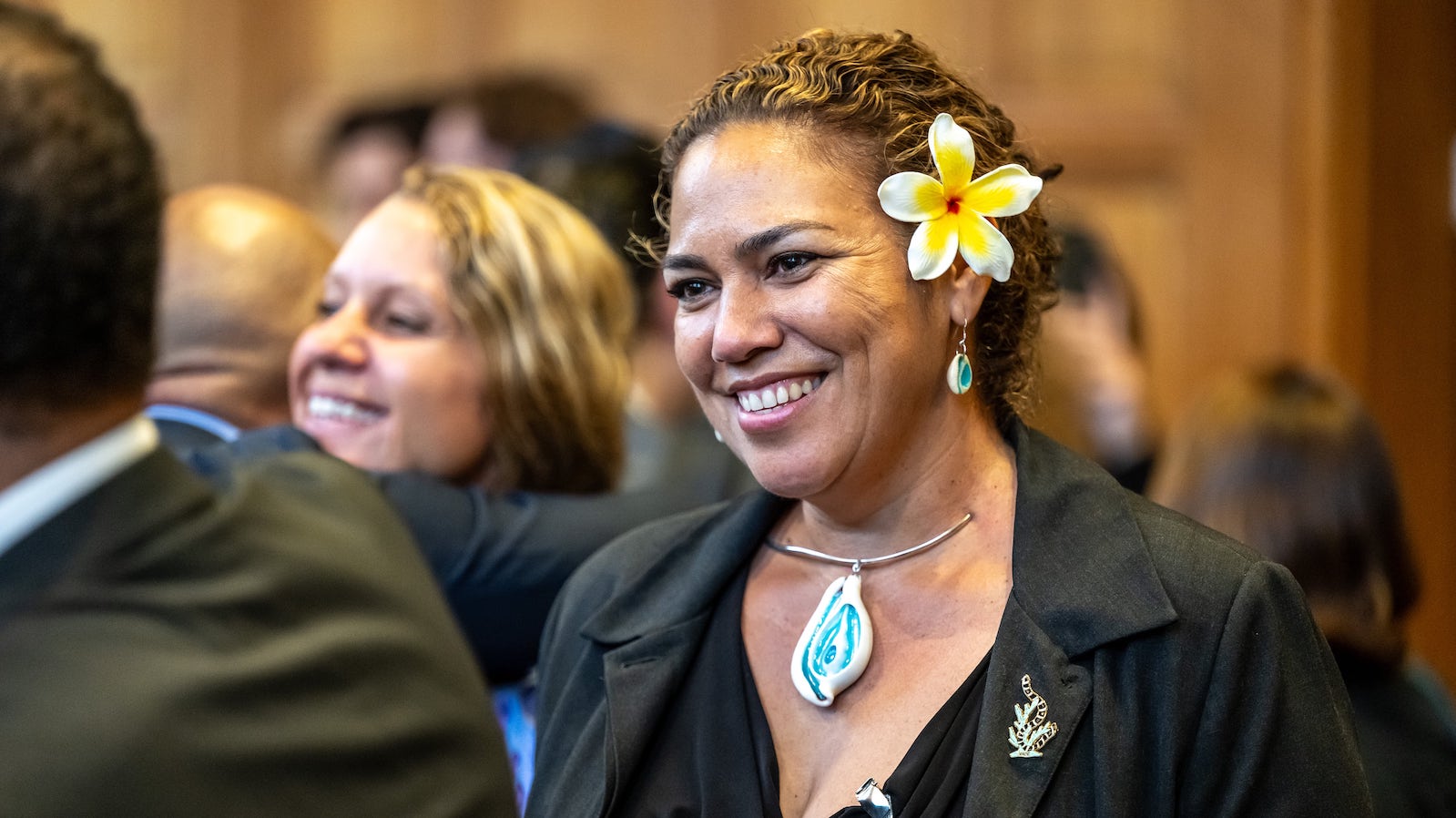
“In Asia, there are many jurisdictions where judicial corruption is a problem [as well as] the lack of judicial independence,” Lin said. Many judges across the region are still unfamiliar with climate litigation and tend to shy away from such cases, she added.
Another challenge is the shrinking space for activism. In several countries, restrictions on free speech and association make it harder to organize, campaign, and bring cases to court.
Still, more people across Asia are turning to the courts. Lin described 2024 as a “particularly meaningful year” for climate litigation in the region.
That year, South Korea’s Constitutional Court ruled that parts of the country’s Carbon Neutrality Act were unconstitutional because they failed to protect the rights of future generations. The case was filed by the environmental organization Youth 4 Climate Action in South Korea, a youth-led movement that leads climate strikes and advocates for clean energy.
Alongside this, the Supreme Court of India recognized protection from the adverse impacts of climate change as a fundamental constitutional right. It stemmed from efforts to protect a critically endangered bird, the Great Indian Bustard, amid concerns that the birds were being killed by collisions with overhead power transmission lines linked to expanding renewable energy infrastructure.
Similar legal challenges are now emerging elsewhere in Asia. In January, a Malaysian climate watchdog sued the federal government in a first-of-its-kind greenwashing case. The complaint alleges a fossil fuel company falsely marketed a fossil fuel-based product as “carbon neutral.”
Win or lose, the case matters. As Malaysia’s first climate litigation, it will test how judges interpret climate obligations under existing laws and expose where resistance lies, which will create a roadmap for future cases, said Kuberan Hansrajh Kumaresan, head of legal advocacy at Malaysia-based environmental watchdog RimbaWatch.
In April, Malaysian youths sued the government over deforestation, asking the court to enforce the country’s pledge to maintain at least 50% forest cover. They argue continued forest loss threatens generations to come.
“My peers are losing hope for a decent future. It feels like we are more and more out of control of our lives. We cannot sit and continue to watch our government risk our future with every tree they cut down,” Amira Aliya, the youngest applicant in the case, said in a statement.
Cases abroad
Plaintiffs are also increasingly filing cases outside their home countries. The Super Typhoon Rai survivors filed their case in the United Kingdom because Shell is headquartered there. This is a strategic move, as according to Jefferson Chua, a campaigner with Greenpeace Philippines, courts in jurisdictions like the U.K. have more developed climate jurisprudence and stronger mechanisms for assessing corporate responsibility.
Similar cases have increasingly been filed outside plaintiffs’ home countries. For example, in 2023, four residents of Pari Island in Indonesia — where rising sea levels have caused persistent flooding — filed a litigation against the construction company Holcim. They are asking the Swiss cement giant to cut its emissions by 69% by 2040, relative to 2019 levels, as well as to compensate for damages already incurred and fund flood protection measures. The Cantonal Court of Zug in Switzerland admitted the case in December last year.
“[We] don’t contribute to island damage, but our island is now threatened by tidal floods and will be submerged because of the company’s activity,” said Arif Pujianto, a 55-year-old resident of Pari Island.
Ibu Asmania, also a plaintiff in the case against Holcim, said they have the right and the responsibility to protect their island because the place where their families are born is at stake.
The case is still in early stages, but it has already had ripple effects. It has been cited in an Australian challenge to a coal mine permit, and in Switzerland, major commercial law firms have issued alerts to corporate clients warning of the legal risks associated with high emissions, said Johannes Wendland, a legal advisor at HEKS-EPER Swiss Church Aid, which supports the Pari plaintiffs.
Justice in a changing climate
Lin expects a continued rise in climate lawsuits in Asia as awareness grows that the window to act on climate change is narrowing. She also anticipates more cases focused on “loss and damage,” with plaintiffs seeking compensation for climate-related harms.
The rise in climate litigation reflects a broader strategy of seeking accountability on multiple fronts. “This is a very powerful tool for affected communities in the fight for climate justice, but it’s not the only tool,” Wendland said. “It’s not a silver bullet.”
Beyond setting legal precedents, these cases are also creating space for affected communities to be heard and to act.
“What we really want is to inspire other communities to say that this is actually possible,” Greenpeace Philippines’ campaigner Chua said. “We can hold big companies like Shell accountable. And that’s something that even if it takes time, it will take years to do it [and] it’s still possible.”
For litigants like Elle, the fight is about the future.
“That’s what I hope I can do, even though I’m just an ordinary person,” she said. “If one day my grandchildren ask me what I did for nature, at least I have an answer: I fought for your future.”

