

Think of a coral reef as a bustling city, full of unique homes, buildings, and landscapes. And with that, unique residents who all serve different purposes. This diversity is key to any city.
The same is true underwater.
The diversity of corals—along with the fish, invertebrates, and algae that live among them—is what keeps reef ecosystems healthy. Each species plays a different role, helping reefs grow, recover, and adapt to changing conditions.
Learn more about the locals: Biodiversity, the Secret Superpower of Coral Reefs
Diversity does more than support daily reef life. It’s also what gives reefs the ability to adapt over time. Different coral species have varying levels of tolerance to heat, pollution, and disease. Some corals can withstand higher temperatures than others. Others recover more quickly after bleaching events than others. This genetic diversity will determine what the future of coral reefs will look like.
This range of traits also creates a kind of natural safety net for these precious ecosystems. When environmental conditions change, it’s clear that not all corals respond the same way, meaning some are more likely to survive, reproduce, and pass on those resilient traits while others die off after being too stressed. Over time, this is how reefs adapt and survive in different conditions.
Watch the video on adaptation here >
When reefs lose diversity, they lose resilience. But when reefs are diverse, they’re stronger, more stable, and better able to survive.
Why Coral Diversity Matters
Different corals grow in different shapes. Some create branching structures that provide shelter for fish. Others form massive boulders that protect coastlines from waves. Some grow quickly and help reefs recover after disturbances, while others grow slowly but provide long-term stability.
Together, they form a balanced ecosystem.
A diverse reef can recover faster after storms and bleaching events, support more fish and marine life, resist disease and environmental stress, protect coastlines more effectively, and… Adapt to changing ocean conditions.
When diversity declines, reefs become more vulnerable. Losing just a few coral species can change the entire ecosystem.
That’s why protecting coral reef diversity matters and why conservation efforts like creating effectively-managed protected areas and improving water quality play such an important role. Reducing local stressors gives a wide range of coral species the chance to survive and thrive.
See Also: Why Clean Water is Vital for the Future of Our Oceans
Let’s take a look at some of the corals that make up a healthy, diverse reef.
Soft Corals, Flexible and Flowing
Soft corals don’t build hard skeletons like reef-building corals. Instead, they move with the current, adding motion, color, and habitat to the reef. You’ll often spot them filling in the spaces between hard corals, creating a more dynamic and layered ecosystem.
As you move along a reef, a few types show up again and again:
Sea Fans
Sea fans spread out like underwater lace, positioned to catch passing currents that bring food.
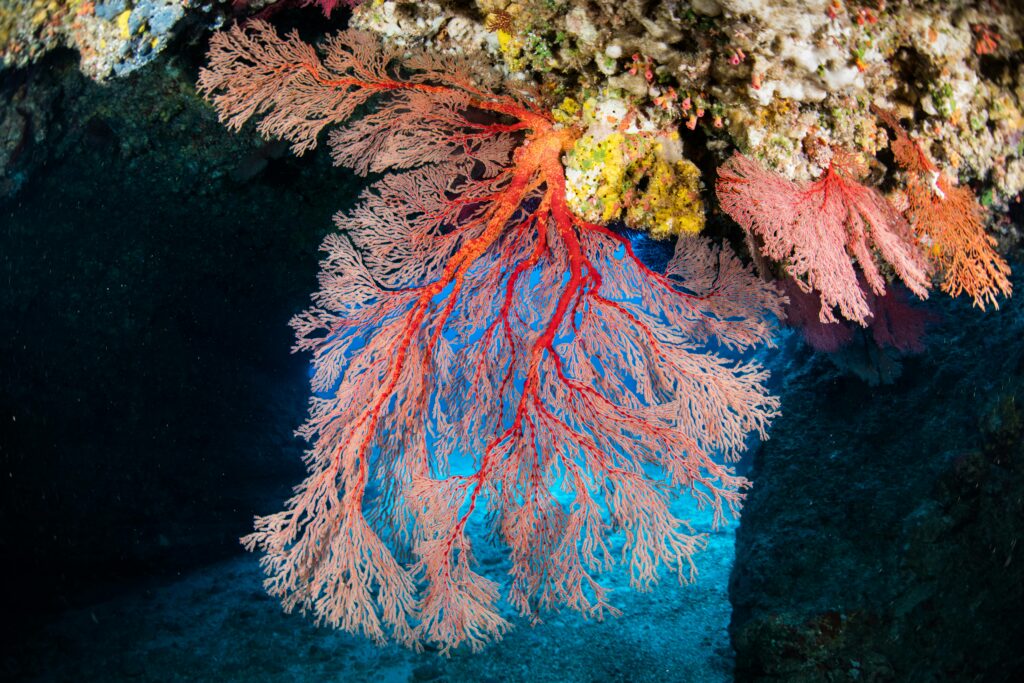
Fun fact: Some sea fans can live for decades and grow in the same direction as prevailing currents.
Sea Whips
Long, slender, and flexible, sea whips bend easily with wave motion.
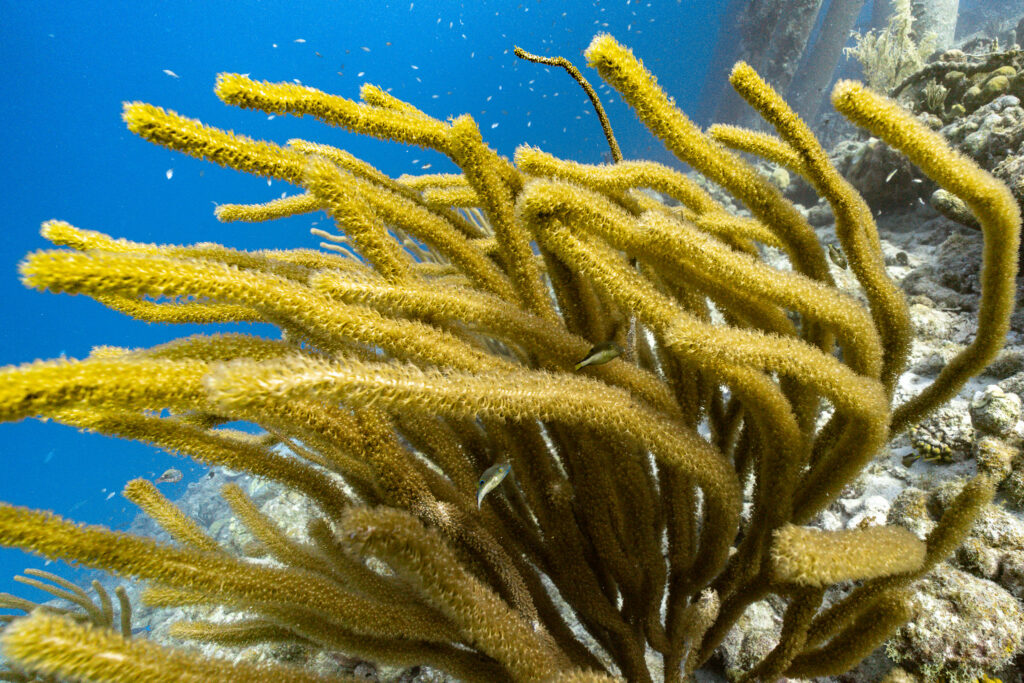
Fun fact: Tiny crustaceans often camouflage themselves along sea whips for protection.
Leather Corals
Leather corals have thick, rubbery bodies and can appear smooth or textured.
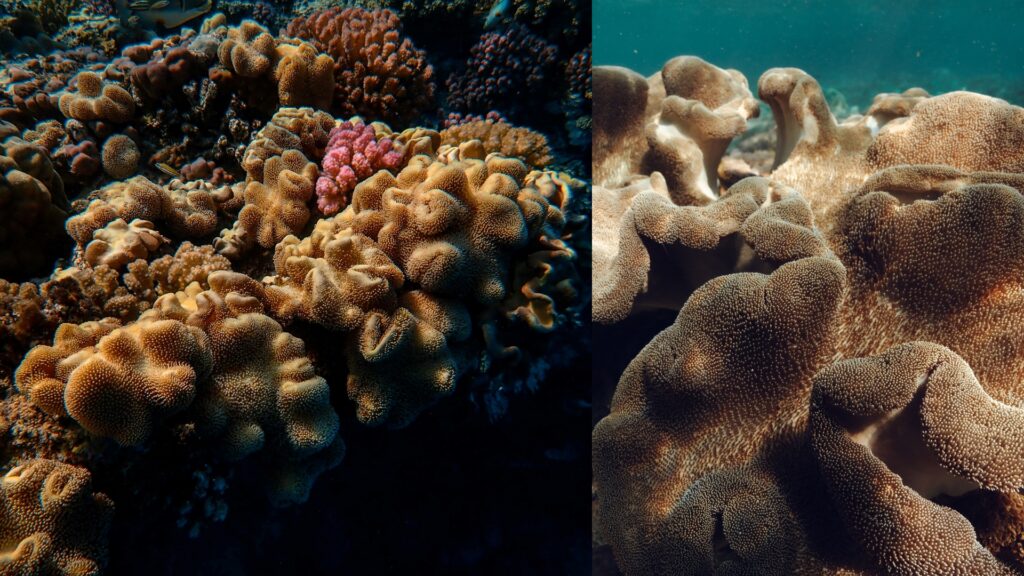
Fun fact: Leather corals periodically shed a thin outer layer to remove algae and debris.
Pulsing Corals (like Xenia)
Some soft corals actually pulse rhythmically, opening and closing their polyps in a way that looks almost like breathing.
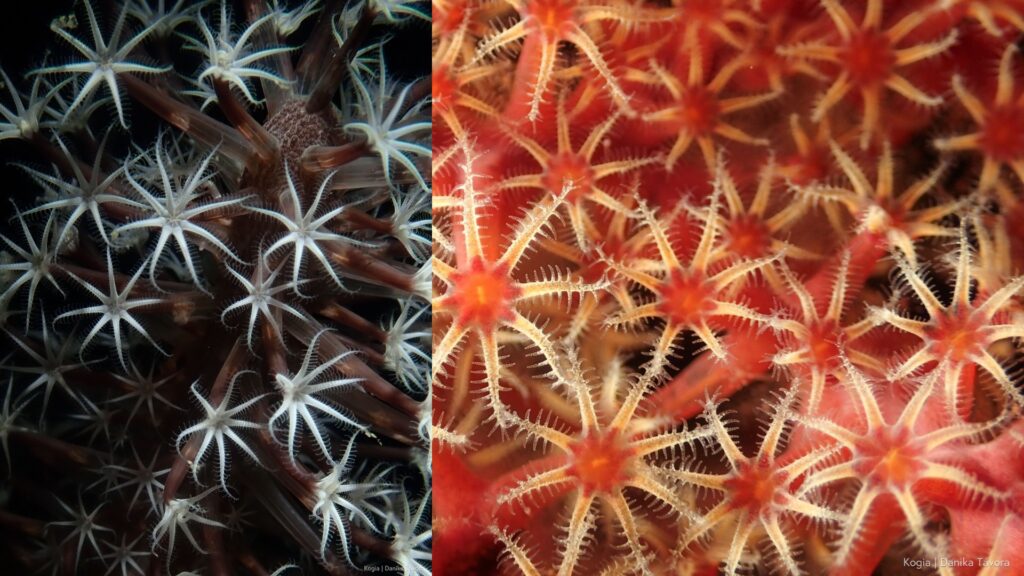
Fun fact: This pulsing motion may help them regulate oxygen and nutrient exchange.
Soft corals add movement, shelter, and complexity — all of which support reef diversity.
Hard Corals, The Reef Builders
Hard corals are the architects of coral reefs. They build calcium carbonate skeletons that create a physical structure and give reefs their shape. Over time, these skeletons form the foundation for entire ecosystems.
Branching Corals, like Staghorn
These fast-growing corals form dense, antler-like thickets that provide critical shelter for fish and other marine life.
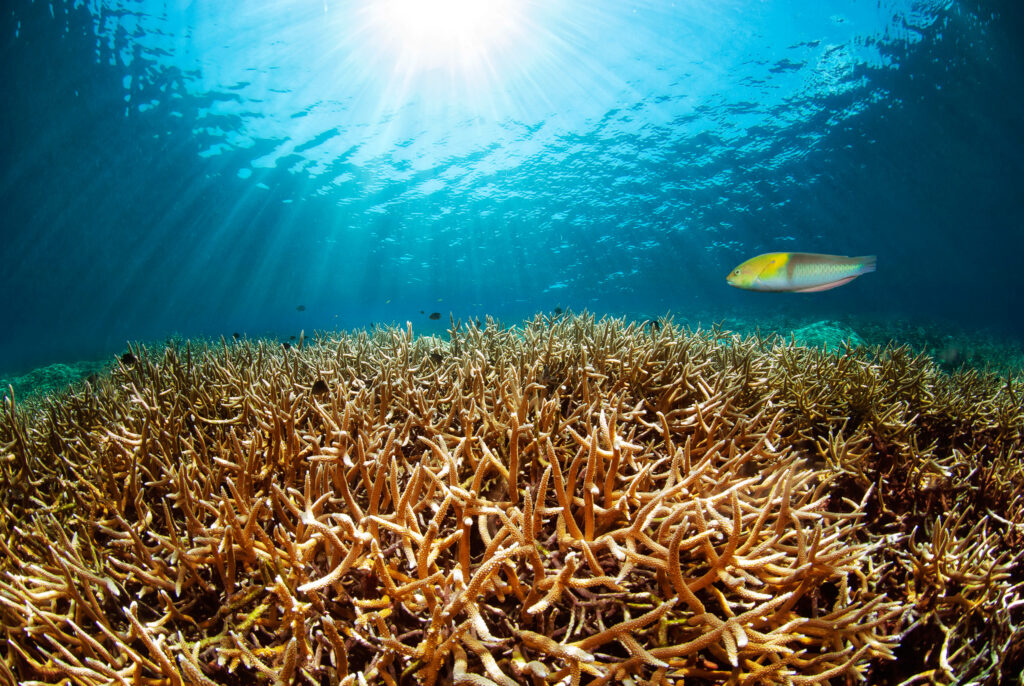
Fun fact: Staghorn coral is one of the fastest-growing corals, helping reefs recover after damage and sometimes growing up to several inches per year.
Boulder Corals, like Brain Coral
Large, rounded, and slow-growing, these corals often live for decades (or even centuries) forming the backbone of older reefs.
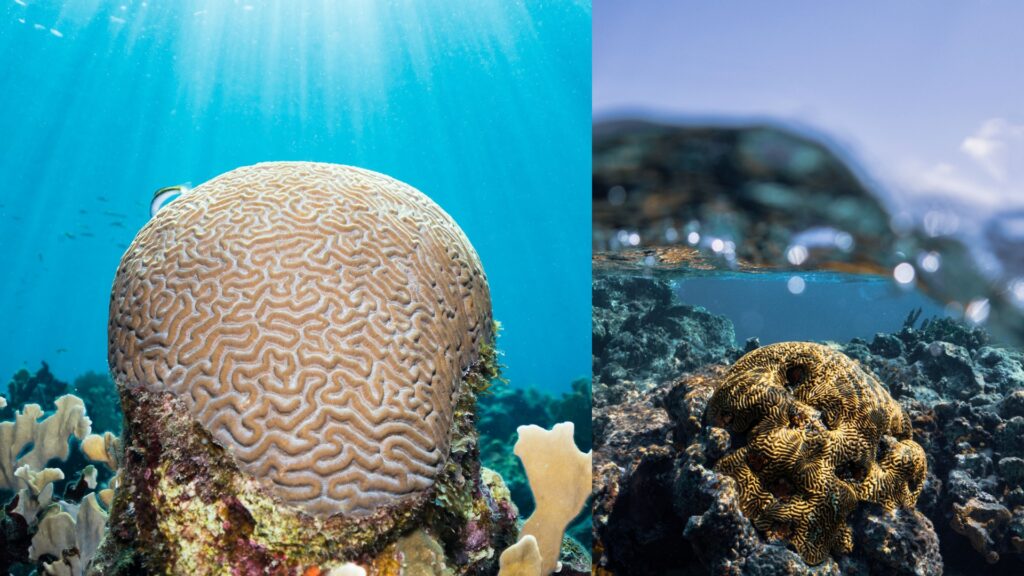
Fun fact: Brain corals form rounded colonies with maze-like ridges. Some brain corals can live for hundreds of years and are among the longest-living organisms on the reef.
Plate and Table Corals
These corals grow outward in flat, layered shapes, maximizing their exposure to sunlight.
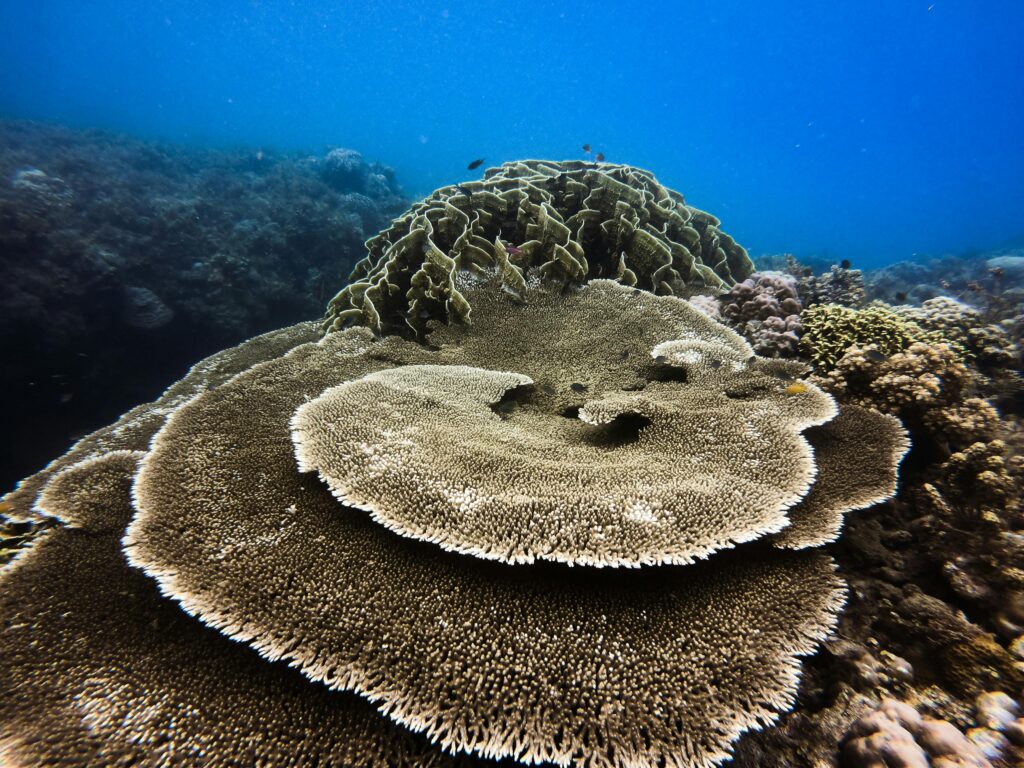
Fun fact: Their wide surfaces make them especially efficient at hosting the algae that provide them with energy.
Elkhorn Coral
With wide, flattened branches, elkhorn coral creates important habitat in shallow waters.
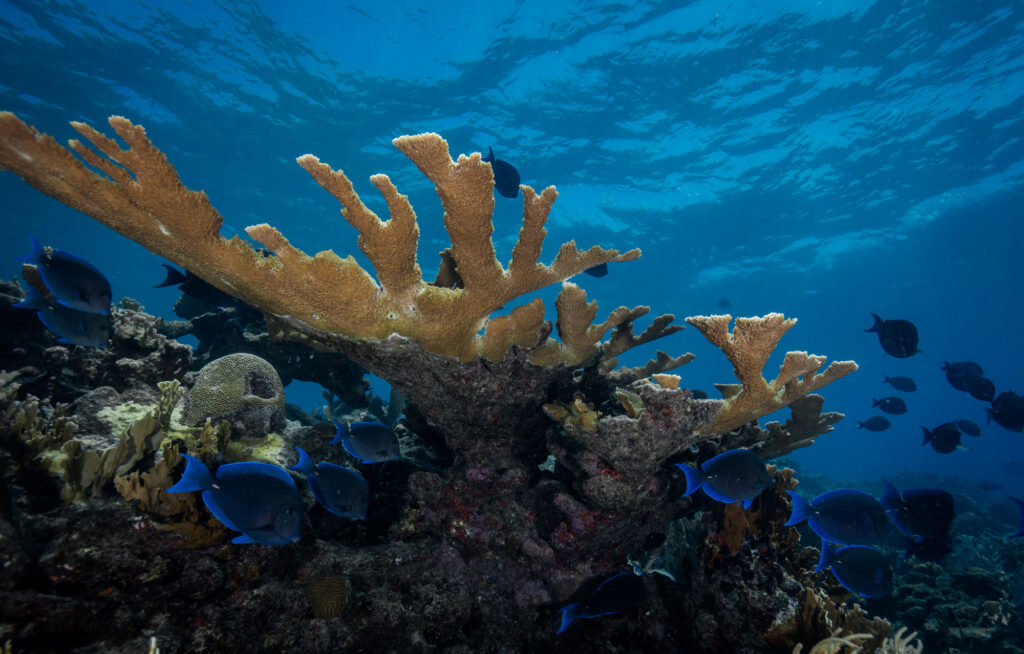
Fun fact: Elkhorn coral helps buffer coastlines by breaking up wave energy before it reaches shore.
Massive Corals
Slow-growing but incredibly durable, these corals can withstand tougher conditions and help stabilize reefs over time.
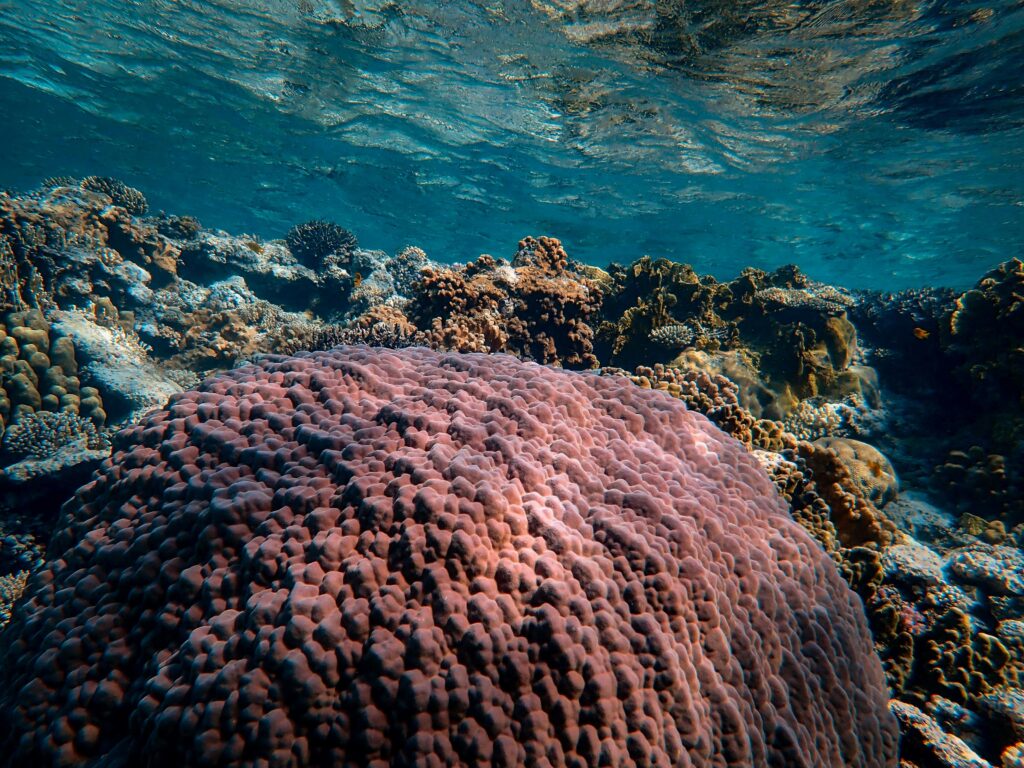
Fun fact: Their density makes them more resistant to storm damage than branching corals.
Hard corals build the reef’s foundation, but it’s the diversity of shapes, growth rates, and survival strategies that makes reefs resilient.
Protecting Reef Diversity
Protecting coral reef diversity means reducing the stressors that make it harder for species to survive.
Improving water quality helps sensitive corals thrive. Marine protected areas reduce damage from overfishing and anchor drops. Supporting local communities leads to better reef stewardship. Reducing pollution helps maintain balanced ecosystems.

When these protections are in place, reefs can maintain the diversity they need to survive. And when reefs survive, so do the people, wildlife, and coastlines that depend on them.
A Diverse Reef Is a Strong Reef
Coral reefs are strongest when they’re diverse. Different species working together create ecosystems that can recover, adapt, and endure.
Protecting that diversity is one of the most important things we can do for the future of coral reefs.
Because when reefs are diverse, they’re resilient. And resilience is what gives reefs a fighting chance.


