

Where many of us claim at various levels to be people-centered, inclusive, and encourage participation, dignity is the choice to see the human being first. Can we really make that choice?
I’ve been working on this piece for more than a few weeks now. I was struggling to put things together in a way that felt right, and Pope Leo XIV released Magnifica Humanitas—an encyclical on safeguarding the human person in this time of artificial intelligence. I decided to read some good chunks.
Thus, this article weaves together a homily I heard, a planning case from Ghana, and ideas from Leo XIV, Pope Francis’s Laudato Si, Achille Mbembe, and Francis Nyamnjoh. It’s about dignity—what it means, where it lives, and what happens when planning documents willingly or unwillingly forget it. If that mix of religion, philosophy, and urbanism speaks to you, keep reading. If not, I’m sure you’ll eventually hear about dignity and planning through other means.
It is based on what I want to call the dignity hypothesis.
Magnifica Humanitas
We, as humans, are scared to embrace our dignity to the fullest and in its fullness.
By the end of this piece, you would have learned how I proceeded with that hypothesis, and my ultimate call to those who care or should care about human dignity (scholars of the urban, planners, believers, humanity apologists, development actors, those crossing these lines, and of course any interested minds).
The Priest, and the cold drink
A few weeks ago, I was attending Mass in a Catholic Church in Bow, in East London.
There, on the pew, the Priest, Fr. Howard, shared a story.
He usually volunteers with a food bank in Bow, not too far from the church I was now in.
One day, after a particularly hot and exhausting volunteering session, he set off to leave. As he did, an officer of the bank asked him, “why don’t you take this cold drink with you ?”
“No, I won’t need it,” he said, as he declined the offer.
He walked away, but three minutes later, realized how hot it was and thought:
“it is really hot today. Let me go back to the bank and take that offer”.
Which he did. Then on his way back, he realized once more that he should have taken more than one drink due to the heatwave.
He got home (the presbytery) and started working. Someone rang the door.
He opened it and saw a man standing there.
“Hello Father, I am homeless…” said the man.
Fr. Howard stood there, expecting what most people would expect the next sentence to be —something about money. Instead, the man asked for a cold drink.
Quite ironic, isn’t it?
Fr. Howard willingly asked him to wait and brought him a very cold drink to satisfy his thirst. The man thanked him very generously and left.
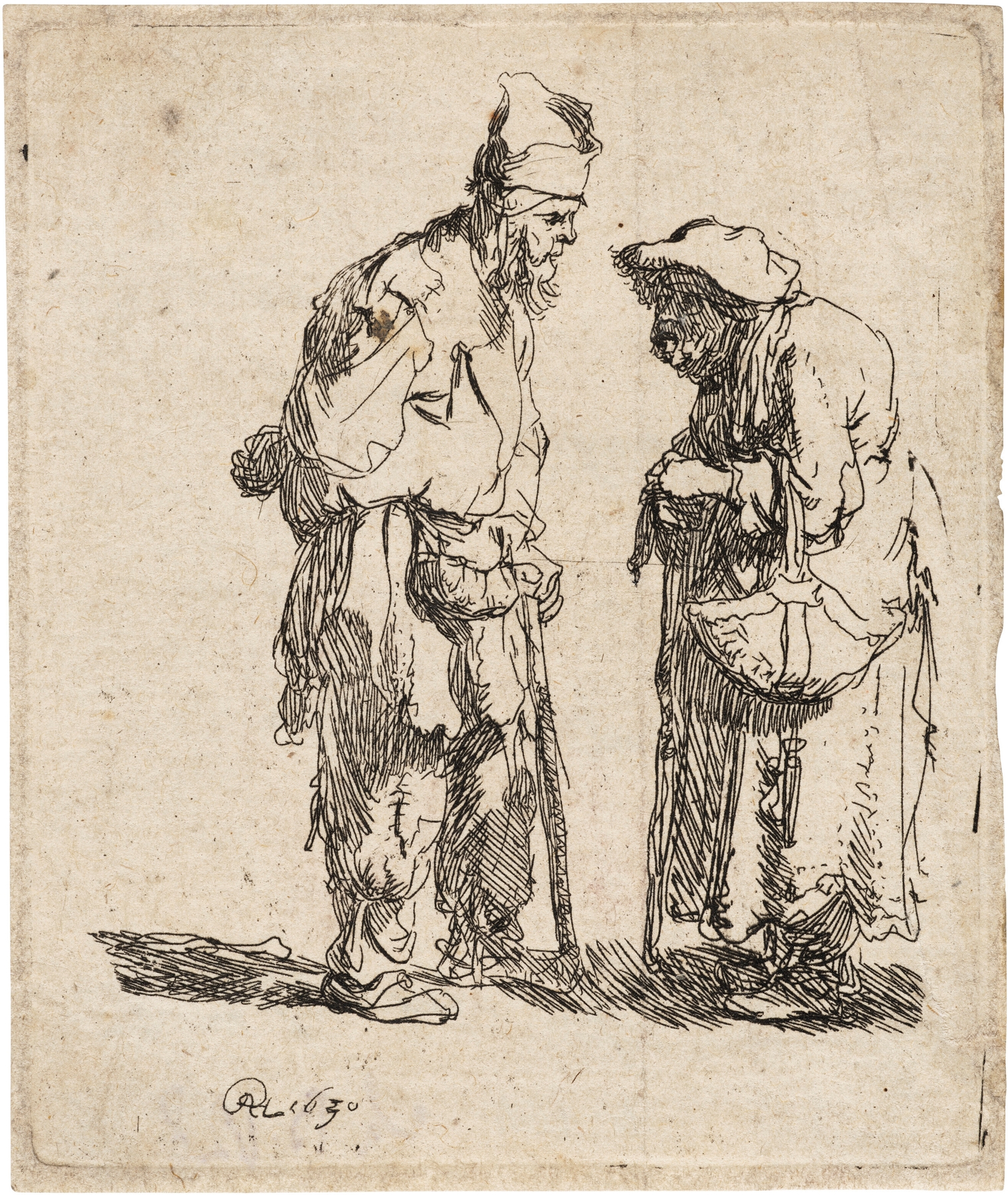
Rembrandt van Rijn (Dutch, 1606-1669)
Hearing this story in the homily, and thinking about this piece, I could not help but reflect a bit more on human dignity, and how easy it is to violate it. It is for sure a story of dignity: recognizing someone in need, not closing one’s ears to the preconceived request one usually might hear, and opening one’s hand to the person in need as someone else had done for you.
But what is the catch? Well, it lies in the fact that being human-centered is an old call.
Allow me to tell you how in the next lines.
* * *
The encyclical
As I said, I had been working on this article for weeks, and then Magnifica Humanitas landed. I had to read it especially because it reminded the reader of previous encyclicals that opined on the environment, dignity, work, and, mind you, development.
Who would have taught so?
In the encyclical, Pope Leo XIV speaks about the human person in the age of artificial intelligence.
He warned against the reduction of humanity to data, numbers (emphasis partially mine), to performance metrics, to “a single digital language”, dangerously toying with dehumanization and the creation of a world hard to fathom.
Maybe not Terminator-like, but scarily, much less humane.
He echoes his predecessors — Pope Francis in Laudato Si, Paul VI and John Paul II on development — calling us back to a core century-old idea: the focus on the human person, and the assurance of human dignity in all development processes.
In other words, it is not the sole preoccupation of growth that matters, not production costs, not just material beauty, or aesthetics, but the place of the human subject as the purpose of development.
Paul VI once described development as a transition “from less humane to more humane living conditions.”
One may wonder what his analysis might be in 2026 since he was so adamant about proposing development as a process that is for “each person, and the whole person”, not the active erasure of places, the destruction of communities and landscape for the sake of AI, blind beauty, and bricks upon bricks or things that presumably don’t feel or care.
He may argue that what is at the heart of development is the human person in its fullness. Not just one of the many aspects one could focus on, but a Whole. In French, one would say a Tout, or Totalité, to allude to the fullness English is referring to. I will get back to this aspect in a different piece.
Now, urban planning and policy documents, the frameworks we use to organize space and decide who gets to stay and who has to move, can all be questioned on the basis of an acknowledgment of the human in its fullness.
* * *
But how do we do that, and what do we even consider?
Do we consider someone talking about dignity from a religious perspective, or someone else, like a scholar, or me writing up these lines, learning from different perspectives?
Before I talk about dignity in planning, let’s pay attention to dignity by talking about humans interacting with one another.
Achille Mbembe, in contemporary Brutalisme and Communauté Terrestre, writes about the human condition in an interconnected, fragile world affected by political powerhouses, capitalist obsessions, environmental disaster, violence, and, more importantly, a world where we are bound to each other and to the earth, whether we acknowledge it or not. Inspiration from Edouard Glissant is in there.
Mbembe philosophically reminded humanity of the community it forms, of the wider impact of environmental pollution and the consumption of earthly capacities on the one hand, and the brutality with which the consumption of early capacities can also extend to the consumption of other human beings by more powerful human beings.

Francis Nyamnjoh has a word for this interconnection: incompleteness. Human beings are never complete in isolation. They are formed through relationships with other humans, relationships with places, countries, territories, cities, and more.
Think of someone negotiating his relationship with his neighbours for help, support, assistance, or else. Or a person in simple need of a cold drink. Or even someone relying on a passerby’s assistance to survive a heat stroke, eat some food, get back from a fall, or recover from being mugged.
Humans are formed in and through relationships with others. We need connections—not only with neighbouring countries, but with the person next door, across the street, within the neighbourhood, across the district, or the borough.
Thinking of this interconnection that is usually quite natural, and that exemplifies how much humans value them, then it would not be an exaggeration to argue that the city, or the place that should host these connections, must all the more be designed to facilitate them, not do the opposite.
Pope Francis, Laudato Si’, speaks of “our common home” or “Sister Earth”. He insists that care for the environment and care for people are inseparable. One may not, therefore, pretend to fight for one without fighting for the other.
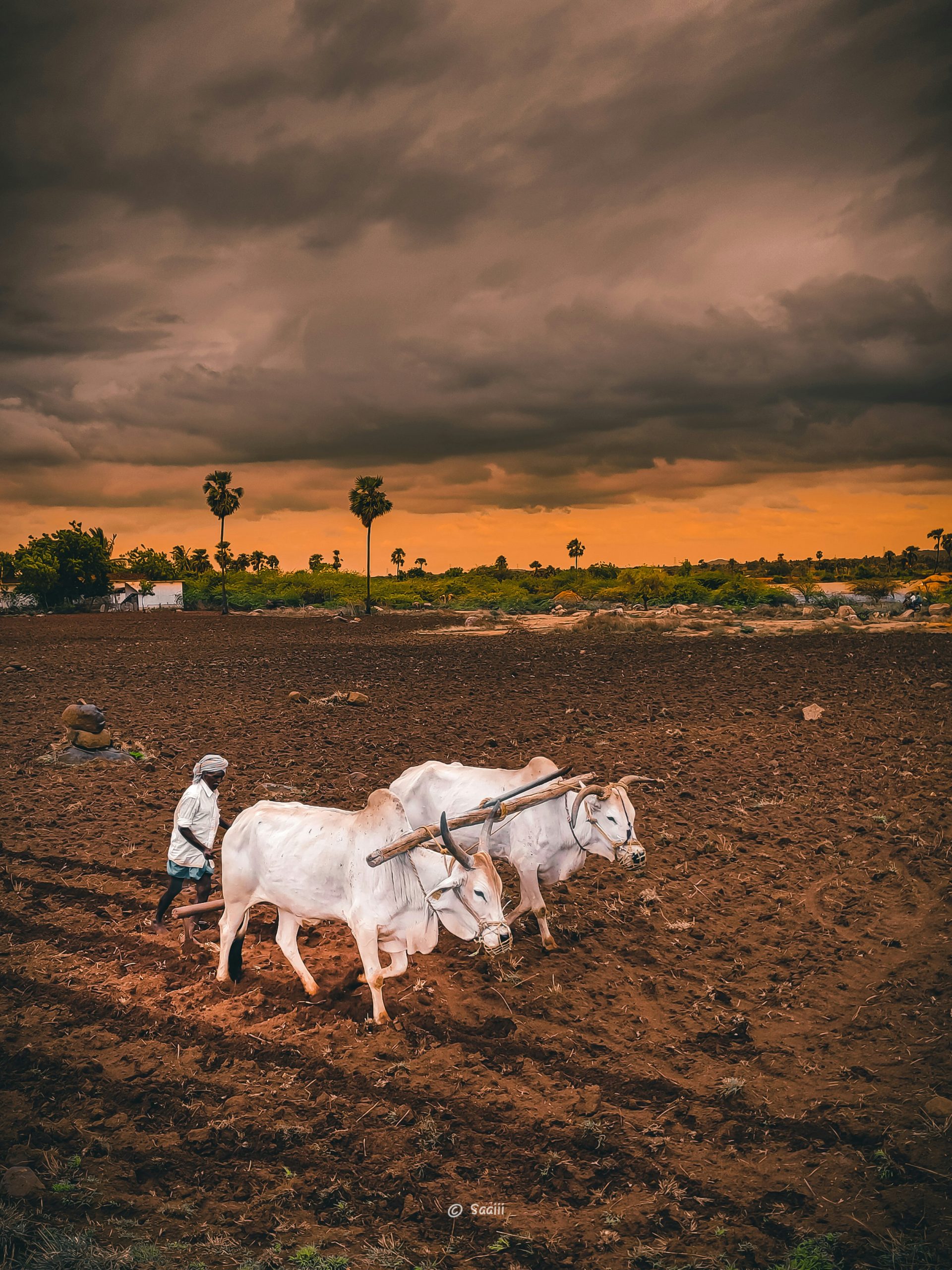
One might ask whether we could have dignity without a liveable environment? How might we have sustainable cities without recognising the decency that each person living in these cities should be endowed with (SDG11 and SDG 8)?
The proximity of humans to each other, especially the care they have toward each other, is the ground upon which I discuss the presence of dignity or dignifying mutual considerations.
So, in this sense, dignity is not purely abstract or something residing in a high tower. It is observable in the way people treat each other, very simply put.
—
In the last coming sections, I take you through the example of a University in Ghana, before circling back to the story I started with. I think that you will be surprised at how easy it is to “erase” human relationships and dignity.
The KNUST farmers: when planning forgets relationship
Let me tell you a planning story.
In the 1950s, local indigenous communities in Ghana gave land for the construction of the Kwame Nkrumah University of Science and Technology (KNUST). They “gave” it with an expectation: that there would be a continuation of land access for farming, as part of a logical, intentional relationship between them and the university.
I am writing “gave” because, from an article I read about the topic, it was not a “gift” with full transfer of property, as one might think. The way the local communities intended this “gift” was with a level of continuous reciprocity bordering on a communal use of the land, i.e., for the university’s educational purposes, but also for farming as it used to be.
In fact, Łukasz Stanek and Kwasi Ohene-Ayeh, in their article Land Imaginaries, The Gift, published in 2024, wrote:
“In the following years, several officials of the college, then the university, continued to refer to the land as a ‘gift’. This term was also used by inhabitants of the neighbouring towns who embraced the moral economy implied by the practice of gift-giving and who claimed that the obligations of the university needed to be expanded to community members who had not been included in the initial compensation schemes. This narrative still reverberates today.”
In other words, the act of giving, in this case, does not negate the needs of the giving community of the thing that is given. Nor does it quench the community’s desire to have continuous usus (The right to use or occupy a physical thing) and fructus (The right to harvest or collect the fruits, revenues, or profits generated by a property) of the land.
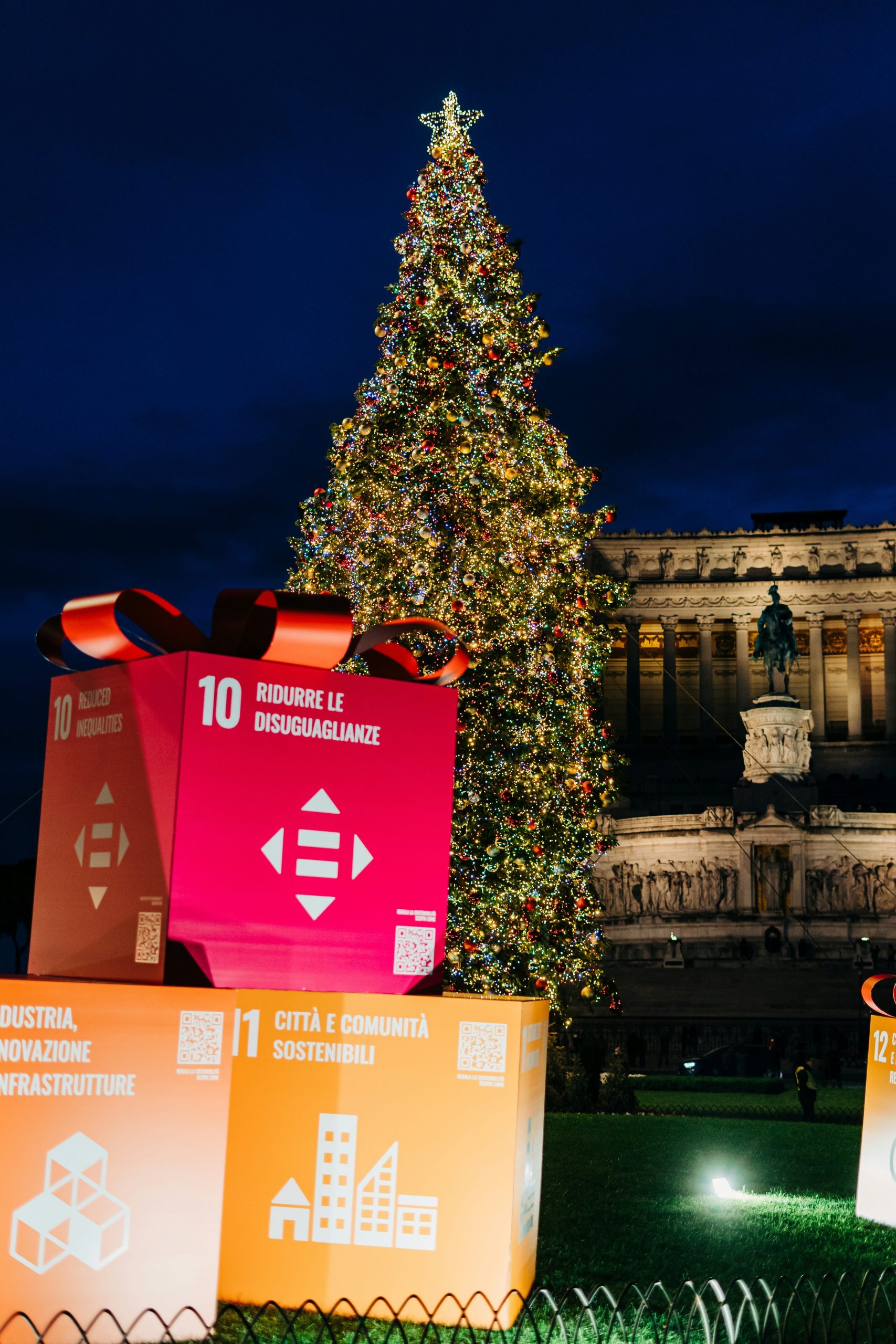
Decades after that first gift, different discourses can be heard about its use. Local farmers, sometimes described as “small gardeners”, want to keep access to a plot that has sometimes passed through generations, but the university’s master plan did not include, or was not aware of, such dynamic ecology of agricultural practice. The existing moral economy of gift giving, as the authors put it, was not accounted for by the colonial master plan. Still, the presence of the farmers on these lands even today tells the story of a possible intertwining of relations and connections allowing the envisioning of a different future, the authors would conclude. After all, the colonial master plan was colonial. The priority was for “developing and civilizing” “undeveloped” places.
The different future, indeed, is one where intertwining occurs for the benefit of all parties, no matter how small these benefits and parties may be.
Dignity here points us to the right to be, the right to be allowed to access a place, or to be perceived as a human worthy of being before the advent of any kind of plan. Dignity, in this sense, is not abstract. It is the demand that you see the person before you see a potential, arguably justified category (farmer, foreign, immigrant, beggar). It is the recognition that humans are not merely hard data, a planning problem, simple beneficiaries, or other element. Humans, in their fullness, have histories, relationships, complexities that may or may not be always accounted for, but do remain present whether we look at them or not.
I posited earlier that we, as humans, are scared to embrace our dignity to the fullest and in its fullness. Embracing it would mean avoiding easy assumptions, or at the very least, being conscious of them. Of course, it would make life harder, because it would require extra care in the short run, but hopefully a better approach in the long run. Embracing our dignity would mean understanding what we do for the sake of development as being primarily oriented toward human beings, and not things. It could also imply making things slowly, because interacting with other human beings demands patience, complexity, and, more importantly, time. Embracing our dignity would mean planning with precaution. Which a lot of planners and urbanists are already doing. Some more than others, but at least the conversation is not new.
Dignity is there all the time. We may choose to erase it like a colonial planner, run, or shy away from it like every time we are potentially scared of someone; we do not know who may be poorly dressed, asking us something on the street or at our door. We may have the “why is this person approaching me” sentiment (speaking for me, of course) — or we may intentionally justify the suppression of dignity for the “greater good” when we are working on a massive development initiative in places in “need” of these projects.
If dignity is always there, then let’s approach it intentionally, or at the very least, start on the premise that it is our ultimate goal. In an age of AI and Sustainable Development Goals (SDGs) — where we aspire to make cities and human settlements inclusive, safe, resilient, and sustainable (SDG 11), and promote sustained, inclusive, and sustainable economic growth, full and productive employment and decent work for all (SDG 8) — where many of us claim at various levels to be people-centered, inclusive, and encourage participation, dignity is the choice to see the human being first. Can we really make that choice? Or is it simply altruistic, religious, philosophical, and maybe naïve?
There are the questions.
Emmanuel Awohouedji
Abomey-Calavi