At UNFCCC COP31 in Antalya, Türkiye, one truth resonates across the negotiating halls and side-event pavilions alike: global climate targets are only as strong as the local communities implementing them. While national governments debate the finer points of international agreements, mayors, regional leaders, and civil society organizations are already on the front lines—managing extreme heat, devastating floods, water scarcity, and rapid urbanization.
Yet, turning local climate urgency into funded, on-the-ground action remains one of the greatest bottlenecks in global climate governance.
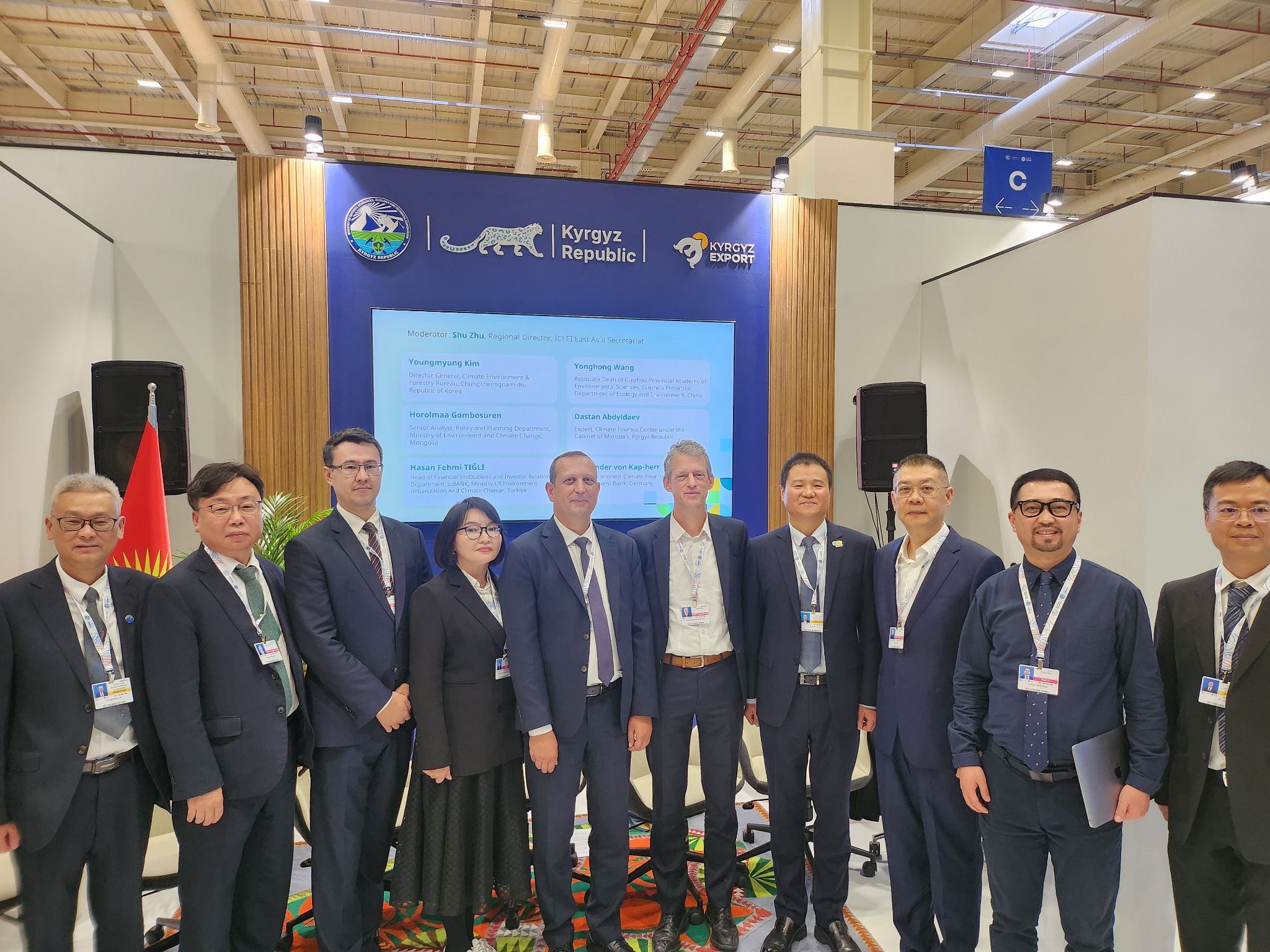
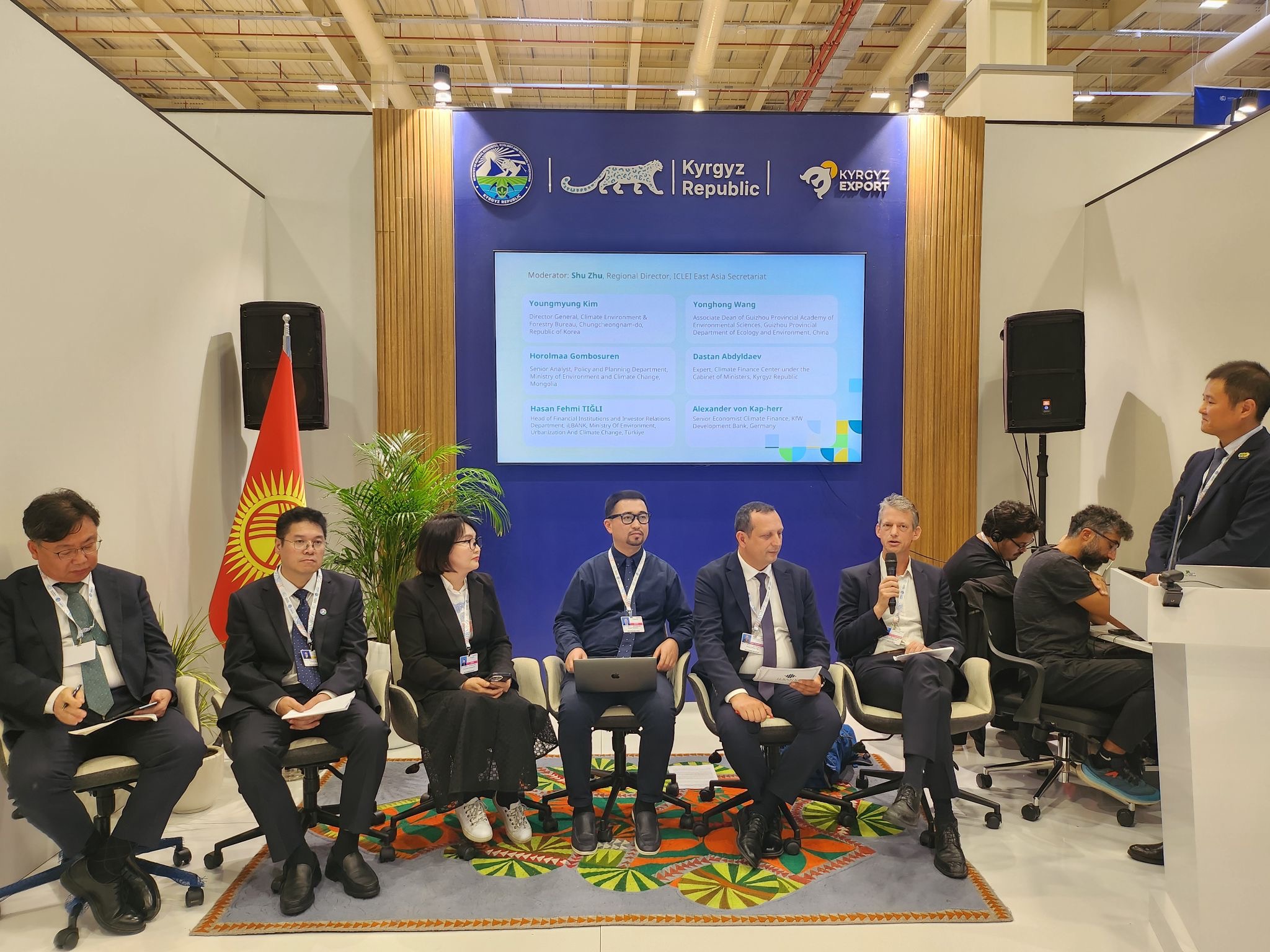
Marking a historic milestone as the first-ever ICLEI side event hosted at a Central Asian national pavilion during a UN climate conference, policymakers, development banks, and subnational leaders gathered on 13 November at the Kyrgyzstan Pavilion for a session titled “Multilevel Partnerships and Synergy for Climate Resilient Cities.” Co-hosted by ICLEI East Asia Secretariat and the Climate Finance Center (CFC) under the Cabinet of Ministers of the Kyrgyz Republic, the event underscored the growing momentum of subnational climate leadership across Central Asia and beyond.
By signing a new Memorandum of Understanding (MOU) to accelerate joint project development and city-to-city exchanges, the co-organizers set the tone for a candid discussion on what it actually takes to localize the Paris Agreement.
1. Bridging the “bankability gap” for urban infrastructure
Cities and local authorities know what resilience projects their communities need, yet they frequently lack the technical capacity to package those priorities into “bankable” investments that meet the strict criteria of International Financial Institutions (IFIs).
Speakers emphasized that intermediary institutions and dedicated project preparation facilities are essential to closing this gap:
- Municipal Development Banks as bridges: Hasan Fehmi TIĞLI of iLBANK—Türkiye’s premier municipal development and investment bank with 93 years of experience—explained how strong coordination between national ministries, municipalities, and IFIs transforms local priorities into viable infrastructure. By pairing financing with technical assistance and institutional capacity building, iLBANK helps cities execute complex projects they could not manage alone.
- Simplifying access to global funds: Alexander von Kap-herr of Germany’s KfW Development Bank noted that while KfW invests roughly €7 billion annually in climate finance—including over €1 billion specifically for sustainable urban transport, water, and energy—municipalities still face steep hurdles accessing international capital. Simplifying financial pathways is vital to getting funding where it is needed most.
- Modernizing legacy systems: CFC’s expert Dastan Abdyldaev explained that in the Kyrgyz Republic, where aging urban infrastructure compounds climate vulnerability, the government is using its $500 million Climate Investment Program to partner with the European Bank for Reconstruction and Development (EBRD) and the Green Climate Fund (GCF). Through initiatives such as EBRD Green Cities, these partnerships are upgrading building energy efficiency, water systems, and public transit.
2. Innovative financing to de-risk and attract private capital
Public budgets and international grants alone will never be enough to fund a just, green transition. To scale urban resilience, local leaders must deploy creative financial instruments that lower risks and crowd in private-sector investment.
Panelists showcased several replicable models from across Asia and Latin America:
- Valuing nature and sharing risk: Yonghong Wang of the Guizhou Provincial Academy of Environmental Sciences in China outlined three mechanisms his province uses to unlock private capital: establishing clear property rights and valuation standards for ecological assets (such as carbon sequestration and water conservation), linking green finance terms directly to measurable adaptation outcomes, and creating provincial risk-compensation pools so public funds can leverage larger volumes of private investment.
- Dedicated subnational climate funds: Youngmyung Kim of Chungcheongnam-do Province in the Republic of Korea highlighted the power of dedicated regional climate funds—capitalized through public and power-generation revenues—to directly support community-level transitions and de-risk local green initiatives.
- Tailor-made climate risk insurance: Recognizing the growing financial toll of climate disasters on municipal budgets, KfW is partnering with ICLEI through programs like ProUrbano in Latin America and the Caribbean to develop customized climate risk insurance for cities, with plans to transfer these lessons to vulnerable mountain cities in Central Asia.
3. Breaking Down Silos with “Rio Synergies” and Rural-Urban Links
Environmental challenges do not respect municipal boundaries, nor do they fit neatly into isolated policy silos. Effective resilience requires recognizing the deep connections between climate change, biodiversity loss, and land degradation, as well as the interdependence of urban and rural ecosystems.
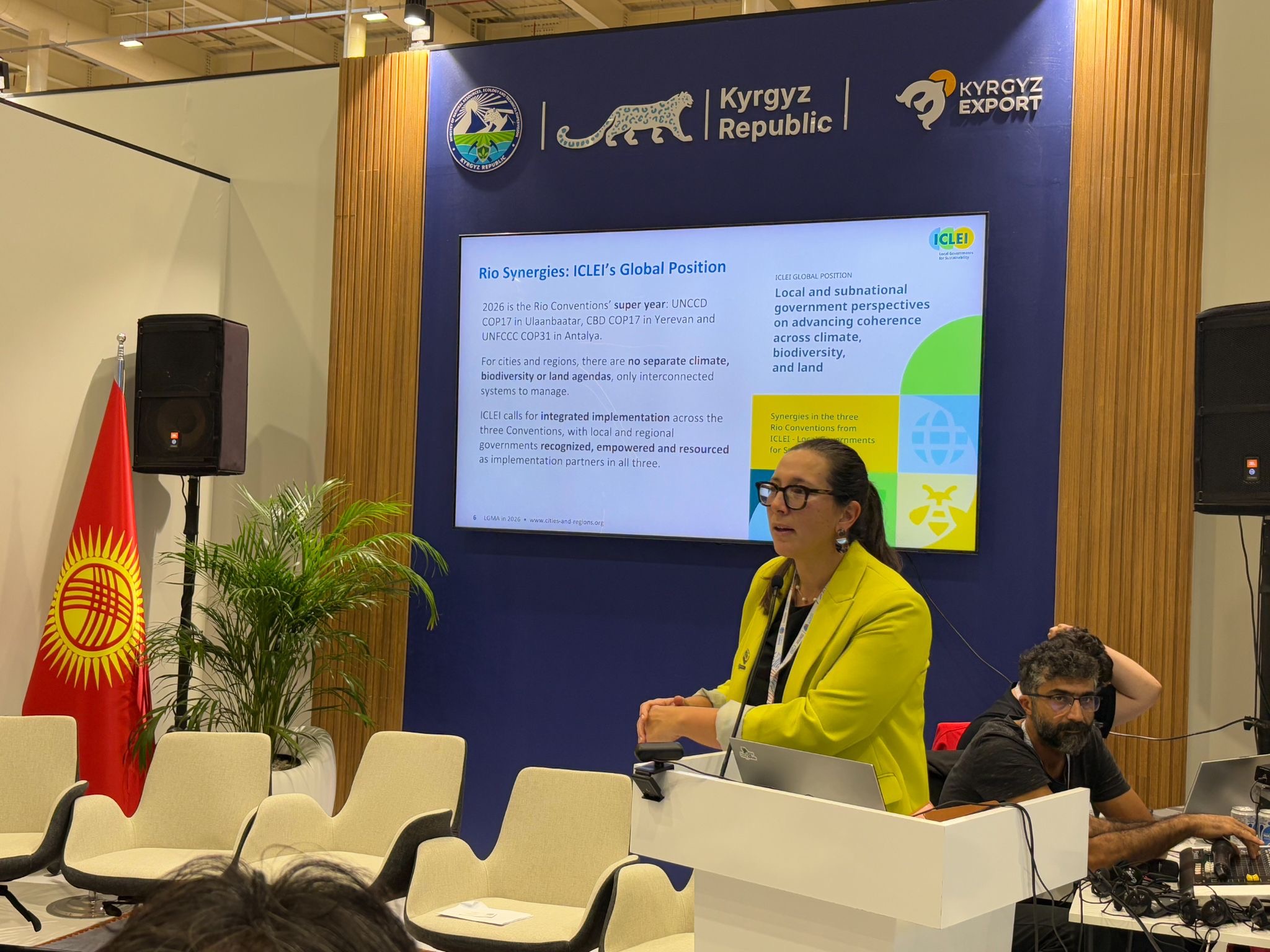
- Advancing “Rio Synergies”: Ariel Dekovic of the ICLEI World Secretariat and focal point for the UNFCCC Local Governments and Municipal Authorities (LGMA) Constituency stressed the urgent need to align action across the three Rio Conventions: Climate Change (UNFCCC), Biodiversity (CBD), and Land Degradation (UNCCD). Urban nature-based solutions simultaneously sequester carbon, restore ecosystems, and protect communities—making unified local reporting and cross-convention alignment a top priority for advocates.
- The rural-urban domino effect: Horolmaa Gombosuren from Mongolia’s Ministry of Environment and Climate Change offered a sobering reminder that urban resilience cannot be separated from rural sustainability. When severe droughts and harsh dzud winters devastate nomadic herders’ livestock, displaced families migrate rapidly into cities, placing immense strain on urban infrastructure. In response, Mongolia’s updated climate commitments (NDC 3.0) explicitly link pastoral ecosystem restoration with climate-resilient urban health, education, and infrastructure upgrades.
4. Tailoring climate action to local realities
A one-size-fits-all approach to climate policy rarely succeeds on the ground. The most effective subnational strategies are rooted in a clear-eyed assessment of local geography, ecosystems, and economic drivers.
- Targeting regional emission profiles: In Chungcheongnam-do Province, where agriculture and livestock account for roughly 80% of methane emissions, provincial leaders worked directly with agricultural departments and local communities to launch a targeted roadmap to cut methane by 35% below 2021 levels by 2030.
- Watershed-level spatial planning: Situated in the fragile karst mountain region of southwest China, Guizhou Province embeds climate risk assessments directly into territorial spatial planning—managing mountains, rivers, forests, farmland, lakes, and grasslands as a single, integrated ecological barrier.
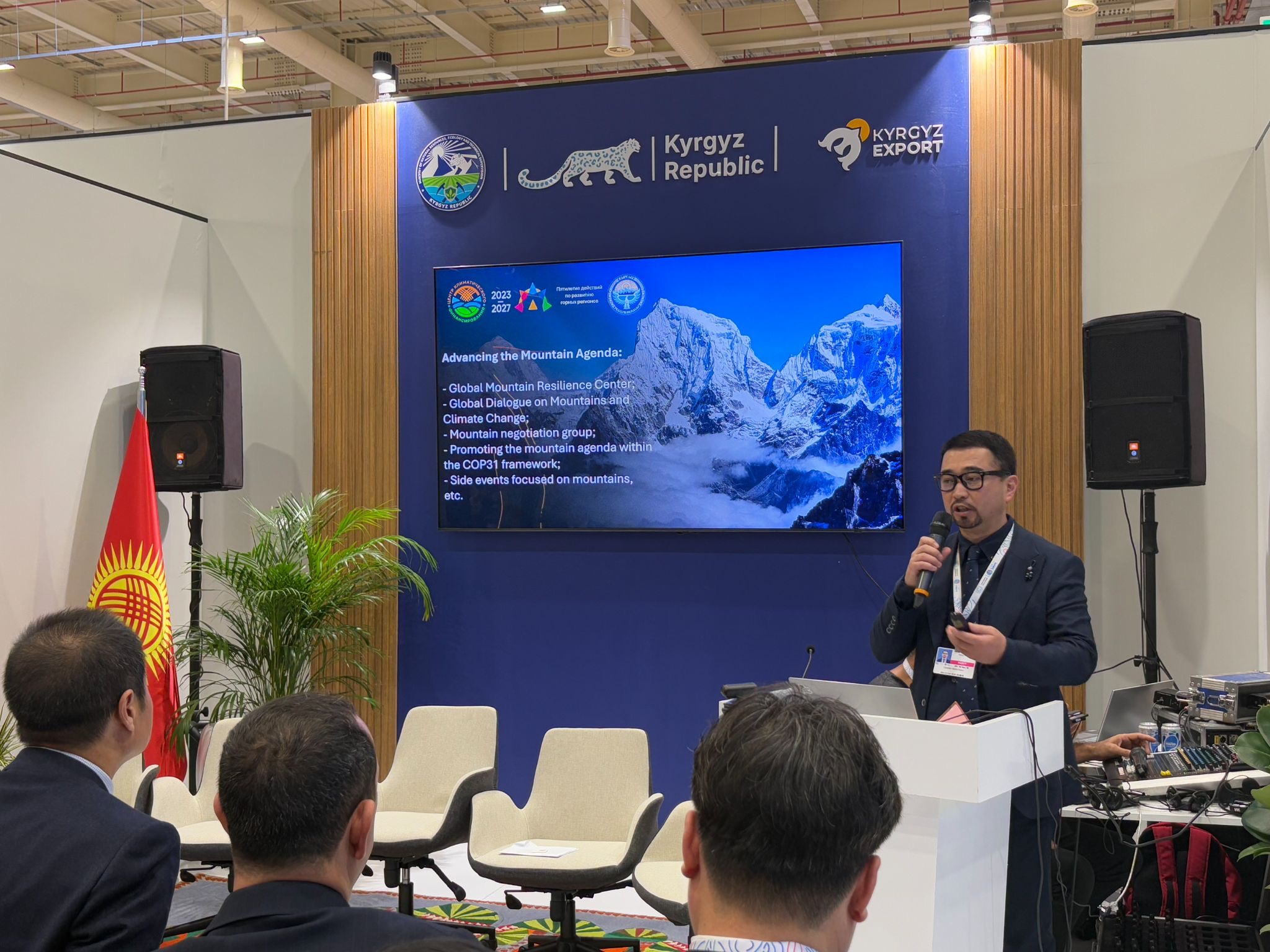
- Elevating the mountain agenda: With mountains covering 94% of its territory, the Kyrgyz Republic has turned its geographic vulnerability into global leadership. Chairing the Group of Mountainous Landlocked Developing Countries at COP31, Kyrgyzstan is advocating for an institutionalized annual UN dialogue on mountains and climate change, while preparing to launch a Global Mountain Resilience Center in Bishkek next year to build technical capacity across mountainous nations.
5. Securing a permanent seat at the global table
Perhaps the clearest message from the event was that local governments and civil society organizations are no longer content to be passive observers of international climate diplomacy. As essential implementation partners, they are demanding structural inclusion in how global agreements are designed and financed.
Representing the collective voice of mayors, governors, and local leaders, the LGMA Constituency outlined six core demands for COP31 Parties: accelerating local clean energy transitions, guaranteeing direct municipal access to climate finance, prioritizing an ambitious outcome on just transition, integrating urban resilience into the Global Goal on Adaptation, grounding policies in the upcoming IPCC Special Report on Climate Change and Cities, and establishing a permanent, annual UNFCCC joint dialogue space between national governments and subnational leaders.
The discussions at the Kyrgyzstan Pavilion highlighted that, despite significant barriers to climate action on the ground, innovative and practical solutions are emerging in diverse settings. Closing the gap between global climate goals and real-world impact demands ongoing cooperation and knowledge-sharing among all stakeholders.
- For local and regional governments: Prioritize project preparation and institutional capacity building. Explore partnerships with national development banks, regional risk-sharing pools, and international city networks to transform municipal climate plans into bankable, investment-ready pipelines.
- For civil society and partners: Champion holistic, cross-cutting approaches on the ground. Leverage the “Rio Synergies” framework to design community projects that connect urban resilience with biodiversity protection, watershed restoration, and rural livelihoods—and hold national governments accountable for including subnational voices in their NDCs.
As the climate community looks beyond COP31 toward upcoming milestones—including next year’s Global Mountain Summit, the Eco Forum Global Guiyang, and the ICLEI World Congress—the mandate is clear: empowering local actors is not just a helpful addition to global climate strategy; it is the only way we will succeed.