

By Bob Kennedy, 2026 Africa Zero Waste Academy Participants
There are moments in life that quietly reshape how you see the world. For me, attending the 2026 Africa Zero Waste Academy in Accra, Ghana, was one of them.
As I boarded my flight from Kenya, I carried more than a suitcase. I carried years of lived experiences as a waste picker, community organizer, and climate advocate. I carried stories from the dumpsites of Nakuru and Lokoni: resilience, innovation, inequality, and hope. Like many others working in waste, I have spent years proving that what society often overlooks is, in reality, one of the most important environmental services on our planet.
When I arrived in Accra, I quickly realized I was joining something much bigger than a training programme. The Academy brought together an inspiring community of practitioners from across Africa, each working in different contexts but united by a common belief: that waste is not merely an environmental issue; it is a question of justice, public health, livelihoods, and our collective future.
Throughout the week-long Academy, I listened to stories from different countries. While our languages, cultures, and waste systems differed, the challenges felt remarkably familiar. Communities everywhere are dealing with increasing volumes of waste, inadequate infrastructure, plastic pollution, open dumping, and policies that often fail to recognize the people who recover valuable materials every day. Yet alongside these challenges, I encountered extraordinary examples of courage, innovation, and community leadership.
One of the Academy’s greatest strengths was that it did not present zero waste as a theoretical concept. Instead, it showed that zero waste is already being practiced in markets, neighbourhoods, schools, recycling centres, composting projects, and informal settlements across Africa. It reminded us that solutions already exist within our communities if we are willing to recognize and invest in them.
The discussions also challenged me to think beyond waste collection. Zero waste is about redesigning systems. It is about preventing waste before it is created, supporting reuse, composting organic materials, strengthening recycling, and holding producers accountable for the products they place on the market. It is equally about ensuring that waste pickers, the people who have sustained these systems for decades are treated with dignity, fairness, and respect.
Another lesson that will stay with me is the importance of collaboration. Governments cannot build a circular economy alone. Civil society cannot do it alone. Researchers cannot do it alone. Communities cannot do it alone. Real transformation happens when all these actors work together while recognizing the expertise that already exists on the ground.
I was particularly inspired by the openness with which participants shared both successes and failures. Honest conversations about policy implementation, community engagement, financing, and public education reminded me that building zero waste systems is a continuous learning process. Every challenge shared became an opportunity for collective problem-solving.
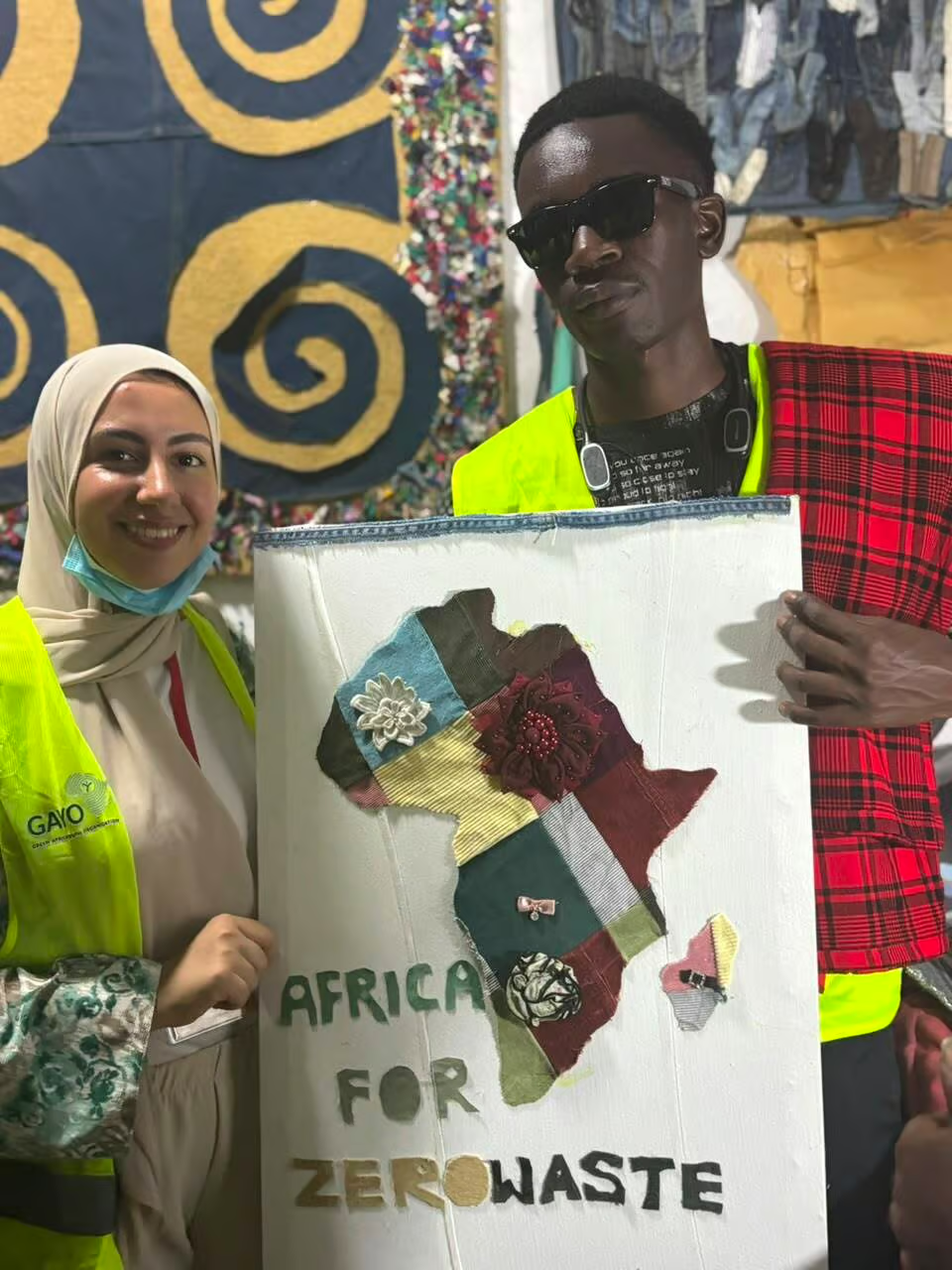
Beyond the classroom sessions, some of the most valuable learning happened over meals, on walks between venues, and in informal conversations late into the evening. These exchanges created connections that extended beyond professional networking. They built friendships and a shared commitment to supporting one another long after the Academy ended.
Personally, participating in the Academy reaffirmed something I have believed for years: waste pickers are not victims of the waste crisis; they are part of the solution. Every day, thousands of waste pickers recover recyclable materials, reduce greenhouse gas emissions, prevent pollution, and contribute to local economies. Yet their work often goes unrecognized and unsupported. A just transition to zero waste must place waste pickers at the centre, not at the margins.
Returning home to Kenya, I brought back more than notes and presentation slides. I returned with renewed confidence that the work happening in communities matters. I returned with practical ideas, new partnerships, and a stronger belief that Africa has the knowledge and leadership required to build waste systems that are fair, inclusive, and sustainable.
The Academy reminded me that zero waste is not only about reducing waste. It is about rethinking our relationship with resources, valuing the people who manage them, and creating systems that protect both people and the planet.
As we continue this journey, I hope more young people, community organizations, municipalities, and policymakers will recognize that the future of waste management lies not in simply disposing of waste, but in preventing it, recovering its value, and ensuring that no one is left behind.
To everyone who made the Africa Zero Waste Academy possible, thank you for creating a space where learning, collaboration, and solidarity could flourish. The conversations that began in Accra will continue to shape my work, and I believe they will continue to strengthen Africa’s growing zero waste movement for years to come.
The journey continues, and so does our shared responsibility to build an Africa where resources are valued, communities are empowered, and zero waste becomes not just an aspiration, but a lived reality.
Writer’s Bio
Bob Kennedy Okoth is a Kenyan waste picker, climate justice advocate, and circular economy practitioner. His work is rooted in the lived realities of waste pickers and communities affected by poor waste management. He is actively involved in Zero Waste, climate action and environmental justice, and is a member of YOUNGO and the Youth Policy Action Network (YPAN). Through community organising, storytelling, and advocacy, Bob works to ensure waste pickers are recognised as essential actors in building inclusive, climate-resilient, and circular cities.

