

From Scraps to Soil: How Eco-Cycle and Our Partners Are Closing the Loop on Food Waste
Eco-Cycle’s Farmers First compost model is turning clean food scraps into high-quality compost on Boulder County farms and beyond—closing the loop and creating real climate solutions here at home.
Every day in communities across the country, food scraps end up in the worst possible place: the landfill. In the United States, up to 40% of what Americans throw away is food, and the country discards more food than any other nation in the world—nearly 120 billion pounds every year.
When organic matter like food scraps and yard trimmings decomposes without oxygen in landfills, it produces methane—a greenhouse gas 84 times more potent than carbon dioxide in the short term.
Even when food scraps are composted, industrial composting facilities can present challenges:
- They are often located far from the communities they serve, requiring long-haul transportation that increases emissions and costs
- They tend to receive loads contaminated with plastic and other non-compostables
- Contamination slows down processing, drives up expenses, and can result in a lower-quality compost product that doesn’t meet farmers’ needs.
A More Climate-Friendly Compost Solution
Instead of relying exclusively on centralized, industrial compost sites, Eco-Cycle is modeling a localized and community-based composting option that builds healthier soils closer to home.
Eco-Cycle’s Farmers First Compost System is a closed-loop model that turns food scraps into a local climate solution. It collects the cleanest food scraps generated in the community—from local businesses and 10 of the 75 schools enrolled in our Green Star Schools program—and delivers them directly to eight small-scale farms in Boulder County, where they are transformed into high-quality compost used on the farm.
Want to see the program in action? Watch our short video about the Farmers First Composting program here.
Here’s how Eco-Cycle’s Farmers First Compost System Works
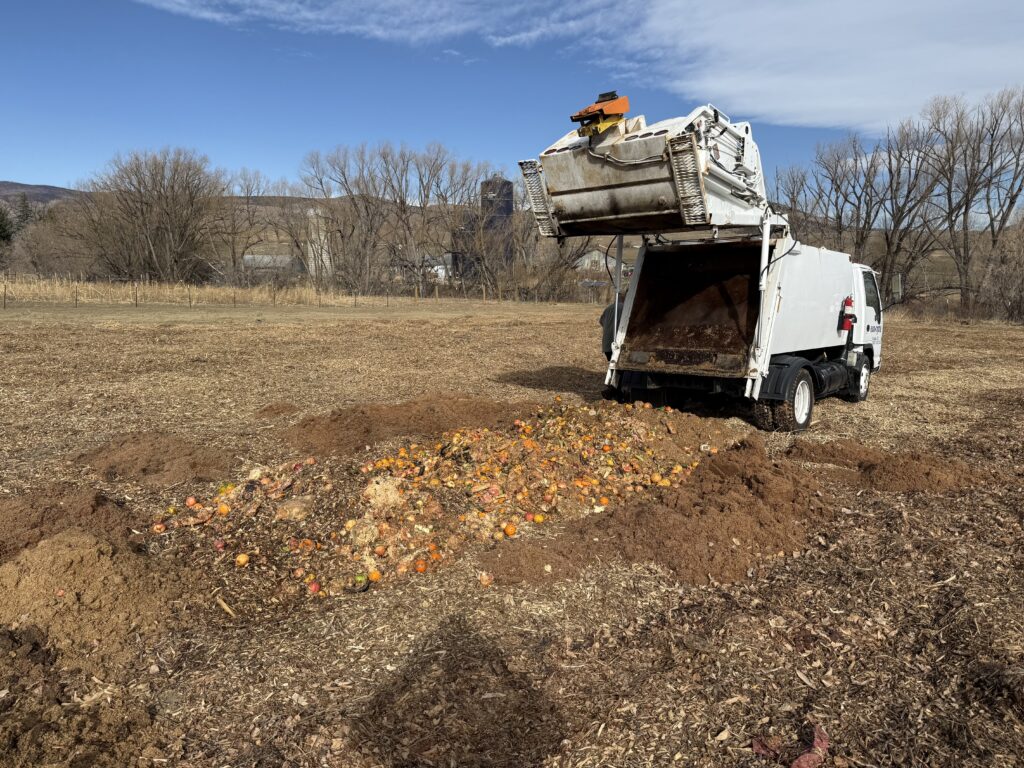
- Collect Clean Food Scraps: Eco-Cycle collects food scraps from local restaurants, schools, and businesses that produce high-quality, contamination-free discards.
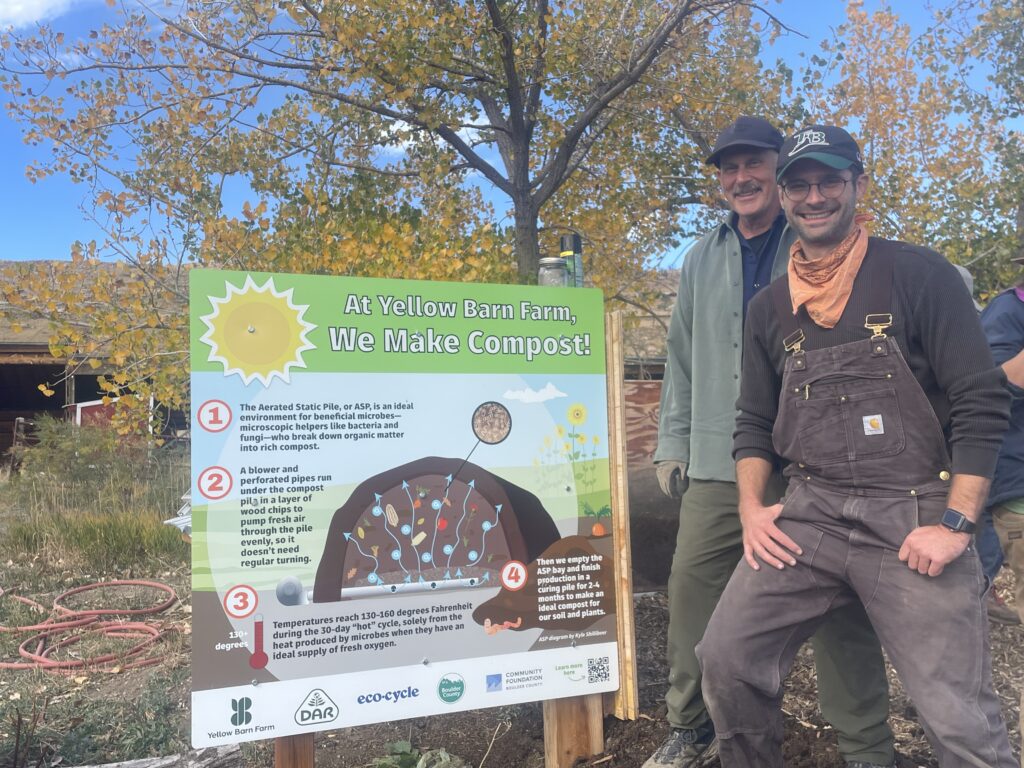
- Deliver Directly to Farms: These clean scraps are brought to farms, where they’re turned into high-quality compost on-site. Through partnerships with local farmers, Eco-Cycle has helped install innovative, small-scale Aerated Static Pile (ASP) composting systems capable of producing top-tier compost that can be used right on the farm. The systems are powered by solar and made almost entirely from reused pallets and PVC sourced from our friends at Resource Central.
- Apply Compost to the Land: Farmers receive training on how to maintain and utilize the systems. They apply the compost to their fields to restore and enrich the soil, increasing its ability to absorb carbon, retain water, and grow more nutrient-dense crops. Because the compost is produced on farms, the high-quality compost is convenient and free for farmers!
- Harvest and Feed the Community: The food grown from this healthy soil stays local, reaching residents through farmers’ markets, CSAs, and local food providers. It also returns to the community that generated the clean food scraps to make the compost.
- Continue the Circular System. Clean scraps from this food come back once again to the farmers to keep the compost cycle turning.
This model isn’t just about waste diversion—it’s about building a regenerative system where food “waste” becomes a critical resource that powers healthy soils and food production within the community.
Expanding the Model Beyond Farms
This decentralized approach to composting is working not only on farms, but in other real-world settings as well. Eco-Cycle and the City of Boulder are partnering on a pilot on-site composting project at the Boulder Reservoir to turn an environmental challenge into a local solution.
The project addresses an invasive plant called Eurasian milfoil, which can form dense mats that crowd out native species, interfere with swimming and boating, and reduce overall water quality. Left unmanaged, it can also create problems for water infrastructure and downstream systems.
The City removes the milfoil from the reservoir, and Eco-Cycle helps transform it on-site into high-quality compost that will be used at the reservoir to support turf and native plants. This keeps the material out of the landfill, reduces environmental risk, and turns a costly maintenance issue into a productive resource—creating a real-time circular solution that benefits both the ecosystem and the community.
How Clean Compost is Changing the System
Regenerative farmers rely on compost (rather than synthetic fertilizers) to build healthy, living soil. But not all compost is created equal. Contaminants like plastics, produce stickers, and other non-organic materials commonly found in industrial compost streams degrade compost quality and limit its use on food-producing fields.
By contrast, Eco-Cycle’s Farmers First model prioritizes “clean organics”—clean food scraps collected from local businesses, restaurants, and schools with strong Zero Waste practices. These clean materials don’t need additional processing to sort out contamination, and they allow farmers to make high-quality compost that meets their specific needs for growing food.
Environmental Benefits That Scale
This local, decentralized network of small-scale production sites on local farms offers major environmental advantages. In Boulder County, most organics generated in the community are currently delivered to a regional compost facility located over 50 miles away. By cutting long-distance transportation out of the composting process, the Farmers First method reduces greenhouse gas emissions and fossil fuel use. Applying compost to the land helps restore topsoil and boosts the ability of soil to sequester carbon from the atmosphere and store it safely and beneficially, reversing climate impacts.
It’s also a drought resilience strategy. Compost-rich soil retains water more effectively, reducing the need for irrigation and making farms more resilient in the face of increasing climate stress.
A Stronger Local Food System
Keeping compost production and application local strengthens Boulder County’s food system. Farmers gain access to affordable, high-quality soil amendments produced on their own land. Food grown in compost-enriched soil is more nutrient-dense and resilient. And because the food stays local—sold through farmers’ markets, CSAs, and wholesale to schools and restaurants—the benefits come full circle, nourishing the same community that helped create the compost in the first place.
Ultimately, Eco-Cycle’s Farmers First compost model demonstrates what a truly circular, community-based food system can look like: one that values resources, builds soil, supports farmers, reduces emissions, and restores the health of both people and the earth.
Want to learn more and get involved?
Learn more about the benefits of composting and how “carbon farming” builds healthier soils, more nutrient-dense foods, and draws down carbon in the atmosphere.
Read more about our Farmers First Program, the schools, businesses, and farmers who make it work, and how you can help.

