

November 13, 2026 Lane Vanderslice would like everyone to know: “I got very interested in hunger, and I got very interested in the world and really tried to make some worthwhile change in it”.
Long-time editor of this publication, Lane Vanderslice sat with us to reflect on his life and work. After finishing college, uncertain about whether to pursue economics or psychology in graduate school, Lane instead hitchhiked around the United States, taking work as an agricultural laborer and in a cannery in Stockton. That decision put him face to face with deep rural poverty for the first time. In Fresno, he connected with an AFL-CIO effort to organize farmworkers and went to work picking cotton for three cents a pound, a wage already undercut by early mechanical harvesters.
What struck him most was who was actually doing the hardest labor. The people around him in the organizing effort were, in his words, a “marginal group,” people who had skipped parole or struggled with alcoholism, while the real workers were Mexican and Latin American braceros. That contrast planted a question that would shape his life’s work: why were so many Mexican laborers crossing into the United States for such punishing wages? The search for an answer sent him back to graduate school, where he eventually earned his Ph.D..
Bolivia’s Education in Development
Determined to understand poverty firsthand, rather than theoretically, Vanderslice took a teaching post that led him to Bolivia for three years. He was based in La Paz, the Capitol city, while conducting dissertation fieldwork. It was an immersive education in how fragile institutions actually function. He recalled waking up to military coups, watching the university shut its doors, and realizing how differently power could be seized and wielded compared to the United States he thought he understood from the civil rights era. He bought a Land Rover from a British embassy staffer and traveled through rural areas, often staying with Peace Corps volunteers and talking directly with campesino families.
One encounter proved formative. A rural friend with a child the same age as Vanderslice’s own son lost that child, having never had access to a doctor or immunizations. Around the same time, Vanderslice’s own son fell ill with diarrhea in Colombia, and Vanderslice initially withheld fluids—the opposite of correct treatment—until a doctor corrected the error. Those two experiences, one nearly fatal for someone else’s child and one a near-miss for his own, became the emotional core of arguments he would later make in Washington about oral rehydration therapy, immunization, and rural health access.
Radicalization at Home
Later, as a University of Michigan student and writer for The Michigan Daily, Lane interviewed figures including Henry Kissinger and Carl Sandburg, and watched colleagues like Tom Hayden, who went on to co-found Students for a Democratic Society, push the paper toward activism. He was moved by the sight of fraternities lying about discriminatory practices dictated by national chapters and he grew radicalized further in graduate school as the Vietnam War intensified. He organized a protest against Dow Chemical’s napalm production and helped found the Union for Radical Political Economics with fellow graduate students. That combination of civil rights, anti-war organizing, and firsthand exposure to farm labor conditions convinced him that meaningful anti-poverty work required organizing, not just scholarship.
Bread for the World and the Fight in Congress
After teaching stints at Rutgers and the University of Notre Dame, Lane joined national anti-hunger nonprofit, Bread for the World, in 1980. He was hired to push the Carter administration’s tentative embrace of land reform in foreign aid, an effort that collapsed during the subsequent the Reagan administration which militarized aid policy in Central America instead. Undeterred, Lane and colleagues including Ernie Lovenson and Paul Nelson pivoted to education and advocacy for redirecting military and security-assistance funding toward “basic human needs,” most notably child survival programs.
The turning point came when UNICEF’s newly appointed director, Jim Grant, sought congressional allies to fund a global child survival push built on immunization and oral rehydration therapy. Vanderslice and Nelson met Grant at the Cosmos Club and helped engineer legislation, co-sponsored by Representatives Tony Hall and Jim Leach, that created a USAID child survival fund. The bill drew roughly 110 congressional co-sponsors and, for the first time in years, held military aid increases flat. Vanderslice later helped defend that health funding stream again in the early 1990s, when USAID sought to eliminate its functional accounts; he recruited Representative Chris Smith to introduce a preserving amendment. Over subsequent years, U.S. international health funding grew roughly five- to six-fold, from about 130 million dollars to over a billion, seeding later initiatives like the vaccine alliance Gavi.
He recalls: “I did do a lot to increase child survival funding while at BFW and later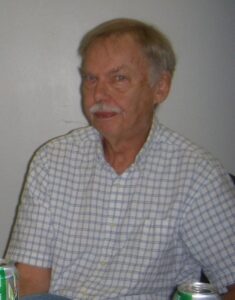 for a bit at NCIH. The worldwide effort by many continued over many years did make a big difference in child mortality and “hunger-related” deaths. Attached is an article in the AJPH describing BFW’s first big effort. It definitely misses some things. We did try to shift shift money from ESF, but that was in the bill from the beginning.”
Twenty Years Editing Hunger Notes
After stints at the National Council for International Health (NCIH) and the Academy for Educational Development (AED), Vanderslice became editor of World Hunger Education Service’s (this organization) flagship publication, Hunger Notes, a role he held from 1996 to 2016. Working roughly ten hours a week alongside a day job, he built the outlet into a reference point for hunger statistics and analysis, registering the domain worldhunger.org early enough to secure a durable web presence as the publication eventually dropped its print edition. At its peak, the site drew close to a million annual readers, though he later reflected that a narrower, more focused site design might have served readers better as search and social platforms reshaped web traffic.
Lane says: “I spent a lot of time doing this in addition to my regular job and I am very pleased with all we were able to do. Nicki Lagoudakis and I took the step of turning WHES into a purely voluntary organization. I did work the same amount of time at WHES as Pat Kutner (the founder), 21 years.”
As the executive editor for virtually all of this period, Lane edited nearly all articles that appeared in the publication, numbering in the thousands. Lane also wrote many articles.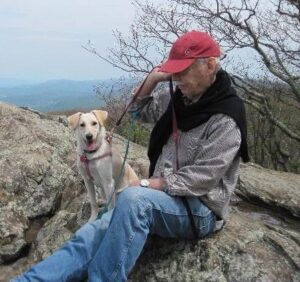
For instance, articles that Lane wrote:
Lane developed a framework analyzing how economic systems can be structured to benefit a small elite at the expense of the poor. He argued that standard economic models fail to account for “unproductive and harmful” economic activities that perpetuate hunger and poverty. He wrote, “Standard economics has made an extremely serious mistake.”
In 2008, Lane wrote, “2.6 billion people live on $2 a day or less. They spend approximately 50 percent of their income on food. Thus a person living on $2 a day spends $1 a day on food. When food prices go up by 100 percent, s/he must spend $2.00 a day on food or purchase less food. The result is s/he purchases less food, leading to increased hunger, and has much less left over for other necessities such as housing.”
His work on this topic examined how powerful groups maintain control of government to extract income and resist reforms. His work covered land reform, debt forgiveness for developing nations, and the role of institutions like the World Bank in poverty alleviation. He wrote, “If it were not for China, world malnutrition would have increased.”
He wrote extensively on the right to food as a human rights issue, particularly in the context of the 50th anniversary of the Universal Declaration of Human Rights. His work explored how human rights frameworks could be better utilized to combat hunger. He wrote, “implementation of the human right to food has been one of the slowest.”
Conflict and Food Insecurity
Lane highlighted the bidirectional relationship between conflict and hunger, noting how food insecurity can spark violence and how conflict disrupts food production and distribution. Lane examined the interplay between global financial crises, food crises, and hunger, showing how economic systems affect the world’s poor. He wrote, “Armed conflict, the fight by groups for control of the government or territory (frequently possessing natural resources), has been throughout history the principal way in which harmful economic societies have been established. Its importance continues today. The results of conflict have been the domination of the winning side over the losing and the establishment of a pattern of income and resource allocation favoring the winners.”
Lane covered critical debates about:
- * Organic vs. conventional agriculture and whether organic farming can feed the world
- * The impact of corporate agriculture on small farmers (campesinos)
- * Threats to biodiversity, such as the impact of avocado farming on Monarch butterflies
- * The need to shift focus from merely feeding people to nourishing them
He analyzed U.S. food assistance programs, including reforms to PL480 (Food for Peace) and the development of strategies like USAID’s multisectoral nutrition approach focusing on the first 1,000 days of life. He wrote, “Hunger is the major health risk globally.”
He addressed the lack of attention to poverty and hunger in political campaigns and advocated for greater policy focus on these issues.
Lane continues to advise WHES about articles for Hunger Notes. Otherwise he says he’s “now spending time trying to maintain my health, staying in touch with family and old friends, some travel with my wife Paula, trying to get my house in good shape including appearance, supporting and participating in anti-Trump activities including elections, and continuing to play the piano.
As well, “In the earlier years of my retirement, after resigning as editor of worldhunger.org., I became member of the steering committee of the Union for Radical Political Economics, an organization which I helped found in the late 1960’s.”
“I wrote a number of economics articles including “Orthodox Economics and the Economics of Harm” in the Journal of Economic Issues.” Orthodox economics understands productive activity, which obtains income by benefiting others, but does not have an adequate conception of activity which obtains income by harming others. There is a broad and important range of activities which obtain income by harming others. This article considers the analysis of some of these including conflict theory, rent-seeking, corruption, harm of workers, consumers, and nature, economic historians’ consideration of extractive political and economic institutions, and the varieties of discrimination. The omission of harm is evident in undergraduate textbooks in microeconomics and public economics. The fundamental political economic system of past and present, a productive plus harmful one, is not being taught to economics students.”
– edited by Steven Hansch of World Hunger Education Service

