

What can we do to boost the longevity hormone FGF21?
In the year 2000, a new human hormone was discovered. It was the 21st documented fibroblast growth factor, so they called it FGF21. Since its discovery, FGF21 has become recognized as a key agent for the promotion of metabolic and arterial health, leanness, and longevity. Inject it into fat monkeys, and they lose body weight without reducing their food intake. And they don’t just lose a little weight—they have a 27% drop in body fat while eating the same amount. In mice, it increases their lifespan by 30 to 40%, which is comparable to lifelong caloric restriction, and, again, they achieve this without decreasing their food intake. The researchers conclude that FGF21 could possibly be used as a hormone therapy to extend mammals’ lifespans, which has gotten Big Pharma salivating, raising the question: “Can aging be ‘drugged’?”
That’s not all FGF21 can do, either. “The idea that one drug can treat obesity, diabetes, dyslipidemia [like high cholesterol], and hypertension all at once might have seemed impossible a few years ago but is now a tantalizing and exciting prospect.” The reason you can’t just give people straight FGF21 is that it gets rapidly broken down in the body, so you’d need injections every hour or two, around the clock. So, drug companies are trying to patent a variety of longer-acting FGF21 look-alikes. And, indeed, give people a little PF-05231023, and they can lose about 10 pounds in 25 days, as well as get dramatic drops in triglycerides and cholesterol, as you can see below and at 1:48 in my video Life Extension with FGF21.Then, the side effects of these new-fangled drugs started cropping up. Okay, so what are the options? How about packaging the FGF21 gene into a virus and then injecting it so it can stitch extra FGF21 genes into our DNA? Or you can just lace up your running shoes. Exercise boosts FGF21 levels, which may in fact be one of the reasons exercise is so good for us.
Which works better, though, aerobic exercise (eight weeks of running training) or resistance exercise (eight weeks of weights)? The answer is both, but the resistance exercise edged out the running, a 42% increase in FGF21 versus a 25% increase in the aerobic exercise group. Okay, but what can we do with food? Yes, you could try engineering and injecting it, but wouldn’t it be easier to just stimulate our own natural, endogenous production through diet? One way is through no diet at all. It’s been dubbed the starvation hormone because fasting induces FGF21, but not after just a day or two.
Physiologically, FGF21 expression rises markedly in response to fasting or starvation. But, unlike mice, which show an increase after just six hours of fasting, humans don’t get a notable surge in FGF21 until after a week. Fasting can quadruple FGF21, but it takes 10 days of fasting, which is the very poster child of an unsustainable eating pattern. You can see the increase below and at 3:19 in my video.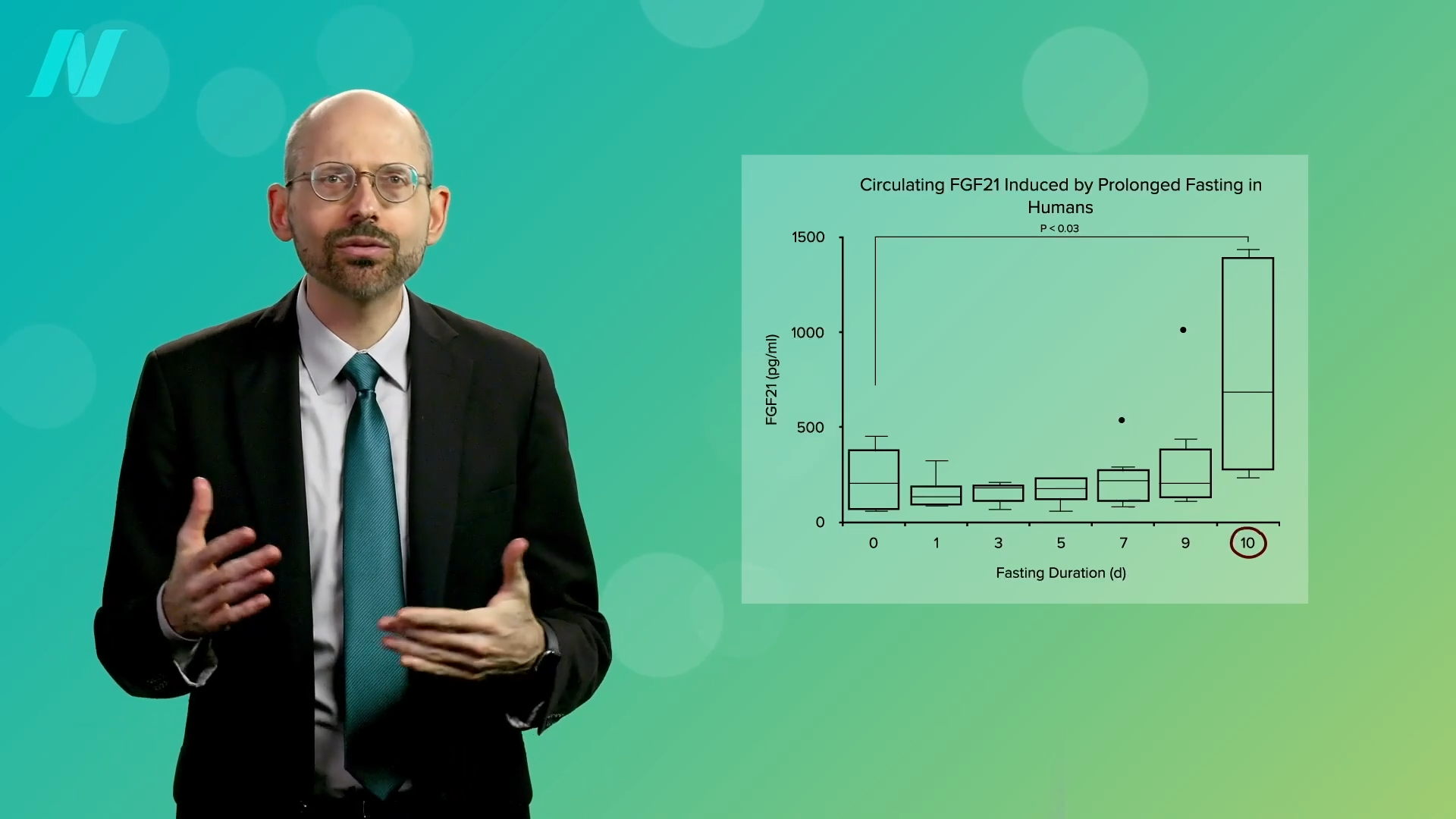 So, how do you get the benefits without the starvation? Might a ketogenic diet be able to mimic the fast? Nope. Keto diets don’t work. In fact, keep it up for a few months, and you can actually get a significant decline in levels. High-fat diets may even interfere with the boost you get from exercise, which was seen in a study of high-intensity interval training.
What kind of diet does work, then? We’ll find out next.
Doctor’s Note
Stay tuned for part two: How to Boost FGF21 with Diet for Longevity.
Flashback Friday: How Much Should You Exercise? Check out the video to find out.
For more on longevity, see Friday Favorites: How to Increase Your Life Expectancy 12 to 14 Years.

