

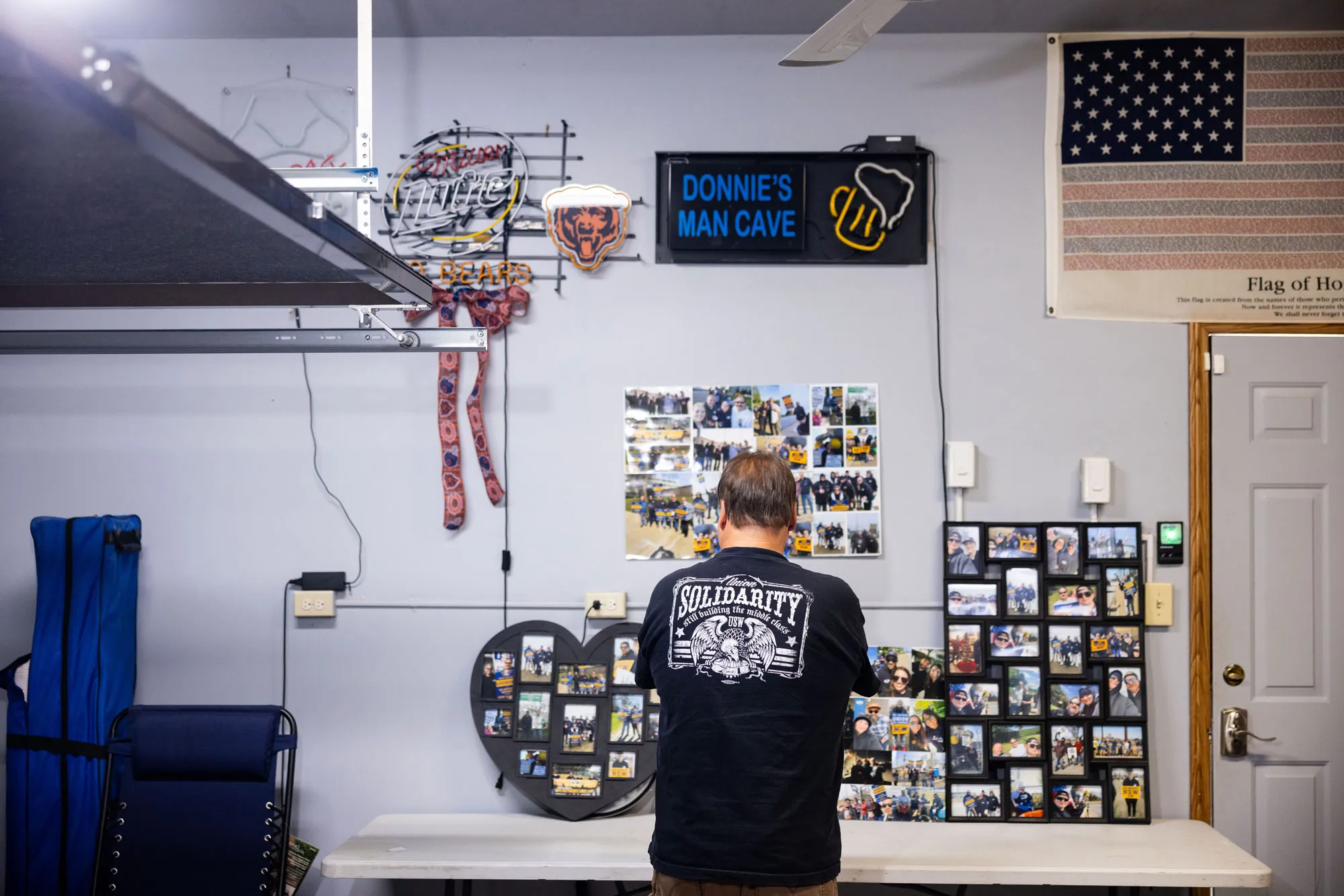
Jessica Skalka, 37, rounded the corner of a homemade bar in her dad’s garage, passing a framed collage of cutout newspaper clips marking the end of the 99-day strike at British Petroleum’s Whiting, Indiana, refinery in 2015. A row of championship banners for the Chicago Cubs, Bears and White Sox hung high across one wall, while a light-up “Donnie’s Man Cave” sign glowed nearby. An air conditioner hummed in the corner in the Northwest Indiana home as the first July heatwave pushed outdoor temperatures into the mid-90s.
She picked an empty blue-and-orange Bears-themed bucket from the counter, shook it, and asked, “No candy today?”
“Yeah, well, I’m not working right now,” said Donald Skalka, 62, from across the garage.
The empty candy bucket was yet another reminder of how much life had changed over the past few months. Until mid-March, father and daughter worked at BP’s sprawling plant in Whiting, Indiana, the largest inland oil refinery in North America, located on the southwestern shore of Lake Michigan, a half-hour drive from downtown Chicago.
Erin Hooley / AP Photo
There, Donald had spent nearly two decades working his way up to a job in the control room, where he monitored the refinery’s operations from behind a bank of screens. The plant processed approximately 440,000 barrels of crude oil every day, and Donald kept the electricity and steam-generating machinery at the plant running. Donald’s son worked there, too, as did Jessica, and Donald’s longtime girlfriend, Renee Pleitner, whom he met during his onboarding and is a third-generation refinery worker.
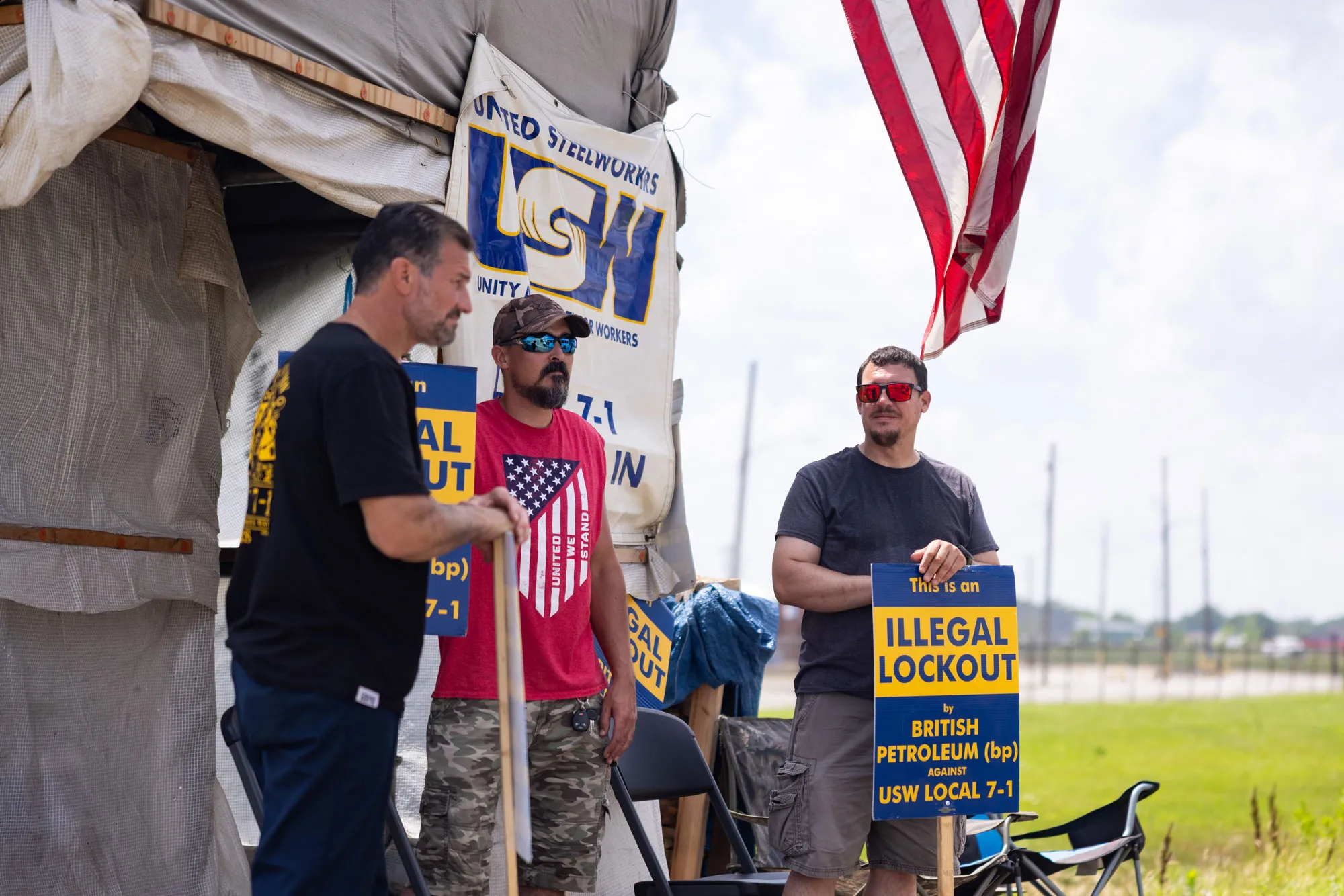
For the last four months, the Skalkas, Pleitner, and approximately 800 other workers represented by United Steelworkers Local 7-1, or USW, have been locked out of the refinery without pay and with no clear indication of when they’ll return to work.
Unlike strikes, in which unionized workers advocate for themselves by refusing to work, lockouts are employer-initiated. During a lockout, management can prevent workers from returning to their jobs to withhold wages. Lockouts are generally seen as a hardline tactic during labor disputes and tend to be rare, especially in the refining business, which requires continuous production and a highly skilled workforce.
Now, longtime refinery workers worry Big Oil is experimenting with a new playbook to break union power, undermine national collective bargaining, and remake its workforce. They also worry that the dispute could have ripple effects far beyond the picket line and threaten not only workers and their families, but the health and safety of the surrounding community — a concern due to four flaring events, a fire, and a major power outage in just four months.
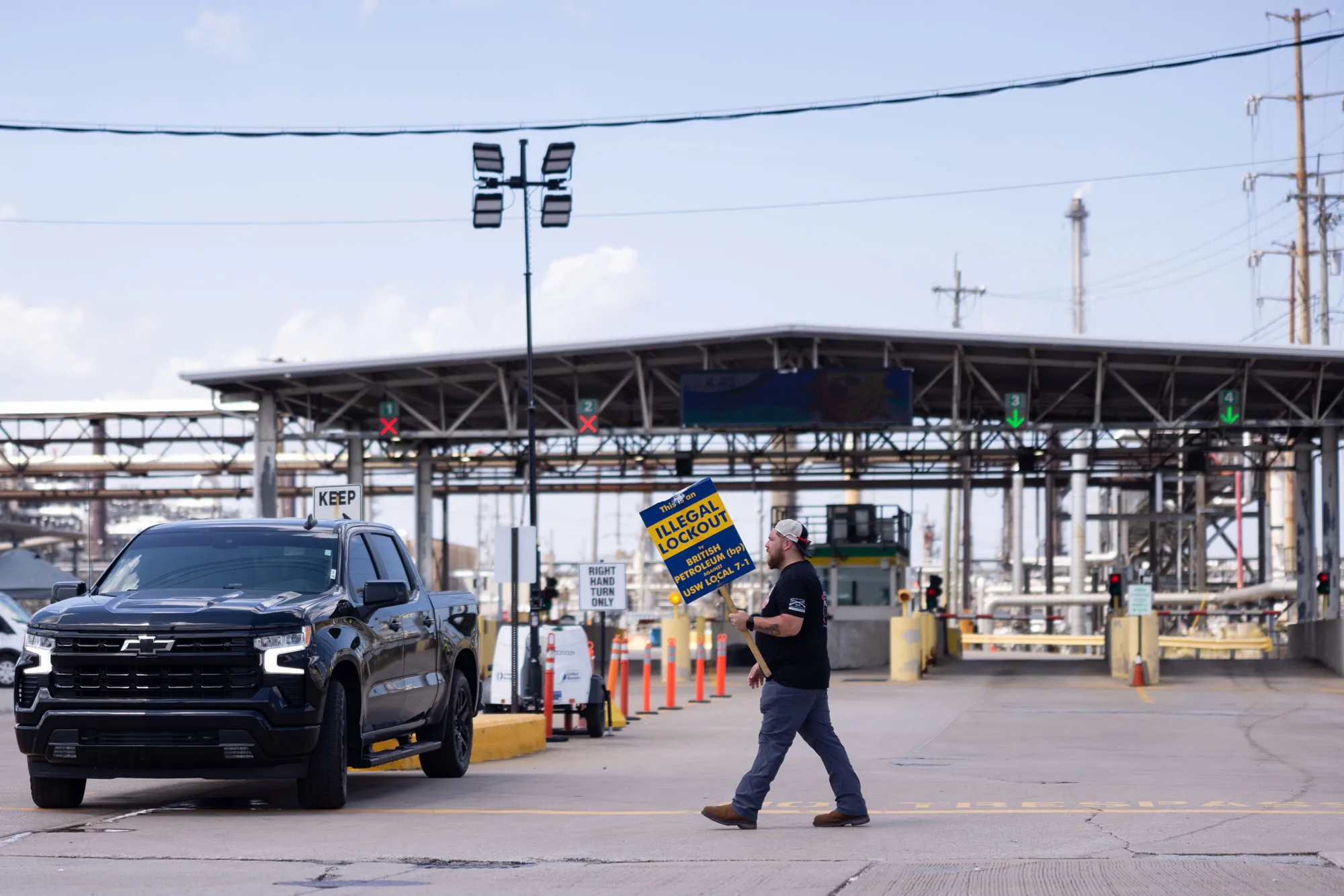
Candace Dane Chambers / Sun-Times.
BP began negotiating with the union in early January ahead of the previous contract’s expiration at the end of the month. But two months into discussions, after 98 percent of USW Local 7-1 members voted to reject what the fossil fuel company called its last, best, and final offer, it issued a lockout order. The proposal would have frozen wages, weakened safety protections, eliminated jobs, and expanded the use of artificial intelligence to monitor employees, according to the union.
In an emailed statement to Grist, BP objected to the union’s characterization of its demands. “Our proposals are not unique or novel,” wrote BP spokesperson Cesar Rodriguez. “Most of what we are seeking has already been tested and implemented elsewhere.”
The lockout also “allowed for a safe and orderly transition of operations,” Cesar said. The union’s 24-hour notice requirement to strike and disrupt refinery operations “presented safety and operational risk,” BP wrote in an earlier statement, and necessitated a continuity plan.
Oil companies have had a banner year following the onset of the U.S.-Israel war on Iran. Chevron, Shell, and ExxonMobil have all reported record-setting profits, making more than $36 billion over the past three months. This week, BP announced quarterly profits of $5.7 billion, more than double the previous quarter.
For Skalka, the March email notifying him that he wouldn’t be returning to work until further notice was gutting.
“The gamut of emotions when I had to face my family, it was a lot,” he said.
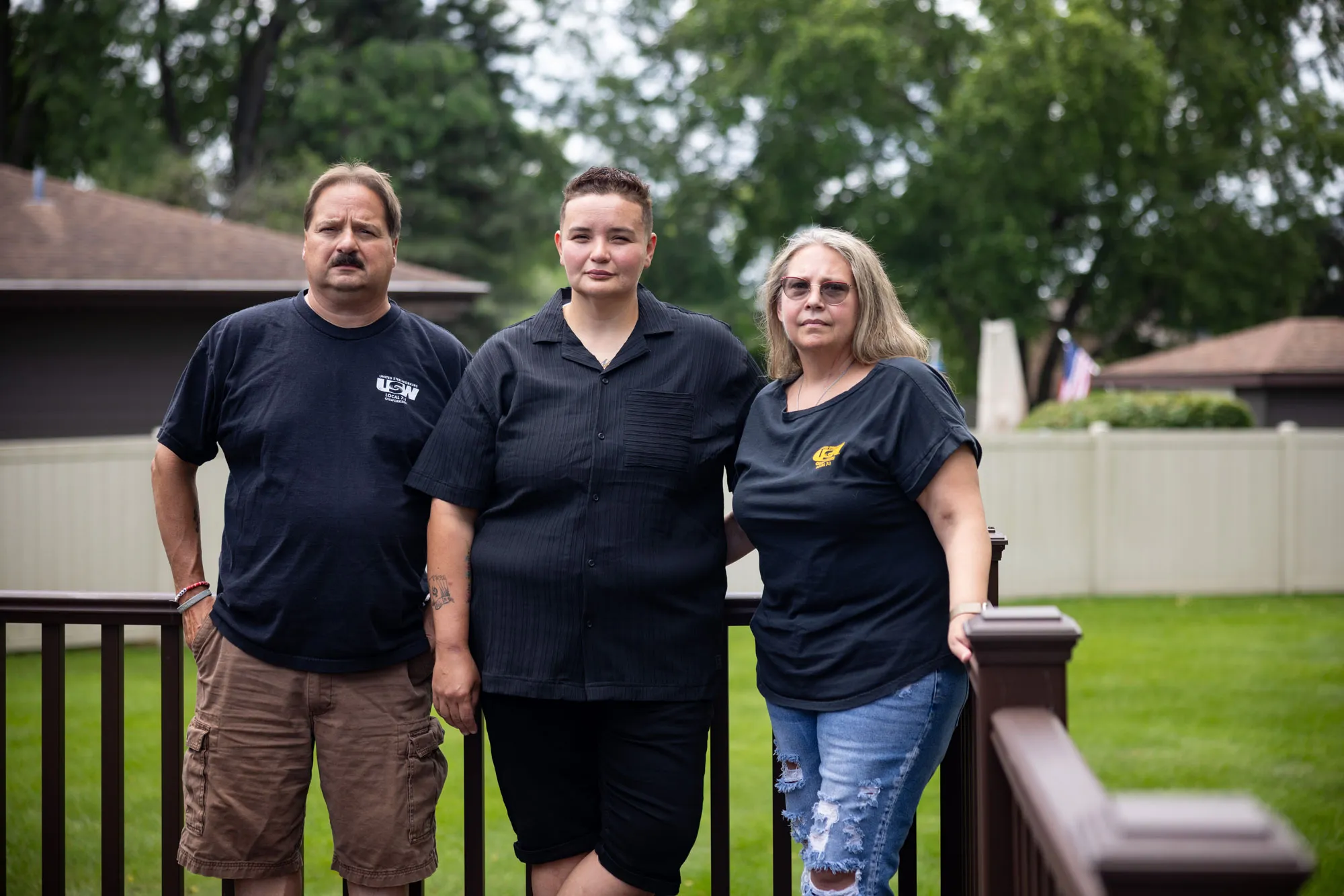
Candace Dane Chambers / Sun-Times
Skalka had inspired his children to follow in his footsteps. Born and raised in the northwest corner of Indiana, known for its concentration of factories, steel mills, and refineries, most of his family had worked at industrial facilities. His father worked at cement factories and later built parts for the nearby steel mills. An uncle was a shipbuilder on the East Side of Chicago. He followed suit. After spending a few years working on the railroads, he took a job at Whiting.
He was eventually entrusted with an important role at the refinery. From the control room, he was responsible for identifying broken pumps, mechanical hiccups, and mystery leaks, all of which, if not caught in time, could mean a major fire or a multimillion-dollar headache for BP. Accidents and outages can also spike regional gasoline prices. A power interruption at the facility in April led to gas prices surging regionally by 40 to 80 cents per gallon.
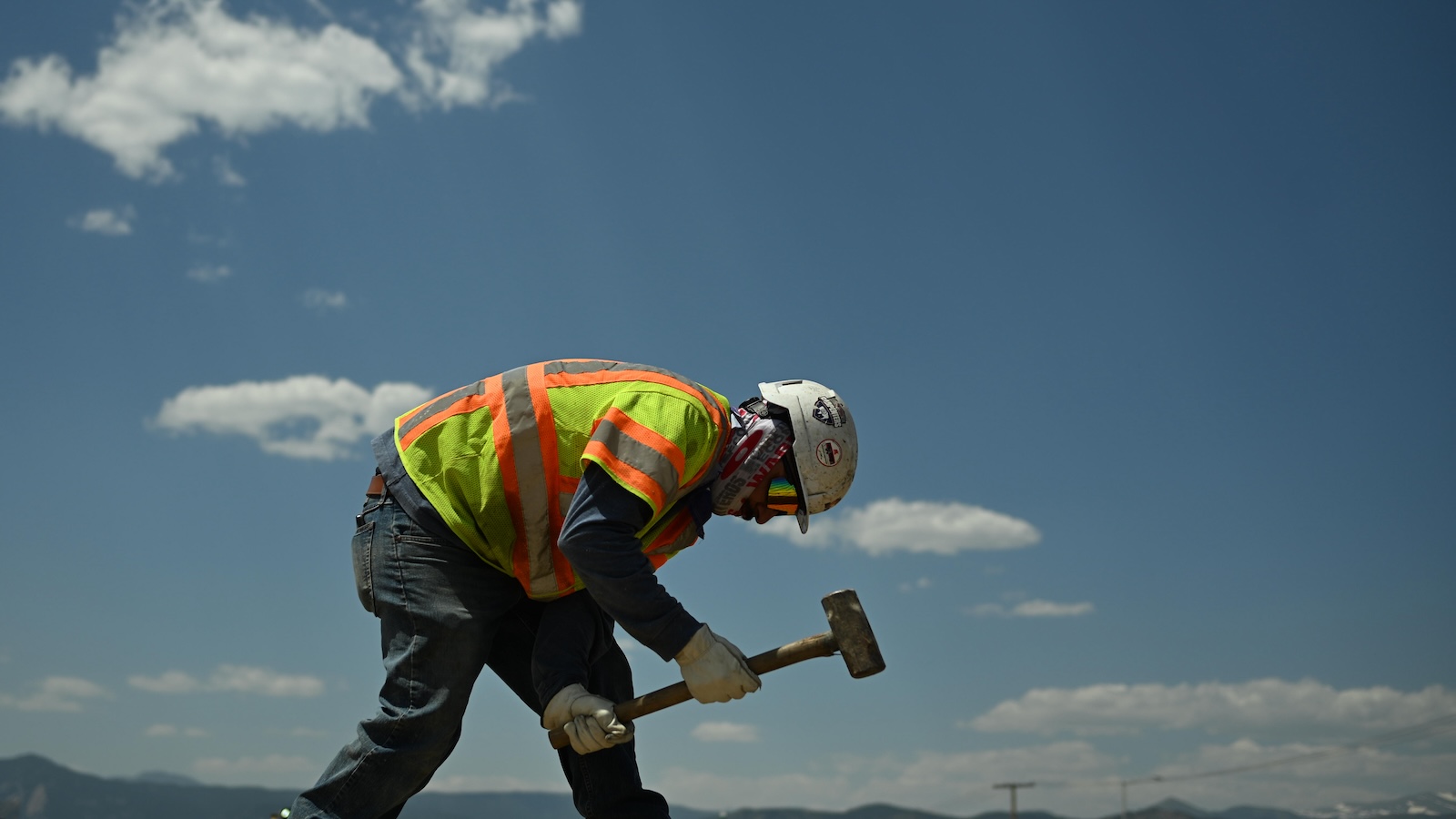
“There’s a little bit of danger to it,” he said. “When you swipe in with your time card, you have to bring your A game.”
All the same, he loved the job — and his daughter noticed.
It was an exciting, breakneck-paced lifestyle, and the pay was good. She peppered her dad with questions, applied, took a qualifying test, passed, and eventually earned a spot. Donald Skalka Jr., Skalka’s son, spent approximately a decade working at a nearby steel mill. When an opportunity at the refinery came up a year and a half ago, he took it. It was a decision his father encouraged.
“He’s one of the 800 like the rest of us, and he’s going, ‘Dad, I don’t know if I should’ve listened to you.’ Well, I didn’t know at the time that was going to happen,” Skalka said. “At the time, on paper, everything seemed better; you’re trying to have a better quality of life.”
Candace Dane Chambers / Sun-Times
The lockout has reshaped his home life in other ways too. Jessica found temporary work. Her brother returned to a job at the mill. Donald and Renee are holding out, living on a budget that keeps shrinking. Besides leaving the candy bowl in the garage empty, they’ve swapped cable for streaming and are using rabbit-ear antennas for free local channels. They also paid their utility bills months in advance to avoid a power shutoff in the future.
“You get rid of the non-essentials right away,” Skalka said. “The thermostat stays higher, there’s less in the grocery cart, you don’t eat out obviously hardly at all anymore,
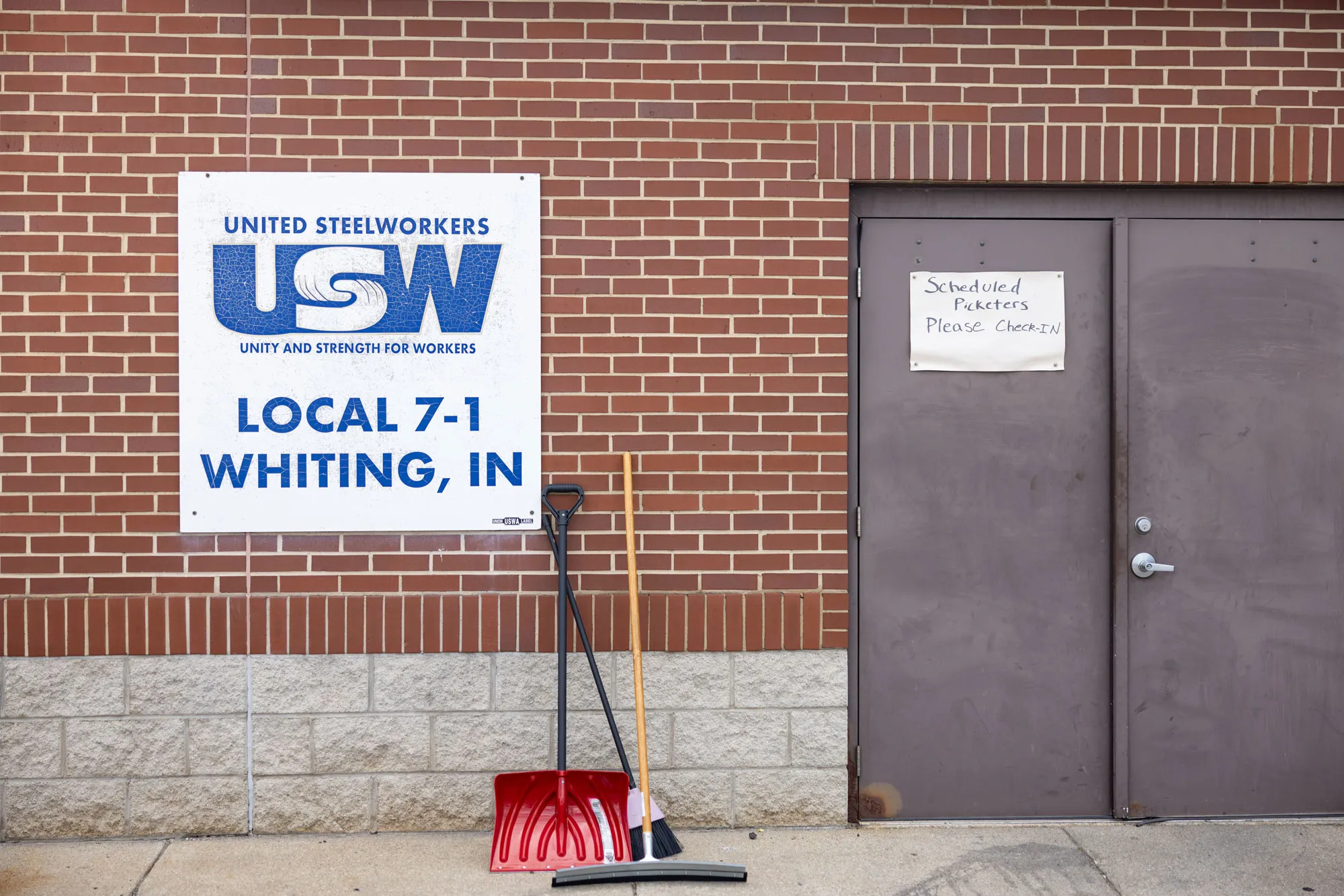
Most days they take it easy. They pass the time filling poster boards with pictures of good times on the picket line this year and during previous standoffs. Sometimes, they visit Jessica’s home, which has a pool — otherwise they picket. Among Skalka’s picketing duties is bus driver; he pilots the union’s second-hand minibus, a stout, white vehicle, shuttling picketing union members between four different entrances. Union members have been assigned shifts to protest — four shifts a day, four protesters a shift. The schedule has allowed workers to find other employment and extend their ability to hold out during the lockout.
Donald goes on his off days too, when Pleitner is on the schedule, and she does the same for him. “We just kind of make it a family event,” Skalka said.
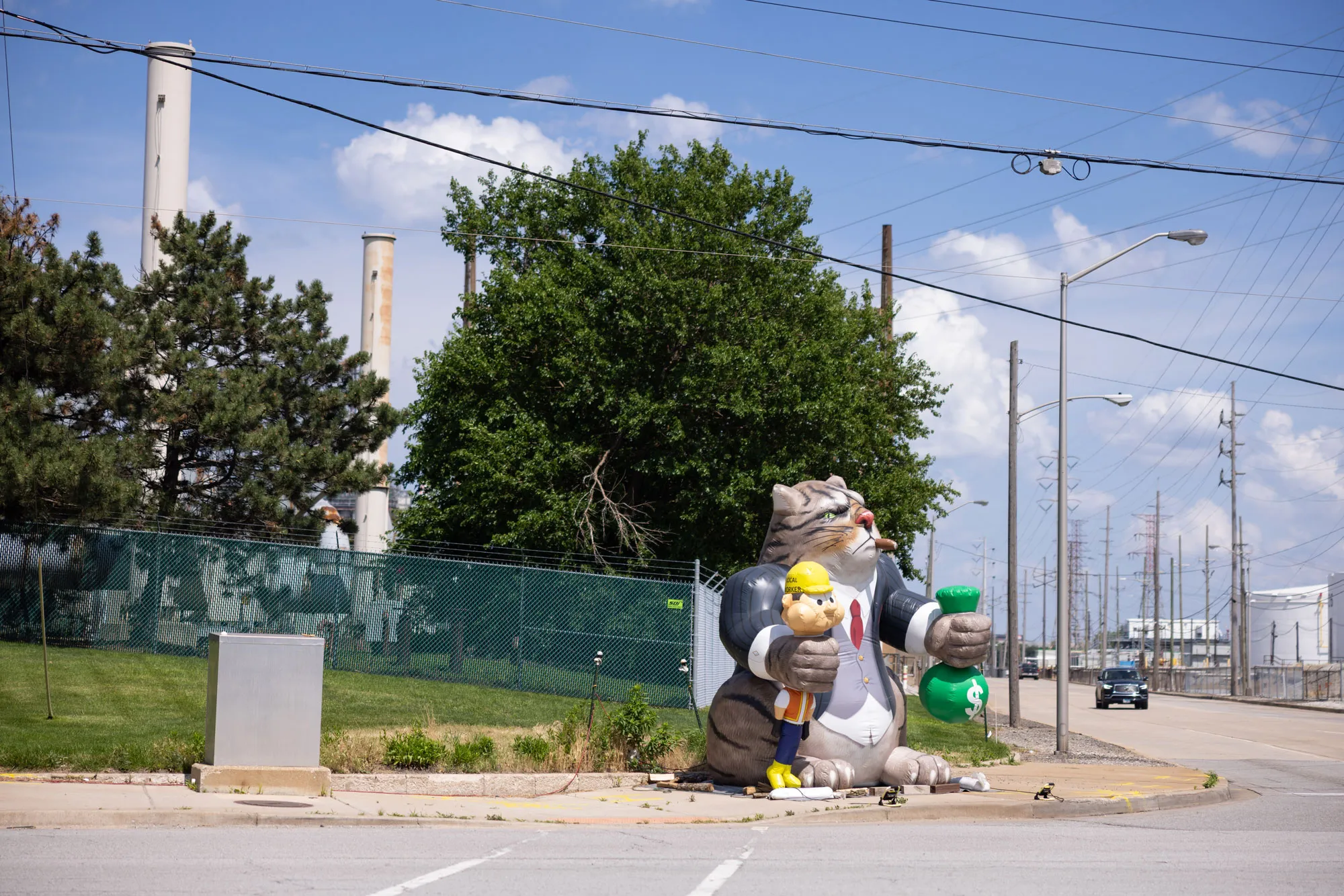
By now, he’s used to the new routine. What he’s still wrapping his head around is a new, more aggressive tack from his employer — one that has pushed his family, friends, and coworkers to their limits. In recent months, the company and the union have blamed the other for alleged altercations. USW workers have filed police reports in two instances involving picketers who allegedly ended up pinned beneath a car. And the BP spokesperson alleged that union members committed unlawful acts. The tension has been building for months.
“This time it seems they’re in a union-breaking mode,” he said, “They’re following a playbook.”
Candace Dane Chambers / Sun-Times
Union leaders trace the origins of BP’s strategy to Texas. In 2021, ExxonMobil, the nation’s largest oil and gas company, locked out approximately 650 unionized workers from its Beaumont, Texas, refinery when they rejected a “last, best, and final offer,” which would have frozen wages and ended some union seniority rights. At the time, the Beaumont workers were already operating outside the framework of the National Oil Bargaining Program, a national effort dating back to the 1960s to negotiate industry-wide standards for wages, health care, and workplace safety. Today, the program covers about 30,000 refinery employees across two-thirds of the nation’s refining capacity.
The program exerts leverage by aligning approximately 200 refinery bargaining units around the same contract timelines, preventing unions from being pitted against each other, and establishing a national standard. Without that collective leverage, the Beaumont refinery workers were at a disadvantage. The Texas lockout lasted 10 months and ended in March 2022. When workers returned to their jobs, they did so under a weaker contract that gave Exxon authority over all job assignments, stripping the union of its previous role in determining a quarter of them. In the course of the 10-month lockout, approximately 20 percent of workers left the refinery for good.
According to Eric Schultz, president of the USW Local 7-1, BP hired the architect of the Exxon negotiations, Jordan Marcks, as a director of employees and labor relations, while that lockout was ongoing. Schultz sees similarities between BP’s proposal and Exxon’s plan for the Texas refinery. For one, BP is pushing a contract term that would put the Whiting refinery out of step with the National Oil Bargaining Program. It is also looking to eliminate jobs and union oversight.
“They obviously liked that playbook,” he said. “They’re trying to bring that flavor up here to Northwest Indiana,” Schultz added.
When reached for comment about Marcks’ employment history and alleged tactics, the BP spokesperson said the company “does not comment on personnel matters.” Marcks did not respond to a request for comment.
Candace Dane Chambers / Sun-Times
BP has brought in an unknown number of temporary workers — some from as far away as Arkansas, Louisiana, and Texas — to replace the locked-out workers, according to Schultz. They’re being paid handsomely. Union wages run on average at about $54 per hour, but a union spokesperson said the new workers are being paid up to $127 an hour plus benefits for a six-month stint.
BP did not comment on how many temporary workers it’s currently contracting at the Whiting refinery. “Compensation is a personnel matter, and BP typically does not comment on personnel matters,” said Rodriguez.
Mike Smith, the chair of the National Oil Bargaining for the United Steelworkers, said it’s not totally clear yet whether the lockouts reflect a new tack for Big Oil. “Whether this is an individual’s idea who happens to have been involved in both of those lockouts, or if this is a strategy — that’s still to be determined,” he said.
Candace Dane Chambers / Sun-Times
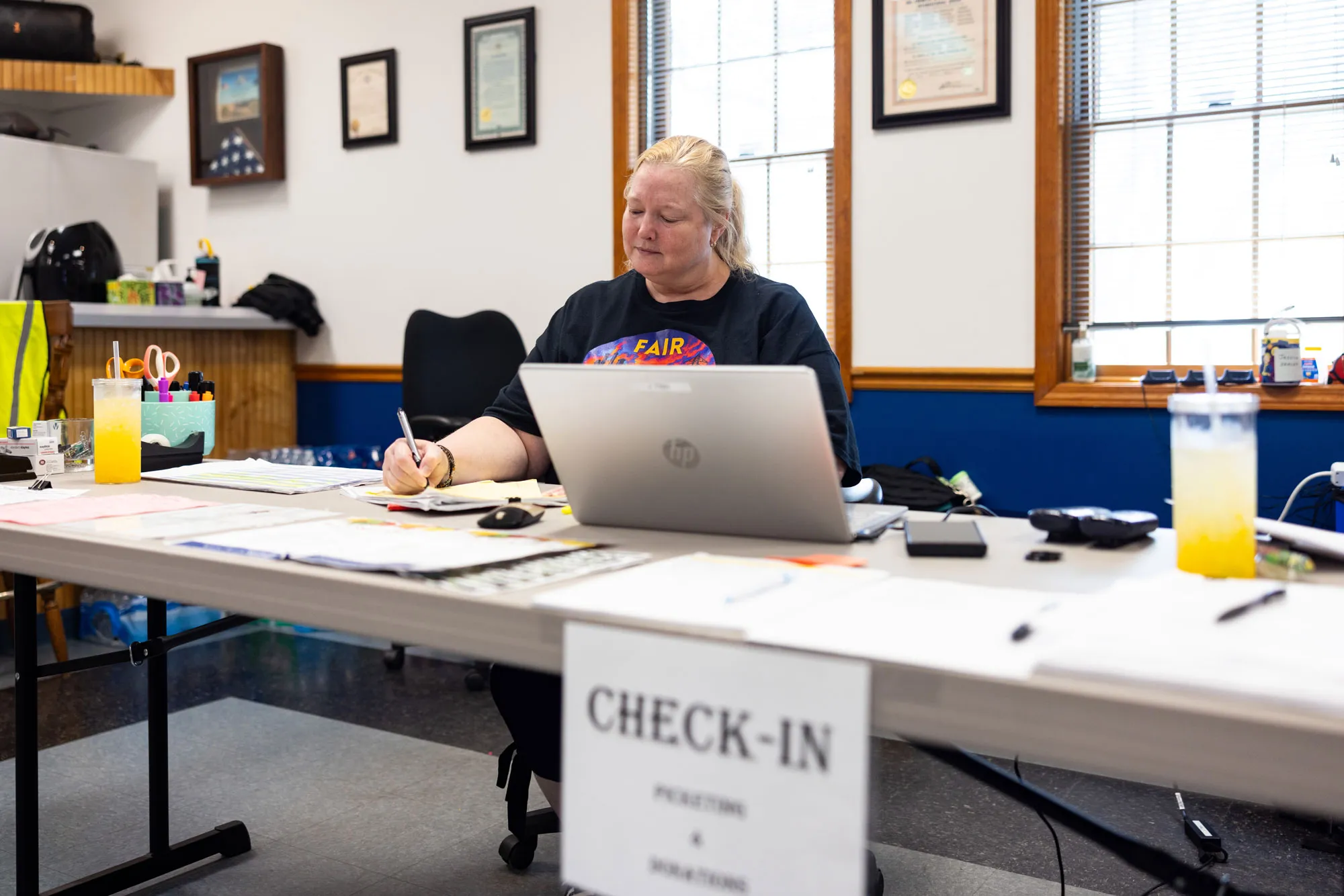
With the workers locked out, the squat union hall has transformed into an all-hours crisis center. Makeshift shelves in a corner carry everything from simple groceries like canned food and pasta to diapers and baby formula. The formula and diapers are typically the first to go, according to Michelle O’Shaughnessy, a union member who has been helping run the improvised pantry since the lockout started.
A lot of the goods available for union members on a daily basis are there thanks to community donations. Amazon boxes arrive daily. So too do notes of support from across the country. The brother of a retired Whiting USW member mailed in a $20 bill all the way from Arizona to contribute to the strike funds.
The local community has also rallied behind the refinery workers. “We have some faithful restaurants who are very good to us,” O’Shaughnessy said. Beggars Pizza in Whiting has been dropping off 10 pizzas to the union hall every Monday, as do Aurelios of Hammond on Tuesdays and Center Lounge, which has been bringing in meals on Wednesdays.
Union members can also get help filling out unemployment applications at the center. The union has a strike fund that helps pay some bills, but members do not receive cash payments or salaries. Other organizations have also stepped up to assist with mortgage payments and help apply for SNAP benefits.
Candace Dane Chambers / Sun-Times
Last month, Hammond Mayor Tom McDermott announced he was returning $20,000 in BP sponsorship money for the local Festival of the Lakes celebration. Not long after, Pierogi Fest in Whiting announced they would also return BP’s sponsorship money and set up donation boxes throughout the festival to collect funds for members to pay their bills. And the Lake County Council and Lake County Board of Commissioners passed resolutions announcing their support for the locked-out workers.
The backlash against BP is far from local. State treasurers from Illinois, California, Colorado, and Connecticut signed onto a letter in April urging BP’s Chief Executive Officer, Meg O’Neill, to consider the national implications of the ongoing lockout. “The costs of prolonged disruption will not be contained within this dispute,” the letter said. “They will be borne by households, workers, and communities across the country, including those that sustain BP’s long-term presence and success in the U.S.”
While the fight plays out, Skalka is hunkering down, preparing for a long road back to work. He’s not sure if he’ll get to put his BP uniform on next month or in three months. What he does know is that he, his family, his nearly 800 USW brothers and sisters, and the rest of Northwest Indiana are determined to win.
“We’re still going to keep living our lives; it’s not gonna deter the hardworking people in Northwest Indiana,” Skalka said. “They’ve got a good fight on their hands, and we’re gonna give it to them.”

