

Centre for Earth Works (CFEW) is a research-driven, youth-led organisation committed to protecting the earth by working closely with communities to build practical, lasting solutions that empower people to conserve their environment and adopt sustainable practices that support both livelihoods and ecological balance.
For nearly a decade, CFEW has consistently advanced environmental sustainability through innovative programmes, grounded research, and proactive community-based advocacy. Through this commitment, CFEW supports communities in taking ownership of environmental stewardship and responding to local challenges with locally driven solutions.
CFEW is a member of the Global Alliance for Incinerator Alternatives (GAIA) and is one of the implementing partners of the GAIA-led Methane Reduction in Nigeria (MAMRN) Project, a major zero-waste and climate-action initiative focused on diverting organic waste from open dumpsites and landfills. It aims to reduce hazardous methane emissions, build circular economies, and empower communities by turning municipal waste into economic gold.
In this article, part of a forthcoming series, we spoke with Benson Dotun, the founder of Centre for Earth Works, about their work as a partner in Jos, Plateau State, for the project.
Thank you for joining us, Benson. Several organisations carry out the project through different activities, but with the same goal. Can you share insights into best practices for collaborating with other organisations on a project in Nigeria?
Collaboration has been a valuable component of this project, particularly through GAIA members’ participation in several activities. Based on our experience within this project and the broader Nigerian context, a few best practices stand out for effective collaboration with other organisations.
Clarity of roles and expectations from the outset is essential. Clearly defining responsibilities, solid deliverables, and areas of contribution helps reduce overlap, manage expectations, and ensure that each organisation’s strengths are effectively utilised.
Open and consistent communication strengthens partnerships. Regular check-ins, transparent information sharing, and timely feedback help build trust and allow partners to adapt quickly to emerging challenges or changes in context.
Finally, learning-oriented collaboration enhances long-term impact. Creating space for reflection, documentation, and knowledge exchange allows partners to learn from one another and strengthens the overall quality of the project. Within this project, collaboration with GAIA members has reinforced the importance of aligning technical expertise with community-based implementation to achieve sustainable outcomes.
Could you share some perspective on the current waste crisis in Nigeria and how this project aims to address this?
Over the past decades, Jos and Nigeria as a whole have experienced rapid population growth and urban expansion, integrating surrounding villages into the metropolitan area. This urbanisation has been paralleled by a sharp rise in municipal solid waste (MSW) generation. Without proper waste management infrastructure, indiscriminate dumping has become widespread, creating both environmental and public health hazards.
Dumpsites are particularly concerning as hotspots for methane emissions. Methane (CH₄) is produced when organic waste (such as food residues, yard waste, and animal waste) decomposes under anaerobic conditions typical of unmanaged dumpsites.
According to the European Environment Agency (EEA, 2025), landfills and dumpsites are the third-largest source of anthropogenic methane emissions globally, after agriculture and fossil fuels. Methane is a short-lived but highly potent greenhouse gas, with 80 times the warming potential of CO₂ over 20 years.
According to the United States Environmental Protection Agency (EPA), food waste comprises about 24% of municipal solid waste disposed of in landfills. Because it decays rapidly, food waste in landfills contributes more to methane emissions than any other landfilled material. An estimated 58% of methane emissions from municipal waste landfills are from landfilled food waste.
This project responds directly to these challenges by addressing methane emissions at their source through improved waste management practices. By promoting separation and composting, the project reduces the volume of biodegradable materials that end up in dumpsites, thereby limiting anaerobic decomposition and methane generation. In doing so, the project not only contributes to climate mitigation but also supports cleaner urban environments, improved public health outcomes, and more sustainable waste management systems within Nigeria.
Do you have a personal milestone or favourite moment in this project so far?
One of the most significant milestones for us at Centre for Earth Works has been establishing the Material Recovery Facility (MRF) and turning the concept into a space for waste sorting and recovery.
The MRF has created a structured system for separating waste streams, particularly organic waste, which is often overlooked but is a major driver of methane emissions when disposed of in open dumpsites.
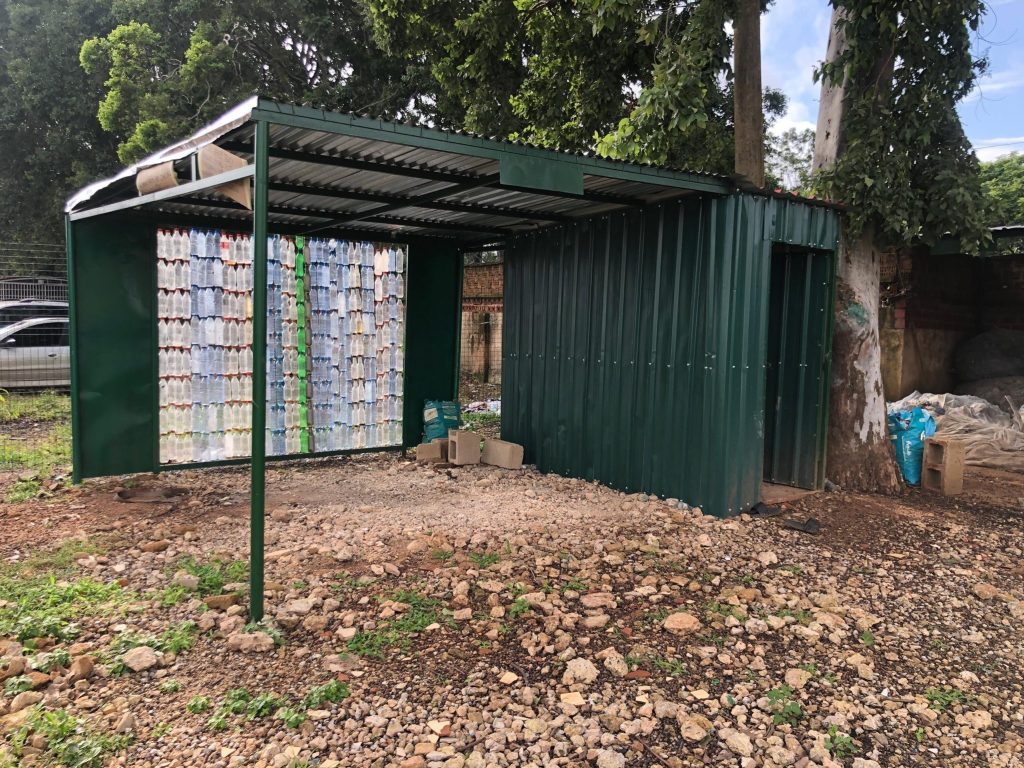
Another defining moment has been the pilot implementation of Black Soldier Fly (BSF) farming for organic waste management. This approach has shown the potential to divert biodegradable waste from dumpsites and convert it into useful by-products. For us at the Centre for Earth Works, this pilot has been both a learning experience and a proof of concept that low-cost, nature-based solutions can be effective in the Nigerian context.
Equally important has been the project’s growing awareness component. Through our engagement, it became clear that many waste pickers and other key stakeholders were not previously aware of the link between organic waste, methane emissions, and climate change.
Seeing these groups begin to understand the environmental and health risks associated with unmanaged organic waste and their role in reducing those risks has been particularly rewarding. It highlights the project’s impact beyond infrastructure by building knowledge and changing perceptions around waste and methane reduction.
We have seen these key themes emerge in this project (Organic Waste Management, Infrastructure Development, Waste Picker Integration, Capacity Building and Awareness Raising, Local Government Engagement, National Policy Advocacy and Emissions Monitoring. Could you share experiences (as applicable) on any of these topics within this
Project so far?
Several of these themes have been central to the project’s progress so far and have shaped both implementation and learning at the Centre for Earth Works.
Organic Waste Management has been a core focus alongside the set-up of our Material Resource Recovery Facility and the pilot use of the Black Soldier Fly (BSF) process. These efforts have demonstrated practical ways to divert organic waste from dumpsites, reduce methane emissions, and convert biodegradable waste into useful by-products, while remaining context-appropriate and low-cost.
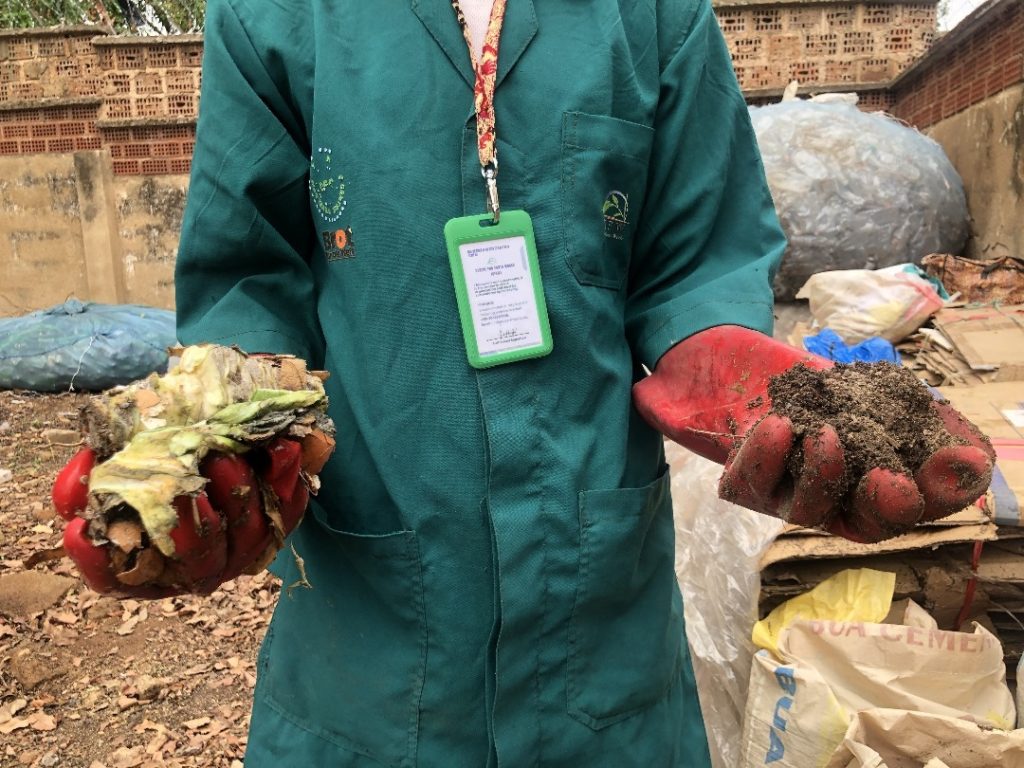
In terms of Infrastructure Development, the establishment of the MRF represents a significant step forward. Beyond being a physical structure, it has served as an enabling platform for improved waste sorting and recovery, as well as for experimentation with organic waste treatment solutions. It has also provided a visible reference point for demonstrating what decentralised waste management infrastructure can look like at the community level.
Waste Picker Integration has been another important aspect of the project. Through engagement and sensitisation, waste pickers have been recognised not only as informal actors but as key stakeholders in waste recovery and methane reduction. The project has created space for dialogue, inclusion, and a better understanding of their role within a more organised waste management system.
Capacity Building and Awareness Raising have been critical across all project components. Training and engagements revealed significant gaps in understanding the links between organic waste, methane emissions, and climate change.
Addressing these gaps has empowered waste pickers, community members, and other stakeholders with knowledge to adopt better practices and see their work as part of a broader climate solution.
Finally, on Local Government Engagement, the project has created opportunities to start conversations with relevant authorities on organic waste management, methane reduction, and the need for supportive local policies and infrastructure. These engagements have helped build institutional interest and lay the groundwork for longer-term collaboration.
Overall, these experiences show how the project integrates infrastructure, community engagement, policy, and learning to address organic waste and methane emissions in a holistic and scalable way.
What is the path forward for your organisation and possible next steps from this project?
The path forward for the Centre for Earth Works builds directly on the lessons, structures, and partnerships established through this project. A key next step is to consolidate and scale the organic waste management systems piloted, particularly by strengthening operations at the Material Recovery Facility (MRF) and expanding the use of nature-based solutions, such as the Black Soldier Fly (BSF) process and other composting methods, including biogas production.
Another important priority is to deepen the integration and capacity of waste pickers and community actors. Building on the awareness and skills developed during the project, CFEW plans to support more structured participation, improved working conditions, and stronger linkages between informal waste workers.
CFEW also intends to strengthen engagement with local stakeholders to translate project learnings into more sustained institutional support. This includes advocating for decentralised organic waste management, improved waste segregation practices, and approaches that reduce methane at the local level.

