

In addition to special experiences of special places in nature being fostered by connection to nature programs, can we embrace mundane, everyday nature as ritual and practice?
about the writer
Melissa Pineda Pinto
I am a McKenzie Postdoctoral Research Fellow at the Melbourne Centre for Cities, University of Melbourne. As an emerging leader in the fields of nature-based solutions, novel ecosystems and biodiversity, my research integrates multispecies justice and systems thinking to examine the complexities of our urban environments. A commitment to just transitions characterises my work, multispecies planning/design, and inter- and transdisciplinary collaboration.

about the writer
Judy Bush
Dr. Judy Bush is a Senior Research Fellow in Urban Planning at the University of Melbourne. Her research centres on nature-based solutions for the climate change-biodiversity nexus in cities, focused on environmental policy and governance perspectives, including collaborative governance, sustainability transitions and resilience.
Soon after the turn of the century, James Miller wrote a couple of important articles on urban biodiversity. The first argued that conservation biology needs to focus more on areas “where people live and work” (i.e., cities) to address the (adverse) effects of human land use (Miller and Hobbs, 2002). The second argued that people living in urban areas are disconnected from nature, and this has led to the “extinction of experience” of biological life (citing Robert Pyle), and in turn a loss of support for conservation (Miller, 2005). These ideas have been very influential in shaping urban nature research, policy, and practice around the world.
In south-eastern Australia, where we live, research inspired by these ideas is showing that cities are biodiversity hotspots (Ives et al., 2016). The first goal of Victoria’s Biodiversity 2037 strategy is “Victorian’s valuing nature” with a target that “all Victorians are connecting with nature” (DELWP, 2017). The City of Melbourne has a “Nature in the City Strategy” to “create and maintain healthy ecosystems and thriving biodiversity” (Bush et al., 2023; City of Melbourne, 2017). A group of researchers and practitioners in Naarm/Melbourne has released the “Playbook for Urban Biodiversity”, highlighting strategies to foster urban biodiversity and dispel myths such as “Nature doesn’t belong in the city” (Oke, 2024). Programs that offer special experiences of nature (or perhaps experiences of special nature) are being developed and implemented to overcome disconnection from nature (e.g., Swimmable Birrarung).
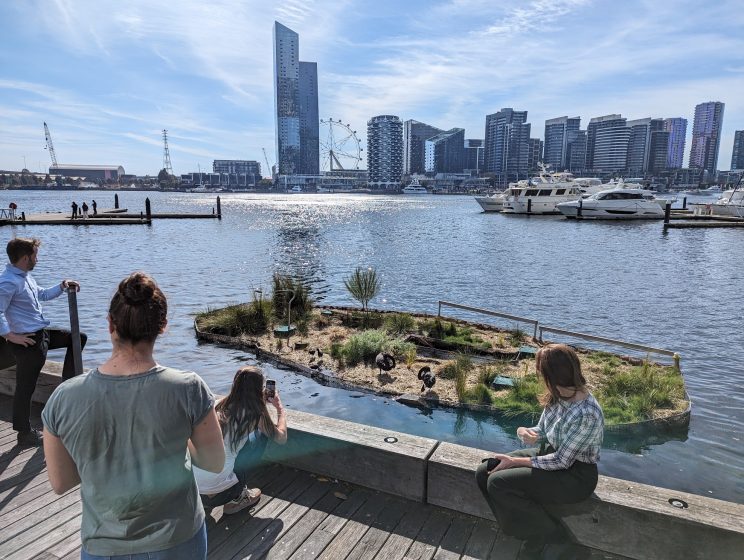
We have been lucky to have been working with these ideas in academia, government, and practice over the last 20 years. But much has changed. It is time to consider the next steps on this journey. While we are writing this as part of a settler-colonial system that has oppressed Indigenous peoples for generations, a key development has been the roles of First Nation peoples in shaping our understanding of, caring for, and with urban biodiversity (and both biodiversity and nature more broadly). Australia is home to hundreds of different and distinct Aboriginal and Torres Strait Islander languages, social or nation groups. Traditional Owners are custodians of Country ― bundles of land, water and sky, people, nature and culture ― including in cities. While there is not (yet) a national Treaty[1], acknowledging the Traditional Owners of the lands, and paying respect to elders past and present, is now routine at the start of meetings and workshops. Awareness of the deep respect that Traditional Owners have for biodiversity, and the cultural practices, kinship relationships, and reciprocal obligations that underpin this, is becoming more widespread. Many First Nations people have complex cultural and spiritual practices embedded in ideas about nature and acted out in nature.
How can this understanding shape our approach to urban nature? Effective urban biodiversity projects and programs can support Traditional Owner self-determination and cultural practices as well as promote biodiversity. But can we take these ideas further and develop new nature-based rituals and practices for our multicultural urban society? (rather than appropriating Indigenous knowledges and practices without consent or respect) The IPBES values assessment (IPBES, 2022) distinguished different ways of living in a values typology ― living from nature, living in nature, living with nature, and living as nature. The work of James Miller (and many others) has helped us shift the dial from living from nature to living in and with nature. We understand the many health and wellbeing benefits of living in biodiversity-rich cities, and respect the rights and capabilities of non-humans to co-exist in cities. But can we shift the dial even further ― to living as nature in cities? Where nature is not seen as “other” but an inseparable part of ourselves and our communities, deserving of care and respect, altruism is extended to non-humans.
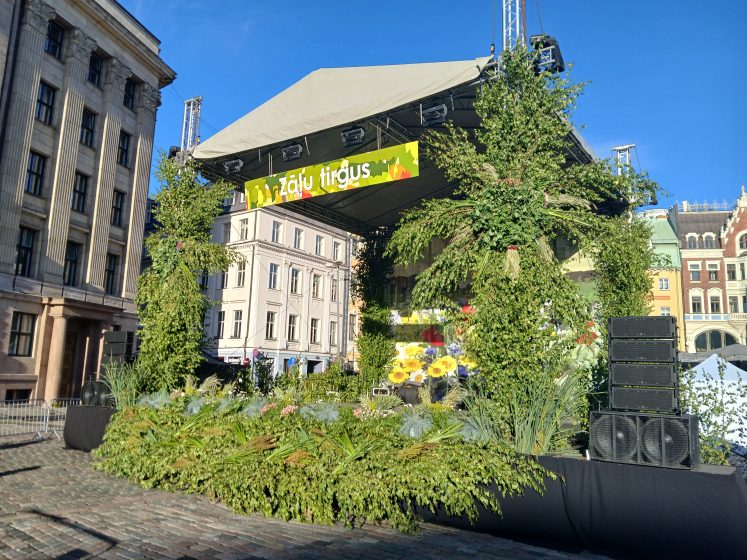
A huge barrier to achieving this is the way we live our lives as urban dwellers. Perhaps it is not so much that urbanisation leads to the extinction of the experience of biological life ― cities can be very biologically diverse places. But our everyday practices and rituals are removed from nature. In addition to special experiences of special places in nature being fostered by connection to nature programs, can we embrace mundane, everyday nature?
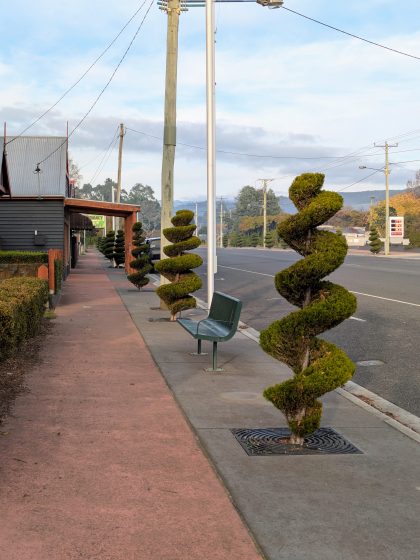
Step one ― outside! Our Acknowledgements of Country are often in meeting rooms with views of walls and carparks, or online with virtual backgrounds of faraway, spectacular nature. We act out our nature-based research, policy, and programs in interchangeable, white-walled rooms. Can we touch the earth, be exposed to the weather, while discussing the future of urban biodiversity? Can we take a moment to see the nature all around us, to think about our work in the context of our local biodiversity? Ironically, the rise of working from home is making it harder to work from nature. We need technology to work and play. What does the practice of working as nature look like? Can we live a technologically rich life as nature?
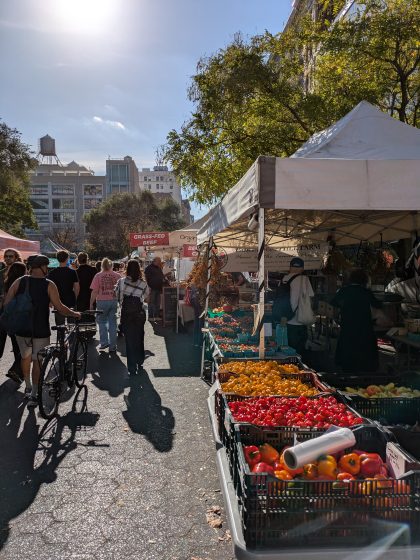
Step two ― walk with (rather than appropriating) First Nation cultures. How can our practices, policies, and programs support Traditional Owner self-determination? How can we listen respectfully for diverse understandings, and create space for developing new and diverse biocultural restoration (rather than “rewilding”, Fletcher, 2025) approaches that respect, not appropriates without consent, First Nation cultures?
Step three ― develop new rituals and practices to overcome the nature-culture divide, to start living as nature. We can become more bio-culturally aware through empathy, compassion, and expanding our moral circles to the more-than-human, through grounding, storytelling, listening, noticing, activating, and caring to bridge human and non-human communities. Can we develop cultural obligations and reciprocal relationships with nature relevant to urban dwelling in our multicultural society? New rituals and practices that integrate Western science and Indigenous knowledges, artistic expressions and performance, teaching and learning, caring and obligations can shift the dial towards living as nature and fostering biodiversity in our urban world.
Dave Kendal, Melissa Pineda-Pinto, and Judy Bush
Ararat, Melbourne, and Melbourne
References
Bush, J., Oke, C., Dickey, A., Humphrey, J., Harrison, L., Amati, M., Fornari, G., Soanes, K., Callow, D., Van der Ree, R., 2023. A decade of nature: Evolving approaches to Melbourne’s ‘nature in the city.’ Landscape and Urban Planning 235, 104754. https://doi.org/10.1016/j.landurbplan.2023.104754
City of Melbourne, 2017. Nature in the City Strategy [WWW Document]. URL http://www.melbourne.vic.gov.au/community/greening-the-city/urban-nature/Pages/nature-in-the-city-strategy.aspx (accessed 7.8.24).
DELWP, 2017. Protecting Victoria’s Environment – Biodiversity 2037.
Fletcher, M.-S., 2025. Rewilding and Indigenous-Led Land Care Are Not Compatible Ideas. Conservation Letters 18, e13107. https://doi.org/10.1111/conl.13107
IPBES, 2022. Summary for policymakers of the methodological assessment of the diverse values and valuation of nature of the Intergovernmental Science-Policy Platform on Biodiversity and Ecosystem Services (IPBES). Zenodo, Bonn. https://doi.org/10.5281/zenodo.7410287
Ives, C.D., Lentini, P.E., Threlfall, C.G., Ikin, K., Shanahan, D.F., Garrard, G.E., Bekessy, S.A., Fuller, R.A., Mumaw, L., Rayner, L., Rowe, R., Valentine, L.E., Kendal, D., 2016. Cities are hotspots for threatened species. Global Ecology and Biogeography 25, 117–126. https://doi.org/10.1111/geb.12404
Miller, J., Hobbs, R., 2002. Conservation where people live and work. Conservation Biology 16, 330–337.
Miller, J.R., 2005. Biodiversity conservation and the extinction of experience. Trends in Ecology and Evolution 20, 430–434. https://doi.org/10.1016/j.tree.2005.05.013
Noe, E.E., Stolte, O., 2023. Dwelling in the city: A qualitative exploration of the human-nature relationship in three types of urban greenspace. Landscape and Urban Planning 230, 104633. https://doi.org/10.1016/j.landurbplan.2022.104633
Oke, C., 2024. Playbook for Urban Biodiversity.
[1] In the state of Victoria, where we live, a Treaty has been negotiated with First Peoples in 2025, following a decade of work to lay the foundations, including Truth Telling, policies and commitments across government and with First Peoples https://www.treatyvictoria.vic.gov.au/

