Brussels, Belgium – 30 March 2026 – On the occasion of International Zero Waste Day, the European network Zero Waste Europe is spotlighting how communities in Montenegro are turning food waste into a valuable resource through the #ForkToFarm project. Over the last two years, Montenegrin municipalities have clearly demonstrated how decentralized bio-waste management can help reduce methane emissions, improve soil health, and support local food systems.
Across Europe, research suggests 74% of food waste generated still ends up in landfill or incineration. For a lot of European countries, landfill remains the predominant disposal methods and organic waste ending up here will decompose and release methane – a greenhouse gas far more potent than carbon dioxide in the short term. By separating food and garden waste, and then composting it locally, communities can significantly cut emissions while returning valuable nutrients to the soil.
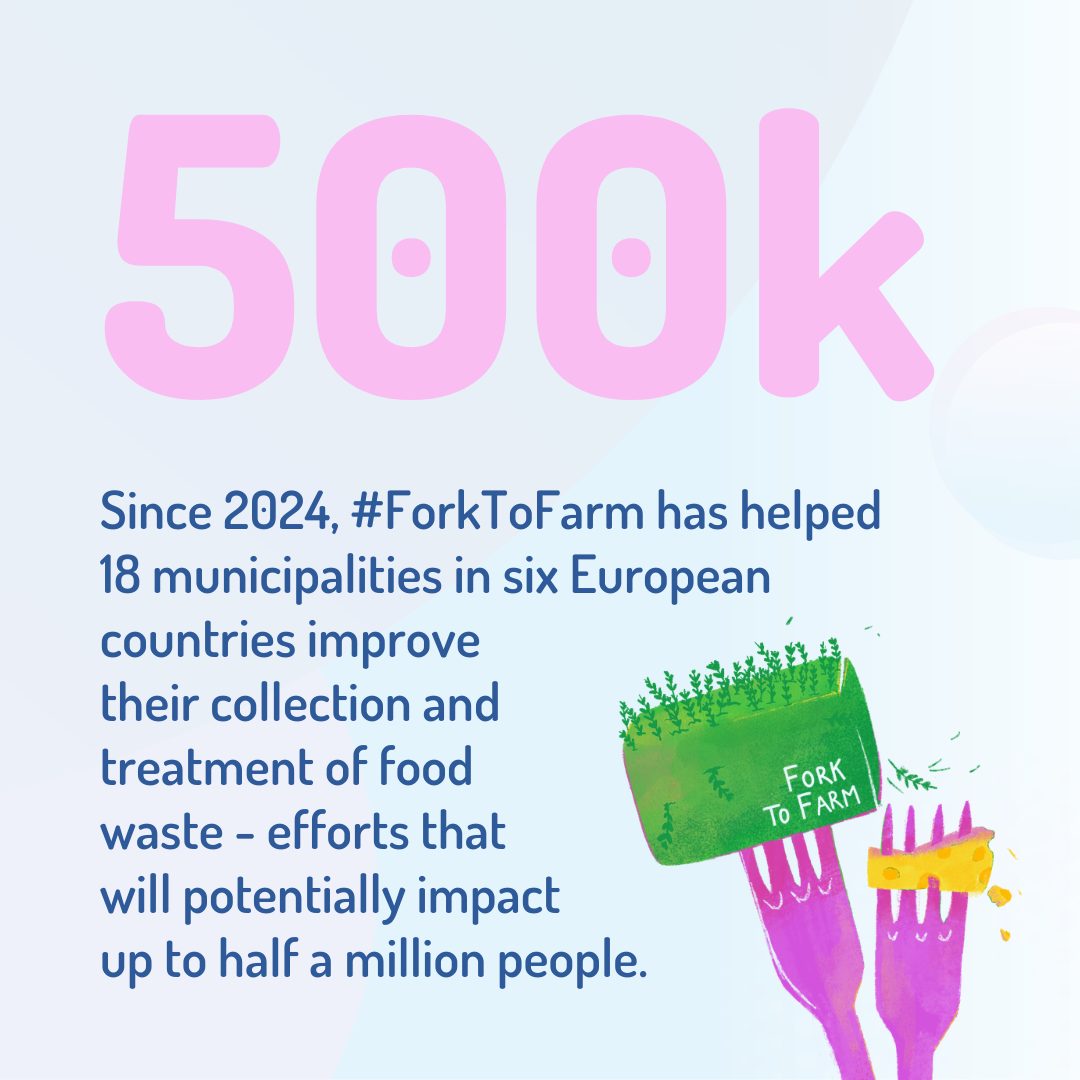
The #ForkToFarmproject, implemented by Zero Waste Montenegro in municipalities including Danilovgrad, Tuzi, Kotor and Podgorica, promotes practical solutions such as household composting, community composting sites, and awareness campaigns encouraging residents to separate organic waste at source. Through trainings and community engagement, residents learn how to transform food scraps and garden waste into compost that can be used in gardens, farms, and green spaces.
“Organic waste is one of the biggest untapped opportunities to reduce emissions in the waste sector,” said Kristina Joksimovic from Zero Waste Montenegro. “By keeping food waste out of landfills and turning it into compost, for relatively low costs, communities can take immediate climate action while supporting healthier soils and more resilient food systems. However, to unlock this potential at scale, we need significantly more public investment in organic waste management and food waste prevention. This must become a clear priority within climate and waste policies and infrastructure investments.”
The project shows that decentralized solutions can work effectively even in municipalities with limited waste management infrastructure. Participating households have reported reductions in mixed waste, while communities benefit from locally produced compost that can improve soil quality and reduce reliance on chemical fertilizers.
These initiatives also support broader European efforts to strengthen bio-waste collection and reduce the environmental impact of waste management. By empowering local communities and municipalities to manage organic waste more sustainably, the project demonstrates a scalable model that can be replicated across Europe.
“The UN Zero Waste Day reminds us that preventing waste is one of the most effective climate solutions available today,” Jack McQuibban, Head of Local Zero Waste Implementation at Zero Waste Europe, added. “The experiences from Montenegro show that with the right support, communities can transform food waste into a resource and move closer to a zero waste future.”
By documenting these experiences, the #ForkToFarm case study aims to inspire municipalities and organisations across Europe to adopt decentralized bio-waste systems that keep organic materials in circulation and out of landfills.