

Do people who eat nuts live longer simply because they replace protein from animals with protein from plants?
The American Journal of Clinical Nutrition “is the highest-ranked peer-reviewed scientific journal in nutrition and dietetics.” That should tell you a lot about the field, since it’s published by the American Society of Nutrition, whose sustaining partners include The Sugar Association, soda companies, and the meat, dairy, and egg industries. This is the highest-ranked nutrition journal! The fact that the National Cattlemen’s Beef Association is a sustaining partner may help explain its publication of an article that claimed eating red meat “does not negatively influence cardiovascular disease risk factors.”
Imagine you’re in the pocket of Big Beef and Big Pork. How could you possibly pull off a meta-analysis of randomized controlled trials purporting to show that eating more versus less red meat does not influence cholesterol or blood pressure? Drs. Neal Barnard and Walter Willett pointed out the fatal flaw in their editorial “The Misuse of Meta-analysis in Nutrition Research” by asking the question: “Compared with what?” Of the 39 trials on LDL cholesterol that the authors of that meta-analysis had chosen, nearly 90% of them just swapped one meat for another, comparing red meat to white meat!
Indeed, the researchers used control diets of chicken or fish. And we know that when it comes to cholesterol, the impact of consuming beef is just as bad as fish or poultry. That’s how they pulled it off—they just swapped meats. That’s like publishing a study saying total Twinkie intake does not negatively influence risk factors by switching Twinkies with Ding Dongs. Those randomized to zero Twinkies didn’t do any better. Obviously, because they were eating Ding Dongs! It’s a classic drug industry trick: testing your drug against something known to be terrible.
Whereas if you swap out meat for plant-based meat—plant-based sausages, plant-based chicken patties, and veggie dogs—you end up with significantly lower cholesterol, as you can see below and at 2:31 in my video Are the Health Benefits of Nuts Limited to Those Eating Bad Diets?.
That shouldn’t be a surprise; there is less saturated fat in plant-based meats. But even independent of saturated fat content, you end up with higher LDL cholesterol when eating red meat or white meat—any kind of meat—compared to non-meat protein sources. The researchers conclude that this is “keeping with recommendations promoting diets with a high proportion of plant-based food,” but, based on cholesterol effects, white meat like chicken and turkey is just as bad as red meat. Fish may be even worse, though what they often did is try to standardize the saturated fat content by adding something like butter. But at the same saturated fat content, fish appears to be worse than beef, and chicken is just as bad as beef. Yet plant protein sources like soy, nuts, and legumes (beans, split peas, chickpeas, and lentils) did better, as you can see below and at 3:20 in my video.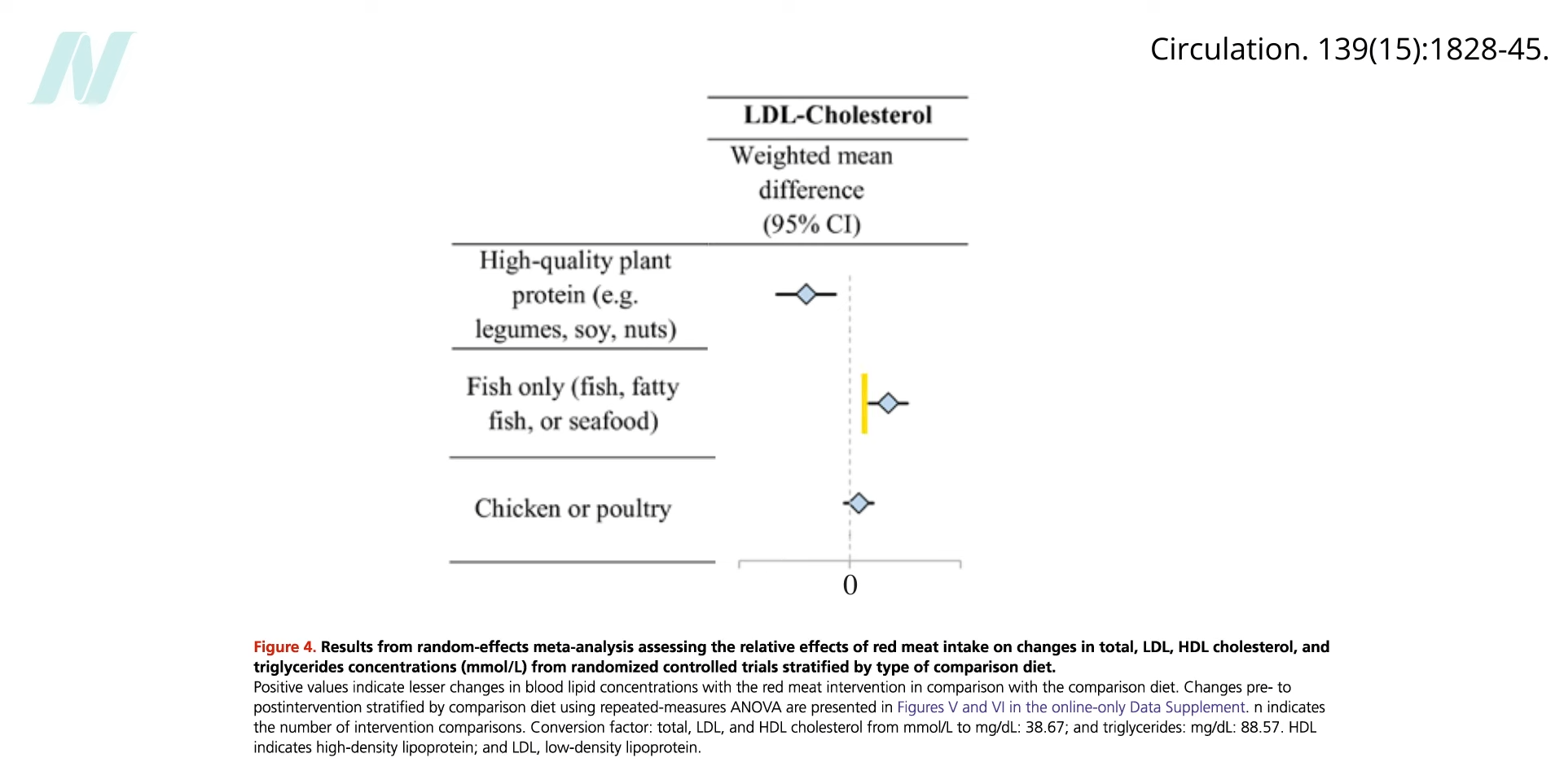
Replacing a single serving of even lean beef with the same amount of calories of nuts or soybeans can lower LDL cholesterol, a key risk factor for the number one killer of men and women in the United States and around much of the world. Is that why a single serving of nuts a day is associated with 22% reduction in the risk of premature death? Why millions of deaths every year may be attributable to inadequate nut intake? Is the benefit just from eating nuts instead of meat? No. The drop in heart attacks amongst more frequent nut eaters is just as strong among nonvegetarians, as you can see below and at 4:10 in my video.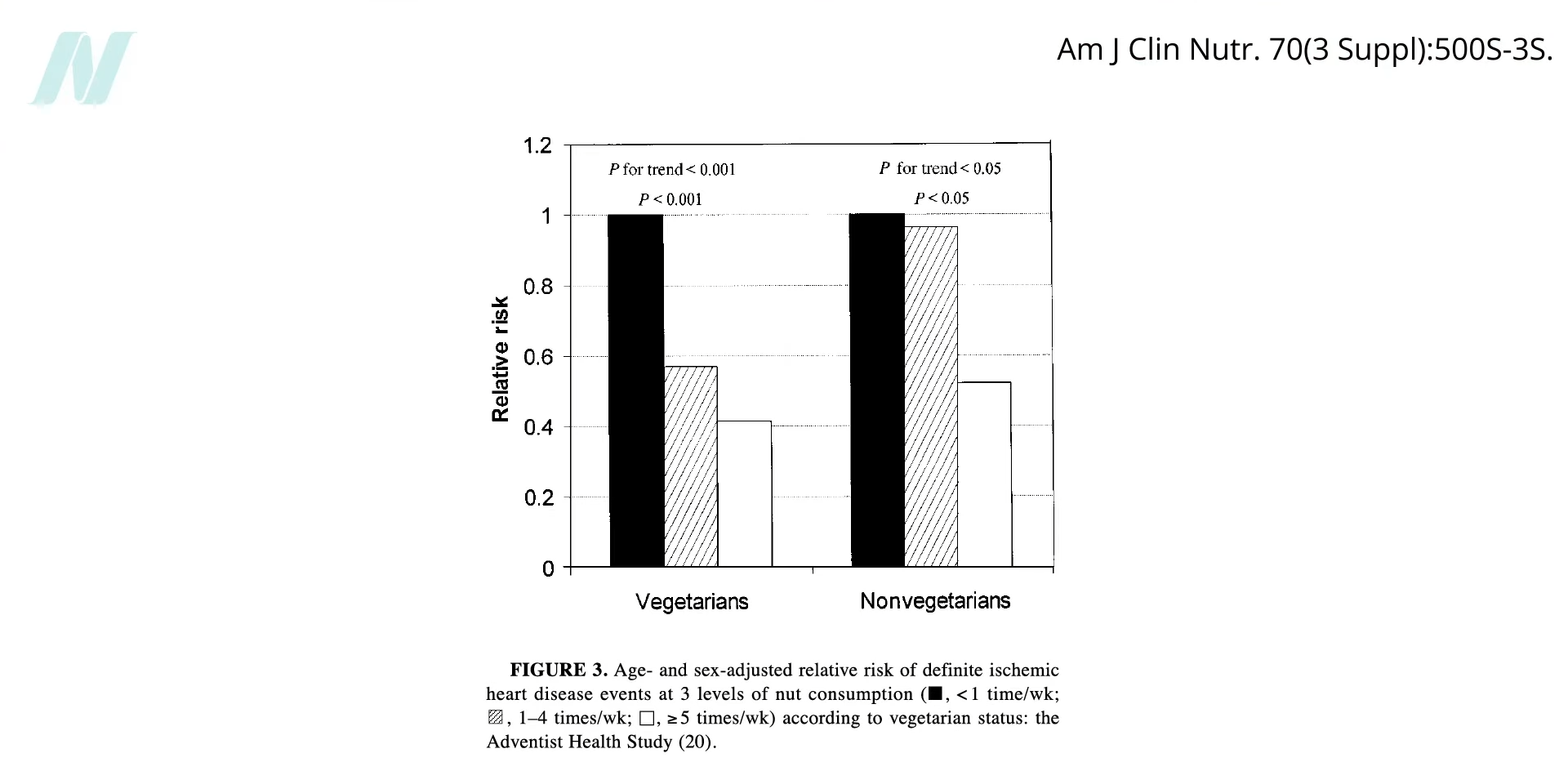
The reduced mortality associated with nut consumption is independent of health condition. It’s not just health nuts eating nuts. In fact, in a comparison of a dozen different food groups, nuts beat out even vegetables when it came to a lower risk of premature death.
Doctor’s Note
In my Daily Dozen Checklist, I recommend a quarter cup (about an ounce) of nuts a day. Check out some of my other videos on nuts in the related posts below to see why.
If you were intrigued by the industry hijinks of study manipulation, you’ll probably like:
A whole series is coming up soon, starting with The Corporate Playbook Behind Undermining Dietary Guidelines.

