

There is an urgent need to address the unintended consequences of our pursuit of green and to return to mitigating the greenhouse gas emissions that are causing the root problem.
We have been undergoing a dramatic quest for green in the face of climate change, green in the urban, green in the rural, from greening the desert to reforestation and afforestation. These “green” solutions (afforestation, exurban tree-planting, urban forestry) are being pursued reflexively as climate mitigation even as climate change undermines the conditions that make them appropriate, viable, or safe.
There are many claims about the benefits of trees. For example, according to Los Angeles based TreePeople, trees combat climate change, cool streets and the city, clean the air, provide oxygen, conserve energy, save water, help prevent water pollution and soil erosion, shield children from ultra violet light, reduce violence, provide food, heal, reduce noise, create economic opportunity, they are teachers and playmates, bring diverse groups of people together, promote healthy soils, provide canopy for wildlife, get people out of doors beautify space, capture rainwater, and are a cost effective solution to climate change. Trees are the solution to many urban woes, par excellence, and they are cheap ― once planted, they grow (given a little water along the way).
Yet there is also evidence that the amount of CO2 trees can absorb in cities is dwarfed by the amount emitted in most cities; there is CO2 emitted in their maintenance as well, and they generally require water to do well. In certain climate zones, water is scarce, and watering trees means less water for domestic use. Trees can also trap particulates along streets, retain urban heat at night, and increase allergies. Afforestation in certain regions can contribute to the depletion of groundwater and affect local biodiversity. Tree planting is not as simple as just planting trees, as they can have unintended consequences.
The seeking of nature ― as represented by trees ― was also a response to the pandemic, where those who could afford to leave cities often did. Evidence from different parts of the U.S. showed increased demand for the consumption of rural, amenity-rich locations (Wildermuth 2022). And others found that migration out of rural America slowed during the COVID-19 pandemic. Rural recreation counties saw net migration gains during the pandemic (Peterson & Winkler 2022).
Beyond the recent exodus that COVID-19 caused among more affluent Whites, a pattern of exurban development across the U.S. and in other parts of the world, including European countries, has created a growing patchwork of housing and housing enclaves in formerly open space lands. Driven in part by cost (Greenberg et al 2024), especially in the past decade, the growth of exurban living has accelerated. People move for affordability, for larger homes, for the sense of open space, for quiet and a rural/nature experience.
In California alone, exurban development now accounts for nearly 1.5 million new homes built in the last 30 years (Greenberg et al 2024). It is the fastest-growing land use type in the coterminous U.S, having grown rapidly from 1990 to 2000 both in number of houses (46%) and land area (31%). CA has the largest absolute number of residents at the Wildlife-Urban Interface (WUI), with more than one out of every three CA households located there (Greenberg et al 2024:1). Amenity migrants have moved into, for example, the Sierra Nevada foothills, where pine forests and chaparral are present. This migration accelerated with COVID and has continued with the increase in remote work. Greenberg et al (2024), also note the push factor toward ex-urban living in the WUI interface due to the affordability crisis in coastal cities in CA, but also more broadly across the US. This includes not only middle-income large-lot housing (the predominant pattern), but also high-end gated communities, infill in smaller, less expensive towns, as well as a proliferation of trailers, vans, and other more informal dwelling units. All are highly exposed to fire.
In many of these communities, residents plant trees. They plant trees for shade, for beauty, and an idea that there must be re-or afforestation. Anecdotally, my brother-in-law, who lives in an exurban small grouping of housing in Sonoma County, is planting redwoods, the dominant forest species. He is convinced that the region needs to be reforested when all evidence is that, pre-settlement, the redwood forest was not dense; in upland old-growth stands in the northern subregion, redwood forests did not have more than about 15 trees per acre, for example (Lorimer et al 2009). He had been asked by Cal Fire to thin his redwoods and was incensed by the requirement. Yet the Settler population, and my brother-in-law is no exception, has a belief that redwoods are under threat and that there needs to be a great deal more planting, despite the trees’ intrinsic resprouting and current high densities. While redwoods themselves are quite resilient to fire if it is not too hot a fire, higher densities of trees incur higher risk. With climate change, the redwood region is no longer as humid, receiving less summer fog, and thus increasingly flammable. Living among the redwoods, for my relatives and others, is one of the reasons they have moved to the exurban, as is the motivation for many more affluent residents in the exurban landscape. At the same time, the fire-safe regulations that are being promulgated by the state are tending in a direction of tabula raza for 500 ft all around the house (though clusters of trees may remain next to the house), to protect them from fire (which led to the need to thin and cut trees that my brother-in-law resented). This is a weird paradox, as that tabula raza area is subject to regrowth by flammable European weedy invasives and soil erosion.
This vast expansion into the “wildlands” entrains enormous social and environmental costs, though people move there for the environmental amenities. It is well documented, for example, that most of the fires in California are human-induced (in Southern California it is 95%), and that includes utility infrastructure.
As of this writing, there are also immense fires in Southern Europe, particularly in France and Spain. In France, the fire is concentrated in the Landes, a former wetland drained and converted into forest by Napoleon (the largest human-created forest in Europe), eliminating the local peasantry that grazed their sheep on stilts in this area. The Landes is riddled with exurban development whose drivers are similar to those we see in the U.S., a combination of ability and desire to live outside of a city as remote work has grown, and affordability of new suburban developments compared to older urban centers. This forest, consisting of maritime pine, produces resin, turpentine, paper, and nearly 50% of France’s wood, while employing 30,000 people. The forest is privately owned – 50,000 properties ― on 1.2 million hectares. Residents’ reasons for living in this forest include: “[…] there are only pines, it isn’t very varied. I think the forest is wild. I feel it’s breathable. With the pines under… it’s wide open… it’s shady but welcoming.” (Capbreton city, resident) “It’s the maritime pine tree forest, the “pignada”, which spreads its incomparable resin scent. The peaceful atmosphere of its undergrowth provides a wealth of rare feelings.” (Tendance33.com) (Bouisset and Degremont, 2025). The fires have caused large-scale evacuations. Interior Minister Lauren Nuñez has said that the Gironde fire has likely caused the largest civilian evacuation operation carried out in France outside war (AP News, July 28, 2026), and here too, nearly all the fires were human-ignited.
We face a double paradox: people are moving into flammable areas as they seek nature but are increasingly exposed to fire as the climate warms, and residents are not fire-savvy; building and landscaping codes have not caught up, leading to immense conflagrations. California has been exceptionally developing new building codes and standards for fire, but they often meet resistance for aesthetic and financial reasons. Retrofitting houses for fire safety is expensive, and thinning or removing vegetation contradicts why people have moved to more natural areas.
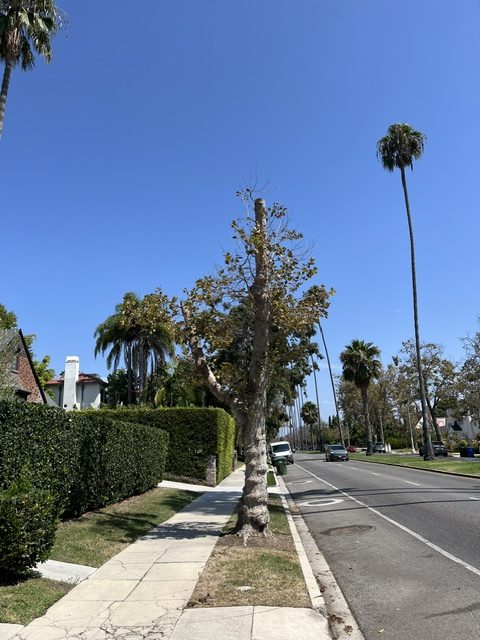
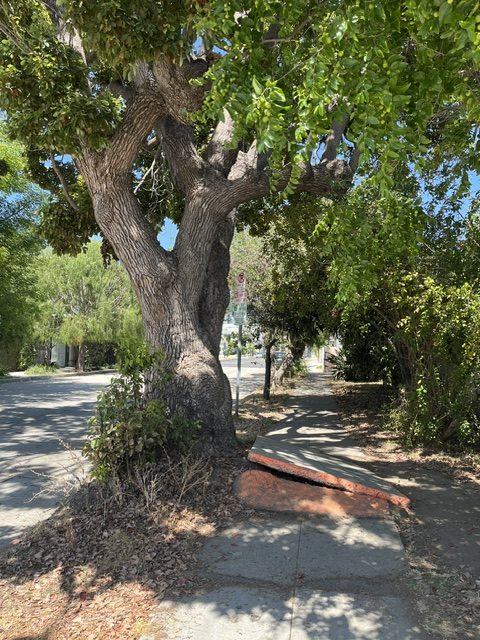
At the same time, cities are pursuing greening of their urban fabrics. In California, at least 165 cities, out of 482 incorporated cities, have formal structured urban forestry programs. A place like Los Angeles has had political campaigns about tree planting, embracing the slogans of TreePeople about their benefits, and aspiring to plant a million trees under Mayor Antonio Villaraigosa (2005-2013). Thousands of small saplings of diverse species were handed out with little or no technical support about watering, maintenance, or guidance for planting locations. Mortality rates for the seedlings were high, but tree planting continues, largely coordinated by CityPlants, a non-profit. Trees are free, subsidized by the Los Angeles Department of Water and Power, to residents. The LA Department of Sanitation seeks grants for tree planting and collaborates with a number of entities, but does not have its own tree planting department, despite their alleged importance to the city. Trees, on average, in Los Angeles live between 30-40 years, and there is a constant tension between the root space necessary for a big shading tree canopy and sidewalk health, among other issues.
So, one might be tempted to pose a question about ideas of nature today reflected in increased greening in cities, claiming vast benefits, and the search for nature outside the city, often accompanied by a desire for trees. Trees and greening have captured the public imagination as a climate mitigation strategy. Yet with climate change impacts, high heat, water stress, and fire, trees are also a threat and may not deliver all the services claimed for them. How are we to approach nature today? What is evident is that much of what I have discussed results from afforestation ― both in the city and in rural areas, places that either did not have trees, or where they were far scarcer. As more trees in the countryside have been planted, it would seem that fire risk has increased as it’s become hotter and drier. City trees face budget constraints, space constraints, and an enormous burden of amenities to provide residents. In hot, dry climates, city trees have become the go-to strategy because seen as cheap and self-maintaining, sidelining other cooling strategies such as constructed shade canopies, sidewalk arcades, light colored surfaces, window overhangs, and other passive approaches well known in historic cities in hot climates.
With increased heat created by greenhouse gas emissions in the atmosphere seeming uncontrollable, we seek nature’s services to compensate, despite the heat also undermining the viability of those very services to perform. There is an urgent need to address the unintended consequences of our pursuit of green, and to return to mitigating the greenhouse gas emissions that are causing the root problem. Trees and open spaces themselves won’t do it; we are simply running away and exacerbating the issues. We need to learn from older cities and towns that incorporated ways to mitigate heat, encourage walking and public transportation, and to work to address affordability in the places humans would have less impact. And there is an urgent need to recognize the importance of existing ecosystems as having intrinsic value rather than trying to change them into something they were not.
Stephanie Pincetl
Los Angeles
References
Craig G. Lorimer, Daniel J. Porter, Mary Ann Madej, John D. Stuart, Stephen D. Veirs, Steven P. Norman, Kevin L. O’Hara, William J. Libby, Presettlement and modern disturbance regimes in coast redwood forests: Implications for the conservation of old-growth stands, Forest Ecology and Management, Volume 258, Issue 7, 2009, Pages 1038-1054, ISSN 0378-1127, https://doi.org/10.1016/j.foreco.2009.07.008
Greenberg, H. Angelo, E. Losada, & C.C. Wilmers, Relational geographies of urban unsustainability: The entanglement of California’s housing crisis with WUI growth and climate change, Proc. Natl. Acad. Sci. U.S.A.121 (32) e2310080121, https://doi.org/10.1073/pnas.2310080121 (2024).
Petersen J., Winkler R.L. 2022. Rural America Gets a Boost from Migration Changes During the COVID-19 Pandemic. Rural Population Research Network. March 18. Brief #2022-10.
Wildermuth 2022. Pandemic: Measuring Short-and Long-Term Amenity Migration and Impacts to Rural Communities in Pennsylvania, dissertation, Pennsylvania State University https://etda.libraries.psu.edu/catalog/19972gvw5117

