

By Kathleen Palmieri
 We can all think back and recall the excitement created by many highly engaging series that had children reading 300+ page books. These memories seem to contradict the current narrative that kids just can’t focus on long texts.
In 2001 a young wizard took the world by storm with a series that became a national phenomenon known as Harry Potter. Author J.K. Rowling crafted characters, settings, suspense, wonder, and magic that captivated readers, both young and old, creating lines of eager readers waiting on book release day for the clock to strike midnight so they could get their hands on the next installment.
Potter’s universal appeal – particularly to 8, 9, and 10-year-olds – was incredible. Students proudly carried around their latest copy and waited for “independent reading time” to dive back into the story. Yet today, getting a large percentage of our students to dive into a physical novel is a chore rather than a pleasure. What happened?
The Rise of Instant Gratification
The shift away from independent reading came in the form of “technology.” Video games, cell phones, apps, and texting offered immediate rewards and engagement. Now, I realize there are reading apps such as Sora and Epic, which provide digital reading and deliver cost savings, but at what cost to physical reading?
The technological shift has hurt the tangible book.
The Unique Value of the Physical Book
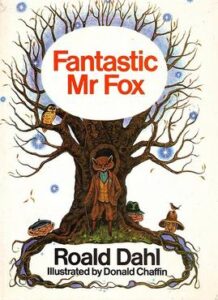
first edition cover
I remember as a kid looking forward to library time each week in school. I’d pick out books to share with my parents, sitting by my dad after dinner, reading stories like The Fantastic Mr. Fox by Roald Dahl. My parents were readers, and I recall Sunday afternoons in our den with the fireplace on, snuggled up in a cozy chair, reading a book while my parents read theirs. This was not because I had to, but it was because I looked forward to reading. Are we modeling the love of reading at home?
Libraries offer such an abundance of learning through fiction and non-fiction. Sadly, in some elementary schools, this library time is often not provided to the “older students” (4th and 5th graders!) or worse, sister schools share one librarian, meaning that some libraries may be closed during parts of the school week. Where and when did we lose our appreciation for building a love of reading and looking forward to visiting the library?
In my research on this topic, I came across a Psychology Today post, The Case for Books vs. E-Readers: Why a good old-fashioned book is better for your mental health, which shares these key points:
- “Research suggests that comprehension is six to eight times better with physical books than e-readers.”
- “Physical books help readers absorb and recall content more effectively.”
- “Turning pages as we read creates an ‘index’ in the brain, mapping what we read visually to a particular page.”
I acknowledge apps such as Audible (which I use, but does not replace the joy of holding a book) and the apps I previously mentioned that offer stories and encourage thinking, but let’s consider the differences between digital and physical books.
Though many people find they can read faster on a device, the distractions, like social media scrolling, advertisements, and email notifications, often hinder memory retention. Physical books provide an immersive experience, resulting in readers who absorb and recall the content more effectively.” – Heather Rose Artushin, Psychology Today.
Holding a physical book is a sensory event. It provides a distinct focus and engagement that the physical page demands compared to digital books. I want my students to know the feel of opening a book, turning the pages, and tracking their reading progress as they use a favorite bookmark.
How can we reclaim the magic?
Let’s recreate the frenzy of an awesome book series, highlighting the tangible magic of books! As educators, let’s make it a priority to read books that are geared toward our students’ age range so we can give firsthand reviews that invite and entice their interest. I promise, as soon as you recommend a book, many students will want to read it!
Let’s create dedicated reading spaces in classrooms, and make one of the important jobs “the Class Librarian.” Curate a classroom library where students can always access a good book and instill the importance of taking care of books to be reread and shared with others.
If you are concerned about not using technology to support reading, consider having them record book reviews or book trailers to share with peers and parents in class newsletters. Support book talks.
Want to pump it up to the next level?
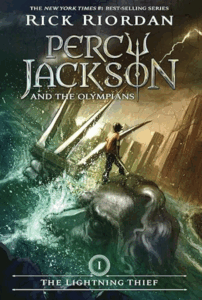 Find a series that you can promote to your students to ignite the same excitement as the Harry Potter phenomenon. As a fifth-grade teacher transitioning into a new reading module that focuses on mythology, I will use the Percy Jackson & the Olympians series by Rick Riordan. I will start with book 1, The Lightning Thief, the first in a series of five. It will align perfectly with my students, as it is targeted generally for 4th-8th-grade readers.
This series has a high-concept hook and the “magic” element. The protagonist Percy Jackson (like Harry Potter) is an ordinary kid who suddenly discovers he has special powers. He is a demigod and is plunged into a “secret world,” which makes the series instantly engaging.
To make this even more intriguing, I will read the first chapter of Book One of the series, but also have the stack of all the books in the series next to me. Once I hook my readers, I will tell them that they must read book one to get to book two and so on. Knowing my students, the excitement will have become electric, and the readership in the classroom will skyrocket!
 As I developed my plan for this series, I thought about my reluctant readers and found another series recommended for those who may find the Percy Jackson series too much. The The Last Kids on Earth by Max Brallier is a novel that is heavily illustrated (think of it as a novel/graphic novel hybrid, as I’ve heard this series described). There are 10 main books plus spinoffs and guides. This choice helps with readers who are not ready for large blocks of text. It’s a popular set that includes monsters, zombies, and humor.
The legacy of Harry Potter
The phenomenon of the young wizard who took the reading world by storm is not merely popular fiction trivia. It’s definitive proof that when a book is compelling enough, children will not shy away from novels of 300 pages or more. This contradicts the narrative of short attention spans that has beset our digital age.
It is essential that we push back on that narrative and reintroduce the magic of the physical book, with its focus and superior comprehension, and the anticipation it creates to hold the next physical installment in our hands.
Kathleen Palmieri is a National Board Certified Teacher, NBCT Professional Learning facilitator, and education writer. She is a fifth-grade educator in upstate New York who reviews and writes regularly for MiddleWeb. With a passion for literacy and learning in the classroom, she participates in various writing workshops, curriculum writing endeavors, and math presentations. As a lifelong learner, she is an avid reader and researcher of educational practices and techniques. Collaborating with colleagues and globally on X https://twitter.com/Kathie_Palmieri and @kathleenpalmieri.bsky.social, as well as expanding her educational adventures at www.kathleenpalmieri.com are her ongoing practices.

