

By: Namwanga Patricia Kizito, End Plastic Pollution
Uganda is facing a growing waste management crisis, driven by rapid urbanization, and population growth. As waste generation continues to exceed the country’s capacity to collect and manage, organic waste has become one of the country’s greatest environmental challenges. Out of the total solid waste fraction, organic waste accounts for 60–80% in many urban centers.
According to the UN Environment Food Waste Index, an estimated 103 Kgs of food are wasted per person annually in Uganda. Most of this food waste ends up in open dumpsites, landfills and informal disposal areas, where inadequate management contributes to environmental degradation, public health risks, and greenhouse gas emissions.
The situation is even more pressing in Kampala, the capital, where an estimated 2,500 metric tons of solid waste are generated daily. Organic waste, including food scraps from markets, restaurants, households, and food vendors, constitute the largest proportion of this waste. Kampala alone is estimated to generate approximately 768 metric tons of food waste every day, highlighting both the scale of the challenge and the opportunity for resource recovery.
The consequences of inadequate waste management became tragically clear in August 2024, when the Kiteezi landfill collapsed, claiming more than 30 lives, displacing communities, and destroying homes. The disaster highlighted the urgent need to rethink Uganda’s waste management systems and transition towards safer, more sustainable approaches that prioritize waste prevention, resource recovery, and circularity.
The problem with food waste.
In addition to contributing the largest amount of waste generated in Uganda on a daily, organic possess much more threat more than one can imagine. Food waste is more than a waste management problem. It represents a significant threat to public health, the environment, food security, and climate resilience.
When organic waste accumulates in open dumpsites and landfills, its decomposition creates conditions that threaten surrounding communities. Rotting food attracts disease-carrying vectors such as flies and rodents, while the release of gases, including ammonia and hydrogen sulfide, can contribute to air pollution and respiratory health risks.
Additionally, leachate generated from decomposing waste can contaminate soil, groundwater, and nearby waterways, increasing the risk of waterborne diseases and ecosystem degradation.
Beyond these immediate impacts, food waste is a significant contributor to climate change. When organic materials decompose under oxygen-deprived conditions in landfills, they release methane, a powerful greenhouse gas with approximately 80 times the warming potential of carbon dioxide over a 20-year period.
Globally, food loss and waste are responsible for an estimated 8–10% of annual greenhouse gas emissions. These emissions contribute to global warming and intensify climate-related challenges already affecting vulnerable communities, including prolonged droughts, unpredictable rainfall, and declining agricultural productivity.
For Uganda, where agriculture remains important to livelihoods and food security, the consequences are significant. At the same time, the disposal of food waste represents a loss of valuable nutrients and organic resources that could otherwise support agricultural production and renewable energy generation.
The Solution: FLOWERS – Facilitating Local Organic Waste Exchange for Regenerative Systems.
Rethinking food waste is not only an environmental necessity but also an opportunity to transform into a resource for food, energy, soil nutrients, protect the environment and climate. Addressing food waste is therefore not only an environmental necessity but also an opportunity to advance climate mitigation, strengthen food systems, and build more resilient communities
In rapidly urbanizing areas of Uganda, organic waste from restaurants, food vendors and university canteens is often mismanaged resulting in nutrient loss, environmental pollution, and missed opportunities for sustainable food systems.
On the other hand, smallholder farmers face declining soil fertility, low crop yields, and limited access to affordable soil amendments or livestock feed, increasing vulnerability to climate stress and threatening food security. These interconnected challenges present an opportunity to create circular systems that link urban food waste generators with rural and peri-urban agricultural producers.
In Kampala, informal networks already facilitate the exchange of food scraps and other organic materials between restaurants, waste traders, and farmers. Although these systems demonstrate the potential for resource recovery, their operations, benefits, and limitations remain poorly understood.
The FLOWERS project aims to bridge this knowledge gap by examining existing organic waste flows, particularly the informal systems connecting urban restaurants to farms. Through research, stakeholder engagement, and practical demonstrations, the project aims to identify opportunities to strengthen these exchanges and promote safe, efficient, and sustainable organic waste recovery.
By exploring how food waste can be converted into livestock feed ingredients, organic fertilizers, and renewable energy, FLOWERS contributes to a circular economy approach in which materials traditionally considered waste are reintegrated into productive systems.
End Plastic Pollution’s intervention.
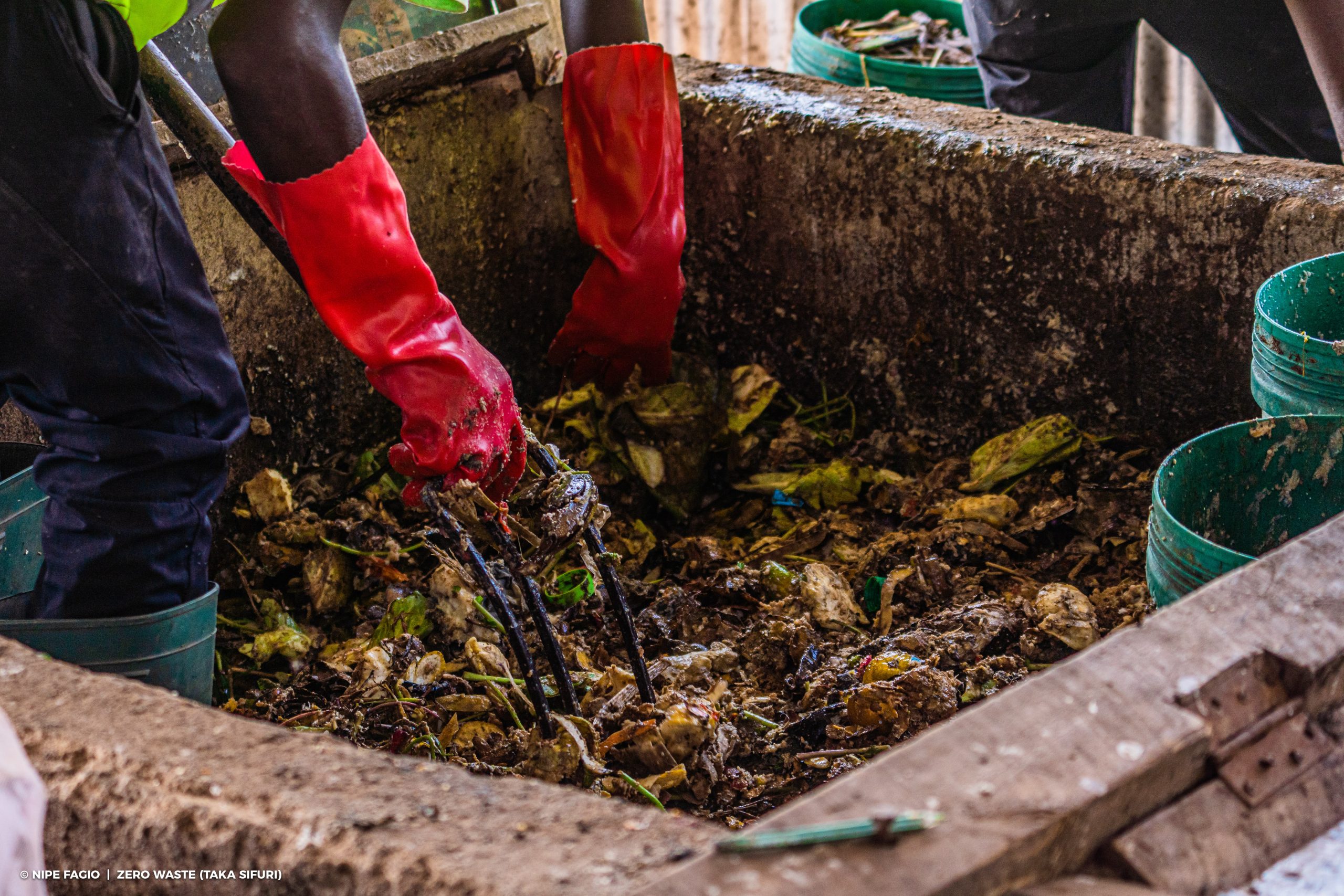
As part of the FLOWERS project, End Plastic Pollution is establishing an organic waste management hub to demonstrate practical, locally adaptable solutions for transforming food waste into valuable resources.
The hub will serve as a practical center for learning, technology demonstration, and capacity building, bringing together waste generators, farmers, and other stakeholders to explore the benefits of circular organic waste management. Through the zero-waste model, End Plastic Pollution is dedicating resources to building capacity to manage over 1 ton of organic waste in a week which will be collected from selected restaurants and markets.
The initiative will also train farmers in three circular waste management technologies: black soldier fly farming to convert organic waste into protein-rich animal feed and organic fertilizer, anaerobic digestion to produce biogas and nutrient-rich digestate, and composting to transform organic waste into compost that restores soil nutrients and improves soil health.

