By Sonia G. Astudillo
When we talk about climate action, organic waste doesn’t always make the headlines. Yet it’s one of the fastest ways to cut methane — a greenhouse gas far more potent than carbon dioxide. Thanks to support from the Climate and Clean Air Coalition (CCAC), GAIA and its partners are showing how community-led zero waste solutions can deliver big wins for the climate, for people, and for local economies.
From Households to Global Climate Talks
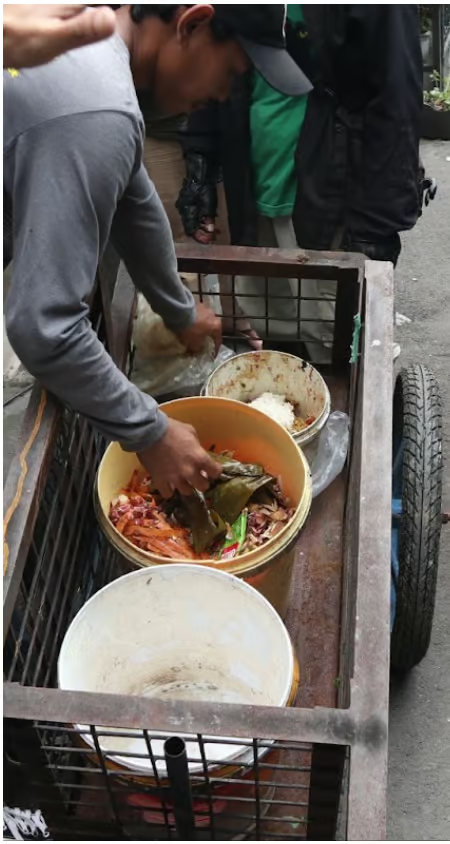
In Bandung, Indonesia, households are separating food scraps, feeding them into composting and Black Soldier Fly (BSF) systems. By early 2026, more than 1,600 households were participating, processing over 1,000 kilograms of organic waste per day. The maggots produced are already being used as animal feed, linking waste management directly to food security.
In Valparaíso, Chile, waste picker cooperatives are building composting programs and training initiatives, despite delays in government permitting. Their persistence underscores the importance of grassroots leadership in shaping sustainable systems.
In Durban, South Africa, market-based composting pilots are underway. Initial audits show potential diversion of 8,400 tonnes of organic waste per year, cutting nearly 2,000 tonnes of methane emissions.
These local stories connect to the global stage. GAIA’s Zero Waste Academy is now live, offering training and resources worldwide. At COP events, GAIA delegates have amplified waste methane solutions, achieving 211 million audience reach via traditional media and doubling social media engagement compared to previous years.
Waste Pickers at the Center
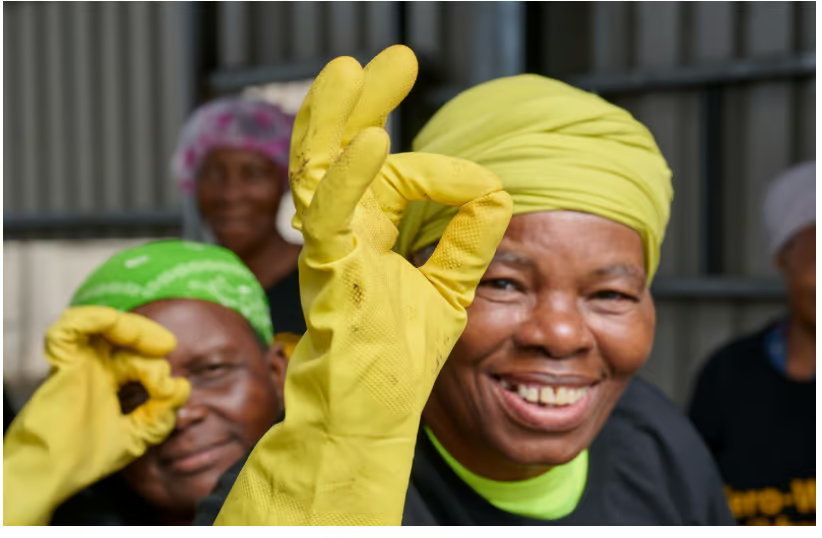
A defining feature of this project is justice and inclusion. Waste pickers and local communities — often marginalized and under-recognized — are placed at the heart of solutions. Training, technical support, and advocacy have helped shift perceptions: waste pickers are not just informal workers, but frontline climate actors. Local communities are not just residents, they are actors of change and engagement.
Gender equity is also emphasized, recognizing the vital role of women waste pickers and addressing barriers to income, safety, and leadership.


Publications Driving Change

GAIA has produced a suite of publications to strengthen knowledge, visibility, and policy impact:
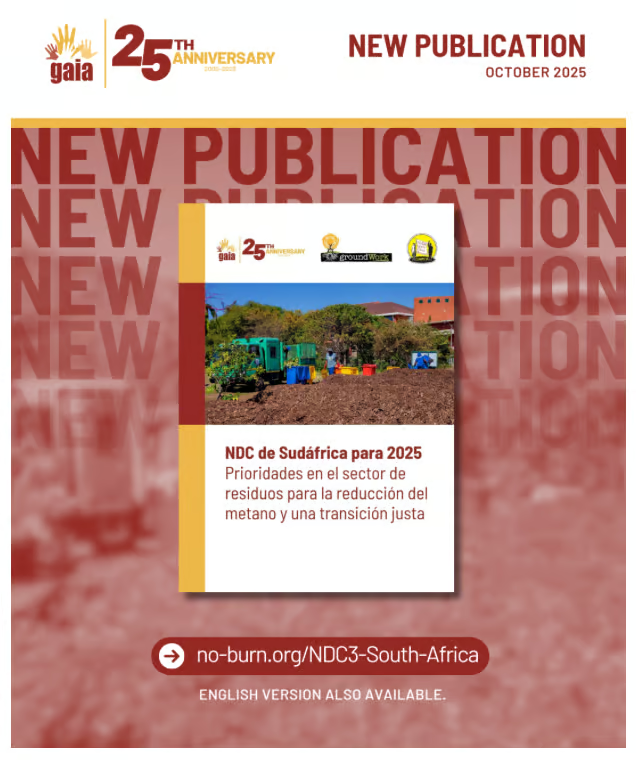
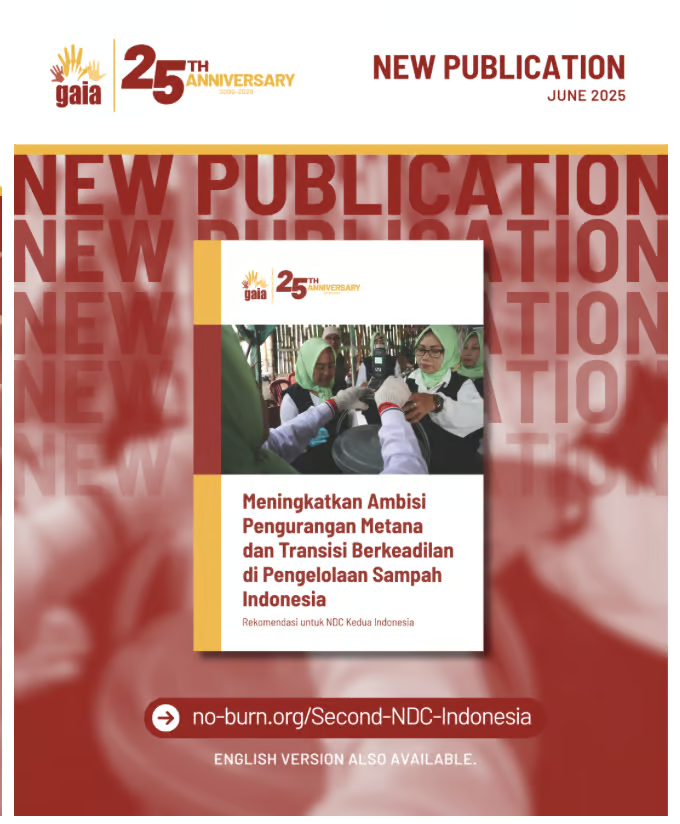

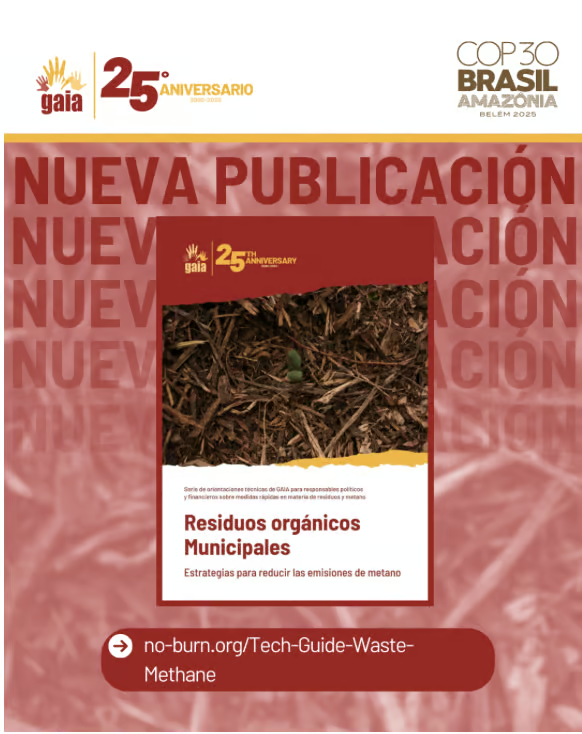
- Technical and policy publications on organic waste, landfill methane emissions, and global warming impacts of zero waste, waste-to-energy incineration, and business-as-usual waste management systems that aim to support policymakers in ensuring effective solutions to waste methane reduction.

Policy Shifts and Global Impact

The initiative has influenced both policy and implementation at multiple levels:
- Technical assistance and policy advocacy have fostered vital linkages between organic waste management, local food production, and stunting reduction, a model now being institutionalized within Bandung’s 2027 city planning and budgeting framework to ensure long-term government ownership through the collaboration of the Regional Development Planning, Research and Innovation Agency, Food Security and Agriculture Agency, Population and Family Planning Agency, and Environmental Agency.
- Strategic efforts have unlocked cross-sectoral public funding to support composting, food production, and distribution.
- Contributions to the recently enacted Bandung Mayor Regulation 3/2026 on Integrated Urban Farming to connect organic waste management and local food production.
- The implementation of household Black Soldier Fly (BSF) systems as part of the city’s organic waste treatment showcases a complementing decentralized composting system in the city.
- Pushing implementation of source-separated organic waste collection and home composting, through Bandung Mayor’s Instruction 001-DLH/2026 on Waste Segregation Officer program will increase the amount of source-separated organic waste for scaling up and replication process.

- Regional forums in Latin America have strengthened collaboration among waste picker groups, other community-led organic management initiatives, and policymakers. It provided a learning space to share best practices on organic waste management and methane abatement, leading to a more regional impact.
- Globally, GAIA’s NDC Tracker shows progress in several countries: significant NDC improvements compared to the previous NDC in Brazil and Mexico, and a growing focus on environmental justice and just transition in Bangladesh, Chile, Colombia, Costa Rica, and Nigeria. Though gaps remain in waste picker inclusion and resistance to waste-to-energy schemes.

A Path Forward
The outcomes of this CCAC-supported initiative prove that organic waste management is more than a technical fix — it’s a powerful entry point for climate action, social equity, and green job creation.
From compost pits in Bandung to market composting in Durban, these solutions are already being implemented, refined, and scaled. They show that a just transition in the waste sector is possible — one that cuts methane, creates livelihoods, and builds resilient communities.