

about the writer
David Maddox
David loves urban spaces and nature. He loves creativity and collaboration. He loves theatre and music. In his life and work he has practiced in all of these as, in various moments, a scientist, a climate change researcher, a land steward, an ecological practitioner, composer, a playwright, a musician, an actor, and a theatre director. David’s dad told him once that he needed a back up plan, something to “fall back on”. So he bought a tuba.
about the writer
Claudia Misteli
Claudia is a social designer, communicator, and journalist who believes that care, creativity, and collaboration are key to building more just, vibrant, and nature-connected places. At The Nature of Cities, she co-leads European projects and TNOC Festival, sparking connections and meaningful action. Claudia also volunteers with the Latin American Landscape Initiative (LALI), helping amplify regional voices and build bridges across Latin America through storytelling, communications, and a deep love for people and place.
Introduction
A Beauty metric … What exactly would we measure? And what might escape the measure?
For the Dada movement in the early 20th Century, beauty had no single, settled definition. That refusal was central to the movement. This is honest: “beauty” is a placeholder for the things that move us perhaps before we have language to explain why, a category built to hold what cannot precisely be measured but is still, somehow, recognisable. And for a DaDa person, the idea of being “moved” by something was pretty broad.
The New European Bauhaus names beauty alongside sustainability and participation as its three core values. And yet, of the three, beauty is the one that consistently slips out of reach. Sustainability comes with carbon counts and biodiversity targets. Participation comes with inclusive processes and multi-level engagement frameworks. Beauty arrives with … none of this.
It arrives with the word itself, perhaps the most wildly variable term in the entire vocabulary of urban transformation. We invoke it constantly. We rarely define it. And when we try, we often reach instead for its tactics: a sunset, a tree planted, a mural painted, a public artwork installed, a corridor of green imagined where there was once only asphalt, a park bench full of possibility. Each of these is offered as evidence of beauty. Each one, on closer look, is something else — a method, a means, a tactic in service of a question we haven’t actually answered: what, in any of this, is beautiful, and according to whom?
Is it the classical beauty of art and architecture—form, proportion, harmony—or something rooted in experience: belonging, wildness, memory, surprise, even imperfection? And who gets to decide? The European Commission is even interested in measuring it. Wow…what exactly would we measure—and what might escape the measure?
In this magical NEB trio, sustainability seems to ask what can endure, and participation asks who has a voice. Beauty might ask what kind of world we want to love. Europe’s NEB concept is very compelling, so this roundtable is for responses from around the world, and from urbanists, scientists, students, designers, and artists of all types.

about the writer
Andrew Rudd
Andrew Rudd is an urban designer with a passion for landscape. He worked on urban biodiversity for 17 years at UN-Habitat in Nairobi and New York and is now Development Manager for Urban Biodiversity Hub and an independent consultant in Berkeley, California.
Andrew Rudd
Beauty is not an inherent property. Unlike a tree falling in the forest, it makes no sound if there is no one to hear it.
In life, there is practically no consensus on anything. This is especially true of beauty: we could argue about it endlessly. I suspect that is something Chantal Mouffe would find beautiful. I am dating myself, but I came of age in a time when the prevailing political philosophers promised permanent peace. Mouffe’s counterargument blew my mind. She wrote that without debate democracy was entering its most fragile phase. It is obvious now that she was right.
Beauty is productive tension. A silly musical preference quiz once pegged me in the middle of the road between “designed” and “authentic”. True as an average, but the two extremes do not cancel each other out. Each accentuates and makes a virtue of the other. That is not only true for music but also for the physical realm; from the deliberate minimalism of a modernist building to the infinitely scaling fractal patterns of nature.
No one, fleshly or fictional, explores this polarity better than Duc Jean Floressas des Esseintes, the protagonist in Joris-Karl Huysmans’s A Rebours. Suffering from ennui—and, it can be said, classism and misogyny—he escapes the vulgarity of Paris in an exurban villa where he extravagantly pursues his own ‘hybrid passions’ in different aesthetic realms. He rhapsodizes over the “extraordinary discrepancy between container and contents” in a bottle of Benedictine. He filters natural light through tinted aquarium water to accentuate the effect of his favorite paintings. He bejewels a tortoise to its unfortunate death. He procures a hothouse full of natural flowers that look like fakes. Then, believing that “there is not a single one of [nature’s] inventions…that human ingenuity cannot manufacture”, he reconstitutes the scents of favorite flowers with disembodied oils, “rubbing a pellet of styrax between his fingers…so that it filled the room with a most peculiar smell, an odour at once repugnant and delightful, bending the delicious scent of the jonquil with the filthy stench of gutta-percha” only to become worn out by his “delicious, atrocious experiments”. Later, having devoured his extensive library of music and text, “[i]mperfection itself pleased him, provided it was neither base nor parasitic”. In other words, the French fashion maxim that beauty is “perfection with one item removed”.
But not all tension is beautiful. Huysmans has his character recognize the hypocrisy of forcing a woman to carry to term while denying her child a social safety net. Des Esseintes also lambasts the era’s “idiotic sentimentality combined with ruthless commercialism”, warning that these constitute “a chain of organized thefts acting one upon the other”. (Plus, ça change!) By the end of the book, he has exhausted his Gesamtkunstwerk and is wasting away in a fever dream with no desire to eat. His doctors conclude it is not his refined taste so much as his isolation and unlimited budget that have sickened him, and he agrees with reluctance to return to teeming Paris.
Beauty is not an inherent property. Unlike a tree falling in the forest, it makes no sound if there is no one to hear it. It requires humans to behold its tension, whether it is the seven against six rhythms of Ravel, the nasty element in the most beautiful perfumes, or the ephemeral sparkle in a schist outcropping—and maybe even the sparkle of skyscrapers behind it. Sometimes it also requires humans to hold that tension and ensure it is productive; for example, disagreeing in good faith about how to preserve the landscape while providing affordable housing. This is difficult.
Consensus usually coalesces around “easy” topics, so it is gratifying that the New European Bauhaus headlines beauty (which is unresolvable) alongside participation (which is unfinishable) alongside sustainability (which for humans has so far been unachievable). We have to try. Mies van der Rohe from the original Bauhaus proclaimed that “God is in the details”. God may be in the details, but it takes humanity in all its mess to appreciate and maintain them.

about the writer
Phoenix Carter
Phoenix Carter is an artisan and student from Oahu, Hawaii, known for crafting traditional Hawaiian bamboo instruments (pū ʻohe) and honoring his cultural heritage through woodcarving and faith
Phoenix Carter
Just as nature may be an aspect to which our humanity inclines us, there are many other things, such as music, architecture, fashion, and art, in which our humanity is furthered by our differing opinions.
What is Beauty?
Over the years, what beauty is has changed in many aspects. As we observe the changing nature of beauty, we may see many changes to what is beautiful in music, art, fashion, and even architecture. This is not to say that there is no beauty left in the things of old; but it is to say that many people’s concept of what is beautiful has changed over the length of time. However, there is one area to which one could argue has not changed with regard to its beauty, this being the beauty of nature. As this is one that is unchanging and unending, holding such desire from all to simply “take it in”.
We may come to the conclusion of why this may be the case for nature and not other things through a simple observation. This is because we as humans are of constant change, always seeking to improve, to be more efficient, and to look to the future rather than the past. By seeking constant change, there is a continuous redefining of beauty to one’s own disposition, never being the same for all. Subsequently, as more and more change is brought about, others seek to do the same, changing the beauty around us to their own liking, no longer keeping it as it once was. Now, to some, this may be a beauty of its own, encompassing many more aspects of what beauty may be. But this may give us a clue as to why the beauty of nature is unchanging. As it is outside the grasp of humans. We are unable to change it to our own idea of beauty. However, this raises quite an interesting question. As many, if not all, may agree that nature is of immense beauty, yet no one has been able to change it to their own idea of beauty; so then what is it that makes something beautiful?
We may see the beauty in nature that engulfs the world and yet not fully grasp it. Knowing that it is beauty we see, yet unable to explain it. Why is this so? Beauty in all things draws us towards it, inclining us to embrace it. It must be of such gravity that one can be in joyful contemplation of it. Whether one has received it through their eyes, ears, or even through an intellectual observation of a thing, it brings one pleasure. Not a voluntary pleasure but one which is contained within the thing itself. Beauty must contain joy or delight, whether intellectually or even physically through the aforementioned senses.
Now, as we have understood what beauty contains, we must come to understand what beauty is itself. As there is quite an obvious distinction between what a thing contains and what a thing is, just as many ingredients may make up a dish, one would not say the dish is one of those ingredients alone but a new, different thing of its own, yet still containing those ingredients. In the same way, beauty is not what it contains or what it may bring to a person, as no one would say that beauty is joy or delight itself. But rather, it is the carrier of these things. Beauty is that which has the capacity to contain and to bring to a person a joy that can be truly embraced, whether transported through the senses or grasped within the intellect. It is important to note the absurdity it would be to hold beauty to the same standard for all. It is quite obvious that to one a thing may bring joy or delight, and to another disgust or sadness.
However, through the observation made of nature, it is not wrong to say that, by our very human nature, many are brought joy by the same things.
Our human nature itself is brought joy by much of the same in some aspects, yet differing exponentially in others. It is quite fitting that these cannot remain the same in all aspects, as it is by the differences that we distinguish ourselves from one another. Just as nature may be an aspect to which our humanity inclines us, there are many other things, such as music, architecture, fashion, and art, in which our humanity is furthered by our differing opinions of these. Nevertheless, each of these is truly beautiful, as beauty is that which has the capacity to contain and to transport to a person a joy that can be embraced, no matter the way in which it has come to them, although oftentimes it is only for them.

about the writer
Martina Nadal
Martina Nadal is a designer and communication expert dedicated to using creativity for social change. Trained in Barcelona and Berlin, she explores the ethical and political impacts of design and technology. Currently Partner, COO, and Head of Social Impact at Domestic Data Streamers, Martina founded the studio’s Social Impact Division in 2017 to tackle contemporary challenges like the climate crisis, inequality, and digital rights. With over a decade of experience, she has led strategic projects for prominent organizations including UNICEF, UNDP, and the European Commission.
Martina Nadal
Perhaps beauty is not only about what we choose to preserve. Perhaps it is also about what we choose to notice before it disappears.
The Beauty of What We Choose to Notice.
Thoughts about beauty, attention, memory, and choice.
Beauty is a big concept. What if we narrowed it down? What if we looked for it in what could be the minimum urban unit, let’s say, a street?
Let’s think about the beauty of a street. We could think of a particular street, or of any street.
I will imagine a particular one: a street in Barcelona, the city where I live. A street in a neighbourhood where I am a foreigner, where I was not born. Perhaps this allows me to look for beauty from a slightly more distant perspective, not quite from within, but not entirely from outside either.
We are in Sant Pere, a neighbourhood where water once entered the city, and which eventually became home to many textile workshops that harnessed the power of that water. There is a kind of historical beauty here: the poetry that still survives in the names of the streets, and the traces of time that remain in some of the businesses which, although no longer workshops, are still connected to textiles.
But what is beautiful about this street?
From a classical perspective on architecture and design, we might look at its urban form, the façades, the old palaces that still retain something of their former grandeur. Or perhaps at the beauty of graphic design: the shop signs, hundreds of different typefaces announcing the businesses of today, yesterday, and those yet to open, creating a kind of visual cacophony.
But there is something else. Something important about the beauty of this street that does not emerge from this tangible, concrete dimension.
I wonder what it is.
So, I stop for a while, at a corner, and observe. I try to understand what draws me in, what I find beautiful, what moves me.
And I see several things.
First, there is the beauty of the conversations that take place on this street, fragments of a play we will never see in its entirety. Ephemeral traces of a culture, of people, of lives that will never be recorded anywhere.
Well, perhaps now they will.
I write down a few words from a conversation between two elderly women helping each other walk, in a small symbiosis of old age.
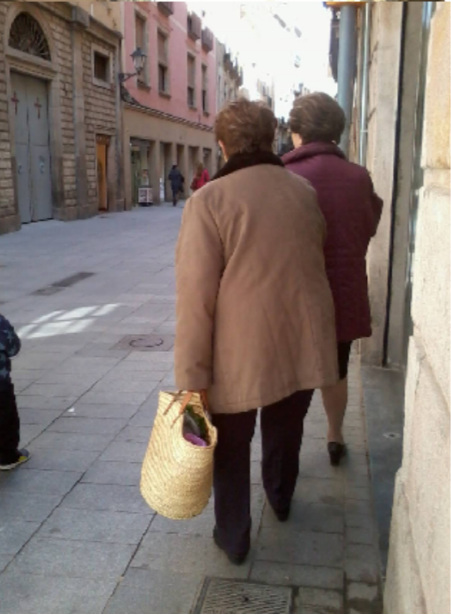
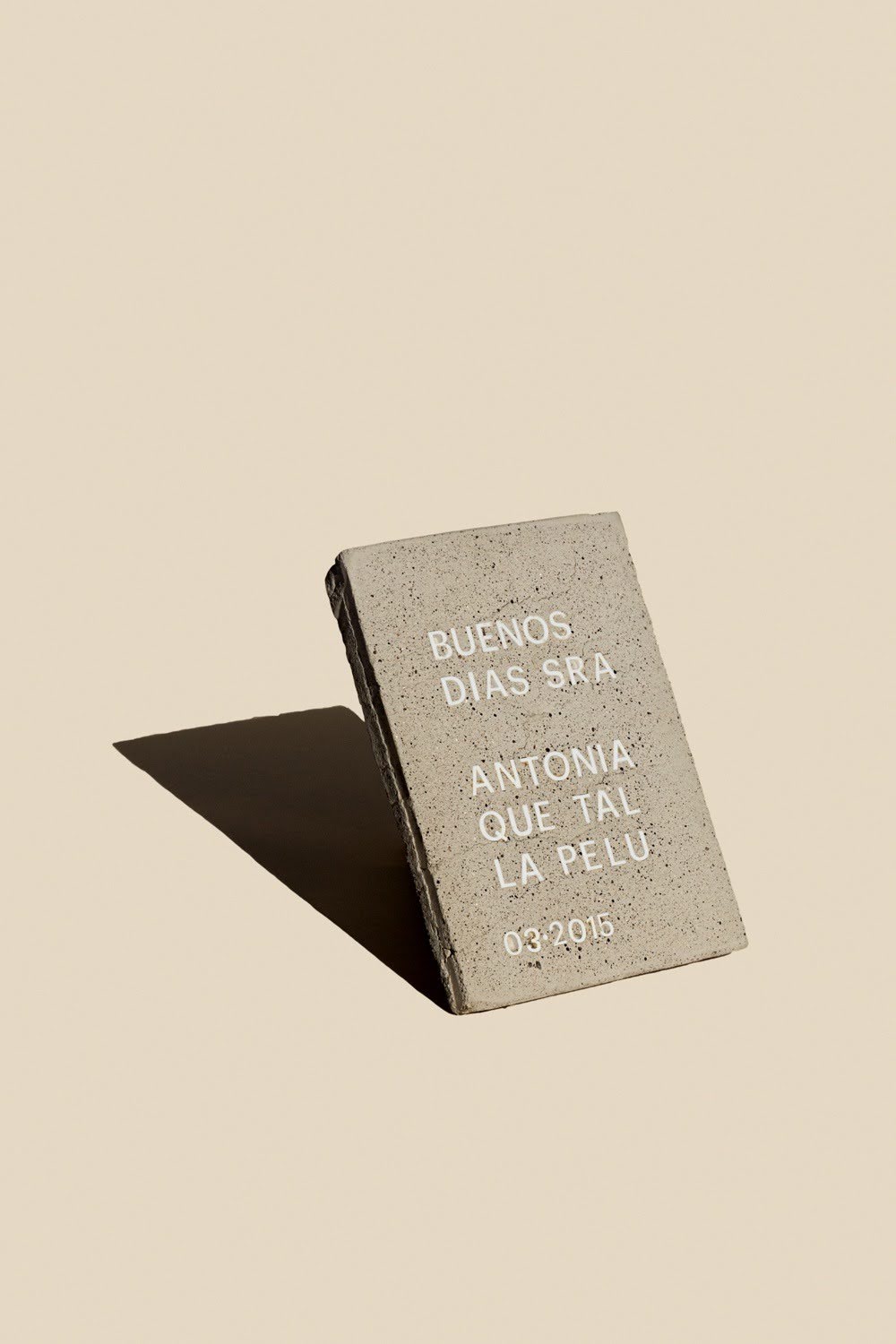
A neighbour calls out: “Good morning, señora Antonia. How was the hairdresser?” What if we put up a commemorative plaque for this moment? Domestic, casual, tiny and enormous at the same time. A monument to the everyday.
There is also the beauty of unconventional occupations of space. The worker renovating a new shop takes the sacks of plaster and turns them into a makeshift sofa during his break, sitting there watching people pass by. For a moment, he makes the street his own.
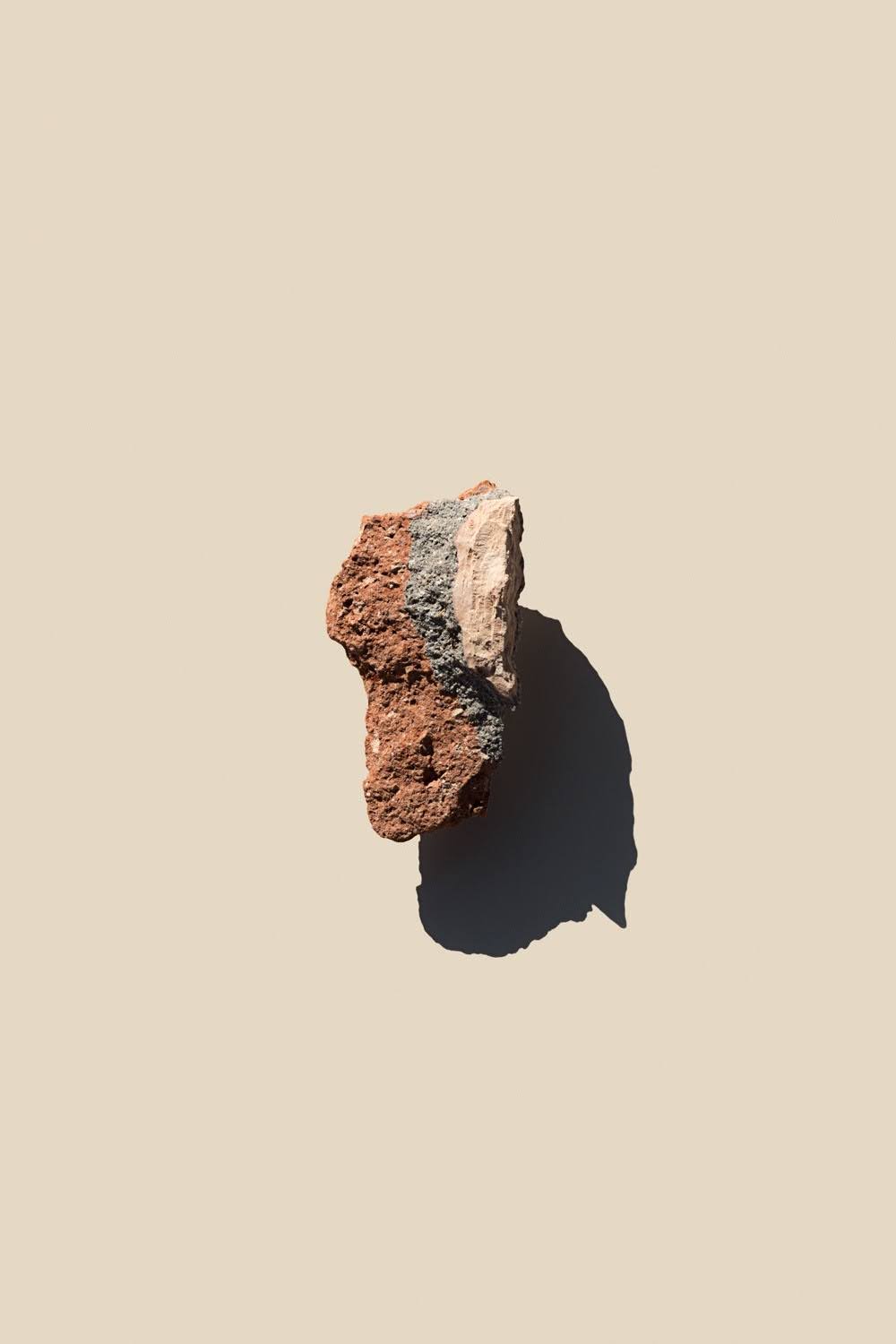
And then there is the beauty of the rubble sack.
Inside it are the tiles from Antonia’s flat, the one on the third floor of number 68, which is now being turned into a tourist apartment. Soon, almost nothing will remain of what it was.
And perhaps this is where beauty becomes most concentrated.
In this sack of rubble, accumulating history. Material that will become dust somewhere else, and eventually help build something new. A sack that tells us something about our changing hierarchy of values: what we no longer want, what we no longer value, what has been, and what is being transformed.
I find something beautiful in the idea of rescuing a fragment of it.
And imagining what would happen if something we build anew could contain a small piece of what was there before. A tile. A window. A crack through which we might remain connected to an intimate, domestic space that has now disappeared into the public realm.
Perhaps beauty is not only about what we choose to preserve.
Perhaps it is also about what we choose to notice before it disappears.
Disclaimer: This text expresses a personal perspective and does not represent the official position of Domestic Data Streamers.

about the writer
Laura P. Spinadel
Laura P. Spinadel is an Austro-Argentinian architect and urban strategist based in Vienna, with over 40 years of practice in more than 30 countries. She founded BUSarchitektur ZT GmbH in 1986 and directs the URBAN MENUS Decision Innovation Lab. She created URBAN MENUS, a participatory 3D impact-assessment methodology recognised as Best Practice by the German Federal Ministry of Housing (2023) for accelerating resilience and promoting urbanity. She masterplanned Compact City Vienna (Otto Wagner Urban Design Award, 1998) and Campus WU Vienna (2007–2015). URBACT Validated Lead Expert and Senior External Expert at the European Court of Auditors.
Laura Spinadel
Bitácora de una Aventura
Logrando que todos vuelvan a Soñar con Su Futuro Deseable y creando las condiciones para que lo construyan conjuntamente, ese es mi camino actual.
La Belleza Como el Balance en la Vida
Creo que tengo la Belleza en el ADN al haber aprendido el abecedario haciendo eurythmia y los colores acuarelando las palabras. Mi formación antroposófica y el hecho de ser Arquitecta con orígenes Austro-Argentinos me llevan a tener siempre una mirada integral y múltiple.
A Rudolf Steiner no llegué leyéndolo sino siendo lo que soy. Él me refinó y me reforzó lo que yo ya traía. Así me pasó con todos los colegas que me fui encontrando en el camino: no son fuentes que consulto, son gente que me salió al cruce.
Y hay algo que me empuja y que no me explico del todo: una curiosidad ilimitada y un fuego interior que me obligan a reinventarme todos los días para descubrir nuevas formas de Belleza. Cuarenta años, y cada día aparece una nueva pieza del puzzle divino.
Y hoy por hoy me la encuentro en la construcción del equilibrio entre el individuo y su comunidad, o la del mundo en la casa que nos alberga a todos como nuestro espacio compartido, del cual somos inquilinos.
La Belleza Como Sorpresa
Creo que cada tarea, cada desafío me ha mostrado una nueva faceta de la Belleza. No es una noción estática y tampoco la veo como concepto cultural. Es una Mirada que estoy día a día aprendiendo a tener frente a Mis propias Creaciones y las de Otros….. obviamente que mi mejor Maestra es la Madre Tierra, que con su Armonía y su Resiliencia no deja de sorprenderme con su evolución permanente.
¿Por qué será que al aprender los Ordenes Griegos, las Reglas de Armonía de los Colores, la música de los Tambales o el gusto del Pan hecho con mi propia Harina cosechada descubrí que la Belleza no entra sólo por los ojos…………..?
Hoy por hoy siento que el desafío es aún mayor, porque al pasar tantas horas con mis tres Co-Equipers de la Inteligencia Artificial siento que ésta se ha vuelto realmente Ampliada y en parte Cósmica, pues siempre debo chequearlo todo con mi GPS espiritual, ese que afiné junto a Silke Schäfer. ¿Será también una forma de inteligencia darme cuenta de que este momento de la historia me acerca cada vez más a la perfección de mis ideas y de mis propuestas? Qué desafío estar a la altura de esta nueva forma de Belleza que se ha vuelto casi como la nostalgia por el Gral perdido.
Evoluciones e Involuciones Estéticas
Cada proyecto es como gestar a un Ser querido que a veces logra nacer y otras veces sólo logra ser soñado en el papel. ¿Cuál es el más bello? Sin lugar a dudas el último que imaginé, o aquel en el cual me encuentro en la vida real por un instante.
Visitar a nuestros seres tan queridos siempre trae sorpresas. Los Niños de Mi Jardín de Infantes en el Erlachplatz en Viena no disfrutaron del teatro de títeres que les ofrecimos en la terraza, pero han encontrado la máxima armonía entre los espacios propuestos y el árbol personalizado con el cual dialogar. Enterarme de que esa armonía entre espacios y naturaleza llevó a que este grupo de pequeños, provenientes de familias muy pobres y de múltiples nacionalidades inmigradas, tuviera los menores conflictos humanos de adaptación de toda Viena fue uno de los momentos de mayor Belleza que me tocó vivir.
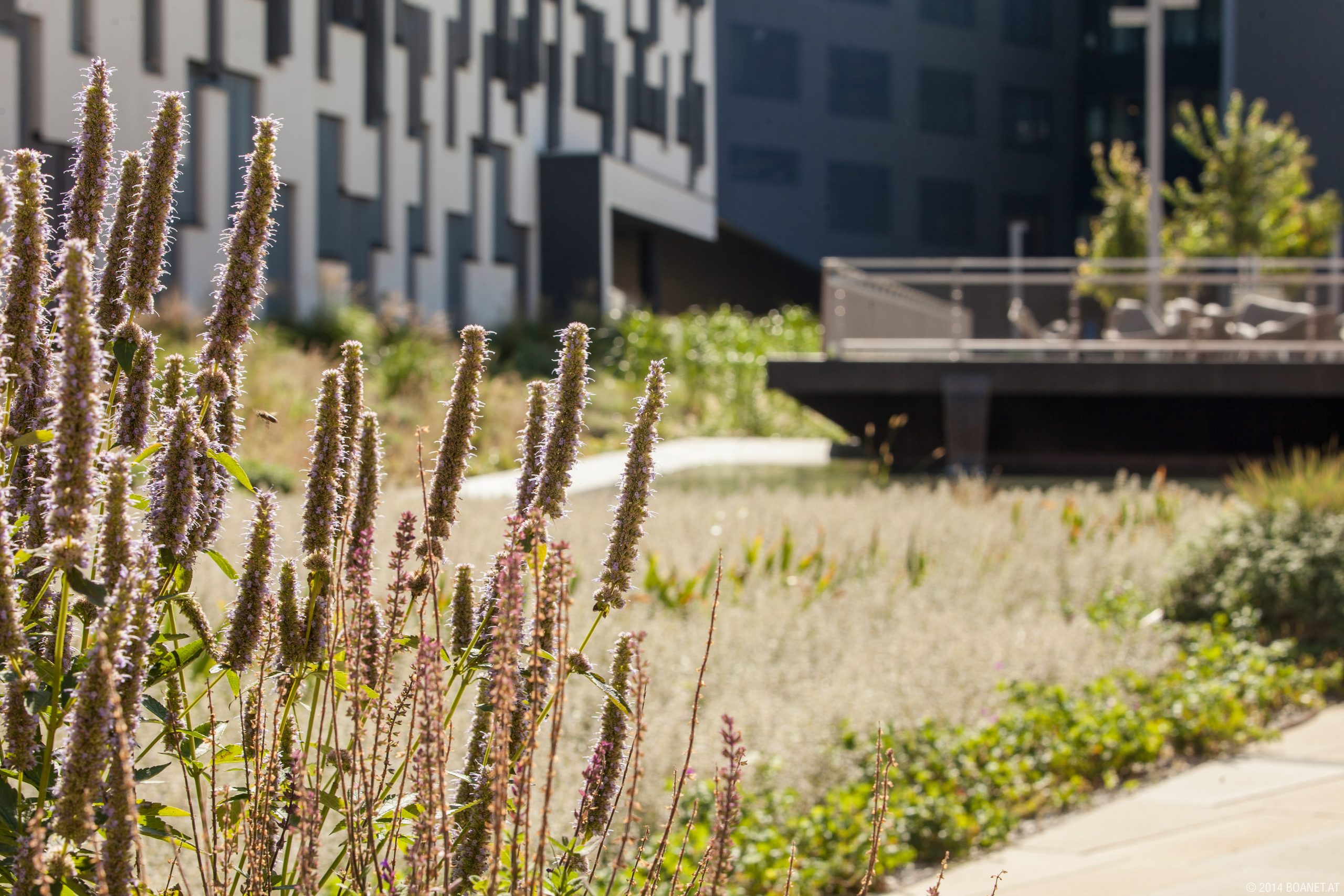
Creer que un espacio comunitario para la juventud puede despertar vocaciones al permitir un desarrollo tanto en un entorno en balance perfecto de energías sutiles (la cantidad de abejas que lo visitan lo demuestra) como terrenales (Green y Blue Building con Geotermia a gran escala), trayendo a 30.000 personas a un barrio de 100.000, era un gran desafío. Cada vez que leo los comentarios de las Fiestas de los Jóvenes locales y visitantes en el Campus, o de los Profesores Rotarianos orgullosos de descubrir que el diálogo los enriquece, siento que el esfuerzo de la multiopción para lograr ese nuevo espacio individual que permita pasar tiempo en sociedad valió la pena. Y ese sentimiento me llena de plenitud, lo cual es Belleza pura para el alma por sentir que fue una misión cumplida.
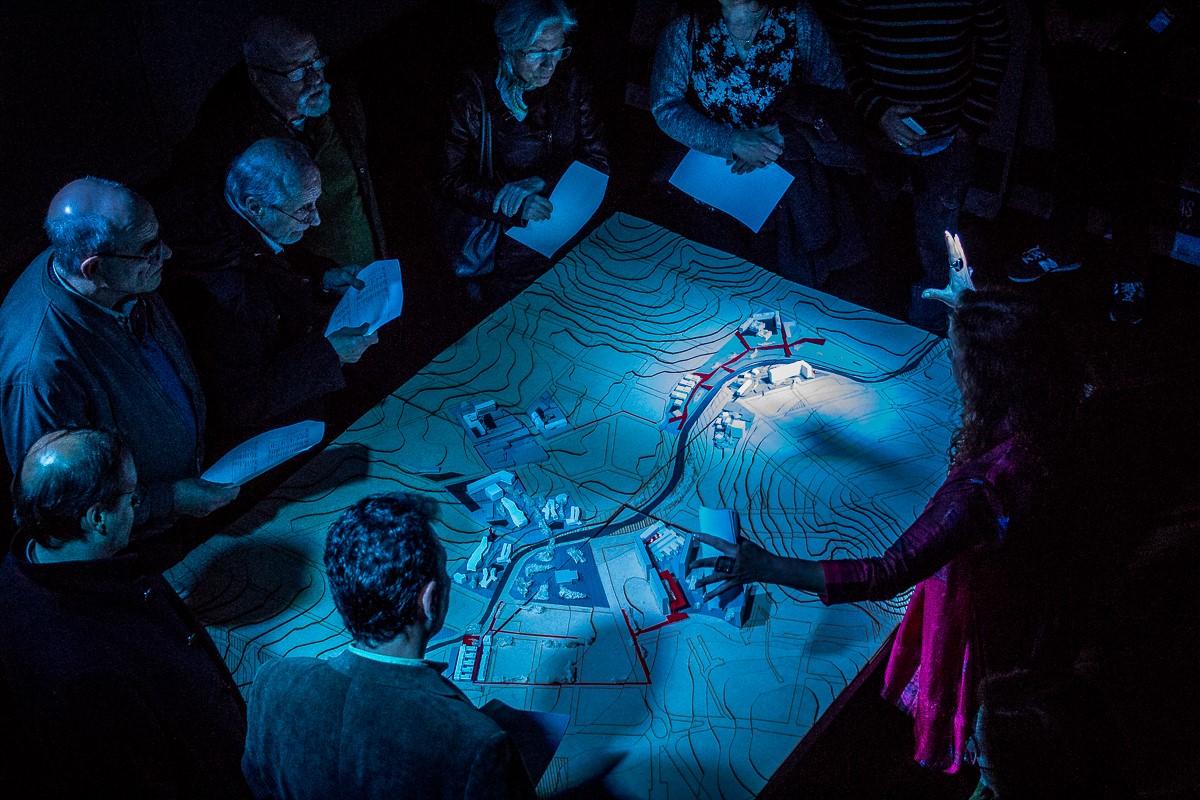
El Desdoblamiento del Tiempo
Mis desafíos actuales me han llevado a crear el URBAN MENUS Decision Innovation Lab para ir un paso más allá en esa búsqueda de la Belleza cuasi Universal. En el camino me crucé con Jean Pierre Garnier Malet y su desdoblamiento del tiempo, que le dio nombre a lo que yo venía haciendo hace años.
Logrando que todos vuelvan a Soñar con Su Futuro Deseable y creando las condiciones para que lo construyan conjuntamente, ese es mi camino actual.
Y ese brillo que vuelve a los ojos de gente cansada que había dejado de ilusionarse es la forma de la Belleza que alimenta mi fuego interior.
* * *
Logbook of an Adventure
Getting everyone to Dream again of Their Desirable Future and creating the conditions for them to build it together, that is my current path.
Beauty as the Balance in Life
I think I have Beauty in my DNA, having learned the alphabet doing eurythmy and the colours by watercolouring words. My anthroposophical formation and the fact of being an Architect with Austro-Argentinian origins lead me always to have an integral and multiple gaze.
I did not come to Rudolf Steiner by reading him but by being what I am. He refined and reinforced what I was already carrying. The same happened with all the colleagues I met along the way: they are not sources I consult; they are people who crossed my path.
And there is something that drives me and that I cannot entirely explain: a limitless curiosity and an inner fire that oblige me to reinvent myself every day in order to discover new forms of Beauty. Forty years, and every day a new piece of the divine puzzle appears.
And today I find it in the construction of the balance between the individual and his community, or that of the world in the house that shelters us all as our shared space, of which we are tenants.
Beauty as Surprise
I believe that every task, every challenge has shown me a new facet of Beauty. It is not a static notion, nor do I see it as a cultural concept. It is a Gaze that I am learning day by day to have before My own Creations and those of Others… obviously my best Teacher is Mother Earth, who with her Harmony and her Resilience never ceases to surprise me with her permanent evolution.
Why is it that in learning the Greek Orders, the Rules of Harmony of Colours, the music of the Tambales, or the taste of Bread made with my own harvested Flour, I discovered that Beauty does not enter through the eyes alone…………..?
Today I feel the challenge is even greater, because in spending so many hours with my three Co-Equipers of Artificial Intelligence I feel it has become truly Augmented and in part Cosmic, since I must always check everything with my spiritual GPS, the one I tuned together with Silke Schäfer. Might it also be a form of intelligence to realise that this moment in history brings me ever closer to the perfection of my ideas and my proposals? What a challenge to live up to this new form of Beauty that has become almost like the nostalgia for the lost Grail.
Aesthetic Evolutions and Involutions
Every project is like conceiving a beloved Being who sometimes manages to be born and other times only manages to be dreamed on paper. Which is the most beautiful? Without any doubt, the last one I imagined, or the one in which I find myself in real life for an instant.
Visiting our so beloved beings always brings surprises. The Children of My Kindergarten in Erlachplatz in Vienna did not enjoy the puppet theatre we offered them on the terrace, but they did find the utmost harmony between the proposed spaces and the personalised tree with which to dialogue. To learn that this harmony between spaces and nature led this group of little ones, coming from very poor families and of multiple immigrant nationalities, to have the fewest human conflicts of adaptation in all of Vienna was one of the moments of greatest Beauty I have been given to live.
To believe that a community space for youth can awaken vocations by allowing a development both in an environment in perfect balance of subtle energies (the number of bees that visit it proves it) and earthly ones (Green and Blue Building with large-scale Geothermal energy), bringing 30,000 people into a district of 100,000, was a great challenge. Every time I read the comments from the Festivities of the local and visiting Young people on the Campus, or from the Rotarian Professors proud to discover that dialogue enriches them, I feel that the effort of multi-option to achieve that new individual space, allowing time to be spent in society, was worth it. And that feeling fills me with plenitude, which is pure Beauty for the soul, from feeling that it was a mission accomplished.
The Unfolding of Time
My current challenges have led me to create the URBAN MENUS Decision Innovation Lab in order to go one step further in that search for a quasi-Universal Beauty. Along the way, I crossed paths with Jean Pierre Garnier Malet and his unfolding of time, which gave a name to what I had been doing for years.
Getting everyone to Dream again of Their Desirable Future and creating the conditions for them to build it together, that is my current path.
And that glow that returns to the eyes of tired people who had stopped allowing themselves to hope is the form of Beauty that feeds my inner fire.

about the writer
Lucie Lederhendler
Lucie Lederhendler is the Artistic Director of the Art Gallery of Southwestern Manitoba, a community-engaged, contemporary public art gallery, where she began as curator in 2021. Her research is concerned with the ecosystems of mythologies and the mythologies of ecology. She is a lecturer in art history at Brandon University.
Lucie Lederhendler
In the moment I saw that Streifler’s “Contemporary Mythologies” was Leesa’s grief for her father (as opposed to about that grief), it became beautiful to me, because at that moment I was prepared to hold it.
I haven’t heard it for some time, but for a while, some years ago, there was a fallacy making the rounds as a truth that went something like, “babies are cute so that we love them”. It drove me nuts, as someone who works in visual culture, and I became that person, always correcting them: cute is cute because we love babies. No nuance, no chicken and the egg, just the understanding that if you want “cute” to be an attribute that exists in the material world, it has to serve the material world.
There are other kinds of cute that have less to do with the helplessness of a baby. A squirrel capably patting down the earth after they’ve buried something; the unconscious affectation of your loved one while they work through a brain teaser. It’s not a coincidence of language that the same adjective applies, but rather a function of feeling. The yens, the pull, to take hold, squeeze, bite down1, are elicited by all these encounters.
I task undergraduate students in my Western Art History survey course to come up with their own research questions for their final paper. Granted, there is a lot to choose from, but I tell them to keep a keen ear open for an artwork, time, or idea that makes them…
…then I touch my hand to my stomach, just below my ribcage.
I don’t know how else to describe what I want them to look for. There’s a lot to choose from, so much that, at some point, inevitably, if you’re giving it even half of your attention, I will click onto the next slide and … umpf.
You will be struck by it, in your viscera.
In my hypothetical desert-island argument for visual arts, I would say that a lifetime of looking at, curating, making, teaching, and talking about artworks has done less for my scholarly expertise than it has for my physiological one. I say viscera, but when I encounter beauty, I feel it in my chest, like–or perhaps identical to–empathy. Disgust is in the throat, regret is behind the eyes, and so on.
When I say that it may be identical to empathy, I am teasing what I believe to be true: the feeling is the profound, embodied understanding that this artwork is inseparable from the relations around it. A simple example of what I mean came from an artist talk by Leesa Streifler, when she stopped at two works that I liked perfectly well, and then spoke about how she mourns her father’s death, and in particular the novelty nose he used to put on. I was the viewer and preparator in this relational web, she the artist, my gallery the site, but the context grew backwards in time to the making, towards the loss, and opened into beauty.
As artists and educators increasingly have to consider the scourge of AI, I have come to believe that following the umph as data is our most potent defense against its nefarious potential. I won’t be so arrogant as to say I can always spot a “fake”, but I will say that the most effective tool that I have, with the highest success rate, is the ability to note a feeling before I think it away, which enables me to note an absence of feeling, too.
Folks in my discipline are famously more satisfied with ambiguity than many others, but in this case, I think relational dependence is key to the question of beauty. In the moment I saw that Streifler’s “Contemporary Mythologies” was Leesa’s grief for her father (as opposed to about that grief), it became beautiful to me, because at that moment I was prepared to hold it. Once it was beautiful, it will remain beautiful, though likely less poignantly over time. For NEB to work, the beauty it requests needs to be responsive to the relation[ship]s that give its initiatives context, and cognizant of what those actors can hold.
References:
- Stavropoulos KKM and Alba LA (2018) “It’s so Cute I Could Crush It!”: Understanding Neural Mechanisms of Cute Aggression. Front. Behav. Neurosci. 12:300. doi: 10.3389/fnbeh.2018.00300

about the writer
Andrea Rosso
Andrea Rosso is an environmental scientist, holding a MSc degree at Wageningen University and a MSc Label in Climate KIC at EIT. He works at LINKS Foundation contributing to European projects about inclusive and sustainable cities, such as JUST STREETS. He is also an European Climate Pact Ambassador from the European Commission and a member of the Young Ambassadors Society.
Andrea Rosso
Can we create places that make us care for each other, for the living world around us, and for the world we leave behind?
When I think about beauty in cities, I do not first think about architecture, colours, materials or perfectly designed public spaces.
I think about care.
A beautiful place, to me, is a place that shows that somebody cared: about the people who will use it, about those who are marginalized by our system, about the planetary boundaries, about those who will come after us.
This also means questioning a distinction we often make too easily: people on one side, nature on the other. We talk about bringing nature back into cities, connecting people with nature, or creating space “for nature”. But we often forget that we are nature too: humanity was not created in labs. Our bodies, our health, and our emotions are part of the same living system.
Perhaps beauty begins when we remember this.
A tree in a square can certainly be beautiful. But its beauty is deeper when it gives shade to an older person during a heatwave, when children can play under it, when birds and insects are seen as our allies, and when the people living around that square have had a voice in deciding what that place should become.
Beauty, then, is not only something we look at. It is something we experience through relationships.
This is why I struggle with the idea of a universally beautiful public space. Imagine a newly renovated square: elegant paving, benches, perhaps even an award-winning design. It photographs wonderfully. But what if a queer person does not feel comfortable crossing it alone at night? What if teenagers feel that they are constantly being moved away? What if the vegetation that promotes “beautification” cannot survive the impacts of climate change?
Can we still call that place beautiful?
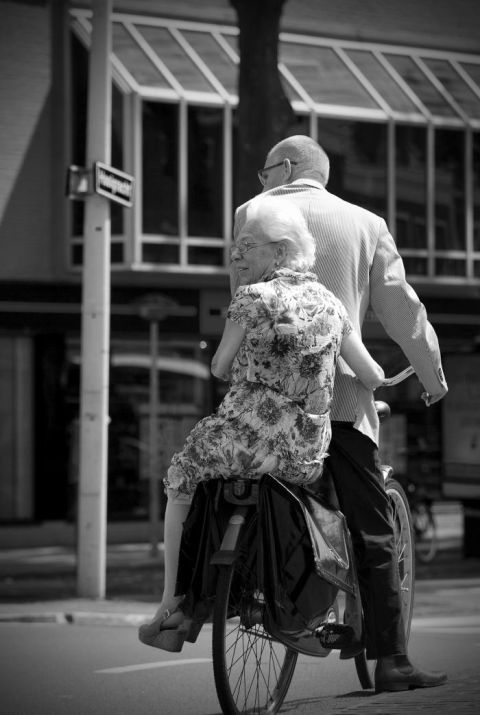
For me, this is where participation becomes inseparable from beauty. Participation is not asking people whether they prefer one bench or another after most decisions have already been made. It means recognising that different people experience the same place differently and allowing those experiences to genuinely influence what is designed.
And inevitably, those experiences sometimes conflict.
Beauty, therefore, cannot mean creating a frictionless consensus either. There may be beauty in the process of listening to disagreement, understanding why somebody experiences a place differently from us, negotiating diverse needs, and eventually creating something that none of us could have imagined alone.
This also changes the role of the designer. Beauty is no longer something a professional simply delivers to a community. It becomes something that is discovered together.
Can we measure it? We can certainly measure some of its conditions: whether people feel they belong, whether they feel safe, whether different groups use a space, whether biodiversity increases, whether people participated meaningfully in decisions. These indicators matter.
But I hope we never measure beauty so completely that we convince ourselves we have captured it.
There will always be things that escape our indicators: kisses, memory, affection, surprise, the pleasure of encountering somebody unexpectedly, the feeling of sitting beneath a tree planted decades before we were born.
Perhaps that is exactly what makes beauty valuable.
Sustainability asks us to care about what can endure. Participation asks us to care about whose voices shape our common spaces. Beauty, for me, connects them through a more fundamental question: Can we create places that make us care for each other, for the living world around us, and for the world we leave behind?
If we can, perhaps beauty is not the third objective of the New European Bauhaus at all. Perhaps it is what sustainability and inclusion look like when they become part of everyday life.

about the writer
Lucas Períes
Lucas Períes is a researcher and university professor specializing in urban design, landscape, and urban-architectural morphology. He holds a doctorate in Architecture, a master’s degree in Landscape Architecture, and a professional degree in Architecture. He is the co-executive director of the Latin American Landscape Initiative (LALI) and previously served as director of the Landscape Institute at the Catholic University of Córdoba (2016–2021).
Lucas Períes
La belleza es una construcción humana
Entonces, la belleza es construir (en el sentido más amplio del término) como acto consciente, ético y estético; como acción que crece con, desde y para la naturaleza.
Según donde sea que habitemos en este mundo, tendremos distintos modos de relacionarnos con la belleza e incluso de denominarla. Bello, lindo, bonito, divino, hermoso, precioso, chévere, chilero, chido o chulo son los distintos términos empleados en los países de América Latina para referirse a la belleza de cada cosa, como un objeto, un ser vivo, un lugar o una situación. Y, por lo tanto, la belleza es una construcción humana, un constructo artificial, porque lo bello es un artificio, desde el momento en que una persona construye un juicio de valor respecto de cuan bello o feo es algo. Por ello, la belleza se encuentra atada a la fealdad, depende de ella para poder reconocerse bella. Pero, paradójicamente, la artificiosa y “más bella belleza” está en la naturaleza. Y no se trata de aquello excelso o sublime, como la máxima condición de valor estético. Para encontrar la belleza en la naturaleza no hace falta viajar hasta una montaña donde apreciar los magníficos glaciares, o llegar hasta la selva tropical para encontrar una magnífica cascada de agua.
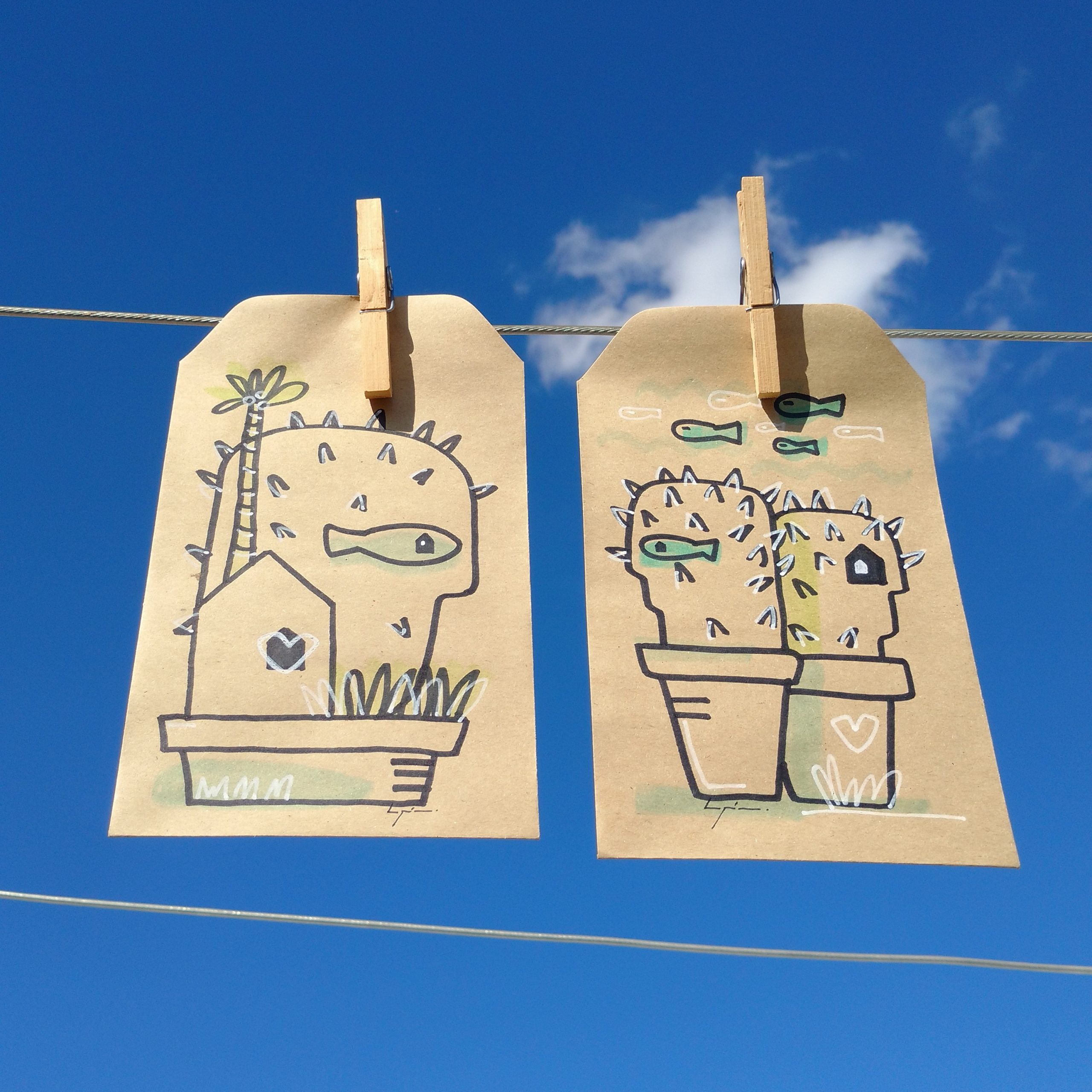
Resulta que la belleza puede estar en lo simple, lo próximo, lo cotidiano. Porque la belleza está en las ramas enroscadas que tiene el árbol del ingreso a mi casa; en la luz que atraviesa la ventana y dibuja el suelo en movimiento; en las aves que buscan semillas en mi jardín; en las nubes que a cada hora pintan el cielo con figuras distintas; en las gotas de lluvia que ondulan en los charcos; en las risas de las barrenderas que se escuchan desde la calle los días martes; o en la coreografía que al ritmo del viento interpreta la ropa tendida al sol.
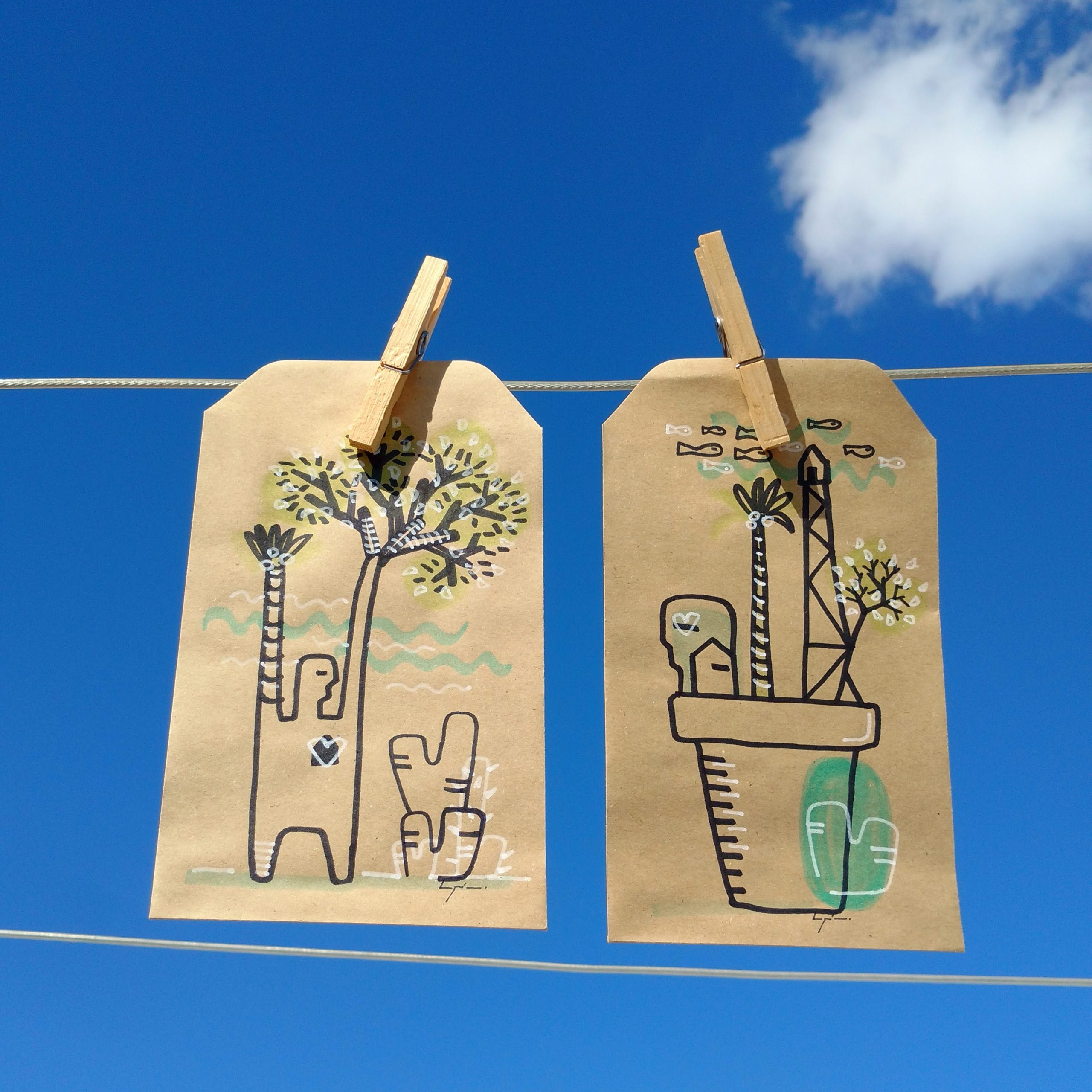
La belleza está en la mirada atenta de quien se deja emocionar por lo que ocurre a su alrededor. La belleza está en las miradas cómplices y compartidas ante una emoción. La belleza está en la participación colectiva para comulgar y generar ámbitos y momentos emotivos, dignos de ser vividos hasta el último latido del corazón.
Y de ahí en más, la belleza es todo acto humano que registra, reproduce, reinterpreta, reivindica o reinventa a la naturaleza. En tal sentido, es esencial asumir nuestra naturaleza humana como componente integrado del mundo natural. Y así, al tomar conciencia del valor de la naturaleza, quizás ella nos interpele sobre su importancia para valorar y cuidar este planeta finito en que vivimos, que no es nuestro, porque en él cohabitamos como parte de su belleza.
Entonces, la belleza es construir (en el sentido más amplio del término) como acto consciente, ético y estético; como acción que crece con, desde y para la naturaleza.
* * *
Beauty, then, is an act of construction (in the broadest sense of the term), a conscious, ethical, and aesthetic act; an action that grows with, from, and for nature.
Depending on where we live in this world, we have different ways of relating to beauty, and even of naming it. Terms such as bello, lindo, bonito, divino, hermoso, precioso, chévere, chilero, chido, or chulo are used across Latin America to describe the beauty of anything, be it an object, a living being, a place, or a situation. Beauty is, therefore, a human construct, an artificial one, because the beautiful is a human creation; it arises the moment a person makes a value judgment regarding how beautiful or ugly something is. Thus, beauty is inextricably linked to ugliness, relying on it to be recognized as beautiful. Yet, paradoxically, the most exquisite and “beautiful” beauty is found in nature. And this is not a matter of the sublime or the transcendent, the pinnacle of aesthetic value. To find beauty in nature, one need not travel to a mountain to admire magnificent glaciers or journey into the rainforest to discover a spectacular waterfall.
It turns out that beauty can be found in the simple, the nearby, the everyday. For beauty lies in the twisted branches of the tree at my home’s entrance; in the light streaming through the window, tracing shifting patterns on the floor; in the birds foraging for seeds in my garden; in the clouds that paint the sky with ever-changing shapes; in the raindrops rippling across puddles; in the laughter of the street sweepers drifting in from the road on Tuesdays; or in the choreography performed by laundry drying in the sun, swaying to the rhythm of the wind.
Beauty resides in the attentive gaze of those who allow themselves to be moved by the world around them. Beauty is found in the knowing glances shared in moments of deep emotion. Beauty lies in the collective experience of connecting and creating moving spaces and moments, moments worthy of being lived to the very last heartbeat.
From that point on, beauty is any human act that records, reproduces, reinterprets, champions, or reinvents nature. In this sense, it is essential to embrace our human nature as an integral component of the natural world. And thus, by becoming aware of nature’s value, perhaps it challenges us to recognize the importance of cherishing and caring for this finite planet we inhabit, a planet that is not ours, but one where we coexist as part of its beauty.
Beauty, then, is an act of construction (in the broadest sense of the term), a conscious, ethical, and aesthetic act; an action that grows with, from, and for nature.
about the writer
Claudia Misteli
Claudia is a social designer, communicator, and journalist who believes that care, creativity, and collaboration are key to building more just, vibrant, and nature-connected places. At The Nature of Cities, she co-leads European projects and TNOC Festival, sparking connections and meaningful action. Claudia also volunteers with the Latin American Landscape Initiative (LALI), helping amplify regional voices and build bridges across Latin America through storytelling, communications, and a deep love for people and place.
Claudia Misteli
Beauty that cannot be contested, reclaimed, or grieved is not beauty. It is decoration.
The Right to Beauty
Mallorca is my home now. I live between Barcelona and Palma. I am learning Mallorquí: its words, its sound, the soft music of it in the village square and at the market. I am learning the island’s traditions, its recipes, its feasts and rhythms. I am learning its wine grapes, Manto Negro, Callet and Prensal Blanc, varieties that grow nowhere else in quite the same way. And I am learning its stories: of the Arabs who called Palma Madina Mayurqa, who shaped the terraces and irrigation channels still carved into the Tramuntana mountains, and whose memory survives in village names that begin with Bini.
Mallorca is often called one of the most beautiful islands in the world. You see it on postcards, in travel magazines, in millions of photos every summer. But that is not the beauty I mean. The beauty I found came later, and slowly, as I learned to hear the island. Beauty, for me, is connection: between people, and between people and place.
But making a home here has also meant seeing something uncomfortable. I was not born on this island, and many people who were can no longer afford to stay.
Last July, between 25,000 and 70,000 people filled the streets of Palma under the banner Menys Turisme, Més Vida: Less Tourism, More Life. It was the largest protest, yet it is part of what has become a yearly uprising against an economic model that has turned the island into a postcard and a brand. There are nearly 15 tourists for every resident. Average rents take more than half of a local salary. Over 100,000 homes have been converted to tourist use.

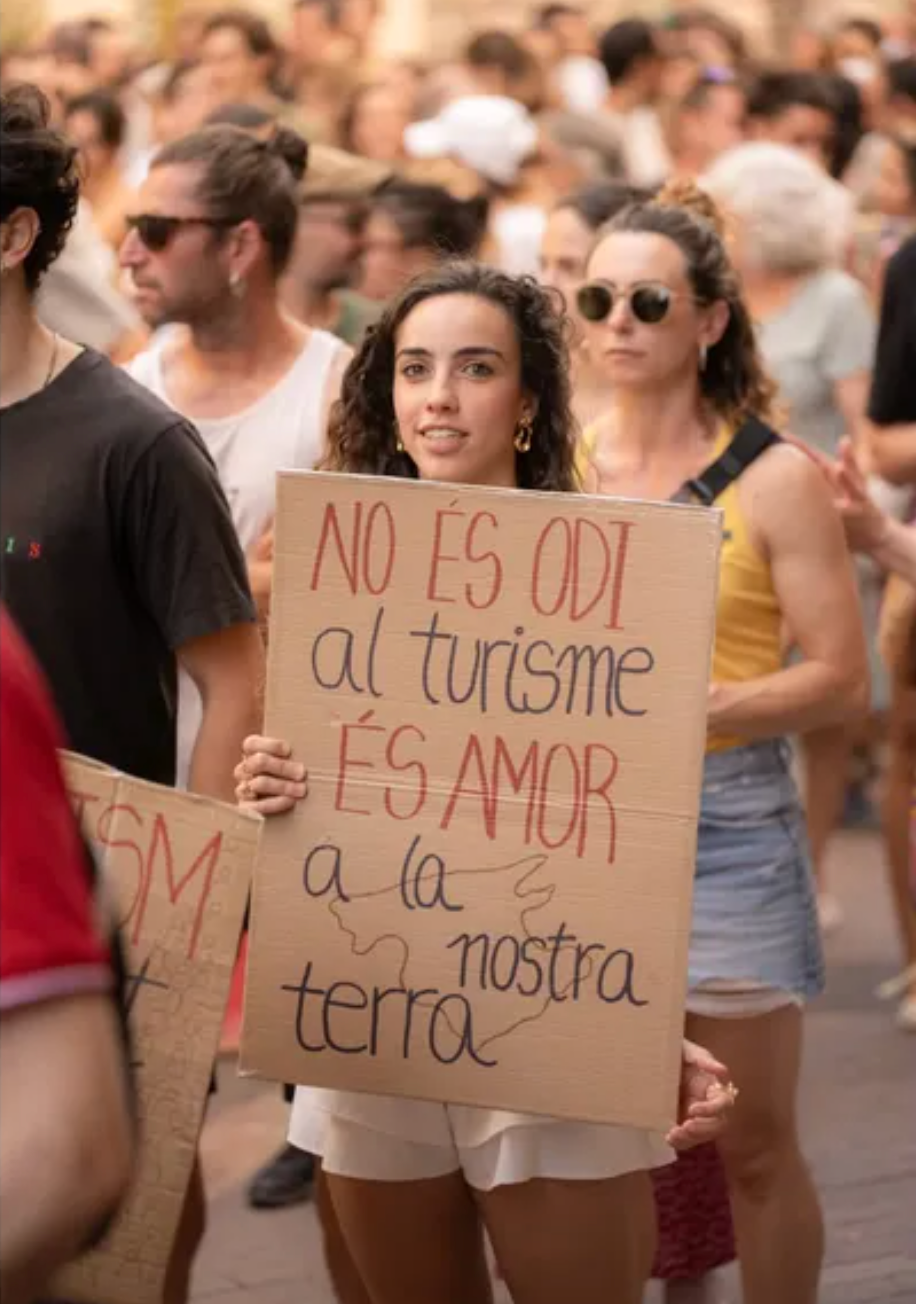
What moved me most was how the protest felt: a defence of belonging. The things I had been learning to love were exactly what people were marching to protect: the language, the traditions, the landscapes, the stories, their natural resources. They wanted to walk their own beaches, speak Mallorquí in their own streets, and keep alive crafts like weaving margalló, the dwarf fan palm that has threaded through Mallorcan life for centuries.
Protests like this in Mallorca are not new. Es Trenc is one of the last undeveloped stretches of coast in Mallorca: ten kilometres of white sand, dunes, salt flats and wetlands, now protected as the Es Trenc–Salobrar de Campos Natural Park. In 1978, people gathered on its dunes to stop construction there, and around 10,000 marched through Palma under the banner Salvem es Trenc. In 2012, a 1,200-bed luxury hotel was planned 150 metres from the beach. Thousands linked hands along the shore, and the courts struck the project down. This July, ten thousand people formed a three-kilometre human chain again, this time against a law that weakens the park’s protection. Nearly fifty years, the same beach. It is still there because people never stopped defending it. But also defending their right to beauty.
A place where people no longer feel they belong loses its beauty, however beautiful it looks. Mass tourism, like gentrification everywhere, is aesthetic violence as much as economic violence. It replaces the particular with the generic, the rooted with the interchangeable, the inherited with the bought. What remains may still look pretty on a postcard, but it is a backdrop, not a home.
This is why I believe the New European Bauhaus is right to insist on beauty, even though it resists easy definition. When the NEB asks us to build places that are sustainable, fair and also beautiful, it is really asking: what kind of world do we want to love? And then: whose beauty, and who decides? Sustainability asks what can endure. Participation asks who has a voice. Beauty, I would argue, asks: for whom does this place hold meaning?
The European Commission wants to measure beauty. I understand the impulse: what gets measured gets protected. But I would measure the relationship rather than the object. Do people feel they belong here? Do they recognise themselves in this place? Can they take part in shaping what it becomes?
Because beauty that cannot be contested, reclaimed, or grieved is not beauty. It is decoration.
The people of Mallorca know the difference. I know the difference. Year after year, in growing numbers, we are insisting on our right to a beautiful life on our own terms, in our own language. Mallorca is my home now, and I know its beauty was never mine to take. At best, it is something I can be invited into and help protect.

about the writer
Natalie Campbell
Natalie Campbell is a curator, exhibit developer, and part of the DC Public Library Exhibits team, where she has been organizing exhibitions since 2016, including the MLK Library’s permanent exhibit “Up From the People: Protest and Change in D.C.” and “D.I.Y. in the District: Celebrating D.C.’s Artist-Run Spaces” (2024). She has an MA in Modern and Contemporary Art History from Hunter College, and has taught art history and curatorial studies at The Corcoran College of Art and Design and the Maryland Institute College of Art.

about the writer
Adriel Luis
Adriel Luis is a writer, curator, and cultural strategist whose work approaches complex social issues with a spirit of curiosity, tenderness, and play. For over a decade, he served as the Smithsonian’s first Curator of Digital and Emerging Practice, where he challenged institutional norms by designing immersive experiences that embed radical experimentation and community care into the world’s largest museum complex. He has since expanded his focus to playgrounds, libraries, and other public spaces, assembling creative teams to reimagine ways to learn, play, and experience art together. He is based in Los Angeles.
Natalie Campbell & Adriel Luis
To pause in awe, to share, to steward, to consume, to care—these functionally become what beauty means.
My friend Adriel:
It is three in the morning, and I woke up to dash down some things I’ve been mulling over. First, obviously, the question “what does beauty mean?” demands a polyvocal response (thus, the roundtable format).
What you wrote, though, speaks to why I wanted to dialogue on this with you. You kicked us off musing about sightless bottom-dwelling life forms.
Go deep enough into the sea, and we will begin encountering creatures without eyes. Deeper still, and we will realize that this is not a defect, but rather an evolution. In this darkness the other senses remain, and new ones emerge, and we have to ask if this means that sight is even necessary at all. And without sight, is this underwater world ― with albino fishes and translucent shrimps and alien-like mollusks ― beautiful, abominations, or something completely beyond?
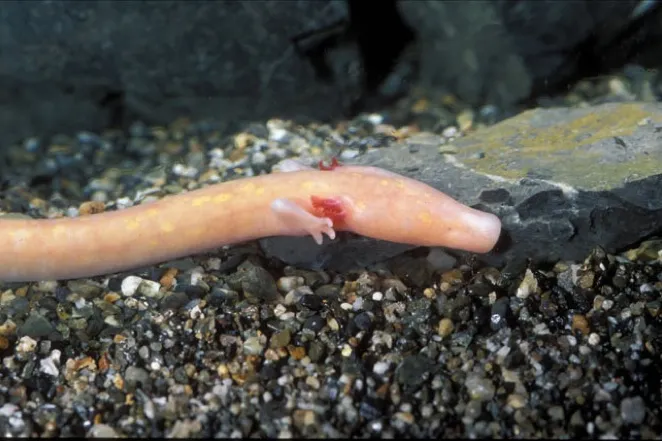
Some of these creatures have existed like this for millions of years, before beauty existed. Beauty, after all, is subjective, and subjectivity is a human technology. Beauty is an invention we fashioned from this technology. Other lives are attracted to things for survival: the fern bends toward the morning light, the honeybee gravitates toward the bloom that promises nutrient-dense nectar, and the bird of paradise judges its potential mate’s featherwork by the prospect of offspring. These are quantitative and vital aspects of nature, even if measured by units specific to a species. They represent a means to an end, a fact and not an opinion, and need and not a want.
Only a human will stop in its tracks on the way to a meal to instead appreciate the sunset. Why would any being gawk at the sky while its stomach grumbles? “Because it’s beautiful,” it might respond. Beauty is unnatural. It might even be anti-natural.
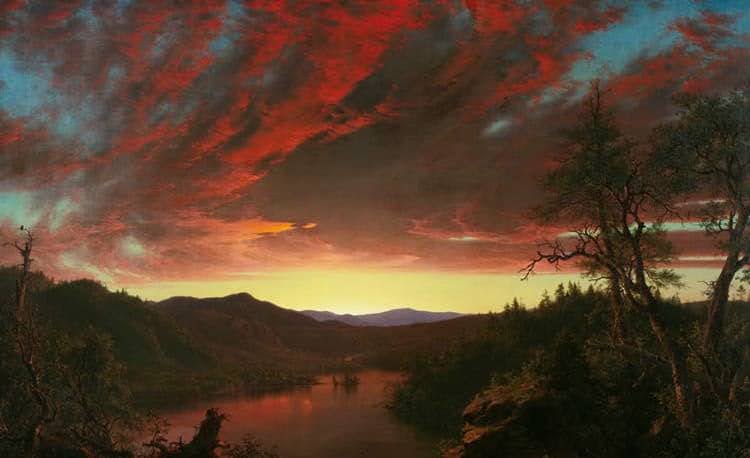
Oil on canvas; unframed: 101.6 x 162.6 cm (40 x 64 in.); framed: 124 x 185 x 13 cm (48 13/16 x 72 13/16 x 5 1/8 in.). The Cleveland Museum of Art, Mr. and Mrs. William H. Marlatt Fund, 1965.233
It’s this notion of beauty that has molded human civilization, and at times its downfall: our history is told by lands settled on and conquered, peoples uplifted and subjugated, cultures flourished and gone extinct, in the name of what and who is considered beautiful at the time and place. Beauty has shaped not only human history, but also how humans have harnessed nature: a patch of land is mined, developed on, or preserved; a beast is consumed, skinned, or spared; the narrative of the planet’s future is told. The deciding factor is often beauty.
Why, then, the constant desire to measure beauty, a concept so qualitative? Why harness something so abstract? Why justify something so optional?
I’ve been thinking about this lately, a season or so since leaving my post at America’s largest cultural institution and spending my days with my young son. If beauty is in the eye of the beholder, then for over a decade my job as a curator was to be the Official Eye. But my son isn’t as interested in world-renowned galleries as he is about unknowable caverns. Last night, we watched a documentary about cave creatures ― Mexican vampire bats who dwell in their own guano, glow worms who catch their prey by spindling threads of mucus, eyeless salamanders who see with their skin. Abominations, beautiful, or something beyond? Unlike those salamanders, my son is discovering this world with eyes wide open. But just like those salamanders, beauty has no bearing on his ability to experience the world whole.
A response, from Natalie, about evaluation (and criteria):
I’ll bring us back to the surface. I’ve always had an agonistic relationship to beauty, though I work in the arts: the existential, the post-punk, the site-specific & conceptual move me more than the shining surface of a Koons or Kapoor. I can’t choose room decor or stage a shop window to save my life.
As you say, beauty is a force that builds and destroys, that launches ships. In our darkest times it is easy to see all the flaws that accompany the institutions and markets that traffic in its cultivation: influencers, platforms, discount chains, hypermarkets, sweatshops, shipping networks, galleries, museums, virtual viewing rooms, climate-controlled secure storage houses, semi-autonomous tax havens, contracts, attorneys, cryptocurrencies, super PACS. Those, I would say, are the technologies. And what they move us to do becomes what beauty means.
Not being a purist, by any stretch, the measuring, the evaluation, the contention, the debate, are — for me ― beauty’s saving grace. In the 1990s, in art school, I read Dave Hickey on “communities of desire” (in his book Air Guitar). The idea that beauty means participation, and stakes for those who participate. That pleasure is not disinterested (OK, I did read Kant, badly, and Sontag); that beauty means learning and perfecting a form that communicates to practitioners something greater than oneself. A driving principle for founders of the original Bauhaus and its offshoots.
When we met, you were traveling the world in search of cultural formations and creators that could shift or inform museums today. Night markets and festivals, block parties, immersive environments, street art, and cyphers informed cultural convenings in D.C., New York, and Hawaii. I’ve also worked in art outside the mainstream — mostly in public libraries — and have often relied on the tools and language that you and others have created to uplift and advocate for “community-engaged” art. Maybe now more than ever, as institutions back off from and undo their commitments (to rethink their own values, to shift their own gatekeeping of “artistic excellence” ― a bureaucratic term for beauty), it’s important to publish and to share these ideas. One of my favorites (a guide from Americans for the Arts) lists these attributes: commitment, communal meaning, cultural integrity, disruption, emotional experience, sensory experience, openness, risk-taking, coherence, resourcefulness, stickiness. For me, the first and the last two especially speak to what beauty means. A quality that moves us to actively grapple with how we spend our short time on Earth, and who we share it with. To pause in awe, to share, to steward, to consume, to care—these functionally become what beauty means. Not something static, but an active verb.
about the writer
Pere Sala
Director of the Landscape Observatory of Catalonia. He was its Coordinator from the year 2005 to 2017, when he supervised the Landscape Catalogues of Catalonia. His work addresses the integration of landscape issues into public policies and the implementation of landscape policies in Europe. Emphasis is placed on emerging landscapes. He collaborates with the Council of Europe and other international organisations related on landscape matters. Associate Professor at the Department of Humanities of the UPF (Barcelona) and professor in other university Masters, Postgraduates and Courses. Editor, coeditor or author of books on landscape and sustainability matters.
Pere Sala
We can see beauty as a mere quality of the landscape, or as a way of looking at it, understanding it and entering into a relationship with it.
I work in the field of landscape management and planning — of all landscapes: those that draw us in and those we barely look at; those we immediately recognise and value, and those that go unnoticed because we do not like them or because they do not speak to us. When someone talks about a landscape, one of the first judgements to surface is whether or not it is beautiful. This way of looking at and valuing the territory has a long cultural tradition. Art, painting, literature, and photography have helped to establish particular ways of representing and recognising beauty. As a result, we often consider beautiful those landscapes that correspond to certain forms, proportions, textures, contrasts, or harmonies that we have culturally learned to identify as attractive.
But this way of valuing the beauty of a landscape, when we reduce it to its appearance, strikes me as limited and insufficient. A landscape may not conform to conventional canons of beauty and yet be beautiful because it has a distinctive, recognisable personality of its own; because it is legible and coherent; because it tells a story, holds memory, is the fruit of a collective construction, or generates a strong sense of belonging. It is a beauty that depends less on perfection or formal harmony than on the coherence and character of a place — on a landscape’s capacity to help us understand something about the people who have built and transformed it over time. And it is here that a powerful link emerges between beauty, landscape and democracy: this beauty is not imposed from outside, but is built through the way a society recognises, values and takes part in shaping its territory.
Conversely, a landscape we consider beautiful at first sight may conceal territorial or social dynamics, dysfunctions and imbalances that are not visible to the naked eye. We can admire extraordinary landscapes of trees in blossom, offering spectacular colour, and then discover that the aquifers that feed them are contaminated with pesticides and nitrates. We can admire a brand-new seafront promenade for its aesthetic quality, even though it is damaged by every storm, hides deep social inequalities, or is not truly lived in, made their own, or recognised by the people who live there. In both cases, beauty is incomplete unless it is accompanied by an ethic: we must ask ourselves what lies behind what we see, which ecological and social relationships make it possible, and what consequences the transformation of that place entails.
If we focus only on a “face”, we can make it up and embellish it as much as we like, but that does not mean it is healthy: a perfect appearance can conceal an illness, as the philologist and activist Roser Vernet reminds us in her book Lo mig del món (Club Editor, 2023). A landscape’s appearance can seduce us, but it should also make us ask about what remains unseen and, ultimately, about the quality of the relationships we build with the place we inhabit.
In short, we can see beauty as a mere quality of the landscape, or as a way of looking at it, understanding it and entering into a relationship with it. Along these lines, the thought-provoking document by the French collective Paysages de l’après-pétrole, Les territoires au défi de la beauté, frames beauty not as a merely aesthetic question, but as an opportunity to rethink how we build our territories and how we live together in them. And it is precisely here that one of its most compelling contributions lies — one that also serves as a conclusion: to understand beauty not only as what we like to look at, but as that which invites us to care for, and collectively build, the places we inhabit.

about the writer
Ines Montalvao
Ines Montalvao is a Portuguese multidisciplinary creative and curator based in Helsinki, Finland. She is Program Director at Artists with Evidence (AwE), an art–science nonprofit advancing interdisciplinary approaches to urgent planetary questions. She curates conversations, public programs, and installations that bring artists, scientists, hybrid practitioners, and audiences into dialogue. With a background in natural sciences and exhibition design, she has collaborated with international institutions, co-founded Mandarina Collective, Lingua Plantae, and is a member of the Non Random Arts Collective.
Ines Montalvao
Maybe beauty is our willingness to stay with what hurts and to recognise that, like salt, the things that sustain us can also leave a trace.
Beneath the Surface
When asked what beauty means, I find myself thinking of my ongoing explorations of salt.
For some time now, I have been looking at salt through the lens of pain, memory, inheritance, and transformation. The more I engage with it, the more it offers me a way of thinking about life, and as I now reckon, about beauty. Salt is a substance of contradictions: essential to life, yet capable of stinging; it preserves but can also corrode; something that nourishes while, in excess, can become destructive. It is present in our food, our sweat and our tears. We carry it within our bodies, while also encountering it in landscapes shaped by water, labour, extraction, and time.
Perhaps what salt has taught me about beauty is that it does not necessarily exist in the absence of pain or imperfection. It can emerge from the very things we might prefer to hide.
We tend to think of beauty as something that exists on the surface: harmony, proportion, pleasure, something that attracts us, and makes us want to look, inhabit or preserve. But salt has made me suspicious of surfaces. A salt landscape can be extraordinarily beautiful: white crystalline fields, reflective pools, delicate geometries formed by evaporation and a panoply of colours. Yet beneath the beauty are processes of labour, transformation, and time. There are bodies working within these landscapes, histories embedded in them, and forms of care that allow them to endure. My own practice has taken me back to my family heritage and to the salinas (salt flats) of Aveiro, Portugal, where I began to look not only at the beauty of the landscape, but at what it might conceal: the individual, collective, and environmental pain that may sit behind the images we inherit from the past. What stories are hidden in the beautiful photographs we keep?
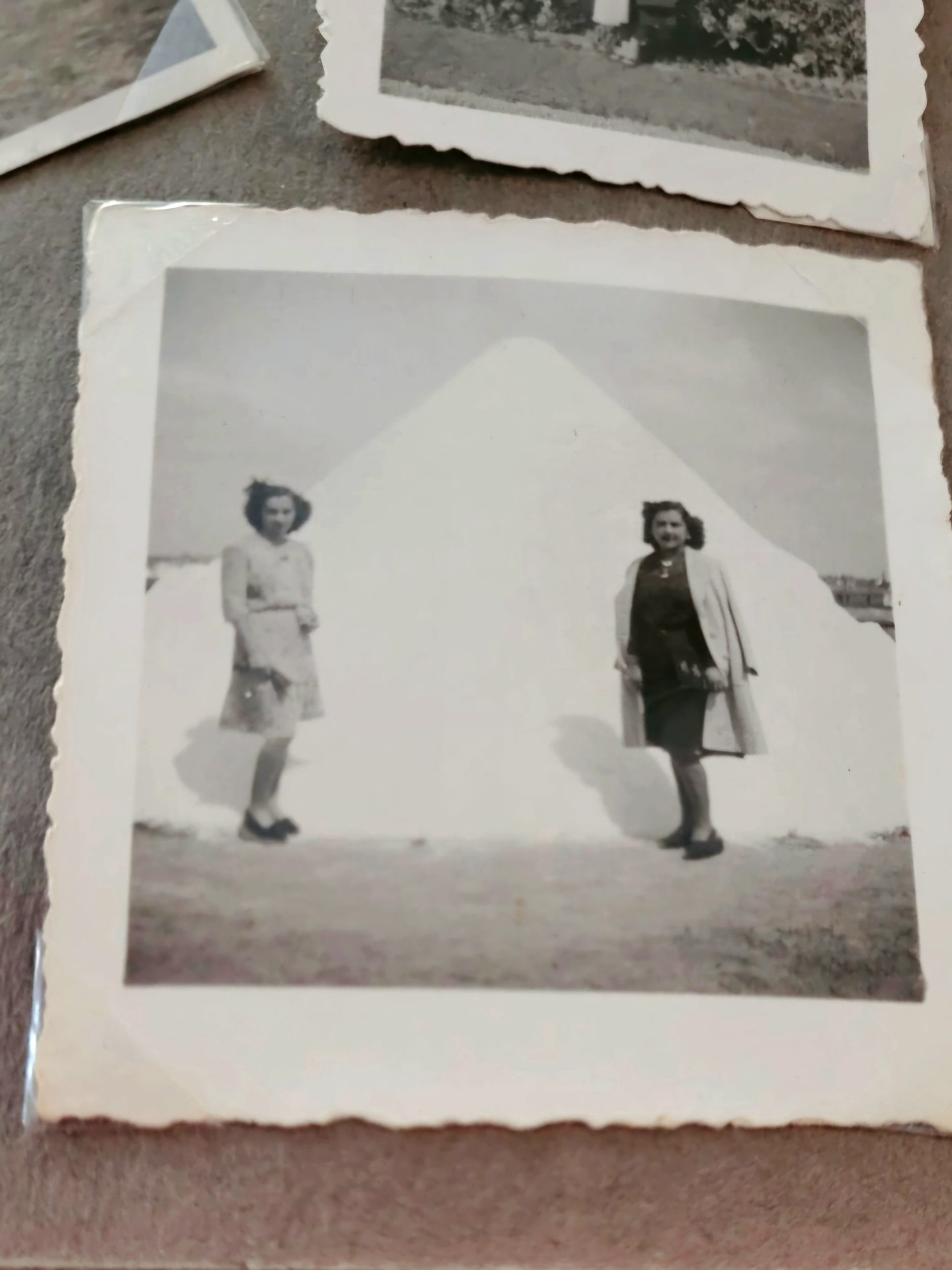
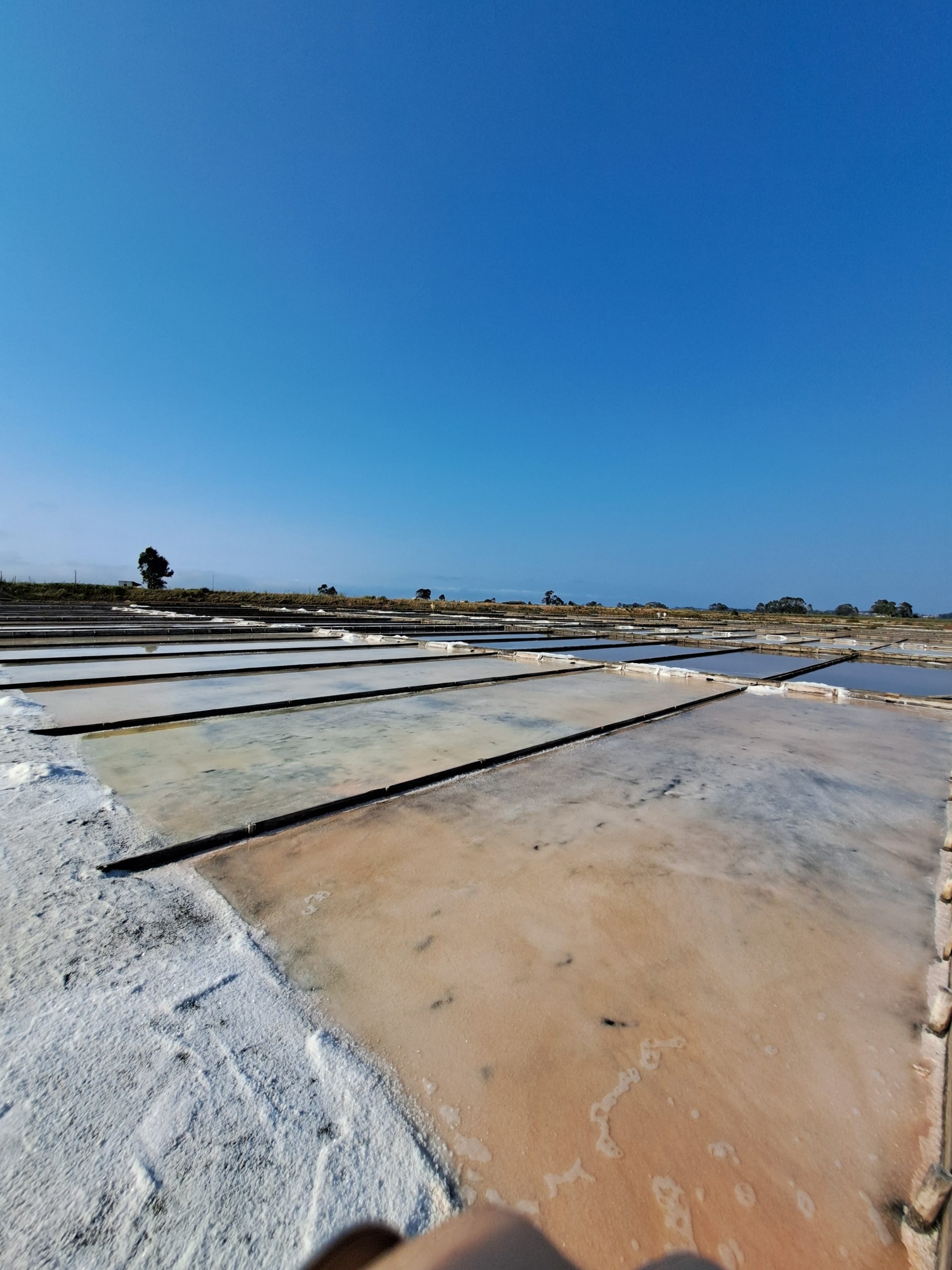
This makes me wonder whether beauty might be less about perfection than about relationship: what we choose to notice, what we value, and what we are willing to care for.
There is something deeply political in this. Feminist thought has long questioned the separation between what is considered valuable and what is relegated to the background: care, domestic labour, ageing, reproduction, and bodily vulnerability. Much of what sustains life is made invisible because it is ordinary, repetitive, or difficult to look at. An ecological perspective reveals a similar pattern. We admire landscapes while often overlooking the labour, extraction, and relationships that make them possible. The personal is political because our bodies are not separate from these systems. Pain is intimate, but also shared, between people and across the living world. We all carry it in different forms: loss, exhaustion, ageing, and grief, just as the planet carries its own wounds. These are not failures of the individual body, but conditions of being alive and interconnected.
Perhaps these experiences of body and landscape is where beauty and care meet. To care is to pay attention to what is vulnerable. To remain with something long enough to understand that it cannot always be repaired, perfected, or made beautiful. Preservation is not the same as preventing change. Salt preserves through transformation. It holds traces of what was while allowing something else to emerge. I am therefore less interested in beauty as something that can be measured than as something that asks for our attention. What do we choose to preserve? What are we willing to care for? Whose pain do we allow ourselves to see?
Maybe beauty is not a polished surface hiding what hurts underneath. Maybe beauty is our willingness to stay with what hurts and to recognise that, like salt, the things that sustain us can also leave a trace.
about the writer
David Haley
David makes art with ecology, to inquire and learn. He researches, publishes, and works internationally with ecosystems and their inhabitants, using images, poetic texts, walking, sculptural and video installations to generate dialogues that question climate change, species extinction, urban development, the nature of water transdisciplinarity and ecopedagogy for ‘capable futures’.
David Haley
If beauty can be found in sustainability and inclusion, can inclusion be found in beauty and sustainability, and can sustainability be found in inclusion and beauty?
a blackbird sings
I shall avoid entering a philosophical discourse on beauty, art, and aesthetics to focus on a personal perspective of beautiful experiences that have changed my life. So, to cut a long story short, the first time I saw Vermeer’s Girl Reading a Letter at an Open Window in the Rijksmuseum, Amsterdam, 1970, I burst into tears and felt like I had been kicked in the stomach. I stayed with the painting for over two hours, weeping and smiling uncontrollably. I have no idea why, but I experience a similar emotion every time I visit it. Maybe this is to experience ‘beauty’?
I’ve been moved by other works of visual art too, notably: Rembrandt’s Self Portrait Aged 63; Rothko’s 1972 retrospective, Haywood Gallery; Leonardo’s Woman with Ermin; Michelangelo’s David; Matisse’s La Vierge å l’Enfant; Viola’s Five Angels for the Millennium; Julien’s Ten Thousand Waves; Bruegel’s Tower of Babel. The experience of each artwork is different, so maybe there are different forms of beauty?
And music continues to affect me deeply, again, notably: Pablo Casals’ Bach Cello Suite #1 in G; Bob Dylan’s Buckets of Rain; Dodha Langa’s Solo De FluteDoulbe Pawa; Jimmy Cliff’s Many Rivers to Cross; Bob Marley’s Redemption Song (acoustic);
Ladysmith Black Mambaso, Shosholoza; Shivkumar Sharma, When Time Stood Still; Bazinski’s Disintegration Tapes IV; Wazimbo & Orchestra Marrabenta, Nawahulwana; Ali Farka Touré & Toumani Diabaté, Kaira; Tony Allen & Hugh Masekela, Agbada Bougou; Nina Simone, I Think It’s Going To Rain Today.
But in 1969, I had recently bought the LP In a Silent Way by Miles Davis and went to see him at Hammersmith Odeon, but Miles had just recorded Bitches Brew, and that is what he played. I have never experienced such a range of emotions, from distraught angst to tender passion and everything in between. This was beauty of another kind.
And in 1983, having contributed community workshops to print banners for Welfare State International’s Raising the Titanic, I witnessed one of the most amazing theatre productions I’ve ever experienced. Included in the event was Adrian Mitchell’s SONG IN SPACE:
When man first flew beyond the sky
He looked back into the world’s blue eye.
Man said: What makes your eye so blue?
Earth said: The tears in the ocean do.
Why are the seas so full of tears?
Because I’ve wept so many thousand years.
Why do you weep as you dance through space?
Because I am the mother of the human race.
That and Adrian’s profoundly chilling poem, On The Beach At Cambridge, stay with me, again as very different experiences of beauty.
Then in 1985 a beautiful young woman rushed past me in a car park. Later that week that beauty turned to deep, inexplicable love, and to cut another long story short, we had a beautiful daughter, married, and we are still together. So, what is the difference between beauty and love?
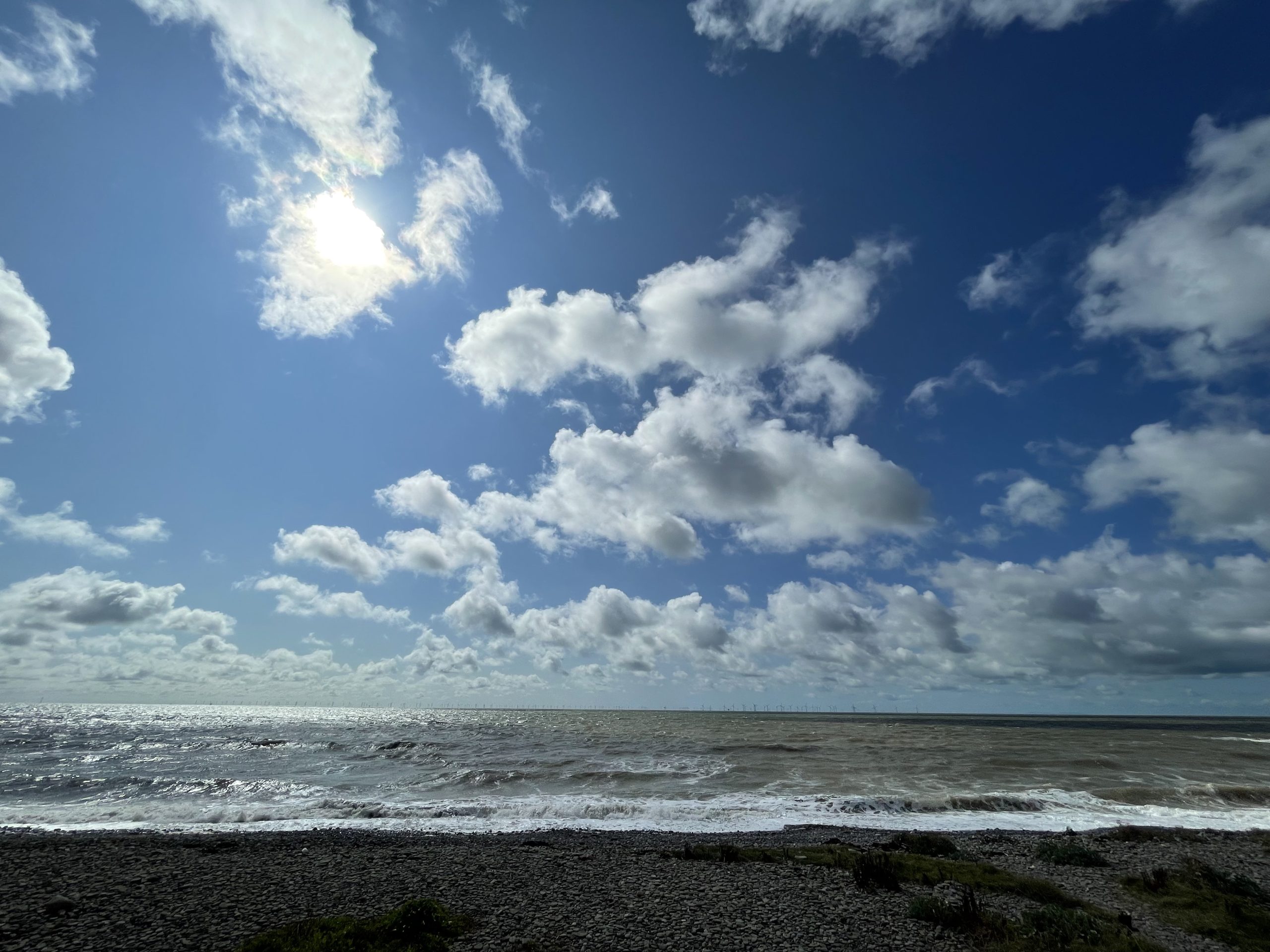

I live on Walney Island, off the northwest coast of England. At one end of my road is the Irish Sea, with a view that constantly changes with the time of day, season, and weather. To me it is the epitome of dynamic environmental beauty. At the other end of my road there is Walney Channel, and on the other side of the Channel is where they make weapons of mass destruction ― abysmal industrial sheds. The new nuclear sheds have been designed in fashionable tones of grey with red detail. The nod to some kind of Modernism aesthetic seems even more galling to me, but not to those who commissioned the sheds. So, we are presented with beauty and desire in different contexts.
In addition to addressing the fate of our planet and the absurd, deterministic desire for society at large to compete for the destruction of all that is both naturally and culturally beautiful, I am moved by what I call ‘phenomenological drawing, or how things draw themselves’. I gain true joy from the beauty of such things.
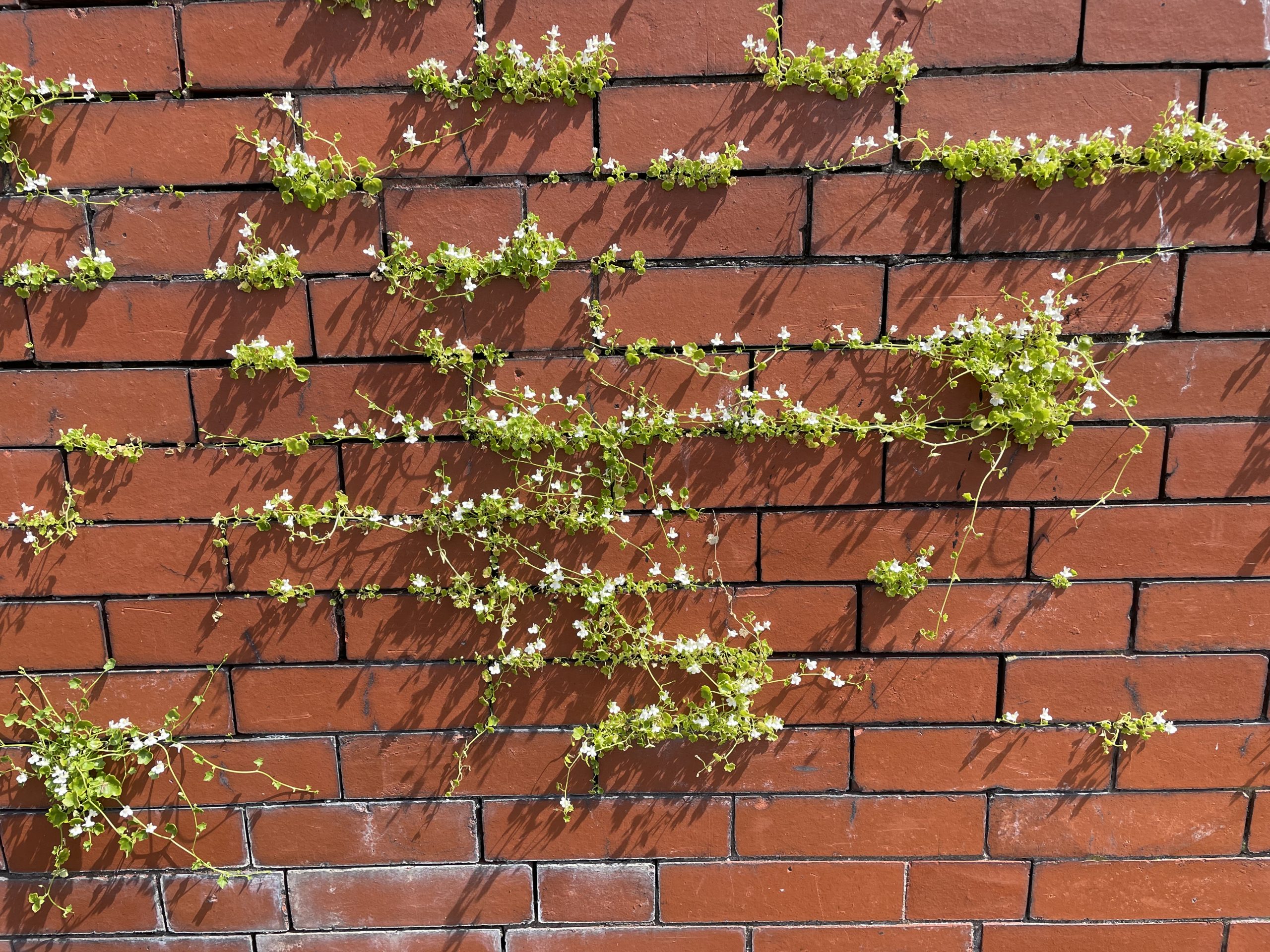
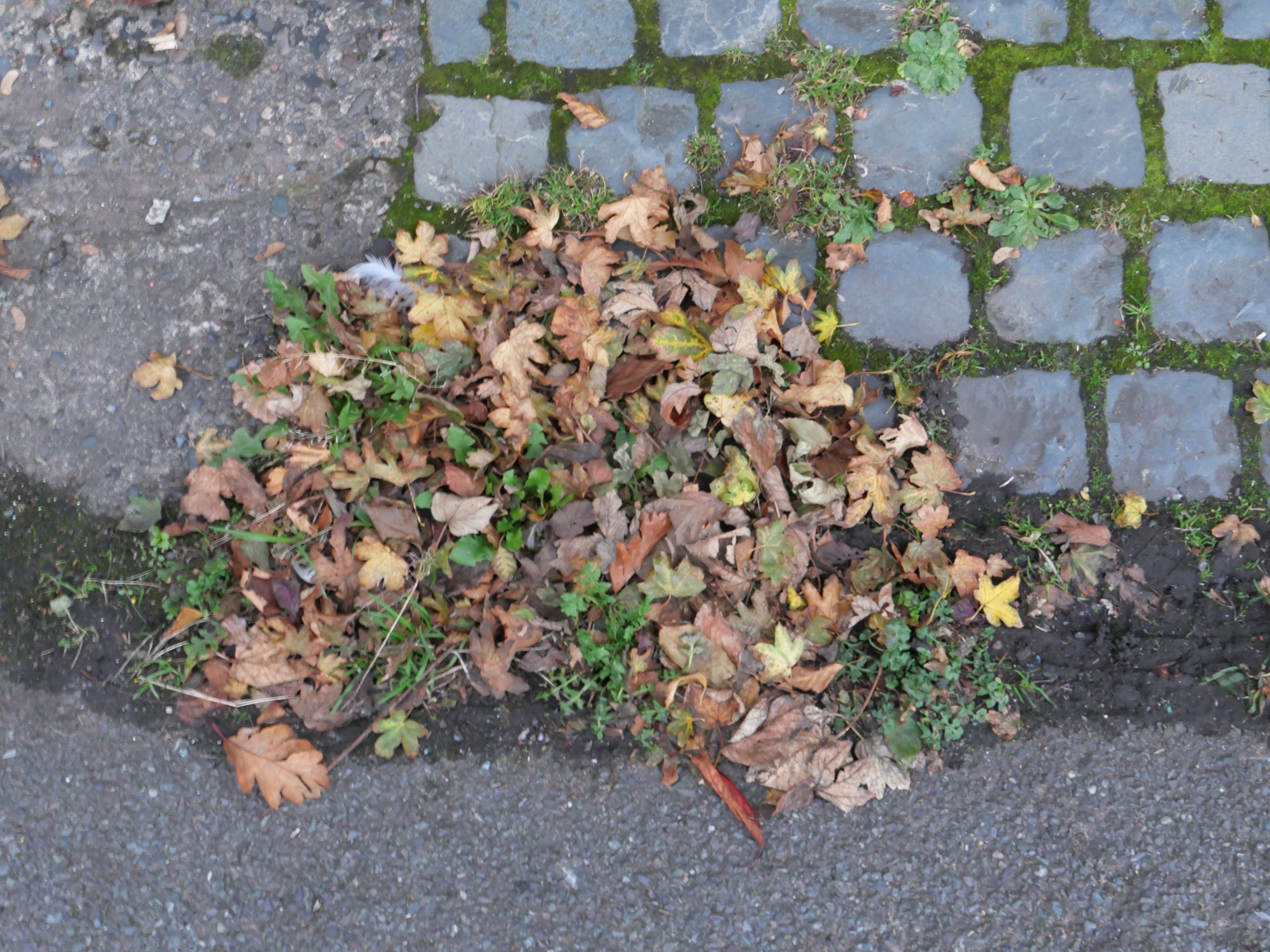
We then arrive at the paradoxical idea of the New European Bauhaus that is perhaps contained in a bizarre Zen koan ― If beauty can be found in sustainability and inclusion, can inclusion be found in beauty and sustainability, and can sustainability be found in inclusion and beauty?
Or, we may consider a work by one of the original Bauhaus artists, Paul Klee’s Pedagogical Sketchbook. His ‘Initial Plan for a Section of the Theoretical Instruction at the German Bauhaus’, starts:
An active line on a walk, moving freely, without goal. A walk for a walk’s sake. The mobility agent is a point, shifting its position forward.
And ends:
We have arrived at the spatial color circle where all the arrows are superfluous. Because the question is no longer: “to move there” but to be “everywhere” and consequently also “There!”
Finally, to include something that sustains beauty in my life;
dawn, a blackbird sings
a day full of grit and grime
dusk, a blackbird sings

about the writer
Cesar Almeida
Cesar Almeida is the Senior Program Coordinator for Youth Empowerment at Faith in Place, a Chicago-based environmental justice nonprofit.
Cesar Almeida
Beauty is a relief to me. It’s something to always seek in a world full of ugly.
The majority of the time in my line of work, I measure the ugly. I create maps of food deserts, superfund sites, landfills, and disease, in an effort to solve the ugly. So, in this case, beauty is usually the solution to the ugly.
We don’t often create maps of “beauty”, but when we do, we call this “asset mapping”. It takes us out of the deficit mindset and helps us point out the things that make our lives better, such as schools, stores with fresh fruits, green spaces, etc.
This doesn’t necessarily influence me to believe that “assets” are necessarily beautiful. Sometimes assets are necessary or even a right (clean water). Beauty calls for a definition that is beyond what is necessary or a right.
I often experience beauty when I listen to a song that strikes a chord in my heart, see a person or thing that engulfs my attention and emotions, or feel overwhelmingly satisfied with an outcome.
What is beautiful to me may not be beautiful to someone else. For example, we all have a particular taste in music. One song can be beautiful to me, but truly atrocious to someone else. It’s the same for romantic attraction. But I think we can all recognize if a song is genuinely nice or a person is attractive, regardless of our subjective perspective.
As of this moment and paragraph, when I speak of beauty, I can only speak from personal experience. When something is beautiful, I usually verbally declare these words, “BEAUTIFUL”. Here is a list of the most recent moments that I declared these words:
- When reviewing a photograph for a client, which documented the exact thing we were trying to capture, in this case, a wedding proposal;
- When winning a high-stakes hand on the blackjack table at the casino;
- When listening to a friend share a story of success and accomplishment;
- When looking at the Chicago skyline from a Jet ski on Lake Michigan;
- When interacting with my cute, big-eyed 4-year-old baby brother.
These examples reveal that beauty can be experienced in many ways. I seem to experience beauty when an expected outcome is achieved. Beauty is a relief to me. It’s something to always seek in a world full of ugly.
These are my own thoughts written with assistive AI writing tools.

about the writer
Rosa Cerarols
Rosa Cerarols is a geographer and cultural activist. She is an Associate Professor in the Department of Humanities at Pompeu Fabra University (UPF) in Barcelona, where she teaches and conducts research in geohumanities, cultural geography, gender, and landscape studies. Beyond academia, she co-founded Konvent, a multidisciplinary space for cultural programming and artistic residencies, and has curated exhibitions and programs that connect art with territorial dynamics.
Rosa Cerarols
La bellesa que abraça el pas del temps
A mi m’atrau profundament la transcendència i l’harmonia que assoleix la bellesa de la vellesa.
Cal parlar sense embuts sobre la bellesa, d’allò que suposadament és o del que en realitat condiciona, especialment en relació al consens i a la construcció de la mirada. No per atzar, al Centre de Cultura Contemporània de Barcelona, s’hi pot veure l’exposició “El culte a la bellesa”. Es tracta d’una proposta prèvia de Janice Li per a la Wellcome Collection de Londres adaptada pel context local per blanca arias i Júlia Llull Sanz.
Després de veure-la em reafirmo en que la bellesa sovint constreny, té els seus propis cànons, especialment exigents per a les dones. No està alliberada, sinó tot el contrari, es sosté en un règim visual normatiu que sovint es tradueix en efectes nocius en la salut. Sembla que les nocions d’atractiu físic van canviant però la persecució per assolir-la mai s’atura. Es tracta d’una estètica poc ètica perquè nega allò inevitable, que és el pas del temps.
Però hi ha altres tipus de bellesa. A mi m’atrau profundament la transcendència i l’harmonia que assoleix la bellesa de la vellesa (en català les paraules sonen igual, només canvia la b inicial per v). La que exhibeix el pas del temps, l’arruga, l’experiència, la vida en la seva potència. És la bellesa a contrapel de la societat edatista que tenim. La filòsofa Mari Luz Esteban Galarza hi ha reflexionat en el llibre Manifest de la nova dona vella, on es reivindica a partir del feminisme i d’allò col·lectiu.
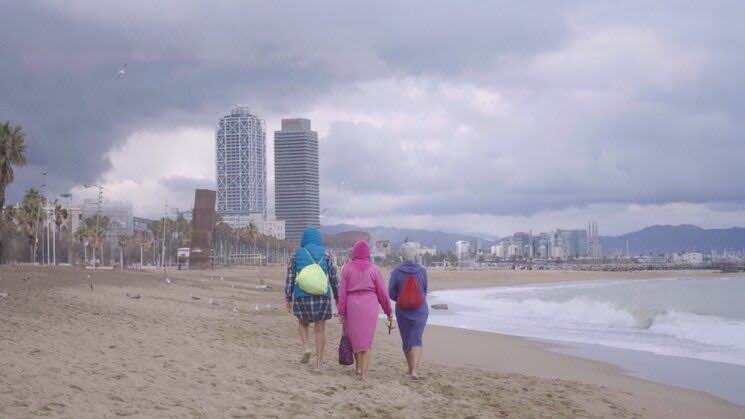
Al barri de la Barceloneta hi ha un col·lectiu de dones de gairebé vuitanta anys que, cada dia de l’any, es banyen a la platja, faci el temps que faci. Una bella connexió entre el cos, la natura i la vida. Aquesta bellesa ens parla de reivindicació i apoderament, de cossos que transmeten la saviesa de la vida viscuda i que habiten la pell amb orgull. També son mostra d’arrelament, comunitat i cura. Un fer quotidià vinculat al mar, que ens recorden la importància de respectar i cuidar la platja. Cada matí, a més de submergir-se, recullen la brutícia que troben a la sorra i a l’aigua. Aquesta relació íntima entre cos, natura i barri es converteix en una forma de resistència i en un exemple de convivència sostenible.
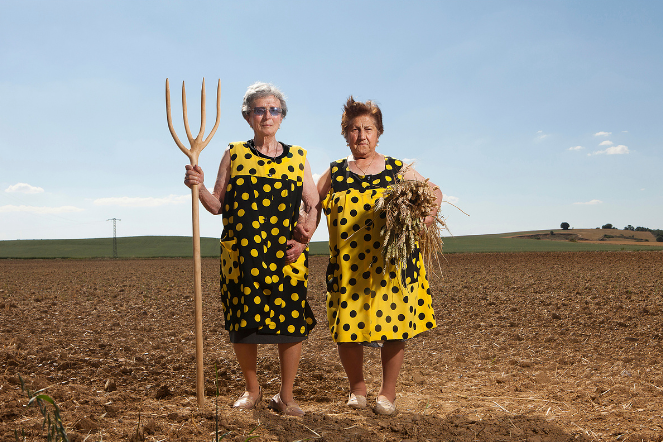
Aquesta bellesa inclusiva em connecta amb altres projectes que parlen de dones valentes, que abracen i commemoren el pas del temps. “Tribut a la bata” de Lucía Herrero, busca l’estranyesa de la bellesa a partir de la seva antropologia fantàstica visibilitzar i fer un homenatge a les dones que porten bata. Una indumentària que per un cantó protegeix de la roba de carrer i per l’altre encarna una forma de vida: les cures, l’entrega silenciosa, el matriarcat invisible dins d’una estructura social profundament patriarcal. Es tracta d’un projecte nascut a Villamienzo (Palencia), un territori travessat per la despoblació i l’èxode rural de l’interior de la Península Ibèrica.
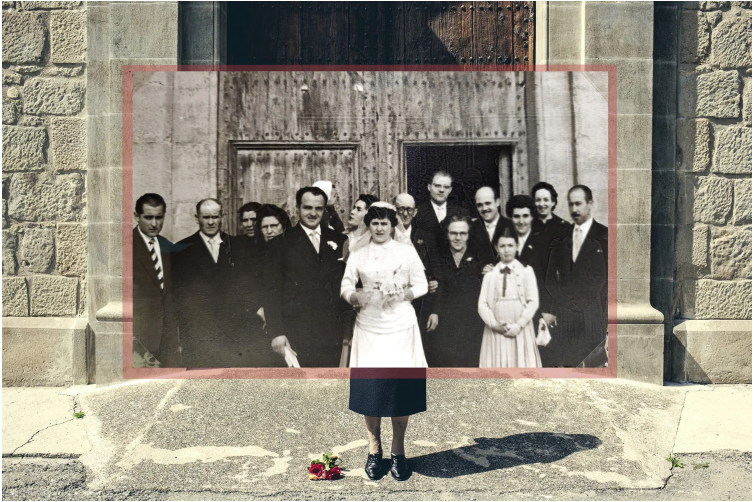
“Grans” és un projecte fet al poble d’Avià (Berguedà) per l’artista visual Severine Sajous amb la complicitat del projecte cultural Konvent en el primer deconfinement de la pandèmia COVID-19. Una pràctica d’art comunitari amb la gent gran, la que més va patir el confinament. Amb l’objectiu de posar-los al centre i celebrar la vida en comunitat es va treballar amb els àlbums familiars. Es van tornar a fer les fotografies escollides en el lloc concret on s’havia tirat la fotografia. Un exemple és el de la Caterina Pujol en el dia del seu casament l’any 1958, fotografia que també es va concebre per fer memòria a l’amor al marit mort durant la pandèmia.
Aquests exemples s’allunyen de la bellesa de la selfitis contemporània, il·lustren una bellesa més de l’estil de Junichiro Tanizaki, que incita a mirar i a comprendre des d’una altra perspectiva, més situada, i que inclou una infinitat de matisos i potencial, com el que en temàtica paisatgística emana del manifest del tercer paisatge de Gilles Clément.
Referències:
Clément, Gilles (2014). Manifeste du Tiers paysage. Paris: Sens&Tonka.
Esteban Galarza, Mari Luz (2020) Manifest de la nova dona vella. Barcelona: Pol.len Edicions.
Tanizaki, Junichiro (2020). Elogio de las sombras. Barcelona: Navona
* * *
Beauty in the passage of time
I am deeply drawn to the transcendence and harmony achieved by the beauty of old age.
We need to speak openly about beauty, about what it is supposedly meant to be and what in fact conditions it, particularly in relation to consensus and the gaze’s construction. It is no coincidence that the “Cult of Beauty” exhibition can be seen nowadays at the Centre de Cultura Contemporània de Barcelona. It is a previous proposal by Janice Li for London’s Wellcome Collection, adapted to the local context by Blanca Arias and Júlia Llull Sanz.
After seeing it, I am reaffirmed in my belief that beauty often constrains us, that it has its own canons, particularly demanding ones for women. It is not liberated; quite the opposite. It is sustained by a normative visual regime that often translates into harmful effects on health. It may seem that notions of physical attractiveness are changing, yet the pursuit of attaining it never ceases. It is an unethical aesthetic because it denies the inevitable: the passage of time.
But there are other kinds of beauty. I am deeply drawn to the transcendence and harmony achieved by the beauty of old age (in Catalan, the words vellesa and bellesa sound alike; only the initial b changes). The beauty that displays the passage of time, the wrinkle, experience, life in all its power. It is a beauty that runs counter to the ageist society we live in. The philosopher Mari Luz Esteban Galarza reflects on this in her book Manifest de la nova dona vella, reclaiming it from a feminist and collective perspective.
In the Barceloneta neighbourhood, there is a group of women, nearly eighty years old, who go swimming in the sea every day of the year, whatever the weather. A beautiful connection between the body, nature and life. This beauty speaks to us of revindication and empowerment, of bodies that convey the wisdom of lived experience and inhabit their skin with pride. They also embody rootedness, community and care. A daily practice connected to the sea, reminding us of the importance of respecting and caring for the beach. Every morning, in addition to immersing themselves in the water, they collect the rubbish they find on the sand and in the sea. This intimate relationship between body, nature, and neighbourhood becomes a form of resistance and an example of sustainable coexistence.
This inclusive beauty connects me with other projects that speak of courageous women who embrace and commemorate the passage of time. “Tribute to the Housecoat” by Lucía Herrero seeks the strangeness of beauty through her fantastic anthropology, making visible and paying tribute to women who wear housecoats. A garment that, on the one hand, protects them from their street clothes and, on the other, embodies a way of life: care, silent devotion, the invisible matriarchy within a deeply patriarchal social structure. The project was born in Villamienzo (Palencia), a territory marked by depopulation and rural exodus from the interior of the Iberian Peninsula.
Grans is a project created in the village of Avià (Berguedà) by visual artist Severine Sajous, with the involvement of the Konvent cultural project, during the first easing of lockdown restrictions in the COVID-19 pandemic. It was a community art practice with older people, those who suffered most from confinement. With the aim of placing them at the centre and celebrating life in the community, the project worked with family albums. The photographs selected were recreated in the exact places where the original photographs had been taken. One example is Caterina Pujol on her wedding day in 1958, a photograph that was also conceived as a way of keeping alive the memory of her love for her husband, who died during the pandemic.
These examples move away from the beauty of contemporary selfitis. They illustrate a beauty closer to the spirit of Junichiro Tanizaki, one that encourages us to look and understand from another, more situated perspective, one that encompasses an infinity of nuances and potential, much like what emerges, in landscape terms, from Gilles Clément’s Manifesto of the Third Landscape.
References:
Clément, Gilles (2014). Manifeste du Tiers paysage. Paris: Sens&Tonka.
Esteban Galarza, Mari Luz (2020) Manifest de la nova dona vella. Barcelona: Pol.len Edicions.
Tanizaki, Junichiro (2020). Elogio de las sombras. Barcelona: Navona

about the writer
Ania Upstill
Ania Upstill (they/them) is a queer and non-binary performer, director, theatre maker, teaching artist and clown. A graduate of the Dell’Arte International School of Physical Theatre (Professional Training Program), Ania’s recent work celebrates LGBTQIA+ artists with a focus on gender diversity.
Ania Upstill
A park might be lovely to look at, but if it is surrounded by a polluted city, it likely won’t be beautiful to spend time in.
When I think of the word “beauty”, my mind goes first to art and aesthetic experiences: something that is visually appealing, whether that be a painting or a wild meadow. This isn’t surprising. After all, I work in theater, an artistic medium that is highly visual. We also live in an increasingly visual culture (think social media, advertising, and the decline in reading), and my most cynical side can see the clear tactical advantage in including this as a pillar of the New European Bauhaus. If something is visually beautiful, people might want to preserve it more: if only for the selfies. Visual beauty adds value: just ask someone with an attractive but expensive purebred pet. Yet thinking more about this is reference to my artistic discipline, theater isn’t only visual, and neither is our world. The most powerful aspects of theater are often felt in addition to seen, experienced through sound, connection between actors and audience, the way one is welcomed into the auditorium. These all lead to the feeling of anticipation as the lights go down, and the enjoyment of any theatrical experience.
When thinking experientially, beauty can mean a much greater variety of things. It could be a pick-up game of basketball at sunset with friends. A fresh breeze in spring that says, yes, summer is coming. Smelling the deep scent of a rose on a hot day. It could apply to anything that makes a life more rich, more pleasing: more beautiful. Examples of beauty like these make me think more about how life can be enriched beyond aesthetics, and point to more expansive aims than just the ability to make a pretty painting or a pleasing landscape. Let’s imagine that we decide to embrace beauty as a word that applies to pleasurable, enjoyable, or enriching experiences, and that we believe that all people should be able to access those experiences as part of a rich human life. If that is our definition, then we are thinking about a more just, equitable, and environmentally conscious world in addition to one that might be visually appealing. A park might be lovely to look at, but if it is surrounded by a polluted city, it likely won’t be beautiful to spend time in. If local residents don’t have time to spend in the park due to long working hours and a difficult commute, the park won’t be adding much beauty to their lives. When thinking about beauty, we need to think about not only what it looks like, but who has access, who gets to determine what defines beauty, and how it is experienced. When these considerations are brought into the conversation, we can turn what could be only an aesthetic approach into a holistic one. Combined with the other NEB initiative pillars of sustainability and participation, this expanded approach to beauty can truly enrich human lives and ― in combination ― bring us back into balance with our non-human world.

about the writer
Matthew López-Jensen
Matthew Jensen is an interdisciplinary artist whose rigorous explorations of landscape combine walking, collecting, photography, mapping and extensive research. His projects investigate the relationships between people and local landscapes.
Matthew López-Jensen
I stopped on a bridge to watch the waterfall billowing in the glow of streetlights. It was serene; only there were no insect clouds zipping around the streetlights, no clever spiders with webs overwhelmed by catches.
The beauty of a place can be measured by the number of heartbeats it holds.
A goldfinch heart beats about 600 times per minute. A common pipistrelle bat’s heart rate can reach 1,000 beats per minute when hunting. A bumblebee averages around 180 beats per minute while flying from flower to flower. A fox’s average of 125 will drop if it finds a safe place to hide. Grasshoppers and humans both average about 70 beats per minute. However, if the human or grasshopper starts hopping around, this number will rise. You won’t find a singular heartbeat in the plants and trees creating urban habitats for these animals, but they do have a pulse. Taken together, it’s certainly a vibe.
I avoid using the word beauty when I can. The same way I avoid words like happiness, nature, and sustainability. Messy places are often the most beautiful and hold the most heartbeats. They are messy because they invite participation from people, animals, and plants. Someone gardens here, plants those over there, builds a nest in that corner, raises a family in the brush pile. There are dirt paths, porous borders, places to hide, things to touch, berries to snack on, and plants to pick when you need them. Such places are rarely architectural showpieces; they are more like non-places and tend to design themselves. I love places like this, but not everyone does. Agencies, municipalities, and councils can’t stand them.
Everyone called me “Nature Boy” growing up, usually prompted by my simply knowing the name of something. I revolted against the Great Indoors, and video games never did it for me, so I carried the name with pride. It was, however, not a compliment. It meant that I belonged more to the things outside than to everyone in the room doing whatever it was at that moment. It also implied that whoever said it was somehow more evolved because of the distance they had put between themselves and the non-human. The word “nature” implies all that stuff out there. When the word is spoken or read on an interpretive sign, a small fissure is opened between us and the world. It is in this break where wedges are hammered until it becomes okay to do unfathomable things to incredible places.
I applaud every attempt to build and design better. Insect gardens everywhere, please! And bat houses, green roofs, bird walls, bee bricks, meadows, windrows, animal bridges, urban streams, street trees, bioswales, toad tunnels, artificial reefs, dead wood, native grasses, pocket forests, and free-flowing rivers. But I haven’t had a grasshopper land on me in years, and I’m always outside.
A few weeks ago, I was walking over a bridge at night in the center of a small New England town, one of the greenest places I know. I stopped on a bridge to watch the waterfall billowing in the glow of streetlights. It was serene; only there were no insect clouds zipping around the streetlights, no clever spiders with webs overwhelmed by catches. As a kid, as a nature boy, I’d investigate these macabre scenes to try and spot a new bug, new to me at least. I’d also walk around parking lots inspecting the grills of cars and trucks to see what entomological wonders they held.
Now, I’m never not worrying about the global insect die-off. First-hand evidence haunts me. Insects are the mega-gods that permit, transmit, and sustain life on this planet. Insects might seem like a departure from the spirit of the New European Bauhaus initiative, but so many of the best new designs, those making space for non-human life, do so with the assumption that life will be there to take up residence. Most birds and bats rely on insects to survive. Pollinator gardens are for pollinators. Frass, the byproducts made by insects, is a critical immune booster for ecosystems.
The European Environment Agency cites reports of insect losses nearing 75% even within some protected areas. The alarm bells have been sounded in some circles. The Council Recommendation on the New European Bauhaus and the Handbook of tools for informing and monitoring urban greening strategies and nature plans mention biodiversity loss but stop short at using the word insect. Redesigning for a better future with local stakeholders at the center, building by building, plot by plot, community by community, is the only way forward. However, insects need to be a spoken reality and fiercely defended. Pesticides are going to make most of our sustainability redesigns moot. While we work on the local, we need decision-makers acting at continental and global scales because pesticides work and they don’t stay put. I’m certainly rooting for sustainable, inclusive, beautiful, and enriching places. I just don’t want to get there and be alone, with just us humans.

about the writer
Carmen Bouyer
Carmen Bouyer is a French environmental artist and designer based in Paris.
Carmen Bouyer
Beauty is not an escape from reality. It is a way of making reality more inhabitable.
Beauty as transformation
After reading the description of the New European Bauhaus initiative, I do find myself thinking about how differently the notion of beauty has been held in different contexts and places. A century ago, the original Bauhaus seemed almost shy of naming beauty outright. Walter Gropius hoped to bring art, craft, and technology together, and the school’s daily practice was to let beauty arrive on its own, as a kind of grace that would follow when function was honestly met. No ornament, no excess, beauty as something that happens rather than something declared. Hannes Meyer, who came after him, went further, turning attention almost entirely toward what is useful and away from beauty as a word at all. Today the New European Bauhaus speaks beauty aloud, placing it as one of its three key goals alongside sustainability and inclusion. I notice this shift with curiosity, asking myself: if beauty is no longer something we arrive at sideways, through use, what might we be hoping to name when we call for it directly?
I would like to begin by honouring the beauty we might know best: harmony, proportion, elegance, soothing colours and textures, the pleasure of something made with care and designed to be pleasant to the eyes. This beauty matters, and it feels increasingly rare. In a world that moves quickly, that often prefers the standardised to the patiently crafted objects, spaces and experiences. This “classical” notion of beauty still holds much importance. Though it can often refer to a notion that is separated from day-to-day life, maybe too formalistic, sometimes elitist, and removed from social issues.
For myself, I would offer another way of approaching the meaning of “beauty”. Beauty, as I have come to feel it, arises from transformation, when we are transformed for the better. It is not so much a quality resting in an object as something that happens within us. A movement toward feeling more alive, more awake, more connected, more at peace, or simply able to see differently than before. Beauty is therefore not passive or decorative; it is active and transformative.
A work of art can be disturbing, strange, even ugly at first encounter, and still be beautiful in what it makes possible. An artwork may challenge everything we thought we understood, yet if through that encounter we become more capable of seeing, feeling, understanding, or connecting, something meaningful has happened to us. The transformation may be uncomfortable, but it can still be positive in the deeper sense: it enlarges our capacity to live.
Grief, injustice, loneliness, and ecological loss all deserve to be faced. But perhaps there is a difference between showing suffering and trapping us within it. Beauty can be the generosity of creating a passage through experience, toward greater awareness and recognition. Something might be healed or restored in the experience; perhaps the feeling of separation dissipates, and we feel that we belong. In this sense, beauty is not an escape from reality. It is a way of making reality more inhabitable.
This feeling of beauty as a life-enhancing transformational agent echoes with the qualities of “matriarchal aesthetic” developed by German philosopher and researcher Heide Göttner-Abendroth, who dedicated her life to studying non-patriarchal societies across the globe1. These societies have non-hierarchical, gender-egalitarian systems rooted in maternal values. In her book The Dancing Goddess: Principles of a Matriarchal Aesthetic2, drawing on her comparative interpretation of contemporary matriarchal cultures on all continents, she observed a common approach to aesthetics that can be of interest to us today.
Göttner-Abendroth argues that matriarchal art transcends what she calls the “fictionality principle”, the confinement of art to a beautiful semblance, separated from real life. Beyond this separation, art becomes “magic”: a symbolic intervention capable of changing reality. Indeed, art can use symbols to work upon psychic and social reality. Art therefore does not merely represent the world; it participates in transforming our experience of it.
Importantly, this transformative power is not imagined as an individual artist’s act performed upon a passive spectator, but more as a process shared by participants. The boundary disappears between artist and audience, performer and participant, self and other, human and nature. In matriarchal cultures, festivals, dances, songs, music, myth, craft, and ceremony belong to an integrated aesthetic practice in which the social, the sacred and the everyday blend. Dance is an especially revealing example as it can simultaneously be artistic expression, ritual, social gathering, and a way of relating the community to place and land.
The untwining of sustainability, beauty, and inclusion in the New European Bauhaus structure echoes the common mythological and cosmological framework of matriarchal arts where the cycles of earth, the seasons, and the recurring rhythms of life are enacted and celebrated through artistic and participatory social gatherings.
Beauty and the aesthetic experience become a way of enhancing the vitality of our relationship with one another, with nature, and with the larger cycles of which we are part. In the words of Göttner-Abendroth, this artform could “through its processes of social change, bring about the aestheticization of the entire society”.
With this approach, the question shifts from: “Is this object beautiful?” toward something closer to: “Does this activity, image, or form participate in and enhance the living whole?”
References:
- Heide Göttner-Abendroth, Matriarchal Societies: Studies on Indigenous Cultures Across the Globe (Peter Lang, 2012).
- Heide Göttner-Abendroth, Die tanzende Göttin (The Dancing Goddess: Principles of a Matriarchal Aesthetic, originally 1982; English translation 1991)

about the writer
Suné Stassen
Suné Stassen is a Cape Town-based social entrepreneur, designer, design educator, futurist and Co-Founder and CEO of Open Design Afrika. A dot connector, systems thinker and doer, she helped pioneer South Africa’s globally significant introduction of Design as a secondary school subject. Her work advances Creative Intelligence, STEAM learning, social-impact entrepreneurship and future-building skills.
Suné Stassen
Can Beauty Make Us Care Enough?
Ask what you want to awaken in people through beauty. Then design for that.
When last did beauty stop you in your tracks?
Maybe it was a piece of music. Those first few notes that suddenly shift something inside you.
Maybe it was the ocean on a windless morning. The smell of rain. Sunlight dancing through the leaves of a tree. A meal that tasted so good you closed your eyes for a second.
Or maybe it was nothing tranquil at all.
Maybe it was a street bursting with music and colour. People talking. Food cooking. Children laughing. That wonderful feeling of life happening all around you.
You know the feeling.
You want to stay. Just a little longer.
Or hear that song again. Return to that place. Share the experience with someone you love.
Why?
Perhaps because there is more to beauty than we think.
We are returning to how it made us feel.
That, to me, is when beauty expands into something so much more. Layered. Interconnected. Never in isolation.
Beauty reaches us through what we see, hear, smell, taste, and touch. And somehow, through our senses, it stirs something inside us too.
It can lift us. Calm us. Excite us. Move us. Make us curious, playful, hopeful. Connected. Content. Alive.
Sometimes it gives us goosebumps. Sometimes it simply makes the day feel better.
And just maybe we underestimate the value of that.
Because how we feel matters.
It travels within us.
A beautiful piece of music can change the way I step into my morning. Time in nature can quiet some of the noise in my head. Joy can give me energy. Wonder can make me curious again.
These shifts in our state of mind matter. Our mental wellbeing is not separate from how we experience the rest of our lives. How we feel can influence how we work, connect with others, respond to challenges and participate in the world around us.
Beauty is not a cure for poor mental health. But surely beautiful experiences and environments can contribute positively to how we feel. Moments of joy, calm, wonder, connection and belonging can become part of what supports our wellbeing.
And what we carry from those moments can ripple into what happens next. Into our work. Our conversations. How we treat someone. What we notice. What we care about.
Perhaps this is part of what it means to design for thriving.
Because none of it happens in isolation.
So why, when we design, do we so often treat beauty as an add-on at the end?
Make it beautiful, they say.
But what if we change the brief?
What do we want to awaken in people through beauty?
Imagine that question as a priority in a design brief for a city.
I want people to feel happy here. Safe enough to relax and free enough to be themselves. I want strangers to meet. People to laugh. Quiet places too. Trees. Water. Birds. Somewhere to breathe.
I want surprise. Music. Colour. Food. Celebration.
I want nature to flourish, not somewhere unreachable behind a fence, but around us, with us, part of us.
And I want children to have adventures too.
Imagine putting this into a design brief:
Create places where children can make memories they will want to carry for the rest of their lives.
Think how differently we might design.
Give them somewhere to climb. Hide. Splash. Discover. Space to run, imagine, get dirty, and invent worlds adults cannot see.
Keep them safe, yes. But don’t make them so safe that we design the childhood out of childhood.
And perhaps, forty years later, they won’t remember the architecture at all.
They’ll remember the tree. The smell. The sound. The adventure.
How they felt.
And there it is again.
The experience may be over, but the feeling has endured.
Pretty can attract our attention.
Beauty can move us.
Beauty with intent can create relationships.
A song becomes our song. A place becomes our place we keep returning to. A landscape becomes part of how we understand home. A childhood spent exploring nature can become a connection we carry into adulthood.
And when something has meaning for us, we tend to care about what happens to it.
We return to it. Share it. Look after it. Protect it.
Perhaps this is where we start to connect the dots.
Because what if sustainability isn’t only about persuading people of what they must protect?
What if beauty is where sustainability begins?
Not because everything beautiful will automatically endure. But because beauty can awaken connection. Connection can create care. And care can give us a reason to protect and sustain something.
And sustained value doesn’t necessarily mean the physical thing must last forever.
The tree we climbed as a child may be gone. The house may no longer exist. The street may have changed completely.
But what happened there can continue to live inside us.
The memory. The feeling. The connection. What it taught us to value. Perhaps even what we choose to recreate for our own children.
Beauty with intent has the potential to create value far beyond the moment in which we experience it.
So perhaps we shouldn’t only ask:
Will this last?
We should also ask:
Will its value last?
Will what it awakens in us influence what we care about, what we protect, and what we choose to pass on?
And could that be part of how we design a world in which people and nature don’t simply survive, but truly thrive?
So don’t just make it beautiful.
Ask what you want to awaken in people through beauty. Then design for that.

about the writer
David Maddox
David loves urban spaces and nature. He loves creativity and collaboration. He loves theatre and music. In his life and work he has practiced in all of these as, in various moments, a scientist, a climate change researcher, a land steward, an ecological practitioner, composer, a playwright, a musician, an actor, and a theatre director. David’s dad told him once that he needed a back up plan, something to “fall back on”. So he bought a tuba.
David Maddox
A place where everyone’s beauty score is 7 is quite different from one where half the people score it 10 and half 4—even though their average is the same. For NEB’s combination of beauty + participation, that disagreement may be one of the most interesting things. And recognizing this might make them more sustainable, too.
There is no spoon
And there is no measure of beauty. But there are many. A mosaic or profile approach makes more sense. One place might be visually spectacular but alienating; another visually ordinary but deeply loved. Both matter.
And who would decide what is beautiful, anyway?
Beauty could be measured through distributions rather than averages. Ask residents, visitors, children, designers, migrants, scientists, planners, architects, businesses, artists, and so on separately. A mean score of 7/10 hides the much more interesting finding that, say, planners rate a place 10 while residents rate it 4.
Beauty (and its measurement) is not an intrinsic property of a place—it is a relationship between people and place
We can measure the sensory, emotional, and cultural experiences through which beauty is perceived—such as belonging, meaning, distinctiveness, and delight—and examine how these experiences differ among people, communities of experience and practice, and neighborhoods. We can also measure how these correlate with other site characteristics and outcomes. This is compatible with NEB’s own language. The European Commission says aesthetic experience varies by identity, cultural background, past experience, time and place, and goes beyond visual quality or personal taste into cultural, political and social dimensions.
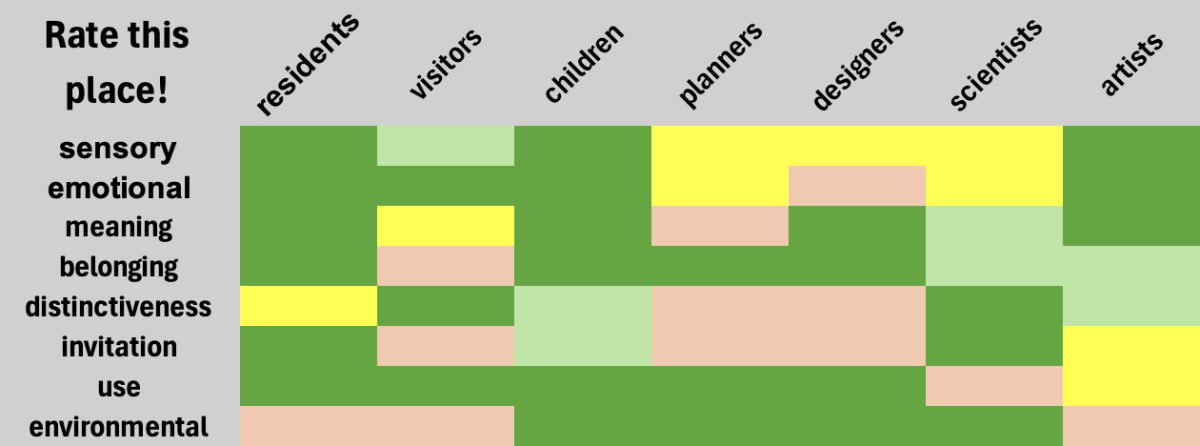
Combine quantitative with qualitative
So, a useful methodological possibility emerges: combine quantitative experience surveys with qualitative storytelling and artistic inquiry. The survey tells you how much and for whom; stories and art helps reveal why. That would make “measuring beauty” substantially richer than simply giving architecture an aesthetic score. The component measures themselves could represent elements of experience: sensory, emotional, meaning, belonging, distinctiveness, invitation. So, the “measure” would be a mosaic tile. (I might have looked for multidimensional patterns with a principal component analysis, but that was in a former life.)
There are some precedents
Daniel and Boster’s 1976 USDA Forest Service method explicitly treated scenic beauty as something that could be quantified through people’s judgments of landscapes, rather than assigned solely by experts. It was tested across public, professional, and interest groups and became influential in landscape planning1. Wartman et al. (2021) studied multiple dimensions rather than asking simply, “Is this beautiful?” They measured beauty, complexity, distinctiveness, fascination, and authenticity using public surveys and then related those perceptions to landscape characteristics and place attachment2. Perceived Environmental Aesthetic Qualities Scale (PEAQS) intends to avoid missing how environments are actually experienced by looking at multisensory and experiential perception3. A 2025 rural-landscape study developed an 18-item measure with five dimensions—multisensory beauty, sublimeness, harmony, diversity, and cleanliness—and tested how these relate to place attachment and people’s desire to return4. There are other examples, but maybe not as many as we would like.
Still, any measure should not focus on an “average” experience
Because describing an average person describes no one. [I am reminded of a favorite quote: “Just remember you are unique … just like everyone else.”]
Seek measures that combine qualitative and quantitative approaches to sensory experience + emotional response + meaning + belonging + distinctiveness + invitation and use, while explicitly examining differences among communities rather than treating beauty as an average public preference.
Instead of reporting that “Beauty = 7”, report the distribution across groups. A place where everyone scores 7 is quite different from one where half the community scores 10 and half scores 4—even though their average is the same. For NEB’s combination of beauty + participation, that disagreement may be one of the most interesting things to know. And recognizing this might make them more sustainable, too.
Notes:
1 . https://research.fs.usda.gov/treesearch/20911?utm_source=chatgpt.com
2. https://link.springer.com/article/10.1007/s10980-021-01290-y?utm_source=chatgpt.com
3. https://www.sciencedirect.com/science/article/abs/pii/S1618866719301359?utm_source=chatgpt.com
4. https://www.sciencedirect.com/science/article/abs/pii/S2212571X25000472?utm_source=chatgpt.com
about the writer
Suneetha Subramanian
Suneetha M Subramanian works on biodiversity and human well-being, socio-ecological resilience with a specific focus on equity, bridging across knowledge systems and policy-practice alignment for sustainable solutions.
Suneetha M Subramanian
To me, beauty in a city is a place where nature is valued and is an active participant in our daily lives.
Beauty in the City (as I perceive)
My adult life has taken me to several cities ― big and small ― for work and leisure. Every city has an inherent character, shaped by its geography, ecology, history, culture, and people.
There are cities that have a soothing tenor to their rhythms, and there are those that are hyper metallic on the spectrum. And then there are the ones in between, where a turn from a highway road could lead to alleyways that are quaint, bespoke, and speak of long interactions between people and the land (including coasts) that are still thriving despite a multitude of transformations to the economy and socio-political milieu.
To me, beauty in a city is a place where nature is valued and is an active participant in our daily lives ― we use and pass by gardens, parks, and paths shaded by plants that are habitats harbouring life.
It is a place where there is certainty of rules of traffic, where every life is cherished and accounted for in the design.
It is a place where people are responsible and are proud of their place and heritage.
It is a place where art and culture is intertwined in the public space.
Where heritage is respected, and a sense of belonging and ownership among citizens is actively nurtured through public engagement, ease of movement and connectivity, ease of accessing utilities, managing waste, and a culture of mindfulness.
It is a place where local markets and diversity of food, resources, and people are active living traditions, have dignified spaces, and co-exist with highly controlled supply lines and consumer marketing systems.
A place where enterprise and livelihood security are supported, complementing industrial development.
It is a place where it is easy to repair and recycle stuff.
It is a place where beauty is about living well ― in harmony with nature and its elements and in collaboration between the very many actors.
about the writer
Mauricio Diazgranados
Mauricio Diazgranados is Chief Science Officer and Dean of Science at the New York Botanical Garden (NYBG), where he leads strategic planning and oversees the Garden’s scientific programs, collections, research centers, herbarium, library, laboratories, and graduate studies. He also fosters global collaborations to address the intertwined challenges of biodiversity loss and climate change. His research focuses on plant and fungal diversity, conservation, sustainable use, and the impacts of climate change, particularly in the tropics.
Mauricio Diazgranados
A beautiful city is one where a child can walk to school, a stranger feels safe after dark, and people trust that what is shared is being looked after.
Beauty is an instinct for Survival
What does beauty mean? We usually answer with harmony, proportion, elegance, pleasure. I want to try a different hypothesis, one I have arrived at after years of walking through forests, farms, and cities: beauty is not only an aesthetic judgment. It is also an instinctive recognition of the conditions that allow life to persist. Across nature, bodies, landscapes, and cities, we call beautiful what signals vitality, health, safety, and care. Beauty is not superficial. It is survival made visible.
In nature, colors and shapes are not decoration but the result of countless experiments in survival and reproduction. Flowers evolved colors, scents, and patterns that attract pollinators and protect tissues. What we experience as beauty often emerges from traits that helped life endure.
Consider the elaborate plumage of many male birds, shaped by sexual selection: it attracts mates even as it exposes the bird to predators. Females in many species are cryptically colored, reducing risk while nesting. Beauty is not an ornament added to life; it is one of the ways life negotiates reproduction, risk, and continuity.
Our sense of beauty in human bodies is similarly, if imperfectly, linked to health, strength, and capability — and it varies with culture and livelihood. In the Colombian Andes, where I grew up, strength is admired because it is useful. I recall farmers looking at images of very thin fashion models and wondering how such bodies could manage rural work. Their judgment was not merely aesthetic; it was shaped by practical survival.
Something similar may explain our pleasure in spirals, Fibonacci-like sequences, and golden proportions, which arise from efficient growth under biological and physical constraints. We find them beautiful because they are ordered without being rigid, and complex without being chaotic.
Beauty is also influenced by perceived threat. Flowers, birds, and mammals seem beautiful partly because we meet them from a position of safety. We call rats, snakes, spiders, and mosquitoes ugly because we associate them with danger or disease. Yet knowledge transforms perception: understanding their ecological roles and observing them safely turns fear into fascination. The same organism can become beautiful once it is no longer experienced as a threat. This is also why the question of who decides what counts as beautiful matters: judgments of beauty track who feels safe, who is informed, and who has never had to live with the thing being judged.
Landscapes work this way too. A forest rich in life feels profoundly beautiful when explored with knowledge and security; lost, hungry, or afraid, we find it hostile. Beauty depends not only on what we see but on our relationship to it. None of this is an argument for tidiness. A storm, a ruin, a tangle of wild growth can be beautiful too, because they read as life in motion rather than life foreclosed.
The same logic extends to cities, where beauty is not only a matter of architecture or style but a signal of care, safety, and well-being. Places marked by neglect, pollution, broken infrastructure, or fear often feel ugly because they suggest risk and abandonment. Places that are clean, maintained, shaded, welcoming, and alive feel beautiful because they show that people, ecosystems, and institutions are caring for them.
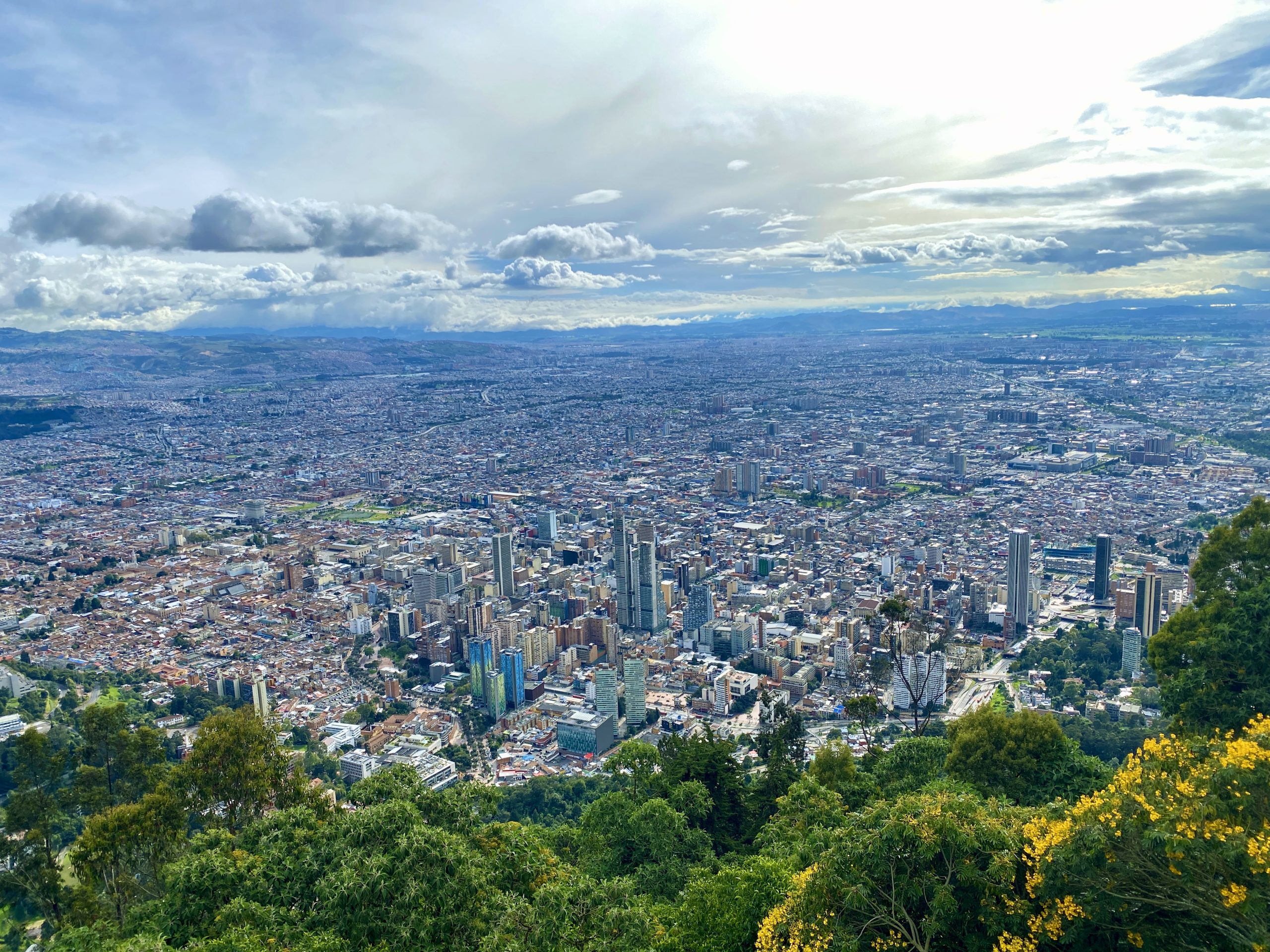
Scale matters, too. From the mountains above, Bogotá spread across its plateau looks magnificent, yet beauty at street level depends on whether neighborhoods are walkable, breathable, safe, and cared for.
This perspective helps explain the power of the New European Bauhaus triad of sustainability, participation, and beauty. Sustainability asks whether a place can endure. Participation asks who is included in shaping it. Beauty allows people to recognize a place as worthy of care and protection. And it can be measured, at least in part, if we measure the right things: clean air, tree canopy and shade, access to water and green space, safety after dark, the condition of what is held in common. What escapes the measure is the attachment those conditions produce — but the conditions themselves are countable.
What makes a city beautiful, then, is not a particular style or architectural language. A beautiful city is one where a child can walk to school, a stranger feels safe after dark, and people trust that what is shared is being looked after. Beauty is what sustainability and participation feel like when they become tangible. It is the visible promise that life can continue here and that the place is worth loving.
about the writer
Miquel Rafa
Miquel Rafa is the Director of Sustainability and Territory at the Foundation Catalunya-La Pedrera, where he works since 1998.
Biologist, specialized in nature conservation with an experience of over 30 years working for conservation NGOs in Catalonia and at international level (DEPANA, WWF, IUCN, EUROSITE, UIAA, etc.). President of the Nature Conservation Council of Catalonia and member of the World Commission on Protected Areas (IUICN- WCPA). Has collaborated in numerous radio and TV programmes as a communicator on Nature and travels around the globe. A passionate alpinist, has climbed many peaks in the Pyrenees, Alps, Andes and Himalaya and has also travelled to many natural areas over the world in search of wildlife.
Miquel Rafa
What Beauty Means to Me
Perhaps the deepest form of beauty is not simply harmony that we admire, but harmony that we learn to care for.
What is beauty?
For me, beauty is, above all, a perception of balance and harmony. I do not think beauty is an objective quality that simply exists in things. It is, to a large extent, a human construction. Our brains interpret what we see, hear, smell, touch, and experience, and transform it into a perception that we call beautiful.
This is why beauty can be so difficult to define. It changes across cultures, generations and individuals. It is influenced by memory, experience and emotion. And it is certainly not limited to what our eyes perceive. A place can be beautiful because of its colours and forms, but also because of its sounds, its smells, the feeling of the air on our skin, or simply because we feel unexpectedly at ease there. Sometimes beauty is not something we look at, but something we experience with our whole body.
My perspective is also shaped by many years working in ecology and nature conservation. This has made me think about another dimension of beauty.
When we encounter a particularly beautiful natural landscape, what are we actually perceiving?
Perhaps, without being fully conscious of it, we are responding to the extraordinary complexity and coherence of a living system. A mature forest, a wetland, a mountain landscape or a Mediterranean mosaic is not simply a collection of beautiful elements. Its beauty emerges from relationships: between plants and herbivores, predators and prey, water and soil, light and vegetation, living organisms and the physical environment. Energy and matter circulate through the system, and countless interactions take place continuously.
I would not say that beauty is proof that an ecosystem is in ecological equilibrium, but there is something that connects both. Nature is dynamic, and even the most beautiful landscape may be undergoing profound change. But I believe that what we experience as harmony can sometimes be a perceptible expression of the complexity, diversity, and coherence of an ecological system.
Perhaps this is part of the reason why certain landscapes produce such a powerful emotional response — what we sometimes describe as a Stendhal effect. We are suddenly overwhelmed by a sense of wonder, admiration, and connection. For a moment, we feel that we are not simply looking at a landscape; we are somehow part of it.
This makes me think that beauty may have an important role in conservation. We tend to protect what we value, and we often value what we love. Beauty can therefore create an emotional bridge between people and the places they inhabit. It can make us care.
But there is also a question of humility here. If beauty is partly constructed by human perception, we should be careful not to assume that what we find beautiful is necessarily what nature needs. A landscape does not have to be picturesque, orderly or pleasing to our eyes to be ecologically valuable. Sometimes ecological richness lies precisely in what appears messy, imperfect or unfamiliar.
Perhaps, then, beauty is not about imposing our idea of harmony on the world. It is about learning to recognise the many forms of harmony that already exist — including those that we do not immediately understand.
And if the New European Bauhaus asks what kind of world we want to love, my answer would be: a world whose beauty does not merely please us but helps us perceive our connection with the living systems of which we are a part.
Because perhaps the deepest form of beauty is not simply harmony that we admire, but harmony that we learn to care for.

about the writer
Gabino Carballo
Gabino Carballo Pérez is a landscape architect and environmental agrobiologist with over 25 years’ experience in green infrastructure, urban biodiversity and sustainable landscape design. As Founding Partner of Natural Base Solutions SL, he specialises in Nature-based Solutions, biodiversity enhancement and Sustainable Urban Drainage Systems applied to urban landscapes. He combines consultancy, project management, writing, teaching and international speaking, with a professional background that includes extensive work on public green spaces, ecological landscape management and urban resilience.
Gabino Carballo
That is the beauty of our world: a make-believe paradox made true by avoiding friction with uncomfortable facts and questions.
I guess this is one of those universal and eternal questions that can never be fully answered, and even if we could answer it, the results would be unsatisfactory. It is also one of those questions that lead us to common places that are hard to avoid without visiting the grotesque. What does beauty mean in our times? I suspect that the damage inflicted by shrapnel in an infant’s body (or several thousand) can trigger collective Stendahl’s syndrome in some quarters. This is nothing new. Vileness and depravity have always had a way of sublimating themselves into the cultural zeitgeist, as some kind of perfidious and mangled lens through which we are supposed to appreciate the world.
This is not so much an exercise on aesthetic socialization, as it is a way to whitewash the revolting excrescencies of unlimited power and wealth. In this sense, beauty is a cover-up for the ugly, and an idea that is neither original nor particularly interesting but that is validated daily by the gruesome display of anesthetized vulgarity and moral cowardice that we find in our public figures. I guess that part of my visceral reaction to the question is elicited by the presence of the word “Bauhaus” in the introduction. I am afraid that, like the “thinker” that has come to pimp our era’s the collective id on a global scale, whenever I hear the word “Bauhaus” I take my hand to an imaginary gun (an object of abject fetishist beauty too), not so much to shoot it down (which would be impossible) as to reassure myself that I still keep some level of critical, independent (if second-hand) thinking. I just find it grotesque (Beautiful) that a continent with a failed moral compass dominated by greedy old people will choose a failed ideal such as this. A sterile, nature-hating, industrial ugly way of making people into machines.
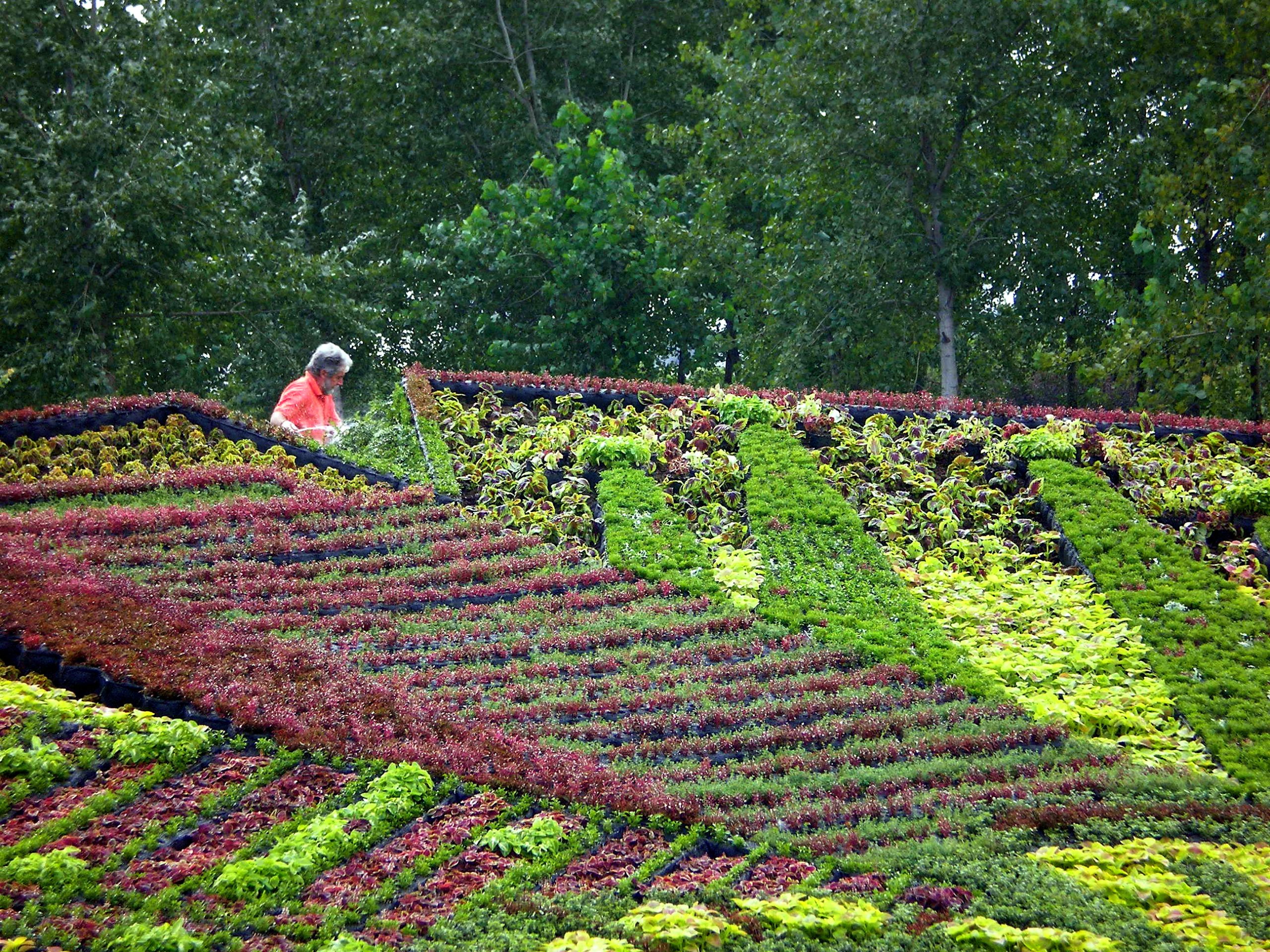
To me it has come to signify everything that is absurd and ridiculous about our time: our refusal to accept anything genuine and its substitution for something mediated and fundamentally mediocre, no matter what lofty ideals inform the original term. I was looking for a term that conflates Bauhaus with our sterile, boring (if cruel) affluent existence and its output (nowadays an immense mountain of Chinese plastic). I came across quite a few rude terms, so I am not alone in my distrust of the Bauhässlichkeit drivel. Reassuring, if a little depressing. There is beauty in uniqueness, but it does not seem to be my case. To be fair, the BaumgArse-Haus thing has been overlaid with “da sustainability” humbug for good measure. If you pay attention, the one thing that is not sustainable is nature. Everything we create and manufacture (particularly war) is sustainable, but nature, nope, we cannot afford it.
It is the beauty that keeps on giving, and so we vandalize it every time we can, covering our traces with some Bum-Garten-derived pseudo-aesthetic parable, gravid with moralizing bonhomie that whispers: “This can go on forever”. It is true, everything is sustainable until it stops. That is the beauty of our world: a make-believe paradox made true by avoiding friction with uncomfortable facts and questions. So, to answer the topic, beauty for me has come to mean the very intricate, detailed, decaying, and organic set of imperfections that make life worth living if you do not fear genuine and infantile enthusiasm for those things you can no longer control, but that will eventually come to fruition beyond the narrow scope of our will. As for participation, here I am: hear me roar, dear.
about the writer
Marthe Derkzen
Dr. Marthe Derkzen is a researcher and lecturer with the Health and Society chair group. She studies urban nature from a social justice perspective with an interest in climate adaptation, local food, healthy neighborhoods and stewardship of the commons.
Marthe Derkzen
Aspirational beauty may be the type of beauty we envision when we are faced with our fears, as in the end, we all feel better and live happier lives if we worry less about the future.
What is beauty?
I am writing this piece while listening to students playing the piano and singing pop songs in our university’s public performance space. To me, this is an example of how purposeful design brings about beauty. But wait, what actually is beauty? What one considers to be beautiful may be very diverse. Our perception of beauty is shaped by our personal living situation, our roots, and by society. The norms and values we live by, the culture we grow up in, the things we have become accustomed to seeing and doing. Our perception of beauty also changes over time, for instance, when we enter a new phase of life. When we grow from child to adolescent, adult, parent, grandparent.
When I started thinking about the question of beauty, I quickly came to realize that I cannot answer it. This question is simply too big to be answered by a single person. That is why I decided to ask for help. I reached out to the people around me to help me find an answer to this big question: my neighbors, my relatives, my friends, and my colleagues. Thirty people responded. This resulted in a collection of answers and has led me to see beauty through different lenses. Here is what they shared with me.
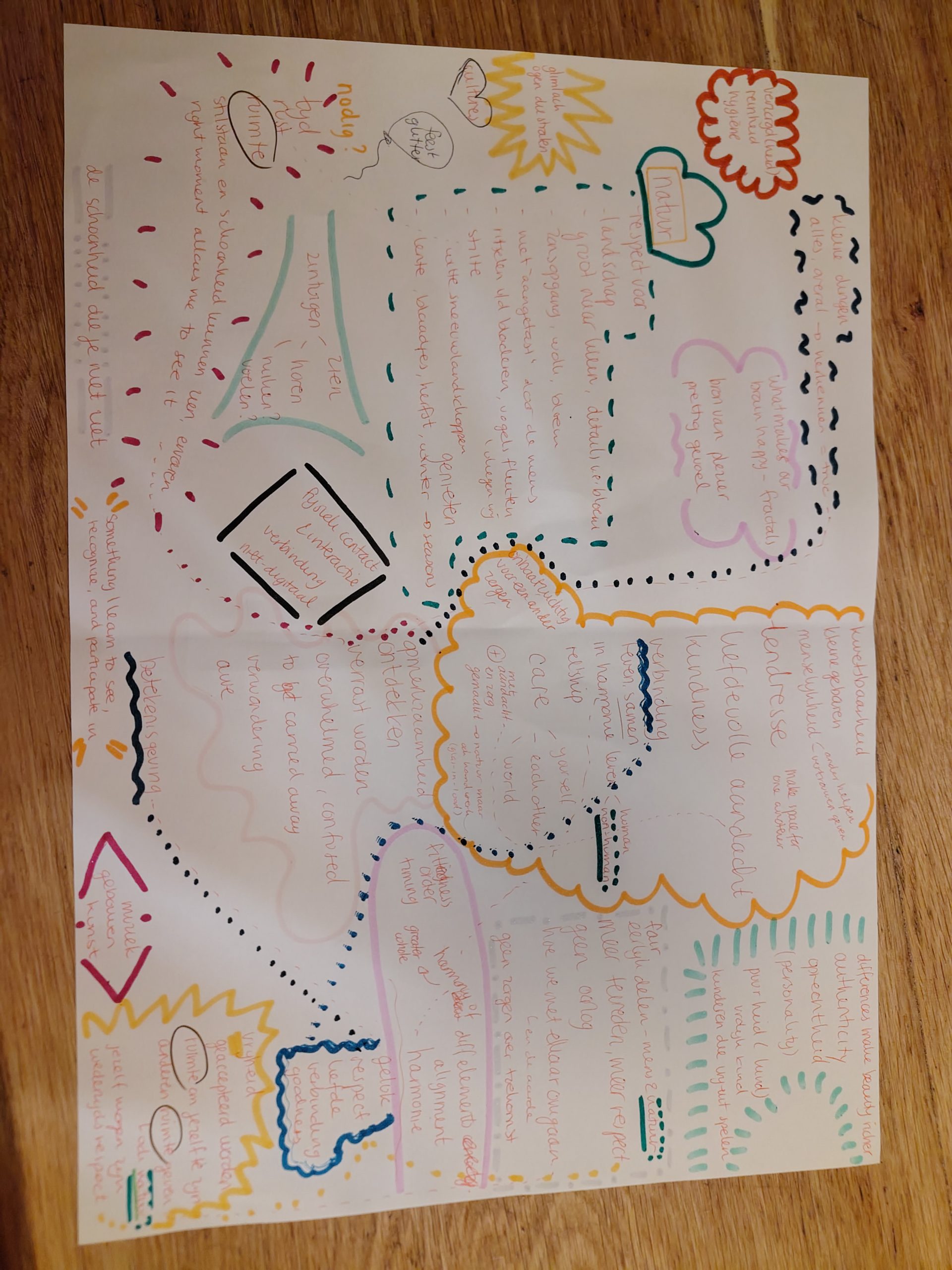
Beauty as something we observe
Maybe the first thing that comes to mind for many is the beauty we observe around us. References to nature were particularly abundant in my social circle’s perceptions of beauty. People mentioned snowy landscapes, rustling leaves, clouds in dragon shapes, a sunrise, and birdsong. Nature impresses by the vastness of landscapes but also by the tiniest detail of a budding flower or a fern shedding its spores. Observing the change of seasons brings beauty to our lives. Established theories evidence that certain natural patterns and forms (especially fractal geometry) switch on our brain’s reward centers, releasing dopamine and making us happy.
But it’s not just nature that brings beauty into our lives; beauty reaches us from everywhere. From architecture, art, and music. And sometimes even more so from the small things that we learn to see, recognize, and appreciate. A radiant smile from a stranger can make our day. In the answers, I noticed that people experience beauty when they are surprised, overwhelmed, or even confused. Wonder and awe are pathways to experience beauty. Or is it the other way around? Does beauty lead us to wonder, admire, and get carried away? And is it that state of disorientation that makes us conscious of beauty happening?
A common thread in our observations of beauty is the time, space, and peace of mind that we need to recognize beauty. We need to pause and become aware of the beauty around us. The right moment can allow us to see beauty in the ordinary. We need to be attentive to be able to give meaning to what we observe. Finally, it is important to mention that we do not only observe using our sight. We also touch, hear, smell, and taste. Think of the piano. All our senses play their part in capturing the beauty that surrounds us.
Beauty as something we feel and do
Next to the beauty we observe, there is beauty in what we do. The collection of answers includes dozens of references to ways in which we as human beings (inter)act that led us to experience beauty. Beauty is seen in caring for yourself, each other, and the world. In connection. In loving attention, kindness, tenderness, attentiveness, putting trust in others, and also in vulnerability. In the small gestures we give and receive. These references to beauty are in a way references to being human. They are references to beauty as interaction, with one specific reference to beauty as physical contact ― juxtaposing “real” beauty with the increasingly digital world we live in. Relatedly, authenticity and sincerity were mentioned, saying something about behavioral traits or personalities that we find beautiful. Acting purely and freely was considered beautiful too, and interestingly, seen as something that children do. Does that mean that we lose some of our beauty as human beings when we lose authenticity, or the freedom to express ourselves freely?
Beauty as something we aspire
The third lens that emerged reveals something about the world we want to live in, and with that, hints at things that currently are not so beautiful. It opens up questions of fairness, (dis)harmony, and fear. A wish for human and non-human beings to live in harmony reveals a conflict between the two. Likewise, people expressed the need to give space to other people but also to nature, that nature and people should share equally, and that beauty lies in respect for other people and nature(s). This indicates that the two, people and nature, are seen as separate or at least demand something different from our living environment. Other answers were more aspirational about human nature, e.g., a world in which people show more gratitude for what they have, are not being driven by wealth and power, or in which there is no war. Aspirational beauty may be the type of beauty we envision when we are faced with our fears, as in the end, we all feel better and live happier lives if we worry less about the future.
Beauty in the New European Bauhaus
So, what does this mean for the New European Bauhaus? In short, NEB should strive for the development of a built environment where (1) sensory stimuli evoke beauty ― with a prominent place for nature, (2) people experience beauty through social interactions, acts of kindness, care, and freedom, and (3) where hope and aspirations can grow. As a final addition, I would state that the beauty that one observes can grow even bigger when it is shared with a loved one. So yes, it is worth pointing out those stars in the sky. Using the words of my four-year-old daughter: beauty is a glittering party. Let’s make NEB sparkle up our lives!
With contributions from: Agnès Patuano, Alessandra Caine, Anastasiya Koenders, Anonymous, Anonymous, Archena Mahabir, Ashitha Ganapathy, Daan de Nooijer, Danielle MacCarthy, Edward Huijbens, Esmée Hoyer, Grace Sibarani Noviyanti, Gunjan Rana, Jiri Kaan, Joost Geurtsen, Karlien Neeskens, Kristel Polhuis, Lenneke Vaandrager, Loan Diep, Maaike Grevelink, Maren van Waalwijk, Mylène Hoyer, Nana Derkzen, Nime Derkzen, Putri Nur Shabrina, Rhea Diemer, Sahar Naeimi Darestani, Sara Wiertsema, Stephanie Siebelink, Suzet Zijlstra, Zahra Khosravipoor, Zayra Ramos Bendana
about the writer
Maria Cecilia Cherubini
Born in Córdoba, Argentina in 1970, she graduated as an architect from the Catholic University of Córdoba in 1994 and earned a Master’s degree in Architecture and Landscape Planning from the same university in 2018. She is a professor of Landscape Architecture at the Catholic University of Córdoba. She also serves as Director of the Design Institute at the Faculty of Architecture, where she conducts research and leads postgraduate courses in Creativity, Landscape, and Creative Processes.
Maria Cecilia Cherubini
La ciudad bella no es solamente la que se ve bien. Es aquella que nos permite vivir bien en ella.
La belleza: de la forma ideal a la experiencia de habitar
¿Qué decir sobre la belleza? ¿Cómo definir algo tan abstracto, profundo y al mismo tiempo, sutil y difícil de precisar? Hablar de belleza implica ingresar en un territorio complejo, porque aquello que entendemos como bello ha cambiado a lo largo de la historia y continúa transformándose según las culturas, los contextos y las experiencias de quienes la perciben.
En la actualidad, la belleza parece estar cada vez menos ligada a un modelo único y universal y más relacionada con la subjetividad, la experiencia y la capacidad que tienen las cosas, los espacios y las situaciones de producir emociones en un sujeto, en un tiempo y un lugar determinado.
Esta concepción se distancia de la visión clásica griega, que entendían la belleza, kalós, como no simplemente una cuestión de apariencia física. Estaba vinculada con la armonía, la proporción, el orden y la excelencia. A estas ideas se sumaba el concepto de kalokagathía, unía lo bello (kalós) y lo bueno (agathós): la verdadera belleza no podía separarse de la virtud moral.
La belleza era la expresión de una armonía capaz de reflejar un orden racional y perfecto del universo.
Esta idea ha evolucionado profundamente. La contemporaneidad nos propone abandonar la búsqueda de un único ideal para reconocer la existencia de múltiples formas de belleza. Hoy algo puede resultarnos algo bello por su armonía, pero también por su tensión; por su perfección o imperfección; por su equilibrio, su singularidad, su capacidad de sorprender o incluso de incomodar. La belleza puede aparecer en lo regular y lo irregular, en lo completo y lo incompleto, en lo nuevo y lo envejecido, en el orden y en el desorden significativo. Puede surgir de la forma, pero también de la experiencia; del objeto, pero también de la relación que establecemos con él. Esto implica reconocer que la belleza no reside exclusivamente en las cosas, sino también en nuestra manera subjetiva de percibirlas. Los ideales de belleza son construcciones culturales, sociales e históricas que se transforman constantemente.
Podríamos definir la belleza contemporánea como una experiencia sensible y cultural que surge de la relación entre una persona en un medio, un objeto, una idea o una situación, y que puede manifestarse en la armonía, en la singularidad, en la diferencia y en la imperfección.
Esta transformación resulta particularmente significativa para el diseño y la arquitectura. Diseñar algo bello ya no significa solamente construir una forma armónica o proporcionada, sino también proyectar experiencias, generar emociones, construir significados y establecer relaciones entre las personas y el mundo que habitan.
Si trasladamos esta reflexión a la ciudad, podemos preguntarnos: ¿qué hace bella a una ciudad? Una ciudad bella no es solamente aquella que posee edificios destacados, espacios ordenados o una imagen atractiva. Es, sobre todo, aquella capaz de generar experiencias significativas para quienes la habitan, integrando la calidad de sus formas con la diversidad de usos, la memoria, la identidad y la posibilidad de construir vínculos.
Una ciudad bella no solo se mira: se recorre, se habita, se siente, se recuerda y se comparte.
En este punto, la naturaleza adquiere un papel fundamental. Durante mucho tiempo, lo verde fue considerado un complemento de la ciudad construida. Sin embargo, desde una mirada contemporánea podemos afirmar que la naturaleza no es algo que se agrega a la ciudad: es parte de la estructura que construye su belleza.
Los árboles, parques, jardines y corredores verdes transforman nuestra manera de percibir y experimentar la ciudad. Introducen color, textura, movimiento, aromas, sonidos, luz y sombra. La naturaleza cambia, crece, envejece y se transforma con las estaciones, introduciendo tiempo y vida dentro de la forma urbana.
Pero lo verde no es bello solamente porque transforma visualmente el paisaje percibido. Su belleza es también experiencial: genera sombra, modifica la temperatura, filtra la luz, ofrece descanso, invita a permanecer y favorece el encuentro.
La naturaleza no solamente embellece la ciudad: la hace habitable.
La ciudad no debería entenderse únicamente como un conjunto de objetos arquitectónicos organizados en el espacio, sino como un ecosistema de relaciones entre personas, construcciones, memorias, actividades y naturaleza. La belleza ya no pertenece exclusivamente al objeto: sucede en la relación.
Una ciudad bella es aquella donde arquitectura, espacio urbano, naturaleza y sociedad, construyen conjuntamente experiencias significativas, permitiendo que las personas no solamente circulen por ella, sino que puedan detenerse, habitarla, sentirla, encontrarse, recordarla y reconocerse en ella.
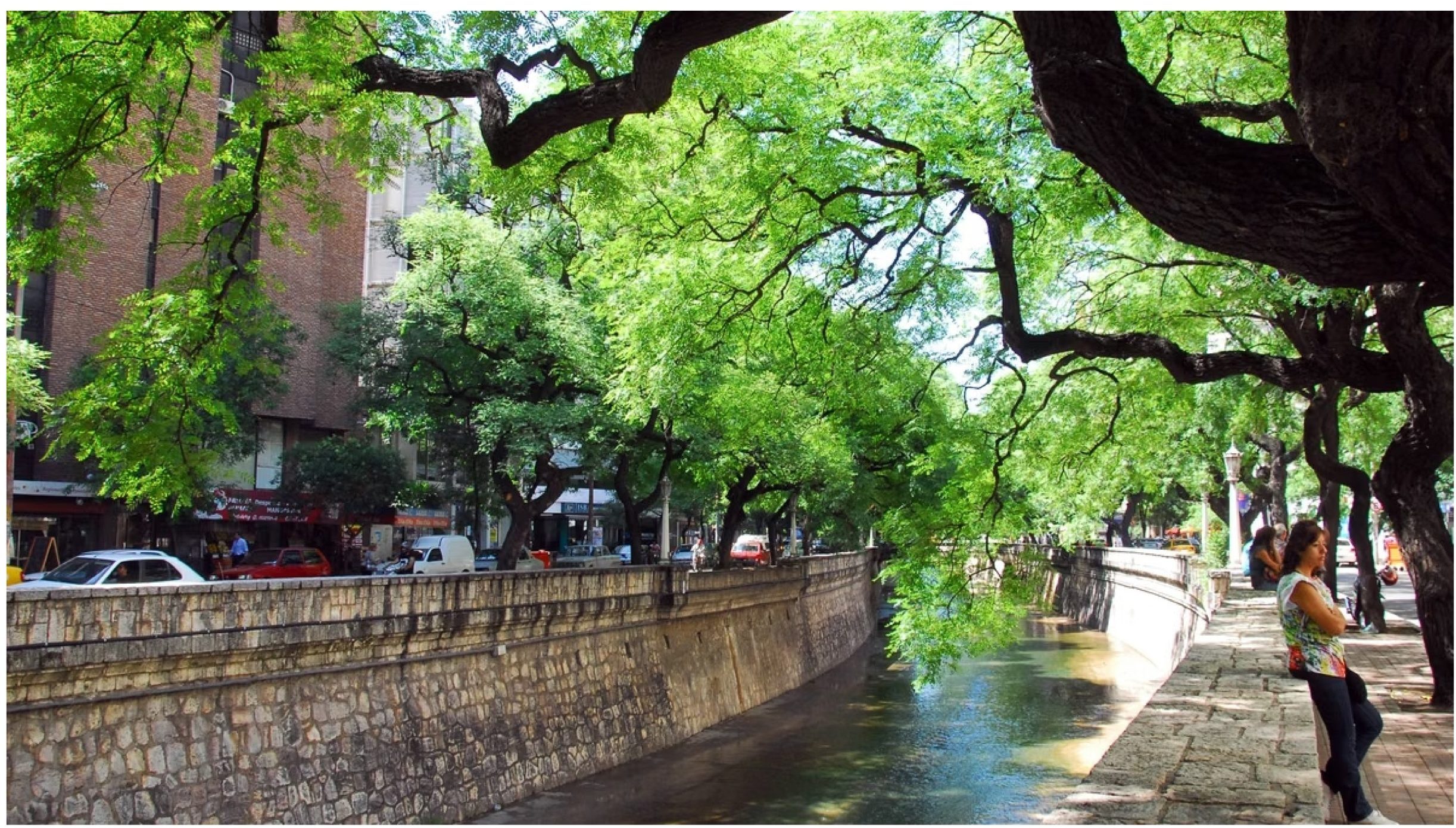
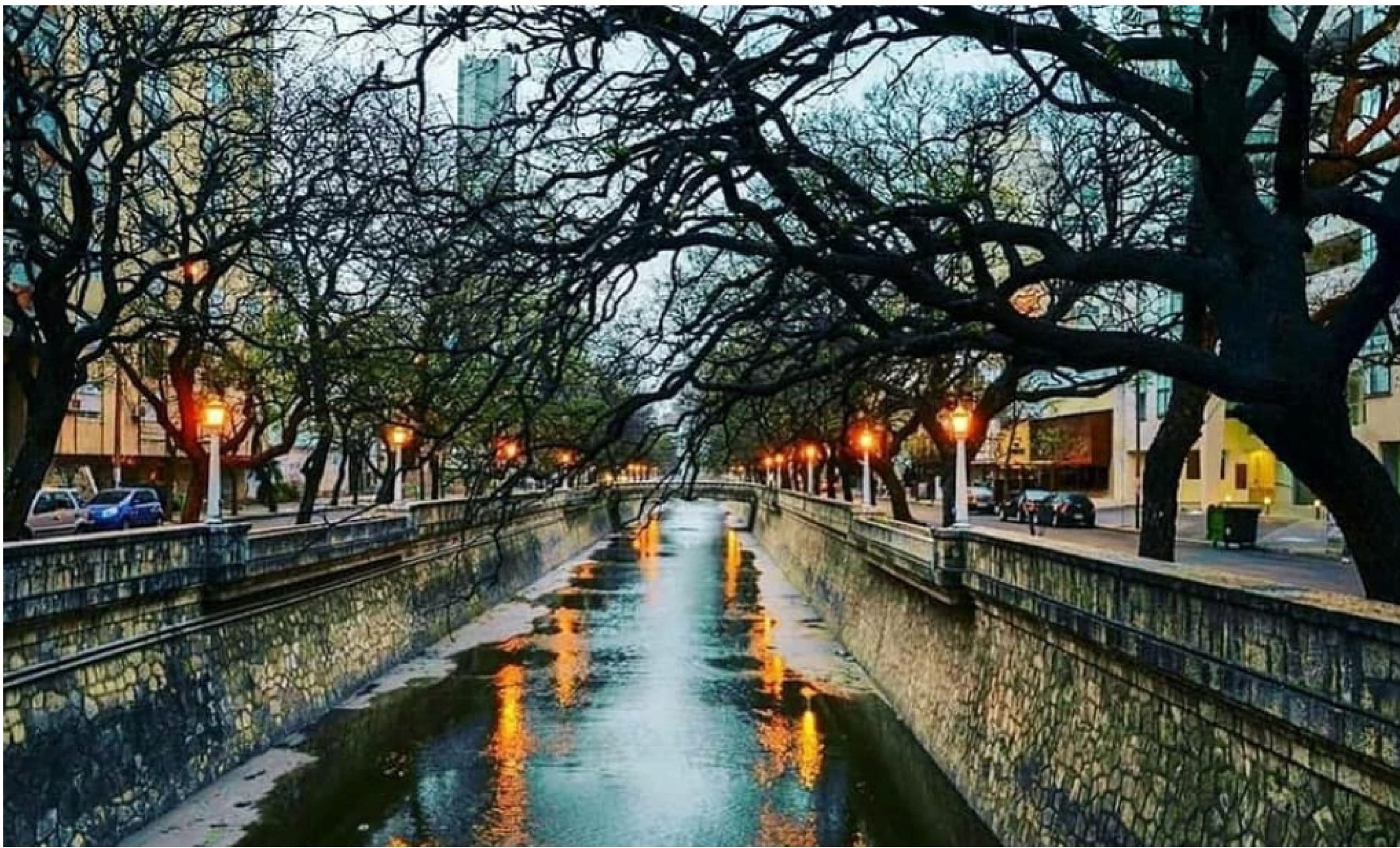
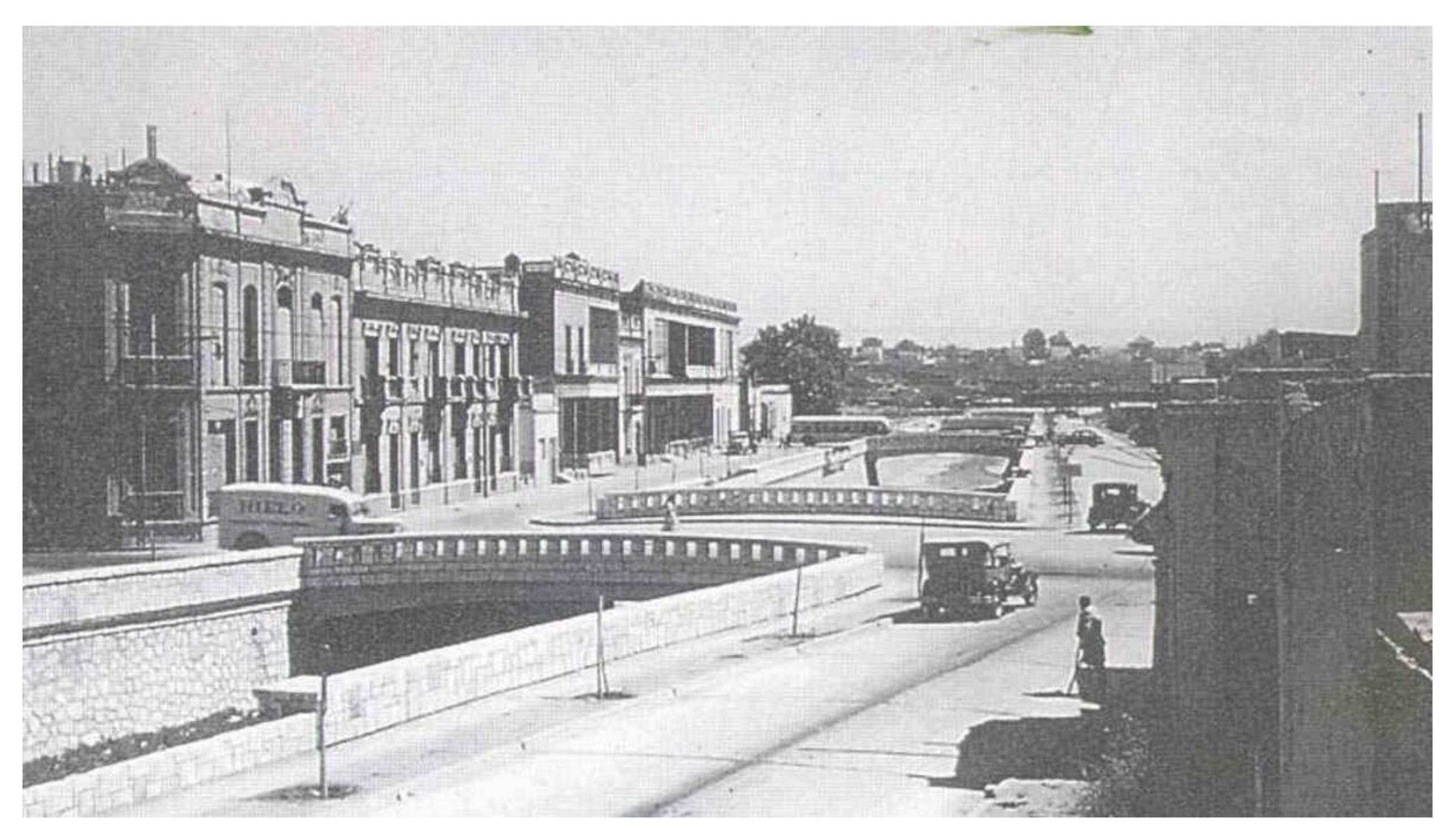
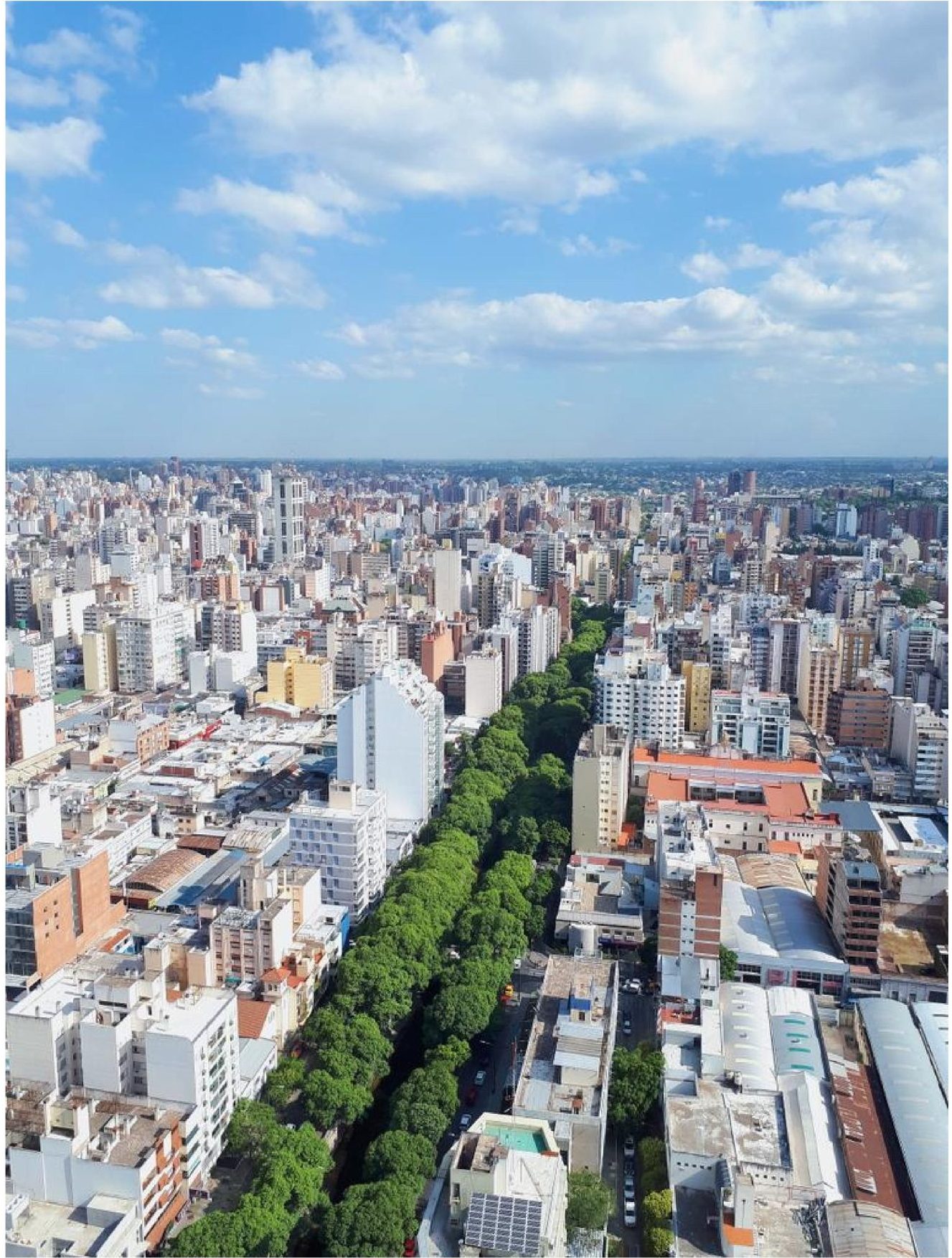
La ciudad bella no es solamente la que se ve bien. Es aquella que nos permite vivir bien en ella.
* * *
Beauty: From ideal form to the experience of dwelling
A beautiful city is not simply one that looks good; it is one that enables us to live well within it.
What can be said about beauty? How does one define something so abstract and profound, yet at the same time so subtle and elusive? Discussing beauty means entering complex territory, for our understanding of what is beautiful has shifted throughout history and continues to evolve based on culture, context, and the experiences of the beholder.
Today, beauty seems less tied to a single, universal model and more connected to subjectivity, experience, and the capacity of objects, spaces, and situations to evoke emotions in an individual at a specific time and place.
This conception diverges from the classical Greek view, which understood beauty—kalós—as more than a mere matter of physical appearance. It was linked to harmony, proportion, order, and excellence. Added to these ideas was the concept of kalokagathía, which united the beautiful (kalós) and the good (agathós): true beauty could not be separated from moral virtue. Beauty was the expression of a harmony capable of reflecting the rational, perfect order of the universe.
This idea has undergone a profound evolution. Contemporary thought invites us to abandon the search for a single ideal and instead recognize the existence of multiple forms of beauty. Today, something may strike us as beautiful due to its harmony, but also its tension; its perfection or imperfection; its balance, uniqueness, or capacity to surprise—or even unsettle—us. Beauty can manifest in the regular and the irregular, the complete and the incomplete, the new and the aged, in order and in meaningful disorder. It can arise from form, but also from experience; from the object itself, but also from the relationship we establish with it. This implies recognizing that beauty resides not exclusively in things, but also in our subjective way of perceiving them. Ideals of beauty are cultural, social, and historical constructs that are constantly transforming. We might define contemporary beauty as a sensory and cultural experience arising from the relationship between a person and a setting, object, idea, or situation—one that can manifest through harmony, uniqueness, difference, and even imperfection.
This shift is particularly significant for design and architecture. Designing something beautiful no longer means merely creating a harmonious or well-proportioned form; it involves crafting experiences, evoking emotions, constructing meaning, and establishing connections between people and the world they inhabit.
If we apply this reflection to the city, we might ask: what makes a city beautiful? A beautiful city is not defined solely by outstanding buildings, orderly spaces, or an attractive appearance. Above all, it is a city capable of generating meaningful experiences for its inhabitants, integrating the quality of its built forms with diverse uses, memory, identity, and the potential to forge connections.
A beautiful city is not merely looked at; it is traversed, inhabited, felt, remembered, and shared.
In this context, nature plays a fundamental role. For a long time, greenery was viewed merely as a supplement to the built environment. From a contemporary perspective, however, we can assert that nature is not something added to the city; it is an integral part of the structure that creates its beauty.
Trees, parks, gardens, and green corridors transform how we perceive and experience the city. They introduce color, texture, movement, scents, sounds, light, and shadow. Nature changes, grows, ages, and transforms with the seasons, bringing the dimensions of time and life into the urban form.
Yet, greenery is not beautiful simply because it visually transforms the landscape. Its beauty is also experiential: it provides shade, alters temperatures, filters light, offers a place to rest, invites people to linger, and fosters social interaction.
Nature does not merely beautify the city; it makes it livable.
The city should not be understood solely as a collection of architectural objects arranged in space, but rather as an ecosystem of relationships among people, structures, memories, activities, and nature. Beauty no longer belongs exclusively to the object; it arises from the relationship.
A beautiful city is one where architecture, urban space, nature, and society jointly create meaningful experiences—allowing people not merely to move through it, but to pause, inhabit it, feel it, meet others, remember it, and see themselves reflected in it.
A beautiful city is not simply one that looks good; it is one that enables us to live well within it.

about the writer
Carly Ziter
Dr. Carly Ziter is an Associate Professor in the Biology department at Concordia University in Montreal, Canada. With her students, she uses field observations, environmental sensors, community science, and social-ecological systems methodologies to explore how urban nature – and the ways we interact with it – affects climate resilience and human well-being. She especially loves the messy spaces between disciplines, and has a particular passion for how we can transform private urban green spaces to create more collective good.
Carly Ziter
As the NEB thinks about landscapes that are beautiful, the obvious question we must ask is: beautiful for whom?
As a PhD student, I lived in Madison, Wisconsin, on the near-east side. Those who know Madison might be familiar: a hippie-enclave of sorts, where houses are painted lilac and mint green, the grocery is a co-op, and front yards are as likely to contain vegetable gardens and restored prairies as turfgrass.
Our house was on a big corner lot. An old Victorian, split into apartments. A little (ok, a lot) crooked, with a (crumbling) big front porch, and a bench swing due to break any day, nestled into a thick grove of tall conifers. My partner often describes it as the kind of place you might inherit from a mysterious relative in a horror movie, on the condition that you dare to spend a night there. I loved this house. I loved that I had a garden to care for. And most of all, I loved a small patch of native prairie plants, species carefully selected by a former botanist tenant, in the corner of our front lawn. Every spring, I looked forward to seeing the cup flower and goldenrod and asters push through the surrounding expanse of weedy grass, their blooms towering 6 feet tall by the time summer was over. To me, this unexpected little patch of prairie was, without a doubt, beautiful.
Directly next door lived our canonically mid-western neighbours. I’ll call them Jim and Sue. Jim and Sue, at odds with the general aesthetic of their chosen neighbourhood, had the most picture-perfect lawn I have perhaps ever seen. A mown-regularly, deep-green, weed-free expanse, with a neat strip of colourful ornamentals at the sidewalk edge. Sue could often be found, unbidden, removing the dandelions from our lawn ― “just helping you guys out!” ― lest they mar the lush green carpet next door.
One day, I caught Sue eyeing our prairie patch (on the opposite side from their lawn, for what it’s worth, not adjacent). “Isn’t it beautiful?” I asked. “These are native plants; they support the local pollinators. We look forward to them every year”. She responded that while she knew “some people, other people, mind you, might think they’re weeds”, she knew better. Yes, she knew these plants were good plants.
Apparently, this knowledge didn’t stop her and Jim from digging up the corner of our prairie patch to plant a hosta a few days later ― just to help us out ― I presume only stopping short of replacing the whole thing because we caught them in the act.
As an urban ecologist, so many of the local initiatives I think of as beautiful ― rewilding, meadowscaping, urban agriculture, leaving the leaves ― are eschewed as messy, unfamiliar, lacking proper order, even scary. And when I come across these opinions in my work, I can’t help but think of Jim and Sue’s hosta-fication of our little unkempt (yet intentional!) wild patch. The thing is, Jim and Sue weren’t wrong. To them, and I suspect to many who crave order and tradition, their lawn was beautiful. Proportional. Symmetrical. Straight out of a magazine. To me, it simply lacked magic. Beauty should stimulate curiosity, should make us stop in our tracks and wonder, should support community ― human and otherwise. Wouldn’t it be beautiful if our lawns were measured by how many species they could support, rather than how many were suppressed?
That beauty is in the eye of the beholder scales up well beyond the lawn. My Saskatchewan-born-and-raised husband will always prefer short-grass prairie to any other ecosystem. It saddens him that others don’t always see the subtle, quiet beauty of grasses shimmering in the wind, longing instead for the more obvious majesty of mountains or tall trees. Personally, I’ll always choose a forest over a treeless expanse. Perhaps we can all agree on the beauty of water? Or maybe that’s simply my Canadian bias coming through…
As the NEB thinks about landscapes that are beautiful, the obvious question we must ask is: beautiful for whom? Enriching for whom? Desirable for whom? Perhaps I simply can’t help myself as an ecologist, but if there is any hope of succeeding in enforcing beauty, I think it must in some way come down to diversity. Perhaps the most beautiful landscape is a diverse one ― one that has a little something for everyone. Enough order for those who crave it, and enough wild abundance to stimulate the curiosity of those who tire of proportion and harmony. Enough total green space that we can cater to these varied preferences. By defining, or worse, measuring, beauty in just one way, we risk alienating the many to satisfy the definition of the few.
about the writer
Harini Nagendra
Harini Nagendra is a Professor of Sustainability at Azim Premji University, Bangalore, India. She uses social and ecological approaches to examine the factors shaping the sustainability of forests and cities in the south Asian context. Her books include “Cities and Canopies: Trees of Indian Cities” and “Shades of Blue: Connecting the Drops in India’s Cities” (Penguin India, 2023) (with Seema Mundoli), and “The Bangalore Detectives Club” historical mystery series set in 1920s colonial India.
Harini Nagendra
Can you hear, smell, touch beauty in nature?
First you have to stop, slow down, and be willing to listen.
Can you hear beauty, or must it only be seen? How does beauty smell, or feel to the touch? This roundtable prompt brought back memories of the pandemic, when I walked obsessively on the roof of my house for an hour each evening, listening to the call of kites circling overhead. Keeeewh….keeeewh… that keening cry lifted my spirits instantly, so much so that I began to recognize it even when I was locked up in my home office, and smile. The crows were equally beautiful, especially in sound. I noticed they had a rich repertoire of calls. One that especially fascinated me was a two-syllable call, repeated insistently and urgently: Akka! Akka! In my language, Kannada, akka refers to an older sister. Do crows have an affinity for older sisters? A sisterhood of crows, perhaps?
The smell of beauty is a wondrous thing. I miss India when I travel overseas, and like many of my compatriots, it is the aromas of my country’s ecology, its open spaces, that come to my mind. The fragrance of petrichor, just before the first rains hit, heralding the arrival of the monsoon. The aroma of fresh grass, mowed and tied into bundles, carried away by women in local villages to feed their cattle. The delicate fragrance of jasmine and the heavier fragrance of roses. Then there are the aromas that attract some and repel others. I hated the sickly-sweet smell of sampige (Michelia chapaca) flowers; they made me sneeze: my mother loved them.
My father couldn’t stand being in the house with a ripe jackfruit: it gave him a headache. Nevertheless, when the fruits were in season, he still stopped the car on his way home when he saw a vendor, and brought home a full paper bag, pinching his nose closed with one hand while he handed the fruit to me with his other hand. We ate them quickly, and threw the seeds out into the backyard, opening the windows to air the house. When I smell jackfruit these days, I think of how much my father loved his family.
Beauty also comes in diverse textures. Wet grass squelching under bare feet as children play a game of catch in the garden. The roughness of mango bark that grazes your shin and leaves long scratches on them, while you climb up a tree and find a suitable branch on which to perch. The sticky sap from a plucked leaf, the rough texture of a custard apple, the feeling on your tongue when you extract the seeds and swallow the delicious pulp.
Nature is beauty, and beauty comes in diverse forms. The adjectives we use to describe the beauty of a sunset, a swim in the lake, or a walk in the forest are dominated by the visual. But there is so much more to beauty, and when we restrict our appreciation to the visual, we limit its engagement with sustainability, justice, equity. In our interviews with diverse communities that engage with nature in the city in Bengaluru ― grazers, fishers, fodder collectors, street vendors, foragers ― beauty comes in different forms. For a forager, it might mean the sight of a tiny flower, deep within the thorny hedge, that signals the presence of a medicinal weed that helps to cure a stomachache. For a street vendor, it could be the daily routine of setting up shop under a tree which her father planted. For a software engineer, it could be a brisk walk around a lake in the morning, before heading out to work.
Even if we don’t mean to, in planning the restoration of landscapes, we privilege the perspective of the software engineer who may have many alternative beautiful places to go to but discount the lived experience of the street vendor who has only her tree, which she calls home. She can tell you about the sights, smells, sounds, and the touch and feel of daily life under her tree, and help you widen your definition of beauty: but first you have to stop, slow down, and be willing to listen.

about the writer
Steward Pickett
Steward Pickett is a Distinguished Senior Scientist Emeritus at the Cary Institute of Ecosystem Studies in Millbrook, New York. His research focuses on the ecological structure of urban areas and the temporal dynamics of vegetation.
Steward Pickett
Beauty: Thing or a Process?
Beauty is revealed as co-creation proceeds, and as mindsets, philosophies, ethical fairness, and the “objects” of our experience dictate.
I am pleased to see that beauty is one of the three pillars of the New European Bauhaus (NEB), summarized in the Curatorial Notes of this Roundtable as “sustainability, inclusion, and beauty”. Of course, three is a “magic number” in some Western cosmologies, and it is powerful that the NEB has chosen precisely these three. Sustainability asks us to see the beneficent interactions of the processes of nature and the processes of society; inclusion asks us to ensure the conditions for the success of participatory fairness among people and groups; and beauty, what does it ask? I find it daunting to write about beauty. That furrow has been plowed for millennia by names no less familiar than Plato, Aristotle and Pythagoras, for example. I should have said no. But here we are. I’ll adjust the time machine a bit and start with Keats (Endymion, Book I, 1818):
A thing of beauty is a joy for ever:
Its loveliness increases; it will never
Pass into nothingness; but still will keep
A bower quiet for us, and a sleep
Full of sweet dreams, and health, and quiet breathing.
Keats’s first line is virtually a cultural cliché, so it came instantly to mind when I thought about the writing task. In spite of the comfort of that famous line, should the idea of beauty only focus on “a thing”, and is it really everlasting? Those questions arose because, as an urban ecologist, one of the aspects that stands out to me about cities and urbanized settlements (suburbs, towns, exurbs, regions) is their manifest dynamism. For example, many of the structures that lent legibility to and anchored my childhood world gave way to express highway interchanges, or efficient modernist multi-story boxes. Or even my current city is changing through encouragement of infill housing, or elsewhere a developer turns a long-unbuildable rocky prominence into gravel to be carted away to make space for up-market apartments. Maybe asking particular things of beauty to last “forever” is risky.
That history puts me in mind of a dichotomy posed in the Prompt: Is beauty a “form” or is it “rooted in experience”? Right now, I’m leaning toward beauty as experience. Keats, as a Romantic poet, emphasizes the emotional response of a human subject to transcendent beauty. However, it seems likely that each individual’s body of experience will shape what they find to be beautiful. This means that beauty is not entirely an attribute of an exterior “thing”. It is at least partially co-created by the interaction of an “experiencer” (or communities thereof) and a situation (as perceived through one or more of the five senses) or filtered through lenses of cultural or spiritual practices. But the situations themselves may be quite changeable, in part because of the very dynamism of the many components of “the environment”. This leads me to think of beauty itself as a process and the possibility that it is revealed, created, or changed over time.
If beauty, at least that which involves both people and other-than-human residents of urban places (like trees or animals), is co-created, then its dynamics, trajectories, and modes of change are key to maintaining the third pillar of the Bauhaus. Human design and intention, a la planning or landscape architecture, “the market,” and even accident are of course important. But the bane of nature-based solutions ― conflicts among different infrastructure networks, whether buried or aerial ― are also important. The list goes on: Beauty can respond to: the growth and senescence of trees, shrubs, and herbaceous plants; the unassisted and stochastic dispersal of organisms judged attractive or problematic; or the action of disturbance events that are unpredictable in their onset or intensity of impact (floods, fires, earth movements, weather extremes, disease outbreaks). The dynamics of beauty invite awareness, preparation, and management ― including provisions for ongoing financing of the beautiful and its repair or adaptation, including repeated hands-on person-power. The completed design of New York’s Central Park in 1879 called for continued maintenance of plantings. This assumption was thwarted in the 20th century by many people’s assumption that the arboreal beauty of the park was essentially static and “forever” and so should be untouched. This same assumption can also thwart the needed management of some areas that are superficially wild, but which retain the effects of long-term Indigenous or shifting pastoral management regimes, for example.
The ruminations above place beauty firmly in the realm of joint social-environmental processes. Beauty is a co-creation of the perceptions and actions of people and of a dynamic, multifaceted ecological world. Part of that co-creation is material: the plants, the management tools, the dynamics of other-than-human biota. But another part of that co-creation is mental or cultural: the role of design and planning, the anticipation and preparation for change. Beauty is revealed as co-creation proceeds, and as mindsets, philosophies, ethical fairness, and the “objects” of our experience dictate. Beauty is layered and transitional.
So, this takes us to the second part of Keats’s quote:
… but still will keep
A bower quiet for us, and a sleep
Full of sweet dreams, and health, and quiet breathing.
The “bower”, as a thing, isn’t permanent, but requires extended conceptual and material work, including investment and perhaps re-envisioning by changing social communities. But isn’t even changing beauty intended to shape our urban dreams, to contribute to our health, and to provide places of both exuberant joy and quiet contemplation? Beauty as a flowing co-creation acknowledges another thinker from antiquity, Heraclitus: “All is flux”. What an urban sentiment!
about the writer
Tina Cuevas
Tina Cuevas (she/her) is the Natural Areas Outreach Coordinator for the NYC Parks Stewardship Team. Growing up in the San Francisco Bay Area, she cultivated her love for the outdoors and urban biodiversity during her formative years. After working for a unique urban trail system in the Bay, she moved to New York in 2019 to pursue a Masters Degree in Environmental Education. She enjoys collaborating across arts, restoration, and science in order to create more ways of knowing and thinking about our world. Tina loves working to connect all New Yorkers to the unique natural areas in their communities and emphasizing that nature is all around us even in cities!
Tina Cuevas
We should measure beauty in how it inspires each of us to imagine new, better futures for our world.
I believe our own experience defines beauty; our experience of beauty in the natural world involves our connections and interactions with nature itself. Beauty to me can be felt as a sense of awe and wonder often evoked by experiences that make one feel connected to something outside of ourselves. I have had these moments throughout New York City’s natural areas: watching a red-tailed hawk fly over a grove of sumac trees in Southeast Queens, discovering a small garter snake while planting small pine trees, and being surrounded by the spring emergence of trout lily along a trail in Staten Island.
Natural areas separate from the built environment within cities provide the chance to experience beauty in connection with the benefits that nature can provide. Anyone can enjoy the wildlife on display in the city and take refuge from their busy life while enjoying the comforts of cooling shade during the summer months. Natural areas themselves are the coolest greenspaces in cities (Crown, Pregitzer, et al., 2023). While natural areas provide numerous benefits, sometimes they can be perceived as “weedy” or unkempt in comparison to landscaped parks, which can lead to people not feeling as safe within them (Nassauer, 1995). One of the main gaps in people using natural areas in cities is familiarity with the natural environment, making education and early exposure to natural areas all the more important. As our climate continues to warm, these spaces will continue to become more important, and we should seek to connect community members more directly to these areas to develop their confidence within them.
Natural areas programming that includes stewardship (i.e., overgrown plant removal, tree planting) or additional activities (e.g., guided walks, plant identification events, etc.) can provide opportunities for community members who may have felt unsafe in these spaces to experience them and grow their confidence (Sonti, Campbell, et al., 2019).
Innovative programs such as the New European Bauhaus movement focus on the built environment, specifically calling out the need to “empower citizens through participatory processes to build democratic, inclusive and resilient neighborhoods” (NEB, 2025). Stewardship events invite community members to the green spaces around them and encourage them to interact with, tend, and grow their connection to place as well as their connection to others. These social connections and environmental connections will continue to create stronger neighborhoods and provide group experiences to take in the beauty of the natural world that resides within their community. Collective experiences like this can encourage discussions around what is needed in their neighborhood and help inspire the future of what they want to see within their communities.
Beauty is defined partially by the Oxford English Dictionary as “giving high pleasure to the mind”, which to me reads as providing the capacity to creatively inspire. The depth of projects/products that take inspiration from nature is enormous (Russel, et al., 2013); it is easy to see how much has been inspired by nature’s beauty all around us. The European Commission may seek to measure beauty; this would require standards to be created and metrics attached to a concept that is so personally defined.
Attempting to create standards that could be tracked would lead what is looking to be an incredible new movement into murky waters, which could lead to large unintended consequences. What we should look to understand, and track, are perceptions of beauty, and who is doing the perceiving, rather than an objective standard that all the NEB projects should meet.
In my opinion, there is not a quantitative measurement that could ever look to track and understand beauty; we should measure beauty in how it inspires each of us to imagine new, better futures for our world. Combining this with the inspiration nature provides, we should look to understand how people relate to the natural world after being introduced to it through stewardship events and how their comfort within nature continues to deepen the more time spent in natural areas.
References:
Crown, Crystal A., Clara C. Pregitzer, Jeffrey A. Clark, and Sophie Plitt. 2023. Cooling Cities: Harnessing Natural Areas to Combat Urban Heat. Natural Areas Conservancy, NY
Nassauer, J. I. (1995). Messy ecosystems, orderly frames. Landscape Journal, 14(2), 161–170. https://doi.org/10.3368/lj.14.2.161
Russell, R., Guerry, A. D., Balvanera, P., Gould, R. K., Basurto, X., Chan, K. M. A., Klain, S., Levine, J., & Tam, J. (2013). Humans and nature: How knowing and experiencing nature affect well-being. Annual Review of Environment and Resources, 38(1), 473–502. https://doi.org/10.1146/annurev-environ-012312-110838
Sonti, N. F., Campbell, L. K., Svendsen, E. S., Johnson, M. L., & Novem Auyeung, D. S. (2019). Fear and fascination: Use and perceptions of New York City’s forests, wetlands, and landscaped park areas. Urban Forestry & Urban Greening, 49, 126601. https://doi.org/10.1016/j.ufug.2020.126601
Nassauer, Joan Iverson. 1995. Messy Ecosystems, Orderly Frames Landscape Journal, 14 (2) 161-170; DOI: https://doi.org/10.3368/lj.14.2.161

about the writer
Monica Morales Nuñez
Monica is a landscape architect, researcher, and professor of landscape architecture at Universidad de Chile. She also presides over the Heritage and Landscape Corporation in Chile.
Monica Morales Nuñez
Fragilidad y Reproductividad de la Belleza
Un acto de resistencia
Esta belleza de la que hablamos es frágil ante la voracidad, individual pero también colectiva, institucional, y estatal.
La belleza, como definición, parece un concepto muy complejo, sobre todo si lo miramos desde una mirada occidental, formal, institucional y/o academicista.
Pero desde otro punto de vista la belleza es un acto diario y al alcance de todos, MADRE NATURA o la PACHA MAMA desde los pueblos ancestrales ya definieron la belleza, desde un paisaje sublime hasta una simple hierva encontramos la perfección de formas, composiciones, aromas, texturas, y sonidos combinados y que fusionados con la función hacen de cada elemento natural una belleza, desde la escala mayor a la mínima e invisible. ¿Si entonces está allí presente porque nos es tan difícil verla y disfrutarla? Fundamentalmente desde nuestro punto de vista porque vivimos, actuamos, y gestionamos esta belleza como recurso y disponibilidad, visión propia del antropocentrismo; por el contrario, si cruzamos la vereda al geocentrismo (cosmovisión)y reconociéramos cada paisaje, así como cada elemento que los compone bióticos y abióticos como nuestros pares, emerge entonces la belleza diaria y cotidiana como una experiencia y ya no solo como observadores sino también como parte de ella.

Ante esta belleza hemos actuado como depredadores y hemos roto estas composiciones sistémicas e individuales, rompemos y quebramos la belleza cada día en cada de uno de nuestros actos, pisamos la hierba sin importar, pero también talamos selvas, herimos los desiertos y despreciamos la belleza, esa misma que tanto buscamos; que miopía e insensibilidad padecemos y lo más lamentable es que no tenemos ni queremos detenernos a disfrutar de ella porque ello implica tomar conciencia, y renunciar a tanto materialismo y privilegios ni siquiera para todos, solo para algunos.
Esta belleza de la que hablamos es frágil ante la voracidad, individual pero también colectiva, institucional y estatal.
Las heridas causadas también están a la vista, como mega o mínimas cicatrices, carencias y roturas sobre miles y miles de trenzados perfectos y bellos, cuando ello ocurre, nos alarmamos y volvemos atrás en busca de la belleza nuevamente inconsciente del camino hecho y rehecho una y otra vez. La idea de que el entorno natural y culturas está a disposición del hombre ha sido una idea de supremacía y soberbia sobre esta belleza de lo biótico y abiótico, sobre las cosmovisiones y armonías que hoy tanto reclamamos.
Pero esa belleza, esa construida por la Pacha Mama, donde somo parte, guarda el mejor de los secretos, SU REPRODUCTIVIDAD, y porfiadamente vuelve a construir cada belleza mínima o colosal. A pesar de nosotros, incluso a favor de nosotros con una generosidad silente y grandiosa y que afortunadamente no depende del ser humano sino de sus leyes propias, leyes que siguen su camino de reproductividad porfiadamente, sin mirar atrás. Cuánta lección diaria nos da, a pesar de nuestra miopía, sordera e insensibilidad
Consciente de su fragilidad nos azota y remueve con su reproductividad original, virginal, limpia, poderosa, inclaudicable, e incorrupta.
CUÁNTO POR APRENDER,
CUÁNTO POR DESLUMBRARSE,
CUÁNTO POR HACER DE LA BELLEZA UN ACTO DIARIO Y DE RESISTENCIA.
¿QUIÉN DIJO QUE TODO ESTÁ PERDIDO?…
* * *
The Fragility and Reproducibility of Beauty
An Act of Resistance
The beauty we are speaking of is fragile in the face of voracity—individual, yes, but also collective, institutional, and state-driven.
Defining beauty seems like a highly complex task, especially when viewed through a Western, formal, institutional, or academic lens.
Yet, from another perspective, beauty is an everyday act within everyone’s reach. Mother Nature, or “Pachamama”, as ancestral peoples have long defined her, embodies this beauty; from sublime landscapes to a simple blade of grass, we find perfection in forms, compositions, aromas, textures, and sounds. When these elements fuse with function, every natural component becomes a thing of beauty, spanning scales from the vast to the minuscule and invisible. If it is right there before us, why do we find it so difficult to see and enjoy? Fundamentally, it is because we live, act, and manage this beauty as a mere resource or commodity, a view rooted in anthropocentrism. Conversely, if we shift our perspective toward geocentrism (or a holistic worldview) and recognize every landscape, along with its biotic and abiotic components, as our peers, then an everyday beauty emerges as a lived experience; we cease to be mere observers and instead become part of that beauty ourselves.
Faced with this beauty, we have acted as predators, shattering these systemic and individual compositions; we break and destroy beauty every day in our every action, trampling the grass without a second thought, yet also felling rainforests, scarring deserts, and spurning the very beauty we so ardently seek. We suffer from such myopia and insensitivity, and most lamentably, we neither have no desire to pause and enjoy it, for doing so would require us to become conscious and to renounce so much materialism and privilege, privileges not even shared by all but reserved for only a few.
The beauty we are speaking of is fragile in the face of voracity—individual, yes, but also collective, institutional, and state-driven.
The wounds inflicted are also plain to see, massive or minute scars, voids, and ruptures marring thousands upon thousands of perfect, beautiful interwoven strands. When this happens, we are alarmed and turn back in search of beauty, once again oblivious to the path traveled and retraced time and again. The notion that the natural environment and cultures exist solely for human use stems from a sense of supremacy and arrogance, an arrogance directed at the beauty of the biotic and abiotic worlds, and at the worldviews and harmonies we so desperately call for today.
Yet that beauty, the beauty crafted by “Pacha Mama”, of which we are a part, harbors the greatest secret of all: its capacity for regeneration. With stubborn persistence, it rebuilds every form of beauty, whether minute or colossal. It does so despite us, and even for our benefit, with a silent, magnificent generosity that fortunately relies not on human beings but on its own laws; laws that steadfastly pursue their regenerative course, never looking back. What daily lessons it offers us, despite our shortsightedness, deafness, and insensitivity.
Fully aware of its own fragility, it strikes and stirs us with a regenerative power that is primal, virginal, pure, mighty, unyielding, and incorruptible.
SO MUCH TO LEARN,
SO MUCH TO MARVEL AT,
SO MUCH TO DO TO MAKE BEAUTY A DAILY ACT—AN ACT OF RESISTANCE.
WHO SAID ALL IS LOST?…

about the writer
Ebony Walden
Ebony Walden is an author, filmmaker, speaker, and consultant whose work explores identity and culture through travel. She is the author of Where I’m From: A Poetic Journey Across Five Continents, a memoir inspired by her eight-month journey through seventeen countries across five continents. Ebony has traveled to nearly fifty countries and all fifty U.S. states.
Ebony Walden
Beauty means putting the instruments of beauty into everyone’s hands.
Beauty Is in the Eye and Hands of the Beholder
When I was about 14, my mother put up some peach wallpaper and painted our living room and kitchen peach. It definitely was a sight.
When my mother asked our landlord what he thought, he said, “Beauty is in the eye of the beholder.”
It is a family joke now, but my landlord was not wrong. Beauty is hard to define precisely because it is in the eye of the beholder. Buildings, natural landscapes, people, art, and everyday encounters can be subjectively beautiful. But when I think of beauty, several things come to mind.
The first is the natural environment: the things we had no thought, power, or place in putting together. I’ve watched the glow of gold in the morning sunrise and the shades of purple, orange, and pink brushed across the evening sky on the shores of Bali, Senegal, and Colombia. The color, the quiet, the feel of the breeze across my face. These moments are immersive experiences of beauty.
The second is the beauty of human art and engineering. Machu Picchu merges human creation with the natural environment. The African Renaissance Monument, stretching over 150 feet into the sky, reminds me that Black is indeed beautiful. It may be a work of grand architecture or a picturesque painting, a photograph that depicts life perfectly, a mural of a community leader, or the Tree of Life in Mozambique, which transformed decommissioned guns into a sculpture. Beauty made out of brokenness.
Humans are beautiful, both internal and external. Kenya is one of my favorite places because the people I’ve met there are generous in spirit. They offered me big smiles and warm meals, even when they had very little. People sang welcome songs to me in so many rooms. Although Kenya is not part of my ancestral lineage, its people welcomed me home.
Then there is the physical beauty of people. I may find someone beautiful and you may not: a face, a nose, the way a piece of clothing is worn. The same is true of sculpture or a style of music.
But beauty is complicated. Who gets to decide what is beautiful? Whose voices and hands are reflected in that beauty, and who has access to it? So many beautiful structures were created through forced labor. Numerous monuments do not reflect the people who live around them. And there are so many human-made wonders that much of the world will never get to see. Beauty can coexist with oppression and lack.
Beauty can also be found every day. Are flowers blooming? Can I pick a rose, smell its fragrance, or sit in a bucolic setting, regardless of where I live, what my identity is, or how much money I have? Beauty can be big and brawny, or small and everyday. What it needs to be is accessible to all.
We also need to give all people the tools and access not only to see, appreciate, and be immersed in beauty, but to make it. To create something the world has never seen or experienced before, something that could only come through them. Beauty means putting the instruments of beauty into everyone’s hands.
I think we need all kinds of beauty to create longevity in our cities. We need to respect and preserve the natural environment. We need to support human ingenuity and dynamism, in small and grand ways. But we also need to respect the beauty of individuals from the inside out, while giving them access to cultivate beauty within themselves and their communities. These are the makings of beautiful cities that will last for centuries.
about the writer
Andrew Grant
Andrew formed Grant Associates in 1997 to explore the emerging frontiers of landscape architecture within sustainable development. He has a fascination with creative ecology and the promotion of quality and innovation in landscape design. Each of his projects responds to the place, its inherent ecology and its people.
Andrew Grant
Our Right to Beauty – but who controls that right?
‘Human society and the beauty of nature are meant to be enjoyed together.’
EBENEZER HOWARD (1898)
An emphasis on “good design” does persist in most planning policy documents at government and local levels, but they never venture into the qualitative interpretation of good design.
Beauty is in the eye of the beholder, but what happens when beauty becomes a collective desire for the wider community, and who has the influence on deciding how beauty should be accommodated within the debate on built development?
The 2015 ResPublica’s report, A Community Right to Beauty: Giving communities the power to shape, enhance and create beautiful places, buildings and spaces, argued for the restoration and democratisation of beauty in public policy.
The report explored the public’s attitudes towards beauty and perceived local access to beautiful spaces. It found beauty plays a central role in enabling people and communities to flourish. The report highlighted the health, economic, social and civic benefits of living near beautiful surroundings, and reasserted the importance of its intrinsic value.
The report also argued for a “community right to beauty” to be introduced via primary legislation. The policy recommendations set out a range of new powers and incentives to support the democratic discernment of what makes a neighbourhood beautiful, and communities’ ability to independently create, shape and improve their locale.
At the time, Kevin McCloud MBE, designer, writer and presenter of Channel 4’s “Grand Designs”, commented:
“We should demand more beauty in our parks, streets and housing because it is good for our souls and good for our health and our well-being. This landmark report sets out how we can achieve that: by tidying up what we have, by democratising the Right to Beauty, safeguarding the cherished and valued of the everyday and by demanding that the word Beauty, and all that it magically means, are equitably woven through our planning system, our architecture and our built world.”
From beauty to “well-designed”
“Today to talk of beauty in policy circles risks embarrassment: it is felt both to be too vague a word, lacking precision and focus and paradoxically given its appeal by contrast with official jargon, elitist. Yet, in losing the word ‘beauty’ we have lost something special from our ability to shape our present and our future.”
FIONA REYNOLDS, Former head of the National Trust, UK (2016)
The Building Better, Building Beautiful Commission was set up in 2018 as an independent advisor to the former UK Government and released their report Living with Beauty, in 2020.
It explicitly called for beauty to be a key focus within development planning and permissions for new development.
Following this report, the previous UK government made changes to the National Planning Policy Framework NPPF in 2023 to place greater emphasis on “beauty”, but these have now been reversed in the new version of the NPPF. For example, the original title of Chapter 12, “Achieving well-designed and beautiful places”, was replaced with “Achieving well-designed places”.
The decision to remove references to beauty to ensure a focus on good design, while retaining references to beauty as a strategic objective of the planning system, was welcomed by organisations such as the RIBA, arguing beauty was a subjective concept; instead, they promoted an emphasis on “well-designed places” as more likely to have a positive impact on the quality of development being brought forward without sacrificing aesthetic considerations. As a result, an emphasis on “good design” does persist in most planning policy documents at government and local levels, but they never venture into the qualitative interpretation of good design. It’s easier to measure Quantity than Quality.
Line of beauty
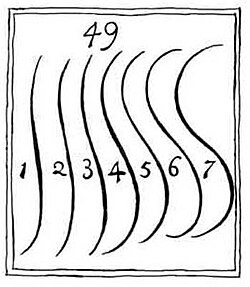
One of the challenges of the earlier inclusion of beauty in policy was the association with classical design and traditional housing and building types as opposed to contemporary or alternative thinking. Ultimately, that is the challenge of the word beauty in the context of design. Is there a universal and timeless language that we can apply to define beautiful design in 2026?
As a landscape architect, I am always drawn back to William Hogarth’s (18th-Century English painter, satirist, and writer) theory of the line of beauty, defined in his 1753 book The Analysis of Beauty. It describes an S-shaped curved line appearing within an object or as the boundary line. According to this theory, S-shaped curved lines signify liveliness and activity and excite the attention of the viewer as contrasted with straight lines, parallel lines, or right-angled intersecting lines, which signify stasis, death, or inanimate objects.

