

In May of 2017, Juan Mancias became an overnight sensation in France. Standing over 6 feet tall with a mane of salt-and-pepper hair, a medicine wheel-emblazoned ribbon shirt, beaded belt, and feathered medallion bearing the seal of the Carrizo/Comecrudo Tribe of Texas, he was conspicuous on the streets of Paris, and he had a message: French banks were financing the desecration of sacred Native lands and burial sites. They were, he said, aiding in the ongoing ethnic cleansing of Indigenous people in Texas through their support of natural gas pipelines and export terminals.
“It’s the same thing for 500 years,” Mancias told Observatoire des Multinationales. “We were occupied by the Spanish, by the Mexicans, then by the Texans, then by the Americans. And now it’s the oil industry.”
Three months before Mancias arrived in France, the last camps at Standing Rock emptied. For nearly a year, thousands of Indigenous water protectors and environmental allies had gathered near the Standing Rock Sioux Reservation in North Dakota to protest the Dakota Access Pipeline, or DAPL. Oil was now flowing through DAPL, but activists and environmental organizations kept the momentum of the protests going.
In South Texas, Mancias had been fighting the same battle on a different front. He and Bekah Hinojosa, a grassroots activist in the Rio Grande Valley, spent weeks organizing against the proposed Rio Grande terminal and Rio Bravo Pipeline. The $18-billion projects would carry tens of millions of tons of natural gas each year to the export terminal in Brownsville, where it would be liquefied and shipped overseas as LNG. The battle led them to collaborate with Rainforest Action Network on a study documenting what it identified as the projects’ threat to the area, which included Carrizo/Comecrudo lands. The proposed industrial corridor, Mancias said, threatened the tribe and Garcia Pasture, a village site near Brownsville with human burials, ruins, and a rare coastal ecosystem the World Monuments Fund, an organization dedicated to raising global awareness of endangered cultural heritage sites, declared “threatened by natural resource extraction.”
“It used to be one of the places that we would gather as different clans and set up our lean-tos and be there for awhile while we were fishing,” Mancias said. “That’s why we were real concerned.”
The report circulated. People were paying attention.
Les Amis de la Terre, or Friends of the Earth France, saw an opportunity: French banks — including BNP Paribas and Société Générale — were, at the time, still financing DAPL and petrochemical industries in South Texas, including the Rio projects. Organizers believed they could pressure them to stop.
“We had a broad objective of trying to prevent more financial flows and loans going from France to this project,” said Lorette Philippot, with Les Amis de la Terre, who worked on the campaign. “We had the difficulty to try to mobilize people on a project that was happening far away with impact on people that were far away.”
By early spring of 2017, Rainforest Action Network, Sierra Club, and Les Amis de la Terre had a plan: Mancias and Hinojosa, who was a Sierra Club campaigner at the time, would travel to France to help launch an international divestment campaign. They would work alongside Indigenous activists and allies involved with Stand Up With Standing Rock, a European solidarity tour aimed at demanding banks divest from oil and gas projects in North America.
Over the next week, they appeared in nearly a dozen print and radio outlets, including Le Monde and Radio France. They spoke at rallies. They built a symbolic oil pipeline inside a Paris branch of the bank Société Générale. A video of Mancias discussing Indigenous rights went viral. The pair were applauded by shareholders at BNP Paribas and booed by those at Société Générale. Mancias even secured a meeting with newly elected President Emmanuel Macron’s diplomatic advisors, where he explained how the United States government ignores Indigenous rights in Texas.
“It was a very strong narrative and it helped us mobilize a lot of media at the time because there were these chiefs coming to France to address French companies,” said Philippot. “It was very strong, it was very new, so it helped really create attention.”
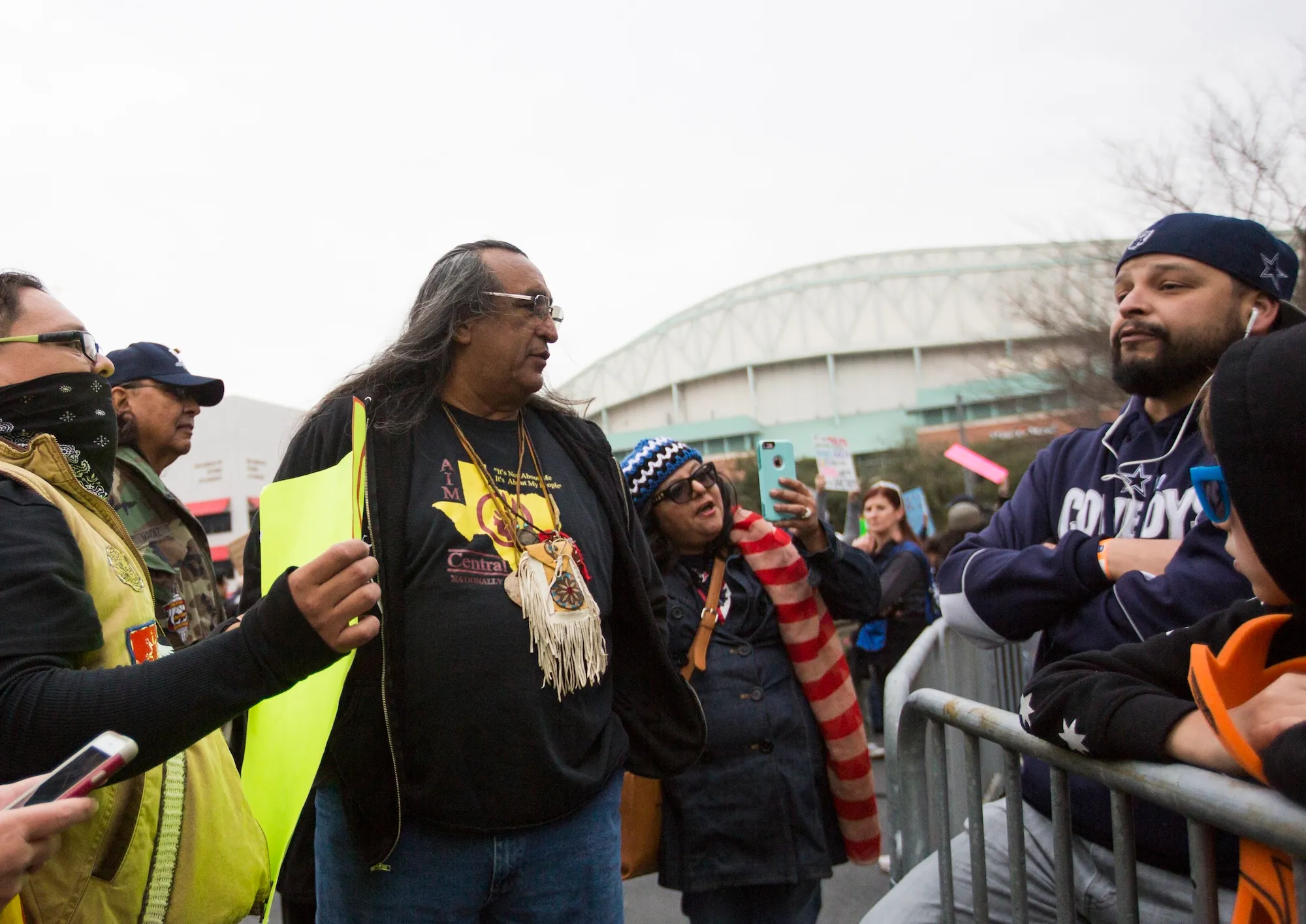
In the wake of Standing Rock, the global climate movement was eager to elevate Indigenous voices in the fight against fossil fuels, and Mancias stepped up. By leveraging the story of the Carrizo/Comecrudo Tribe as a victim of ethnic cleansing at the hands of fossil fuel interests, the European campaign eventually helped push the two banks to withdraw from U.S. oil and gas projects. This high-profile victory launched Mancias and the tribe into the international media ecosystem, transforming them into environmental media darlings.
Mancias’ visit to France was a massive public relations victory for the climate movement.
But an extensive review of historical and genealogical records reveals that key documents underpinning Mancias’ claims to being of Carrizo/Comecrudo descent contain significant historical inconsistencies and cannot be verified or authenticated. His platform instead rests on family lore that has generated immense financial and social capital for Mancias, who is the group’s chairman, while fueling a broader trend that has detrimental global repercussions for Indigenous Peoples and the fight to address climate change.
“At the time we met him in the United States, Juan Mancias was clearly recognized as a representative of Indigenous communities,” said a spokesperson for Amis de la Terre France. “Regardless of his origins or ancestry, we believe that everyone has the right to oppose LNG projects and their financiers.”
Everyone had a reason to believe the story Mancias told. And somewhere in the years of campaigns and headlines, the question of whether it was true fell away. The story worked, and that was enough.

If you’re a Native reader, you know the word pretendian — its history, the personalities attached to it, and the debates over identity and “pretendian hunting.” The next two paragraphs are not for you. Feel free to skip ahead.
Pretendian — a portmanteau of “pretend” and “Indian” — describes someone who poses as Indigenous but is not. The term has broken out of Indian Country in recent years, with coverage, unmaskings, and think pieces by Indigenous and non-Indigenous writers alike in outlets ranging from The Atlantic and National Public Radio to the New York Post and others as far away as Aotearoa, New Zealand. You know these people; some of your friends and family may even be pretendians, and the problem is bigger than your weird aunt with high cheekbones waving the results of a recent DNA test. Instead, tribal nations and international bodies agree that Indigeneity is a political identity requiring verifiable citizenship within a historically continuous community.
The consequences of false claims to Indigenous identity are not abstract and have brought pretendians significant financial, professional, and cultural benefits. In 2017, three fake Cherokee tribes received $300 million in federal contracts by claiming minority-owned business status. Twin sisters Amira and Nadya Gill received more than 158,000 Canadian dollars earmarked for Inuit kids after pretending to be tribal members. Scholars Elizabeth Hoover and Andrea Smith built careers on bogus claims of Indigenous identity. Perhaps most famously, an investigation by the Canadian Broadcasting Corp. in 2023 found that Buffy Sainte-Marie, the internationally known singer whose career spanned nearly six decades, had falsified her claims of tribal identity and was born in Massachusetts to Italian and English parents.
Tribal Recognition 101
Stories are powerful, and in the world of climate action, an idealized Indigenous narrative can be more malleable, and more valuable, than facts. In France, the story of the Carrizo/Comecrudo Tribe provided exactly what activists needed to pressure international banks into divesting from oil and gas: a moral front line. It was a victory built on a collective willingness to believe a story that no one bothered to question, let alone investigate.
In the years since he returned from Paris, Mancias has transformed the Carrizo/Comecrudo Tribe of Texas, which lacks federal and state recognition, into a formidable environmental force. He has raised more than $5 million from major philanthropic foundations and joined heavyweights like Earthjustice and World Monuments Fund, and he has engaged with several United Nations agencies to battle oil and gas terminals, President Donald Trump’s border wall, and Elon Musk’s SpaceX.
Those partnerships have allowed the Carrizo/Comecrudo to behave as a tribal nation in the public eye while evading the responsibilities — and burdens of proof — genuine sovereign nations must bear. That has brought financial windfalls and international influence, revealing a troubling shadow recognition system, one in which well-heeled environmental organizations, well-meaning but unwitting journalists, and trusting international human rights bodies unknowingly prop up unverified Indigenous groups and pretendians to wage the climate war at the expense of legitimate Indigenous Peoples, tribes, and organizations.
For Indigenous policy experts, the elevation of unverified groups by environmental organizations represents a systemic issue that extends far beyond any single region. Speaking broadly about the nationwide trend of illegitimate actors and unverified groups entering the environmental movement, Kyle Whyte, a member of the Citizen Potawatomi Nation and a climate justice scholar at the University of Michigan, noted the widespread damage caused by this dynamic.
“It’s actually hurting, I would say at an exponential rate, the possibility for Indigenous people to be major players in climate change,” said Whyte. “It’s completely undermining the potential that tribal nations and Indigenous people have.”
The Carrizo/Comecrudo Tribe of Texas, which also goes by Esto’k Gna, claims historical connection to the Texas Gulf Coast and Rio Grande Delta, a region with a thin record of its Indigenous history. While many primary documents about tribes in the region exist in the official archives of Spain, Mexico, and Texas, as well as parish records and municipal files, these threads have rarely been woven into a cohesive narrative.
Spanish archives from the 16th through 18th centuries contain information on more than six dozen distinct groups in the region, but do not describe a unified “Comecrudo” or “Carrizo” tribe. Instead, Comecrudo, which is Spanish for “eats food raw,” and Carrizo, which translates as “river cane,” were simply derogatory, catchall descriptors colonizers applied to bands, tribes, communities, and groups that likely knew little of each other. These fragmentary colonial records capture little of the lived history of South Texas Indigenous communities, reducing complex human beings and societies to scattered chalk outlines of births, baptisms, and geographic displacements.
Indigenous homelands in South Texas have played a reluctant host to the shifting, militarized edge of the Spanish, Mexican, and, later, Texan and American frontiers. Nearly 50 years of perpetual war against Native peoples into the late 19th century ended in forced removal and genocide. By the 1870s, many surviving tribal nations had been pushed out of the state altogether, including the Waco, Kiowa, and Tonkawa, all of which are now based in Oklahoma — a brutal reminder of Texas moxie. Historians have called the state “a cauldron of racist violence.”
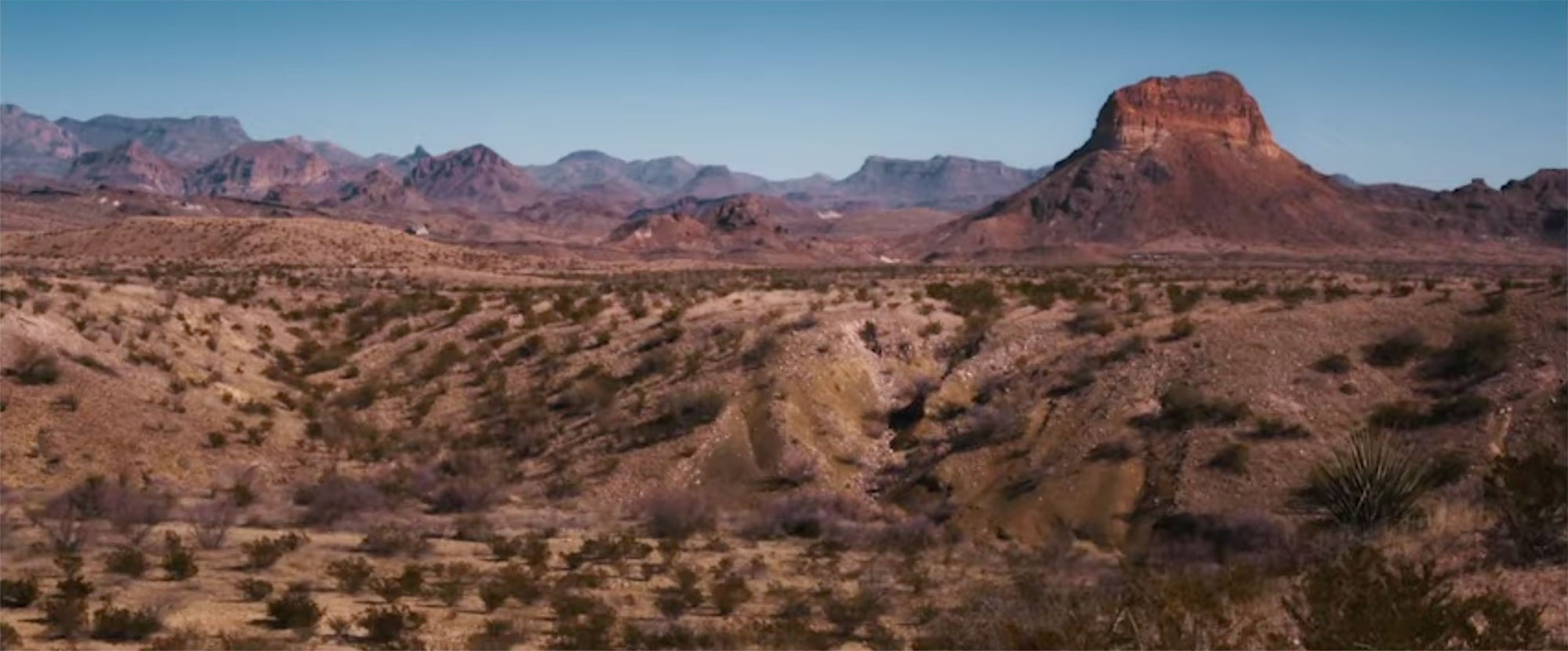
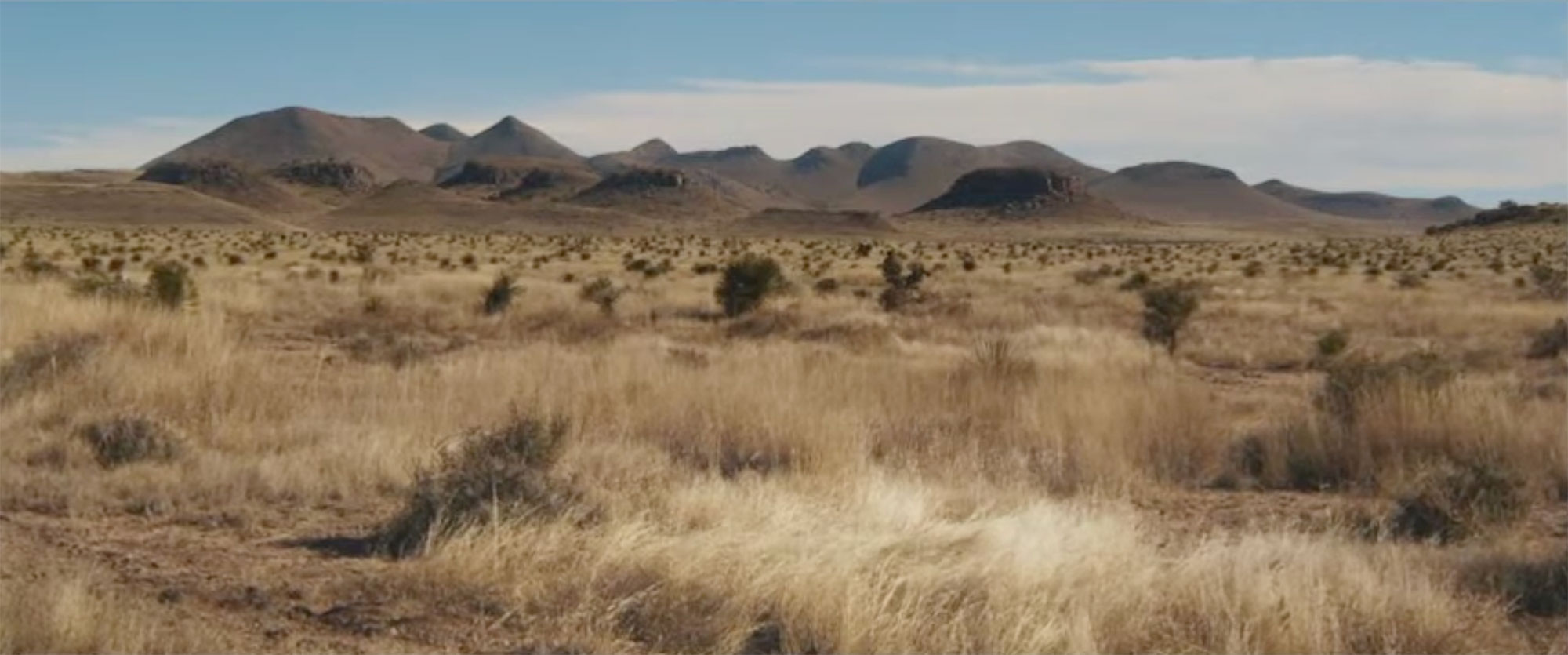
These landscapes appear in the Carrizo/Comecrudo video ‘Teaching of the Hands.’ Courtesy of Juan Mancias
Few authoritative books compile the Indigenous history of South Texas. The most prominent, Martín Salinas’ Indians of the Rio Grande Delta, was praised for painstakingly compiling what one reviewer called the “recorded sherds of Indian existence” in the lower Rio Grande Valley. Those sherds, created by Spanish colonizers and military leaders, document Carrizos and Comecrudos at Spanish missions into the 19th century, and is punctuated by an 1886 visit from noted Swiss ethnologist Albert Gatschet, who found elderly Comecrudos living on the riverbanks of the border town of Reynosa Diaz. Some could still speak their language, which he wrote down, but after Gatschet the tribe disappears from the historical record.
For more than a century, the prevailing academic and historical consensus has held that Gulf Coast groups like the Carrizo, Comecrudo, and Karankawa ceased to exist as distinct societies by the late 1800s. According to the Texas State Historical Association, leading anthropologists, and historians, the surviving populations of South Texas died from colonial violence and disease, or they were assimilated into Mexican and Tejano society, leading to their de facto extinction as distinct cultural groups. To modern scholars, these tribes simply do not exist today.
According to Mancias, those scholars are wrong. He insists the Carrizo/Comecrudo Tribe and its history, culture, and language survived.
Mancias claims that in the 1940s, his grandfather, Juan Ramirez Mancias, a Carrizo/Comecrudo chief, led 29 tribal families from their traditional homelands along the Rio Grande 600 miles north to the Texas Panhandle. There, the families adopted identities as Mexican farmworkers and deliberately assimilated into the Hispanic population. The Mancias family, however, secretly maintained its Indigenous identity, language, and oral histories — the only people to keep the tribe alive. Mancias has said he knew as a child that he was Indigenous, and that he was dismissed and marginalized for it. He claims to have endured anti-Indian racism and expulsion from school for fighting his tormentors, but he never abandoned his convictions or his grandfather’s orders to “go get our land back.” Mancias says he is the hereditary leader of the tribe due to his family’s singular role in preserving its identity and history, and that those convictions have fueled his mission of protecting his ancestors’ homelands from billionaires, pipeline companies, banks, and the federal government, while rebuilding those homelands one parcel at a time.
“They almost annihilated us,” Mancias told a reporter in 2024. “That genocide continues.”
The story Mancias tells echoes the Book of Exodus in the Bible: a multigenerational quest to return home that requires concealed identities, years in hiding, and a history physically carried forward — ending, at last, in a hard-fought, triumphant return.
“This is pretty standard for people to make a life out of a story like this,” said Kim TallBear, who is Sisseton Wahpeton Oyate, author of Native American DNA: Tribal Belonging and the False Promise of Genetic Science, professor at the University of Minnesota, and an expert in Indigenous self-definitions. “This is a pretty standard hiding-out-in-the-wilderness kind of thing, and it is very common in the South.”
When ‘Hiding’ Doesn’t Hold Up
Mancias said around a dozen of the 29 families who moved north remain active in the Carrizo/Comecrudo Tribe, but would not provide a full list or contact information for them. But he said his ancestral claims go back even further. He has told journalists his lineage starts with Chief Naz’tazea, a Carrizo/Comecrudo warrior, and his son, Manuel Cavazos — the lone survivor of an alleged massacre of more than 300 Carrizo/Comecrudo people in 1801 at the hands of Spanish soldiers, acting with Catholic priests, along the Devils River in South Texas.
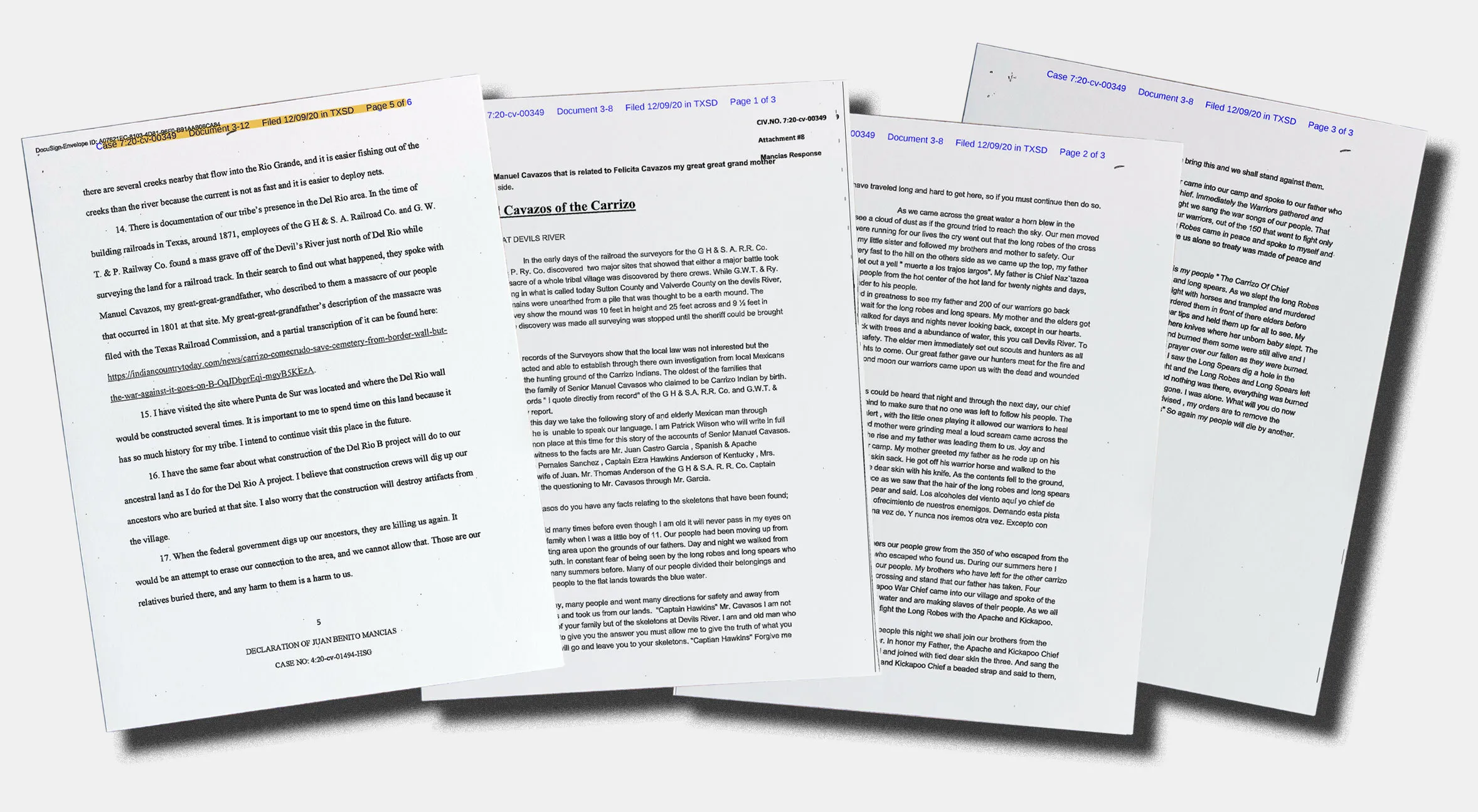
The sole basis for this claim is an unverified 19th century document that Mancias insists he discovered in the archives of the Texas Railroad Commission — a find he has repeatedly said corroborates his family’s oral history and confirms his relation to Naz’Tazea and Cavazos. According to Mancias, the report details an 1871 incident in which surveyors for the Gulf, Western Texas, and Pacific Railway stopped work after excavating an earthen mound containing the skeletal remains of more than 300 people. The document chronicles a subsequent military investigation during which an elderly Cavazos testified through a Spanish and Apache interpreter about the slaughter and his miraculous survival.
Mancias has recounted the story many times. In 2002, he read the alleged report aloud while testifying before the Texas Senate on the need for a state agency for Native American affairs, including a quote he attributed to Cavazos: “As I have said many times before, even though I am old, it will never pass in my eyes on what happened to my family when I was a little boy of 11.” In 2019, Mancias provided additional passages to a reporter, including a particularly graphic recollection from Cavazos that Spanish soldiers “put our little ones on spear tips and held them up for all to see. My sister was with child and Long Spears cut her with their knives where her unborn baby slept.”
‘I didn’t make it up.’
Juan Mancias
Mancias has been inconsistent about when he discovered the document. He told Grist that he had to threaten the state Railroad Commission to release it in the late 1980s, but also told Texas state senators that he’d discovered it only the week before his 2002 testimony. He has also placed the discovery in 2005, and in a recent interview claimed the report was not translated until 2023 because it was written in what he called “Castilian/Galego” Spanish. That translation, Mancias said, was done with the help of reporter Frank Hopper at Indian Country Today, now ICT, but the article in question was published in 2019.
“I didn’t translate the story,” Hopper wrote in an email. “I don’t have the original document. I tried researching the massacre online but could find very little.”
Mancias would not share the document despite repeated requests, blaming technological issues and suggesting that state officials may have altered or removed it from public viewing. “I know that it exists somewhere, and maybe they changed it, so I can’t do anything about them changing it,” he said when confronted with our findings.
Extensive searches of digital and physical repositories within the Texas State Library and Archives Commission found no evidence that the report exists. Instead, it revealed multiple discrepancies and historical anachronisms in Mancias’ story.
Mancias has been inconsistent on where the massacre occurred, with the railroad report naming two counties that did not exist at the time it was allegedly created and hundreds of miles from the traditional territory of the Carrizo/Comecrudo. He claims the document was written in a dialect of Spanish that would not have been used by an American railroad company operating in Texas almost 30 years after statehood. His chronology has also been historically illiterate: There weren’t any railroads operating in the area until nearly a decade after the discovery of the human remains purportedly occurred. None of the individuals named in the deposition, including the interpreter and a former Civil War captain, were found in the military and genealogical databases examined.
“I doubt any railroad survey crews would have been in such a remote area 10 years before the tracks were being laid,” said Rick McCaslin, the Texas state historian. “I strongly doubt that an Anglo company would have a deposition in Spanish without a translated version to accompany it.”
Don Hofsommer, a railroad historian and author of several books on the topic, also noted that the Texas Railroad Commission — the agency Mancias claims held the report — was not established until 1891, two decades after the alleged survey. “Typically, railroads did not move that sort of information to the public domain,” said Hofsommer. “It’s extremely unlikely that such a document would have migrated, and I can’t see any reason why it would have migrated to the Texas Railroad Commission. Improbable.”
“I didn’t make it up,” said Mancias.
The Texas Railroad Commission did not respond to repeated requests for comment.
Mancias has cited the purported document as evidence to his claims in federal court. In 2019, he sued the federal government, alleging genocide against the Carrizo/Comecrudo people, the desecration of sacred sites, and the use of discriminatory waivers to expedite border wall construction. He asserted “absolute land sovereignty” over six South Texas counties and sought sweeping remedies: an immediate halt to border wall and energy development, the transfer of land from corporations to the tribe, and $1 trillion in reparations — including $400 billion up front and $200 billion annually for 500 years.
When a judge required Mancias to specify the basis for alleging that the Carrizo/Comecrudo held a legal interest in the territory, Mancias submitted the text of the alleged Devil’s River report but did not produce a physical copy. Mancias later dismissed the lawsuit after the government challenged his legal standing to sue as an unrecognized tribe. In 2020, Mancias cited the railroad report in a Sierra Club lawsuit challenging the Trump administration’s border wall, but neither he nor the environmental group provided the original document in the court filings, instead referencing the article Hopper wrote for ICT in 2019.
The alleged report is the only documentary evidence Mancias has publicly referred to in order to establish his connection to the Carrizo/Comecrudo Tribe.
A lack of proof extends to his other ancestral claims, including the foundational lore of his activism: a childhood command from his grandfather to “go get our land back.” When pressed by the judge in his 2019, $1-trillion lawsuit against the federal government about whether he held traditional title to the lands he was suing over, Mancias admitted that while his grandfather claimed to own land in Peñitas, Texas, the family had “never been able to find a recorded deed or a document verifying this.”
Grist also reviewed census, birth, baptism, marriage, and death records spanning the mid-18th century to the end of the 20th century from across Texas and in Tamaulipas and Nuevo León, Mexico. They show Mancias descends from a well-documented colonial family with deep roots in northern Mexico, including at least three documented Indigenous ancestors born in Mexico between approximately 1770 and 1800. They lived six to seven generations ago and are among the roughly 64 to 128 direct ancestors a person has at that generational depth. However, parish records show this Indigenous ancestry likely originates from the Sierra Madre Oriental mountains, not the Rio Grande Delta, the historic territory of the Carrizo/Comecrudo. More crucially, those ancestors are found on Mancias’ maternal line, not paternal — the foundation of his Indigenous claim. Those genealogical records also do not support Mancias’ assertion that he is related to Manuel Cavazos — the historical paper trail breaks at the precise generational link required to connect Mancias to the Devil’s River survivor. Nobody by that name, or the name Naz’tazea, appears in any records, including those by Gatschet, the Swiss ethnologist. Mancias did not respond to a detailed request for comment outlining our findings.
“If you go back six generations, that’s a lot of ancestors,” TallBear said. “Why are you focusing on the one who might or might not have been Indigenous? Even if there’s an actual Indigenous person, who cares? That’s not a claim. Ancestry alone is not a claim.”
That point is essential to understanding Indigenous identity. Tribal nations, the federal government, and international human rights bodies agree that Indigeneity is fundamentally a political and collective identity, not a private matter of individual racial descent or even blood quantum. As recognized by both the Bureau of Indian Affairs and international bodies like the United Nations, a group cannot simply self-identify into existence or reexistence; legitimate Indigenous Peoples must demonstrate historical continuity by tracing an unbroken line of political authority, typically through formal treaties, acts of Congress, or historical archives that document unbroken, collective lines to preinvasion and precolonial societies. When recognition politics shift from collective, land- and place-based rights toward individual rights that rest on ancestral claims, Indigenous Peoples, rights, and movements face compounding harms — a point scholars emphasize. To avoid that, and distinguish inherently sovereign tribal nations from groups composed merely of individuals claiming descent, the United States relies on a formal, if imperfect, legal system to vet claims of nationhood.
It’s important to note that recognition status indicates whether a group has governmental authority and collective political rights as a sovereign nation. It does not, in and of itself, validate individual Indigenous heritage, just as the lack of federal recognition does not invalidate it. But it does determine whether a group is a sovereign governmental authority or merely an association or nonprofit organization. Indigenous leaders and scholars say that failing to respect those political boundaries enables individuals and groups fraudulently claiming Indigenous heritage for professional, political, and financial gain, ultimately harming legitimate Native communities.
Mancias rejects these bedrocks of Indigenous identity.
“We don’t abide by the colonial mentality of a procedural recognition process,” he said, referring to the tribe’s lack of political status.
Still, Mancias submitted a letter to the Bureau of Indian Affairs, or BIA, in 1998 with the intent of petitioning for federal recognition of the Carrizo/Comecrudo Tribe. Although Mancias frequently cites the multimillion-dollar cost of the process as the primary barrier to proceeding, documents obtained through the Freedom of Information Act show the group continues to interact with the agency. In March 2016, Mancias and his daughter Christa Mancias submitted a signed letter to the BIA to officially update their tribal council roster and maintain the petition.

The financial barriers and public condemnation of the recognition process haven’t stopped Mancias from emulating those federal systems. Since the 1990s, when Mancias established a nonprofit under the tribe’s name and began fundraising, he has created a tribal government with himself as the hereditary leader, recruited members, and issued identification cards. During the Texas Senate hearing in 2002, Mancias claimed the tribe had 352 members. By 2009, that figure had risen to 9,000 and by 2017 to 17,000 before tumbling to 2,500 four years later. It jumped again to 6,500 in 2024. This year, Mancias claims 30,000 members, a surge that would require adding roughly 65 members every day for an entire year. Mancias said membership is granted through lineal descendancy.
“It’s family connections,” said Mancias. “Because of the blood that runs through us.”
That recruitment strategy helped bring in Christopher Basaldú, one of the tribe’s most prominent and outspoken members. Basaldú grew up in South Texas hearing family stories of his Indigenous heritage, but that changed when he met Mancias. According to an article featuring Basaldú, who did not return requests for comment, Mancias asked for his family names and where his relatives were born, then declared: “Those are my families, too. We’re related. You’re Carrizo.” Basaldú has since co-founded the tribe’s closest ally fighting oil and gas terminals, the South Texas Environmental Justice Network, along with frontline activist Bekah Hinojosa, whom Mancias also claims is a “distant cousin.”
Presented with our findings, Hinojosa said, “I’m not aware of any familial ties with Juan Mancias.”
Over the last two decades, global leaders have increasingly looked to Indigenous Peoples for solutions to climate change. That shift started in 2004 with the release of the landmark Arctic Climate Impact Assessment, which pushed Indigenous ecological expertise into the mainstream. Three years later, the United Nations Permanent Forum on Indigenous Issues — among the largest global gatherings of Indigenous leaders and advocates — dedicated its annual session to climate change, helping establish Indigenous stewardship as a pillar of global environmental policy.
Institutional acceptance deepened in 2014, when the Intergovernmental Panel on Climate Change formally recognized Indigenous expertise as an important resource for climate adaptation, a stark departure from earlier reports that marginalized or ignored those perspectives. The following year, the Paris Agreement wove Indigenous ecological knowledge into its framework.
Then came Standing Rock. Nearly a year of intense protest put Native people in the international spotlight and pushed the Indigenous climate movement to the fore.
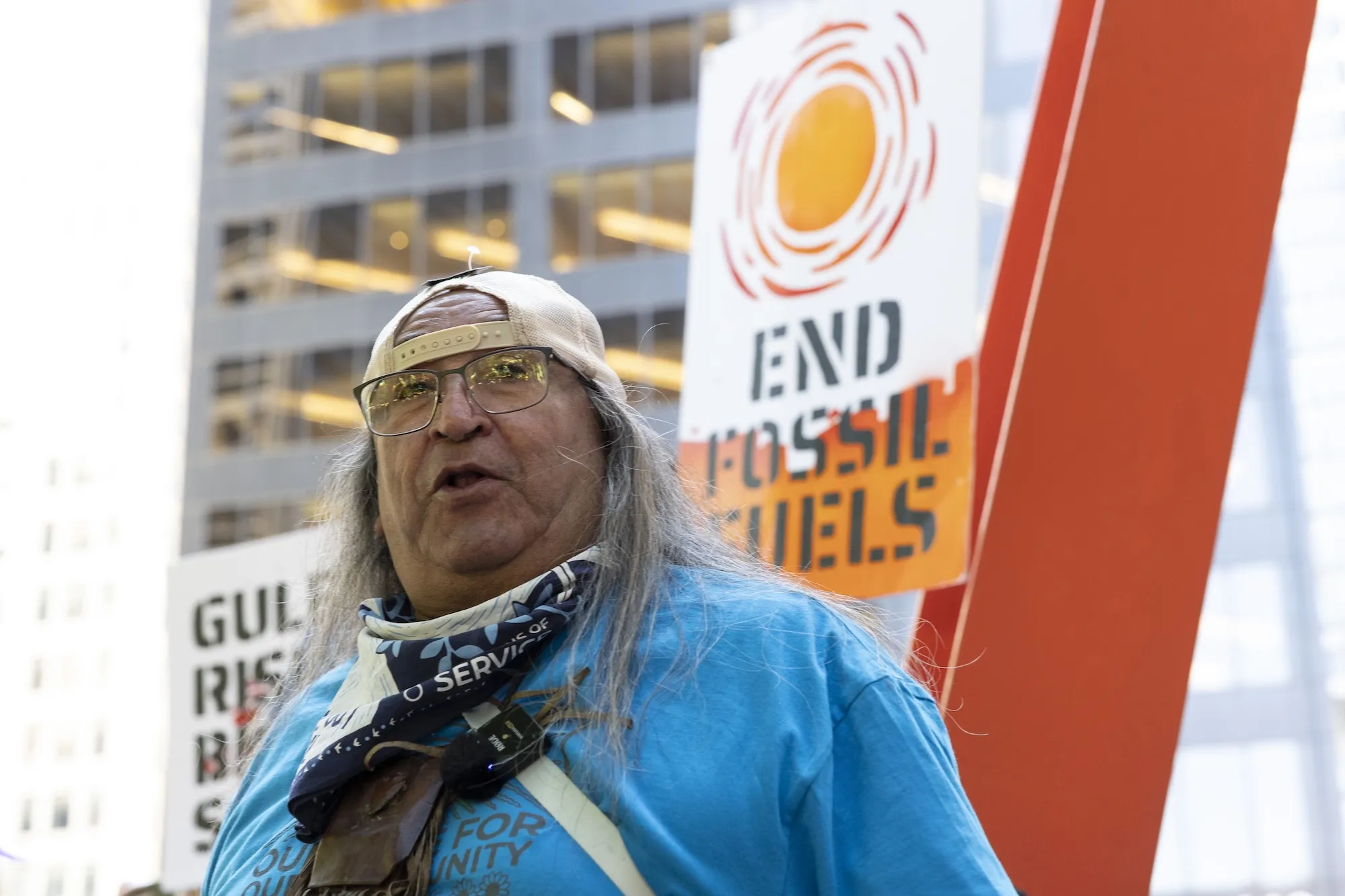
Eventually, the federal government caught up. In 2021, the Biden administration elevated Indigenous traditional ecological knowledge to federal policy and established an interagency working group to ensure Native stewardship informs decision-making. “Tribal and Native communities have stewarded these lands since time immemorial,” said Brenda Mallory, who chaired the White House Council on Environmental Quality, at the time. “Their voices and their expertise are critical to finding solutions to address the climate crisis, an issue that disproportionately affects tribal and Native communities.”
Mounting recognition brought an unprecedented flood of money. In 2021, a coalition of governments and private funders unveiled a $1.7 billion pledge to support Native-led land defense, the largest investment ever in Indigenous climate action. By the time world leaders gathered in Brazil last year for the COP30 international climate summit, that commitment had expanded to an additional $1.8 billion for Indigenous and locally led conservation efforts. If the climate crisis is a defining marker of this century, Indigenous Peoples are becoming keystone parties in the fight to address it.
How an Indigenous Claim Can Attract Millions
When that unprecedented funding reaches legitimate tribal nations, the impact is undeniable. “One million dollars that goes into an entity with accountability and due process and cultural integrity could allow [it] to actually do things that lower carbon footprints or protect themselves from the fossil fuel sector,” said Whyte, the University of Michigan professor.
But the sudden influx of money also created a lucrative new pathway for bad actors. That shift led some funders and advocacy groups to unwittingly elevate people and organizations with no legitimate claim to indigeneity, said Whyte. “After Standing Rock and during the Biden administration, you have philanthropy and federal resources focused on Indigenous people,” he said. “They didn’t have a lot of long-term relationships with tribes or with Indigenous people with legitimate organizations.”
Historically, financial support for Indigenous people and organizations has been dismal. A 2019 Native Americans in Philanthropy report found that between 2002 and 2016, large U.S. foundations gave, on average, 0.4 percent of their total funding to such communities and causes. Similarly, tribal leaders quoted in a 2021 study from the Center for Effective Philanthropy reported that nonprofits had denied requests because program participants were already deemed successful.
“We interpreted that as, They just want to fund drunk, starving Indians on the reservation or on skid row in the city. They’re not interested in what Native American leaders can contribute to society,” said one survey participant. These misconceptions, fueled by racist stereotypes, have been documented in other studies. Research has also found that philanthropy fundamentally misunderstands Indigenous experiences, tribal sovereignty and governance, and organizations operating in Indian Country — to say nothing of the growing problem of people fraudulently claiming Native identities.
“They didn’t understand, for example, that maybe in a certain region there was a legitimate tribal nation or Indigenous organization that was representing actual communities,” Whyte said of philanthropy in general. “They didn’t understand that there’s a difference between a group that is a nonprofit and a state-recognized tribe and a federally recognized tribe. Or in another country, a group that has a certain status. They didn’t know anything about it, and often, they were sucked in by these very powerful stories.”
Those same blind spots plague news coverage, where journalists with little or no understanding of Indigenous affairs are ill-equipped to engage in critical reporting or recognize when sources mislead them.
Vetting Indigenous Identity
Media access is essential for the well-being and civic participation of legitimate Indigenous nations. But it can also grant visibility and credibility to illegitimate individuals and groups whose claims go unscrutinized, and non-Native reporters often feel overwhelmed by the complexities of Indigenous identity, a vulnerability that is easily exploited. Many fail to do basic research or ask tough questions about a source’s tribal ties for fear of causing offense or because they are rushing to meet a deadline, said Sunnie Clahchischiligi, who is Diné and president of the Indigenous Journalists Association. “I think it’s just carelessness and laziness,” she said.
That can create an echo chamber because, as the Indigenous Journalists Association warns, “once a fraudulent claim is published in one news article, especially in Indigenous-led media, other media tend to follow without verification.”
That echo chamber has benefited Mancias and the Carrizo/Commecrudo Tribe, which have appeared in more than 70 stories, blogs, and press releases since 2016. They have received frequent coverage from outlets ranging from ICT and Inside Climate News to PBS, The Guardian, and The Texas Tribune.
Inside Climate news and ICT were among the most prolific outlets covering Mancias and the tribe. Grist presented the findings of this investigation to them and asked about their editorial policies for covering unrecognized groups and whether reporters examined primary documents to corroborate Mancias’ claims. Both outlets provided statements but did not answer the questions or explain their fact-checking protocols or policies covering unrecognized Indigenous groups.
“The issues you raise about identity are ones [the reporter] included with nuance in his reporting on displaced and marginalized people seeking justice,” the executive editor at Inside Climate News told Grist in an email.
ICT also declined to discuss its vetting process or its publication of the unverified 1871 Spanish railroad document. Citing an organizational restructuring that occurred in 2021, the president of IndiJ Public Media, which runs ICT, said she “can’t speak to decisions made in the past” but added that the outlet “is committed to integrity and the highest journalistic standards.”
The Carrizo/Comecrudo Tribe operated on a tight budget for years after incorporating as a registered 501(c)(3) nonprofit in 1999. The IRS repeatedly revoked and restored that status, and tax filings show the tribe reported less than $50,000 in annual revenue between 2012 and 2018. In 2016, a GoFundMe campaign raised just $3,000 to support a monthslong pipeline protest encampment.
Everything changed in 2019.
As Mancias’ celebrity grew on the heels of his 2017 Paris trip, the tribe began attracting philanthropic support. The Carrizo/Comecrudo Tribe has raised more than $5 million since 2019, largely from environmental and social justice funders like the Schmidt Family Foundation, First Nations Development Institute, Rockefeller Family Fund, and the Andrew W. Mellon Foundation.
First Nations Development Institute, the Rockefeller Family Fund, and the Andrew W. Mellon Foundation did not respond to detailed requests for comment. The Schmidt Family Foundation defended its funding and said identity verification is beyond its philanthropic mandate.
“While we resource many movements run by, and in service of, historically excluded demographics, we do not fund based on identity,” said Joseph Sciortino, the executive director of the 11th Hour Project, the environmental- and social justice-grantmaking program of the Schmidt Family Foundation. “Furthermore, it is not our place to interrogate the identity of those we support. Federal tribal recognition and matters of cultural legitimacy are incredibly complex and important subjects with significant social, cultural, and political implications. Our job as a philanthropy is to support important work, not to serve as the arbiters of who does and doesn’t get to be Indigenous.”
Philanthropic support helped the tribe in many successful campaigns. The tribe pushed French and Japanese banks to divest from LNG, disrupting financing for projects worth billions. It joined German activists to blockade European imports of fracked gas. It engaged in direct action to stop construction of the border wall and challenged Elon Musk’s plans to expand SpaceX operations in South Texas. As an accredited nongovernmental organization at the United Nations, the Carrizo/Comecrudo have weighed in on international negotiations, including a global plastics treaty.
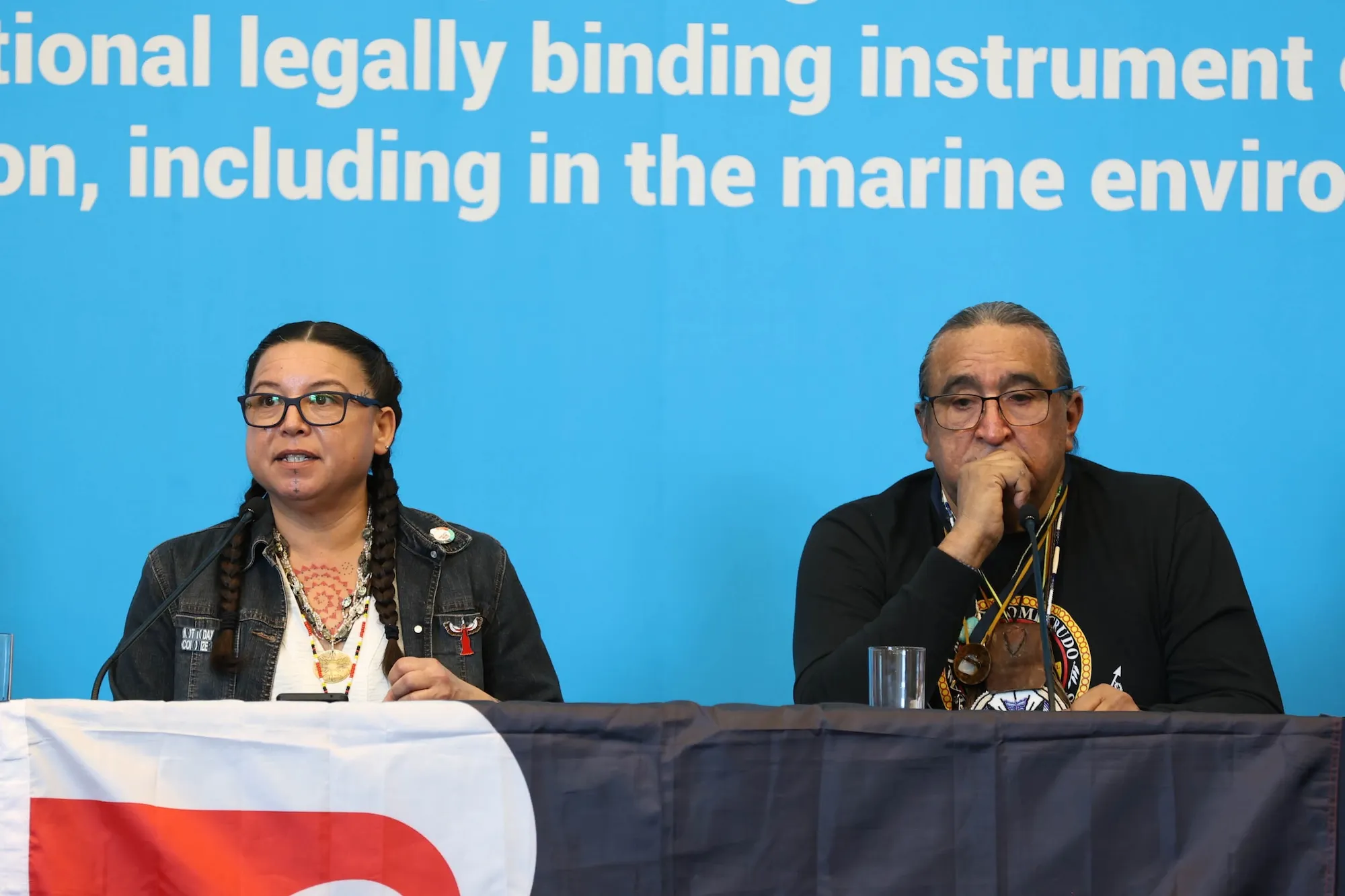
Mancias said the tribe is now working to protect threatened peyote habitats in South Texas, one of the few places in the U.S. where the psychoactive cactus, used as a sacrament in the Native American Church, grows wild. A spokesperson for the Native American Church declined to comment on this story.
It has accomplished all of this, Mancias said, with just five full-time employees, including his daughter. He also said much of the tribe’s money has gone toward buying land and paying taxes on it, a financial burden stemming from the tribe’s unrecognized status.
The Sierra Club has been one of the tribe’s most important allies. It has provided nearly $200,000 in grants and ongoing legal support, most recently in a lawsuit targeting SpaceX. The suit, filed by the environmental group SaveRGV in 2021 and later joined by the Sierra Club and the Carrizo/Comecrudo Tribe, challenged the closures of Boca Chica Beach on the Gulf Coast. The shutdowns can last as long as 12 hours and are meant to safeguard the public from any falling debris from the rocket company’s launches. The plaintiffs argued the closures violated the Texas Constitution’s guarantee of access to public beaches.
In June, the Texas Supreme Court unanimously ruled against them, holding that private parties do not have the right to sue to enforce public beach access.
Mancias has argued publicly that the closures infringe on rights protected under the federal American Indian Religious Freedom Act — but that law applies to citizens of federally recognized tribes.
“The Carrizo/Comecrudo Tribe are the original people of the Boca Chica Beach region,” Mancias has claimed. “The river is sacred to us. When we call for the rains, we go to the river because that’s where the rains come from. And we’ve been stopped, prevented from giving our prayers at Boca Chica beach by a billionaire’s pet project and the police.”
But the litigation wasn’t fought on that ground. The suit rested on Texas beach-access law, not federal Indian law, and the tribe appeared in the case not as a sovereign nation but as an incorporated nonprofit organization.
The Sierra Club did not respond to a detailed request for comment.
As an unrecognized group, the Carrizo/Comecrudo lack the legal standing to compel developers or governments to consult with them on projects impacting their claimed ancestral lands. Instead, Mancias has turned to international frameworks, specifically invoking the U.N. Declaration on the Rights of Indigenous Peoples, or UNDRIP, and the legal principle of free, prior, and informed consent, or FPIC. By leveraging these standards, the tribe has forged an effective strategy to legitimize its identity claims on the world stage, pressure international financial institutions, and attract philanthropic support.
Representatives of the Carrizo/Comecrudo Tribe have argued that because companies like SpaceX haven’t consulted tribal leaders, they are violating UNDRIP. As part of its legal tactics, the tribe has demanded federal agencies obtain its free and informed consent before launching oil and gas projects. It has used similar arguments to pressure investors in France and Japan, contending banks are violating that standard by failing to consult with the tribe.
Although UNDRIP is universal in scope, its practical significance is greatest where Indigenous Peoples lack meaningful domestic protections, legal recognition, or recourse against state violence. In much of Latin America, Africa, and Asia, weak protection of Indigenous land rights — compounded by extractive pressure, organized crime, and impunity — has made defending Indigenous territory deadly. Indigenous people make up roughly 6 percent of the world’s population but account for nearly a third of the environmental defenders attacked in 2024.
The U.N. special rapporteur on the rights of Indigenous Peoples, Albert K. Barume, has tied that violence directly to the absence of secure land rights. “There is a crisis Indigenous people are currently experiencing, and it’s because many Indigenous Peoples are killed, many are under arrest, many live in hiding,” he told the U.N. Permanent Forum on Indigenous Issues in 2026. “This is because Indigenous Peoples’ land and territory are often not protected enough.”
Critics argue the framework was never intended to legitimize identity in the United States, where a system for establishing and recognizing tribal sovereignty already exists.
“They are literally using an argument that people in the world, that are being killed right now, actually need,” said Whyte.
The tribe’s closest ally in its international work has been the Society of Native Nations, or SNN, a Texas nonprofit founded in 2016 to combat historical erasure and promote the idea that “Indigenous peoples are still here in Texas.” It represents unrecognized tribes that receive no federal funding or support, including the Tap Pilam Coahulitecan Nation, Lipan Apache, Chichimeca, Tobotolobal, Mexica, and Purepecha.
The society started with help from Mancias.
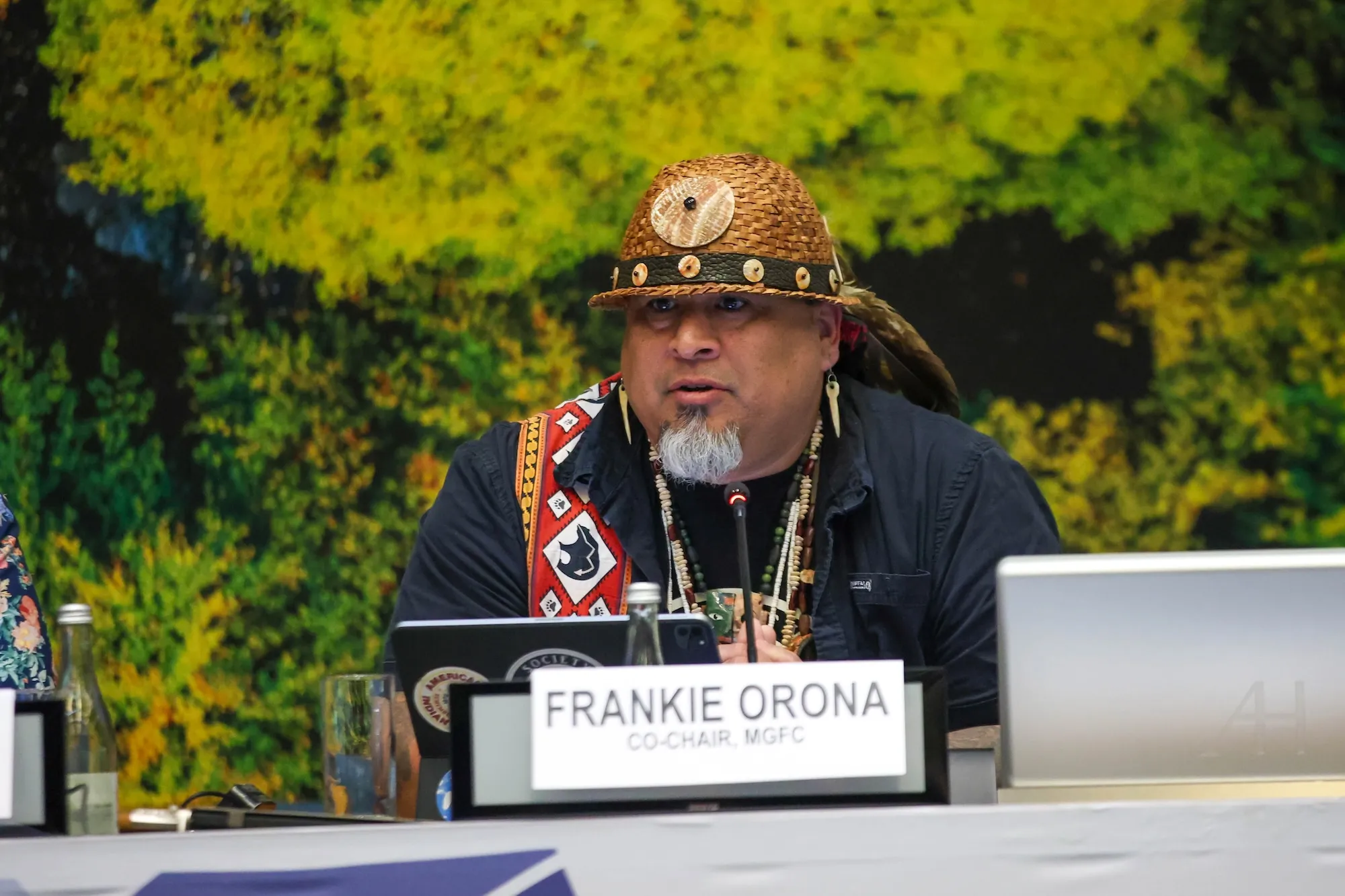
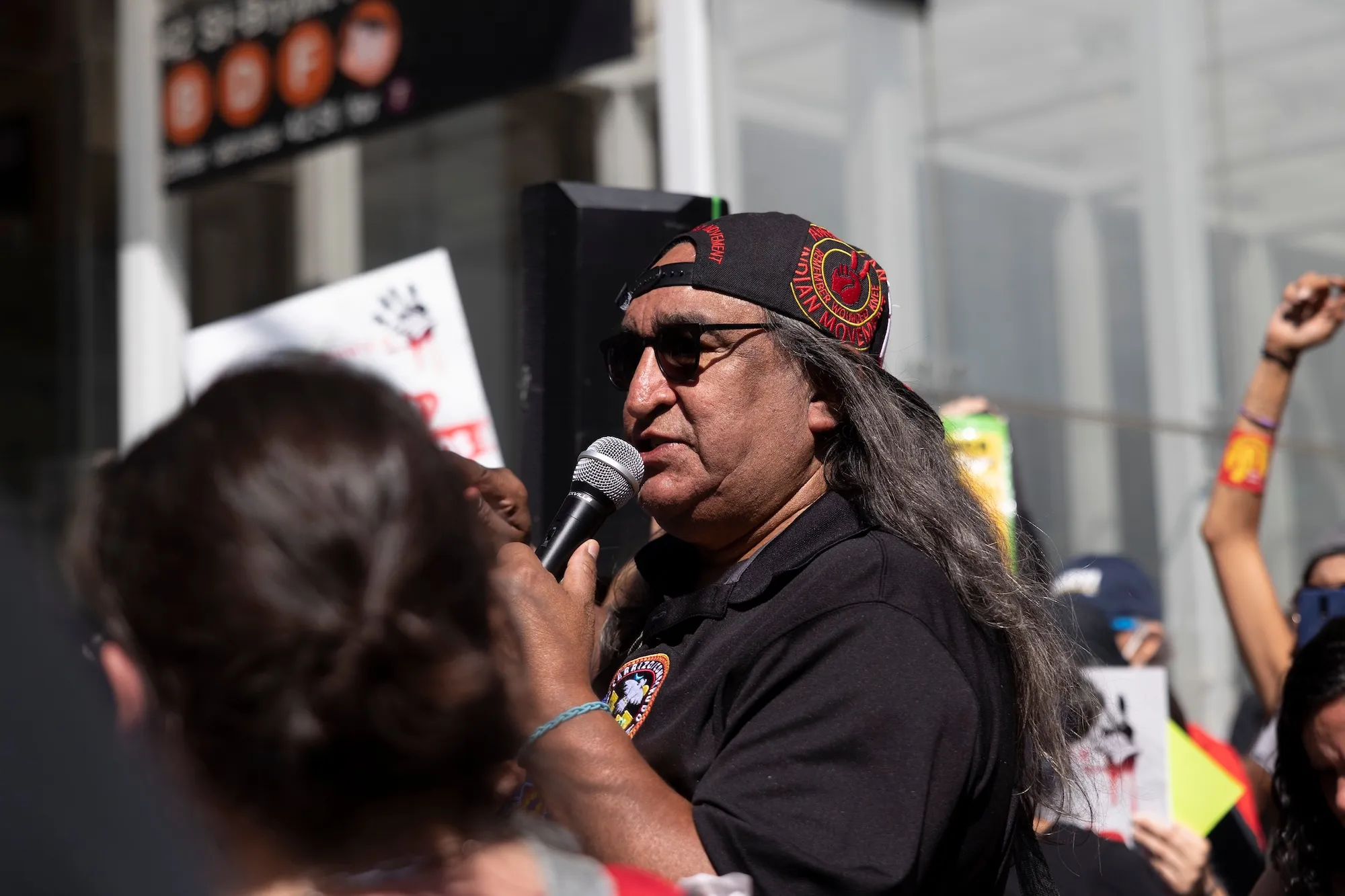
For more than a decade, Mancias led the Central Texas chapter of the American Indian Movement, or AIM, a historic and controversial Native American grassroots civil rights organization. During that time he recruited Frankie Orona, an information technology entrepreneur from California who identifies as Tongva, Chumash, and Borrado, and is an enrolled member and environmental liaison for the San Gabriel Band of Mission Indians, which does not hold federal recognition status.
“Frankie became a member because he met me,” said Mancias.
In early 2016, Orona filed the paperwork required to incorporate their chapter, the American Indian Movement Of Central Texas, as a nonprofit. Riding the momentum of Standing Rock, the chapter mobilized against the Trans-Pecos Pipeline in West Texas. Later that year, AIM Central Texas members, including Mancias, protested at a resort owned by the CEO of Energy Transfer Partners, the company behind the Dakota Access and Trans-Pecos pipelines. Two weeks later, on October 20, Orona renamed the organization the Society of Native Nations because, he said, AIM’s radical history made it “very, very difficult” to work with other organizations.
In a written response to an email outlining our findings, Orona said the “AIM Central Texas chapter was not renamed or replaced by SNN,” the organization still exists, and it “remains entirely separate from SNN.”
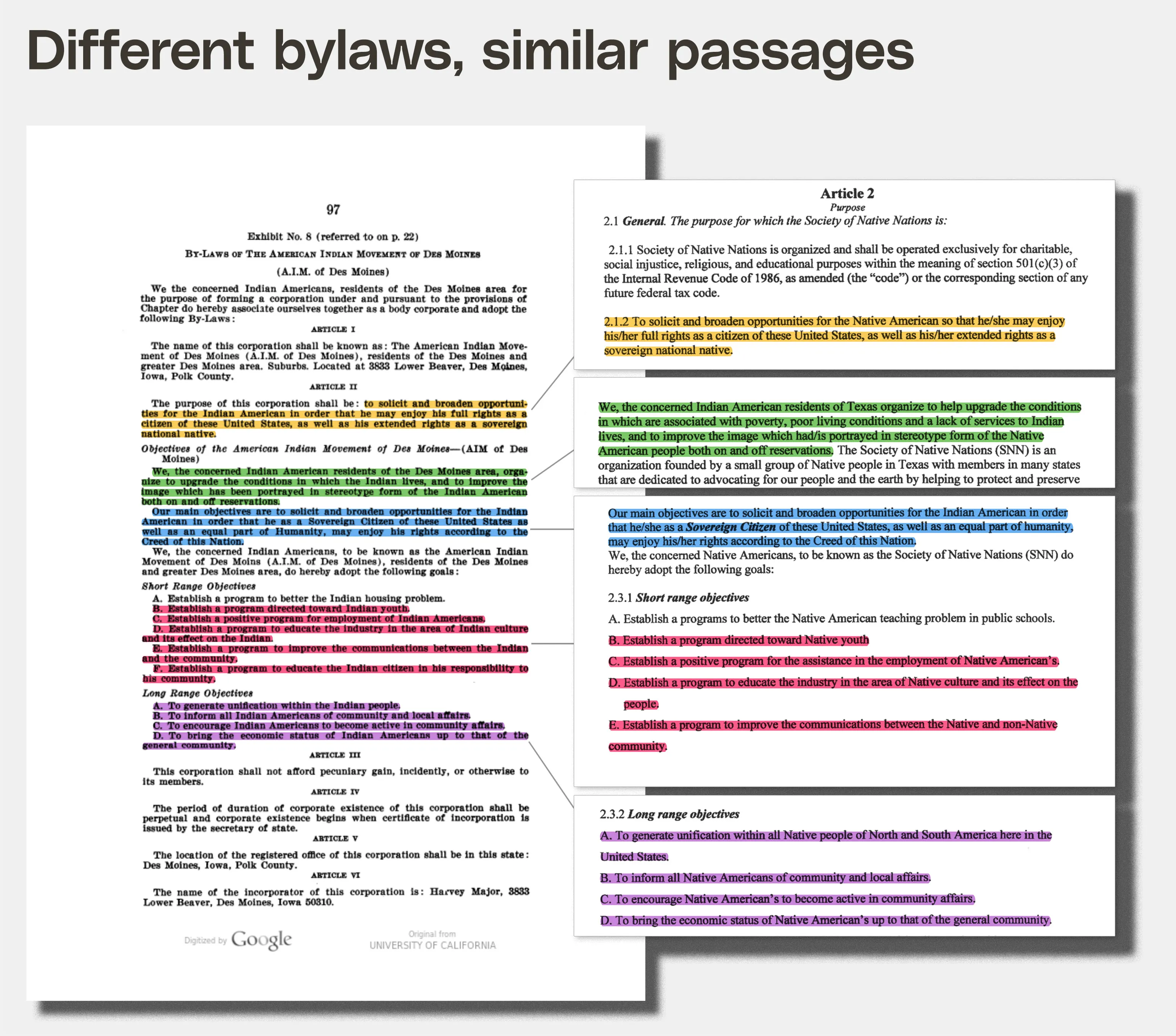
That claim does not align with legal filings available through the IRS and the Texas Secretary of State. Those documents show that AIM Central Texas and the Society of Native Nations share the same incorporation date, state file number, and federal tax identification number. SNN’s own governing documents reveal a shared origin: SNN’s by-laws — including its entire preamble, structural goals, and mission statements — are drawn almost verbatim from bylaws the Des Moines, Iowa chapter of AIM used in the 1970s, many of which are found in contemporary AIM materials.
Orona also insisted that “Juan Mancias was not part of creating SNN.”
The society’s financial growth has mirrored the rise of the Carrizo/Comecrudo Tribe. After filing rudimentary tax returns for several years, the organization’s fortunes changed dramatically in 2019 when it began securing climate-action grants, including funding to “address threats of fossil fuel infrastructure and border wall construction on ancestral lands of the Carrizo Comecrudo Tribe.” By 2024, its reported annual revenue had reached nearly $777,000 with money coming from many of the same philanthropic funders supporting the Carrizo/Commecrudo Tribe.
A review of the organization’s tax filings reveals a history of reporting inconsistencies and revisions. The society has on three occasions between 2018 and 2024 reported different revenue for the same tax periods, and later filings reported substantially higher revenue for earlier tax years. In 2024, the society’s tax forms misattributed historical revenues to the wrong years and left the current year’s income column blank.
In his written response to Grist, Orona said SNN is aware of the discrepancies and is working with a new accountant to review its filings for the past three years. “This corrective process began before we learned of your investigation,” he said. “We acknowledge that the public filings contain reporting inconsistencies that need to be corrected. However, the placement of figures in incorrect year columns or inconsistent presentation across returns should not, without further evidence, be characterized as intentional misconduct or as proof that funds were missing, improperly received, or misused.”
Asked to speak in general about the structural risks of funding unverified organizations rather than sovereign nations, Whyte noted that such groups frequently lack the infrastructure to handle large grants. “When a group comes in that has no potential for self-governance, they often lie about who their members are,” he said. “It might be a few figureheads, usually one person that’s the point person for everything, and a few other followers, and if they do get money, they often don’t have the capacity to manage those funds, and the entire thing gets wasted.”
Ongoing financial support helped propel the Society of Native Nations onto the global stage alongside the Carrizo/Comecrudo Tribe. Both organizations gained accredited nongovernmental status within the United Nations, allowing them to participate in global conversations, forums, and negotiations.
Within the United Nations system, legitimate tribal governments can, and do, participate as sovereign nations in specific Indigenous-focused spaces, such as the Permanent Forum on Indigenous Issues. However, at the highest levels of global diplomacy — including the U.N. General Assembly, Human Rights Council, and Economic and Social Council — the U.N. remains exclusively for recognized Member States.
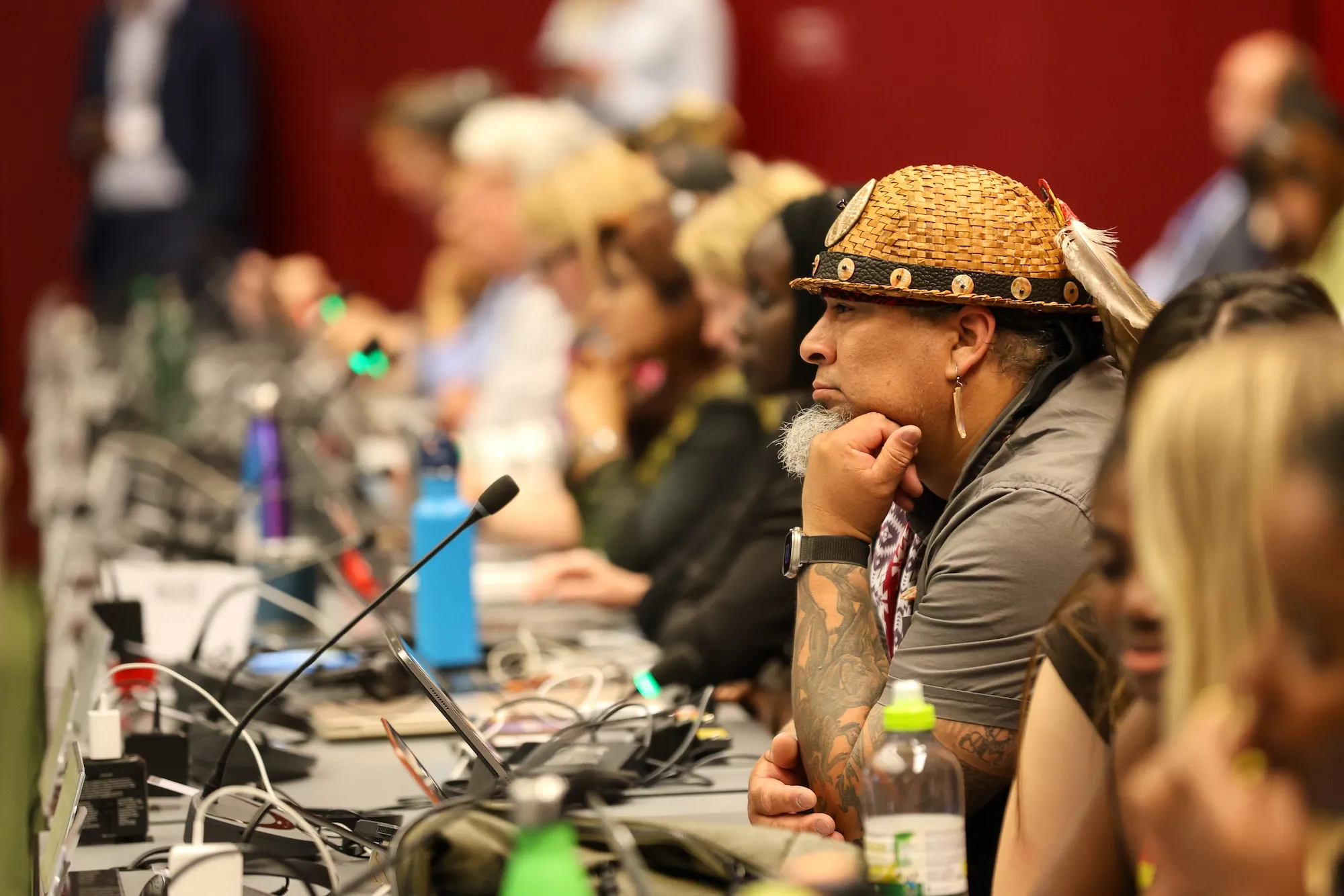
Because the U.N. excludes Indigenous governments from participating as sovereign nations in these broader arenas, Indigenous Peoples have fought for years for “enhanced participation” — the ability for tribal governments to hold a dignified, permanent status to negotiate on global policies that directly affect them. Until that happens, the system forces a workaround: To gain access to high-level bodies and specialized agencies, Indigenous Peoples must participate through nongovernmental organizations, or NGOs.
Both the society and the Carrizo/Comecrudo have used this loophole to gain a level of international power and influence they could not exert in the United States. The society secured accreditation with UNESCO — the U.N. body protecting cultural heritage — in 2024 by highlighting its partnership with the Carrizo/Comecrudo. It also won recognition from the U.N. Environment Programme, or UNEP, where Orona now co-chairs the Indigenous Peoples Major Group, a position that helps shape high-level negotiations like the global plastics treaty that represent the interests of Indigenous Peoples worldwide.
Just 24 Indigenous-focused organizations are accredited observers to the United Nations Environment Assembly, the world’s highest decision-making body for environmental matters. Only four are from the U.S. One is the International Indian Treaty Council, which is among the oldest and most established Indigenous NGOs at the U.N. The others are the Society of Native Nations, Humanculture, and the Carrizo/Comecrudo Tribe of Texas.
The society holds similar standing at UNESCO. Of the 10 NGOs from the United States with accreditation, only three focus on Indigenous issues: the Pacific Traditions Society, Cultural Survival, and the Society of Native Nations.
As accredited observers, NGOs cannot negotiate as sovereign governments. But groups like the Society of Native Nations and the Carrizo/Comecrudo Tribe receive a wide range of institutional privileges. Among other things, they can provide oral and written contributions to draft resolutions, access internal documents unavailable to the public, and interact directly with government delegations.
“The U.S., when they come with a delegation, you have members from the [Department of Justice] there sometimes, or [Health and Human Services],” said Orona. “You speak to states and you are able to influence policy that can impact generations and generations and generations yet to come.”
Yet despite granting this high-level diplomatic access, the U.N. does not verify whether these organizations actually represent historical Indigenous communities. In an emailed statement to Grist, a UNEP spokesperson confirmed that the agency “respects the principle of self-identification” and relies purely on standard nonprofit eligibility requirements for accreditation.
“UNEP, like other U.N. mechanisms, does not conduct determinations regarding the sovereign status, federal recognition, historical continuity, ancestry, or genealogical claims of organizations or individuals,” the spokesperson wrote, adding that accreditation “does not constitute endorsement or validation of such claims.”
That policy creates a structural conflict of interest for anyone looking to challenge a group’s credentials. Indigenous participation at UNEP is managed through the Indigenous Peoples Major Group. Because Orona currently serves as its co-chair, internal guidelines recommend that any official complaints or clarifications be brought to “one or both” co-chairs privately before being elevated to the broader group. A UNEP representative confirmed there is no specific conflict-of-interest procedure for this scenario, but did say that such a case wouldn’t be required to pass through a co-chair’s hands. Instead, concerns could be raised with the other co-chair or bypass the internal governance entirely by consulting UNEP’s Civil Society Unit.
Orona has become a fixture at U.N. summits, attending more than a dozen international events since 2024 in places like Geneva; Nairobi, Kenya; and Busan, South Korea. Mancias has also traveled internationally on behalf of the tribe and has, among other events, attended global conferences on fossil fuels and plastics in Kenya and Uruguay. He also participated in the 2024 plastics treaty negotiations in South Korea.
For Indigenous delegates, the presence of individuals and groups with unverified claims exercising this level of influence has been a longstanding source of frustration. Because the U.N. system relies heavily on NGO credentials and self-identification, it inadvertently creates a pathway to undeserved international legitimacy.
“This has been an issue of concern throughout the U.N. system regarding the representation of Indigenous Peoples, and it is really hard to know how to deal with it,” said Andrea Carmen, executive director of the International Indian Treaty Council. “None of us know everybody, and definitely we don’t know Indigenous Peoples’ from every region. We don’t want to exclude anyone unfairly, but we do hear these concerns expressed.”
The Right of ‘Peoples,’ Not Groups
The U.N. has no formal mechanism to verify if participants, tribes, or organizations are who they say they are. But having illegitimate actors in the system takes diplomatic oxygen and means from legitimate Indigenous Peoples.
“It is concerning when you hear about entities whose claims to being Indigenous aren’t substantiated, that may be taking funding, time, representation, and resources away from Indigenous Peoples’ and their organizations that are really struggling to participate,” said Carmen. “If some are truly not bona fide, they should not be speaking as Indigenous Peoples.”
Orona and Mancias have known each other for more than a decade. “We do a lot of ceremony together, we spend a lot of time up in South Dakota together, we Sun Dance together,” Orona said in an interview with Grist earlier this year. Later, Orona said in an email that their collaboration has been largely a professional relationship before later saying it was largely a ceremonial one.
“My association with a person through environmental and Indigenous rights advocacy should not be presented as proof that I authenticated every historical or genealogical claim made by that person,” he wrote. “Participation in SNN does not confer Tribal citizenship, federal recognition, sovereign status, or validation of a person’s genealogy. Likewise, SNN membership should not be portrayed as evidence that the organization has formally authenticated every identity claim made by every member or affiliated individual.”
Mancias’ ability to garner headlines and funding has required sharing the spotlight. Just up the Gulf Coast near Galveston, the unrecognized Karankawa Tribe of Texas has also been focused on environmental justice and protecting ancestral lands and artifacts from the petrochemical industry. This work has been led primarily by Sandra Love Sanchez, who claims Karankawa and Lipan Apache descent and is the tribe’s environmental liaison. She has cited Standing Rock as the catalyst for the tribe’s work.
The Karankawa are well documented in Texas history and once controlled nearly 300 miles of coast from Corpus Christi Bay to Galveston Bay. Yet for more than a century, history books and roadside historical markers deemed them “extinct,” like the Carrizo/Comecrudo. That narrative held until 2009, when retired U.S. Army veteran Enrique Gonzalez came forward and claimed to be Karankawa.
According to Gonzalez, rather than being wiped out in the mid-1800s, a band of Karankawa retreated to the Rio Grande Valley and secretly preserved the tribe’s culture. Gonzalez’s account marked a turning point. Since then, a growing network of people identifying as Karankawa Kadla — Kadla meaning “culturally mixed” to encompass other bloodlines, including non-Indigenous ones — has begun connecting online and with local historians.
“For many centuries we have been in hiding,” the tribe’s website declares. “We are hiding no longer.”
‘I think if you’re going to be doing these kinds of things, you have to be honest about who or what you are.’
Juan Mancias
The Karankawa have found common cause with the Carrizo/Comecrudo in a fight to save Donnel Point, a 2,300-year-old shell midden rediscovered along the La Quinta Ship Channel after having been assumed destroyed by dredging in the 1950s. When a local geologist stumbled across the intact site in 2025, organizers realized it was in immediate danger of development. The Karankawa and Carrizo/Comecrudo enlisted attorneys at Earthjustice to challenge the federal permitting process.
“By stopping this project, that would be protecting the land,” said Love Sanchez in an interview.
Earthjustice responded to a detailed list of questions about its vetting protocol with a statement reading, “At Earthjustice, we represent impacted communities across Texas to defend their health and significant places. We will continue to fight in the courts for our clients’ legal rights to protect their longstanding, generational legacy of stewardship.”
But Mancias has dismissed the Karankawa as fakes and latecomers riding the wave that followed Standing Rock. “If you follow the paperwork, they just got together, like, what, three or four years ago,” he said. “It became a fad after NODAPL. A lot of people got into the environmental stuff.”
Mancias claims that he too is Karankawa, and that the word comes from the Carrizo/Comecrudo language. “I know that we’re Karankawa for a fact,” he said. “The documentation is there. I think it’s just poor research, and people are just trying to fight and justify their Indigeneity.”
The Karankawa are not alone in facing Mancias’ skepticism. He has questioned the historical presence and true identity of the Lipan Apache in South Texas, an unrecognized tribe also heavily engaged in climate and environmental work at the domestic and international level. He claims that historical records provide no evidence the Lipan Apache ever lived in South Texas, and he attributes the name “Apache” to the Spanish word mapache: “A racoon,” said Mancias. “Everybody sees the racoon as a mischievous little thief and that’s what they would call a lot of the Native groups that had already started losing their identity.”
Mancias has also dismissed the legitimacy of the Miakan-Garza Tribe, arguing that the unrecognized group based in San Antonio is not a distinct nation but a Carrizo/Comecrudo clan. He claims it was formed by “old men” who emerged from the Chicano movement, discovered they were Indigenous, and sought to identify with a tribe. “If you know anything about the Garzas, it’s not really a tribe,” he said.
“I’m not going to fight anybody that claims to be Native because we got bigger fights to fight,” Mancias added. “But I think if you’re going to be doing these kinds of things, you have to be honest about who or what you are.”
A landmark study in the journal Science found that Indigenous nations in the United States have lost 98.9 percent of their land, the result of centuries of violence, unratified or broken treaties, and racist federal policy. The Dawes Act of 1887 alone stripped tribes of roughly 90 million acres, of which only 8 percent has been reacquired. Today, 42 percent of tribal nations have no land base at all, and those that do hold, on average, less than 3 percent of their historic territory.
Regaining stolen land is a long process. Tribes can often wait decades to see even the smallest parcel placed into trust — the legal step that turns public or private property into sovereign territory. Records obtained from the Bureau of Indian Affairs show the Ely Shoshone Tribe’s 1995 application to put land into trust was approved in 2024. The Pala Reservation’s 2003 filing was completed in 2023; the same year saw a 2006 submission from the Wind River Reservation approved.
The Carrizo/Comecrudo haven’t had to wait that long. Between 2022 and 2024, the tribe bought four properties in Cameron County, Texas, totaling 22.61 acres along the route of a proposed Enbridge pipeline. The deals were funded by grants from the Hive Fund for Climate & Gender Justice, Equation Campaign, the Schmidt Family Foundation, and NDN Collective.
“We selected these grantees for the demonstrated effectiveness of their organizing against fossil fuel expansion and related harms in South Texas and elsewhere,” Katie Redford, executive director of the Equation Campaign, said in an emailed statement. “That record, not a claim to Indigenous identity, is why we funded them.
“We do not adjudicate who is or is not Indigenous, and we would not consider it legitimate to try,” Redford said. “We find the premise of these questions — that a funder should be auditing a person’s bloodline — offensive. A tribe’s determination of its own membership is a core attribute of its sovereignty, and federal acknowledgment under 25 C.F.R. Part 83 is a political and administrative process, not a genealogical one. There is no single accepted standard a funder could apply, and any standard we invented would be our own imposition — which is the reason philanthropy has no business in this.”
Melanie Allen, CEO of Hive Fund, said in an emailed response that the organization’s grantmaking is focused on the transition to clean energy in the South. “We fund the Carrizo/Comecrudo Tribe of Texas as part of a broader ecosystem of grantee partners in South Texas working to protect the health and safety of communities by opposing fossil fuel buildout,” Allen said. “Specifically, we have funded the Tribe to contest the construction of several liquefied natural gas (LNG) terminals in the Rio Grande Valley. We evaluate prospective grantee partners for charitable status, legal compliance, financial management, organizational capacity, and alignment with our mission, not Indigenous status.”
NDN Collective did not respond to requests for comment.
A $1.2 million check from the Andrew W. Mellon Foundation was supposed to underwrite the Carrizo/Comecrudo Tribe’s plan to acquire 170 acres in Laredo for a community center and land trust. That deal fell through, according to Mancias, and most of that grant was rescinded, but a purported 3,400-acre donation in Sierra Blanca to restore the tribe’s traditional land base remains a work in progress. That land, he said, has been willed to the tribe, but the required paperwork is still being completed; around 700 acres of the donation is currently being leased, though Mancias would not say by whom.
Mancias hopes these acquisitions will make the tribe more “self-determining.” To that end, he said he is founding “the first Native American university in Texas,” which conceivably would teach future generations of Carrizo/Comecrudo to be financially and academically independent. “We want to say, ‘You can’t tell us what to teach anymore, we don’t accept your ideas of invasion and colonization because we’re not a conquered people,’” he said.
Mancias said he’ll work with Rice University or the University of Houston to obtain accreditation, and claims to have been in contact with the American Indian Higher Education Consortium, a nonprofit composed of the presidents of the nation’s 37 tribal colleges. The University of Houston said it was unaware of the project and is not an accrediting agency. The consortium declined to comment, and Rice University did not respond.
Still, Mancias’ efforts have attracted support from global institutions. For decades, Garcia Pasture — a sprawling, pre-Columbian village site and burial ground near Brownsville — has been listed on the National Register of Historic Places. But as plans for a massive oil and gas export terminal advanced on the site, international advocates took notice. In 2022, the World Monuments Fund designated Garcia Pasture an irreplaceable cultural site and “traditional territory of the Carrizo/Comecrudo Tribe of Texas threatened by natural resource extraction” that “requires formal legal recognition to ensure its future.” The organization accompanied its announcement with a sprawling online exhibit supporting the tribe’s history and pledged to support its quest for federal recognition, citing “overwhelming historical evidence” that proves its connection to South Texas.
According to Frankie Orona, the Society of Native Nations plans to leverage its UNESCO accreditation to one day see Garcia Pasture formally recognized.
“We have had conversations about how we can help to support the tribe in doing that,” said Orona. “To acknowledge Garcia Pasture as a sacred site and try to help to recommend it to be seen and recognized as a UNESCO heritage site.”
In his written response, Orona said that statement was not a commitment to pursue a UNESCO nomination, only a reflection of “SNN’s general practice of looking for appropriate ways to support issues affecting Indigenous Peoples and culturally significant places.” He also said the society had not authenticated the historical or genealogical documents the Carrizo/Comecrudo Tribe cited.
The World Monuments Fund declined to comment on the findings of this investigation, and UNESCO did not respond.
Taken together, the tribe’s acquisitions are, relatively speaking, significant. A few tribes have managed to see vast tracts placed in trust — nearly 60,000 acres for the Santa Ana Pueblo in New Mexico, for example, and almost 39,000 for the Osage Nation in Oklahoma. But BIA data show nearly 70 percent of applications filed between 1995 and 2014 were for less than 50 acres. Many sought tiny slivers of land. The Puyallup Tribe, in what’s currently Washington state, filed paperwork for just 0.57 acres, and applications filed by the Shakopee Mdewakanton Sioux Community in Minnesota included parcels as small as 0.684 acres.
“Rampant land dispossession has not been addressed with actual tribes,” said Whyte. “That’s well documented. It’s clear. I think the remedies are clear. Yet somebody that spins this narrative is then receiving resources and having a public profile, but there’s nothing behind it.”

Mancias’ side-stepping of the process that recognized tribes must endure limits how that land is protected. A community land trust, like the one the Mellon Foundation initially supported, can offer limited protection from fossil fuel and other development. Land placed into trust, however, is placed under the jurisdiction of a federally recognized tribe. It is no longer subject to state and local taxes, zoning laws, or eminent domain, and officially becomes “Indian Country,” allowing a tribe to exercise its inherent sovereign powers, manage land and resources as it sees fit, and deploy traditional ecological practices.
That has profound implications for biodiversity and the climate. A review of more than 600 studies shows conservation is vastly more successful when Indigenous Peoples and local communities have primary control or equal partnership over their lands. Positive outcomes have been achieved in 85 percent of the cases where that happens, compared to just 18 percent when Native peoples are treated merely as stakeholders or a community to be consulted.
“The Indigenous climate justice movement is all about the fact that you have, across the world, thousands of groups that for generations have been self-governing,” said Whyte. “These self-governing entities, in the territories where they are self-governing or where legally they should be able to self-govern, have a tremendous impact on climate change.”
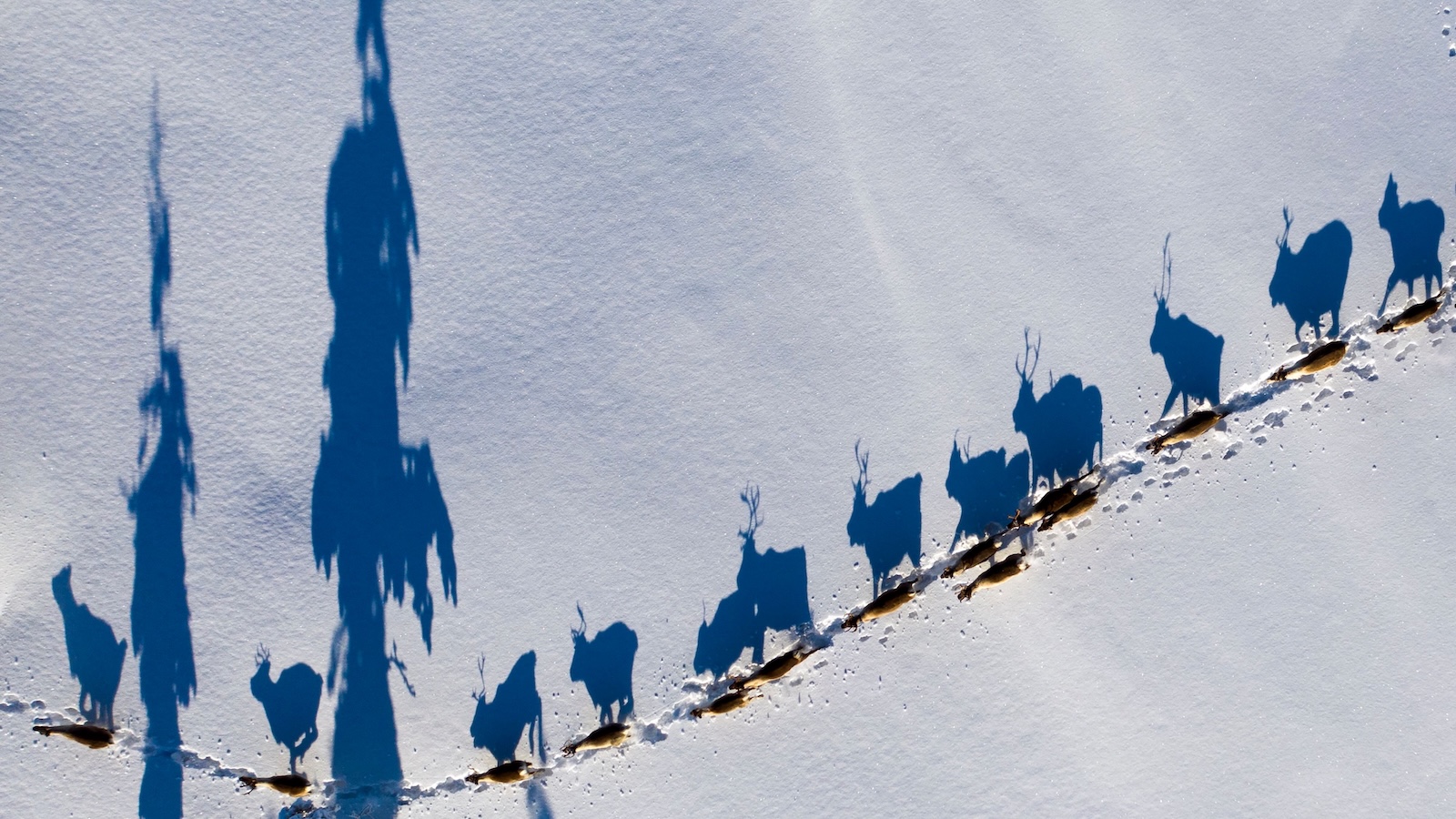
In a warming world, Indigenous identities — warped by centuries of abuse and misuse — have become potent vehicles for capturing public attention and sympathy. This too often includes recycling of old tropes, including the ecologically minded Indian made popular by Espera Oscar de Corti. Among the most well-known pretendians, de Corti is famous for his appearance as “The Crying Indian” in a Keep America Beautiful ad that aired on Earth Day 1971. De Corti, dressed as a Plains-style Indian in buckskin and braids, paddles a canoe past ship channels filled with trash before pulling up to a debris-strewn beach. “Some people have a deep, abiding respect for the natural beauty that was once this country, and some people don’t,” the narrator intones as trash thrown from a passing car lands at de Corti’s feet. The camera pans up to his face, where a single tear rolls down his cheek.
But that trope endures beyond nostalgia. Today, it appropriates and repackages genuine Indigenous scholarship, worldviews, and political struggles into simplified archetypes that can be easily consumed, circulated, and capitalized upon, from the crying Indian to the righteous water protector.
“The appropriation and use of that imagery can be attractive to NGOs entering into this space,” said Monte Mills, director of the Native American Law Center at the University of Washington. “Some of that is so deeply ingrained in the national consciousness. It’s hard to uproot.”
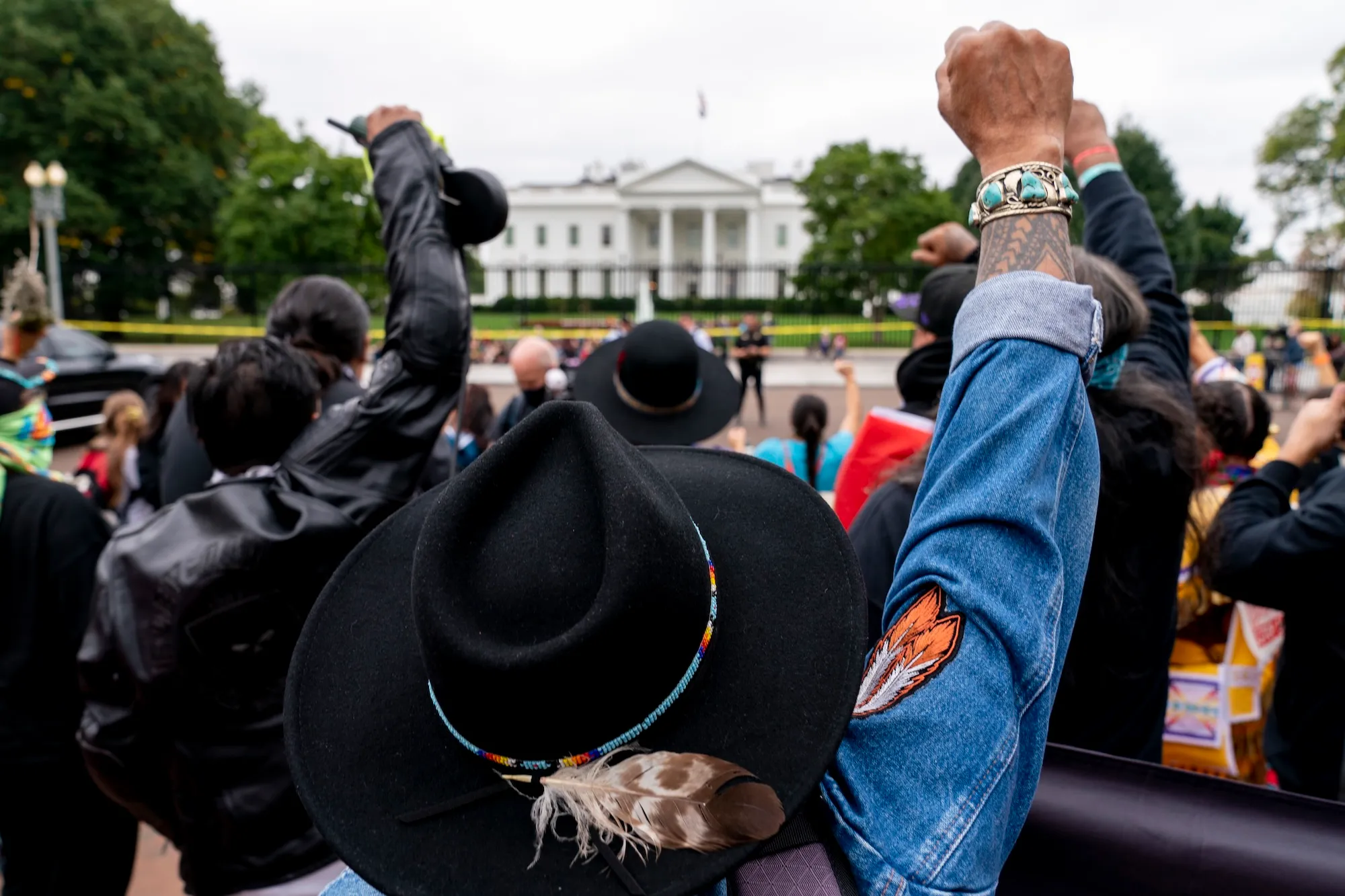
Indigenous Peoples have long been imagined or appropriated to serve settler needs and anxieties. Phil Deloria, a Yankton-descended Harvard historian and author of Playing Indian, argues that Americans have always needed constructed images of “Indians” to define their own history and identity. From sports mascots to the Boy Scouts’ appropriation of Indigenous culture, Native iconography has been woven into narratives of national belonging.
“In the ’70s, you’ve got this ecological Indian thing happening,” Deloria said. In the 1980s, the self-healing, New Age Indian was in vogue. And then, “In the ’90s and aughts, you’ve got the postmodern Indian, who’s sort of ironic and hip and kind of cool,” Deloria added. “So one way to think about this is that climate change is just another one of these modernist crises where people imagine certain kinds of Indian-ness.”
For Mancias, that kind of Indian-ness has meant replacing buckskin with ribbon shirts and ball caps, trash by pipelines, tears by righteous anger.
“I’m no f*cking activist,” said Mancias. “I’m protecting our land and protecting our principles and our teachings and who we are. Cuz I was told, ‘Go get our lands back.’”

In February of this year, the Carrizo/Comecrudo Tribe graduated from press releases, niche blogs, and climate reporting to Hollywood with the release of Gaslit. The documentary, hosted by Jane Fonda and produced by Greenpeace, chronicles her travels through Texas’ oil fields, documenting “fossil fuel profiteering, environmental racism, and the lives of everyday people.” During her journey, Fonda visits the Carrizo/Comecrudo Tribe, and between sweeping images of the Gulf Coast and fossil fuel infrastructure, footage of Juan Mancias and Frankie Orona carrying an American Indian Movement flag flashes across the screen.
For viewers, there are no missing records, genealogical gaps, questionable family histories, or factual anachronisms. Instead, they see exactly what Mancias has manifested: a moral, Indigenous front line in the battle to stop climate change, with a story the world is eager to believe.
In the film, that story is delivered by Christopher Basaldú, the co-founder of South Texas Environmental Justice Network and alleged relative of Mancias. “We have the port selling us out, not listening to the tribe when we tell them these are sacred lands and we actually do have villages and archeological sites in the area that are being destroyed,” he says. “On top of that, in comes the billionaire conman of the world, Elon Musk. He’s polluting and destroying the area where we remember our creation.”
“When Gaslit was produced and published, our editorial review surfaced no dispute over the region’s Indigenous communities and gave us no reason to doubt Mr. Mancias’ statements,” said a spokesperson for the film. “Greenpeace USA respects Indigenous sovereignty and the right to self-determination as outlined in our Indigenous Peoples Policy, and also recognizes that Indigenous identity is a complex issue due to the far-reaching effects of colonialism. Therefore, we believe decisions on claims of Indigenous identity belong to tribal nations and communities, and follow that leadership.”
The fight against Musk and his company SpaceX has become Mancias’ primary focus these days. With the Texas Supreme Court dismissing the tribe’s claims earlier this year, the tribe has opened a new front: Working with the Center for Biological Diversity, South Texas Environmental Justice Network, and SaveRGV to sue the U.S. Fish and Wildlife Service. The groups hope to block a land swap that would give SpaceX more than 700 acres of a national wildlife refuge.
“Our Mothman prophecies come straight out of Texas and they talk about the coming of fracking,” Mancias said of prehistoric and historic petroglyphs found in the state. “It shows horizontal fracking and it shows the actual land movers, and then there’s the other ones that show SpaceX and Blue Origin and they show the rockets there.”
Of this, as with everything, belief is the only evidence he can offer.
CREDITS
This story was reported and written by Tristan Ahtone and edited by Chuck Squatriglia and Katherine Bagley. Story art by Marty Two Bulls Jr., with art direction by Teresa Chin. Fact-checking was conducted by Elisângela Mendonça of Mongabay through the Indigenous News Alliance, as well as Angely Mercado. The story was copyedited by Jaime Buerger and Laura Mallonnee assisted in searching Texas state archives.
DISCLOSURES

